
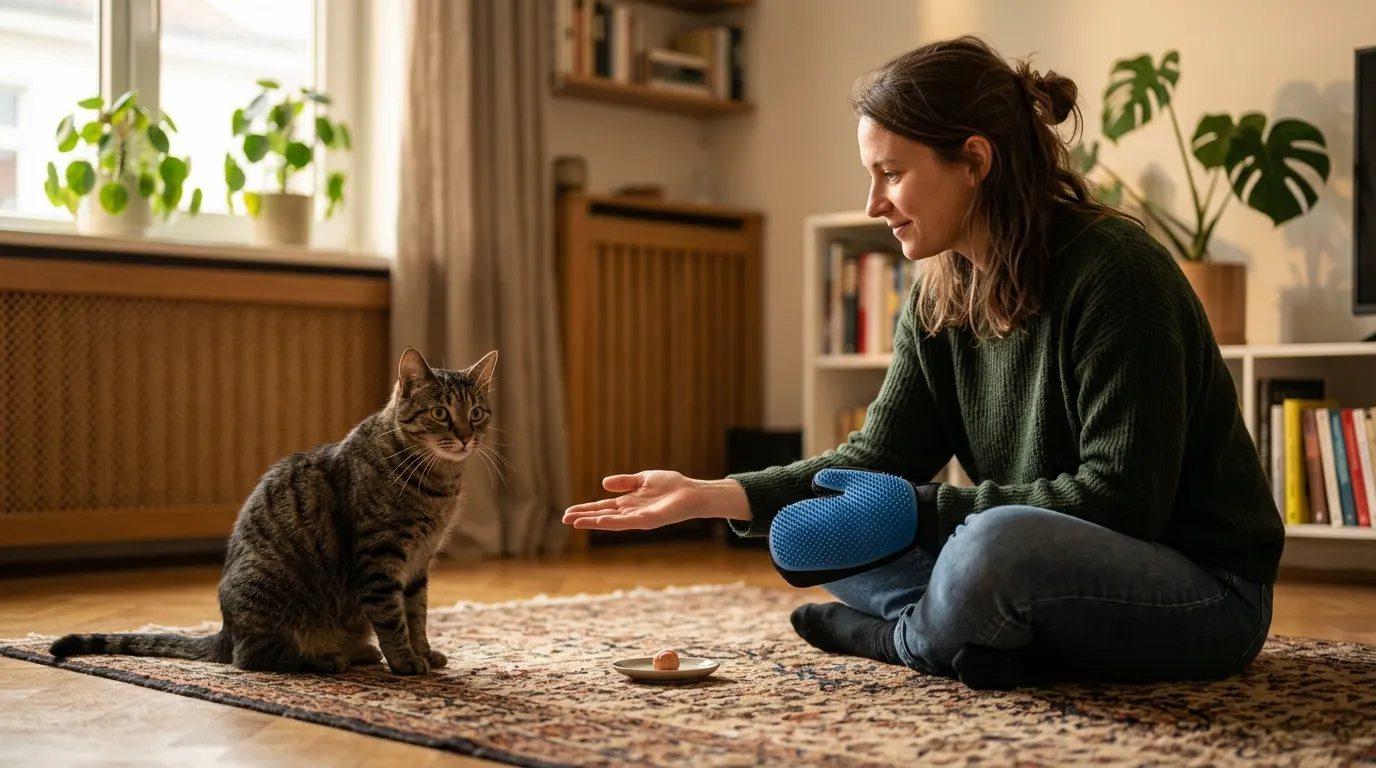
Every grooming session with my rescue cat started the same way for the first six months: she would allow exactly three strokes before spinning around and staring at my hand like it had personally offended her. Learning how to groom cat that hates being touched is mostly about understanding what “hates being touched” actually means and why it is happening. For most touch-averse cats the problem is not the grooming itself but the feeling of having no control over when contact starts and stops. Indoor cats often need more grooming help than outdoor cats because they shed more from artificial light cycles and get less natural coat maintenance through outdoor activity. This article covers the six-step method, the right tools, the body language signals that tell you to stop and when a professional groomer is the better choice.
How to groom a cat that hates being touched: start with a grooming mitt rather than a brush, keep sessions under 30 seconds initially, let your cat choose to end the contact and use high-value treats after every session. Never restrain a cat for grooming. Build tolerance over weeks rather than trying to complete a full session in one sitting.
Why Your Cat Hates Being Touched During Grooming?
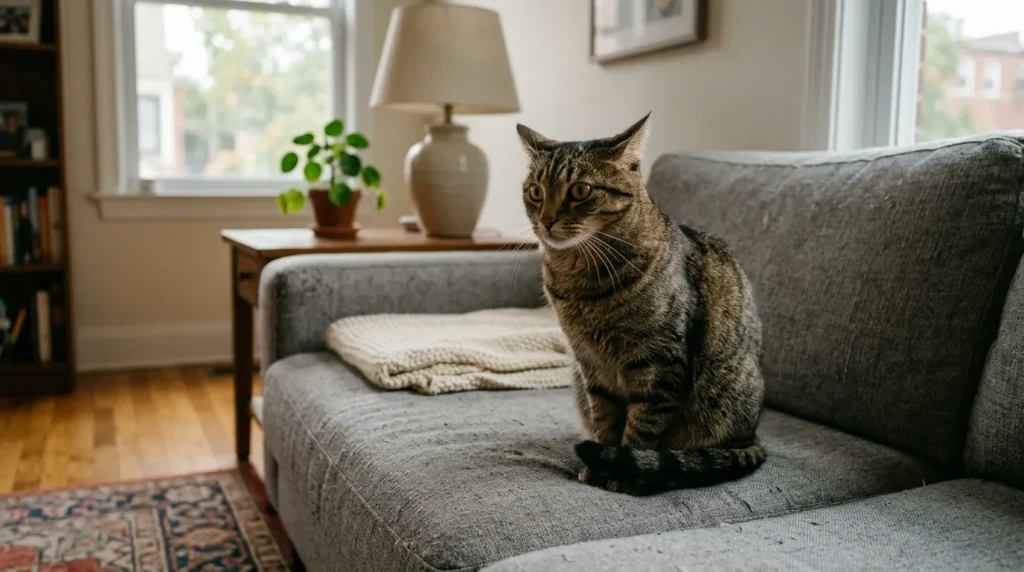
Touch aversion in cats is almost never about the grooming itself. It is usually about one of three things: a previous negative experience with handling, overstimulation from petting that went on longer than the cat was comfortable with, or physical pain that makes touch uncomfortable in specific areas.
Indoor cats in apartments often develop stronger touch aversion than cats with more varied environmental stimulation. Limited exposure to different textures, sounds and handling situations means any unexpected contact can feel more alarming than it would for a cat who grew up being regularly handled. Dry apartment air also creates static electricity in the fur which makes brushing genuinely uncomfortable rather than pleasant for some cats.
According to ASPCA feline behavior resources, the most common grooming mistake is attempting to continue past the cat’s visible stress signals. Every session that ends in the cat fleeing or biting trains the cat to associate grooming with an unpleasant experience it could not escape from. The next session becomes harder as a direct result. Understanding your cat’s indoor behavior patterns more broadly helps you identify whether touch aversion is grooming-specific or part of a wider anxiety pattern that might benefit from veterinary support.
The Right Tools Make an Enormous Difference
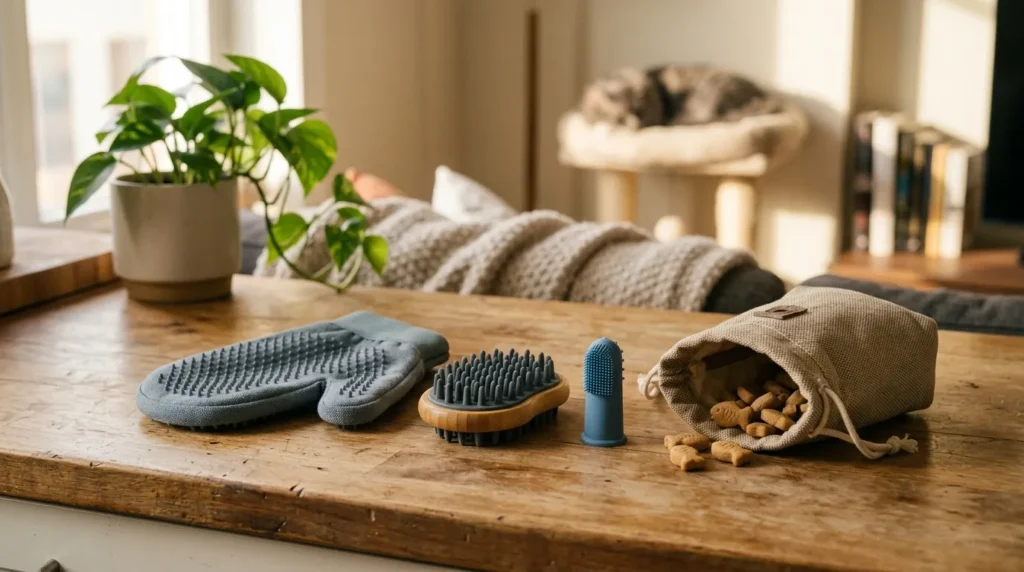
A grooming mitt is the single most effective starting tool for a cat that hates being touched during grooming. The mitt fits over your hand which means the contact feels identical to petting from the cat’s perspective rather than being approached with a foreign object. Cats who will not tolerate a brush for more than two seconds will often sit through three or four minutes of mitt grooming without protest once they have associated it with petting.
| Tool | Best For | Why Touch-Averse Cats Accept It | Limitation |
| Grooming mitt | First introductions | Feels like a hand petting | Less effective on heavy mats |
| Rubber curry brush | Short to medium coats | Gentle massage sensation | Limited reach into undercoat |
| Soft pin brush with rounded tips | Medium coat maintenance | Familiar stroking motion | May feel brush-like to sensitive cats |
| Grooming wipes | Spot cleaning | No brushing sensation at all | Not a full grooming substitute |
Metal deshedding tools, wire slicker brushes and fine-tooth combs should come much later in the process if at all. For a cat that currently hates any touching during grooming these tools feel abrasive and confirm the cat’s suspicion that grooming is an ordeal. Your overall home grooming routine for your indoor cat should be built around what the individual cat tolerates rather than what produces the most thorough result in the shortest time.
How to Groom a Cat That Hates Being Touched? The 6-Step Method
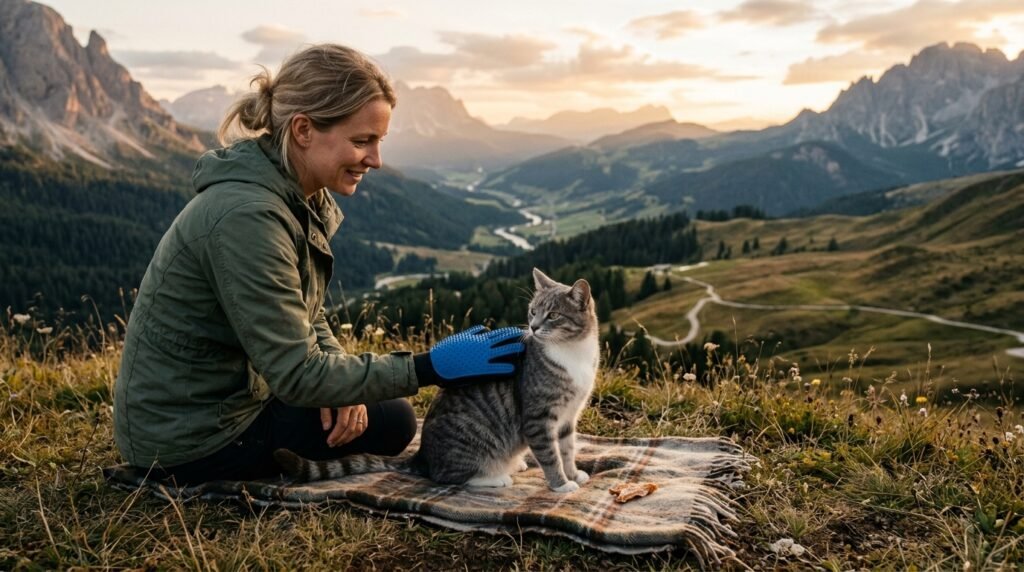
Step 1: Choose timing carefully. A cat who has just eaten and is slightly drowsy is far more tolerant of contact than one who is alert and in full predatory mode. Late morning or early afternoon after a meal is usually the best window.
Step 2: Let the cat approach the tool. Place the grooming mitt on the floor or couch near the cat and let them sniff it at their own pace. Offer a treat when they investigate without backing away. This step alone can take two to three days for very wary cats.
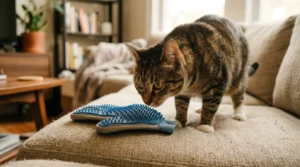
Step 3: Begin with areas the cat already accepts. Most cats tolerate the cheeks, chin and back of the head better than the flanks, belly or base of the tail. Start there and stop after five to ten seconds regardless of how well it is going. End voluntarily before the cat ends it for you.
Step 4: Extend gradually by two to three seconds per session over one to two weeks. The goal is never to see how long the cat will tolerate contact. The goal is to build an association between the mitt and good outcomes at whatever length feels manageable for your specific cat.
Step 5: Add the treat immediately after stopping. Not when the cat looks annoyed. Immediately when you withdraw the mitt, even if the session was only three seconds long. The speed of the reward matters for building the association.
Step 6: Introduce new areas only after the cat is visibly relaxed during the sessions you have been doing. Moving too fast is the most common failure point. A cat who was fine with back grooming last week does not automatically accept flank grooming this week.
Reading Your Cat’s Body Language During Grooming
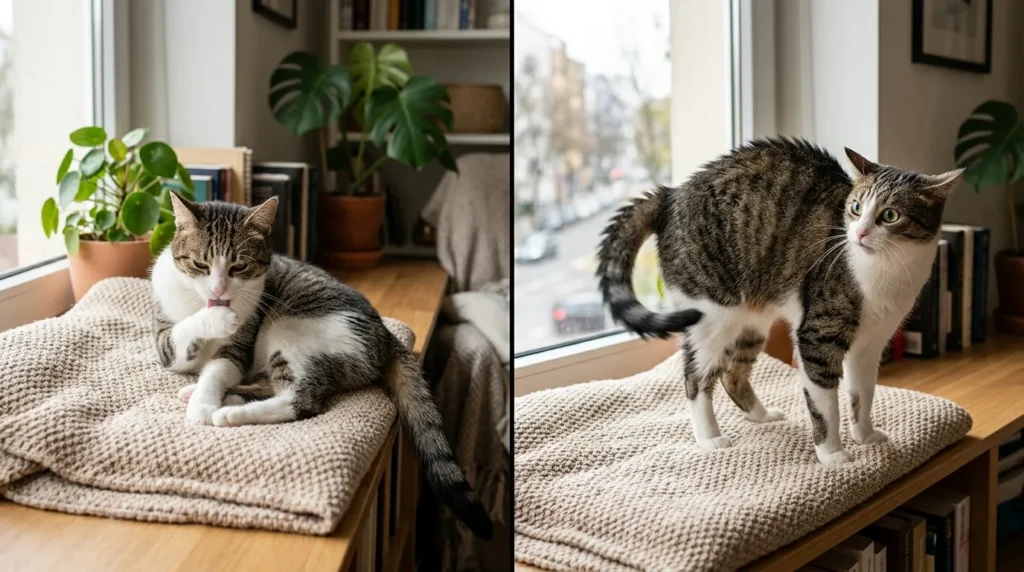
Knowing when to stop is more important than knowing how to start. A tail that begins to lash or flick is the clearest early warning. Skin rippling along the back, ears that flatten or rotate backward and pupils that dilate suddenly all appear before a bite or scratch and give you a clear window to stop the session voluntarily.

Freezing is a sign of high stress, not cooperation. A cat that goes completely still during grooming is not enjoying the session. It is tolerating it by shutting down. This is a common misread where owners interpret stillness as acceptance and continue grooming until the cat suddenly bites. The correct interpretation of freezing is to stop immediately and give the cat space to move away freely.
Monitoring your cat’s general indoor health also matters here. A cat who suddenly develops much lower tolerance for grooming touch in an area she previously accepted may have developed pain in that location. Arthritis, skin infections or mats pulling at the skin all cause new touch sensitivity that can look like behavioral reluctance but is actually a physical signal worth investigating.
When to Call a Professional Instead of Continuing at Home?
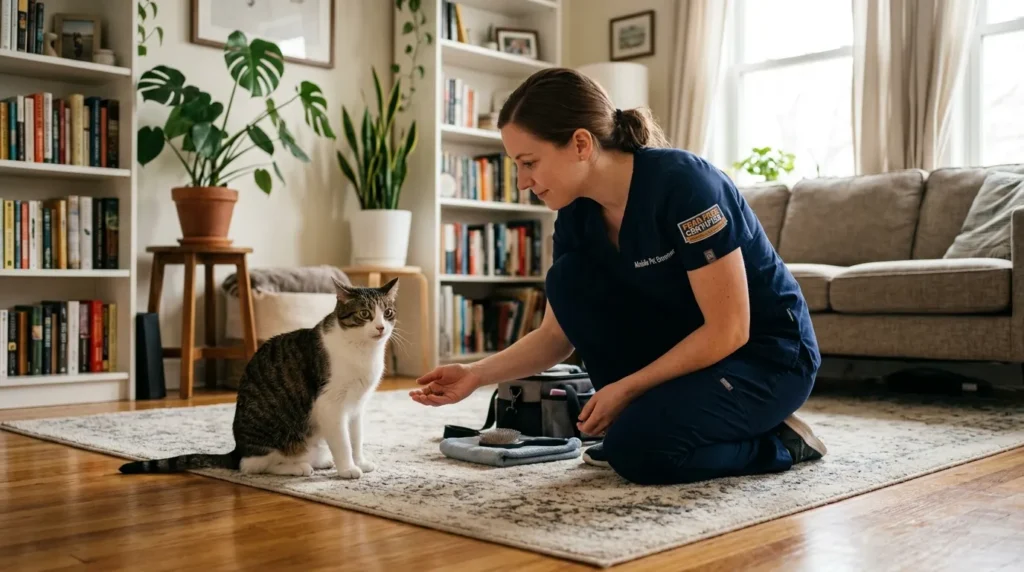
A cat who bites hard enough to break skin, who has mats that have tightened against the skin or who shows escalating aggression across multiple sessions despite consistent gentle attempts needs professional help before continuing at home. These are not failure states. They are situations where the right next step is a Fear Free certified groomer rather than another DIY session.
Mobile cat grooming is particularly well suited for touch-averse indoor cats because it removes the two most stressful elements of professional grooming: the carrier and the salon environment. A groomer who comes to your apartment works with a cat who is on their own territory rather than in a completely foreign setting. The result is almost always a calmer cat and a safer session.
Enrichment that reduces your cat’s baseline anxiety between grooming attempts makes each session more likely to succeed. Vertical space and climbing options let cats self-regulate their stress levels by choosing height and distance, which carries over into greater tolerance for handling. What you feed your cat also matters because proper nutrition directly affects skin and coat condition, which can reduce the tangles and buildup that make grooming sessions longer and more uncomfortable.
Patience Note: The cats that seemed completely ungroomable at month one are often the same cats tolerating full coat sessions at month four. The timeline feels impossibly slow when you are in it and obvious in retrospect. Do not measure progress by sessions. Measure it by months.
The Mistake That Guarantees Grooming Will Always Be a Fight
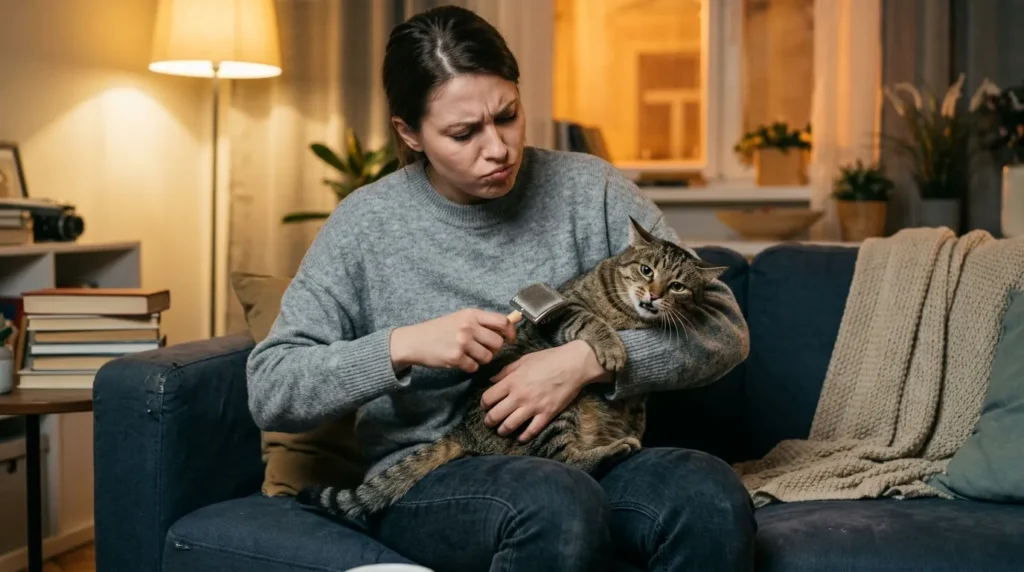
Restraining a cat for grooming is the mistake that cements touch aversion permanently in most cases. Wrapping a cat in a towel, holding her scruff or pinning her legs while you brush trains the cat that when the grooming tools appear, the outcome is entrapment. The next session requires more restraint because the cat now knows what is coming and reacts earlier. Within weeks you have a cat who hides at the sight of the brush.
The second connected mistake is measuring a session’s success by how much grooming got done rather than by how the cat felt during the session. A three-second session that ends with the cat walking away calmly and accepting a treat is a successful session. A five-minute session that ends with the cat biting and hiding is a failed session regardless of how much fur you collected.
Keeping your cat’s litter box clean and accessible is an indirect factor here because cats experiencing litter box stress carry that anxiety into every other interaction including grooming. Good overall indoor cat care habits that keep stress low across the whole environment produce a cat who is meaningfully easier to handle in every context, including grooming. Living in an apartment with a cat also shapes how much environmental stimulation your cat gets, which directly affects her baseline anxiety level during grooming sessions.
When Touch Aversion During Grooming Needs a Vet Visit?
A cat who suddenly becomes aggressive during grooming in an area she previously tolerated needs a vet check before the next grooming session. Sudden-onset touch sensitivity in a specific body area is a pain signal far more often than it is a behavioral change. Arthritis, mats pulling at skin, a skin infection or an internal injury can all present as reluctance to be touched in that area.
A cat who over-grooms one spot until it is raw, who pulls her own hair out or who stops grooming entirely while previously maintaining a clean coat also needs a veterinary evaluation rather than a change in grooming technique. These are medical presentations that grooming adjustments cannot resolve.
This article is for informational purposes only. Always consult your vet if you have concerns about your cat’s health.
Frequently Asked Questions About Grooming Touch-Averse Cats
How long does it take to desensitize a cat to grooming?
Most cats show meaningful improvement within four to eight weeks of daily short sessions. Some cats with trauma histories take three to six months. Consistency matters far more than session length.
Is it okay to use a towel wrap to restrain my cat for grooming?
Only as an absolute last resort and only for a few seconds for a specific task like a nail trim. Regular restraint for grooming makes touch aversion significantly worse over time.
My cat is fine with petting but hates brushes. Why?
Brushes feel different from hands and often generate static or pull the fur in unexpected directions. Start with a grooming mitt which mimics the hand sensation. Most cats who hate brushes accept mitts.
What if my cat has mats I can’t brush out?
Do not cut them with scissors. See a professional groomer or vet. Skin folds into mats in ways that make home scissor use genuinely dangerous regardless of how careful you are. This article is for informational purposes only. Always consult your vet if you have concerns about your cat’s health.
Can I sedate my cat at home for grooming?
No. Only a vet can safely administer sedation for grooming and only after a health evaluation. Over-the-counter calming supplements may reduce anxiety slightly but do not provide sedation and should be discussed with your vet before use.
Should I groom my cat even if she hates it?
Yes, but on her terms and timeline. Grooming is necessary for coat health, nail length and skin condition. The goal is building tolerance through gradual desensitization rather than forcing grooming sessions your cat experiences as traumatic.
How to groom a cat that hates being touched requires starting with a grooming mitt rather than a brush, keeping initial sessions under 30 seconds and letting the cat end contact voluntarily. Tail lashing, ear flattening and skin rippling are early stress signals that mean stop immediately. Never restrain a touch-averse cat for grooming as this worsens aversion. Most cats show meaningful improvement within four to eight weeks of consistent daily short sessions paired with high-value treats. Fear Free certified mobile groomers are the best option for cats with severe touch aversion or existing mats.

Written by Mishu
A passionate cat lover and indoor living enthusiast, Mishu is the founder and voice behind Indoor Living Cat – a go-to resource for cat owners who want to create the happiest, healthiest life for their feline companions indoors.
View Full Profile