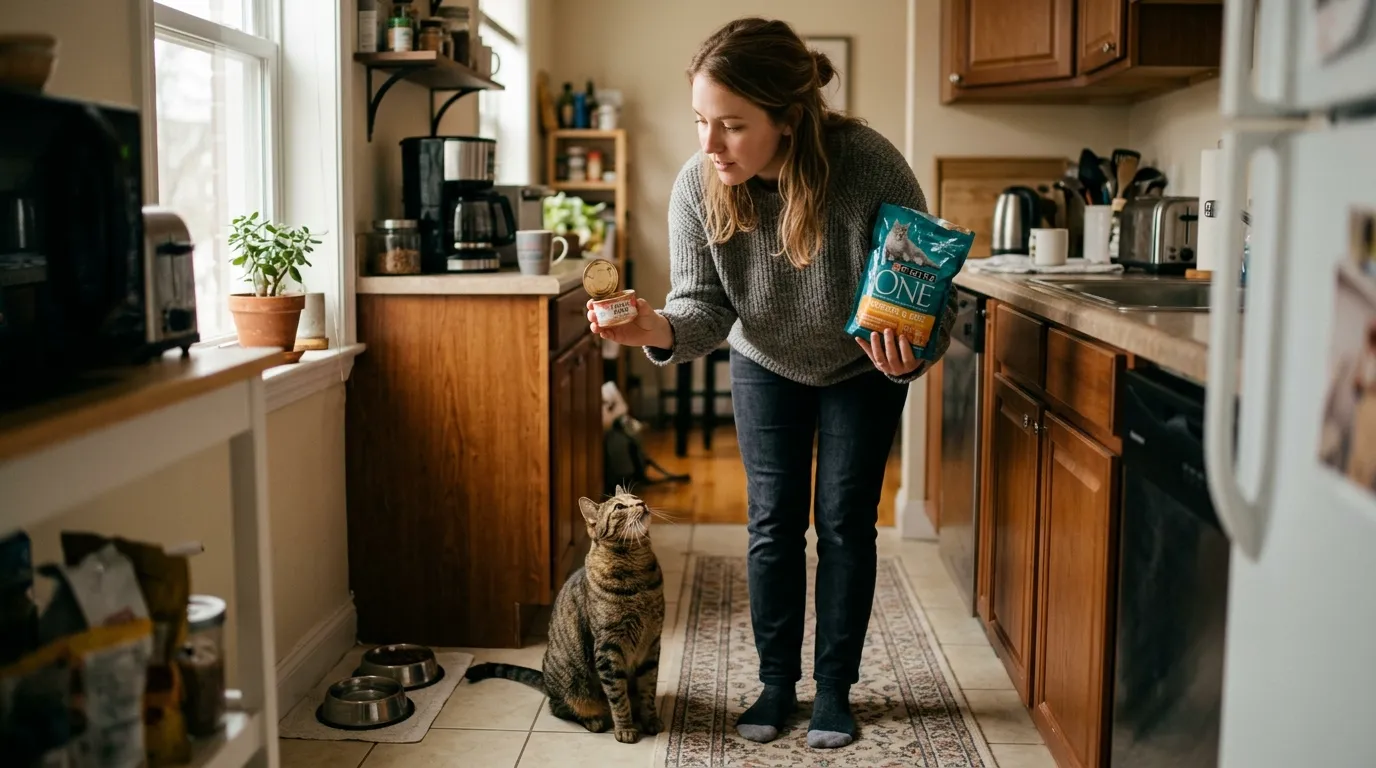
You keep reading that wet food is better for cats but your cat seems perfectly happy on dry kibble and now you are not sure whether you are actually failing them by not serving wet food every single day. The question of whether do indoor cats need wet food every day is one of the most common nutrition questions apartment cat owners search for and the honest answer is more nuanced than most articles admit. I watched my own cat’s coat noticeably improve within two weeks of switching from dry-only to a mixed diet that visual change told me something that nutritional arguments alone had not fully landed. This guide gives you the direct answer, the real benefits that matter specifically for indoor cats and the practical feeding plan that makes implementing this change straightforward.
Indoor cats do not strictly need wet food every day to survive on a complete balanced diet but most vets strongly recommend including it daily or at least regularly. Wet food’s 70 to 80 percent moisture content addresses the two biggest indoor-cat health risks directly chronic dehydration and urinary disease in a way that dry food alone cannot match regardless of how much water is offered alongside it.
What Vets Actually Say About Whether Cats Need Wet Food Daily?
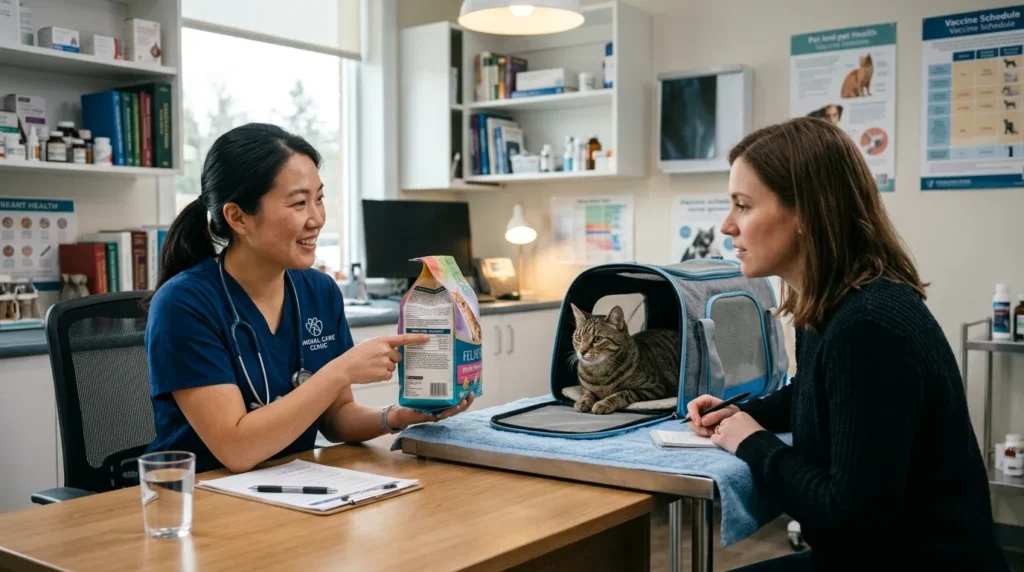
The veterinary consensus is consistent across major feline health organizations: cats do not have an absolute dietary requirement for wet food specifically as long as the diet is nutritionally complete and balanced. A cat eating quality dry food designed to meet AAFCO standards alongside adequate water access can technically meet all nutritional requirements without wet food.
However that same veterinary consensus strongly recommends wet food as a regular part of an indoor cat’s diet because the obligate carnivore biology of cats creates a persistent hydration gap on dry food that most cats cannot fully compensate for through drinking alone. The research supporting this is consistent enough that even sources that classify wet food as optional typically classify it as “strongly beneficial” rather than genuinely neutral.
The distinction matters because “does not need” and “does not benefit meaningfully from” are very different statements. Most indoor cat owners asking this question are deciding whether to invest the extra cost and effort of wet food and the honest answer to that decision is yes for most apartment cats not because dry food is dangerous but because wet food addresses the specific vulnerabilities that indoor sedentary life creates.
The 5 Benefits of Wet Food That Matter Most for Indoor Cats Specifically
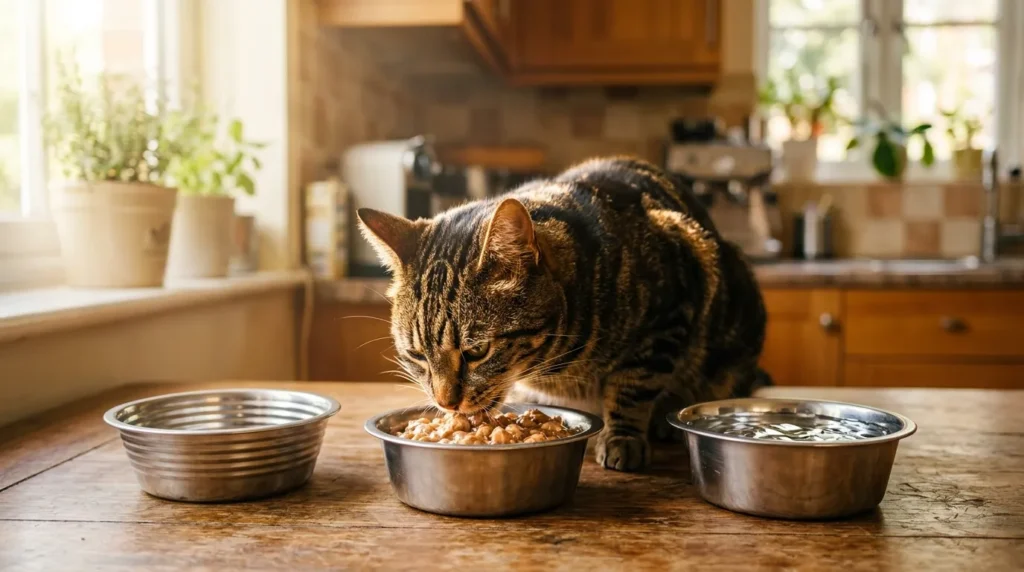
Benefit 1: Hydration that actually reaches the cat. Wet food contains 70 to 80 percent moisture by weight. A cat eating primarily wet food gets most of their daily fluid requirement from food rather than from voluntary drinking. Indoor cats have a naturally low thirst drive inherited from desert-dwelling ancestors and most do not drink enough from a bowl to compensate fully for a dry-food-only diet. Wet food closes that gap without requiring your cat to change a behavior that their biology actively discourages.
Benefit 2: Direct urinary health protection. More moisture in the diet means more diluted urine and fewer conditions for struvite or calcium oxalate crystals to form. Feline lower urinary tract disease (FLUTD) is significantly more common in indoor cats than outdoor cats and diet-related dehydration is a primary contributing factor. Adding wet food daily is one of the most concrete preventive measures available without a prescription.
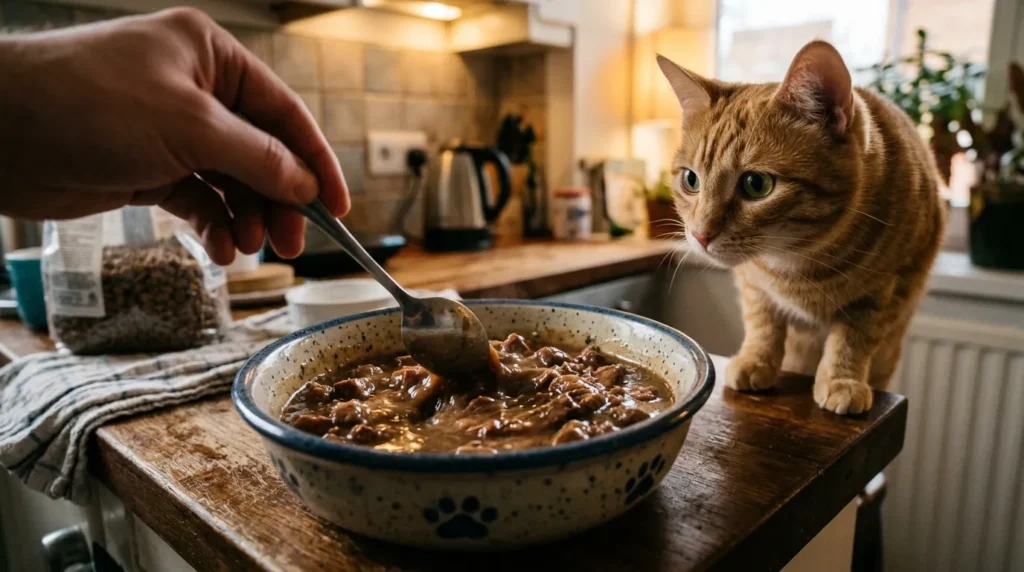
Benefit 3: Weight management without calorie deprivation. Wet food has lower calorie density than dry kibble because of its high moisture content. A cat eating an appropriately portioned wet food meal consumes a physically larger amount of food for fewer calories which produces genuine satiety rather than the lingering hunger that can occur on a small measured portion of calorie-dense dry food. For sedentary indoor cats prone to weight gain this is a meaningful advantage.
Benefit 4: Higher protein and lower carbohydrate content. Most wet foods have a higher protein-to-carbohydrate ratio than most dry foods because the formulation process does not require carbohydrates as a binding agent the way kibble extrusion does. Cats are obligate carnivores whose metabolism is designed to run on protein and fat rather than carbohydrates and the closer a diet matches that profile the better the metabolic outcomes tend to be over time.
Benefit 5: Palatability for senior and picky cats. Older cats and cats with dental sensitivity often find soft wet food easier and more appealing to eat than hard kibble. Senior cats sometimes stop eating dry food entirely while continuing to eat wet food readily. Starting wet food as a regular part of the diet before age-related appetite changes occur keeps feeding straightforward later. The full picture of how diet connects to long-term health for indoor cats is covered in detail in this guide on indoor cat health particularly the sections on age-related dietary needs that most owners do not think about until they are already dealing with the problem.
Do Indoor Cats Need Wet Food Every Day or Can You Feed It Less Often?
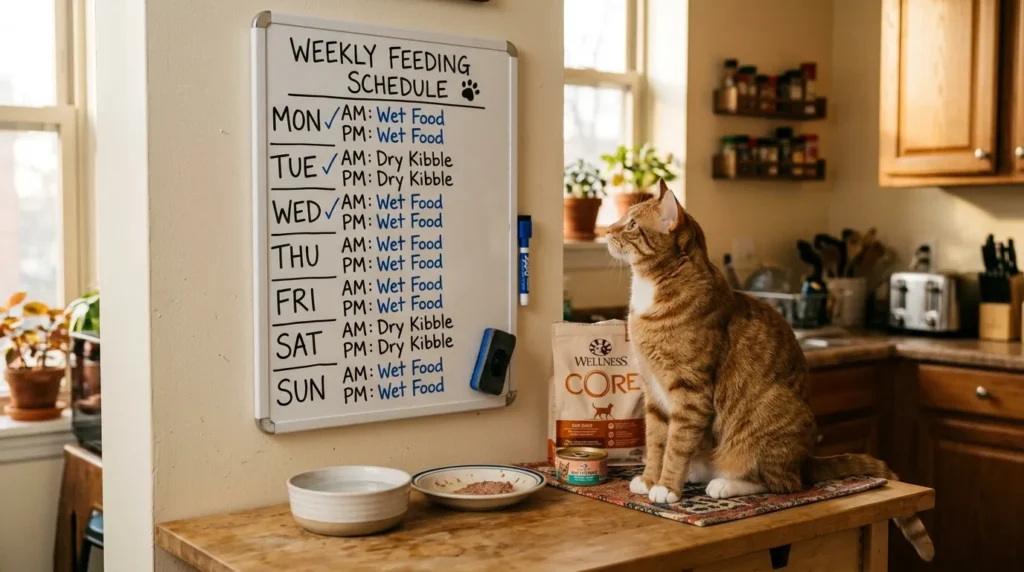
Daily wet food produces the most consistent hydration benefit because it ensures a reliable moisture contribution to total daily fluid intake regardless of how much your cat drinks from a bowl on any given day. Every-other-day or three-times-per-week wet food is meaningfully better than dry food only but creates more variation in daily fluid intake that can allow urine concentration to spike on dry-food-only days.
For most indoor cats the practical recommendation is at least one wet food meal per day as a minimum and two meals daily as the ideal. This does not require abandoning dry food entirely. A morning wet food meal and an evening wet food meal with dry kibble available at midday through a timed feeder or puzzle feeder represents the structure that most vets and feline nutritionists would consider close to optimal for an indoor apartment cat.
The cost concern is real and worth acknowledging. Wet food is more expensive per calorie than dry food. One practical approach is replacing one of the two daily meals with a smaller portion of quality dry food rather than serving two full wet food meals, which reduces cost meaningfully while preserving most of the hydration benefit. For the specific calorie calculations that help you structure a mixed diet correctly for your cat’s weight and ideal portion sizes, this guide on how to feed an indoor cat properly covers the practical math in a way that makes sense without requiring a nutrition degree.
Insight The easiest way to start adding wet food daily if your cat is resistant is to warm it slightly to just below body temperature before serving. Room-temperature wet food fresh from a refrigerated can smells much less appealing than the same food warmed for twenty seconds in a microwave. Most cats that appear to dislike wet food are actually responding to the temperature and smell rather than the food itself.
The Downsides of Daily Wet Food That Are Worth Knowing
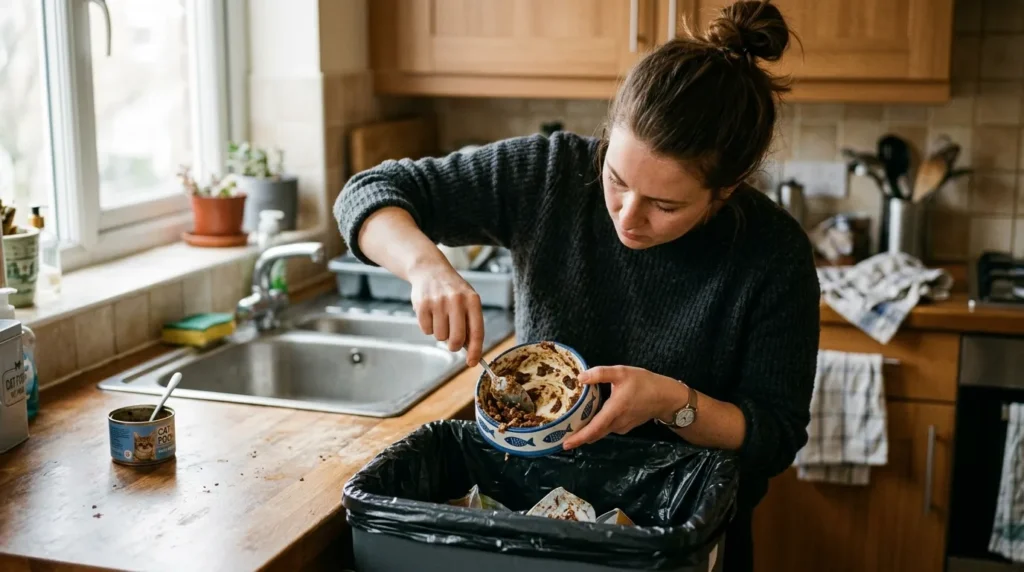
Daily wet food has three real limitations that dry-food-only feeding does not. First, opened wet food cannot remain at room temperature for more than two to four hours before bacterial growth makes it unsafe and most cats reject it before that point anyway as the smell and texture change. This means scheduled wet food meals rather than leave-and-forget feeding and refrigerating unused portions from a partially used can.
Second, wet food provides minimal dental benefit compared to dry kibble. The mechanical action of a cat chewing hard kibble removes some plaque and tartar buildup that soft wet food cannot replicate. Cats eating primarily wet food benefit from tooth brushing or dental treats as a compensating measure not a dealbreaker but a real consideration that dry-food advocates correctly identify.
Third, wet food costs approximately two to three times more per calorie than quality dry food when calculated honestly. For owners on a genuine budget the cost difference over a year of daily wet feeding is substantial. The mixed approach of one wet meal and one dry meal daily cuts this cost roughly in half while preserving most of the health benefit.
How to Add Wet Food to Your Indoor Cat’s Diet Without Digestive Upset?
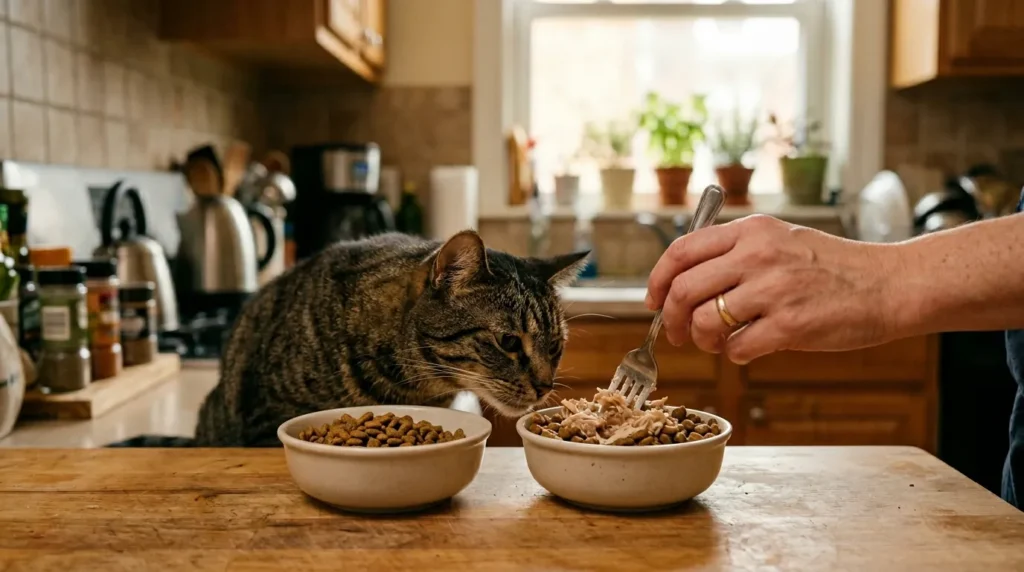
Transitioning from dry-only to a mixed or predominantly wet diet should happen over seven to ten days rather than overnight because sudden diet changes commonly cause loose stools or vomiting in cats whose digestive systems have adapted to dry food exclusively.
Start with 25 percent wet food mixed directly into 75 percent dry food for the first three days. Increase to a 50/50 mix for the next three days and then to 75 percent wet and 25 percent dry for the following three days. After ten days most cats accept wet food fully without digestive disruption. If loose stools persist beyond the transition period the issue is usually the specific wet food formula rather than wet food as a category and switching to a different protein source often resolves it.
For cats that refuse wet food outright during the transition, warming it slightly and adding a small amount of low-sodium broth as described in strategies for increasing water intake typically breaks the resistance within a week or two without forcing the change in a way that creates food aversion.
Insight Cats that have eaten dry food exclusively for years sometimes go through a period of three to five days where they eat less than usual during the transition. This is preference and habit rather than genuine hunger in most cases. Keep scheduled meal times consistent during the transition and do not reintroduce free-choice dry food to compensate for temporary reduced eating because doing so restarts the transition process from the beginning every time.
Common Mistakes When Introducing Daily Wet Food for Indoor Cats
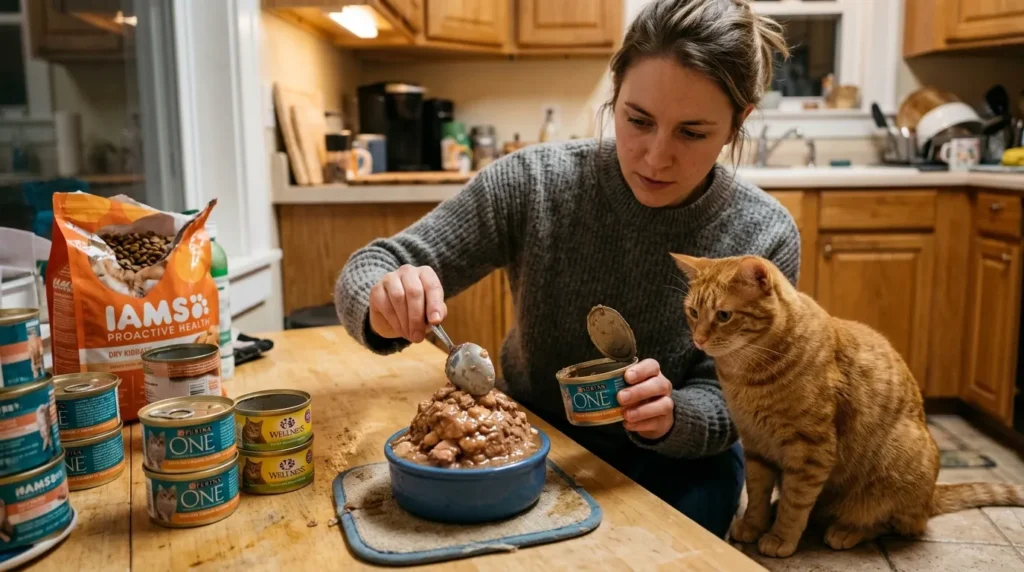
The most common mistake is serving wet food in the same visual portion size as dry food without accounting for the dramatic difference in calorie density. Dry kibble is approximately 350 to 500 calories per cup. Wet food in a standard 3-ounce can is typically 75 to 150 calories. Owners who switch to wet food and serve “a bowl” of it equivalent in visual size to what they were serving in dry food can easily double their cat’s daily calorie intake within the first week.
The second mistake is leaving wet food out all day to replicate the free-feeding dry food habit. Wet food at room temperature becomes unsafe within two to four hours and most cats will eat it all at once rather than grazing anyway because the texture and smell deteriorate quickly. Wet food requires scheduled meals rather than constant access and that schedule change is actually a benefit for weight management even though it feels like more work initially.
The third mistake is giving up after one rejected meal. Many cats that have never eaten wet food before will sniff it and walk away the first one to three times it is offered. This is novelty rejection not genuine dislike and persistence over five to seven days with warming and broth tricks resolves it for the vast majority of cats.
When a Vet Visit Is Worth It Before Changing Your Cat’s Diet?
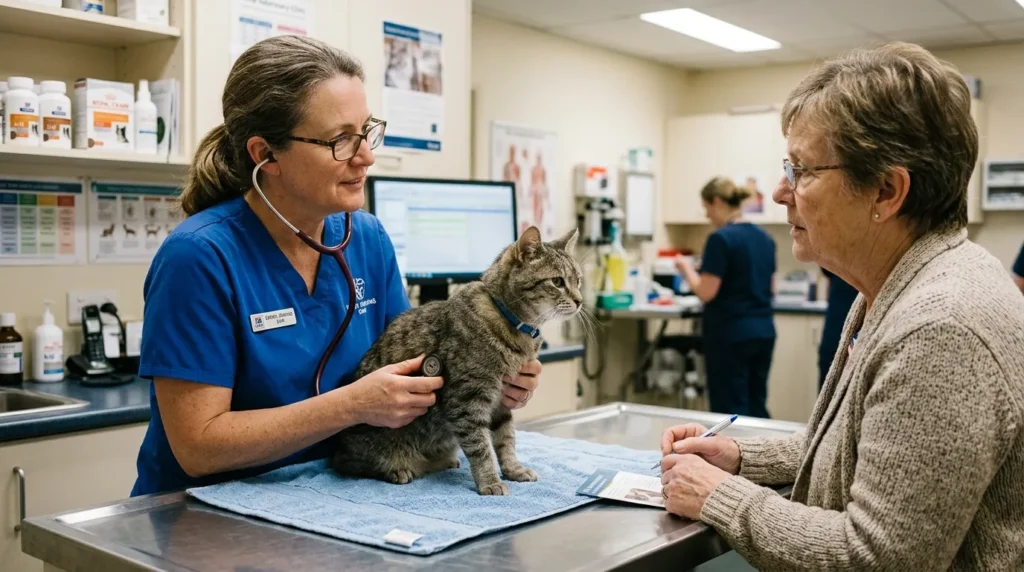
For most healthy adult indoor cats adding wet food daily is a safe and straightforward improvement that does not require a vet visit before starting. However cats with existing kidney disease, diabetes, inflammatory bowel disease or urinary conditions already under treatment should have any significant diet change discussed with their vet first because the protein levels, phosphorus content and calorie density in wet food affect these conditions in ways that require specific management.
Senior cats over ten years old benefit particularly from a vet conversation before switching because some have developed chronic conditions that are not yet showing obvious symptoms and a blood panel at that life stage confirms whether dietary adjustments are appropriate. According to the American Association of Feline Practitioners, senior cats aged eleven and older should receive health screenings at least every six months because metabolic changes accelerate significantly after that age threshold.
This article is for informational purposes only. Always consult your vet before making significant dietary changes for cats with known health conditions.
Frequently Asked Questions About Daily Wet Food for Indoor Cats
Do indoor cats need wet food every day or can they just eat dry?
Indoor cats do not strictly need wet food every day but most benefit significantly from it given their lower activity levels and natural low thirst drive. Daily wet food provides reliable hydration that dry food with a water bowl alongside rarely fully replaces. For most indoor apartment cats daily wet food is the most practical single diet improvement available.
Can cats live healthy lives on dry food only?
Yes provided they drink adequate water and maintain a healthy body weight. However indoor cats are significantly less likely to drink adequate water than outdoor cats because of lower activity and lower thirst drive so the “if they drink enough” condition is harder to meet in practice. Regular vet checkups that monitor kidney function and urine concentration give the earliest indication of whether a dry-only diet is working for your specific cat.
How much wet food should I feed my indoor cat each day?
A ten-pound adult indoor cat needs approximately 200 to 250 calories per day total. A standard 3-ounce can of wet food contains 75 to 150 calories depending on the formula so a ten-pound cat on a mixed diet typically needs one to two small cans of wet food daily alongside a small measured portion of dry food. Always calculate based on the specific calorie content on your food label rather than can count.
Is it okay to mix wet and dry food in the same bowl?
Yes and for many cats mixing directly is the fastest way to introduce wet food to a dry-food-only cat. The dry kibble masks the texture change and makes the wet food more familiar. Serve the mixed bowl at meal times and remove it after thirty to forty-five minutes rather than leaving it out because wet food at room temperature deteriorates quickly and most cats stop eating the mixture once it dries out.
Does wet food actually improve cat coat quality?
Many owners report noticeable improvement in coat shine and softness within two to four weeks of adding regular wet food partly because higher moisture intake supports skin hydration from the inside and partly because quality wet food formulas often have higher digestible protein content that supports coat condition directly. This article is for informational purposes only. Always consult your vet if you notice significant changes in your cat’s coat or skin condition.
Start With One Wet Meal Today
Indoor cats do not technically need wet food every day but the combination of their low thirst drive, sedentary apartment lifestyle and higher risk of urinary disease makes daily wet food one of the most practical health investments you can make. Replace one dry food meal with a small portion of wet food today and use the seven-to-ten-day transition plan if your cat resists. The cost difference from a purely dry diet is real but the reduction in urinary health risk and improved satiety make it worth it for most apartment cats. Understanding the full picture of what a healthy indoor cat diet looks like day to day is what this guide on indoor cat care addresses it connects nutrition to the broader daily routine that keeps apartment cats genuinely well rather than just fed.
Indoor cats do not strictly need wet food every day but veterinary guidelines strongly recommend including it daily or at minimum several times per week. Wet food contains 70 to 80 percent moisture compared to 8 to 10 percent in dry kibble and this moisture difference directly reduces the risk of feline lower urinary tract disease and chronic kidney stress in sedentary indoor cats with low thirst drive. A mixed diet of wet food at two daily meals and measured dry food at one meal provides optimal hydration and weight management for most adult indoor cats. Daily wet food portions for a ten-pound cat total one to two 3-ounce cans daily depending on calorie density. Transitions from dry-only to mixed diets should occur over seven to ten days to prevent digestive upset.