Getting the litter depth wrong is one of those mistakes that quietly ruins a litter box setup without you ever realizing it was the problem. I spent three weeks thinking my cat was being difficult before I measured the litter and realized I had been putting in barely an inch. She was hitting the bottom of the box while trying to dig and no cat tolerates that gracefully. Once I corrected the depth she went back to using the box without a single issue. Knowing how deep cat litter should be is one of those small details that makes an enormous difference to whether your cat uses the box reliably. This article covers the right depth for different litter types, different cats and how deep should cat litter be figure out why your cat is avoiding the box.
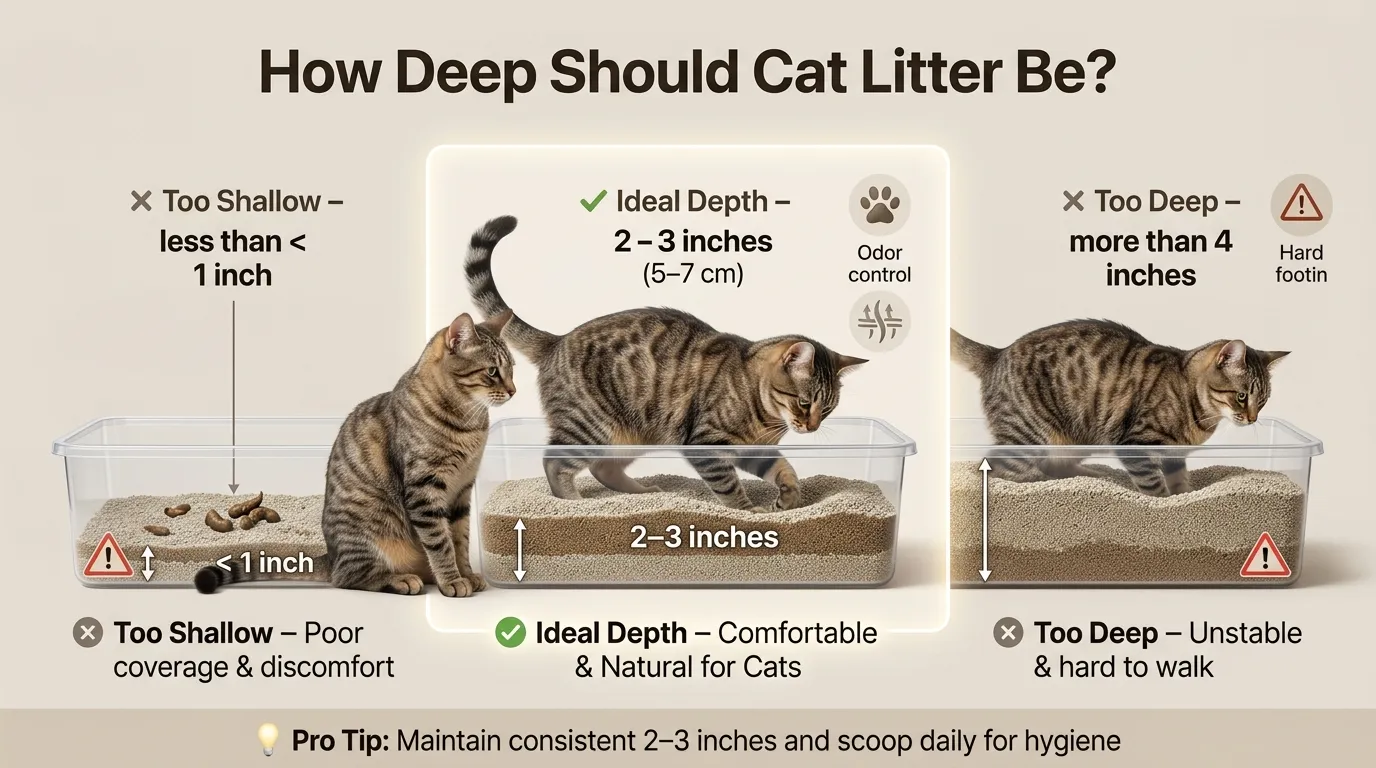
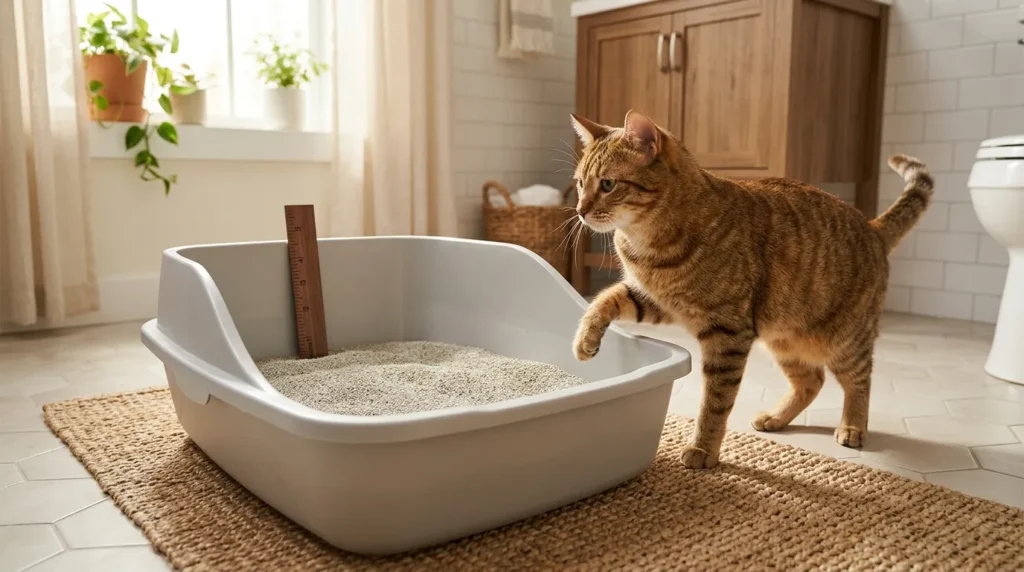
Cat litter should be 2 to 3 inches deep for most adult cats. This depth gives your cat enough material to dig, cover waste and form proper clumps without sinking through to the box bottom. Two inches is the absolute minimum. Three inches is the practical sweet spot for most clumping clay litters. Going deeper than four inches creates more scatter and waste without any benefit.
Why Litter Depth Matters More Than Most Owners Realize?
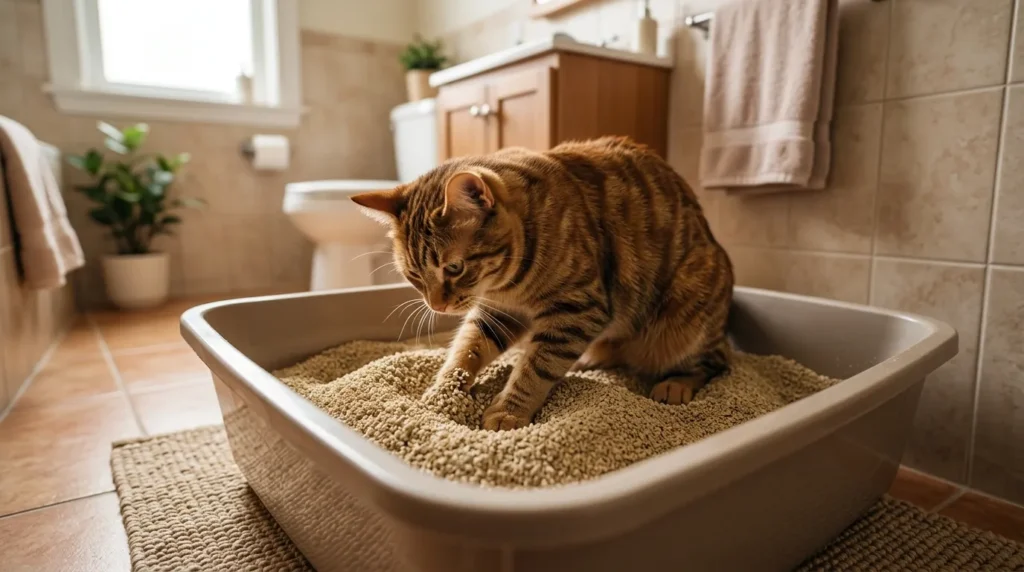
Cats dig and bury waste instinctively. This behavior is not about cleanliness for the cat’s sake. It is a survival mechanism inherited from wild ancestors who buried waste to hide their scent from predators and competitors. When your cat cannot dig and bury properly because the litter is too shallow it registers as a genuine problem with the box rather than a mild inconvenience.
Litter box avoidance is one of the most common consequences of incorrect depth. A cat that hits the hard plastic bottom of the box while digging often refuses to use it again or begins eliminating right next to the box instead. It looks like a behavior problem but the cause is purely physical. The box became uncomfortable to use.
Clumping litter specifically requires adequate depth to function correctly. When urine hits litter that is less than two inches deep it penetrates all the way to the box bottom and forms a flat, nearly unremovable pancake rather than a scoopable clump. That pancake builds up between full changes, concentrates odor and makes the box harder to maintain. Proper depth prevents this entirely.
Insight A quick way to check your current depth is to push a clean finger straight down into the litter. You should not feel the box bottom before your second knuckle. If you do the depth is insufficient. This thirty-second test takes the guesswork out of measuring and you can do it every time you scoop.
How Deep Should Cat Litter Be by Litter Type?
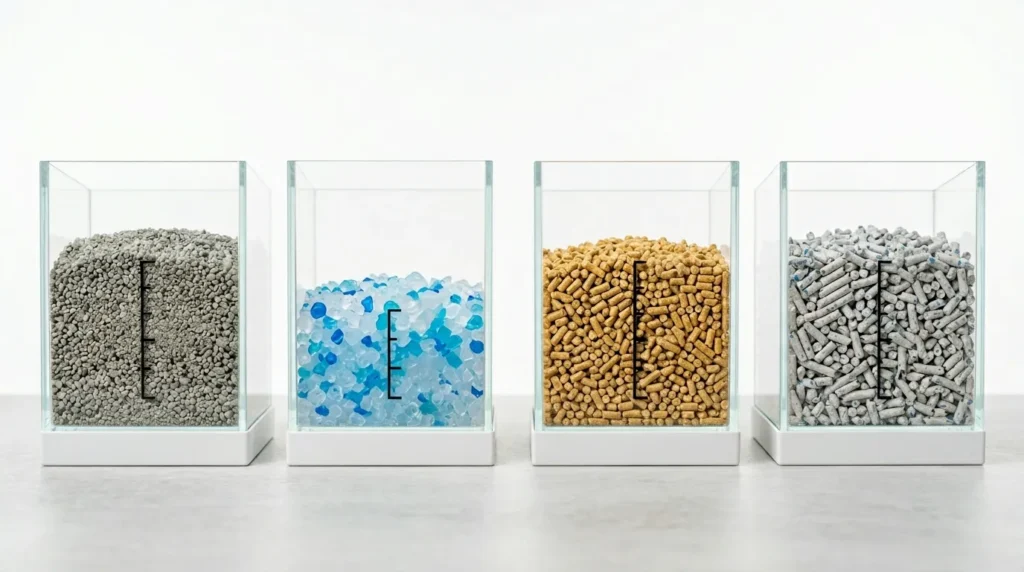
The correct depth varies slightly depending on which litter type you use because different materials clump absorb and compact at different rates. The 2 to 3 inch baseline applies to most types but specific adjustments improve performance for each.
Clumping clay litter works best at 3 to 4 inches. The deeper fill gives the bentonite enough mass to form firm complete clumps that lift cleanly from the box without falling apart. At 2 inches the clumps form but often attach to the box bottom making daily scooping significantly harder. At 4 inches you get strong clumps and good odor control without the excessive scatter that comes with overfilling.
 Crystal or silica gel litter performs well at 2 to 3 inches. These larger smooth crystals absorb urine at the surface and dehydrate it rather than clumping it. Depth beyond 3 inches wastes expensive crystal litter without improving odor control. The goal is ensuring urine contacts enough crystal surface to absorb fully before reaching the box floor.
Natural plant-based litters made from corn, wheat or tofu work well at 2 to 3 inches. These tend to be softer and lighter than clay so they scatter more easily at depths above 3 inches. Pellet-style natural litters work at 2 to 2.5 inches because the individual pellets are larger and maintain structure at shallower depths. Paper pellets follow the same guideline.
Here is a quick reference table for litter depth by type:
| Litter Type | Recommended Depth | Key Reason |
| Clumping clay | 3 to 4 inches | Forms firm complete clumps |
| Crystal / silica gel | 2 to 3 inches | Absorbs urine at surface level |
| Corn or wheat | 2 to 3 inches | Clumps moderately, lighter weight |
| Tofu or paper pellets | 2 to 2.5 inches | Large pellets need less depth |
| Non-clumping clay | 2 to 3 inches | Replaces fully rather than scooping |
How Depth Changes for Different Cats: Size, Age and Fur Length?
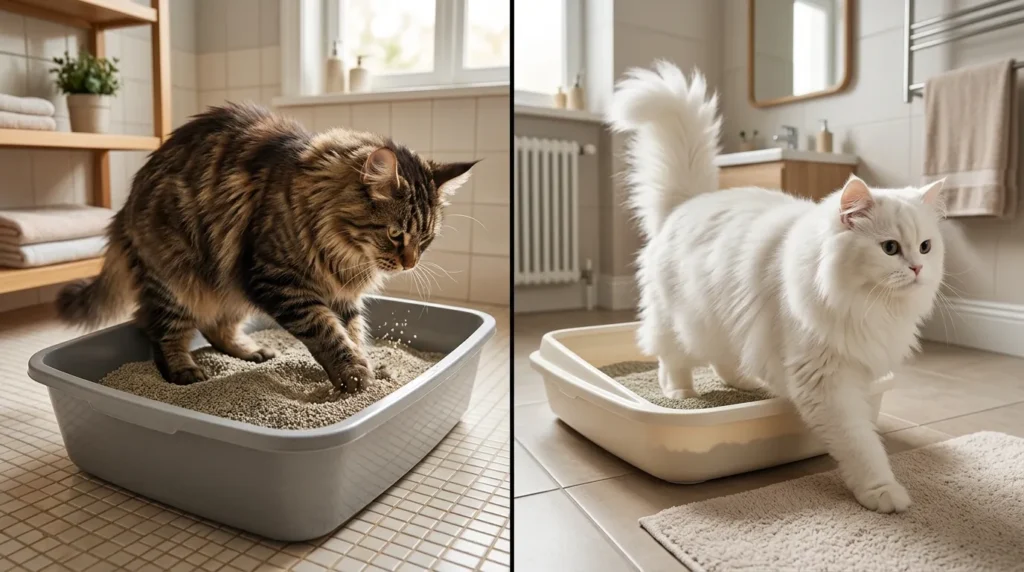
The 2 to 3 inch baseline applies to average adult shorthaired cats. Specific cat characteristics shift the ideal depth meaningfully enough to change the outcome.
Long-haired cats do better with shallower litter at 1.5 to 2 inches. The thick flowing fur of breeds like Persians, Ragdolls and Maine Coons acts like a magnet for fine litter particles. Deep litter means more particles contact more fur during digging and covering. The result is litter matting into the coat around the hindquarters, requiring daily grooming to remove and often causing enough discomfort that the cat starts avoiding the box. Shallower depth reduces particle contact while still allowing enough material for covering.
Kittens and senior cats both do better at 1.5 to 2 inches. Kittens are small enough that 3 inches of litter feels like wading through sand and they frequently end up covered in litter rather than just walking through it. Senior cats with arthritis or joint stiffness sink into deeper litter which makes standing, turning and exiting harder and more painful. Shallower depth combined with a low-entry box solves both problems immediately.
Large breeds like Maine Coons need 3 to 4 inches because their body weight compresses the litter more than a smaller cat. At 2 inches a large cat often creates divots that expose the box bottom and the cat ends up digging into nothing. The additional depth compensates for the compression and keeps the surface functional throughout the day between scoops.
Here is how depth adjusts by cat profile:
| Cat Profile | Recommended Depth | Why It Differs |
| Average adult shorthair | 2 to 3 inches | Standard baseline |
| Long-haired breeds | 1.5 to 2 inches | Prevents fur matting from particle contact |
| Large breeds (Maine Coon etc.) | 3 to 4 inches | Compensates for compression from body weight |
| Kittens under 6 months | 1.5 to 2 inches | Small body, easier to become overwhelmed by depth |
| Senior cats with mobility issues | 1.5 to 2 inches | Shallower is easier to navigate with stiff joints |
| Active heavy diggers (Bengals etc.) | 3 to 3.5 inches | More material absorbs enthusiastic digging |
For everything related to the full litter box setup including box size and placement check our complete guide to indoor cat litter box setup and maintenance.
How to Maintain the Right Litter Depth Between Full Changes?
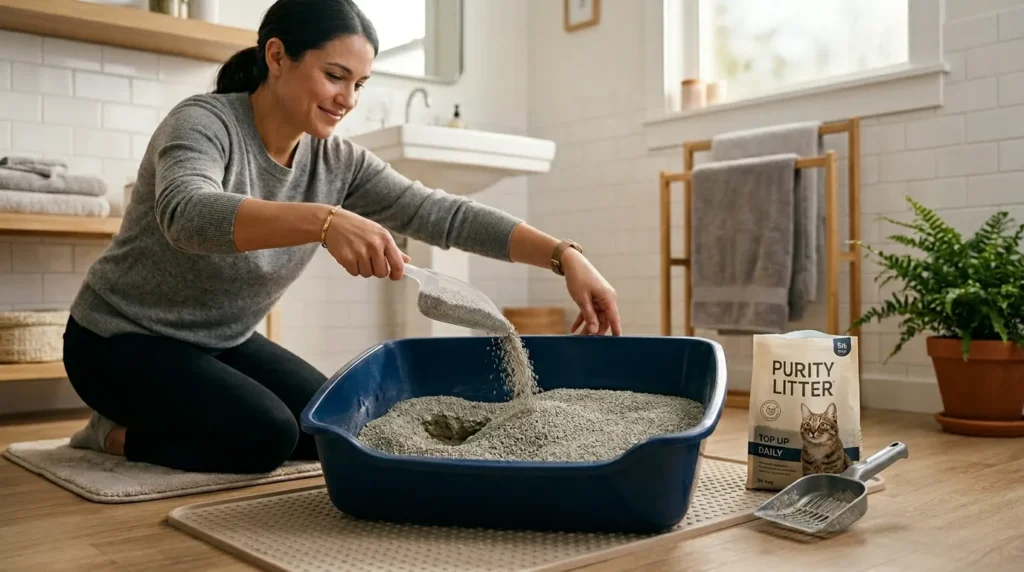
Litter maintenance is not just about scooping. It is about keeping the depth consistent every single day. Each time you scoop clumps and solid waste you remove litter volume. A box that started at 3 inches drops to 2 inches after two or three days of daily scooping without a top-up. At 1.5 inches the box starts failing your cat regardless of how clean it is.
The fix is straightforward. After every scoop add a small amount of fresh litter to restore the original depth. This takes ten seconds and a quarter cup of litter. It keeps the box performing consistently without requiring a full change more than once every one to two weeks for most cats.
According to the Ohio State University Indoor Pet Initiative, consistent litter box maintenance is directly linked to whether cats continue using their boxes reliably. The depth matters as part of that consistency not as a one-time setup decision.
A full litter change every one to two weeks removes the compacted old litter that collects at the box bottom regardless of daily scooping. Wash the box with mild soap and water during each full change. Replace plastic litter boxes every six to twelve months because microscratches from scooping trap bacteria that cleaning does not fully remove and the box itself starts to smell to your cat even when it looks clean to you.
Insight One thing I noticed over years of managing a litter box is that the depth matters more in warmer months. Higher temperatures accelerate odor production in the litter and a thinner layer of litter provides less buffering against that smell. During summer I consistently maintain depth closer to 3 inches rather than 2 and it makes a noticeable difference in how long the box stays fresh between scoops.
The Litter Depth Mistakes That Cause Box Avoidance
The most common depth mistake is not filling the box enough. Most owners pour litter by sight and consistently underestimate how much two to three inches actually looks like in a large box. The result is a cat that hits the box bottom during digging and either stops using the box or eliminates just outside it where the floor feels more stable underfoot.
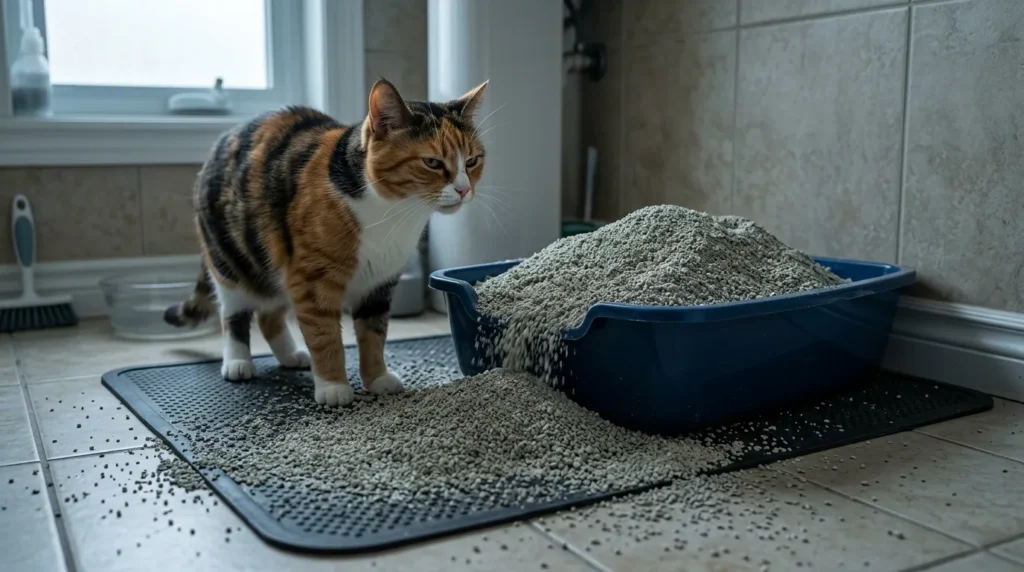
The second mistake is overfilling. Beyond four inches litter scatter increases dramatically because the cat displaces a larger volume during digging. That extra litter ends up on the floor around the box rather than inside it. The box also becomes harder to scoop evenly because the deeper bottom layer compacts into a dense mass that resists the scoop. More litter in the box does not mean better performance. It means more mess and faster wear of your litter supply.
The third mistake is letting depth drop between full changes without topping up. An owner who scoops diligently but never adds fresh litter between changes watches the depth slowly fall from three inches down to one inch over two weeks. The cat experiences a progressively worse box environment every day. The owner wonders why the cat is suddenly having issues when nothing changed. The depth changed. That is the issue.
When Litter Depth Is Not the Problem and a Vet Visit Is?
A cat that avoids the litter box after you have corrected the depth, cleaned the box and confirmed the placement is quiet and accessible may be showing medical symptoms rather than behavioral ones. Even if you’ve already figured out how deep should cat litter be, ongoing issues at this stage usually point to a health concern rather than a setup problem. Urinary tract infections, kidney disease, bladder crystals and diabetes all produce litter box changes that look exactly like a preference problem from the outside.
Watch for a cat that visits the box frequently but produces very little or nothing each time. In male cats this pattern combined with crying or straining indicates a potential urinary obstruction which is fatal within twenty-four to forty-eight hours without emergency treatment. Do not adjust the litter depth. Go to the vet immediately.
Blood in the litter, unusually strong-smelling urine or a dramatic change in how much your cat drinks and urinates warrants a vet appointment within the week rather than continued home adjustments.
This article is for informational purposes only. Always consult your vet if you have concerns about your cat’s health.
Frequently Asked Questions About Cat Litter Depth
How deep should cat litter be in inches?
Most cats do best with 2 to 3 inches of litter. Clumping clay litter works best at 3 to 4 inches because it needs enough mass to form firm scoopable clumps. Long-haired cats and kittens do better at 1.5 to 2 inches to prevent litter from matting into fur and to make navigation easier.
What happens if cat litter is too shallow?
A cat that hits the box bottom while digging often stops using the box or eliminates beside it rather than inside it. Shallow clumping litter also forms flat urine pancakes that stick to the box bottom instead of lifting out cleanly which makes maintenance harder and increases odor faster.
Can cat litter be too deep?
Yes. More than four inches causes excessive scatter as the cat displaces a larger volume during digging. The bottom layer also compacts into a dense mass that scoops poorly. Deeper litter does not improve odor control or clumping performance beyond three to four inches and creates more mess than it solves.
How often should I add fresh litter to maintain the right depth?
Top up with fresh litter after every daily scoop to replace the volume removed. This keeps depth consistent without requiring a full change more frequently than every one to two weeks. A full box change with a wash using mild soap should happen every one to two weeks regardless of how clean the litter appears.
Does litter depth affect odor control?
Yes directly. Litter that is too shallow cannot absorb urine fully before it reaches the box bottom where it concentrates and produces stronger odor than properly absorbed waste. Maintaining 2 to 3 inches ensures the litter material does the full job of absorbing and neutralizing odor at the right depth. If odor problems persist despite correct depth and regular scooping consult your vet to rule out a urinary issue.
Conclusion
The answer to how deep cat litter should be is 2 to 3 inches for most cats with clumping clay performing best at 3 to 4 inches. Adjust shallower for long-haired cats, kittens and seniors and slightly deeper for large active breeds. Top up after every scoop to maintain consistent depth between full changes. Start today by pushing your finger into your current litter to check the depth. If you feel the box bottom before your second knuckle it is time to add more. For the complete guide to box size, type and placement visit our guide on where to put a litter box in a small apartment to pair depth with the right location for your cat.
Cat litter should be 2 to 3 inches deep for most adult cats. Clumping clay litter performs best at 3 to 4 inches to form firm scoopable clumps. Long-haired cats and kittens do better at 1.5 to 2 inches to prevent fur matting and improve navigability. Large breeds need 3 to 4 inches to compensate for body weight compressing the litter surface. Litter depth should be topped up after every daily scoop to maintain consistency. Litter that is too shallow causes box avoidance and urine pancaking at the box bottom. Litter deeper than 4 inches causes excessive scatter without improving performance.