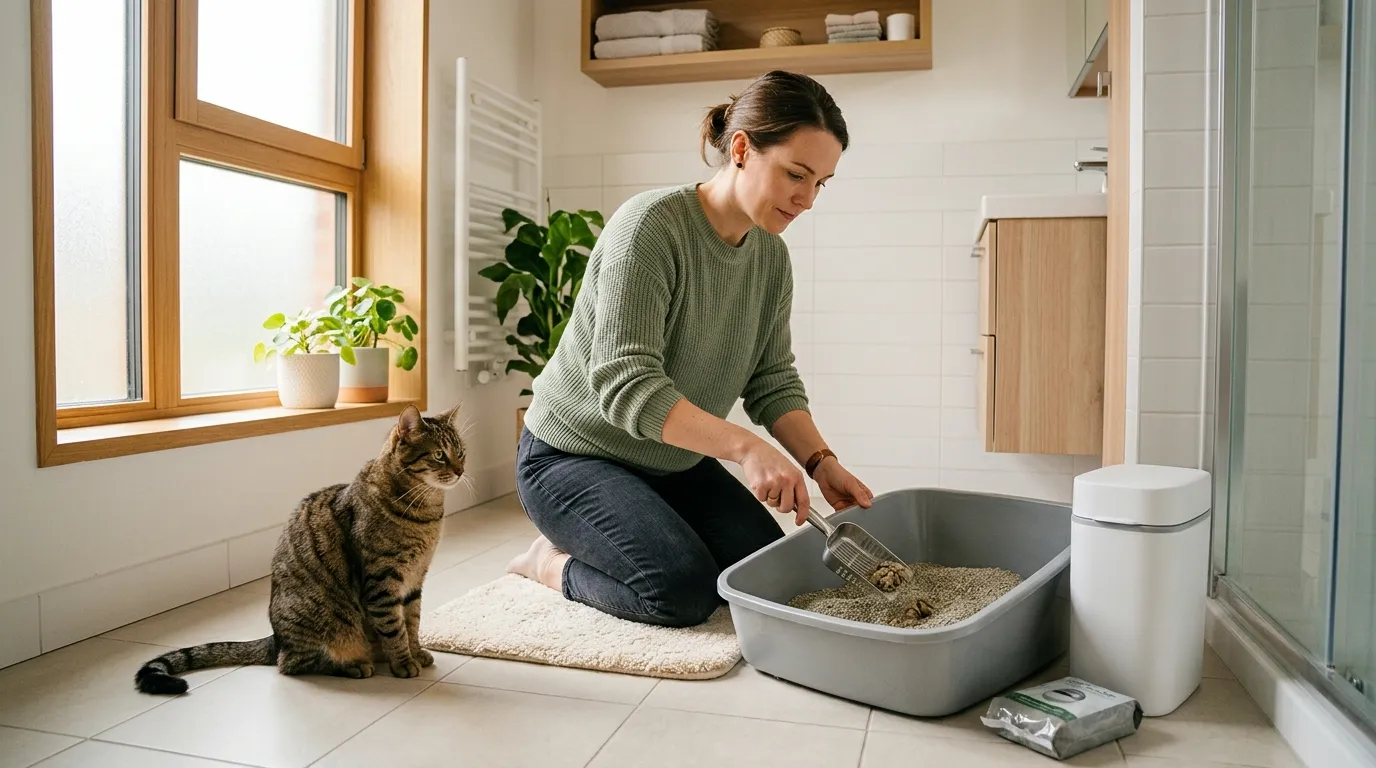
Your cat walked to the litter box, sniffed it and walked away. Then it went on the bathroom rug instead. That specific sequence is how most owners discover their scooping schedule is not frequent enough. I went through exactly this before I committed to scooping every single morning without exception and the avoidance stopped within two days. Knowing how often you should scoop the litter box is one of the most practical things you can do for your cat’s health and your apartment’s air quality. This article covers the exact scooping frequency for single cats and multiple cats, what changes between litter types and how often should you scoop litter box that actually sticks.
Scoop the litter box at least once every day for a single cat and twice daily for two or more cats. Once daily is the minimum acceptable frequency. Twice daily is the standard that keeps odor controlled, litter depth consistent and your cat reliably using the box. Scooping less than once a day leads to litter box avoidance in most cats within days.
Why How Often You Scoop the Litter Box Changes Everything?
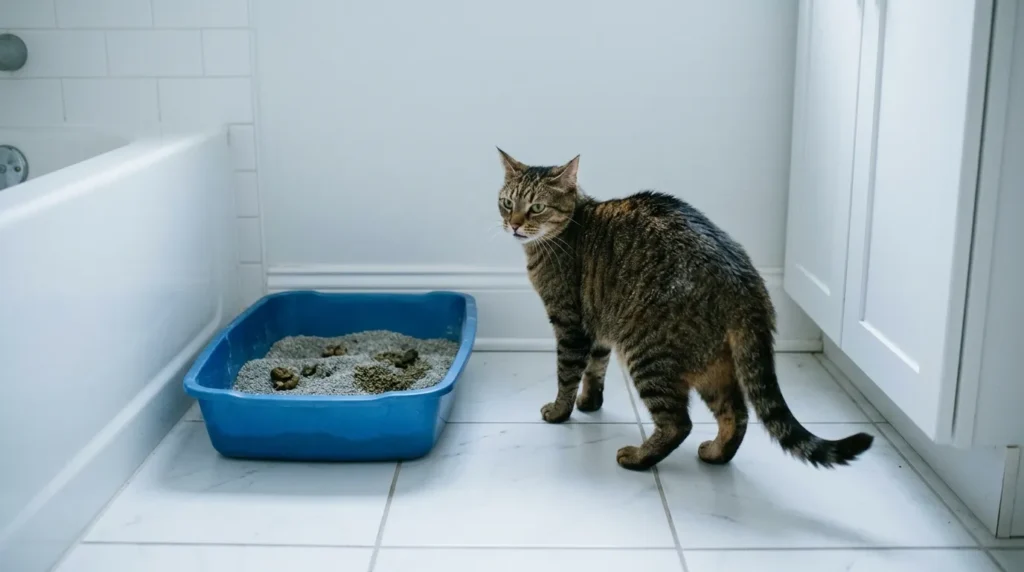
Cats avoid dirty litter boxes not out of stubbornness but because of how powerfully their sense of smell processes ammonia. A cat’s nose is fourteen times more sensitive than a human’s. What smells mildly off to you after a day without scooping registers as genuinely overwhelming to your cat standing inside the box.
Daily scooping is the single maintenance habit with the most direct impact on whether your cat uses the litter box consistently. Remove waste before ammonia builds and your cat has no reason to look elsewhere. Let it accumulate and even the most cooperative cat starts making other choices. Those choices almost always involve your floor, your bath mat or a corner of a room you rarely check.
Scooping also functions as a daily health check. Each time you scoop you see the size, frequency and appearance of urine clumps and solid waste. Small clumps appearing more frequently than usual can signal a urinary tract infection. Dramatically larger or looser stools warrant a vet conversation. You catch these signals only when you scoop daily because the baseline is something you have seen hundreds of times before.
Insight The best habit I ever built around litter box maintenance was scooping at the same time I made my morning coffee. The coffee takes four minutes to brew. The litter box takes two. By the time I pour the first cup the box is done. Tying scooping to an existing habit removes the decision entirely and means it never gets skipped.
How Often Should You Scoop Litter Box With Multiple Cats?
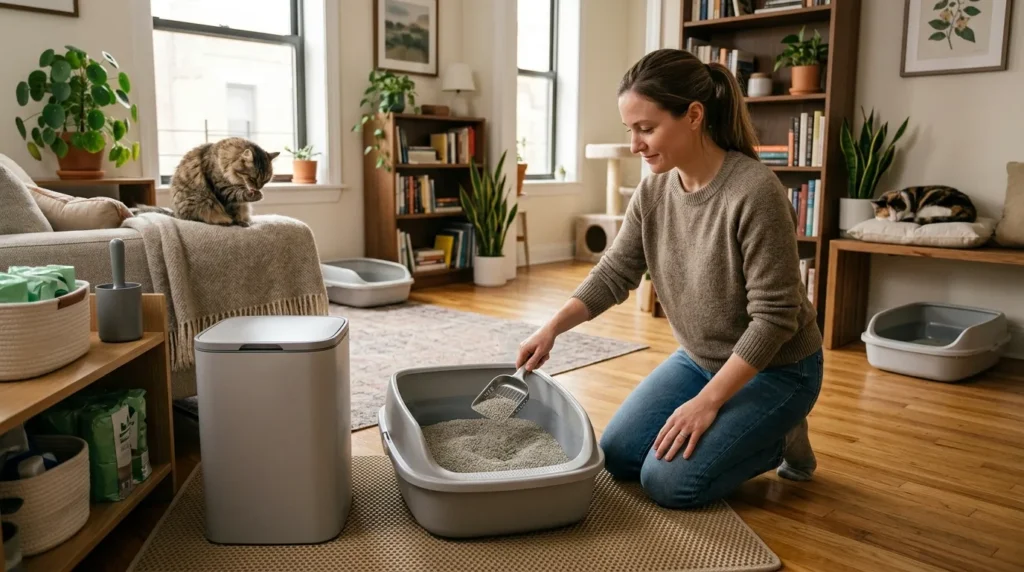
Two or more cats require twice daily scooping as the baseline rather than as an upgrade. Each additional cat adds waste volume, odor buildup and the probability that one cat will encounter a box that another just used and find it unacceptable. Cats are solitary eliminators by instinct. Sharing a recently used box registers as a territorial intrusion to many cats even in households where the cats otherwise get along well.
The frequency guide by household size looks like this:
| Number of Cats | Number of Boxes | Scooping Frequency |
| 1 cat | 2 boxes | Once daily minimum |
| 2 cats | 3 boxes | Twice daily |
| 3 cats | 4 boxes | Twice to three times daily |
| 4+ cats | 5+ boxes | Three times daily or more |
Spread the scooping across morning and evening rather than doing both passes back to back. A box scooped at 7am and again at 9am achieves nothing compared to one scooped at 7am and then again at 7pm. The twelve-hour interval between passes is what keeps the box acceptable throughout the day for all cats.
In a multi-cat apartment the N plus one rule applies to placement as well as number. Two boxes in the same bathroom of a two-cat household functionally count as one location to both cats. Spread boxes across genuinely different rooms so no single cat can monitor all boxes from one position. For the complete guide on how to set up the right number of boxes and where to place them check our detailed resource on indoor cat litter box setup.
The Complete Scooping Routine That Takes Under 5 Minutes
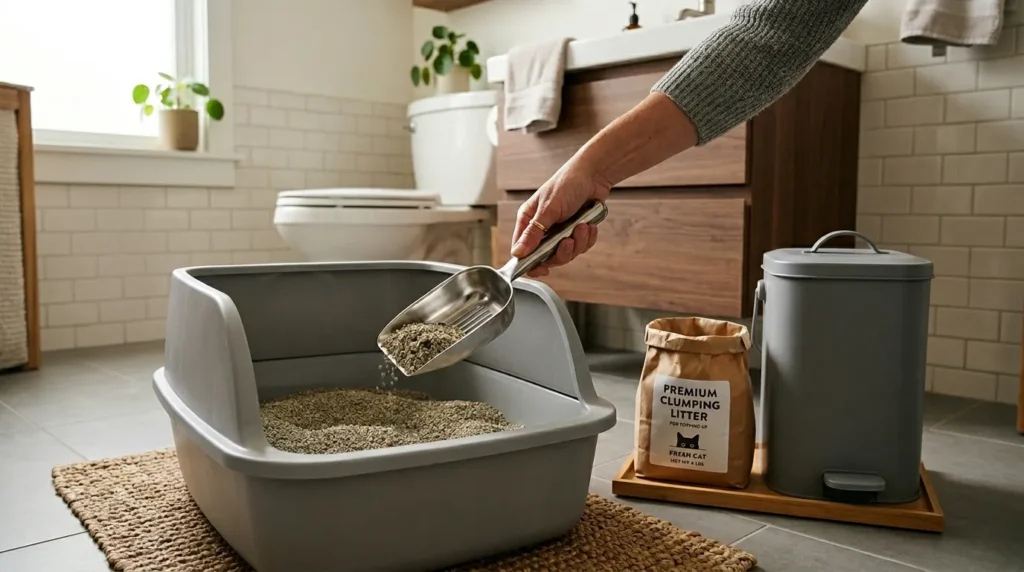
A proper scooping session follows four steps that together take under five minutes and extend the life of your litter significantly between full changes.
Step one: Scoop all visible solid waste and every urine clump completely out of the box. Use a metal scoop rather than plastic because metal slots are smaller and catch finer clumps more completely. Plastic scoops flex under pressure and miss pieces that break apart and fall back into the litter.
Step two: Seal the waste in a bag or drop it into a dedicated litter disposal container. Dropping loose scoopings into an open bin releases ammonia into the room for hours afterward. A container with a carbon filter or a sealed lid containing waste bags stops the odor immediately.
Step three: Top up with fresh litter to restore the correct depth. Each scooping session removes volume. Without topping up the box drops from three inches to two inches over days and eventually to an inch and a half where the cat hits the box bottom during digging. Add a small measured amount of fresh litter after every scoop.
Step four: Give the box surface a quick level with the scoop. An even litter surface is more appealing to most cats than a lumpy uneven one left from previous dig marks. This thirty-second step takes no extra effort and makes the box look and feel fresh to your cat.
How Scooping Frequency Changes by Litter Type?
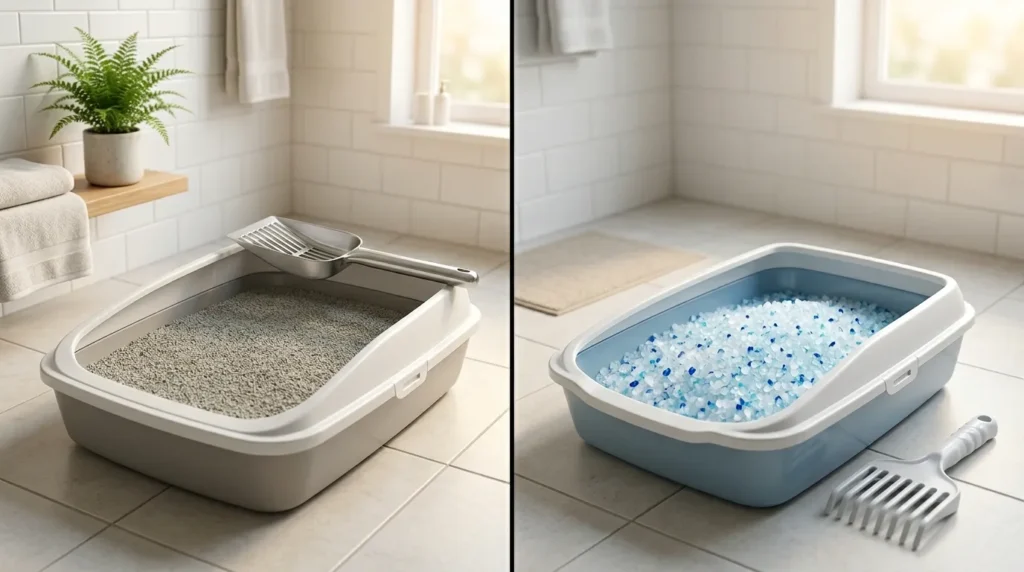
Clumping clay litter requires daily scooping without exception because the clumping mechanism only functions correctly when clumps are removed before they break apart or desiccate and release ammonia back into the litter. A clump left in the box for two days no longer scoops cleanly. It crumbles and leaves residue throughout the remaining litter which concentrates odor and degrades the performance of the entire box.
Crystal or silica gel litter absorbs urine rather than clumping it and technically tolerates a slightly different maintenance approach. However daily stirring to expose fresh crystal surfaces to the top layer and removal of solid waste still needs to happen every day. The waste drawer or tray of crystal systems requires a full change every two to four weeks depending on the number of cats using it.
Natural plant-based litters made from corn, wheat or tofu require daily scooping and more frequent full changes than clumping clay. These materials do not form the same firm clumps as bentonite clay and they break down faster under repeated use. Most natural litter manufacturers recommend a complete full change every one to two weeks rather than the two to three weeks that well-maintained clumping clay can sustain.
Here is a quick reference for scooping and full-change frequency by litter type:
| Litter Type | Scoop Frequency | Full Change Frequency (1 cat) |
| Clumping clay | Daily minimum | Every 2 to 3 weeks |
| Crystal / silica gel | Daily stirring and solid removal | Every 2 to 4 weeks |
| Natural plant-based | Daily | Every 1 to 2 weeks |
| Non-clumping clay | Daily solid removal | Every 1 to 2 weeks |
According to the American Association of Feline Practitioners, daily litter box maintenance is a core welfare requirement for indoor cats not an optional extra. Skipping days creates a measurable impact on cat stress and litter box reliability even in cats that appear otherwise tolerant of less frequent cleaning.
What Happens When You Skip Scooping for Even 2 Days?
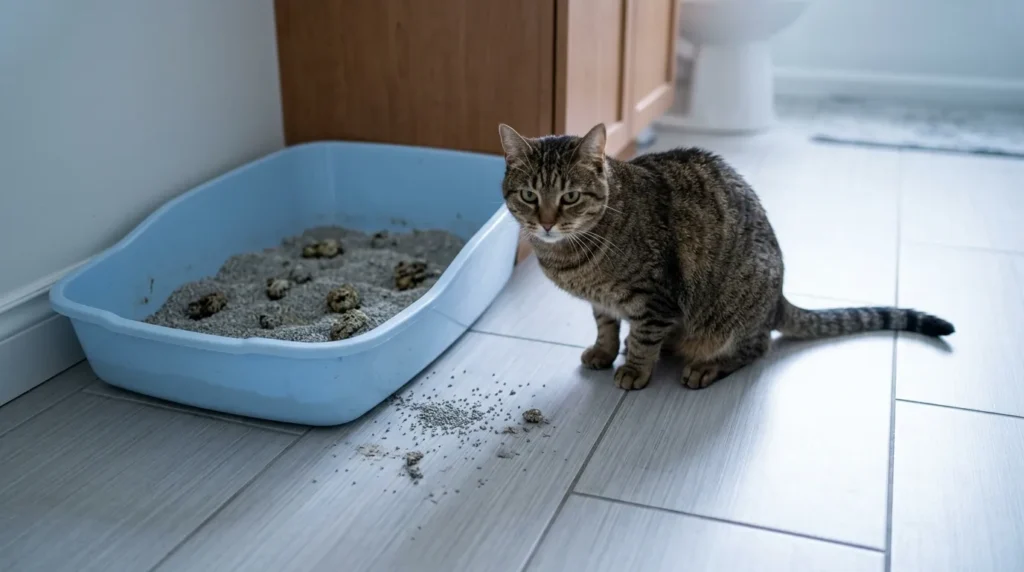
Litter box avoidance begins faster than most owners expect when scooping lapses. Most cats start showing preference for other elimination spots within two to three days of daily scooping stopping. By day four the pattern has often become habitual and takes active retraining to reverse even after the box is fully cleaned.
Ammonia builds in unscooped boxes because urea in cat urine breaks down into ammonia over time. The process accelerates in warm weather when higher temperatures speed bacterial activity. A box skipped for two summer days produces more ammonia than one skipped for three winter days. Owners in warmer climates often need to increase scooping frequency beyond once daily during summer months to maintain the same box quality their cats experienced through winter.
Odor control in a small apartment relies almost entirely on scooping frequency rather than on litter type or box design. The most expensive clumping litter in the most aesthetically impressive furniture enclosure still builds ammonia if it goes three days without scooping. The litter and the box are tools. The scooping is the work that makes those tools function.
Insight Two days without scooping is where most cat behavior problems silently begin. The owner does not notice the smell increasing gradually. The cat does. By the time the owner smells something the cat has already been uncomfortable for a day and is already reconsidering its options. Daily scooping prevents the problem from ever reaching that point.
The Scooping Mistakes That Undermine Your Whole Setup
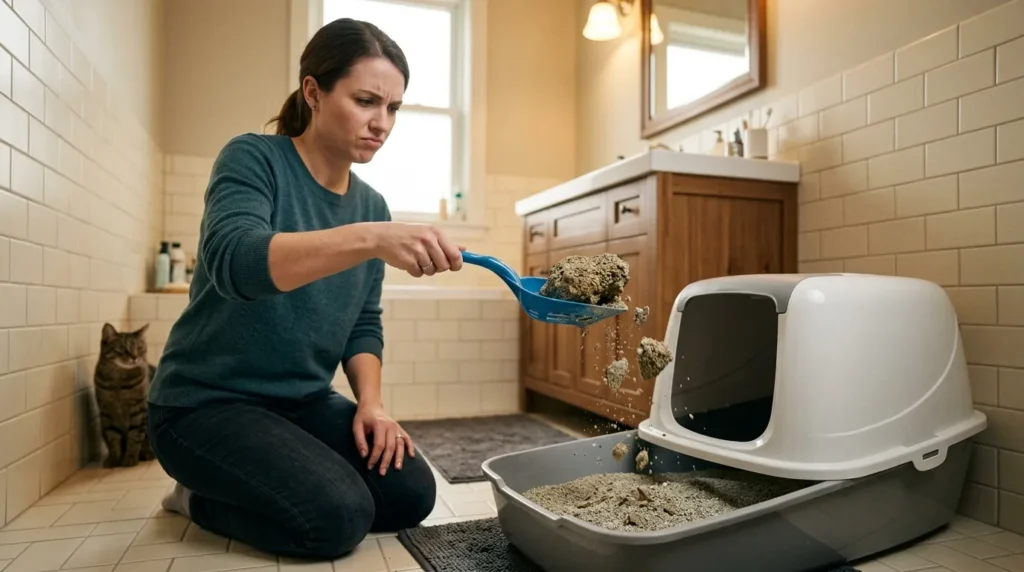
The most common scooping mistake is using a plastic scoop. Plastic scoops flex under pressure and allow clumps to break apart as you lift them. Fragments fall back into the litter where they continue to release ammonia rather than being removed. A metal scoop with small slots lifts even imperfect clumps cleanly because the rigid frame does not bend under the weight of wet litter.
The second mistake is scooping without topping up. Owners who scoop diligently but never add fresh litter watch their boxes slowly thin out from three inches to one inch over two weeks. At one inch the box fails the cat even though the owner is scooping every day. The scooping removes volume. The topping up restores it. Both steps are required.
The third mistake is treating the full litter change as a substitute for daily scooping. An owner who empties and refills the entire box every five days instead of scooping daily is cleaning more total litter but providing a worse experience for the cat. The cat lives with five days of accumulating waste between changes. Five days of daily scooping gives the cat a clean box 35 times instead of 7 times at the same total litter cost.
When Litter Box Issues Need a Vet Call?
Sudden changes in litter box use after a consistent scooping routine is already in place are almost always medical signals rather than behavioral ones. A cat that was using the box reliably and begins going elsewhere despite a clean box may have a urinary tract infection, kidney disease or diabetes. First confirm the box is genuinely clean and in an accessible quiet location then book a vet appointment within the same week if the avoidance continues.
Watch for a cat making multiple trips to the box within an hour and producing little or nothing each time. In male cats this pattern combined with straining or crying indicates a possible urinary obstruction which becomes fatal within twenty-four hours without treatment. Do not continue monitoring or adjusting the scooping routine. Go to the vet immediately.
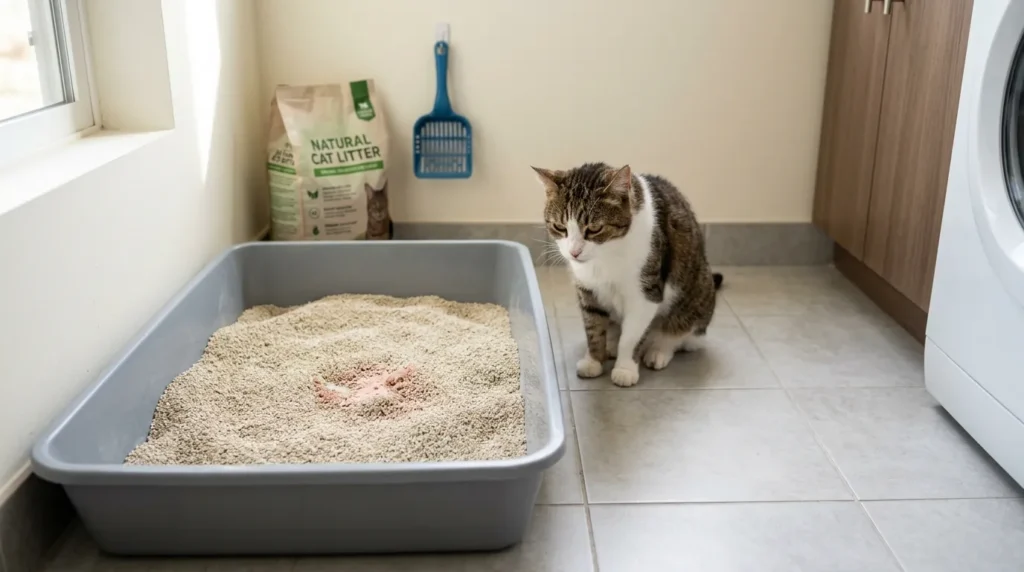 Blood visible in the litter or urine that smells dramatically stronger than usual warrants a same-week vet appointment. These are signs of a health condition that no amount of cleaning or scooping frequency will resolve on its own.
This article is for informational purposes only. Always consult your vet if you have concerns about your cat’s health.
Frequently Asked Questions About Litter Box Scooping
How often should you scoop a litter box for one cat?
Scoop at least once daily for a single cat. Twice daily is better if your cat is sensitive to box cleanliness or if you live in a warm climate where ammonia builds faster. Once daily done consistently prevents avoidance in most single-cat households when the box is properly sized and in the right location.
Is it okay to scoop the litter box every other day?
Every other day is the minimum that some cats tolerate short-term but it is not a sustainable routine. Most cats begin showing litter box avoidance within two to three days of daily scooping stopping. Every-other-day scooping provides a dirty box experience on alternating days that gradually erodes the cat’s willingness to use it consistently.
How often should you completely change the cat litter?
Completely change clumping clay litter every two to three weeks for a single cat when you scoop daily and top up consistently. Natural plant-based litters need full changes every one to two weeks. Crystal litters need tray changes every two to four weeks. If your cat’s waste has unusual color consistency or smell during a full change consult your vet before assuming it is a litter issue.
Does scooping frequency affect litter box odor?
Yes directly. Scooping frequency is the primary driver of litter box odor in an apartment. Litter type box design and air fresheners contribute marginally. Daily scooping prevents ammonia from forming in the first place. Products that cover odor without removing waste do not work because ammonia buildup continues under the fragrance layer.
Should you scoop the litter box after every use?
Scooping after every single use is not necessary for most cats though it genuinely helps in multi-cat households where one cat is particularly fastidious. Twice daily scooping achieves approximately the same odor control result for most households at a fraction of the effort. Cats that reject the box after every use may have a medical condition worth discussing with a vet.
Conclusion
Scoop the litter box once daily for one cat and twice daily for two or more. Use a metal scoop and top up with fresh litter after every session to maintain correct depth. Tie scooping to an existing daily habit so it becomes automatic rather than a decision you make each day. Start today by choosing a specific time for your first daily scoop and committing to it for one week. Pair this habit with the right litter depth and placement by reviewing our guide on where to put a litter box in a small apartment.
Scoop the litter box at least once daily for one cat and twice daily for two or more cats. Scooping less than once per day causes ammonia buildup that leads to litter box avoidance in most cats within two to three days. Use a metal scoop to remove all clumps completely and top up with fresh litter after every session to maintain 2 to 3 inch depth. Clumping clay litter requires full changes every two to three weeks with daily scooping. Crystal and natural litters need full changes every one to four weeks depending on the number of cats and usage volume.