
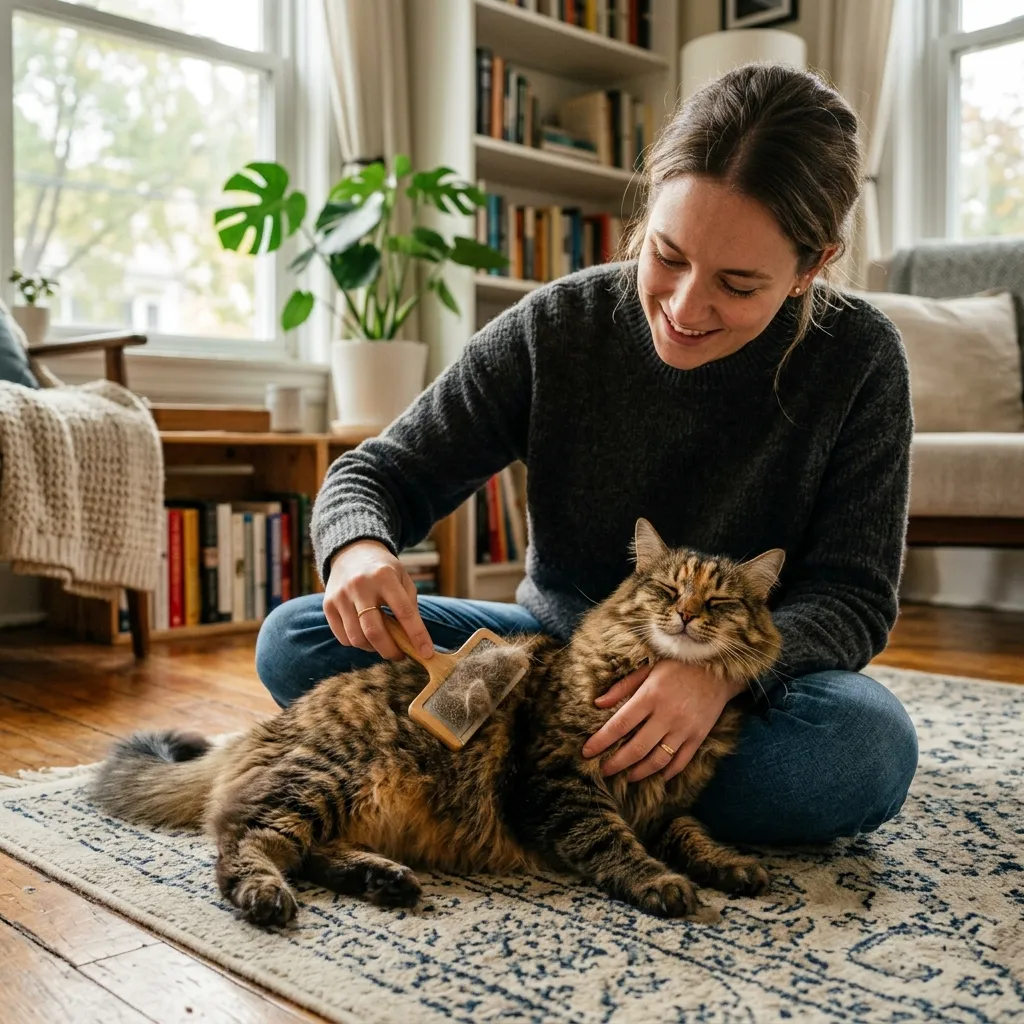
Finding a solid mat behind my cat’s ear after skipping a week of brushing was exactly the kind of avoidable problem that taught me just how much coat type determines everything about how often to brush indoor cat. It was not a long-haired cat. It was a medium-haired cat I had been treating like a shorthair and that was the mistake. The answer to brushing frequency is not one number and it is not one tool. It changes based on your cat’s fur length, her age, how much she sheds year-round in your climate-controlled apartment and whether she is still grooming herself effectively. This article gives you the exact schedule by coat type and life stage, the right tools, how long each session should run and the technique that makes cats actually tolerate it.
How often to brush indoor cat: short-haired cats need one to two sessions per week. Medium-haired cats need every two to three days. Long-haired cats need daily brushing to prevent mats. Kittens do best with a gentle one to two minute session daily, and senior cats often need brushing bumped up as self-grooming gets harder with age. Indoor cats shed year-round due to stable artificial lighting, so the schedule stays consistent across seasons rather than spiking only in spring or fall, though a light seasonal increase is still worth doing.
Quick Answer: Indoor Cat Brushing Frequency at a Glance
- Short hair: 1 to 2 times per week, 5 to 10 minutes per session
- Medium hair: every 2 to 3 days, 5 to 10 minutes per session
- Long hair: daily, 5 to 15 minutes per session
- Kittens: daily, 1 to 2 minutes, focused on getting them used to the brush
- Senior cats: increase frequency regardless of coat type as mobility and self-grooming decline
- Shedding season (even indoors): add one extra session per week for 3 to 4 weeks
How Often to Brush Your Indoor Cat Based on Coat Length?

How often to brush indoor cat is almost entirely determined by how long and dense the fur is rather than by breed name alone. The coat type sets the baseline schedule and everything else, including age, shedding level and health, adjusts around it.
| Coat Type | Brushing Frequency | Session Length | Primary Tool |
| Short hair | 1 to 2 times per week | 5 to 10 minutes | Rubber brush or grooming glove |
| Medium hair | Every 2 to 3 days | 5 to 10 minutes | Slicker brush or soft bristle brush |
| Long hair | Daily | 5 to 15 minutes | Wide-tooth comb plus slicker brush |
Short-haired indoor cats are strong self-groomers and their tongue removes most loose fur without help. One or two sessions per week keeps shedding manageable on furniture and removes the dead skin and dander that builds up in a sealed apartment. Skipping weeks at a time still leads to an accumulation you will notice on your couch and clothes even with a shorthair.
Long-haired cats like Persians and Maine Coons living indoors require daily attention because their fine undercoat tangles within days in a climate-controlled environment where humidity stays constant and there is no outdoor breeze or rough surface to naturally work through the fur. Missing two or three days in a row with a long-haired cat often means spending time working out knots rather than brushing freely, and a neglected long coat can mat so tightly it pulls the skin.
A session does not need to run long to work. Five to ten minutes covers a short or medium coat completely once your cat is used to the routine. Long coats can run closer to fifteen minutes, especially through the legs, tail and the collar area where friction builds fastest. If you are still fighting the brush past the ten minute mark, stop and split the coat across two shorter sessions instead of forcing one long one.
How Often to Brush an Indoor Cat by Age and Life Stage
[Image placeholder: kitten being introduced to brushing next to a senior cat receiving a gentle grooming session, side by side in an apartment setting]
Coat length sets the baseline, but age changes the schedule on top of it. A kitten and a senior cat with the same coat type do not need the same routine, and treating every adult cat the same way regardless of life stage is a second version of the mistake I made with my medium-haired cat.
| Life Stage | Brushing Frequency | Why |
| Kitten (under 1 year) | Daily, 1 to 2 minutes | Builds a positive association with the brush before her adult coat and adult opinions come in |
| Adult (1 to 10 years) | Per coat-type schedule above | Full self-grooming ability, so brushing supplements rather than replaces it |
| Senior (10+ years) | Increase by one extra session per week, any coat type | Arthritis and reduced flexibility make self-grooming harder, especially over the hips and lower back |
Start brushing kittens as early as eight weeks old, even before shedding becomes a real issue. The goal at this stage is not coat maintenance. It is training. A kitten who gets a gentle brush and a treat every day grows into an adult who does not fight you over it. Keep kitten sessions short, under two minutes, and end before she loses interest rather than after.
Senior cats need the opposite adjustment. A cat who groomed herself perfectly well for eight years can develop stiff hips or a sore lower back that makes twisting around to reach her flank or tail base uncomfortable. If you notice mats appearing in a cat who never used to get them, age-related mobility is a more likely explanation than a sudden coat change. Step in with more frequent, gentle sessions rather than assuming something else is wrong first, though a vet check is still worth it if the change is sudden.
Why Indoor Cats Need More Consistent Brushing Than Outdoor Cats?
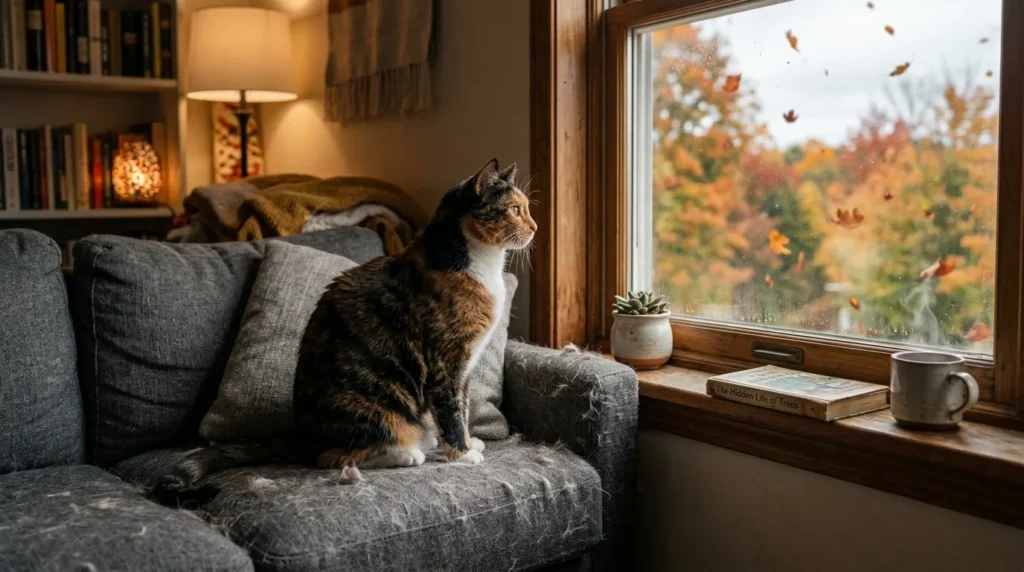
Outdoor cats shed heavily in spring and fall as daylight changes trigger hormonal shifts that drive seasonal shedding. Indoor cats living under artificial lighting experience a muted version of those cycles but shed a smaller amount consistently throughout the entire year instead. That steady year-round shedding means brushing cannot be a seasonal project the way it might be for cats with outdoor access.
Stable indoor temperatures also mean your cat never gets the natural coat-blow that outdoor cats experience when weather shifts dramatically. Without that external trigger, the coat transitions happen more slowly and loosely, spreading the shedding across months rather than concentrating it. Regular brushing replaces the environmental signals that outdoor life provides automatically.
That said, “consistent” does not mean “identical every single week.” A window-facing apartment still lets in enough natural light change to trigger a mild coat shift in spring and fall, even without outdoor exposure. If you notice more fur than usual in the brush for two or three weeks around those seasonal turns, add one extra session per week until it settles back down. That is a small adjustment, not a schedule overhaul.
Understanding your cat’s overall indoor cat health picture helps you connect coat condition to nutrition, hydration and internal health rather than treating brushing as a standalone task. A dull coat, excessive shedding or a greasy feel can all point to something beyond just needing more frequent brushing.
The Right Tools for Each Indoor Cat Coat Type
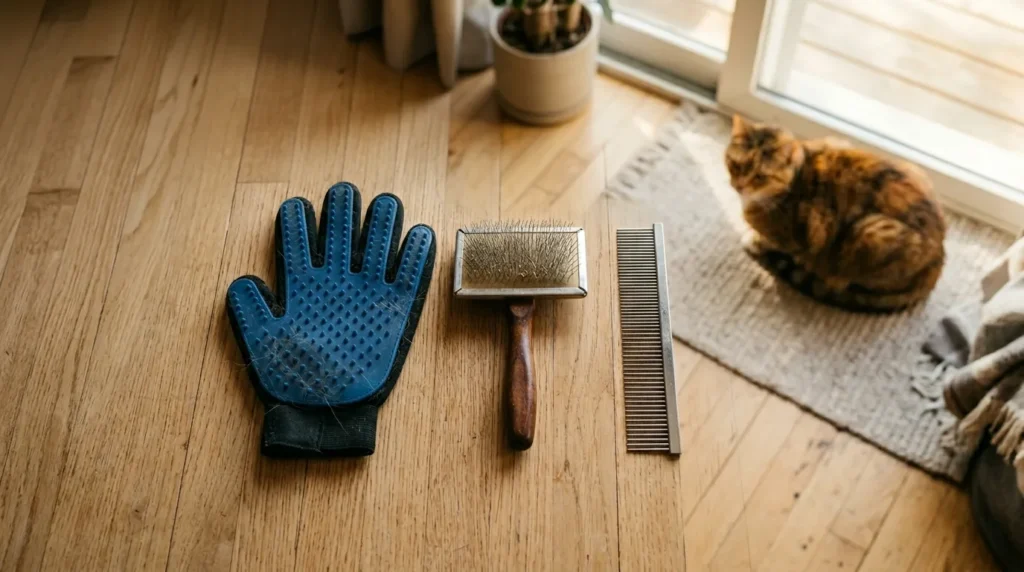
Short-haired indoor cats respond well to a rubber grooming glove or a soft rubber brush with rounded nubs. These tools feel like petting, and most shorthaired cats who resist traditional brushes will accept a glove without issue. The rubber collects loose fur through static attraction and the massaging sensation distributes natural oils across the coat at the same time.
Medium-haired cats need a slicker brush with fine wire pins to reach through the topcoat and lift fur from the underlayer. Press gently. The pins do not need to drag across the skin to be effective, and pressing too hard causes a skin irritation called brush burn that makes cats dread future sessions. The goal is light contact with the undercoat, not force.
Long-haired cats need two tools used in sequence: a wide-tooth comb first to find tangles before they tighten, and a slicker brush second to finish the surface and collect loose fur. Always start combing from the tip of the fur and work toward the body in sections. Starting at the root and pulling outward turns a small tangle into a painful ripping motion that your cat will remember and punish you for later.
A dedicated deshedding tool, the kind with a metal comb edge that pulls loose undercoat out in sheets, is a different device with a different schedule than your everyday brush. It is more aggressive by design, so limit it to once a week, or every other week for a short-haired cat, and never use it as your daily tool. Daily deshedding tool use is the fastest way to cause brush burn and thin out a healthy topcoat.
How to Brush an Indoor Cat That Tolerates It Poorly?
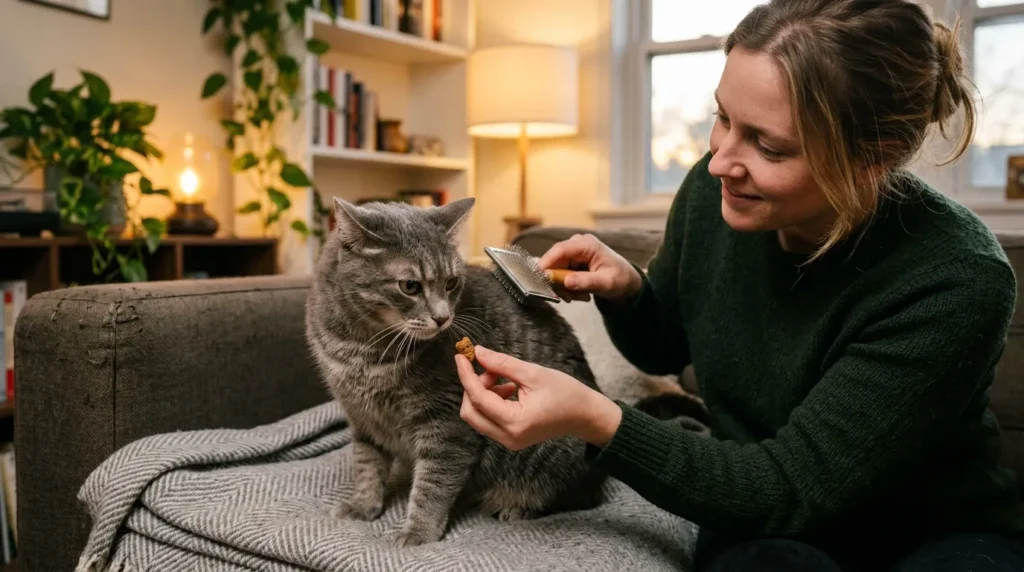
Most indoor cats who resist brushing were either never introduced to it properly or had a painful experience, usually from too much pressure or a session that went on too long. Start with sessions of only two minutes and reward immediately after with a high-value treat. The goal at first is not a thorough brushing but a positive association with the brush appearing.
Begin on the areas cats are least sensitive: the back and shoulders. Avoid the belly, armpits and base of the tail in early sessions because those are the spots most cats find uncomfortable. Once your cat is tolerating back brushing without tensing, you can slowly introduce other areas over several sessions rather than in a single sitting.
A full step-by-step guide to grooming your indoor cat at home covers the complete technique from first touch to finishing the face and tail. If your cat has been resistant for months, that detailed desensitization approach is worth following from the beginning rather than improvising.
Worth Knowing: The single biggest mistake people make when brushing a resistant cat is pushing through when the cat signals discomfort. A twitching tail, flattened ears or a low growl means stop now and end the session positively with a treat. Ending on a bad moment sets the next session up to fail before you even pick up the brush.
Why Brushing Does More Than Just Manage Shedding?

Regular brushing sessions serve as an informal health screening every time you do them. Running a brush through the coat gives you contact with the skin beneath, and that contact reveals lumps, scabs, thinning fur, parasites or unusual warmth that you would never notice by simply looking at your cat from across the room. According to the American Veterinary Medical Association, routine home physical checks that happen during grooming are one of the most effective tools owners have for catching health changes early.
Hairball prevention is the other major benefit that owners consistently undervalue. Indoor cats who self-groom swallow loose fur throughout the day, and that fur accumulates in the stomach. Regular brushing removes the loose fur before your cat swallows it, and that reduction in ingested fur directly reduces the frequency of hairballs. The benefit is not dramatic after a single session but becomes clearly noticeable after several weeks of consistent brushing.
Brushing also cuts down on airborne dander, which matters if anyone in the household deals with cat allergies. Loose fur and the dander riding on it are a major source of the allergen that triggers reactions, and pulling that fur out with a brush over the trash or a towel keeps a large share of it from ever settling into carpet, bedding and air vents in the first place. It will not eliminate allergies, but a consistent brushing routine measurably cuts down on what is circulating in a closed indoor space.
Understanding your cat’s grooming behavior patterns also tells you when something is changing. A cat who suddenly over-grooms one spot or stops grooming a section she normally maintains is showing you a behavioral signal worth paying attention to.
The Grooming Mistake That Leads to Painful Mats
The most common mistake indoor cat owners make is treating a medium or long-haired cat the same way they would treat a shorthair. It looks manageable for weeks until it suddenly is not. Mats form fastest in friction zones: behind the ears, in the armpits, at the base of the tail and along the backs of the legs, areas that your cat’s own tongue cannot easily reach. By the time you feel a mat with your fingers it has usually been tightening for several days already.
Never use scissors to cut out a mat yourself. Cat skin is loose and thin, and it folds into mats in a way that makes it almost impossible to see where the fur ends and the skin begins. Cutting toward a mat is how cats end up with accidental lacerations that need a vet visit. If a mat is too tight to work out with a comb and your fingers, take your cat to a professional groomer who has the right tools and the experience to remove it safely.
Good litter box habits and a proper feeding routine both support coat health from the inside. A cat on a low-quality diet with poor hydration shows it in the coat long before it shows anywhere else.
When Brushing Changes Tell You Something Is Wrong?
A sudden change in how your cat tolerates brushing warrants attention. A cat who was previously calm during sessions and suddenly flinches, vocalizes or moves away during contact on a specific area may be experiencing pain or skin sensitivity in that spot. Do not push through it. Examine the area, and if you see redness, swelling or unusual heat, contact your vet.
Excessive shedding beyond your cat’s normal baseline, clumps of fur coming out with minimal pressure, or a coat that looks dull and flat when it was previously shiny can all indicate nutritional deficiency, thyroid issues, kidney disease or stress. These are not grooming problems. They are health signals that a regular indoor cat care routine helps you notice because you have the baseline to compare against.
Senior cats who begin grooming themselves less effectively often need more frequent brushing sessions to compensate. A cat who has always maintained a clean coat but now looks unkempt may have arthritis making it painful to reach certain areas. Stepping in more consistently is one of the most practical ways to support an aging indoor cat’s comfort. Adding appropriate furniture and resting spots that do not require jumping also helps senior cats stay comfortable while you maintain their coat.
This article is for informational purposes only. Always consult your vet if you have concerns about your cat’s health.
Frequently Asked Questions About Brushing Indoor Cats
How often should I brush my short-haired indoor cat?
One to two times per week is the right frequency for most short-haired indoor cats. Their tongue handles most of the daily maintenance, but weekly brushing removes the dead fur that self-grooming misses and keeps shedding manageable on furniture. During any period of increased shedding, bump that up to three sessions per week for a few weeks.
Can I brush my indoor cat too much?
Yes. Using a slicker brush or deshedding tool more than a few times per week can cause brush burn on the skin from repeated friction or thin out the coat by removing fur before it is actually ready to release. Short daily sessions with a gentle rubber tool are fine, but aggressive deshedding tools should be limited to once or twice a week at most.
What if my indoor cat hates being brushed?
Start with a grooming glove rather than a brush because the sensation is closer to petting. Pair every session with a high-value treat offered immediately before and after. Keep sessions under two minutes initially and increase length only when the cat is visibly comfortable. Never force a session past when the cat signals it wants to stop.
Do indoor cats shed more than outdoor cats?
Not necessarily more, but more evenly throughout the year. Outdoor cats experience concentrated seasonal sheds driven by daylight changes. Indoor cats under artificial lighting shed a smaller amount consistently across all twelve months. This is why brushing an indoor cat is a year-round routine rather than a springtime project.
Should I brush my indoor cat before or after a bath?
Brush before bathing, not after. Brushing dry fur removes loose fur and works out any tangles before they tighten in water. Wet mats become nearly impossible to comb out without cutting, and they take much longer to dry, which can chill a cat or cause skin irritation. Brush first and then bathe if bathing is needed.
At what age should I start brushing my kitten?
Around eight weeks old, as soon as she is settled into your home. At this age it is about training rather than coat maintenance, since kittens do not shed heavily yet. A gentle one to two minute session daily, paired with a treat, gets her used to handling before her adult coat comes in and before she has formed any opinions about the brush.
Should I brush my indoor cat more during shedding season?
A little, yes. Indoor cats do not go through the dramatic seasonal blow that outdoor cats do, but light passing through windows still triggers a mild coat shift in spring and fall. If you notice more fur than usual in the brush for two or three weeks, add one extra session per week until it tapers off. That is a temporary bump, not a permanent change to the schedule.
How long should each brushing session last?
Five to ten minutes covers most short and medium coats once your cat is comfortable with the routine. Long coats can take closer to fifteen minutes, particularly around the legs, tail and collar where mats form fastest. New or resistant cats should start at one to two minutes and build up gradually rather than sitting through a full session on day one.
Does brushing my cat help with my allergies?
It helps, though it will not eliminate allergies on its own. A large share of cat allergen travels on loose fur and dander. Brushing regularly, ideally over a trash can or towel rather than on furniture, physically removes a good portion of that before it settles into carpet, bedding and air vents. Combine it with regular vacuuming and air filtration for the biggest effect.
What is the difference between a deshedding tool and a regular brush?
A regular brush, whether a slicker, bristle brush or rubber glove, is for everyday maintenance and can be used as often as your coat-type schedule calls for. A deshedding tool has a metal comb edge designed to pull loose undercoat out in bulk, and it is more aggressive on the skin. Limit it to once a week, or every other week for a short-haired cat, and never substitute it for daily brushing.
How often to brush indoor cat depends on coat length and life stage: short-haired cats need brushing one to two times per week, medium-haired cats every two to three days and long-haired cats daily, with sessions running five to fifteen minutes depending on coat length. Kittens do best with daily one to two minute sessions focused on training, and senior cats often need extra sessions as arthritis makes self-grooming harder. Indoor cats shed year-round due to stable artificial lighting rather than seasonally like outdoor cats, though a light seasonal uptick around spring and fall is normal and worth a temporary increase in frequency. Regular brushing prevents matting, reduces hairballs, cuts down on airborne dander for allergy sufferers, controls shedding on furniture and serves as a health screening for skin changes. A dedicated deshedding tool is more aggressive than a daily brush and should be used weekly or biweekly, not every day.

Written by Mishu
A passionate cat lover and indoor living enthusiast, Mishu is the founder and voice behind Indoor Living Cat – a go-to resource for cat owners who want to create the happiest, healthiest life for their feline companions indoors.
View Full Profile