
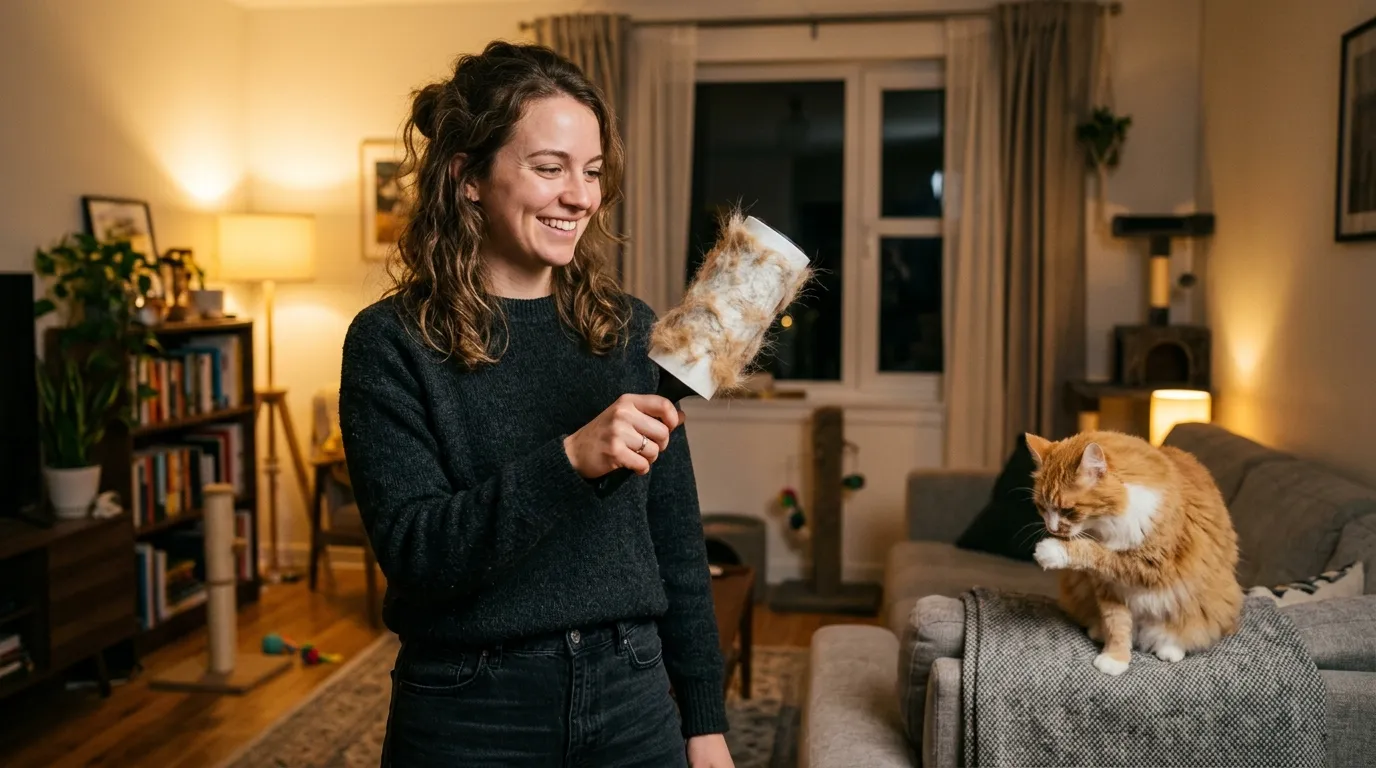
Finding a fur tumbleweed rolling across the kitchen floor every morning is one of those indoor cat realities nobody warns you about before you bring a cat home. Learning how to reduce cat shedding in the house took me a full season of lint rolling every black item I owned. What finally worked was going after the source of the fur instead of chasing it around the apartment.
This guide covers the changes that shrink the amount of fur you actually see: brushing by coat type, a diet that strengthens the coat, cleaner air, better furniture and vacuum choices, stress control, and the point where shedding needs a vet instead of a new brush. You’ll also find a weekly routine you can copy and a troubleshooting table for when nothing seems to work.
How to reduce cat shedding in house: brush your cat consistently based on coat type, upgrade to a high-protein diet with omega fatty acids, and add an air purifier to capture floating dander. These three changes hit the source, the strength of the hair, and the air. Everything else on this list is maintenance built around those three pillars.
How to Reduce Cat Shedding in House?

Year-round shedding in indoor cats happens because artificial lighting and stable HVAC temperatures disrupt the seasonal signals that would normally concentrate coat changes into two annual events. Outdoor cats shed heavily in spring and fall. Your apartment cat sheds a smaller amount continuously across all twelve months, because her body never gets a clear signal to switch modes.
You can’t stop this process, and trying to eliminate it entirely will exhaust you. The goal is to intercept fur before it spreads, strengthen the coat so hairs release less easily, and remove what does land before it works into your fabric. Shifting from “solve shedding” to “manage shedding consistently” is what separates owners who make progress from those who vacuum every weekend and get nowhere.
According to ASPCA feline care guidelines, a mix of grooming, nutrition, and environmental management works best for controlling fur in indoor cat homes. This shedding guide sits inside a bigger topic. If you want the full picture of daily routines beyond just fur, our daily indoor cat care pillar guide covers feeding, grooming, litter, and health together, and cuts the reactive cleaning burden by a lot.
Why Is Your Cat Shedding So Much Right Now?
Before you pick a fix, work out which kind of shedding you’re dealing with. A cat who has always left a light dusting on the sofa is different from a cat who suddenly leaves clumps. Match what you see to the likely cause:
| Likely Cause | What You’ll Notice | What to Do |
|---|---|---|
| Seasonal coat change | Heavier fur loss in spring or fall, even indoors, with a normal-looking coat underneath | Add a couple of extra brushing sessions a week until it settles |
| Diet not supporting the coat | Dull, dry coat, flaky skin, steady fur loss that never really lets up | Switch gradually to a named-protein food with omega-3 and omega-6 |
| Stress or boredom | Shedding jumps after a move, a new pet, or a schedule change | Daily play, hiding spots, a steady feeding routine |
| Fleas or skin allergies | Scratching, overgrooming, red or scabby skin, small dark specks in the coat | Vet visit and vet-approved flea control, since more brushing won’t fix this |
| Overweight or older cat | Greasy or matted fur on the back and hips where she can’t reach | Brush those areas for her and talk to your vet about weight and joint comfort |
| Underlying illness (thyroid or other conditions) | Shedding plus weight change, increased thirst, or behavior changes | Book a vet appointment |
If your cat lands in the first three rows, the rest of this guide will help. If she lands in the last three, start with the vet section near the end.
Does Your Cat’s Breed Affect How Much It Sheds?
Yes, and the difference is bigger than most owners expect. Coat structure, not just length, decides how much fur ends up on your floor.
| Breed | Coat Type | Shedding Level |
|---|---|---|
| Persian | Double coat, long | Heavy, prone to matting without daily brushing |
| Maine Coon | Double coat, long guard hairs | Moderate to heavy, sheds a lot but mats less than Persians |
| Domestic shorthair | Double coat, short | Moderate, most common shedding baseline |
| Siamese | Single coat, short | Low, minimal undercoat to shed |
| Devon Rex and Cornish Rex | Short, fine, wavy coat with little guard hair | Low, but the fine coat still needs gentle care |
| Sphynx | Hairless or near-hairless | Almost none, needs skin care instead of fur care |
Double-coated breeds carry a dense undercoat under the visible topcoat, and that undercoat is what drives most house fur. Single-coated breeds like Siamese skip that layer almost entirely, which is why their shedding barely compares to a Persian’s. If you’re choosing a cat with shedding in mind, coat structure matters more than length alone.
One caveat if you’re picking a breed for allergies: low shedding and low allergens aren’t the same thing. Cat allergies come mostly from a protein in saliva and skin that ends up on fur and dander, so a Sphynx can still trigger symptoms.
The Single Most Effective Tool for Reducing House Fur Is Already in Your Hand
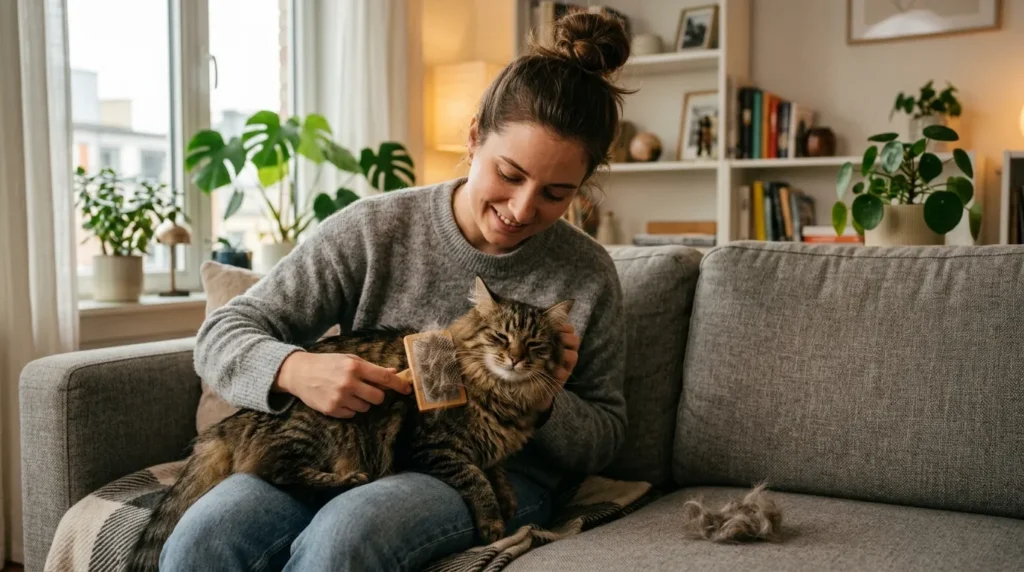
Brushing is the highest-impact single action you can take to reduce cat shedding in your house. Every minute you spend brushing is fur that lands in a trash bin instead of your sofa. The right frequency depends on coat type, and the right tool matters almost as much as the schedule.
| Coat Type | Brushing Frequency | Best Tool |
|---|---|---|
| Short-haired | 1 to 2 times a week | Rubber grooming glove or slicker brush |
| Medium-haired | Every 2 to 3 days | Slicker brush or deshedding tool |
| Long-haired | Daily | Deshedding tool plus a wide-tooth comb |
The goal is catching loose fur at the source, before it reaches furniture, floors, and clothing. A deshedding brush or a quality slicker brush pulls far more undercoat, the dense insulating layer under the topcoat, than a soft bristle brush does per session. For cats who resist brushes, a rubber grooming glove works through the same mechanism with less resistance, since the sensation feels closer to petting.
How to Brush a Cat Who Hates Being Brushed
Most brush resistance comes from sessions that run too long or start in the wrong spot. Try this order:
- Pick a calm moment. Right after a meal or a nap works better than when she’s wound up from play.
- Introduce the tool first. Let her sniff the brush or glove and rub her cheek on it before any strokes.
- Start where she already likes touch. Cheeks, the base of the ears, and the back are usually safe.
- Brush with the direction of the fur. Use light pressure and let the tool do the pulling.
- Keep the first sessions to two or three minutes. Stop while she’s still relaxed, not after she swats.
- Add the touchy zones slowly. Belly, armpits, and the base of the tail mat easily but many cats guard them, so build up over a couple of weeks.
- End with a treat or play. She learns that brushing predicts something good.
- Clean the brush and bin the fur. Fur left on the tool just goes back onto the cat or the floor.
Mats are a different job. Don’t yank them out with a brush. Work a wide-tooth comb gently at the edge, and if a mat sits tight against the skin, let a groomer or vet remove it, because cat skin tears easily.
Which Deshedding Tool Actually Works Best?
| Tool | Best For | Watch Out For |
|---|---|---|
| Slicker brush | Daily maintenance, all coat types | Light pressure only, fine wires can scratch skin if pressed hard |
| Deshedding tool (undercoat rake style) | Heavy undercoat, double-coated breeds | Overuse can thin the coat, limit to 2 to 3 times a week |
| Rubber grooming glove | Nervous or brush-resistant cats | Pulls less fur per session than a slicker brush |
| Wide-tooth comb | Detangling before brushing long hair | Not enough alone to reduce shedding volume |
A full home grooming routine for your indoor cat that pairs brushing with occasional coat maintenance keeps baseline fur volume lower than grooming only when it’s visible ever will. Five minutes three times a week beats thirty minutes every Sunday for keeping house fur under control.
Does Bathing Help Reduce Shedding?
Sometimes, but it’s not a first-line fix. An occasional bath with a deshedding shampoo loosens dead undercoat and rinses away loose hair that brushing alone misses, especially on double-coated breeds heading into a heavy shed cycle.
The catch is frequency. Bathing more than once a month strips natural skin oils, and dry skin actually increases shedding over time instead of reducing it. Most cats do better with brushing as the primary tool and bathing reserved for a heavy-shed month or a vet-recommended skin issue. Always use a cat-formulated shampoo. Human shampoo disrupts a cat’s skin pH and can make coat problems worse.
Do Grooming Wipes or a Damp Hand Help Between Brushing Sessions?
A little, and they cost almost nothing. Stroking a slightly damp hand or a cat-safe grooming wipe along the coat picks up loose hair that’s sitting on the surface. It won’t reach undercoat the way a brush does, so treat it as a top-up for days you skip the brush, not a replacement.
How Nutrition Directly Reduces the Amount of Fur Your Cat Sheds?
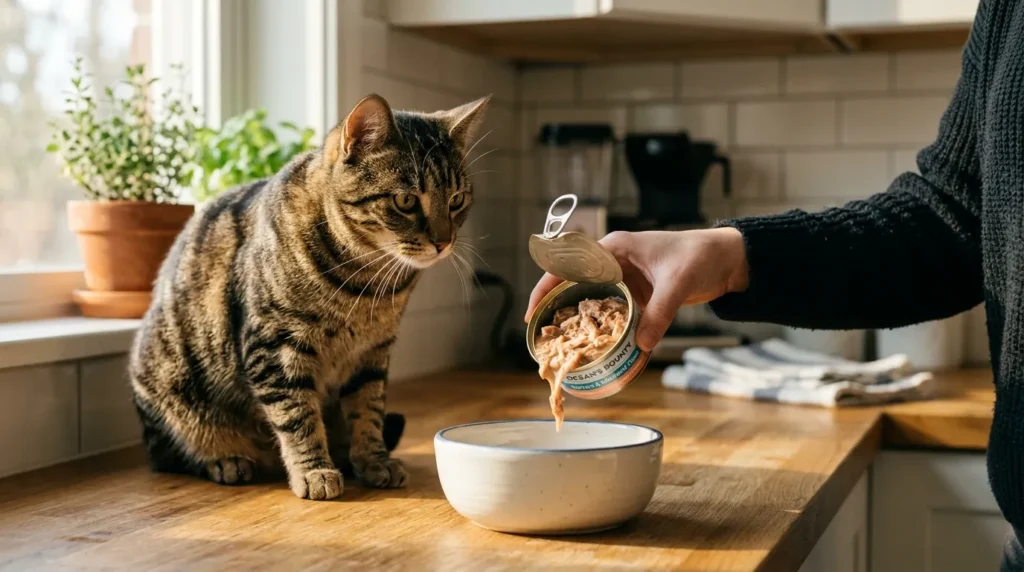
Omega-3 and omega-6 fatty acids are the nutritional factors most directly linked to reduced shedding. These fats support the skin barrier and strengthen hair follicles, so individual hairs are less likely to release before the end of their natural growth cycle. Fish-based wet foods naturally carry higher omega levels than most dry kibble, and the added moisture supports the skin hydration that keeps a coat healthy.
Protein quality matters just as much. Hair is built mostly from keratin, a structural protein. A cat eating food where plant-based proteins make up the bulk of the formula can’t convert that protein into keratin efficiently. A named animal protein listed first on the ingredient panel is a more reliable coat-health signal than the crude protein percentage alone.
What to Check on a Cat Food Label for Shedding Control
- A named animal protein first: chicken, turkey, salmon, or tuna, not a vague “meat” or a plant protein.
- A listed omega source: fish oil, salmon oil, or flaxseed, ideally with omega-3 and omega-6 called out.
- A “complete and balanced” statement: this tells you the food meets AAFCO nutrient profiles for your cat’s life stage.
- A wet food option: even mixing wet and dry adds moisture that dry-only diets lack.
How to Switch Your Cat’s Food Without Upsetting Her Stomach?
A sudden swap often brings loose stool or a hunger strike, and then owners quit before the coat has time to improve. Go slowly:
- Days 1 and 2: about 25% new food, 75% old.
- Days 3 and 4: half and half.
- Days 5 and 6: about 75% new food, 25% old.
- Day 7 onward: 100% new food. Stretch each stage if her stool softens.
If your cat eats a prescription diet or has a medical condition, ask your vet before changing anything.
Do Fish Oil Supplements Help Beyond Diet Alone?
They can, particularly for cats already eating a lower-quality diet you’re not ready to switch entirely. A vet-approved omega-3 supplement adds the same fatty acids a premium diet would provide, but dosage needs to come from your vet, not a guess based on a bottle made for dogs or humans. Supplements work as a bridge or a boost. They don’t replace the effect of an actual diet upgrade.
Understanding what to feed your indoor cat for coat health takes some label reading at first. But the drop in visible shedding after four to eight weeks of consistent, higher-quality nutrition is one of the more noticeable results you’ll see from a diet change.
How to Keep the Air in Your Apartment Cleaner Between Brush Sessions?

A HEPA-rated air purifier captures floating cat dander, the tiny flecks of dead skin cats shed alongside fur, before it settles on surfaces. This doesn’t replace brushing or vacuuming, but it cuts down how much micro-level fur and dander builds up on every horizontal surface in the room. In a sealed apartment where windows rarely open, the same particles circulate over and over. A purifier pulls them out of that loop.
Place the purifier in the room where your cat sleeps most. Most indoor cats settle into two or three consistent spots, and fur and dander concentration runs highest there. Running a purifier near that primary resting spot catches shed fur and dander at its densest point, rather than after it has spread across the whole apartment.
Match the unit to the room. Check the manufacturer’s stated room size and clean air delivery rate (CADR) before you buy, because a small purifier in a large living room moves too little air to matter.
The limitation is filters. They need consistent replacement to stay effective. A clogged filter stops capturing particles well and the unit still draws electricity while doing almost nothing. Factor filter replacement cost into your choice, not just the upfront price.
Surface Management: What Actually Works and What Is Just Busywork?
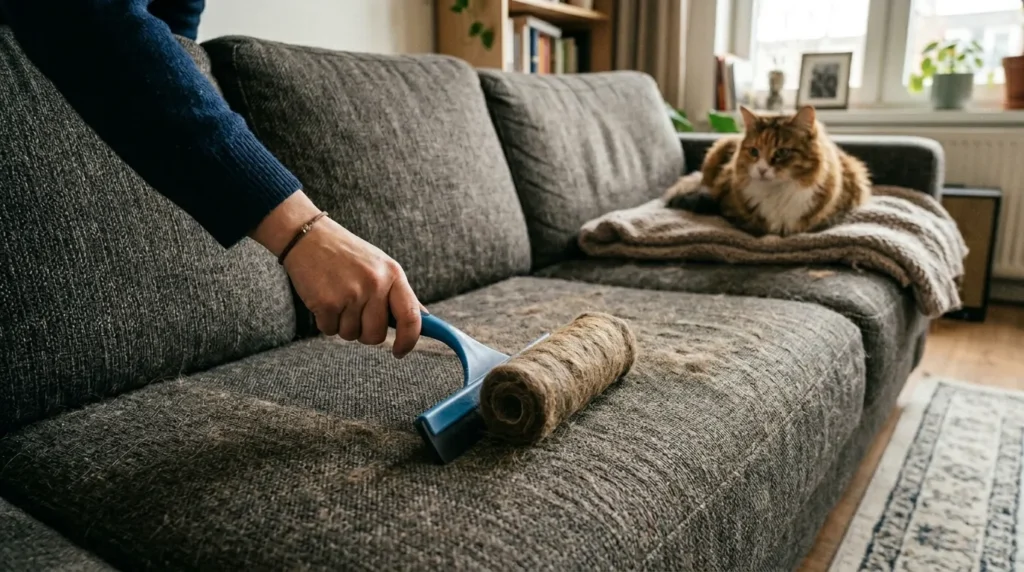
A rubber squeegee on upholstered furniture pulls embedded fur out of fabric fibers far better than a vacuum alone. Static from rubber against fabric grabs fine fur and rolls it into clumps you can lift off by hand. Use it before vacuuming and you’ll cut how much fur the vacuum misses. It feels too simple to work, until you see the pile it pulls up.

Lint rollers kept in every room remove the friction that makes you put off dealing with fur in the moment. A five-second roll when you spot fur on a cushion beats a thorough weekly clean, because fur sitting in fabric works itself deeper over time. Spot treatment in the moment consistently beats batch cleaning later.
Washable furniture throws on high-traffic cat spots solve most of the upholstery problem. Your cat will sleep on the same two or three spots regardless of what you do. A washable cover there gives you a weekly machine-wash fix instead of a constant fight with the sofa fabric itself.
Fabric choice plays a part too. Tight weaves like microfiber and leather release fur easily, while loose weaves and wool-blend textiles hold on to it. If you’re buying a new sofa, that matters more than the color.
How to Get Cat Hair Off Clothes and Bedding
Washing alone often leaves hair stuck to the fabric, and it can clump in the machine. Do this instead:
- Run the dryer first. Tumble clothes or bedding on low or no heat for about 10 minutes to loosen hair.
- Empty the lint trap. Most of the loosened fur ends up there.
- Wash as normal. Then give the load a quick shake before folding.
- For quick fixes, a lint roller or a slightly damp rubber glove lifts hair off most clothes in seconds.
Wipe the washer drum afterward, since stray fur collects around the door seal.
Choosing a Vacuum That Actually Picks Up Cat Hair
Not every vacuum handles embedded pet hair the same way, and the wrong one leaves you doing the squeegee work twice. Look for three things specifically:
- HEPA filtration: traps fine dander instead of blowing it back into the air through the exhaust.
- Motorized brush roll: agitates carpet and upholstery fibers to lift hair that suction alone leaves behind.
- A dedicated pet hair attachment: usually a rubber-tipped tool built for the same static effect as a squeegee, useful on stairs and furniture edges.
Vacuum two to three times a week if you have a shedding cat, and don’t skip the filter maintenance schedule. A vacuum with a clogged filter loses suction fast, no matter how good the brush roll is.
A robot vacuum can handle the light daily passes between full cleans, especially across hard floors. Empty the bin after each run, because a full one stops picking up hair.
How Stress Reduction Quietly Lowers the Baseline Fur Your Cat Sheds?

Chronic stress from boredom or a shaky household routine raises cortisol levels in indoor cats, and elevated cortisol speeds up hair follicle shedding. A cat with nothing to do produces more baseline fur than a cat with steady daily engagement. Most owners miss this link, because a stressed cat often looks calm rather than visibly anxious.
Daily interactive play and consistent enrichment keep cortisol lower across the day, and that hormonal baseline shows up as slightly less shed fur over weeks and months. It’s not dramatic the way brushing is, but it’s measurable and it costs nothing. Vertical climbing space and window access give cats the stimulation that cuts the passive boredom driving stress shedding in apartment cats.
Watching your cat’s behavior patterns also helps you notice when shedding spikes line up with behavioral changes. If fur increases after a household change, stress is the likely cause, not a health or grooming issue.
Simple Ways to Lower Your Cat’s Stress at Home
- Play twice a day: short sessions with a wand toy, ending with a small meal or treat so the hunt feels complete.
- Keep feeding times steady: cats read routine as safety.
- Add vertical space: a cat tree or wall shelf near a window gives her somewhere to watch and retreat.
- Offer hiding spots: a covered bed or box in a quiet corner, especially after a move or a new visitor.
- Introduce changes slowly: new pets, furniture, and schedules go better in small steps.
The Practical Reality: Stress reduction and enrichment do the least visible work in week one, but they compound the most over a year. A cat who is mentally engaged, well-fed, and regularly brushed sheds less baseline fur than any single fix delivers on its own. These habits work together. None of them substitute for the others.
A Weekly Routine That Keeps House Fur Manageable
Knowing what works is half of it. Sticking to it is the other half. This schedule works for most short and medium-haired cats, and long-haired cats just move the brushing to daily.
| When | What to Do |
|---|---|
| Daily | Brush long-haired cats, play for two short sessions, quick lint roll or vacuum pass over her favorite resting spots |
| Every 2 to 3 days | Brush medium-haired cats, vacuum high-traffic floor areas |
| Weekly | Brush short-haired cats, machine-wash bedding and throws, squeegee upholstery before a full vacuum, empty the vacuum canister |
| Monthly | Check the air purifier filter against the manufacturer’s schedule, bathe only if the coat needs it, check her weight and coat condition |
The Mistake That Keeps House Fur Out of Control Despite Constant Cleaning
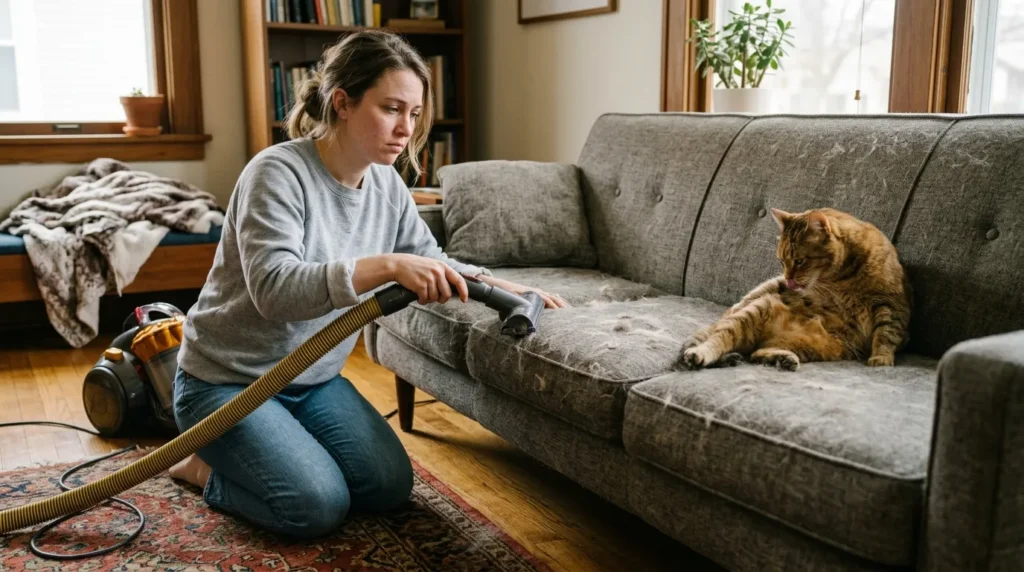
The mistake that keeps most owners stuck in a cleaning loop is treating surfaces and ignoring the source. Vacuum furniture every other day while skipping brushing, and the fur your cat sheds today sits on your couch tomorrow. Cleaning handles yesterday’s fur while today’s fur is already coming loose. Without regular brushing, the supply never runs out, no matter how often you clean.
Washing cat bedding too rarely is the second mistake, and the two are connected. Your cat’s favorite sleeping spots build up the highest fur and dander concentration in the apartment. A weekly machine wash of those surfaces removes fur that would otherwise redistribute into the air and nearby furniture every time your cat resettles.
Two more habits cause trouble. Shaving a cat to “fix” shedding doesn’t work, because the hair cycle keeps running and you end up with short, prickly fur that embeds in fabric. And brushing only when the house already looks furry means you’re always a week behind the shed.
Keeping your cat’s litter box clean and well placed matters here too, since a cat tracking litter through the apartment carries fur and dander further from her sleeping spots. Tracking your cat’s overall health as part of your routine gives you a baseline, which makes a sudden shedding increase easy to spot instead of easy to miss.
When Shedding Levels Need a Vet Visit Rather Than More Cleaning
A sudden, sharp jump in shedding that isn’t explained by a seasonal shift or a recent stressful event is worth a vet call within a week or two. Sudden increases paired with skin changes, bald patches, overgrooming, or symptoms like weight loss or increased thirst are red flags, not routine shedding.
Senior cats over age eight who shed more and also groom themselves less effectively than before are showing a combination that sometimes points to thyroid disease or joint pain limiting their reach. Both are manageable when caught early. A coat that suddenly looks dull, greasy, or matted in a cat who used to keep it neat is also worth a look, rather than chalking it up to normal shedding variation.
Red Flags Checklist
Call your vet if you see any of these alongside heavier shedding:
- Bald or thinning patches, especially symmetrical ones
- Red, scabby, or flaky skin, or small dark specks that could be flea dirt
- Constant scratching or licking in one area
- Weight loss, weight gain, or a change in appetite
- Increased thirst or urination
- A dull, greasy, or matted coat in a cat who used to keep it neat
Before the appointment, take dated photos of the coat and note when the shedding changed, what she eats, and anything new in the home. Your vet can work with specifics much faster than with “she’s shedding more.”
This article is for informational purposes only. Always consult your vet if you have concerns about your cat’s health.
Key Takeaways: A Quick Shedding Control Checklist
- Brush based on coat type: 1 to 2 times weekly for short hair, every 2 to 3 days for medium hair, daily for long hair.
- Know your breed’s baseline. Double-coated breeds like Persians and Maine Coons shed far more than single-coated breeds like Siamese.
- Feed a diet with named animal protein first and added omega-3 and omega-6 fatty acids, and ask your vet about a supplement if a diet change isn’t realistic yet.
- Switch foods over about a week so her stomach keeps up.
- Run a HEPA air purifier near your cat’s main sleeping spot, and replace filters on schedule.
- Squeegee upholstery before vacuuming two to three times a week, and keep a lint roller in every room.
- Limit baths to once a month at most, using a cat-formulated deshedding shampoo.
- Wash cat bedding weekly to stop fur and dander from redistributing.
- Add daily play and vertical space to keep stress-driven shedding down.
- Don’t shave her to fix shedding. It doesn’t work.
- Call your vet if shedding spikes suddenly or comes with skin changes or bald patches.
Frequently Asked Questions About Reducing Cat Shedding in the House
How often should I brush my cat to reduce shedding in the house?
Short-haired cats need brushing one to two times per week. Medium-haired cats need it every two to three days. Long-haired cats need daily sessions to stay ahead of the undercoat turnover that produces most visible house fur. Consistency matters more than session length. Five minutes every two days beats thirty minutes once a week for keeping fur off your furniture.
Does changing my cat’s diet actually reduce shedding?
Yes, noticeably so over four to eight weeks. High-protein wet food with omega-3 and omega-6 fatty acids strengthens hair follicles and cuts premature shedding compared to low-quality dry food. The improvement isn’t instant, but it holds. Cats eating better food with real animal protein as the main ingredient typically shed less than cats on plant-protein or filler-heavy diets.
Can I use an air purifier to reduce cat fur in my apartment?
Yes. A HEPA-rated air purifier captures floating fur and dander before it settles on surfaces. Place it near your cat’s main sleeping spot for the best effect. It won’t replace brushing or surface cleaning, but it cuts how much micro-level fur circulates through the apartment. Budget for regular filter replacement, or the unit loses effectiveness fast.
What is the fastest way to remove cat fur from furniture?
A rubber squeegee dragged across upholstered furniture pulls embedded fur up into collectible rolls faster than most vacuum attachments manage. Follow with a vacuum and a lint roller for whatever remains. On leather or smooth surfaces, a barely damp microfiber cloth wiped in one direction picks up fine fur that dry cloths miss. These two tools handle most furniture surfaces in a few minutes.
Will shaving my cat reduce the fur in my house?
No. Shaving removes fur length, but the hair cycle keeps running at the same rate and produces the same volume of shedding. You end up with shorter, sharper pieces of fur instead of less of it. The only sustainable fix is consistent brushing, diet quality, and stress management, not removing the coat’s length.
What is the best cat food for shedding control?
Look for a named animal protein listed first, such as chicken or salmon, plus added omega-3 and omega-6 fatty acids. Fish-based wet food tends to support coat health better than dry kibble loaded with plant-based fillers.
Do indoor cats shed less than outdoor cats?
Indoor cats shed less per session but shed year-round, since stable indoor temperatures remove the seasonal cue to molt. Outdoor cats shed heavily twice a year, in spring and fall, then stay lighter the rest of the time.
Do certain cat breeds shed less than others?
Yes. Single-coated breeds like Siamese shed noticeably less than double-coated breeds like Persians and Maine Coons, because they carry little to no dense undercoat. Sphynx cats have almost no fur to shed at all, though they need regular skin care in place of coat care.
Should I bathe my cat to reduce shedding?
An occasional bath with a cat-formulated deshedding shampoo can loosen dead undercoat and rinse away loose hair. Bathing more than once a month tends to strip natural oils and can make shedding worse rather than better, so keep it as an occasional tool, not a routine one.
What kind of vacuum works best for cat hair?
Look for HEPA filtration, a motorized brush roll that lifts embedded hair from carpet and upholstery, and a dedicated pet hair attachment. Filter maintenance matters as much as the model you buy, since a clogged filter kills suction fast.
Do fish oil supplements help with shedding beyond diet alone?
A vet-approved omega-3 supplement can help, especially for cats eating a lower-quality diet you’re not ready to fully switch. It works best as a bridge alongside food changes, not as a stand-in for them. Confirm dosage with your vet rather than guessing from a bottle made for another species.
How often should I vacuum a home with a shedding cat?
Two to three times a week keeps fur from working deep into carpet and upholstery. Quick daily passes over your cat’s favorite resting spots do more good than one long weekly clean.
Why is my cat shedding so much all of a sudden?
The usual causes are a seasonal coat change, stress after a household change, a diet that isn’t supporting the coat, or fleas and skin allergies. If the extra shedding comes with bald patches, red or scabby skin, weight changes, or increased thirst, see your vet within a week or two instead of waiting it out.
Is it normal for indoor cats to shed all year?
Yes. Artificial light and steady indoor temperatures blur the seasonal signals that trigger heavy spring and fall sheds, so indoor cats lose a smaller amount of fur across all twelve months. Expect a modest bump in spring and fall and keep brushing steady through both.
Does brushing make a cat shed more?
No. Brushing removes hair that is already loose and would have landed on your furniture anyway. Overusing an undercoat rake can irritate skin and thin the coat, so keep rake-style tools to two or three sessions a week and use gentler tools the rest of the time.
Can stress make a cat shed more?
Yes. Boredom, a new pet, a move, or a changed routine can raise stress hormones in cats, and shedding often increases afterward. Daily play, vertical space, and a steady routine bring it back down over weeks, not days.
How do I get cat hair off clothes and bedding?
Tumble clothes and bedding in the dryer on low or no heat for about 10 minutes first to loosen the hair, empty the lint trap, then wash as normal. For quick fixes, a lint roller or a slightly damp rubber glove works on most fabrics.
This article is for informational purposes only. Always consult your vet if you have concerns about your cat’s health.

Written by Mishu
A passionate cat lover and indoor living enthusiast, Mishu is the founder and voice behind Indoor Living Cat – a go-to resource for cat owners who want to create the happiest, healthiest life for their feline companions indoors.
View Full Profile