
The vet visit that changed how I think about indoor cat health wasn’t dramatic. My cat looked completely fine. She was eating, using her box and acting normal. The blood panel told a different story: early kidney markers. Caught early enough to manage easily, but only because we went in for a routine checkup instead of waiting for something to go wrong. Knowing how to keep an indoor cat healthy means getting ahead of the problems that don’t announce themselves until they’re serious. This guide covers the nine areas where indoor cats are most vulnerable and what to do about each one before a problem develops.
Quick answer: To keep an indoor cat healthy, focus on nine core areas: a high-protein wet food diet with portion control, daily water intake and hydration support, annual vet visits including dental checks and bloodwork, daily interactive play for weight management, consistent dental care, year-round parasite prevention, a low-stress and enriched environment, regular grooming, and reading your cat’s litter box habits for early warning signs. Indoor cats live a lot longer than outdoor cats, but they need deliberate management of obesity, dental disease, dehydration and stress-related conditions that indoor life makes more likely.
The Nine Areas at a Glance
| Area | The one habit that matters most | How often |
| 1. Diet and portions | Measure every meal, wet food as the main meal | Every meal |
| 2. Water | Several clean water sources, away from food and litter | Refresh daily |
| 3. Vet visits | Exam plus bloodwork, with a dental check | Yearly, twice a year after age 10 |
| 4. Weight and movement | Two play sessions, 15 to 20 minutes total | Daily |
| 5. Dental care | Brush with cat toothpaste | Daily if tolerated |
| 6. Parasites and vaccines | Cat-safe flea prevention, core vaccines | Monthly and per vet schedule |
| 7. Stress and enrichment | Predictable routine, vertical space, hiding spots | Daily |
| 8. Grooming | Brush, then check skin, lumps and nails | 2 to 3 times weekly, daily for long hair |
| 9. Litter box | Scoop daily and notice changes | Daily |
Step 1: Get the Diet and Portion Size Right
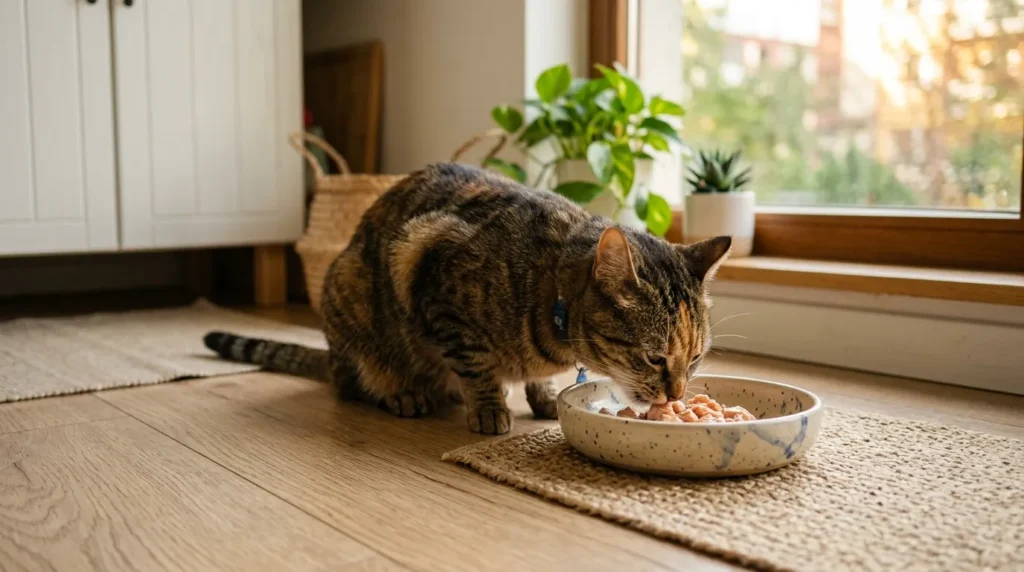
The biggest health lever for an indoor cat is what goes in the bowl and how much of it. Indoor cats burn far fewer calories than outdoor cats because they don’t patrol territory, hunt or deal with the physical demands of the outdoors. Feed a sedentary indoor cat the calories an active outdoor cat needs and you get slow, steady weight gain that most owners don’t notice until the vet mentions it.
Body condition scoring is the tool vets use to judge weight, and you can do it at home. Run your hands along your cat’s sides. You should feel the ribs without pressing hard, but you shouldn’t see them. A visible waist from above and a slight belly tuck from the side mean a healthy weight. If you can’t find the ribs without real pressure, your cat is already overweight, however normal it looks day to day.
Wet food as the main diet supports urinary and kidney health in ways dry food can’t match, because of its water content. Indoor cats face higher risk for both conditions since they move less. A diet heavy in dry kibble leaves urine more concentrated, which sets the stage for crystals and blockages over time. Switching to wet food for the main meal is one of the simplest preventive moves an indoor cat owner can make.
 Measure every meal. It sounds obvious, and almost nobody does it. Scoops drift upward, and eyeballed portions run heavy. Use the feeding guide on the packaging as a starting point, then adjust based on your cat’s body condition score every few months. That one habit heads off most indoor cat obesity before it starts. For the calorie math by weight, see our guide on how to feed an indoor cat properly.
Quick reference: what “healthy weight” feels like
| Body area | Healthy weight | Overweight |
| Ribs | Easy to feel, not visible | Hard to feel under a fat layer |
| Waist (viewed from above) | Visible tuck behind the ribs | Straight or bulging sides |
| Belly (viewed from the side) | Slight tuck upward | Rounded or hanging pouch |
| Spine | Felt with light pressure | Cannot feel it at all |
Step 2: Don’t Skip Water and Hydration
Hydration gets far less attention than diet, but it drives the same urinary and kidney conditions that wet food is meant to prevent. Cats have a naturally weak thirst drive, a leftover from their desert-dwelling ancestors, and a cat that relies only on a bowl often drinks less than its body needs. As a rough benchmark, cats need about 3.5 to 4.5 ounces of water for every 5 pounds of body weight each day, counting both drinking water and the moisture in wet food. A 10 pound cat lands around 7 to 9 ounces.
A water fountain helps some cats drink more, because many are drawn to moving water over still water in a bowl. It’s no guarantee, though. Research comparing still, circulating and free-falling water setups found no meaningful difference in total intake across cats as a group, even though individual cats clearly had preferences. Treat a fountain as one more option to try, and keep a clean bowl out while your cat adjusts to it.
- Place multiple water sources around the home, away from the litter box and food bowl. Cats often avoid drinking near where they eliminate or eat.
- Wash bowls and fountains daily and change fountain filters every two to four weeks. Stagnant or dirty water discourages drinking.
- Watch for signs of dehydration: dry or tacky gums, skin that’s slow to spring back when gently pinched, and dark, strong-smelling urine.
- If your cat’s urine clumps are consistently small, or your cat visits the litter box often with little output, call your vet. That’s a hydration and urinary concern, and a fuller water bowl won’t solve it.
Step 3: Annual Vet Visits Catch What You Can’t See at Home
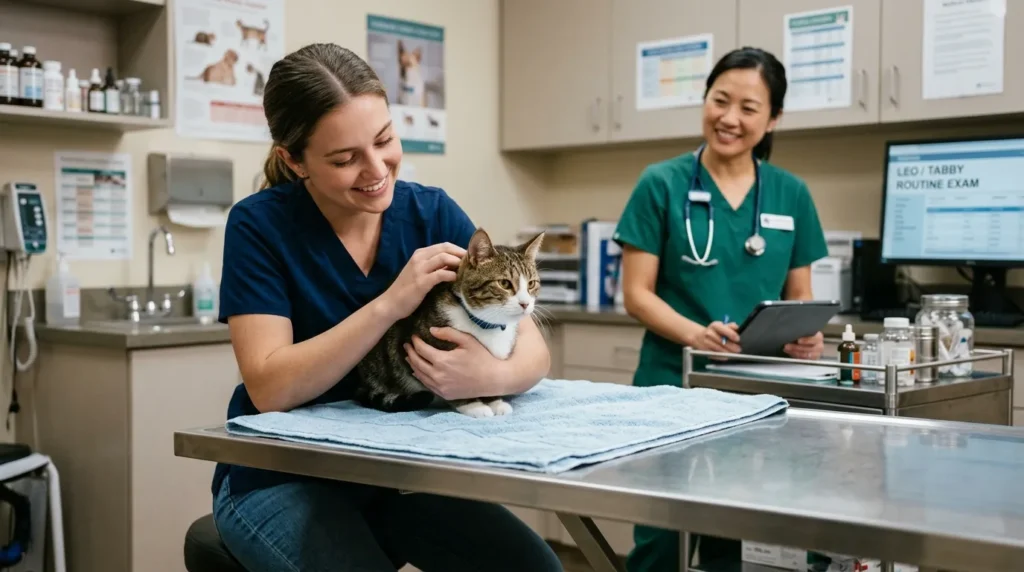
Annual wellness exams for indoor cats aren’t optional, even when the cat looks perfectly healthy. Cats are wired to mask pain and illness. By the time a cat shows obvious signs of kidney disease, dental infection or hyperthyroidism, the condition has typically been developing for months or years. A physical exam and basic bloodwork once a year catches these conditions while they’re still manageable.
Dental disease is the most underdiagnosed condition in indoor cats. Studies estimate that over 70 percent of cats show signs of dental disease by age three. Bad breath is the obvious signal, but most owners blame the food instead of infection. Untreated dental disease causes chronic pain and can contribute to kidney and heart complications over time. Ask about dental health at every annual visit, because it doesn’t always come up on its own.
Cats over ten need exams twice a year instead of once. Chronic kidney disease is the leading cause of death in senior cats, and the earliest markers show up in bloodwork years before any behavioral or physical symptoms. According to the American Veterinary Medical Association, senior pets benefit from twice-yearly wellness screening. Catching kidney disease early changes the whole trajectory of the condition.
Vet visit schedule by life stage
| Life stage | Recommended visits | What to ask about |
| Kitten (under 1 year) | Every 3 to 4 weeks until vaccines finish, then annually | Vaccine schedule, spay/neuter timing, deworming |
| Adult (1 to 7 years) | Once a year | Weight, dental exam, baseline bloodwork |
| Mature (7 to 10 years) | Once a year, or twice if any risk factors exist | Full bloodwork, thyroid check, dental x-rays if indicated |
| Senior (10+ years) | Twice a year | Kidney values, blood pressure, thyroid, joint health |
Questions worth bringing to every visit:
- What’s my cat’s body condition score, and has it changed since last time?
- Did you look at the teeth and gums, and is a cleaning coming up?
- Which bloodwork did you run, and how do the kidney and thyroid values compare with last year?
- Is my cat’s vaccine and parasite plan still right for our household?
Step 4: Manage Weight Through Daily Movement
Obesity in indoor cats has nothing cosmetic about it. It’s a direct pathway to diabetes, joint disease, hepatic lipidosis and a shorter life. On a 10 pound cat, two extra pounds is 20 percent over ideal weight, and the strain on joints and metabolism shows. The indoor lifestyle makes weight management an active job, because it won’t take care of itself.
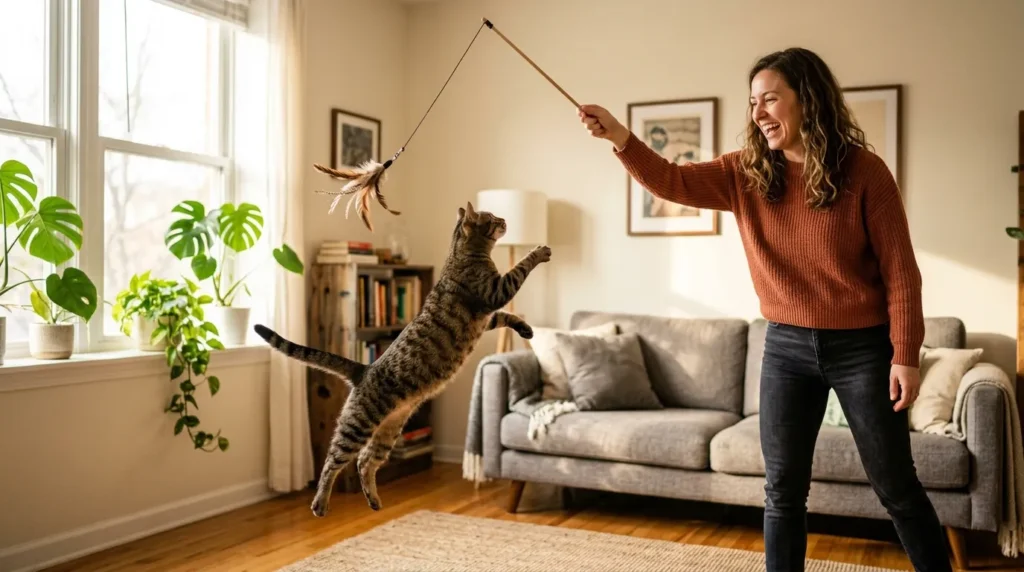
Feline obesity means body weight more than 20 percent above ideal. Cutting food alone won’t fix it. You also need to raise energy use through daily structured movement. Two play sessions a day, fifteen to twenty minutes total, burn enough calories to move the weight trend over months. Play also builds muscle that supports joints and metabolism.
Puzzle feeders stretch mealtime from a twenty second sprint into a ten minute activity that slows eating and burns calories through light movement. Swapping the standard bowl for a puzzle feeder at one meal a day is one of the easiest weight tools available, and once it’s set up it costs you no extra time.
What a good play session looks like:
- Pick a wand toy and move it like prey: away from the cat, in short bursts, with pauses and hiding behind furniture.
- Let the cat catch it every minute or so. A hunt with no catch frustrates cats.
- Play until the cat’s pace slows, usually five to ten minutes.
- Finish with a meal or a small treat portion, then let the cat groom and nap.
Step 5: Handle Dental Care Before It Becomes a Crisis
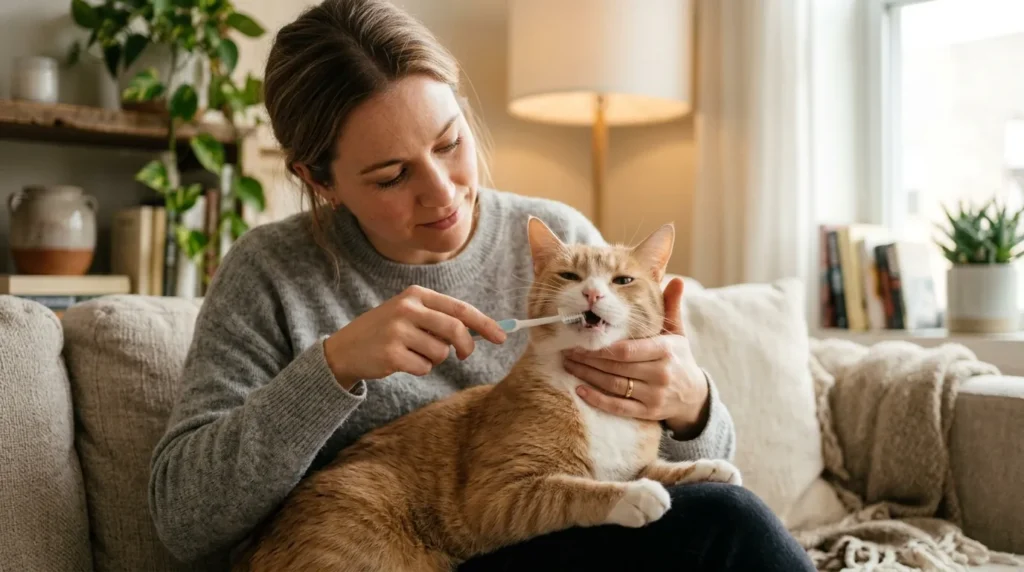
Most indoor cat owners have never brushed their cat’s teeth, and most cats over five years old are paying for it silently. Dental disease doesn’t produce dramatic symptoms in cats. You get a cat that eats a little slower, drops food now and then, or tilts its head while chewing. Those signals are easy to miss, and most owners don’t connect them to mouth pain until a vet exam turns up serious disease.
Daily tooth brushing with cat-specific toothpaste is the gold standard for preventing periodontal disease. The technique takes about thirty seconds once a cat is used to it. Start by letting the cat lick toothpaste off your finger for a week before you introduce a brush. A patient introduction gets you a cat that tolerates brushing, and a forced first session gets you a cat that hides when it sees the toothbrush. Never use human toothpaste, since it contains ingredients that aren’t safe for cats to swallow.
Dental treats and water additives cut plaque between brushing sessions, but they don’t replace brushing or professional cleanings. Treat them as maintenance. Professional cleanings under anesthesia, every one to two years where your vet recommends them, keep the baseline manageable in cats where home care is difficult.
 If your cat has genuinely bad breath and you’ve ruled out diet, don’t wait for the annual visit. Mouth pain in cats escalates quietly, and a cat eating through dental infection has been doing it in discomfort for longer than you realize. Book the appointment and ask for a full oral exam. The relief after treatment is visible and fast.
Signs of mouth pain to watch for:
- Chewing on one side or dropping kibble
- Drooling, or pawing at the mouth
- Red, swollen gums, or a dark line along the gum edge
- Breath that smells rotten, not just fishy
- Eating wet food readily but turning away from hard kibble
Step 6: Keep Up Parasite Prevention Even Without Outdoor Access
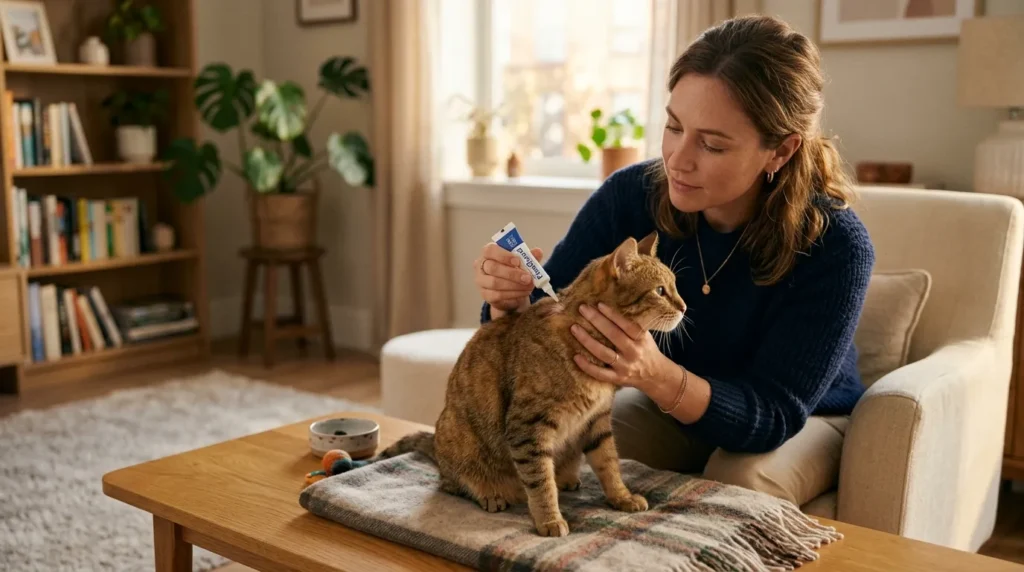
The most common indoor cat owner assumption is that a cat with no outdoor access needs no parasite prevention. That’s wrong, and it causes preventable problems. Fleas travel indoors on clothing, shoes and bags. Mosquitoes enter through window screens or open doors, and heartworm spreads by mosquito bite. A cat that never leaves the apartment can still pick up fleas, heartworm and intestinal parasites by these routes.
Year-round flea and tick prevention for indoor cats requires a product made for cats specifically. Many dog flea products contain permethrin, which is toxic to cats even in small amounts. Use only products labeled for cats and approved by your vet. Monthly topical treatments or oral preventives cover the most common exposure risks in apartment settings.
Vaccines for indoor cats
Core vaccinations stay relevant for indoor cats because several viruses can enter the home on surfaces instead of through direct animal contact. These pathogens survive on shoes, clothing and hands long enough to reach a cat that never steps outside.
| Vaccine | What it covers | Indoor cat notes |
| FVRCP | Feline herpesvirus, calicivirus, panleukopenia | Core vaccine. Pathogens can reach indoor cats on hands and shoes. |
| Rabies | Rabies virus | Required by law in many places, and bats can enter homes. Check local rules. |
| FeLV | Feline leukemia virus | Usually recommended for kittens, then based on your cat’s risk. Ask your vet. |
Discuss your cat’s schedule with your vet based on its age and health status, and consider microchipping even a strictly indoor cat, since accidental escapes happen more often than owners expect.
Step 7: Lower Stress With Routine and Environmental Enrichment
Chronic stress in indoor cats is a direct physical health risk as well as a welfare concern. Feline idiopathic cystitis is a bladder condition with no identifiable physical cause, and it’s linked to psychological stress. It looks identical to a urinary infection: straining in the litter box, blood in urine, frequent trips with little output. It comes back every time the underlying stress goes unaddressed, and it’s far more common in indoor cats than outdoor ones.
The triggers are often invisible to owners: a new piece of furniture in the cat’s established territory, a change in household routine, a new person around the home, or a conflict with another pet. Cats treat environmental change as a real threat even when it looks minor to you.
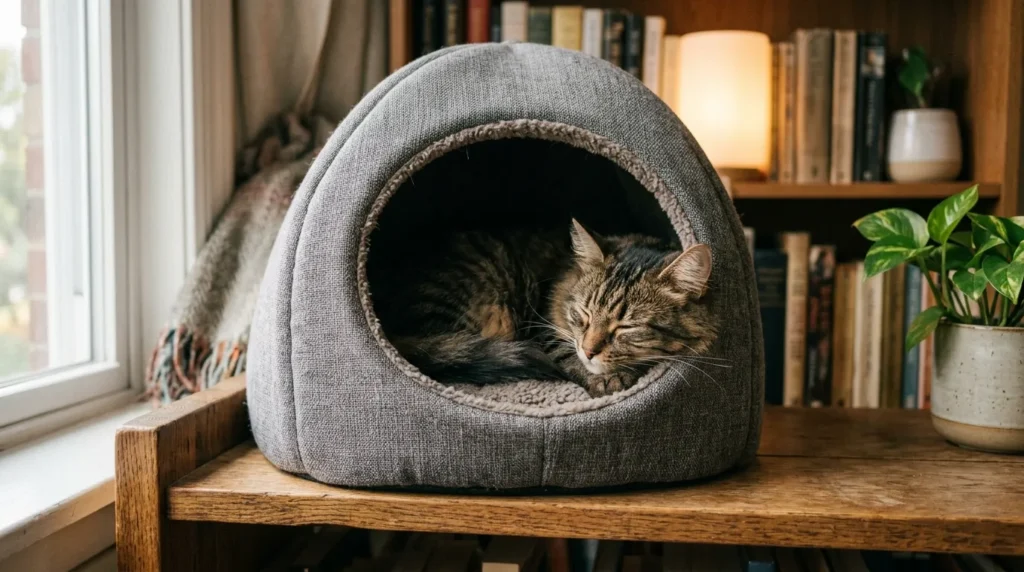
Reducing stress means creating predictability. Consistent feeding times, play sessions and sleeping arrangements give a cat the territorial security it needs to hold a calm baseline. Safe, enclosed hiding spots that the cat controls access to matter as much for health as food and water, because they give the cat somewhere to regulate its own stress response.
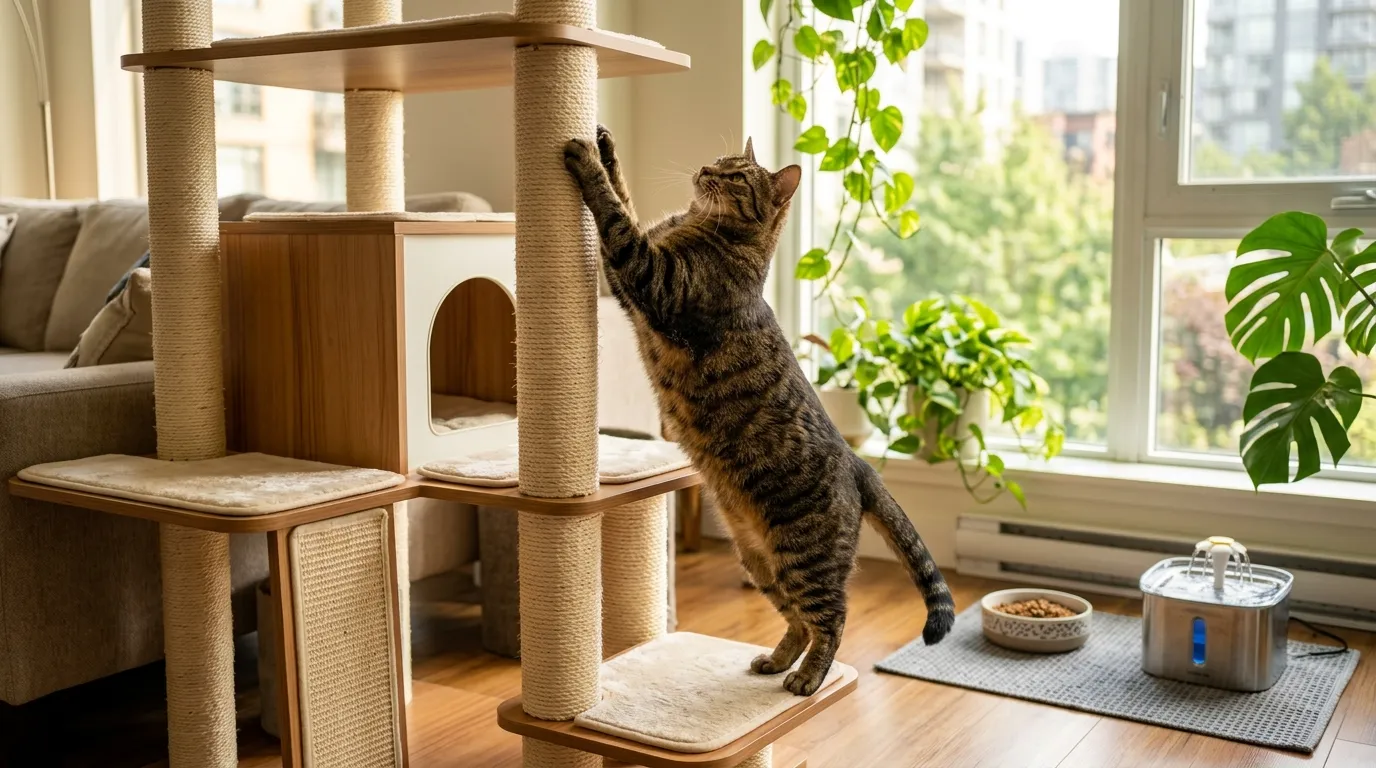
Vertical space plays a bigger role here than most owners assume. A cat tree, a window perch or even a cleared bookshelf gives a cat somewhere to climb, observe and retreat, which cuts the boredom and territorial pressure that feed into stress-related illness. If you want a full setup guide, our indoor cat enrichment guide covers cat trees, puzzle feeders and play routines in more depth.
Low-cost enrichment ideas that work in an apartment:
- A window perch facing a street or tree, so the cat has something to watch
- A cardboard box left out, with a hole cut in one side
- Rotating three or four toys weekly so none gets stale
- A scratching post tall enough for a full stretch, placed near where the cat sleeps
- Food hidden in puzzle feeders, egg cartons or muffin tins
If your cat has had a urinary episode and the vet has ruled out infection, look hard at what changed in the home in the two weeks before it happened. A new roommate, a rearranged living room, a different feeding schedule or even a new cleaning product smell can be enough to trigger cystitis in a stress-sensitive cat. Treat the environment along with the symptom.
Step 8: Use Grooming as a Health Monitoring Tool
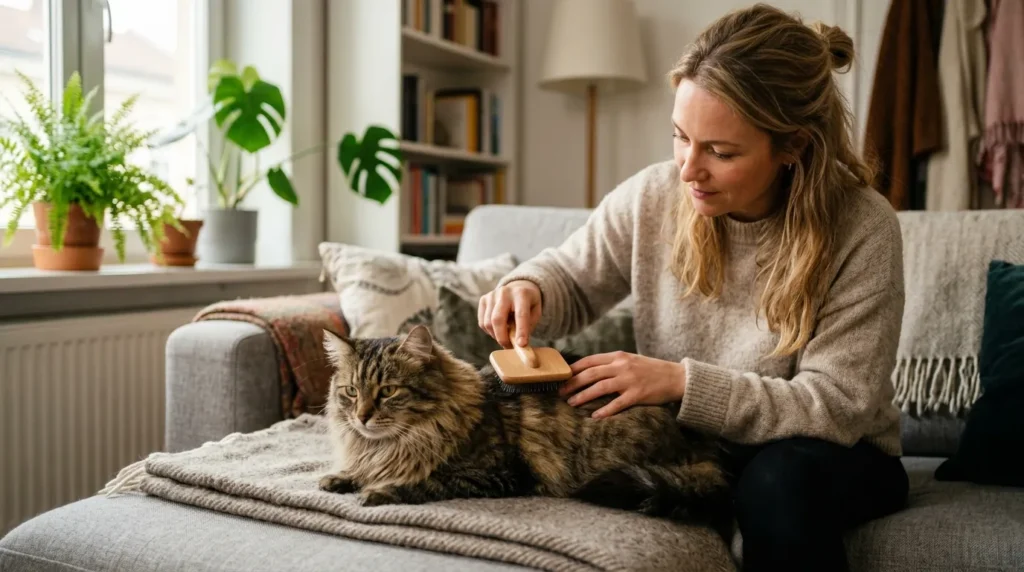
Regular brushing does more than maintain the coat. It’s the most consistent hands-on health check you get between vet visits. Each session lets you notice lumps under the skin, changes in coat texture, spots the cat flinches at when touched, weight loss that only shows when you feel the spine and ribs directly, and skin problems invisible from across the room.
Hairball prevention is the other practical reason indoor cats need regular brushing. Indoor cats groom themselves more than outdoor cats because they have fewer distractions. More self-grooming means more swallowed fur and more hairballs. Brushing two to three times weekly for short-haired cats and daily for long-haired cats removes enough loose fur to cut hairball frequency noticeably, without supplements or treatments. A cat that’s retching often with no hairball, or hasn’t produced one in a while despite trying, needs a vet check.
Nail trims every two to three weeks complete the grooming routine. Overgrown nails curve back toward the paw pad and cause pain and infection with no visible external injury. Check the nails during each brushing session so it becomes part of the same habit.
Step 9: Read the Litter Box as a Daily Health Report
Your cat can’t tell you something hurts, but the litter box usually does. Long before a cat stops eating or goes lethargic, its bathroom habits shift. Scooping daily instead of every other day gives you a baseline for normal, so a change registers instead of blending into the background.
What litter box changes can mean
| What you notice | Possible cause | What to do |
| Very small, hard urine clumps, frequent trips | Urinary tract inflammation or early blockage risk, more common in male cats | Same-day vet call; treat straining with no output as an emergency |
| Unusually large clumps, more frequent urination | Increased water intake, possible early kidney disease or diabetes | Book a vet visit within the week for bloodwork |
| Straining or crying while urinating | FLUTD, cystitis or urinary blockage | Same-day vet visit, urgent if no urine passes at all |
| Diarrhea or very hard stool lasting more than 48 hours | Diet change, parasites, inflammatory bowel disease | Vet visit if it persists past two days |
| Blood in urine or stool | Infection, inflammation or injury | Vet visit the same day |
| Litter box avoidance with no medical cause found | Stress, box cleanliness, or box placement/competition in multi-cat homes | Add boxes (one per cat plus one spare), clean more often, review placement |
A few habits make this easier to keep up. Scoop at the same time every day so changes stand out. If you have more than one cat and can’t tell which one produced an unusual sample, separate them into individual boxes for a day or two to find the source. Keep at least one litter box per cat plus one extra, since a shared or contested box is one of the most common causes of stress-driven litter box avoidance that has nothing to do with illness.
Litter box setup checklist:
- One box per cat, plus one spare, spread across different rooms
- Large boxes, since many cats dislike cramped ones, with low sides for kittens and seniors
- Quiet spots away from the washing machine, food and water bowls
- Unscented litter, which most cats accept more readily
- A full wash of the box with mild soap every few weeks
Make Your Home Safe for an Indoor Cat
An indoor cat is protected from traffic and predators, but a home has its own hazards. Most of them are cheap to fix once you know they’re there.
| Hazard | Why it matters | Fix |
| Lilies and other toxic plants | Even small amounts of lily, including pollen and vase water, can cause acute kidney failure in cats. Sago palm and tulip bulbs are also toxic. | Keep lilies out of the house. Check every plant against the ASPCA toxic plant list. |
| Open or unscreened windows | Cats fall from high windows and balconies, a pattern vets call high-rise syndrome. | Use sturdy screens made for cats, and keep balcony doors closed. |
| String, ribbon, hair ties, dental floss | Swallowed linear objects can cause a dangerous intestinal obstruction. | Store them in closed drawers and put away toys with strings after play. |
| Human medications | Painkillers such as acetaminophen and ibuprofen are toxic to cats. | Keep pills in closed cabinets. Never give human medicine without your vet’s say-so. |
| Dog flea treatments | Permethrin is toxic to cats. | Use only cat-labeled products, and keep treated dogs away from the cat until dry. |
| Essential oil diffusers | Some oils are toxic to cats. | Skip diffusers, or ask your vet before using any oil near your cat. |
Caring for a Senior Indoor Cat
Cats are usually considered seniors from around ten, though some slow down earlier. The routine above still applies, with a few changes that matter more with age.
- Twice-yearly exams with kidney values, thyroid, blood pressure and joint checks.
- Lower-sided litter boxes, because arthritis makes climbing over a tall edge painful, and a cat avoiding the box may be hurting.
- Ramps or pet stairs to favorite perches and the bed.
- Soft, warm resting spots at ground level.
- Closer weight tracking, since unexplained loss is an early flag for kidney disease, thyroid problems and dental pain.
- Gentler play in shorter sessions, spread across the day.
The Health Mistakes Indoor Cat Owners Make Most Often
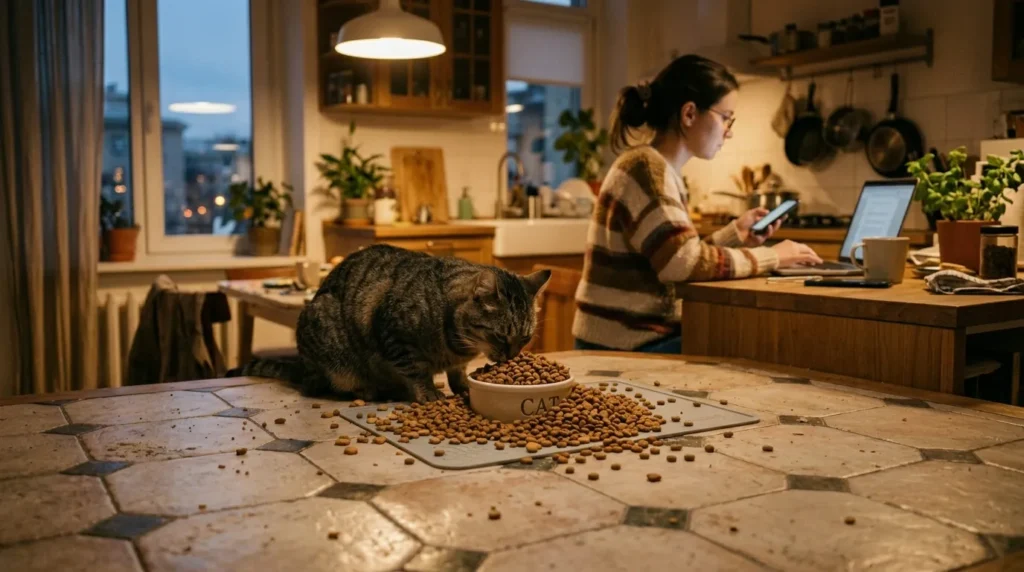
The most expensive health mistake is skipping vet visits while the cat looks fine. Cats that look healthy often aren’t. Silent conditions including kidney disease, dental infection, thyroid dysfunction and early diabetes are all common in indoor cats over seven, and a basic wellness panel can detect all of them long before symptoms appear. The annual exam does the work of catching what you can’t see, so treat it as the main event and not as paperwork.
The second mistake is treating indoor status as a substitute for parasite prevention. Fleas don’t need the cat to go outside. They need one ride on a shoe or a bag, and they’re in the apartment. A single flea infestation in a carpeted apartment is a months-long problem that’s much harder to resolve than to prevent.
The third mistake is waiting for a dramatic weight change before addressing diet. Weight creeps. On a 10 pound cat, an extra half pound is 5 percent of body weight, and a cat that gains that much each year is 20 percent over ideal in four years. It feels invisible in real time and enormous at the annual visit years later. Measure portions from the first day and adjust as the cat ages.
The fourth mistake is assuming a cat that drinks from the bowl is drinking enough. A cat’s thirst drive is weak by nature, and dry-food-only diets make chronic mild dehydration easy to miss until urinary or kidney trouble shows up on bloodwork.
The fifth is ignoring small litter box changes. A cat that has stopped using a box has rarely turned spiteful. Something hurts, or something has changed, so look for the cause before you scold.
Quick checklist: indoor cat health habits by frequency
| Daily | Weekly | Monthly | Annually (or twice a year after 10) |
| Measured meals, fresh water, litter scoop, two play sessions, tooth brushing | Nail check, wash food and water bowls, brush 2 to 3 times for short hair | Body condition check, flea and parasite preventive, rotate toys | Full vet exam with bloodwork, dental assessment, weight and body condition review |
Signs Your Indoor Cat Is Sick
Cats hide illness, so the early signals are quiet. This table separates what can wait for a scheduled visit from what can’t.
| Sign | Urgency | Why it matters |
| Straining in the box with little or no urine | Emergency, go now | Possible blockage, which can turn life-threatening within hours, especially in males |
| Stumbling, falling, walking in circles | Emergency, go now | Possible stroke, hypertension or neurological event |
| Refusing food for 24 hours | Same day | Risk of hepatic lipidosis rises quickly in cats |
| Open-mouth breathing or labored breathing | Emergency, go now | Cats rarely pant. It points to heart or lung trouble. |
| Drinking and urinating much more | Within the week | Classic early sign of diabetes or kidney disease |
| Weight loss with a normal or bigger appetite | Within the week | Common pattern in hyperthyroidism and diabetes |
| Hiding, grooming less, greasy or matted coat | Within the week | Pain, nausea or general illness |
| Bad breath, drooling, dropping food | Book an exam | Dental disease |
When a Healthy Cat Suddenly Isn’t
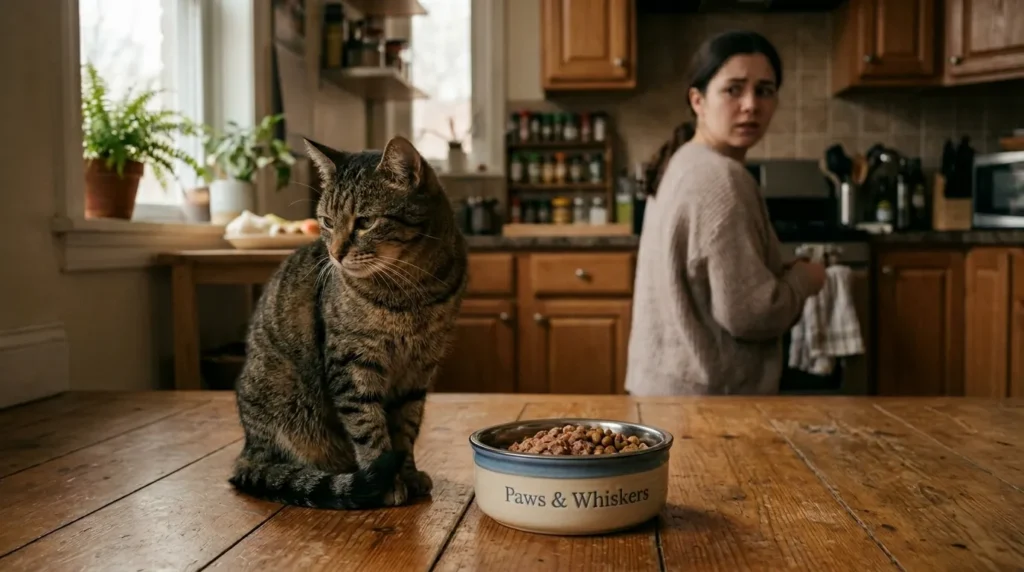
A cat that was eating normally and stops for more than twenty-four hours needs a vet call the same day. Cats that go without food can develop hepatic lipidosis, a serious liver condition, within days in cats carrying any body fat reserves, and it needs veterinary treatment to resolve.
Increased thirst combined with increased urination is the classic early warning sign of both diabetes and kidney disease. If your cat visits the water bowl a lot more than usual, or produces noticeably larger clumps in the litter box, book a vet appointment within the week and skip further monitoring.
A cat straining in the litter box with little or no urine coming out needs emergency care. Don’t wait and see, especially with a male cat, where a urinary blockage can turn life-threatening within hours.
Any sudden neurological change, including stumbling, falling or walking in circles, is an emergency. These symptoms point to stroke, hypertension or a neurological event and need same-day emergency veterinary attention.
This article is for informational purposes only. Always consult your vet if you have concerns about your cat’s health.
Your First 30 Days: A Simple Plan
If this list feels like a lot, start here. Each step takes under ten minutes to begin.
- Week 1, measure and weigh. Weigh your cat, check the body condition score, and start measuring every meal with a scale or measuring cup.
- Week 1, book the vet. If your cat hasn’t had an exam with bloodwork in the past year, book it now and ask for a dental check.
- Week 2, fix water and food. Add a second water source, and switch one meal a day to wet food.
- Week 2, start play. Two sessions daily with a wand toy, 15 to 20 minutes total.
- Week 3, start the toothbrush. Let your cat lick toothpaste off your finger daily before introducing a brush.
- Week 3, check parasite prevention. Confirm your cat’s flea product is labeled for cats and up to date.
- Week 4, upgrade the space. Add a window perch or cat tree, one hiding spot, and a spare litter box if you’re short.
- Week 4, re-weigh. Compare against week one, and note any changes in drinking or litter box output to share with your vet.
Frequently Asked Questions About Keeping Indoor Cats Healthy
How long do indoor cats live compared to outdoor cats?
Indoor cats commonly live 12 to 18 years, while outdoor cats average far less because of traffic, predators, disease exposure and injury. The indoor advantage is real, but it depends on active health management. An indoor cat with poor food, no vet care and chronic stress doesn’t automatically outlive a well-managed outdoor cat.
How often should an indoor cat go to the vet?
Once a year for healthy adults, twice a year for cats over ten, and every three to four weeks for kittens until their vaccine series is done. Mature cats between seven and ten should go twice a year if any risk factor exists. Any sudden change in eating, drinking or litter box habits needs a call sooner.
Do indoor cats need vaccinations if they never go outside?
Yes. Core vaccines including FVRCP protect against viruses that can enter the home on clothing, shoes and hands. Rabies vaccination is required by law in many places even for indoor cats. Your vet will set the schedule based on your cat’s age and health history. If your cat has had a vaccine reaction in the past, always tell your vet before the next vaccination.
What is the most common health problem in indoor cats?
Dental disease is the most common condition in indoor cats, affecting over 70 percent of cats by age three according to widely cited veterinary estimates. Obesity is second and contributes to diabetes, joint disease and a shorter lifespan. Both are largely preventable with consistent home care and annual vet checks.
How do I know if my indoor cat is at a healthy weight?
Feel along the ribcage. You should find the ribs easily without pressing hard, but you shouldn’t see them through the fur. Looking down from above, there should be a visible waist. If you need real pressure to find the ribs, or the belly hangs, your cat is likely overweight. Ask your vet for a body condition score.
What are the signs of a sick indoor cat?
Cats hide illness, so look for quiet changes: eating less or more, drinking more, hiding, a greasy or unkempt coat, weight loss, bad breath, and changes in litter box output. Straining to urinate with little or no urine, refusing food for 24 hours, and sudden stumbling are emergencies.
Should indoor cats have regular blood tests?
Cats over seven benefit from annual bloodwork even when they look healthy, and cats over ten benefit from it twice a year. Blood panels can show kidney disease, thyroid problems, diabetes and liver trouble years before symptoms appear.
How much water should an indoor cat drink each day?
A rough benchmark is 3.5 to 4.5 ounces of water per 5 pounds of body weight daily, including the moisture in wet food. A 10 pound cat lands around 7 to 9 ounces total. Cats on all-dry diets have to drink more to make up the difference.
Do indoor cats really need a water fountain?
Not strictly, but many cats drink more from moving water than from a still bowl. A fountain is a reasonable add-on for a cat that drinks little, but it won’t prevent kidney or urinary disease on its own. Keep it clean, keep a backup bowl out, and watch actual intake and litter box output.
Do indoor cats get fleas?
Yes. Fleas ride in on shoes, clothing, bags and other pets. One flea hitching a ride is enough to start an infestation in a carpeted apartment. Year-round prevention made specifically for cats is the safest plan.
What common houseplants are toxic to indoor cats?
Lilies are the most dangerous. Even small amounts of the plant, or the pollen and vase water, can cause acute kidney failure in cats. Sago palm, tulip bulbs and oleander are also toxic. Check any plant against the ASPCA’s toxic plant list before bringing it home.
What does it mean if my cat’s litter box habits suddenly change?
It usually means something needs checking. Straining, blood, very small or very large clumps, and new avoidance of the box most often point to a urinary, kidney or stress-related issue. One odd trip isn’t cause for panic, but a pattern lasting more than a day or two, or any straining with no output, calls for a same-day vet call.
Conclusion
Keeping an indoor cat healthy comes down to a handful of things done consistently: the right diet in the right amount, enough water, annual vet visits that don’t skip dental and bloodwork, and daily movement through structured play. Start today by switching one meal to wet food, topping up the water bowl, and booking an annual wellness exam if your cat hasn’t had one in the past year. For the daily habits that keep all of this running without extra effort, see our guide to an indoor cat daily routine that actually works, and for setting up your cat’s space to reduce stress and boredom, check out our full indoor cat enrichment guide.
Keeping an indoor cat healthy requires a high-protein wet food diet with measured portions, daily water intake support, annual veterinary wellness exams including bloodwork and dental assessment, and daily interactive play totaling 15 to 20 minutes to prevent obesity. Indoor cats need year-round parasite prevention despite having no outdoor access, because fleas and heartworm reach indoor environments through human contact. Home hazards such as lilies, loose string and unscreened windows add risk that’s easy to remove. Dental disease affects over 70 percent of cats by age three. Chronic kidney disease is the leading cause of death in senior indoor cats and is detectable through routine bloodwork years before symptoms appear. Reading litter box habits daily catches urinary and kidney problems earlier than almost any other home check. Indoor cats commonly live 12 to 18 years with consistent, proactive care.

Written by Mishu
A passionate cat lover and indoor living enthusiast, Mishu is the founder and voice behind Indoor Living Cat – a go-to resource for cat owners who want to create the happiest, healthiest life for their feline companions indoors.
View Full Profile