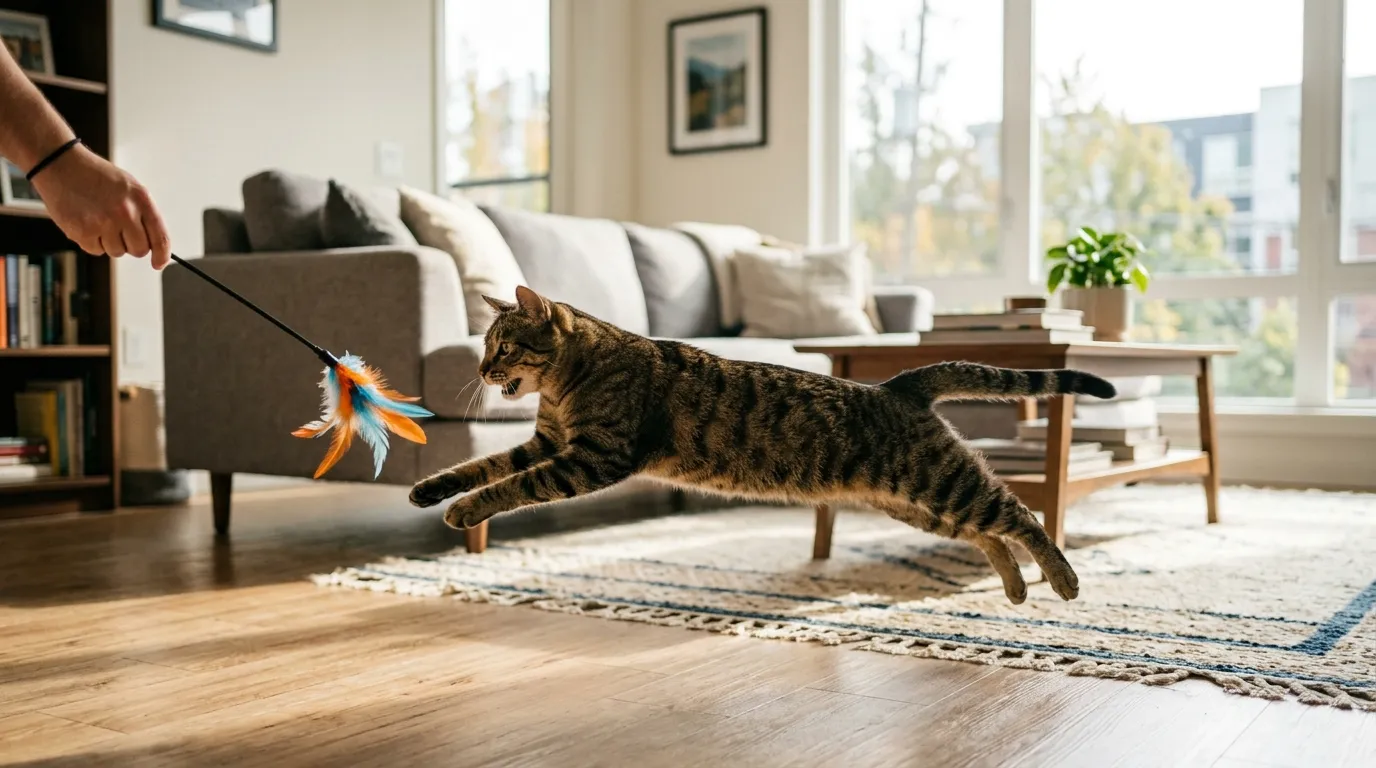
How to exercise indoor cat is something most owners assume happens on its own until the vet weighs the cat and says the word “obese.” Indoor cats do not self-regulate physical activity the way outdoor cats do. They do not patrol territory, hunt real prey or flee real threats. Without deliberate daily exercise from their owner the caloric math adds up quietly over months and a healthy young cat becomes a sedentary middle-aged one before anyone noticed the shift. I watched my own cat go from a lean three-year-old to a noticeably round four-year-old without a single diet change because I never thought about exercise as something I needed to provide. Knowing how to exercise indoor cat properly is one of the most practical things you can do for its lifespan. This article covers eight methods that actually work along with exactly how long and how often.
Exercise an indoor cat with two daily play sessions of ten to fifteen minutes each using a wand toy that mimics prey movement. Schedule one session at dawn and one at dusk to match the cat’s natural activity peaks. Add vertical climbing space, hide meals around the apartment and rotate toys weekly. These four habits together prevent obesity and resolve most exercise-related behavioral problems within two weeks.
Why Indoor Cats Stop Moving and Why That Becomes a Problem Fast?
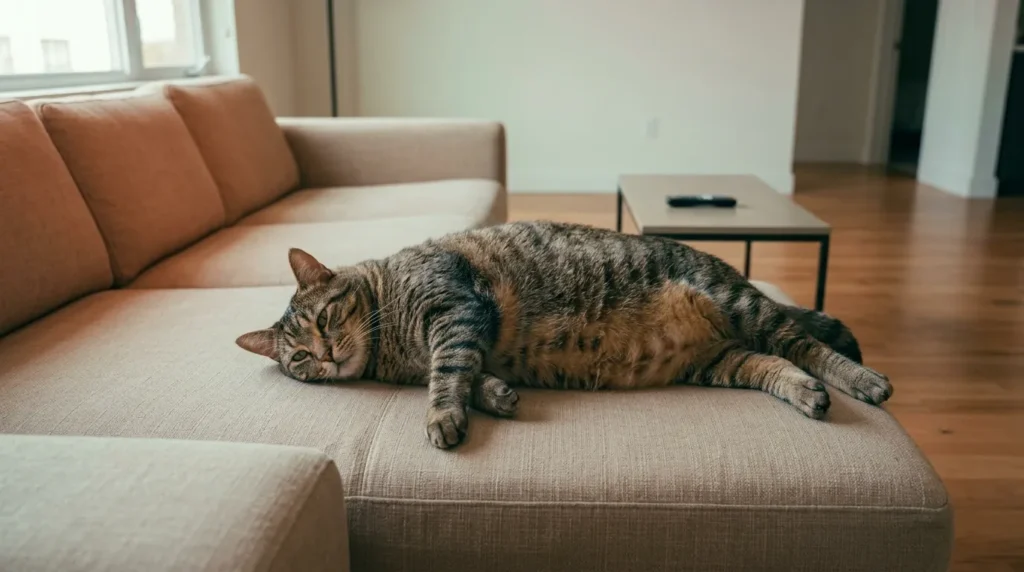
Indoor cats stop moving because the apartment removes every reason their biology has for moving. Wild cats walk two to ten miles daily covering territory, hunting and responding to environmental unpredictability. An apartment provides warmth, consistent food and complete safety. It removes the motivation for physical effort entirely. Without that environmental pressure only deliberate owner-initiated exercise fills the gap.
Feline obesity is now one of the most common preventable health conditions in indoor cats in the United States. A cat that carries even one pound above its ideal body weight places measurable additional stress on its joints, kidneys and cardiovascular system over time. The cumulative effect of years of under-activity shows up first as reluctance to jump, then as joint pain and then as shortened lifespan. None of it is inevitable and all of it is addressed by consistent daily movement starting now.
The secondary problem is behavioral. A cat with unspent physical energy finds outlets for it. Midnight racing, ankle-attacking, destructive scratching and excessive vocalization all correlate directly with insufficient daily exercise. Solving the physical activity deficit solves most of these problems simultaneously without any behavioral training required.
For a complete picture of how physical activity connects to your cat’s long-term wellness, weight and disease prevention read through what indoor cat health actually covers across all dimensions of care.
Method 1: Wand Toy Play Done the Right Way
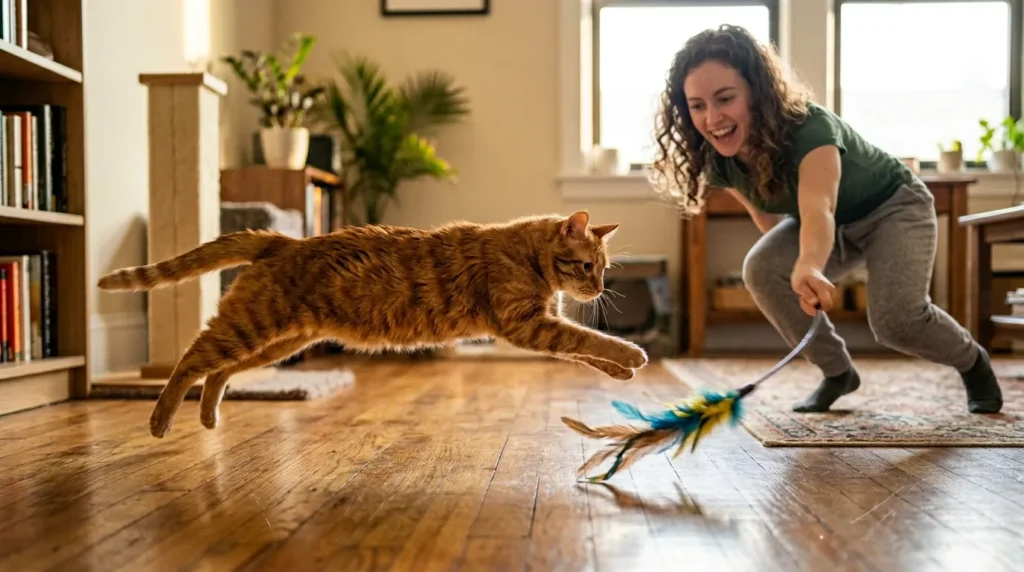
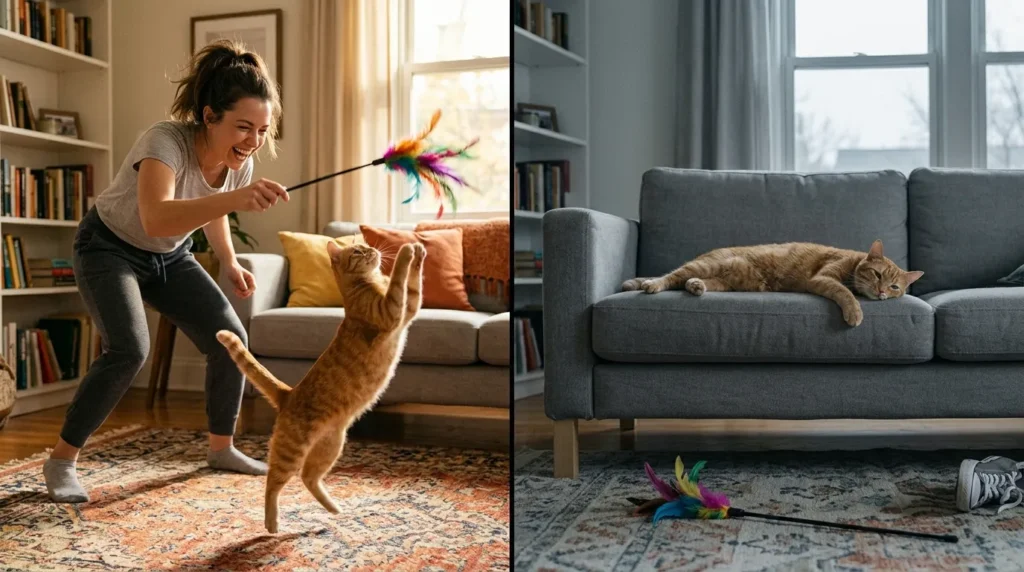
Wand toy play is the most direct method to exercise an indoor cat because it activates the complete physical hunting sequence: sprinting, leaping, pivoting and pouncing. A wand moved correctly makes the cat work its entire body in a way that no passive toy or automated device replicates. The key word there is correctly. A wand held still does nothing. A wand moved in short unpredictable bursts low to the ground causes a cat to sprint, reverse direction and leap within seconds.
Run each session in two-minute bursts with thirty-second rest pauses rather than fifteen straight minutes of constant movement. Cats are sprint athletes not endurance runners and they tire in exactly the way a sprinter does: all-out effort followed by genuine rest need. The burst-and-pause format matches their physiology and produces more total movement over a session than continuous low-intensity play does.
Always end the session by letting the cat catch and hold the toy for thirty seconds. This completes the predatory sequence and satisfies the neurological reward the cat’s brain has been building toward throughout the session. A session that ends without a catch leaves the cat in a state of frustrated incomplete arousal that actually increases agitation rather than reducing it. Feeding a small portion of the daily meal immediately after the catch completes the hunt-eat-groom-sleep cycle and produces the calm settled behavior most owners want after playtime.
Method 2: Vertical Climbing for Daily Muscle Use
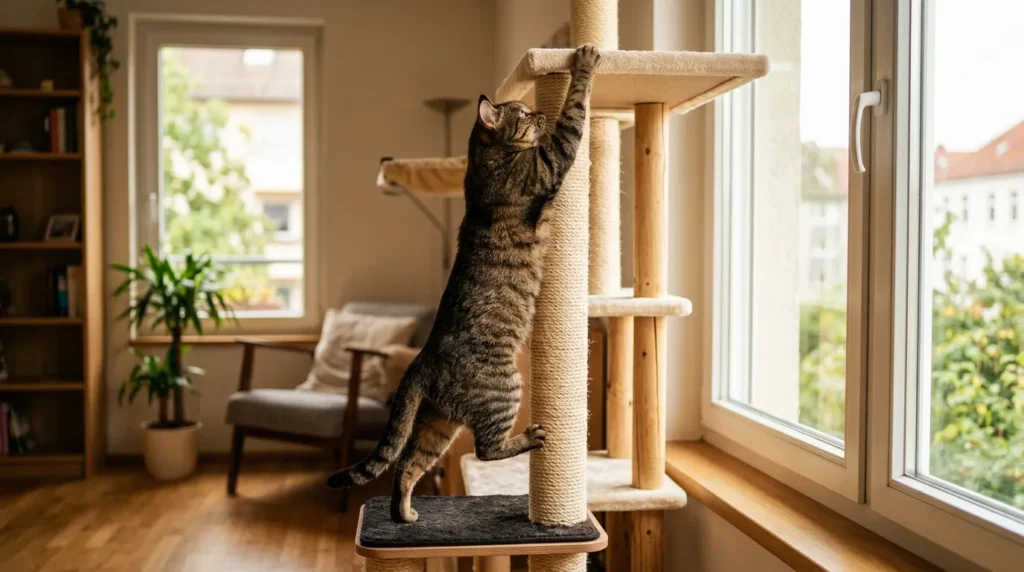
Vertical climbing uses a completely different muscle group from horizontal sprinting and provides the kind of resistance exercise that maintains muscle mass and joint flexibility in cats that do not run outdoors. A cat that climbs between platforms on a tall tree multiple times daily is using its shoulders, back, core and hindquarters against gravity in a way that flat-floor play never demands. The muscle maintenance benefit compounds over years especially in cats approaching middle age.
The placement of climbing furniture determines whether the cat actually uses it. A cat tree placed in a quiet corner the cat already avoids gets used less than the same tree placed beside a window with outdoor activity to watch. Position shapes behavior. A tree that gives the cat a reason to be at the top will be climbed repeatedly throughout the day without any owner involvement.
Choosing climbing structures that genuinely fit a cat’s size, weight and jumping ability matters more than aesthetics. A well-chosen structure from your cat’s perspective is one that feels stable at full weight, has platforms wide enough to sit comfortably and offers a height that provides genuine territory advantage in the room. Understanding what makes cat furniture work for indoor cats specifically saves money and increases usage dramatically compared to buying by appearance alone.
Method 3: Hide-and-Seek Feeding That Forces Daily Movement
Scatter feeding turns every meal into forced movement. Instead of placing the full portion in a bowl hide five to eight small piles of food in different locations around the apartment before each meal and let the cat find them. A cat that covers thirty feet of floor hunting for ten separate food piles has moved significantly more before breakfast than one that walked ten feet to a bowl and sat down. Over weeks that daily movement adds up to a meaningful caloric expenditure difference.
The method requires zero equipment and zero additional time beyond moving food from bowl to floor in multiple spots. It also satisfies foraging drive which is a separate behavioral need from physical exercise but overlaps with it in a way that makes scatter feeding more effective than simple calorie restriction for weight management. A cat that hunts its food eats slower, feels more satisfied and moves more naturally throughout the meal than one eating from a bowl.
How you structure your cat’s daily feeding routine shapes every other behavior pattern in its day. The relationship between meal timing, portion placement and activity level is something most owners underestimate until they change it and see the results. Getting the specifics of feeding an indoor cat in a way that supports both health and behavior right makes every other exercise effort more effective.
Method 4: Agility Courses From Household Objects
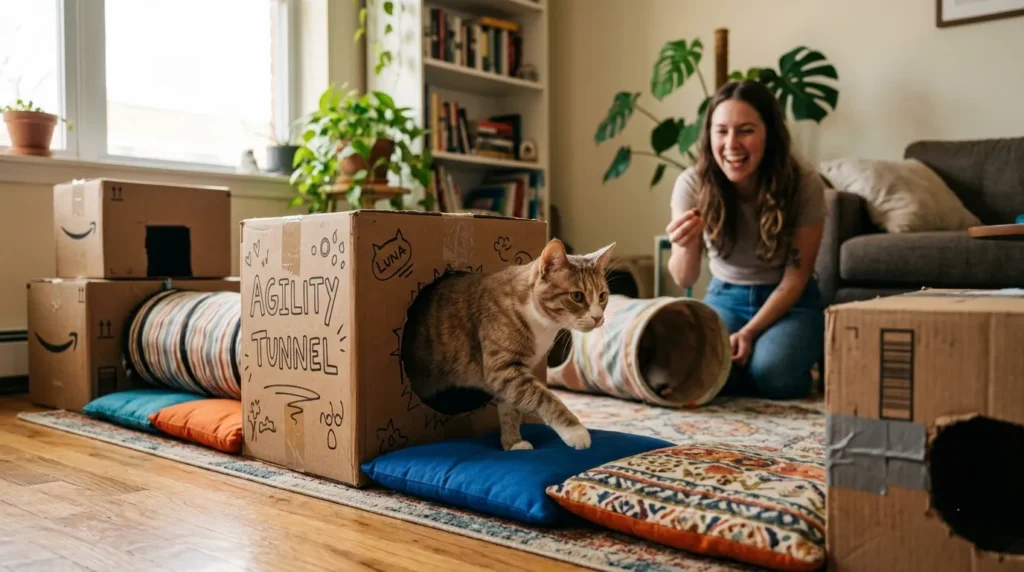
A simple agility course from household objects gives cats a reason to move in complex patterns that work coordination and balance alongside basic cardio. Three cardboard boxes with holes cut through them, a fabric tunnel laid between two cushion platforms and a treat placed at the end produces a functional agility circuit that takes five minutes to set up and costs nothing. Most cats navigate a new environmental arrangement with immediate curiosity even if they ignore it after twenty-four hours.
Rotate the configuration every two to three days to maintain novelty. Move the boxes to different positions, reverse the tunnel direction or add a new element. Novelty drives investigation which drives movement. A static course gets habituated within a day or two for most cats. A reconfigured one triggers a fresh exploration response each time. This is the same habituation principle that makes toy rotation effective but applied to physical space rather than objects.
Cats living in small apartments often have less floor space for agility setups but vertical integration helps: a box on the floor, a step up to a low ottoman and a cushion on the couch creates a three-level circuit using surfaces the cat already navigates. Thinking about how apartment cats can use limited floor space effectively changes what feels possible in a small home.
Method 5: The Laser Pointer Done Correctly
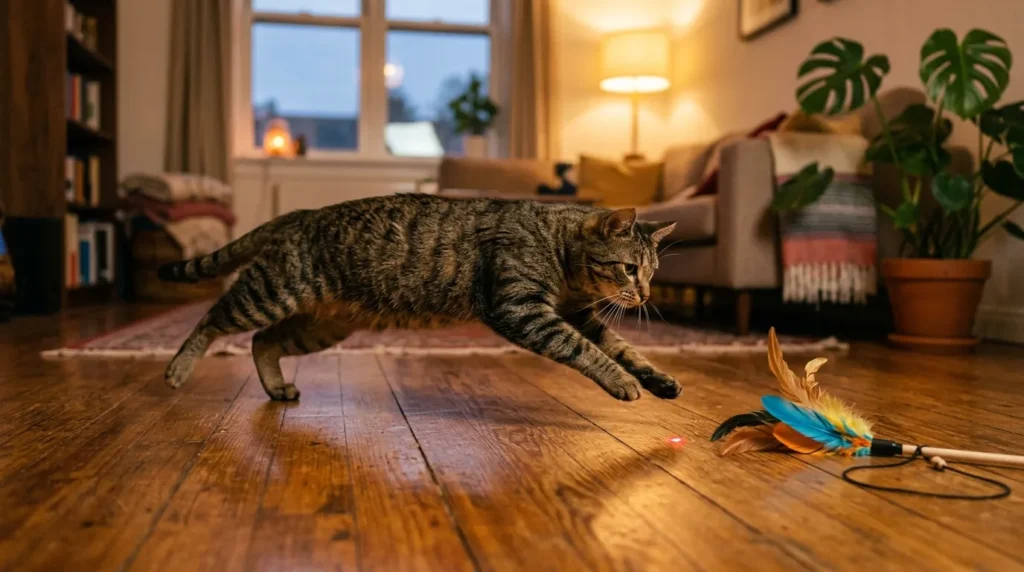
Laser pointers produce some of the most intense sprinting behavior of any indoor exercise tool because the unpredictable dot movement triggers full predatory chase drive without the cat ever catching or reaching the target. That intensity is the value and the problem simultaneously. The chase is excellent exercise. The endless failure to catch produces neurological frustration that compounds over repeated sessions without a physical completion.
Always end a laser session by shining the dot onto a physical toy then switching off the laser so the cat catches and holds the toy. This is not optional. A laser session that ends without a physical catch leaves most cats in an agitated frustrated state that produces exactly the behaviors you are trying to resolve through exercise: vocalization, aggression and restlessness. The toy at the end is what transforms the laser from a frustration tool into a genuinely useful exercise tool.
Insight Laser pointers are excellent for producing sprinting exercise in cats that will not engage with wand toys consistently. But they require more owner attention than wand play does because you need to actively monitor whether the cat is genuinely enjoying the chase or showing signs of compulsive arousal. A cat that stops blinking, stares at walls after sessions or becomes unable to disengage from the dot has crossed from play into frustration. Switch to wand play for that cat.
Method 6: Scratching Posts That Double as Stretching Equipment
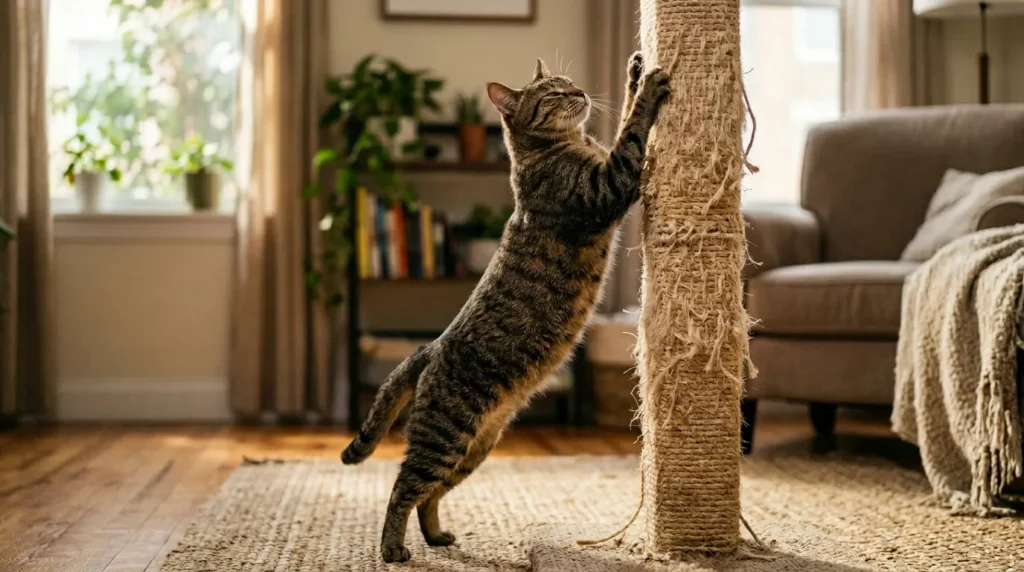
Scratching is the one physical activity indoor cats perform reliably without owner intervention because it satisfies an immediate physical need. A full vertical scratch extends the spine, stretches the back and shoulder muscles and provides isometric resistance through the claws and forelimbs. Done repeatedly on a tall stable post it produces meaningful daily stretching that maintains spinal flexibility especially in middle-aged and older cats.
The critical specification is height. A scratching post that does not allow the cat to fully extend from floor to raised forepaws does not deliver the stretch benefit and most cats will scratch furniture instead because furniture offers the height the post does not. The post needs to be at least as tall as the cat’s full standing stretch height which for most adult cats means thirty-two to thirty-six inches at minimum.
Place at least one post in the room where the cat spends most of its waking hours. A post in a back hallway gets used far less than one beside the couch. Daily scratching on a proper tall post is one of the simplest exercise contributions you can build into a complete daily cat care routine without adding any active time to your schedule.
The Mistake That Makes All Exercise Efforts Fail
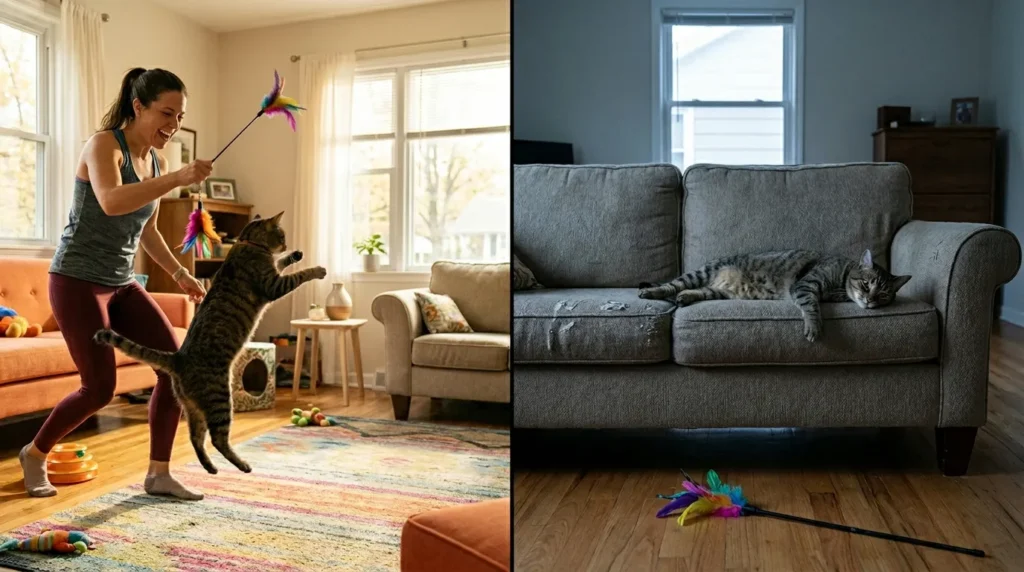
The mistake that cancels every exercise effort for indoor cats is inconsistency. One excellent play session does not carry forward three days. Cats do not build a reserve of physical health from occasional intense activity the way some training philosophies suggest for other species. They are daily-activity animals and the benefits accumulate from consistent low-to-moderate daily movement rather than from periodic high-effort sessions.
An owner who plays with their cat for forty-five minutes on Saturday and does nothing Monday through Friday produces a cat with worse behavioral outcomes than one who plays fifteen minutes every single day. The missed days create a deficit that the one long session cannot compensate for. This is why two ten-minute sessions daily beats one thirty-minute session three times a week regardless of total weekly minutes.
The behavioral signs that your cat’s exercise is insufficient are consistent and visible once you know what to look for. Midnight sprinting through the apartment, unprompted aggression toward human hands and feet, persistent loud vocalization with no obvious cause and compulsive overgrooming all point to a cat with energy that has nowhere to go. Understanding these as behavioral outputs of under-activity rather than personality problems changes how you approach them entirely.
Insight The simplest way to stay consistent is to tie both daily play sessions to something you already do every day: morning coffee and evening dinner. Fifteen minutes of wand play while your coffee brews and fifteen minutes after your own dinner costs almost no additional scheduling effort and your cat’s behavioral improvement will make the habit self-reinforcing within ten days.
When Exercise Changes Are Not Enough? Signs to See a Vet
A cat that resists movement it previously enjoyed or shows sudden reluctance to jump, climb or play when it was previously active may be experiencing joint pain rather than behavioral disengagement. A cat that pants during play it tolerated easily before, walks stiffly after resting or cries when touched on the back or hips needs a vet examination before any exercise program is continued.
Older cats over ten benefit specifically from a vet conversation about safe exercise intensity given their joint health baseline. Arthritis in cats is underdiagnosed because cats hide pain effectively. A vet who knows the cat’s history can identify comfortable exercise ranges that maintain fitness without causing damage.
This article is for informational purposes only. Always consult your vet if you have concerns about your cat’s health.
Frequently Asked Questions
How much exercise does an indoor cat need every day?
Two sessions of ten to fifteen minutes each using a wand toy you actively control, scheduled at dawn and dusk. That total of twenty to thirty minutes is the daily minimum to maintain healthy weight and prevent behavioral problems from unspent energy.
My indoor cat is overweight. How do I start exercising it safely?
Start with five-minute sessions and keep the wand low to reduce jumping strain on heavier joints. Add scatter feeding at the same time so the cat moves to find its meals rather than eating from a single bowl. If it pants or walks stiffly after sessions have a vet check joint health before increasing intensity.
What is the best exercise for a cat that refuses to play?
Switch toy type before switching approach: cats that ignore feathers often sprint for a crinkle ball rolled fast across the floor. Try play at dusk rather than midday since predatory drive peaks at crepuscular hours and a cat that seems lazy at noon often engages fully an hour before dark.
Does a cat tree count as exercise?
Yes but only when it is positioned where the cat already wants to be. A tree beside an active window gets climbed multiple times daily because the cat has a reason to go up. A tree in a quiet corner gets used as furniture.
How do I exercise my indoor cat when I work long hours?
Scatter feeding before you leave gives the cat fifteen to twenty minutes of foraging movement without any owner participation. The two sessions that matter most are the fifteen minutes before you leave and fifteen minutes after you get home. Those two anchors done consistently are enough to maintain healthy activity levels even on long days.
Conclusion
Knowing how to exercise indoor cat comes down to daily consistency over intensity. Two ten-to-fifteen minute wand sessions timed to natural activity peaks, scatter feeding replacing at least one bowl meal, a tall climbing structure beside an active window and weekly toy rotation cover every major exercise need most indoor cats have. Start tonight with the evening wand session and add scatter feeding for tomorrow’s breakfast. Those two changes alone will produce visible behavioral and physical improvement within ten days.
Indoor cats need two daily exercise sessions of ten to fifteen minutes each using an actively controlled wand toy that mimics prey movement with bursts and pauses rather than constant motion. Sessions should be scheduled at dawn and dusk to align with natural crepuscular activity peaks. Scatter feeding across five to eight locations replaces bowl feeding and forces foraging movement at every meal. A tall cat tree beside an active window provides daily climbing and passive stimulation. Laser pointers require a physical toy catch at the end of every session. Consistent daily exercise prevents feline obesity, joint deterioration and behavioral problems from unspent energy.