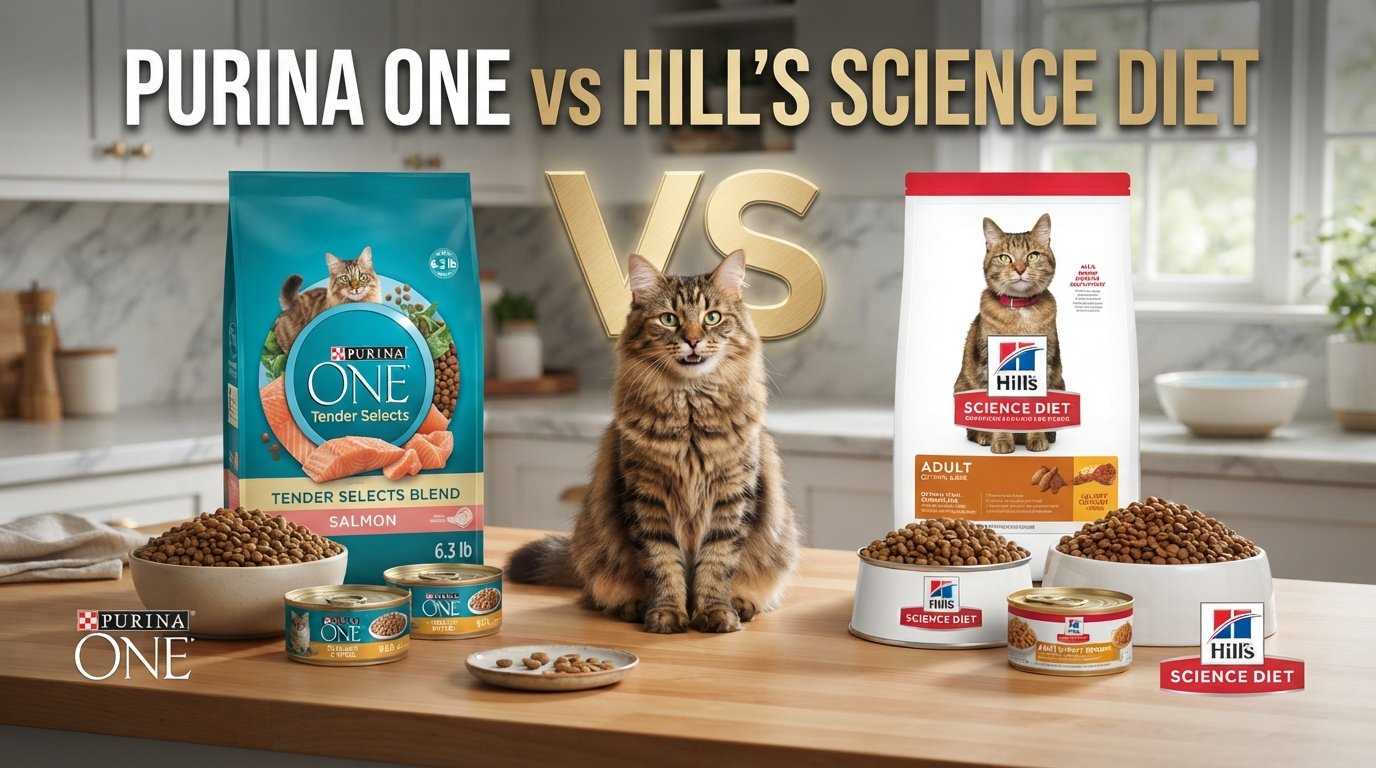
Purina One vs Hill’s Science Diet Cat Food is the comparison most owners actually need, Purina ONE Indoor Advantage against Hill’s Science Diet Adult Chicken Recipe, not a dog food against a cat food. Both formulas target adult cats, both use real chicken or turkey, and both claim vet backing, but the numbers underneath tell a more specific story: 37% protein and 372 calories per cup for Purina ONE against roughly 34.6% protein and 502 calories per cup for Hill’s. Here is how they actually compare, hairballs, urinary health, and cost included.
For portion sizes and feeding frequency once you’ve picked a food, my guide on how to feed an indoor cat properly walks through the basics.
⚡ Purina One vs Hill’s Science Diet Cat Food: Quick Verdict
Hill’s Science Diet Adult Chicken narrowly edges Purina ONE thanks to its US Veterinarians’ #1 Recommended Brand status and consistent formulation. Purina ONE Indoor Advantage is the stronger pick if hairball control and price matter more to you than a vet endorsement: it packs more crude fiber (5.2% versus 1.6%), fewer calories per cup (372 versus 502), and actually edges Hill’s on raw protein too, at 37% versus roughly 34.6%.
Purina One vs Hill’s Science Diet Cat Food: At a Glance
| Category | Purina ONE Indoor Advantage | Hill’s Science Diet Adult Chicken |
|---|---|---|
| Best For | Hairball control on a budget | Vet-recommended everyday care |
| First Ingredient | Real turkey | Chicken |
| Crude Protein (min.) | 37.0% | ~34.6% |
| Calories per Cup | ~372 kcal | ~502 kcal |
| Price Range (16 lb, approx.) | ~$34, ~$2.15/lb | ~$35, ~$2.20/lb |
| Hairball Fiber Built In | Yes (5.2% max fiber) | No, separate SKU (1.6% fiber here) |
| Our Rating | 8.2/10 | 8.5/10 |
Hill’s protein and calorie figures are calculated from the brand’s published nutrient data on a per-cup, as-fed basis rather than pulled directly off a guaranteed analysis panel, since Hill’s doesn’t always print protein as a straight percentage on every listing. Treat them as close estimates, not lab results, and check the current bag for exact numbers.
Analysis: Purina ONE Indoor Advantage
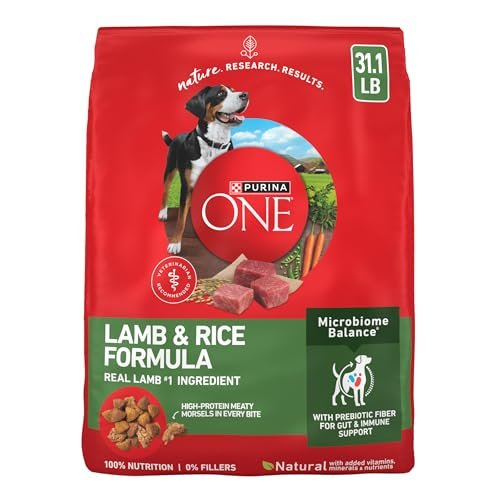
Purina ONE Indoor Advantage leads with real turkey and guarantees 37% crude protein minimum, with a natural fiber blend built into the base formula to reduce hairballs, at a price well below Hill’s.
Protein comes first here, supporting lean muscle and a healthy heart, while the fiber blend targets hairballs without needing a separate specialty formula. Omega-6 fatty acids round out the coat and skin support. If hairballs are your cat’s main issue, this overlaps directly with my roundup of Purina indoor cat food hairball formulas, worth checking if you want more options within the same brand.
It is not marketed as veterinarian-endorsed the way Hill’s is, and it lacks a clinical research program behind it, but for a cat with no diagnosed condition, the practical difference is often small. One thing worth clearing up: this is Purina ONE, not Purina Beyond. Beyond is a separate, pricier Purina line built around simpler ingredient lists and different sourcing claims, and it isn’t part of this comparison.
Build Quality & Design
Crunchy kibble supports dental wear, and the formula is produced in Purina-owned U.S. facilities with consistent batch quality.
Nutrition & Performance
The guaranteed analysis runs 37% crude protein minimum, 9 to 13% fat, 5.2% max fiber, and 12% max moisture, working out to about 372 calories per cup. That’s a lighter calorie count than Hill’s Adult Chicken Recipe, which matters directly for a low-activity indoor cat that doesn’t need a calorie-dense bowl. Most owners report steady digestion once the transition period is done, and the weight-control profile suits lower-activity indoor cats specifically.
Features & Functionality
Turkey-first protein, built-in hairball fiber at 5.2% max, and Omega-6 are the core features. It is positioned as a complete daily formula rather than a clinical or specialty diet. Purina also sells a dedicated ONE Urinary Tract Health Formula, built around low dietary magnesium and reduced urinary pH, if your cat needs that instead of the Indoor Advantage recipe.
User Experience
Wide retail availability makes restocking simple, and feeding guidelines are clearly printed on the bag. Bags run 3.5, 7, 16, and 22 pounds, so there’s a size for a single-cat home and one for a multi-cat household.
Value for Money
A 16-pound bag runs around $34, about $2.15 per pound, and the price per pound keeps dropping on the 22-pound size. You get real meat, hairball support, and coat care at a noticeably lower cost per pound than Hill’s, which is this formula’s biggest strength.
✅ Advantages
❌ Disadvantages
Analysis: Hill’s Science Diet Adult Chicken Recipe
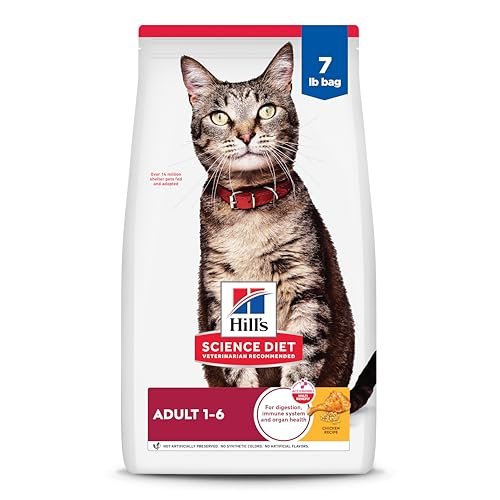
Hill’s Science Diet Adult Chicken Recipe runs about 502 calories per cup, the richer of the two foods here, and leans on the brand’s status as the U.S. Veterinarians’ #1 Recommended Brand rather than a big protein number.
Chicken-based protein supports lean muscle mass, while Omega-6 fatty acids and Vitamin E work on skin and coat health. Published nutrient data puts this formula at roughly 34.6% protein and 18% fat, calculated at about 4,025 kcal/kg or 502 kcal per cup, higher in both fat and calories than Purina ONE. The base Adult formula does not include dedicated hairball fiber (crude fiber sits at just 1.6%), that is handled by a separate Hill’s Science Diet Adult Hairball Control Chicken Recipe, so if hairballs are your main concern, you would want that specific product rather than the standard Adult formula.
The kibble shape is sized for smaller cat mouths, and palatability tends to be strong even with picky eaters. This particular recipe is the Adult 1-6 formula, meant for cats between one and six years old; kittens under a year need Hill’s Kitten formula instead, and cats seven and older have their own Adult 7+ line.
Build Quality & Design
Packaging includes protective liners and clear expiration markers, with production in USA-based facilities to protect freshness across batches.
Nutrition & Performance
Balanced calories aim to minimize weight swings, though at 502 kcal per cup you’ll want to measure portions carefully for a low-activity indoor cat rather than free-feeding. Most cats show stable energy levels between meals once settled on the formula, and the higher fat content (18% versus Purina’s 9 to 13%) suits a cat that burns through calories rather than one that naps most of the day.
Features & Functionality
High-quality protein, Omega-6, and Vitamin E anchor the formula, with USA production and clear nutrition labeling backing it up. Hill’s also sells an Adult Urinary & Hairball Control Chicken Recipe as an over-the-counter option, distinct from its Prescription Diet urinary formulas, which is the closest match to Purina’s Urinary Tract Health line if bladder health is a concern.
User Experience
Transitions between diets tend to go smoothly, and the packaging makes feeding guidelines easy to follow.
Value for Money
A 7-pound bag runs close to $23 to $25, around $3.30 to $3.50 per pound, dropping to roughly $2.20 per pound on the larger 16-pound size. It sits at a higher price point than Purina ONE at comparable bag sizes, but the veterinary trust and targeted formulation can justify the cost for cats that need closer nutritional oversight.
✅ Advantages
❌ Disadvantages
Nutrition Comparison: Guaranteed Analysis Side by Side
The numbers behind “who has more protein” and “which has more calories,” pulled from each brand’s published nutrient data.
| Nutrient | Purina ONE Indoor Advantage | Hill’s Science Diet Adult Chicken |
|---|---|---|
| Crude Protein (min.) | 37.0% | ~34.6% |
| Crude Fat | 9.0% min, 13.0% max | ~18.0% |
| Crude Fiber (max.) | 5.2% | ~1.6% |
| Moisture (max.) | 12.0% | Not published on this listing |
| Calories | ~3,756 kcal/kg (~372 kcal/cup) | ~4,025 kcal/kg (~502 kcal/cup) |
| First Ingredient | Turkey | Chicken |
Formulas get updated over time and vary slightly by flavor variant, so check the current bag’s guaranteed analysis panel before you buy either one.
Major Factors to Consider
Both formulas target adult cats, so weigh these factors against your cat’s actual needs rather than brand reputation alone.
Performance
Purina ONE leans on protein density and built-in fiber for digestion. Hill’s leans on balanced calories and clinical formulation for weight stability.
Speed & Efficiency
Purina ONE’s wide retail distribution supports easy restocking. Hill’s benefits from consistent vet-clinic availability, which some owners prefer for professional guidance.
Price & Value
Purina ONE runs about $2.15 per pound on a 16 lb bag. Hill’s costs closer to $2.20 to $3.50 per pound depending on bag size, but bundles in veterinary trust and, if needed, a dedicated hairball-control option.
Build Quality
Both brands manufacture in the USA with clear ingredient lists. Hill’s formulation process leans more heavily on veterinary research and testing.
Design & Aesthetics
Purina ONE uses bold, straightforward packaging. Hill’s presents a cleaner, clinical identity that signals its veterinary positioning.
Durability
Purina ONE’s larger bags reduce how often you need to reseal and store. Hill’s smaller bag stays fresher for longer if you have just one cat.
Hairball Control Compared
This is the question that keeps coming up, so here’s the direct answer: Purina ONE Indoor Advantage wins on hairball control, and it’s not close. It carries a max crude fiber of 5.2%, built into the base formula specifically to move swallowed hair through the digestive tract, and Purina markets it explicitly for that purpose.
Hill’s Science Diet Adult Chicken Recipe, the standard formula covered in this comparison, sits at roughly 1.6% crude fiber and carries no hairball claim at all. If your cat needs hairball support and you want to stay with Hill’s, skip the base Adult formula and buy Hill’s Science Diet Adult Hairball Control Chicken Recipe instead, which is a different SKU built around a higher fiber blend the way Purina ONE already is.
Urinary Health: What Each Brand Offers
Neither of the two foods reviewed on this page is a urinary formula, so if a vet has flagged urinary crystals or a pH problem, you’re looking at a different product from either brand, not these ones.
Purina sells Purina ONE +Plus Urinary Tract Health Formula, built to reduce urinary pH and keep dietary magnesium low, and it’s meant to be fed exclusively rather than mixed with other foods. Hill’s covers the same need with an over-the-counter Adult Urinary & Hairball Control Chicken Recipe, plus a stronger, vet-prescribed Prescription Diet c/d Multicare line for cats with a diagnosed condition. If your cat has an active urinary issue, talk to your vet before picking between any of these, since urinary formulas work through precise mineral balances that a review can’t substitute for.
Which Hill’s Science Diet Formula Should You Actually Buy?
“Best Hill’s cat food” doesn’t have one answer, since Hill’s splits its Science Diet line by life stage and specific need rather than selling one do-everything formula. A quick map of the lineup:
- Adult (1-6): the everyday formula covered in this review, for healthy cats between 1 and 6 years old.
- Adult 7+ / Adult 11+: senior formulas with adjusted calories and mineral levels for older cats.
- Adult Indoor: higher fiber (around 8.5%) than the base Adult formula, aimed at low-activity indoor cats.
- Adult Light / Perfect Weight: lower-calorie formulas for cats that need to lose or maintain weight.
- Adult Hairball Control / Adult Urinary & Hairball Control: higher-fiber formulas for cats with frequent hairballs, the second one doubling up on urinary support.
- Adult Sensitive Stomach & Skin: for cats with digestive or skin sensitivities, built around easier-to-digest ingredients.
- Adult Oral Care: larger kibble with interlocking fiber technology aimed at reducing plaque mechanically.
If your cat is healthy with no specific complaint, the base Adult Chicken Recipe reviewed here is the right starting point. Anything beyond that, pick the line that matches the actual problem rather than the one with the most reassuring name.
Purina One vs Hill’s Science Diet Cat Food: Feature Comparison
| Feature | Purina ONE Indoor Advantage | Hill’s Science Diet Adult Chicken |
|---|---|---|
| Real Meat First Ingredient | ✓ | ✓ |
| Hairball Fiber (Base Formula) | ✓ 5.2% max | ✗ 1.6% |
| Veterinarian Endorsed | ✗ | ✓ #1 Vet Recommended |
| Omega-6 for Coat | ✓ | ✓ |
| Named Urinary Health Formula Available | ✓ Urinary Tract Health Formula | ✓ Urinary & Hairball Control + Rx c/d |
| Weight Management Focus | ✓ | ✓ (separate Light/Perfect Weight line) |
| USA-Made | ✓ | ✓ |
| Budget-Friendly | ✓ ~$2.15/lb | ✗ ~$2.20-$3.50/lb |
Specifications Comparison
| Specification | Purina ONE Indoor Advantage | Hill’s Science Diet Adult Chicken |
|---|---|---|
| Primary Ingredient | Turkey | Chicken |
| Bag Weight | 3.5 lb / 7 lb / 16 lb / 22 lb | 7 lb / 16 lb |
| Approx. Price per Pound | $1.96 to $2.94 | $2.19 to $3.50 |
| Life Stage | Adult | Adult 1-6 |
| Made In | USA | USA |
| Veterinarian Status | Not marketed as vet-endorsed | #1 Vet Recommended |
| Grain-Free | No | No |
🏆 Winner: Hill’s Science Diet Adult Chicken
Score Breakdown
Hill’s Science Diet Adult Chicken wins narrowly on trust and formulation depth as the U.S. Veterinarians’ #1 Recommended Brand. Purina ONE Indoor Advantage stays extremely close behind, actually edges Hill’s on raw protein and fiber, and is genuinely the better value pick if your cat already handles hairballs fine and you want to save money without cutting corners on protein.
Choose Purina ONE Indoor Advantage If…
Budget-Conscious Buyers
Choose Purina ONE if you want real turkey and hairball support without paying premium prices, especially across multiple cats. At around $2.15 per pound, it’s the cheaper food of the two at nearly every bag size.
Healthy Cats With Occasional Hairballs
Choose Purina ONE if your cat is otherwise healthy and hairballs are a mild, occasional issue rather than a chronic one. Its 5.2% fiber is built in, no upgrade or separate SKU required.
Comparing Other Brands
If you’re also weighing other options, my comparisons of Purina One vs Royal Canin cat food and Purina One vs IAMS cat food cover how Purina stacks up against the rest of the field.
Choose Hill’s Science Diet Adult Chicken If…
You Want Veterinary Backing
Choose Hill’s if the #1 Veterinarian Recommended Brand status genuinely matters to your decision, or if your vet has already pointed you toward Science Diet specifically.
Your Cat Is Active or Needs More Calories
At 502 kcal per cup and around 18% fat, this formula fits a cat that burns through energy rather than one that sleeps most of the day. A sedentary indoor cat should get portions measured carefully on this food.
You May Need a Specific Formula Later
Hill’s wide Science Diet lineup, Hairball Control, Urinary & Hairball Control, Sensitive Stomach & Skin, Light, and senior formulas, means you can move within the same brand if your cat’s needs change without switching to a new company entirely.
🎯 Final Recommendation
If your cat needs veterinary-grade formulation or has a diagnosed hairball problem, go with Hill’s, and consider its dedicated Hairball Control Chicken Recipe rather than the base Adult formula. If your cat is healthy and you want strong everyday nutrition without the premium markup, Purina ONE Indoor Advantage delivers real value, at a lower price per pound and with more built-in fiber. Cats prone to frequent hairballs are also worth checking against my list of cat food for indoor cats that throw up.
Summary
- Purina One vs Hill’s Science Diet Cat Food comes down to price and endorsement, not a clear-cut winner in every case.
- Purina ONE Indoor Advantage guarantees 37% protein minimum, more than Hill’s roughly 34.6%, and builds hairball fiber (5.2% max) into its base formula.
- Hill’s Science Diet Adult Chicken runs richer at about 502 kcal per cup versus Purina’s 372, and carries the U.S. Veterinarians’ #1 Recommended Brand status, but needs a separate SKU for hairball control.
- Purina ONE costs roughly $2.15 per pound on a 16 lb bag; Hill’s runs closer to $2.20 to $3.50 per pound depending on size.
- Both brands sell dedicated urinary-health formulas, and Hill’s additionally offers a vet-prescribed Prescription Diet option for diagnosed cases.
- Choose based on whether your cat needs clinical-level oversight or reliable everyday nutrition at a lower cost.
Frequently Asked Questions
Purina One vs Hill’s Science Diet Cat Food, which is better overall?
Hill’s Science Diet Adult Chicken is better overall for cats that benefit from veterinary-backed formulation. Purina ONE Indoor Advantage is better if you want strong everyday nutrition, more built-in fiber, and a lower cost per pound.
Who has more protein, Purina One or Hill’s Science Diet?
Purina ONE Indoor Advantage guarantees 37% crude protein minimum. Hill’s Science Diet Adult Chicken Recipe runs closer to 34.6%, based on the brand’s published nutrient data. Purina ONE is the higher-protein food here, even though Hill’s carries the stronger veterinary reputation.
How do Purina One and Hill’s compare on hairball control?
Purina ONE Indoor Advantage includes hairball-reducing fiber (5.2% max crude fiber) in its standard formula. Hill’s base Adult Chicken Recipe runs about 1.6% fiber and carries no hairball claim, you would need to choose Hill’s Science Diet Adult Hairball Control Chicken Recipe specifically for that benefit.
What do these foods actually cost?
Purina ONE Indoor Advantage runs roughly $2.15 per pound on a 16-pound bag, and drops toward $1.96 per pound on the 22-pound size. Hill’s Science Diet Adult Chicken Recipe runs closer to $3.30 to $3.50 per pound on a 7-pound bag and around $2.20 per pound on a 16-pound bag. Prices shift by retailer and promotion, so check current listings before buying either one.
Is Purina Beyond the same as Purina One?
No. Purina Beyond is a separate, higher-priced Purina line built around simplified ingredient lists and different sourcing claims. It isn’t the formula covered in this comparison, and its nutrient profile differs from Purina ONE Indoor Advantage.
How do Purina and Hill’s urinary formulas compare?
Purina ONE offers a dedicated +Plus Urinary Tract Health Formula that reduces urinary pH and keeps dietary magnesium low. Hill’s covers the same need with an over-the-counter Adult Urinary & Hairball Control Chicken Recipe and a stronger, vet-prescribed Prescription Diet c/d line for diagnosed cases. Neither Indoor Advantage nor the base Adult Chicken Recipe reviewed here is a urinary formula.
Is this formula right for a 1-year-old cat?
Yes for both. Hill’s Science Diet Adult Chicken Recipe is labeled Adult 1-6, meaning it’s formulated for cats starting at one year old. Purina ONE Indoor Advantage is also an adult formula. Cats under a year need a kitten formula from either brand instead, since kittens have different protein and calorie needs.
Is the price difference worth it?
If your cat needs veterinary-level nutritional oversight, Hill’s premium price is often worth it. For a healthy cat with no specific issues, Purina ONE offers comparable or better core nutrition, by the numbers, for less.
Which is better for beginners?
Purina ONE is easier for beginners thanks to wide availability and simple feeding guidelines. Hill’s may make more sense once you understand your cat’s specific nutritional needs, ideally with vet input.
What are the main differences between Purina One and Hill’s Science Diet cat food?
Purina ONE leads with turkey-first protein at 37%, built-in hairball fiber, and a lower price. Hill’s leads with veterinary endorsement, a richer 502-calorie-per-cup formula, and a wider range of clinical sub-formulas, including dedicated hairball-control and urinary options.

Written by Mishu
A passionate cat lover and indoor living enthusiast, Mishu is the founder and voice behind Indoor Living Cat – a go-to resource for cat owners who want to create the happiest, healthiest life for their feline companions indoors.
View Full Profile