
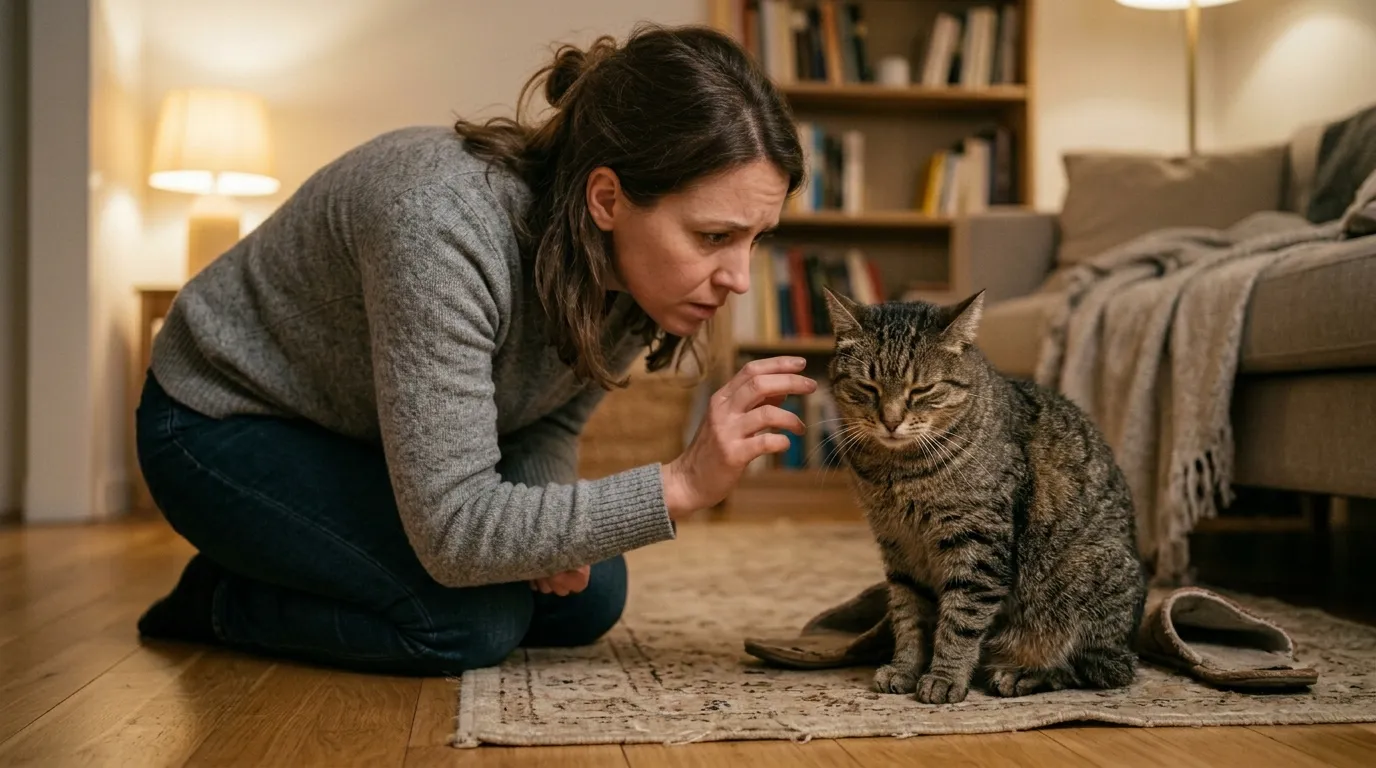
Your cat seems quieter than usual. She hesitated before jumping on the sofa this morning, and she has been licking the same spot on her leg for three days straight. Now you are wondering if she is actually hurting, or just having an off day.
Knowing how to tell if a cat is in pain matters most for indoor cats. Cats evolved as prey animals, and hiding weakness kept them alive in the wild. That instinct does not switch off just because your cat sleeps on a couch. My own cat walked slightly stiff for almost three weeks before I realized it was not a mood, it was early arthritis in her back leg. She never limped or cried out. She just jumped a little less than she used to.
This guide covers 12 signs of pain in cats, how to score pain at home with the Feline Grimace Scale, and which symptom combinations mean a same-day call to the vet instead of watchful waiting.
Quick answer: To tell if your cat is in pain, check six areas against their normal baseline: hiding or withdrawal, mobility and posture, grooming habits, vocalization, appetite and litter box use, and facial expression. One small change might be nothing. A change in two or more areas, lasting several days, is worth a vet visit.
Why Cats Hide Pain So Effectively and Why That Makes It Harder to Catch
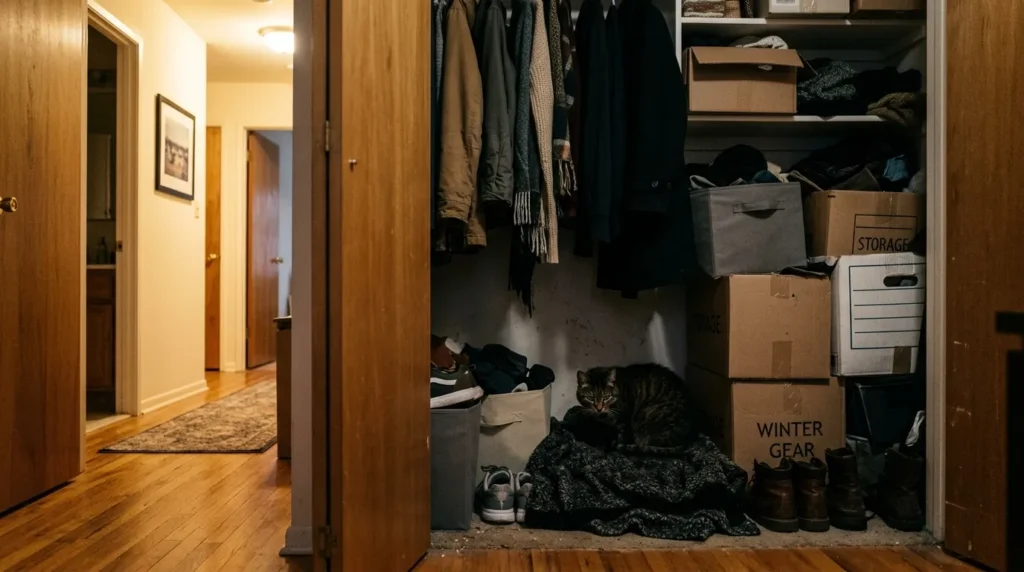
Cats hide pain because showing weakness got their wild ancestors killed. An injured or sick cat in the wild became easy prey, or lost its place in the group. Your indoor cat still carries that instinct, even in a home with zero threats.
That is why pain rarely looks dramatic in cats. A cat in pain usually shows less energy, less interest in you, or a shift in grooming and eating, not crying or limping. By the time the change is obvious, the pain has often been there for weeks already.
Indoor cats make this harder to catch. Their baseline activity is already lower than an outdoor cat’s, so a small drop is easy to miss. An outdoor cat that stops clearing a fence gets noticed fast. An indoor cat that quietly stops using the top shelf of her cat tree can go unnoticed for a month. Learning your cat’s normal body language, covered in our guide to indoor cat behavior, is the first step to catching these changes early.
How to Tell If Your Cat Is in Pain: 12 Signs by Category
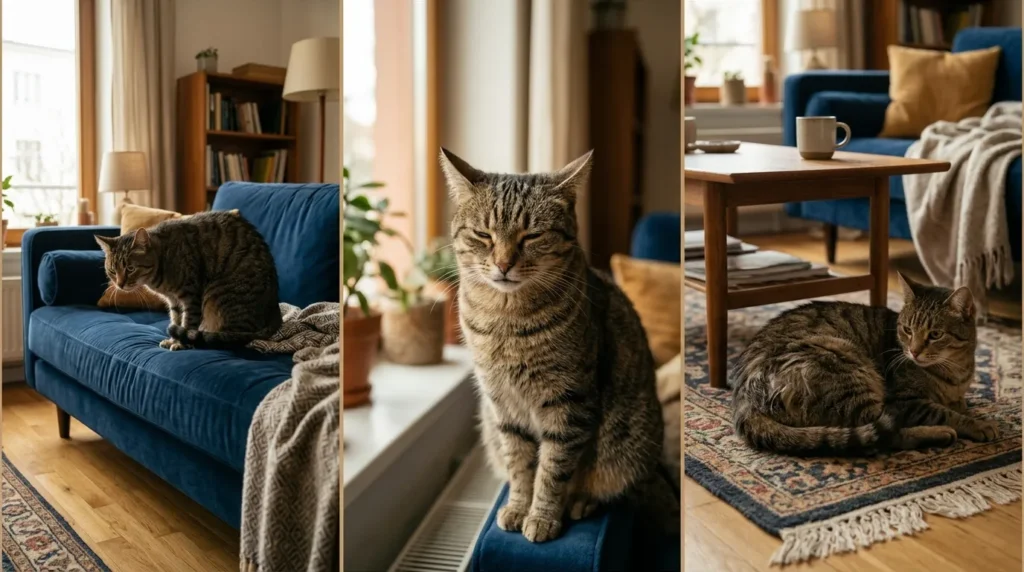
Behavioral signs (Signs 1 to 3)
- Sign 1: Increased hiding or withdrawal. A cat retreating to spaces she used to ignore is telling you something changed. Hiding for a day or two after a stressful event, like a vet visit, is normal. Hiding with no clear cause that lasts past three days is a pain signal.
- Sign 2: Reduced social engagement. A cat that stopped greeting you at the door, or stopped sitting near you, has pulled back in a way that usually points to discomfort, not a personality shift.
- Sign 3: Aggression or sensitivity to touch. Hissing, biting, or swatting when touched somewhere she used to allow it means that spot hurts now. This is one of the clearest pain signals cats give, and one of the most often blamed on “attitude.”
Mobility and posture signs (Signs 4 to 6)
- Sign 4: Hesitation before jumping. A cat that walks up to a familiar surface, pauses, circles, or backs away is feeling something new when she moves. This is the earliest sign of arthritis in indoor cats, and it shows up months before any visible limp. It also shapes how long a cat stays comfortable long term, which our guide on indoor cat lifespan covers in more depth for the senior years specifically.
- Sign 5: Hunched posture or tucked tail. A cat sitting with her back arched up, head lowered below her shoulders, and tail wrapped tight around her body is guarding herself. A comfortable, resting cat keeps a loose tail and holds her head level with or above her shoulders.
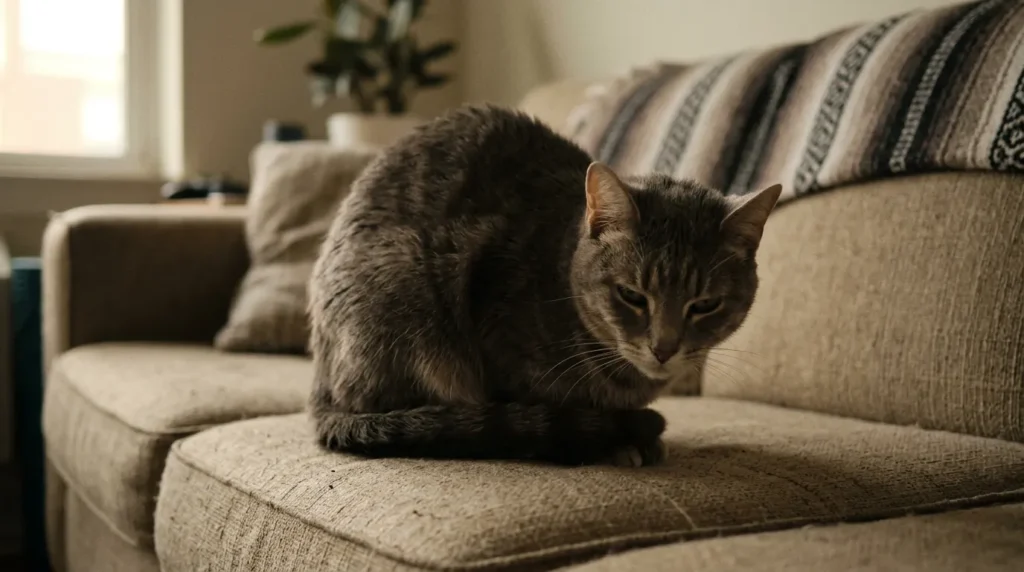
- Sign 6: Stiffness after resting. A cat that gets up slowly, stretches stiffly, or takes short steps right after resting is showing joint stiffness typical of arthritis or muscle pain. It usually eases after a few minutes and returns after the next nap.
Grooming signs (Signs 7 and 8)
- Sign 7: Overgrooming one spot. Repeated licking, chewing, or biting at a single area almost always means pain or irritation there. That spot is not always where the real problem is. Referred pain and nerve irritation can make a cat groom an area near, or far from, the actual source.
- Sign 8: Undergrooming and a rough coat. A cat that has let her coat go unkempt is either physically unable to reach certain spots, or hurting enough that grooming has dropped down her priority list. A dull, matted coat with no diet change behind it is a real signal, not laziness. Our guide on how often to brush an indoor cat covers how to tell a grooming lapse from a mobility problem when a cat that always kept herself clean suddenly stops.
Vocalization and facial signs (Signs 9 and 10)
- Sign 9: Vocalization changes, either direction. More meowing, especially at night, can mean disorientation or distress from pain. Less meowing from a normally vocal cat can mean she is conserving energy instead.
- Sign 10: Facial changes on the Feline Grimace Scale. The Feline Grimace Scale is a validated tool built to assess acute pain in cats using five facial features, each scored zero to two. A total score of four or higher out of ten suggests pain is present. The scale is explained in full detail below.
Appetite and elimination signs (Signs 11 and 12)
- Sign 11: Appetite or eating changes. A cat that sniffs food and walks away, or drops food while chewing, is likely dealing with oral pain from dental disease. A cat who just eats less overall, with no food preference involved, is more likely dealing with pain elsewhere in the body, or nausea.
- Sign 12: Litter box avoidance. A cat that stops using her litter box reliably, or cries while posturing inside it, is linking pain to the act of elimination. In male cats, this can also mean a urinary blockage, which is life-threatening and needs same-day care.
Quick reference: the 12 signs at a glance
| Category | What to watch for |
|---|---|
| Behavior | Hiding, withdrawal, aggression when touched |
| Mobility | Hesitation before jumping, hunched posture, stiffness after rest |
| Grooming | Overgrooming one spot, rough or unkempt coat |
| Vocalization | More or less meowing than usual |
| Face | Squinted eyes, flattened ears, tense muzzle |
| Appetite and litter box | Eating less, dropping food, straining or avoiding the box |
Dental Pain Specifically: The Signs Owners Miss Most
Dental disease deserves its own callout because it is the single most common source of chronic pain in indoor cats, and it produces signs that look nothing like a sore tooth to an untrained eye. By age three, most cats already have some degree of dental disease, and it usually goes unnoticed until it is advanced.
Watch for bad breath that is new or has gotten noticeably worse, pawing at the mouth or face after eating, chewing only on one side, drooling more than usual, or dropping kibble mid-chew and walking away from it. A cat that suddenly prefers wet food to dry, after years of eating dry without issue, is often telling you chewing hurts now.
These signs are easy to miss because a cat with dental pain usually keeps eating. It just eats differently, faster, on one side, or in smaller more frequent visits to the bowl. Annual dental checks catch this before it reaches the chronic pain stage, which is one of the preventive habits covered in our full indoor cat health guide.
The Feline Grimace Scale: How to Score It at Home in 30 Seconds
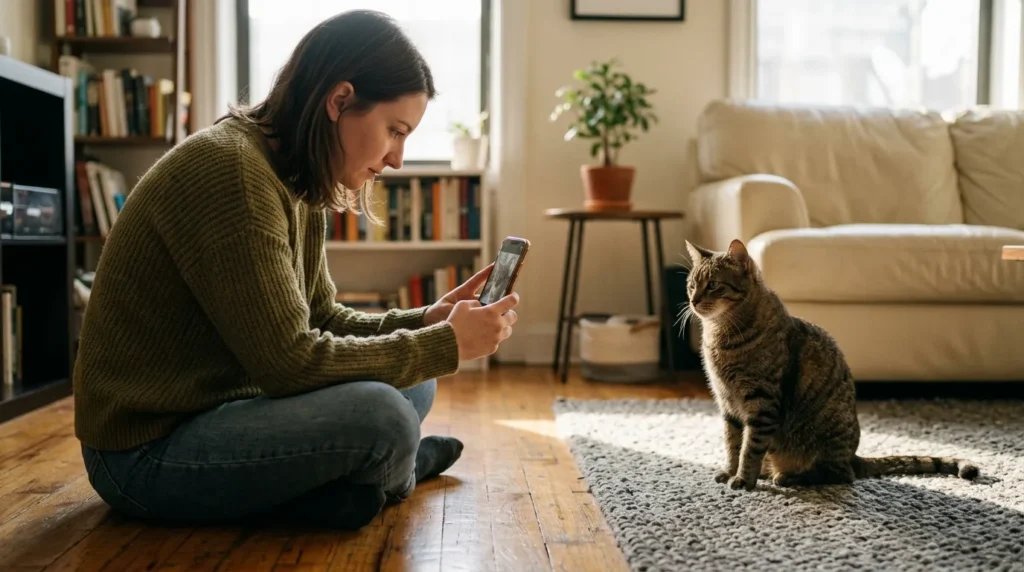
The Feline Grimace Scale works best when your cat does not know she is being watched. A cat aware of your attention will often soften her expression toward neutral, which skews the score. Sit two to three meters away, stay quiet for 30 seconds, then take a clear photo of her face.
Score each feature zero, one, or two. Zero means normal and relaxed. One means partly changed. Two means strongly changed. Add the five scores together.
| Facial feature | Score 0 (normal) | Score 2 (pain likely) |
|---|---|---|
| Orbital tightening | Eyes open, relaxed | Eyes squinted or narrowed |
| Ear position | Ears face forward, upright | Ears rotated outward or flattened |
| Muzzle tension | Whisker pad loose and round | Whisker pad drawn tight |
| Whisker position | Whiskers fanned forward, loose | Whiskers swept back, stiff |
| Head position | Head level with or above shoulders | Head held below shoulder level |
A total score of zero to three means pain is unlikely. Four or higher means pain is likely, and a vet visit is appropriate. Six or higher means a same-week appointment, not a wait-and-see approach.
The scale was developed and validated by researchers including a team at the University of Montreal, and free scoring guides are available through university veterinary sites. It reads acute pain better than chronic pain, since long-term pain shows up differently on the face. A cat with chronic arthritis, for example, often adapts her expression to a new normal over months, which can score lower on the Grimace Scale even while genuine pain continues. That is exactly why the scale works best paired with the behavior and mobility signs above rather than used alone. Still, any score of four or above on a cat who is not freshly stressed is worth acting on.
Body language beyond the face
The face is not the only signal. Tail, ears, and posture back up what the Grimace Scale is telling you.
| Body part | Comfortable | In pain |
|---|---|---|
| Tail | Loose, relaxed, moves freely | Tucked tight against the body |
| Posture | Stretched out or loosely curled | Hunched, back arched upward |
| Movement | Smooth, silent landings | Short steps, audible landing, stiffness |
Cat Pain vs Stress: How to Tell the Difference
Pain and stress can look alike. Both can cause hiding, less appetite, and skipped litter box trips. A few details separate them.
| Clue | Points to pain | Points to stress |
|---|---|---|
| Timing | Gradual, no clear trigger | Starts right after a change (new pet, move, guests) |
| Touch | Reacts to touch in one specific spot | Avoids all handling generally |
| Movement | Hesitation, stiffness, altered gait | Normal movement, just less of it |
| Duration | Persists past a week regardless of environment | Eases once the trigger is resolved or the cat adjusts |
If stress looks more likely than pain, a calmer, more predictable environment often helps. Our guide to indoor cat enrichment covers ways to lower anxiety through routine and mental stimulation. When in doubt, treat it as pain until a vet rules it out. Guessing wrong on stress costs a few days. Guessing wrong on pain can cost a lot more.
Indoor and Senior Cats: Why They Need Closer Attention
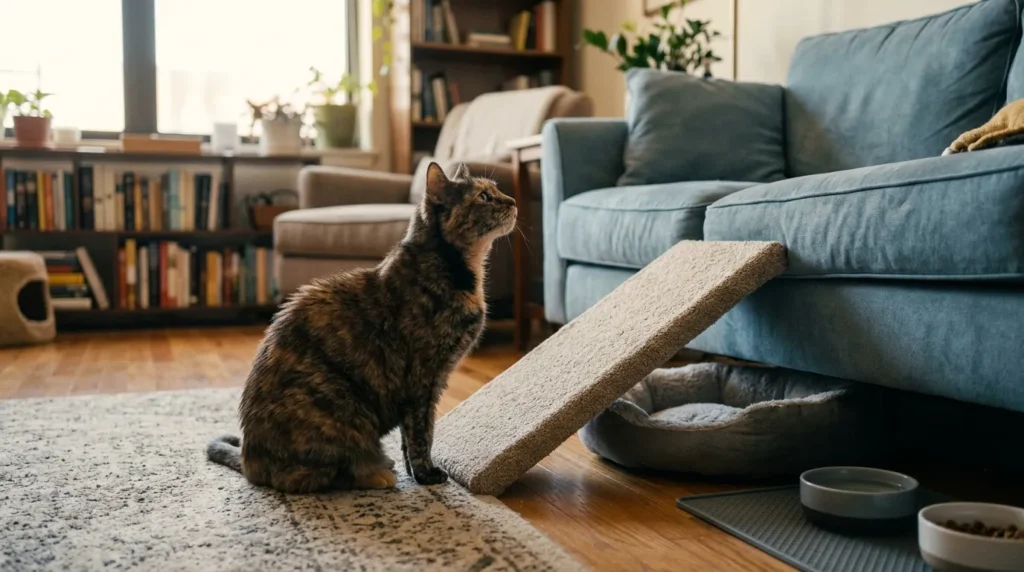
Senior cats over age ten develop arthritis at rates most owners underestimate. Veterinary research suggests over 90 percent of cats over 12 years old show radiographic evidence of degenerative joint disease. Most never get a pain diagnosis, because owners chalk the changes up to normal aging instead of a treatable condition. Reduced jumping in a healthy cat is not aging. It is pain.
Indoor cats face a specific detection problem at any age. Their environment rarely forces a movement that would expose a mobility issue. An outdoor cat that can no longer clear a fence gives you an obvious signal. An indoor cat that can no longer comfortably reach the third shelf of her cat tree just stops using it, quietly, with nothing dramatic to catch your eye. If you live in a smaller space, our guide to keeping a cat in an apartment covers how to design a layout that makes these changes easier to spot.
For the fuller picture of how pain, aging, and chronic conditions interact in indoor cats, and the preventive monitoring habits that catch problems early, see our guide on indoor cat health. It covers the age-related changes that show up as behavior shifts long before a physical exam would catch them, which is exactly why knowing how to tell if your cat is in pain matters as an ongoing skill, not a one-time check.
Insight: The observation that finally sent me to the vet for my cat’s arthritis was not any single dramatic sign. It was how she landed after jumping down from furniture. She had always landed silently. Over about six weeks, she started landing with a soft thump on her back legs. That thump told me her joints were not absorbing impact the way they used to. Know your cat’s normal patterns closely, and the small deviations tell you everything you need.
Common Mistakes That Delay Pain Recognition
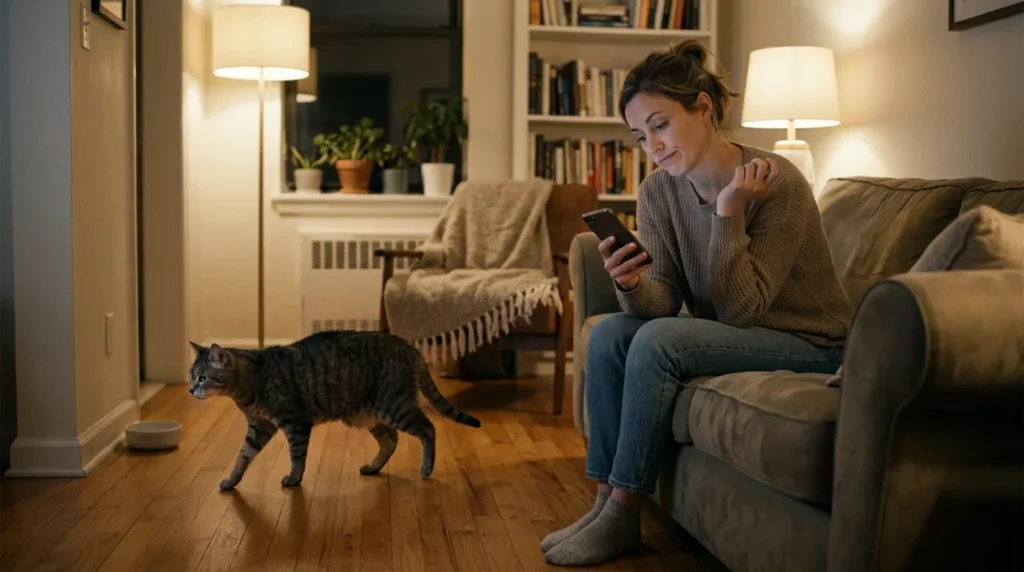
The most common mistake is normalizing slow change. When jumping height drops over three months, or engagement fades over six weeks, the shift is spread out enough that it never creates the sudden contrast that would grab your attention. Keep a simple monthly note of your cat’s normal activity and behavior. Gradual changes become visible against a written record in a way they never are against memory alone.
The second mistake is reading aggression during handling as a behavior problem instead of a physical one. A cat that never scratched during grooming and suddenly does has a pain source right at that spot, almost every time. Owners often respond by avoiding that area, which removes the pain signal from view without fixing what caused it.
The third mistake is assuming a cat eating normally cannot be in real pain. Cats keep eating through a lot of discomfort until pain gets severe enough to override appetite. Normal eating does not rule out pain elsewhere in the body.
When Cat Pain Signs Require a Same-Day or Emergency Vet Visit
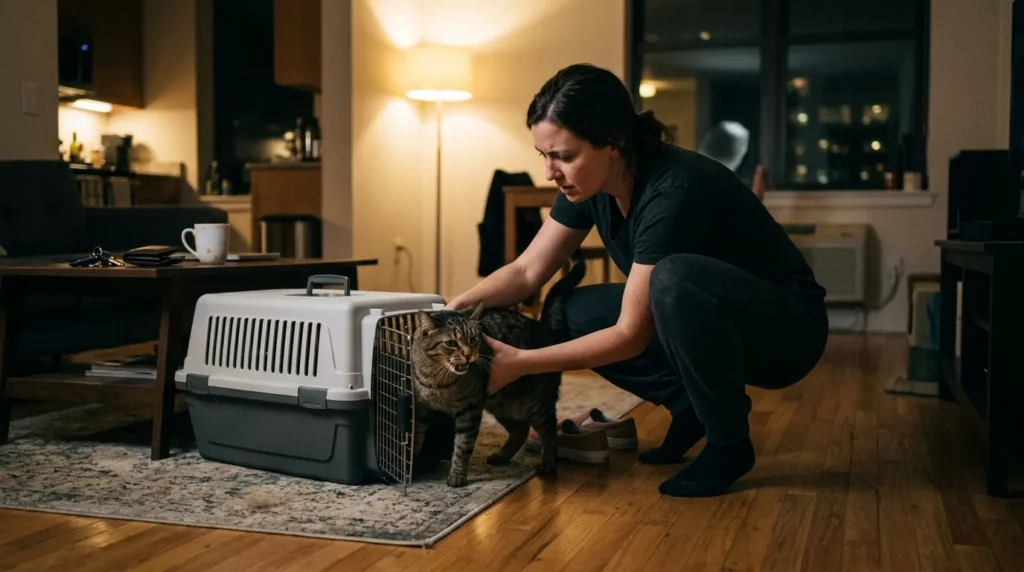
Some pain presentations need immediate care, not a scheduled visit later in the week.
- A male cat straining in the litter box without producing urine needs emergency care within hours. Urinary blockage is rapidly fatal without treatment.
- A cat crying out suddenly and continuously, without stopping, needs a same-day exam. Sudden pain this intense usually has a structural cause that gets worse without help.
- A cat breathing faster than 30 breaths per minute at rest, panting with no heat or exercise involved, or showing labored breathing alongside any other pain sign, needs emergency evaluation. Rapid, shallow breathing at rest is never normal in cats.
According to the American Association of Feline Practitioners, pain assessment should be a standard part of every feline vet exam, because cats hide pain so well that it goes underdetected without a deliberate check. This article is for informational purposes only. Always consult your vet promptly if you notice signs that concern you.
Frequently Asked Questions About Cat Pain Signs
Can cats purr when they are in pain?
Yes, and this surprises a lot of owners. Purring is not only a contentment signal. Cats also purr to self-soothe during stress, pain, and even medical procedures. A purring cat showing other signs on this list is not automatically pain-free. The purring itself can be a sign she is trying to manage distress.
How do I use the Feline Grimace Scale to tell if my cat is in pain?
Watch your cat undisturbed for 30 seconds from a distance, then take a clear photo of her face. Score orbital tightening, ear position, muzzle tension, whisker position, and head position from zero to two each. A total of four or higher points to likely pain. Pair the facial score with behavior changes for the clearest picture. This article is for informational purposes only. Always consult your vet if your Feline Grimace Scale assessment indicates pain.
My senior cat is moving more slowly. Is that normal aging or pain?
Slower movement in a senior cat is almost always arthritis pain, not plain aging. Healthy cats do not naturally slow down the way some other species do. A cat that is less active or reluctant to jump at age ten or twelve has a high chance of treatable arthritis.
How long can a cat hide pain before it becomes obvious?
Weeks, sometimes months, especially for chronic conditions like arthritis or dental disease. Cats mask pain gradually rather than all at once, so the timeline depends on how closely you track their normal baseline.
Do cats meow more or less when they are in pain?
Either direction is possible. Some cats vocalize more, particularly at night, when they are hurting or disoriented. Others go quieter than usual because they are conserving energy. The key is any change from her normal baseline, not the direction of the change.
What home environment changes help a cat in pain while I wait for a vet appointment?
Add ramps or steps to reach elevated surfaces she normally uses, so jumping is not required. Lower the sides of her litter box to reduce the step height. Offer warm, soft bedding in her preferred resting spots. Keep household noise and disruption down near where she rests. Never give human pain medication. Paracetamol, ibuprofen, and aspirin are all toxic to cats at any dose.
How can I tell if my cat is in pain after being spayed, neutered, or another surgery?
Watch for excessive licking or chewing at the incision site, reluctance to jump or climb stairs for longer than your vet’s stated recovery window, hiding more than the first day or two, or a hunched posture that persists past the immediate post-op period. Some grogginess and reduced activity for 24 to 48 hours is normal and expected. Continued crying out, swelling or discharge at the incision, or a complete refusal to move deserves a call to your vet, not a wait-and-see approach.
Do kittens hide pain the same way adult cats do?
Yes, the same instinct is present from a young age, though kittens tend to bounce back from minor injuries faster and show more obvious distress with acute pain like a fall or a bite from rough play. Persistent limping, reluctance to play at all, or hiding for more than a few hours in a kitten is less likely to resolve on its own and warrants a vet check sooner than the same behavior might in a healthy adult.
Trust Your Instinct and Act on What You Observe
Learning how to tell if your cat is in pain starts with knowing her individual normal baseline, so deviations register instead of fading into the background. Check her facial expression against the Feline Grimace Scale monthly, note any change in jumping or grooming, and book a vet visit once two or more areas show sustained change. Catching pain early leads to far better quality of life than starting treatment once a condition is advanced.
Feeding your cat well, keeping her at a healthy weight, and keeping her daily routine stimulating all lower the long-term risk of the chronic pain conditions indoor cats develop most. Our guide on how to feed an indoor cat properly covers this specifically for apartment cats, and it pairs naturally with everything above.
Cats hide pain as a leftover survival response, and the signs are almost always subtle behavior shifts rather than crying or visible injury. The 12 signals covered here include hiding, hesitation before jumping, grooming changes, vocalization shifts, litter box avoidance, and facial tension measurable with the Feline Grimace Scale. A total facial score of four or higher points to likely pain and a vet visit. Senior indoor cats over ten have a greater than 90 percent chance of arthritic changes, and reduced jumping is a pain signal, not a normal part of getting older.

Written by Mishu
A passionate cat lover and indoor living enthusiast, Mishu is the founder and voice behind Indoor Living Cat – a go-to resource for cat owners who want to create the happiest, healthiest life for their feline companions indoors.
View Full Profile