
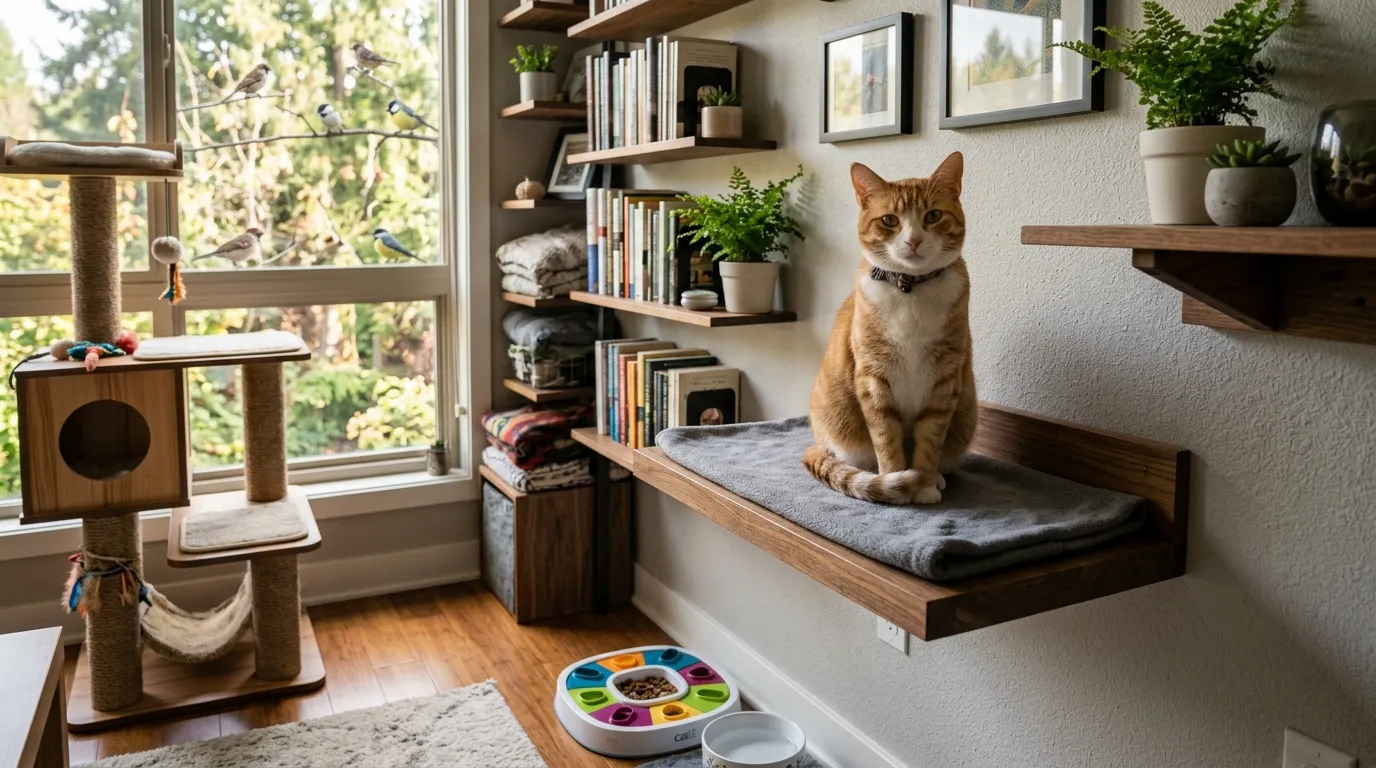
Is it ok to have a cat in a small apartment is the question I asked myself on repeat the first week I moved into a 380-square-foot studio with my two-year-old cat. She spent the first three days sitting on the single windowsill and I spent those three days convinced I had ruined her life. What I discovered over the following months was that she did not care about the floor area at all. What she cared about was whether the space had height she could access, whether anything moved outside the window and whether play happened at predictable times. Is it ok to have a cat in a small apartment is not really a question about square footage. It’s a question about whether the owner commits to the setup that makes small-space living work. This article gives you the complete honest answer, including how much space a cat actually needs, which cats do best in tight quarters, what landlords expect, and how long a cat can handle being alone in a studio while you’re at work.
Yes. It’s completely fine to have a cat in a small apartment when the space provides vertical territory through wall shelves or a cat tree, window enrichment through an active bird feeder and a consistent daily play schedule timed to the cat’s natural activity peaks. Cats sleep twelve to sixteen hours daily and measure happiness through stimulation and security rather than floor area. A well-enriched small apartment beats an unstimulating large one every time.
Is It OK to Have a Cat in a Small Apartment? What the Evidence Actually Shows?
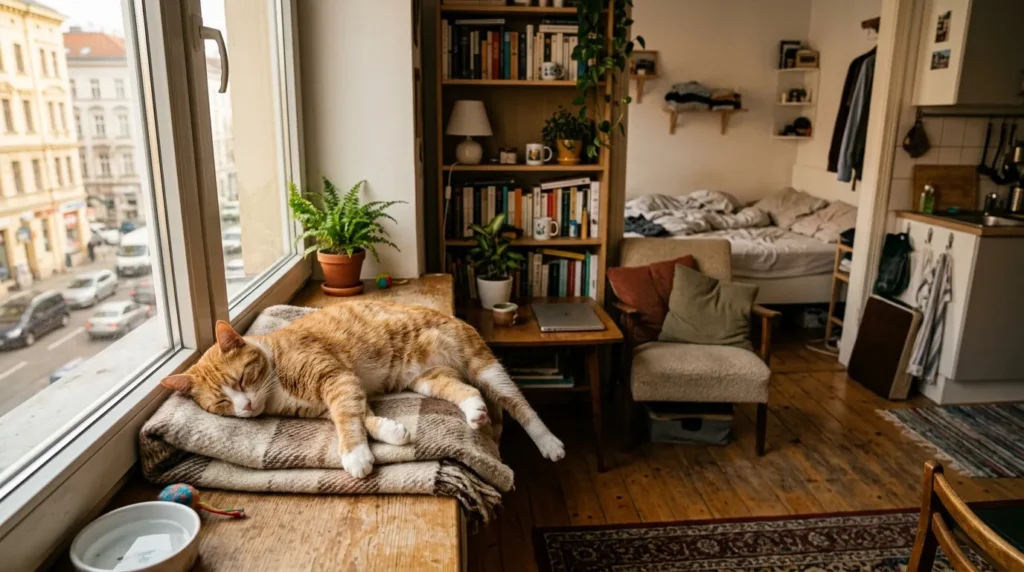
Is it ok to have a cat in a small apartment comes down to one behavioral fact: cats are not distance animals. Dogs evolved as pack hunters that cover territory daily. Cats evolved as solitary ambush predators that claim a fixed home range, defend it from a vantage point and make short intense bursts of movement rather than sustained roaming. A three-hundred-square-foot apartment is not a cramped territory for a cat. It’s a perfectly sized exclusive domain when it’s set up with enough height variation and sensory input to make it interesting.
Indoor cats sleep between twelve and sixteen hours per day according to guidance from the American Animal Hospital Association. During the hours they’re awake they look for elevated observation points, investigate novel sounds and smells and engage with interactive play when it’s offered. None of those activities require a large floor area. They require a space designed for height access, sensory variety and human engagement, not one measured in square feet.
The cats that genuinely struggle in small apartments aren’t struggling because of the apartment size. They’re struggling because the apartment has bare walls, no elevated territory, no window enrichment and no consistent daily play. Remove those deficiencies in any size apartment and the behavioral problems disappear. Add them to a small apartment and the cat is as behaviorally healthy as one living in a much larger space. There’s no official square-footage minimum for cats the way some housing codes set one for dogs. What actually predicts a cat’s wellbeing in a small home is covered below.
How Much Space Does One Cat Actually Need? A Square Footage Guide
There’s no law or vet-issued minimum for how many square feet a cat requires. What follows is a practical range based on what actually works day to day, drawn from how cats use vertical space to multiply the territory a floor plan gives them.
| Apartment Size | Cats It Comfortably Supports | What Changes |
|---|---|---|
| Under 300 sq ft (micro-studio) | 1 cat | Vertical space isn’t optional here. It’s the whole strategy. |
| 300–500 sq ft (small studio) | 1 cat, or 2 if they’re a bonded pair | Wall shelves on at least two walls become necessary, not decorative. |
| 500–750 sq ft (one-bedroom) | 2 cats | Separate litter box zones and feeding stations get much easier to place. |
| 750–1,000 sq ft | 2–3 cats | Territory can split by room, not just by height. |
| Over 1,000 sq ft | 3+ cats | Floor space stops being the limiting factor. Cat-to-cat dynamics matter more than square footage from here on. |
Two things push a cat down a size bracket: a high-energy breed or a kitten under a year old. Both need more territory to burn off the same amount of daily energy than a low-key adult cat does. The breed and age breakdown below covers which cats are the safer bet for a small footprint.
The Three Things That Actually Determine Apartment Cat Happiness
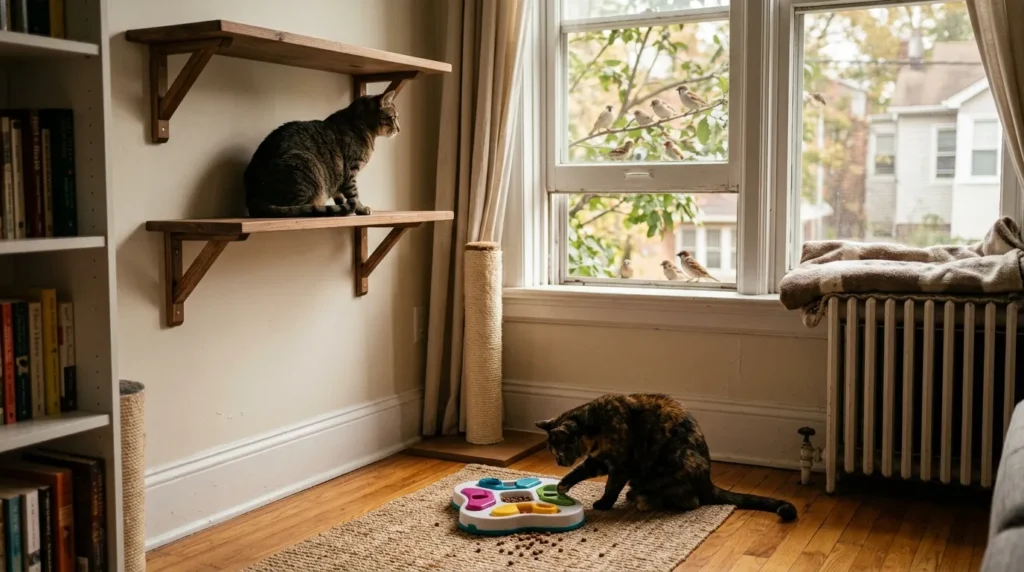
The first factor is vertical territory. A cat in a small apartment with one floor-level perch and no elevated options has the behavioral profile of a cat in captivity, regardless of apartment size. Add two wall shelves at different heights connected by a cat tree and the cat immediately begins spending time in distinct elevated zones throughout the day. That height variation isn’t decoration. It’s territory the cat actively experiences as separate from floor level.
The second factor is window enrichment. A window with an active bird feeder positioned outside provides unpredictable sensory input across the entire day without any owner involvement after initial setup. The cat can’t predict when birds will arrive, and that unpredictability keeps its visual attention system engaged for hours at a stretch. In a small apartment where the outdoor view is the only source of genuine environmental variety, the window station isn’t optional enrichment. It’s a behavioral necessity.
The third factor is the daily play schedule. Two fifteen-minute wand play sessions timed to dawn and dusk, before each meal, discharge the predatory energy that accumulates across the day and produce genuine settled rest once each session ends. A cat that receives this schedule consistently shows none of the behavioral problems owners associate with small-space living: no midnight racing, no furniture destruction, no persistent vocalization. The schedule doesn’t require more space. It requires consistent execution.
Which Cats Actually Do Best in a Small Apartment
Body size has almost nothing to do with how well a cat handles a small footprint. Energy level and how much daily interaction the cat needs are what matter. A twelve-pound Maine Coon that sleeps eighteen hours a day is an easier small-apartment cat than a six-pound Bengal that needs to run, jump and problem-solve for hours.
| Cat Type | Typical Energy Level | Fit for a Small Apartment |
|---|---|---|
| Ragdoll | Low | Bonds closely to one or two people and is content on a single favorite perch for long stretches. A strong first choice. |
| British Shorthair | Low | Low exercise drive and tolerates a quiet, repetitive routine well. |
| Senior cat (7+ years) | Low | Sleeps most of the day. Often the easiest possible fit for a micro-studio under 300 sq ft. |
| Domestic shorthair, adult, low activity | Low to moderate | The most common “it just worked out” small-apartment cat. Ask the shelter about the individual cat’s activity level, not just the breed. |
| Bengal | High | Workable, but the two daily play sessions become non-negotiable. Skip them for a few days and expect furniture damage. |
| Abyssinian | High | Needs almost constant interaction. Better suited to a larger footprint or a second cat for company. |
| Kitten (under 1 year) | High and unpredictable | Burns energy in short violent bursts. Needs more vertical territory and a firmer play schedule than an adult cat of the same breed. |
If you’re choosing a cat specifically for a small apartment and this is your first cat, a low-energy adult or a senior is the safer bet. A high-energy cat or a kitten can absolutely work in the same square footage. It just means the play schedule and vertical setup described above stop being nice-to-haves and become the terms of the deal.
What Small Apartment Challenges Actually Look Like and How to Solve Them?
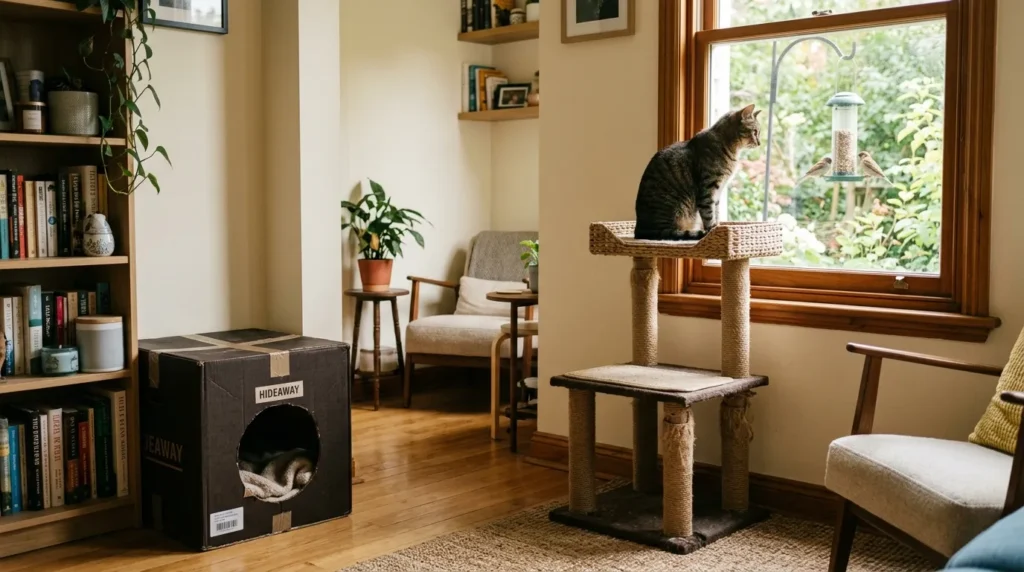
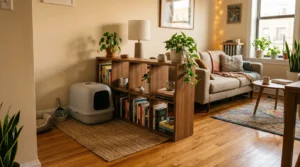
Litter box odor is the challenge most owners worry about before moving a cat into a small apartment, and it’s the most solvable one. The box type matters less than the scooping schedule, but the type still changes how much work that schedule takes.
| Litter Box Type | Odor Control in a Small Space | Tradeoff |
|---|---|---|
| High-sided open box | Strong, as long as it’s scooped daily | Litter tracks further than a covered box |
| Covered box | Weaker; traps ammonia inside instead of letting it ventilate | Some cats also dislike the enclosed feel and skip it |
| Pine pellet litter with a sifting tray | Very strong; pellets absorb ammonia well and don’t track much | Some cats resist the texture change if switched abruptly |
| Self-cleaning/automatic box | Strong, with less daily labor | Higher upfront cost and a motor cats can be startled by at first |
Whichever type you pick, scoop it every single day without exception. The problem was never the litter box. The problem is skipped scooping days in a space where you can’t avoid the consequences the way you could in a larger apartment. Position the box away from sleeping and eating areas, use a room divider or curtain as visual separation, and the odor question mostly answers itself.
Boredom and restlessness produce the most visible behavioral problems, and they both trace directly back to the three factors covered earlier. A cat that lacks vertical territory, window engagement and scheduled play produces restlessness that shows up as furniture scratching, persistent meowing and midnight energy, because it has nowhere to direct its accumulated daily drive. These aren’t small-apartment problems. They’re enrichment-deficit problems that happen to occur in a small apartment.
Safety in a small apartment is simpler to manage than safety in a larger space, because there are fewer rooms to cat-proof and fewer surfaces to monitor. Secure window screens (a cat leaning its full weight against a flimsy screen can push through it, so check the frame, not just the mesh), anchor tall furniture to walls and remove toxic plants. If you have a balcony, treat it as off-limits without direct supervision or a secured cat-proof net, since a fall from even a low balcony can seriously injure a cat. That covers most apartment cat safety in an afternoon rather than the multi-day project it can turn into in a larger home.
How Long Can You Leave a Cat Alone in a Small Apartment?
This is the question that stops a lot of people before they even get a cat, and the honest answer depends on age, not apartment size. A healthy adult cat generally handles a typical eight- to ten-hour workday without distress, provided food, fresh water and a clean litter box are available before you leave. Kittens under four months old are a different situation. Their smaller stomachs and higher metabolism mean they need a midday check-in, feeding, or a trusted person to look in on them if you’re out much past four to five hours.
In a small apartment specifically, the alone hours go better when the passive enrichment covered earlier is already in place before you walk out the door:
- A window perch positioned at the most active part of the day, ideally facing the bird feeder
- A puzzle feeder used for one of the two daily meals, so the cat is working for food rather than just waiting for it
- A second water source away from the food bowl, since some cats drink more when the two aren’t next to each other
- Access to at least one elevated resting spot away from the front door, so the cat has somewhere to settle that isn’t just watching for you to come home
None of this requires more floor space. It requires the setup to already be running before the workday starts, not assembled after the cat has spent a week alone with nothing to do.
Renting With a Cat: What Landlords and Leases Actually Expect
Most landlords treat cats differently from dogs, but “differently” doesn’t mean “no rules.” Expect one or more of the following, and budget for it before you sign:
- A pet deposit, commonly in the $200 to $500 range, which may or may not be refundable depending on the lease
- Monthly pet rent, often $20 to $50, stacked on top of the deposit rather than instead of it
- A cap on the number of cats allowed, frequently one or two per unit even in buildings with no breed restrictions
- A request for vaccination or vet records, especially in larger buildings with shared hallways or elevators
- A no-declaw clause in some cities, since declawing is restricted or banned outright in a growing number of jurisdictions
Before move-in, photograph the apartment’s existing condition, including baseboards, window screens and carpet corners, and keep those photos. It’s the single easiest way to protect your deposit if a landlord later tries to attribute unrelated wear to the cat. If your lease is silent on renter’s liability for pet damage, ask directly rather than assuming; a policy that covers cat-related damage is inexpensive relative to a disputed deposit.
The Honest Reality of Multi-Cat Small Apartments
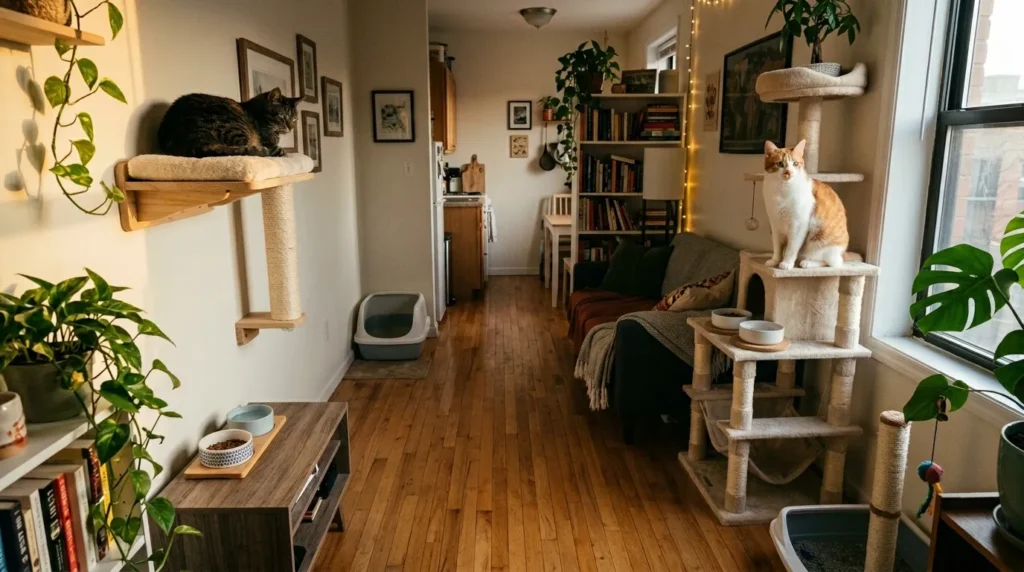
Two cats in a small apartment is workable, but it requires deliberate resource duplication rather than the assumption that two cats will share everything comfortably. The standard rule from behaviorists is one litter box per cat, plus one extra, so two cats need a minimum of three boxes spread across different locations. Add two separate feeding stations that aren’t adjacent to each other, and enough elevated territory that each cat can claim a preferred height without blocking the other’s access.
| Resource | 1 Cat | 2 Cats |
|---|---|---|
| Litter boxes | 1–2 | 3, in separate locations |
| Feeding stations | 1 | 2, not adjacent |
| Elevated perches | 1–2 | 2+, at different heights on different walls |
| Scratching posts | 1 | 2, near separate resting spots |
The territorial math in a small apartment with two cats is tighter than in a larger space. One cat can claim the high perch, and the other can’t access it without confronting the first. Wall shelves at two different heights on two different walls solve this completely by creating two genuinely separate elevated territories both cats can use without crossing paths. That single addition changes the social dynamic between cats in a compact space more than any other intervention.
Everything that makes two cats work well together in a small apartment is an extension of how the space needs to be set up for one cat. The principles are identical. The resource numbers double. The careful attention to escape routes and separate zones is what makes the difference between two cats tolerating each other and two cats actually living without daily conflict.
The Mistake That Collapses the Whole Setup
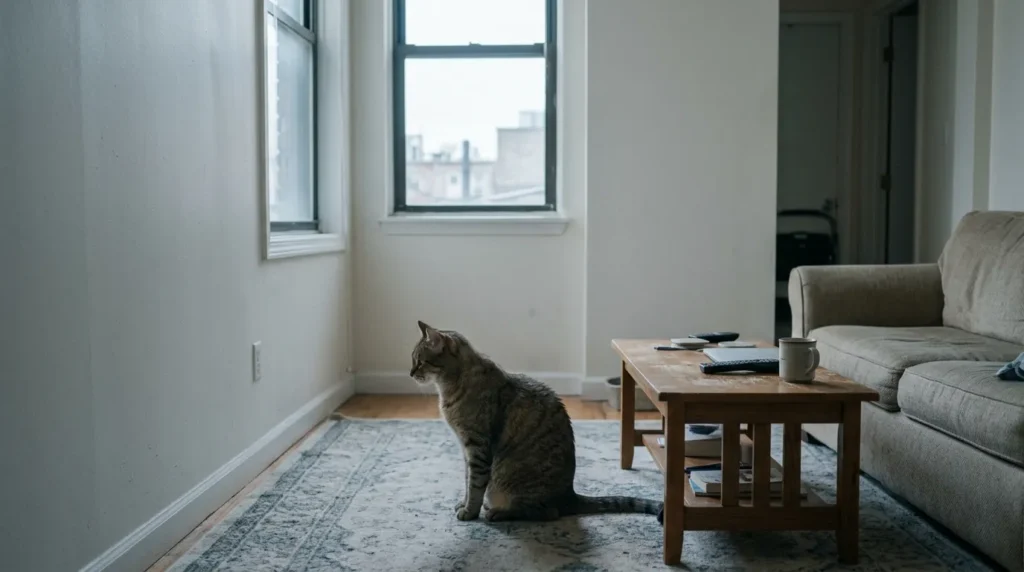
The mistake that makes small-apartment cat ownership genuinely difficult is attributing every behavioral problem to the apartment size and doing nothing about enrichment because the owner has already decided the space is the problem. A cat that scratches furniture in a small apartment isn’t doing it because the apartment is small. It’s doing it because no appropriate scratching surface exists near its sleeping or perching spots. A cat that vocalizes persistently isn’t protesting the square footage. It’s discharging predatory drive through the only outlet available to it.
Owners who focus on the size rather than the setup spend months managing symptoms rather than solving causes. The fix for nearly every common small-apartment cat behavior problem is the same: vertical territory, window enrichment and a consistent daily play schedule.
[Image placeholder: a simple before/after style graphic showing an un-enriched studio corner next to the same corner with a wall shelf, window perch and scratching post added]
Insight The apartment size guilt is real and I felt it for months before I understood what my cat actually needed. She didn’t want more room. She wanted the room she had to be more interesting. One wall shelf, a bird feeder outside the window and a consistent evening play session transformed her behavior in ten days. You don’t need a bigger apartment. You need a better-designed one.
Small Apartment Cat Setup Checklist
Everything covered above, priced out, comes to roughly $150 to $220 total. Here’s what that buys:
- Wall-mounted shelves or a narrow cat tree ($40–$80)
- Window perch positioned at the most active window ($20–$30)
- A bird feeder for outside the window ($15–$25)
- Two wand toys, since cats lose interest in a single toy faster than owners expect ($10–$15 each)
- A puzzle feeder for one daily meal ($15–$25)
- A high-sided open litter box ($25–$40)
Set it up in a weekend and give it two weeks of consistent daily play before judging whether it’s working.
Frequently Asked Questions
Is a 300 or 400 square foot apartment too small for a cat?
No. Cats don’t evaluate their environment by floor square footage. A three-hundred-square-foot apartment with wall shelves at two heights, an active window bird feeder and daily wand play sessions produces a behaviorally healthier cat than a one-thousand-square-foot apartment with bare walls and nothing to engage with. The setup determines welfare outcomes. The size doesn’t.
Will my cat be unhappy living in a small apartment alone all day?
Not if the passive enrichment is adequate during those hours. A window perch with an active bird feeder outside, a puzzle feeder for one of the daily meals and access to multiple height levels covers the alone hours effectively. The cat monitors the bird activity, forages for food and rests across its natural cycle. It doesn’t experience the alone hours as distressing when the environment provides genuine sensory engagement. See the section above for exact hour guidelines by age.
Do indoor cats need outdoor access to be happy in a small apartment?
No. Indoor cats that have never had outdoor access don’t experience its absence as deprivation. What they need is the sensory input that outdoor access provides for outdoor cats: unpredictable movement to observe, smells through a cracked screened window and territory to claim at height. Those needs are all addressable within a small apartment without outdoor access.
How do I manage litter box smell in a tiny apartment?
Scoop every single day without exception and use a high-sided open box rather than a covered box for better ammonia ventilation, or switch to pine pellet litter with a sifting tray if odor is still a problem. Position the box away from sleeping and eating areas using a room divider as visual separation. In a small apartment, skipped scooping becomes noticeable within hours rather than the next morning.
Do I need a pet deposit or pet rent to have a cat in a rental apartment?
Usually, yes. Most leases charge a pet deposit in the $200–$500 range and separate monthly pet rent of $20–$50, even for a single cat. Some buildings also cap the number of cats per unit or require current vaccination records. Check your specific lease rather than assuming cats are treated as fee-free compared to dogs.
What cat breeds or types do best in a small apartment?
Low-energy adult cats and seniors are the easiest fit. Ragdolls, British Shorthairs and most laid-back domestic shorthairs adapt well to a quiet routine and a single favorite perch. High-energy breeds like Bengals and Abyssinians, and kittens under a year old, can also do well in a small apartment, but only if the daily play schedule and vertical setup are treated as mandatory rather than optional.
How many litter boxes do I need for two cats in a small apartment?
Three, following the standard one-per-cat-plus-one guideline, spread across separate locations rather than lined up together. Fewer boxes, or boxes placed side by side, tends to produce avoidance and accidents even when the total floor space is small.
Conclusion
Is it ok to have a cat in a small apartment? Completely. A well-designed small apartment with vertical territory, window enrichment and a consistent play schedule produces a cat that’s behaviorally indistinguishable from one living in twice the space. Match the cat’s energy level to your square footage, budget for the pet deposit your lease will likely charge, and put the enrichment setup in place before the cat spends its first week bored. Start today by positioning whatever elevated surface you have closest to the most active window and committing to an evening play session before dinner. Those two immediate changes will show you within a week that your apartment isn’t the problem and never was.
It’s completely acceptable to have a cat in a small apartment when the space provides vertical territory through wall-mounted shelves or a narrow cat tree, window enrichment through an active bird feeder positioned outside the glass, and two daily wand play sessions of ten to fifteen minutes timed to dawn and dusk before each meal. There’s no official square-footage minimum for cats; as a practical guide, a studio under 500 sq ft comfortably supports one cat (or a bonded pair), while 500–1,000 sq ft supports two. Low-energy adult cats and seniors are the easiest fit for micro-studios, while high-energy breeds and kittens need the vertical setup and play schedule treated as mandatory. Healthy adult cats generally handle a typical 8- to 10-hour workday alone when food, water and litter access are in place beforehand; kittens under four months need a midday check-in. Renters should budget for a pet deposit ($200–$500) and monthly pet rent ($20–$50) in most leases. Cats sleep twelve to sixteen hours daily and evaluate their environment through territorial security and sensory stimulation rather than floor area. A well-enriched studio of three hundred to five hundred square feet produces the same behavioral health outcomes as a much larger apartment with equivalent enrichment.

Written by Mishu
A passionate cat lover and indoor living enthusiast, Mishu is the founder and voice behind Indoor Living Cat – a go-to resource for cat owners who want to create the happiest, healthiest life for their feline companions indoors.
View Full Profile