
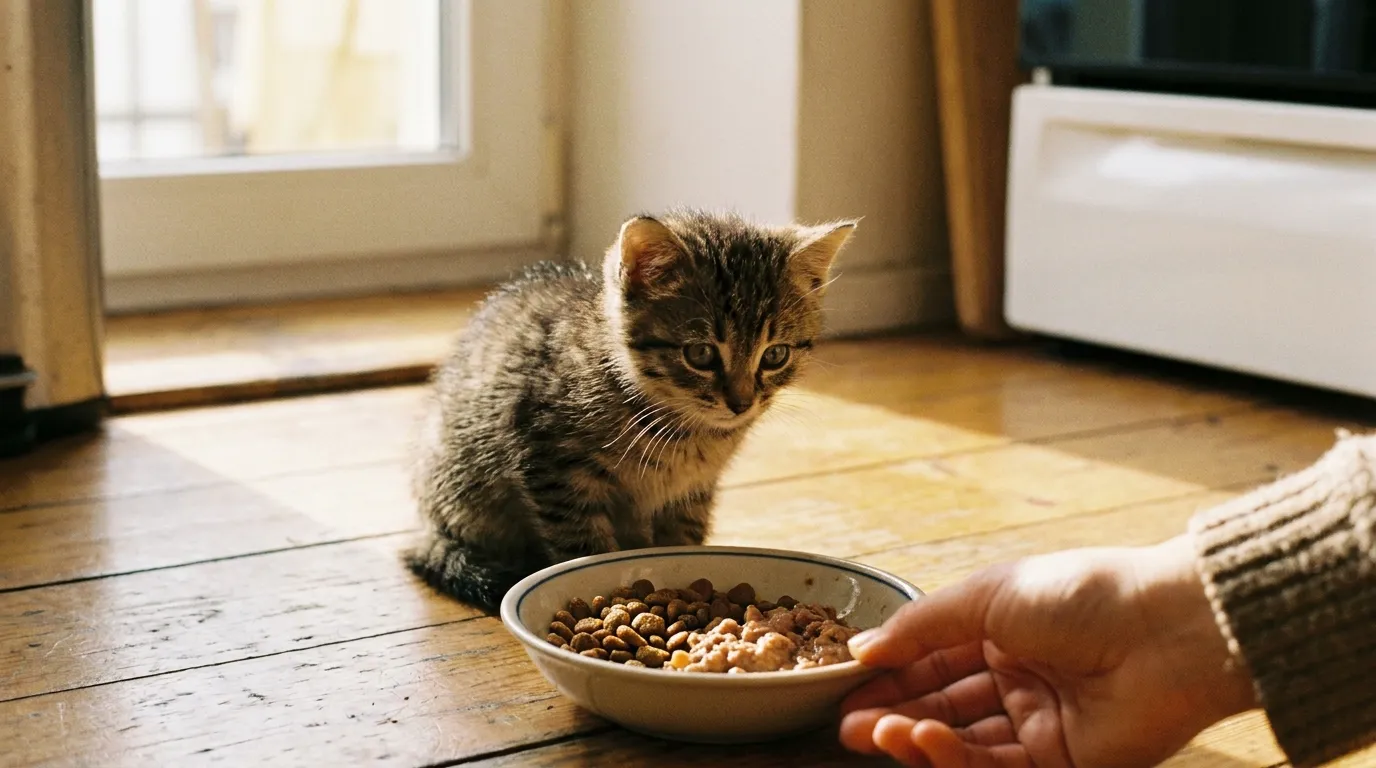
Your new kitten has barely touched their food since you brought them home and you are already convinced something is seriously wrong. That fear is valid because a kitten not eating is not the same as an adult cat being picky, a kitten’s body runs out of fuel fast and the stakes are genuinely higher. Figuring out what to do when a new kitten is not eating requires you to first rule out a medical emergency and then work through the most likely behavioral and environmental causes in order. I noticed with my own kitten that the food bowl was sitting directly next to the litter box, something I had arranged for convenience, and moving it six feet away was all it took to get her eating within an hour. This guide walks you through every step from emergency check to appetite tricks so you know exactly what to do right now.
If your new kitten is not eating, first check for emergency signs like limpness, cold body temperature or pale gums. If the kitten looks alert but is just refusing food, try warming wet food to body temperature, switching to a flat plate and offering a tiny amount from your fingertip. Kittens under 12 weeks should not go more than 12 hours without eating.
Why Is a New Kitten Not Eating? The Most Common Causes
Before you troubleshoot, it helps to know what’s usually behind it. In order of how often we see them, here’s why a new kitten refuses food:
- Rehoming stress. New home, no littermates, no mother. Cortisol spikes and appetite drops. This is the single biggest cause in the first 48 to 72 hours.
- Food bowl too close to the litter box. Cats won’t eat where they eliminate. It’s instinct, not stubbornness.
- Whisker fatigue. A deep, narrow bowl brushes sensitive whiskers with every bite and some kittens simply stop trying.
- Cold or unappealing food. Wet food straight from the fridge has almost no smell, and smell is what drives a cat to eat.
- An upper respiratory infection. Common in shelter and pet store kittens. A blocked nose means no smell, and no smell means no appetite.
- Too many food changes at once. Rotating through three new brands in a week overwhelms a digestive system that’s already under stress.
- Age-related feeding needs. A kitten under 4 weeks old isn’t eating solid food at all yet, that’s a different situation entirely, covered below.
Most of these resolve with the fixes further down this page. A couple of them, cold gums and a blocked nose especially, need a vet involved. The emergency check below tells you which category you’re in.
New Kitten Not Eating: The Emergency Check You Must Do First
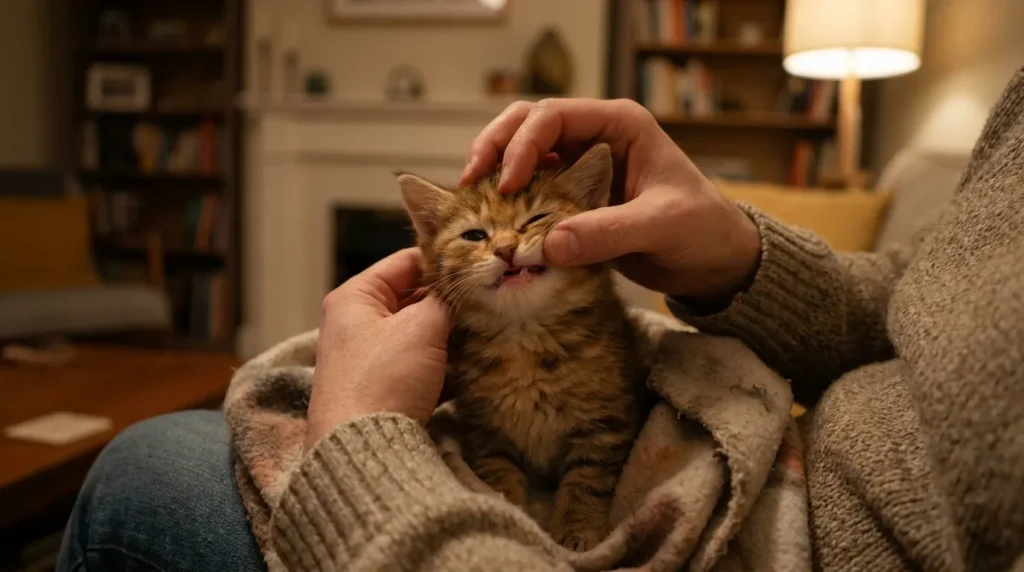
Before trying any appetite tricks, check whether this is an emergency. A kitten under 12 weeks should not go more than 12 hours without food because their blood sugar drops fast and hypoglycemia becomes a genuine risk within that window. At very young ages the margin between “stressed and not hungry” and “medically critical” is uncomfortably narrow.
Press gently on your kitten’s gum with a clean fingertip and release. The gum should return to pink within two seconds. Pale or white gums, a limp body, a kitten that feels cold to the touch or one that will not lift its head all require an immediate emergency vet visit. Do not try home remedies first. Do not wait until morning.
If the kitten is alert, moving around, vocalizing and has pink gums but simply will not eat, you are most likely dealing with a stress or environmental issue rather than a medical crisis. That is what the rest of this article addresses step by step.
A note on very young kittens. Everything above and below assumes a weaned kitten, roughly 8 weeks or older, that’s already eating solid food and has just moved to a new home. If your kitten is under 4 weeks old, still nursing or bottle-feeding, and refuses a bottle or the queen, that’s not the same problem. Very young kittens can’t regulate their own body temperature and drop into hypothermia and hypoglycemia far faster than an 8-week-old. Warm the kitten first, gently, then call a vet or an emergency line right away rather than working through the tricks in this article.
| Kitten State | Action | Urgency |
| Alert, active but picky | Try warming food and flat plate | Low, monitor closely |
| Eating less than usual, otherwise acting normal | Warm food, add a topper, track intake for 24 hours | Low to medium, watch closely |
| Hiding, not eaten in 8 hours | Offer warmed wet food, check for sneezing | Medium, act today |
| Not eating and not drinking | Check gums and temperature, call vet same day | Medium to high, don’t wait until tomorrow |
| Limp, cold, pale gums | Vet immediately | Emergency, do not wait |
Why Rehoming Stress Is the Most Common Reason a New Kitten Won’t Eat?
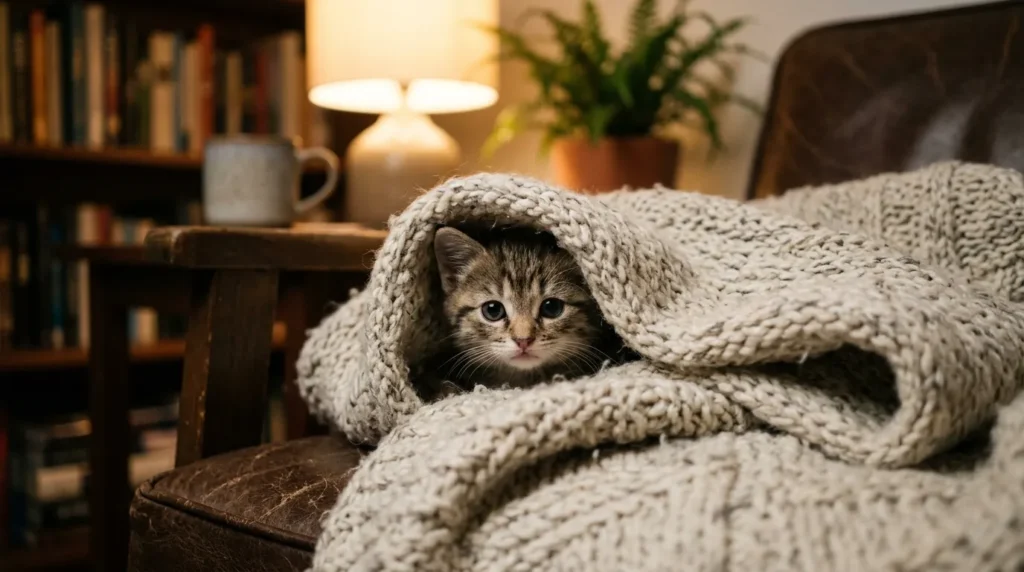
The move from a litter of siblings and a familiar mother to a new home alone is one of the most disorienting experiences a kitten will ever face. Their cortisol levels spike sharply and digestion slows when the body is in stress mode, because survival takes priority over appetite. This is completely normal and it does not mean the kitten is sick.
Set up a single quiet room as a base camp and keep the kitten there for the first few days. Remove the food bowl from anywhere near the litter box, because cats have a strong instinct to avoid eating close to where they eliminate. Six feet of separation is the minimum and across the room is better.
Keep noise low and foot traffic minimal during the first 48 hours. Loud appliances, barking dogs and well-meaning visitors all add to the stress load and delay the point at which the kitten feels calm enough to eat. A hungry kitten in a quiet room will usually start eating before a stressed kitten in a busy one.
Some kittens skip the first meal entirely and eat almost nothing on day one. That’s within normal range as long as the kitten stays alert and warm. It’s the kittens who go quiet, cold, or limp on top of not eating who need a vet, not the ones who are simply cautious in a new room.
The 101°F Trick That Jumpstarts a Kitten’s Appetite
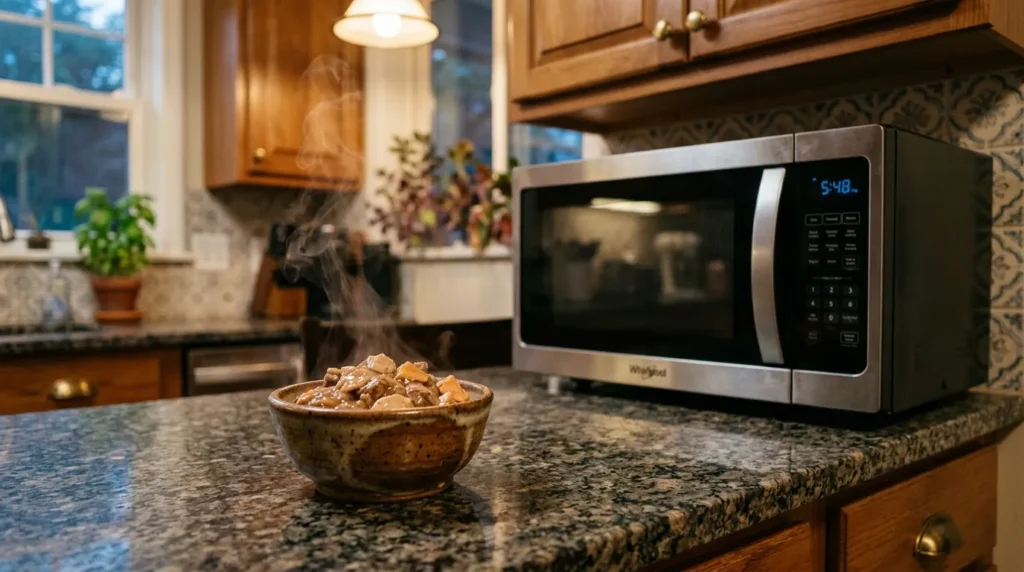
Warming wet food to approximately 101°F releases olfactory stimulation that a stressed or congested kitten cannot resist. At room temperature wet food has very little aroma, but at body temperature the aromatic molecules become volatile and fill the air around the bowl. A kitten that will not look at cold food will often walk straight over to warmed food.
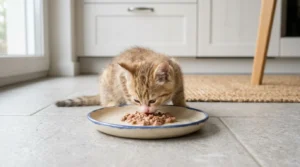
Microwave wet food for eight to ten seconds and stir it before offering. Test the temperature on your wrist the same way you would test a baby bottle, it should feel warm but not hot. Never serve food that is still cold from the refrigerator to a new kitten. The scent difference between cold and warmed food is the difference between ignored and eaten.
While you are at it, check the bowl shape. Kitten starter kits almost always come with deep narrow bowls, and those cause whisker fatigue, a real stress response triggered when sensitive whiskers constantly brush the sides of a bowl during eating. Switch to a flat plate or a wide shallow saucer. This is a two-second fix that makes a visible difference for a large percentage of kittens who seem picky.
How to Use Hand-Feeding to Break the Eating Barrier?
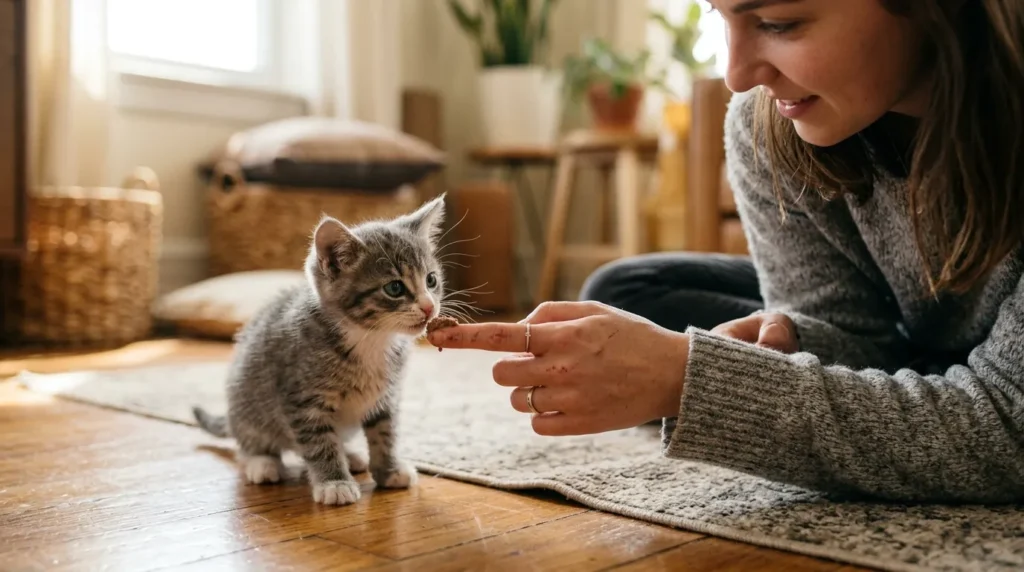
Hand-feeding works because it bypasses the vulnerability of putting their head into a bowl in an unfamiliar environment. A kitten that will not approach a food dish will often take food directly from your finger, because the warmth and familiar scent of a human hand provides a sense of protection that an empty bowl cannot.
Put a small amount of warmed wet food on your fingertip and hold it at the kitten’s nose level while sitting on the floor. Do not chase the kitten with your hand. Sit still and let them come to you. Once they take food from your finger two or three times the bowl is usually no longer a problem, because the association between eating and feeling safe has been established.
According to the Cornell Feline Health Center, stress-related appetite suppression in newly homed kittens is one of the most common presentations in the first week after adoption. Hand-feeding combined with environmental calm resolves the majority of cases without medical intervention. For a full guide on what and how much to feed as your kitten settles in, how to feed an indoor cat properly covers kitten-specific portions and meal frequency.
When a Stuffy Nose Is the Real Reason Your Kitten Won’t Eat?
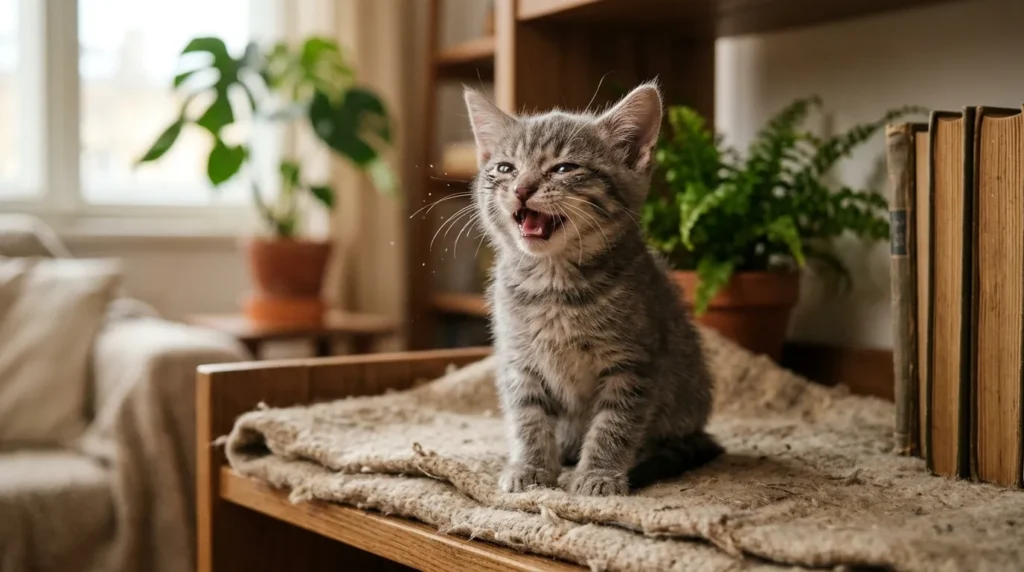
An upper respiratory infection is extremely common in kittens coming from shelters or pet stores, and it is one of the most missed causes of appetite loss. If a kitten cannot smell their food they will not eat it. Smell drives appetite in cats at a neurological level, and a blocked nose effectively switches off the motivation to eat entirely.
Watch for any sneezing, watery or crusty eyes, nasal discharge or noisy breathing. Even mild congestion that is barely noticeable to you can completely block a kitten’s sense of smell. If you see any of these signs alongside appetite loss, this is not something that resolves on its own in young kittens, a vet visit for treatment is needed.
While waiting for a vet appointment, run a hot shower and sit in the steamy bathroom with the kitten for ten minutes. The humidity can temporarily open their nasal passages enough to get a meal down. Offer the most pungent wet food you can find immediately after the steam session while their sense of smell is briefly restored.
Straight Talk If your kitten came from a shelter and is sneezing within the first week, assume a respiratory infection until proven otherwise. Most shelter kittens are exposed to URIs during their stay and symptoms can take three to five days to show up after you bring them home. It is not the shelter’s fault and it is not yours, but it does need a vet.
Safe Appetite Boosters You Can Use at Home Right Now
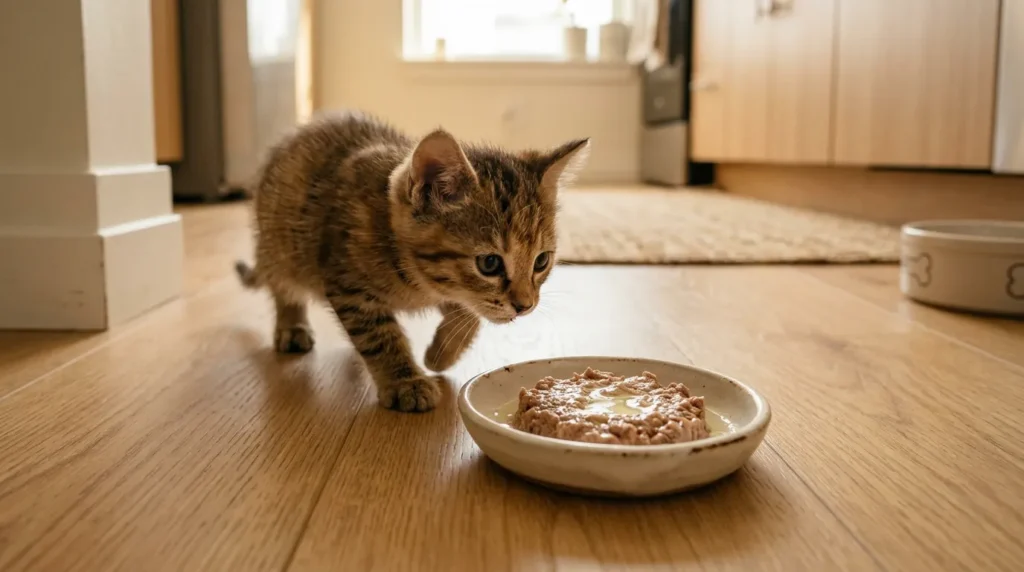
A small amount of low-sodium tuna water drizzled over wet food is one of the safest and most effective appetite stimulants you can use at home. Use tuna packed in water with no salt added, and use only the liquid, not the fish itself, which is too rich for daily use. A teaspoon over their normal food is enough to completely change a reluctant kitten’s interest level.
Plain meat baby food with no onion, garlic or added seasoning is another option that works well for kittens who need a bridge between a completely empty stomach and normal eating. Look for single-ingredient chicken or turkey varieties in Stage 1 pureed form. This is gentle on a stressed digestive system and palatable enough to get most kittens eating.
For very young kittens under eight weeks who are still transitioning off nursing, a small amount of kitten milk replacer drizzled over solid food softens the texture and adds familiar flavors from their nursing period. This eases the weaning stress of moving fully onto solid food in a new environment at the same time. Never use regular cow’s milk, which causes digestive upset in kittens.
Straight Talk Do not force feed a kitten by squirting food into their mouth with a syringe unless a vet has instructed you to. Forced eating creates a food aversion that can last for months. A kitten who associates a specific food with being held down and force-fed will refuse that food long after they are otherwise healthy. Patience and enticement always beat force with kittens.
The Feeding Mistake That Makes a Picky Kitten Worse
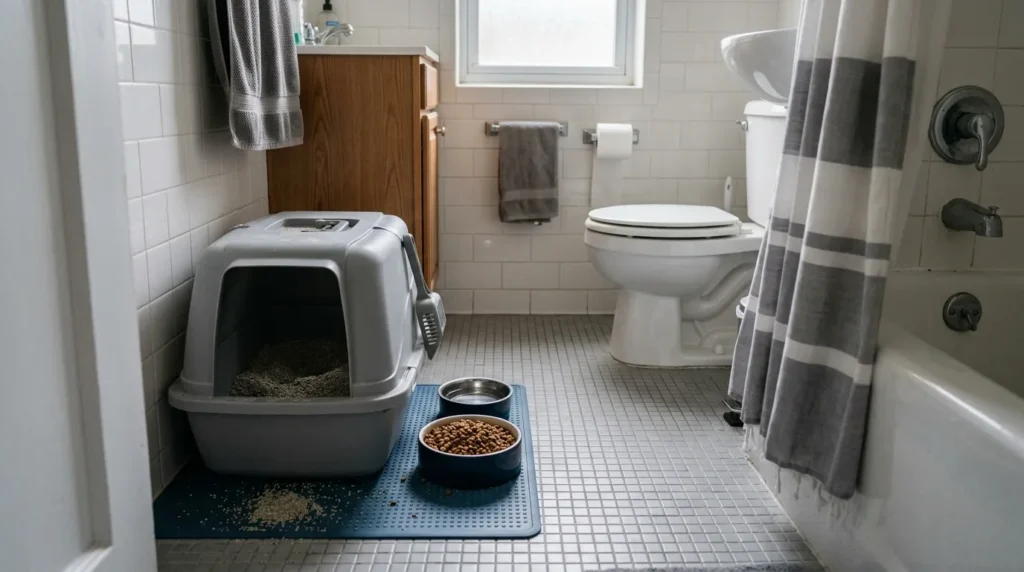
The most common mistake new kitten owners make is placing food too close to the litter box. It is done for convenience and it makes complete sense from a human perspective, everything in one corner of the bathroom. But cats are hardwired to avoid eating near where they eliminate, because in the wild that area attracted predators. A kitten will consistently skip meals rather than eat in a location that feels instinctually wrong.
The second mistake is offering too many food changes too fast. When a new kitten refuses one brand, owners often immediately buy three more varieties and start rotating through them. Sudden changes in texture, protein source and brand all overwhelm a digestive system that is already stressed. Pick one high-quality wet food that matches what the shelter was feeding, stick with it for two weeks and use the warming and topper techniques to make it more appealing rather than replacing it.
Switching food too abruptly also causes digestive upset that can produce loose stools or vomiting, which then gets confused with illness and triggers another round of food changes. Stability is what a stressed kitten’s gut needs most during the first two weeks at home.
When to Call the Vet About a Kitten Not Eating?
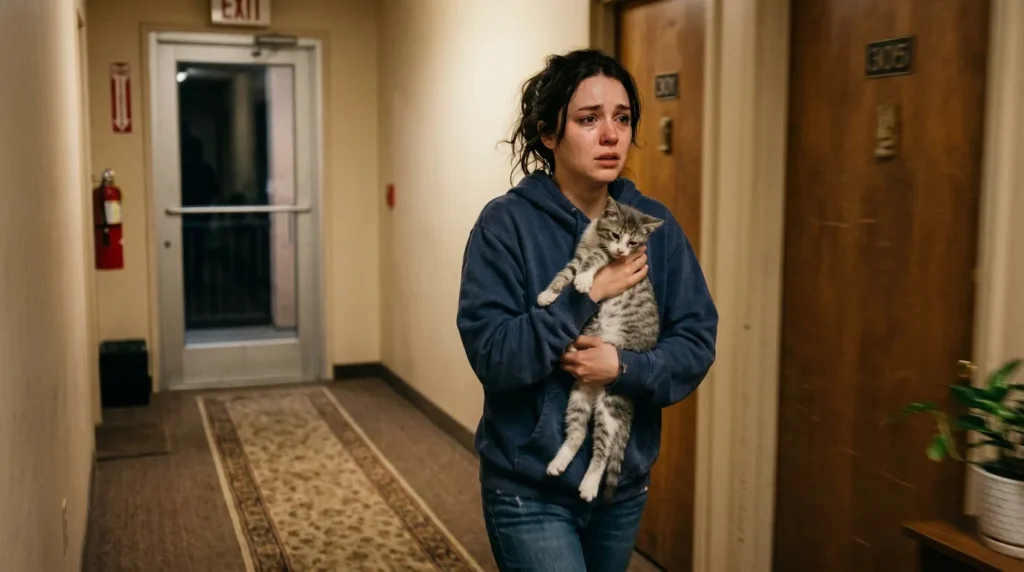
Call a vet immediately if your kitten has not eaten for more than 12 hours and is under 12 weeks old. At this age feline hepatic lipidosis can begin developing quickly in a kitten with no body fat reserves, and low blood sugar becomes dangerous within hours. This is a time-sensitive situation. A 10-week-old and a 12-week-old kitten both fall under this same 12-hour rule, age within that range doesn’t change the math.
Beyond the 12-hour rule, contact a vet the same day if you see any of these specific signs alongside appetite loss: vomiting more than once, diarrhea with blood or mucus, a body temperature that feels noticeably cold when you hold the kitten, breathing that sounds labored or wheezy, refusing both food and water together, or a kitten that stops meowing and becomes completely silent and still.
A kitten that is simply hiding and skipping meals but remains warm, vocal and responsive is almost certainly dealing with stress rather than illness. But one that goes quiet and limp has crossed into medical territory and needs professional evaluation, not more time and not more food tricks.
This article is for informational purposes only. Always consult your vet if you have concerns about your kitten’s health.
FAQ
How long can a new kitten go without eating?
Kittens under 12 weeks should not go more than 12 hours without food. Older kittens can go 24 hours but anything beyond that warrants a vet call regardless of age.
Is it normal for a new kitten to not eat the first day?
Yes. Skipping the first meal or eating very little in the first 24 hours is common and usually stress-related. As long as the kitten is alert and warm, monitor closely and try warming their food.
My kitten is eating less than usual but acting normal otherwise. Should I worry?
A kitten who’s playing, using the litter box, and drinking water but eating a bit less than before is usually adjusting, not sick. Weigh the food you put down against what’s left after a few hours to see how much is actually going in, and try the warming and topper tricks above. If the reduced appetite runs past 24 hours, or the kitten is under 12 weeks old, call your vet rather than waiting it out.
What should I feed a kitten that won’t eat?
Start with warmed high-quality wet food on a flat plate. Add a teaspoon of low-sodium tuna water as a topper if they still show no interest. Avoid dry kibble as the only option for kittens under six months.
What if my kitten is under 4 weeks old and won’t eat?
This isn’t the same problem as an older kitten skipping meals. A kitten that young should still be nursing or on a bottle, and refusing to nurse usually points to being too cold to feed effectively, not stress. Warm the kitten slowly against your body first, then attempt a bottle with kitten milk replacer. If she still won’t nurse within an hour of being warm, or feels cold to the touch at any point, that’s a vet emergency, not a wait-and-see situation.
Is a kitten not eating or drinking always an emergency?
Not always, but it moves up the urgency list fast. A kitten that’s skipping food but still drinking normally is usually just stressed. One that’s refusing both food and water, especially for more than a few hours, is at real risk of dehydration on top of low blood sugar. Check gums and body temperature and call your vet the same day if both food and water are being refused together.
Can I give a kitten honey if they won’t eat?
A tiny dab of plain honey or corn syrup on the gums can help maintain blood sugar while you get to the vet if you suspect hypoglycemia. This is a stopgap measure only, it does not replace a vet visit.
Why does my kitten sniff the food but walk away?
Sniffing and walking away usually means the food is the wrong temperature, the bowl is too deep causing whisker discomfort, or the location is too stressful. Try warming the food and switching to a flat plate first.
Should I be worried if my kitten is drinking water but not eating?
Drinking water is a good sign. It means the kitten is not severely dehydrated. Keep offering warmed food every two to three hours and contact your vet if the kitten has not eaten within 24 hours despite your efforts.
A new kitten not eating is alarming, but it is almost always solvable once you know what to look for. Start by ruling out the medical emergency signs, then work through warming the food, fixing the bowl shape and separating feeding from the litter area. Most kittens respond to one or two of these changes within a few hours. For building a solid feeding and enrichment routine once your kitten is eating well, new indoor cat covers exactly what the first month should look like.
A new kitten not eating is most commonly caused by rehoming stress, whisker fatigue from deep bowls, or proximity to the litter box. Kittens under 12 weeks should not go more than 12 hours without food due to hypoglycemia risk. Warming wet food to 101°F releases scent molecules that stimulate appetite in stressed kittens. Hand-feeding from a fingertip at floor level helps kittens associate eating with safety. Emergency vet signs include limp body, pale gums, cold temperature and complete silence. Upper respiratory infections are a common medical cause of appetite loss in newly adopted shelter kittens. Kittens under 4 weeks old who won’t nurse face a different and more urgent problem tied to body temperature, not rehoming stress, and need a vet call rather than the tricks in this guide.

Written by Mishu
A passionate cat lover and indoor living enthusiast, Mishu is the founder and voice behind Indoor Living Cat – a go-to resource for cat owners who want to create the happiest, healthiest life for their feline companions indoors.
View Full Profile