
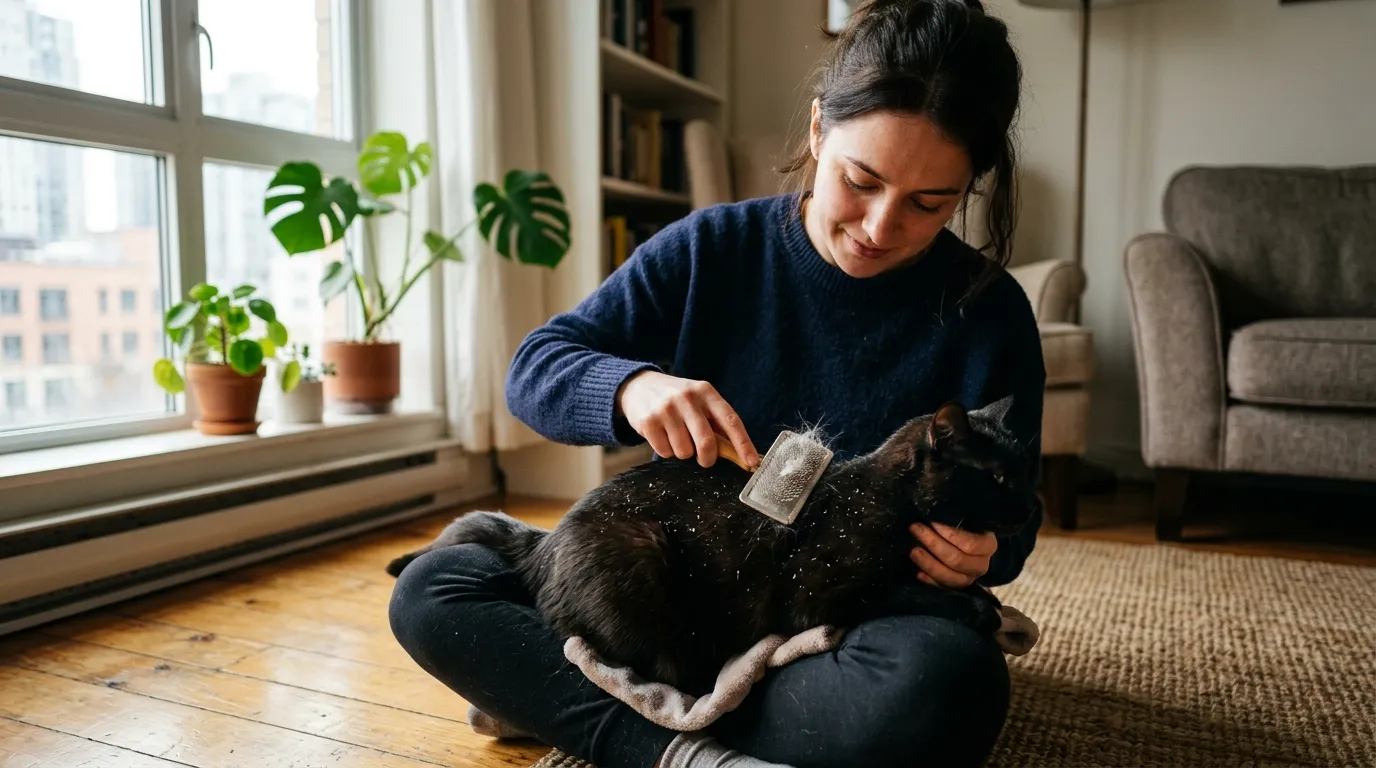
The first winter I ran my apartment’s heater continuously, my cat developed what looked like a light dusting of flour along her spine, and I spent two weeks wondering whether something was seriously wrong with her. Getting rid of cat dandruff fast and for good turned out to be mostly about fixing the room, not the cat. Dense, dry heating air was pulling moisture out of her skin faster than her natural oils could replace it. This article covers six fixes for the most common causes of indoor cat dandruff, a four-week plan that shows what to do and when, how to tell dandruff from dander and flea dirt, which shampoos and home remedies are safe, and the warning signs that mean a vet visit beats another brushing session.
The short answer: brush your cat two to three times a week (daily for long coats), run a humidifier where she sleeps, add wet food and a cat-safe omega-3, and check for fleas before anything else, since flea dirt and flea allergy look like dry-skin flakes. Most mild indoor cat dandruff clears in two to four weeks. “Fast” has a floor, though. Brushing and humidity show up in days, but diet changes take four to six weeks to show in the coat, and nothing at home fixes dandruff caused by a medical problem.
Quick Answer: How to Get Rid of Cat Dandruff Fast
If you want the order of operations without the backstory, use this checklist. Work through it top to bottom, because step one decides whether steps two through six will do anything.
- Rule out fleas and mites. Do the damp paper towel test described below. Reddish-brown streaks mean fleas.
- Brush. Two to three sessions a week for short coats, daily for long coats.
- Add humidity. Aim for 40 to 60 percent in the room where she sleeps.
- Increase water. Wet food, a fountain, or both.
- Add omega-3. A fish oil made for cats, mixed into wet food, after your vet signs off on the dose.
- Book a vet visit if flakes come with hair loss, redness, odor, scabs or heavy scratching, or if two to four weeks of consistent care changes nothing.
What Cat Dandruff Actually Is and Why Indoor Cats Get More of It
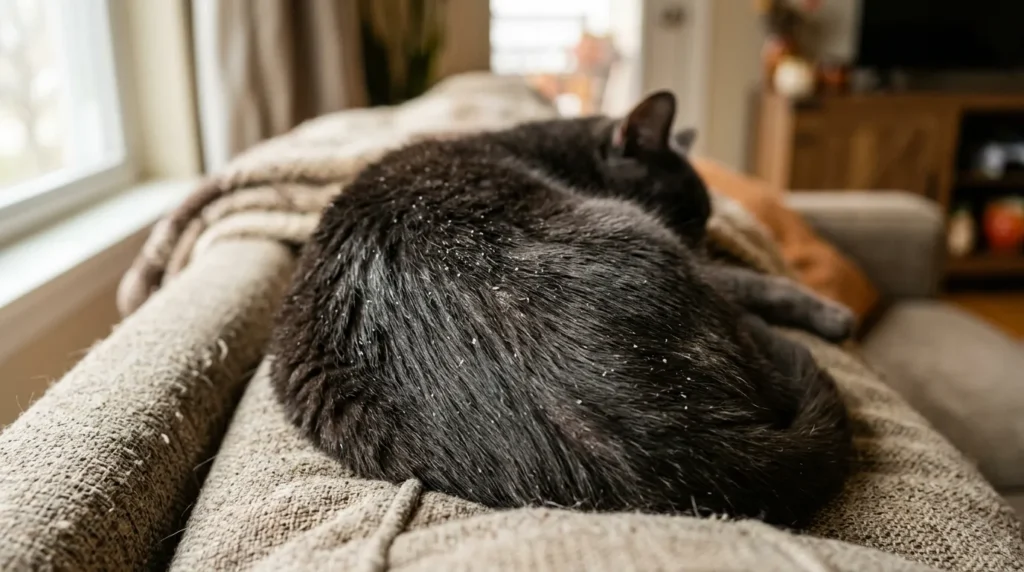
Cat dandruff is dead skin that sheds faster than normal, or that the coat traps instead of releasing. Every cat renews her skin constantly. When the cycle speeds up, or when oils fail to spread along the hair, those cells clump into visible white or grayish flakes on the fur, the bed and the couch. They collect along the lower back and the base of the tail first, because those are the spots a cat reaches least during self-grooming.
Indoor cats get more of it than outdoor cats, and the biggest reason is the heating and cooling system. According to Cornell Feline Health Center, skin health in cats ties directly to environmental humidity, coat maintenance and nutritional status. When forced-air heating drops indoor relative humidity below 30 percent, a cat’s skin loses moisture faster than her oil glands can make it up. That’s why flaking so often starts the week the heater goes on.
Dandruff also doesn’t mean your cat is dirty. A clean, well-groomed cat can still flake if the air is dry, her diet is thin on fats, or arthritis keeps her from twisting around to reach her back. For mild cases the fix is environmental. For anything else, dandruff is a symptom, and the cause needs finding.
[Image placeholder: infographic showing the three main zones where cat dandruff appears (lower back, tail base, hind legs) and why each is hard to self-groom]
Cat Dandruff vs. Cat Dander vs. Flea Dirt: How to Tell Them Apart
Plenty of owners searching for dandruff answers find out the flakes aren’t dandruff at all. Three things get confused constantly, and telling them apart changes what you do next.
| What You See | What It Actually Is | What It Means |
| Fine white flecks, barely visible, no clumping | Cat dander | Normal shedding of microscopic skin cells. Every cat produces it. It’s the main trigger for human cat allergies but it’s not a health problem for the cat. |
| Visible white or grayish flakes, often clumped in fur | Dandruff | Abnormal skin cell buildup, usually from dry air, poor grooming reach, or an underlying cause worth investigating if it persists. |
| Small black or reddish-brown specks near the tail base | Flea dirt (flea feces) | Evidence of an active flea infestation. Turns rust-colored when wet with water, since it’s digested blood. This needs flea treatment, not a humidifier. |
| Flakes that seem to move when you look closely | Cheyletiella mites (“walking dandruff”) | A parasite that mimics dandruff. It can pass to other pets and temporarily to people. Needs a vet to confirm and treat. |
The damp paper towel test: wipe a damp white paper towel across the area. Dandruff smears pale or stays white. Flea dirt leaves a reddish-brown streak. If you see the streak, treat for fleas first. Everything else in this article assumes you’ve already ruled that out.
[Image placeholder: side-by-side comparison of cat dandruff flakes, cat dander, and flea dirt on light-colored fur, plus a paper towel test photo]
The 6 Most Effective Ways to Get Rid of Cat Dandruff at Home
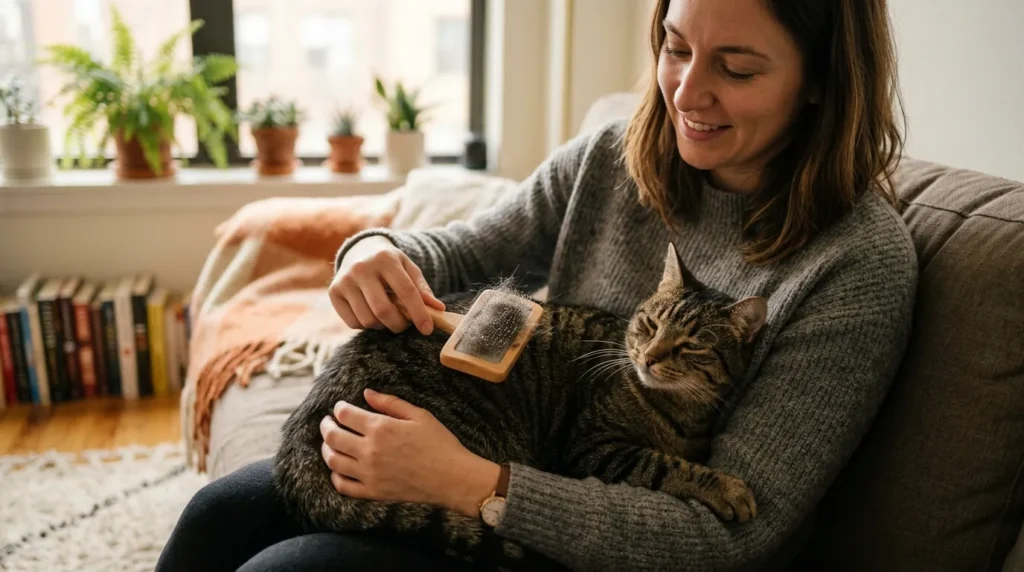
Fix 1: Brush consistently. If you only do one thing, do this. Brushing spreads skin oils along each hair shaft, which keeps the coat moisturized and stops dead cells from piling up. Short-haired cats need two to three sessions per week. Long-haired cats need daily brushing. A slicker brush or a grooming glove both work, depending on what your cat tolerates. Keep sessions to three or four minutes at first, and stop before she gets annoyed. A cat who dreads the brush won’t let you do it twice a week for a month.
Fix 2: Add humidity to the room. A humidifier in the room where your cat sleeps most gives back the moisture the HVAC system has stripped out. Target 40 to 60 percent relative humidity, which suits both cat skin and human comfort. A cheap hygrometer (usually under $15) tells you where you actually are, so you’re not guessing. The catch: humidifiers need regular cleaning, or the reservoir grows bacteria and mold you’ll be misting into the air your cat breathes. Empty it daily and scrub it weekly.
Fix 3: Switch to or supplement with wet food. Cats evolved to get most of their water from prey, not a bowl, so a dry-kibble-only diet tends to leave them mildly dehydrated. Wet food raises daily water intake a lot and supports the skin barrier. If a full switch isn’t possible, replace one meal a day with wet food and put a water fountain next to the kibble bowl. If your cat has a medical condition such as kidney disease or diabetes, ask your vet before changing her diet.
Fix 4: Add omega fatty acids. Omega-3 and omega-6 fatty acids support the skin barrier and cut down on excess shedding. A small amount of fish oil in wet food is the easiest route. Use a product made for cats and get the dose from your vet, because the right amount depends on weight and what she already eats. Coat and skin improvements from omega supplementation usually become visible within four to six weeks. Some cats refuse fish oil outright. If yours does, a skin-and-coat cat food with added omegas does the same job without the fight.
Fix 5: Reduce static buildup. Dry indoor air builds static in cat fur, which holds onto loose skin cells and makes flakes stand out. After brushing, wipe her gently with a very lightly damp cloth. Anti-static sprays made for pets exist, but the damp cloth works just as well.
Fix 6: Bathe only when necessary and only with cat-specific products. For heavy flaking, an occasional bath with a moisturizing cat shampoo containing oatmeal or aloe redistributes oils and lifts dead skin better than brushing alone. Never use human shampoo. The pH difference irritates cat skin and makes dandruff worse. For persistent or moderate to severe cases, a vet may prescribe a medicated anti-seborrheic shampoo, which is a different product from the oatmeal shampoos sold for routine home care. See the shampoo section below for how to choose.
A complete home grooming routine for your indoor cat covers how to build all six of these fixes into a consistent weekly schedule instead of treating each one separately.
A 4-Week Plan to Clear Cat Dandruff
Doing everything on day one is how owners burn out and quit by day nine. Stagger the changes so you can see what’s working. If nothing has shifted by the end of week four, that’s your cue to call the vet.
| Week | What to Do | What You Should See |
| Week 1 | Run the paper towel test. Start brushing. Set up the humidifier and hygrometer. Add a water fountain. | Fewer flakes on the brush after a few days as static drops and oils spread. |
| Week 2 | Swap one meal a day for wet food. Start the damp-cloth wipe after brushing. | Visibly less flaking on furniture. Coat starts to look less dull. |
| Week 3 | Begin the vet-approved omega-3. Bathe once with a cat-safe moisturizing shampoo only if flaking is still heavy. | Most mild cases are clearly improving. Flakes concentrate in fewer spots. |
| Week 4 | Keep the routine. Take a photo of the same coat area you shot on day one. | Mild dandruff largely gone. Omega effects keep building through week six. |
| Week 4+, no change | Book a vet visit. | A diagnosis, not another round of guessing. |
Which Dandruff Fix Matches Which Cause?
Brushing and humidity help almost everyone, but the rest of the fixes depend on why the flakes are there. A fungal problem won’t care how much fish oil you add, and a dry-air problem won’t respond to flea treatment.
| Likely Cause | Clues | Best First Move |
| Dry indoor air | Starts with the heating season, even flakes, no redness | Humidifier, brushing, wet food |
| Grooming reach (age, weight, arthritis) | Flakes only on the lower back and tail base | Brush those areas for her, weight plan, ask the vet about joint support |
| Low omega fatty acids | Dull coat, dry skin, thin or budget diet | Better food or vet-approved fish oil |
| Fleas or flea allergy | Rust-colored specks, scratching, small scabs near the tail | Vet-prescribed flea control for every pet in the home |
| Cheyletiella mites | Heavy flaking, flakes that appear to move, itchy people or pets | Vet exam and prescription treatment |
| Food or environmental allergy | Itching, redness, hair loss, ear problems | Vet workup, possibly a diet trial |
| Ringworm | Flaky patches, hair loss, often little itching | Fungal culture or PCR at the vet. It’s contagious to people. |
| Underlying illness (diabetes, thyroid, kidney) | Sudden flaking plus weight, thirst or appetite changes | Vet exam and bloodwork |
Best Shampoo for Cats with Dandruff (and What to Skip)
Most cats hate baths, so the shampoo question really has two parts: what’s safe, and whether you can get it onto your cat without a fight. Here’s how the main options compare.
| Type | Best For | Trade-off |
| Oatmeal or aloe moisturizing cat shampoo | Mild to moderate dry-skin flaking | Needs a real bath, so it only suits cats who tolerate water. |
| Waterless foam or dry shampoo made for cats | Cats who panic in the tub, spot treatment between baths | Lighter cleaning. Check that the label says cat-safe, and brush the foam out. |
| Vet-prescribed medicated shampoo | Seborrhea, yeast, bacterial or fungal skin problems | Needs a diagnosis first, and the vet will set a contact time and schedule. |
Skip these: human dandruff shampoo (Head & Shoulders and similar), baby shampoo, dish soap, and anything with essential oils. Tea tree oil in particular is toxic to cats, and it shows up in “natural” dandruff remedy lists far more often than it should. Cats lick everything off their coat, so any product has to be safe to swallow in small amounts. If a bath is still on the table, one every two to three months is plenty for most cats. See the mistakes section below for why more is worse.
[Image placeholder: owner applying waterless cat foam shampoo to a calm cat, with a towel and brush ready]
Why Indoor Cats Specifically Struggle with Flaky Skin
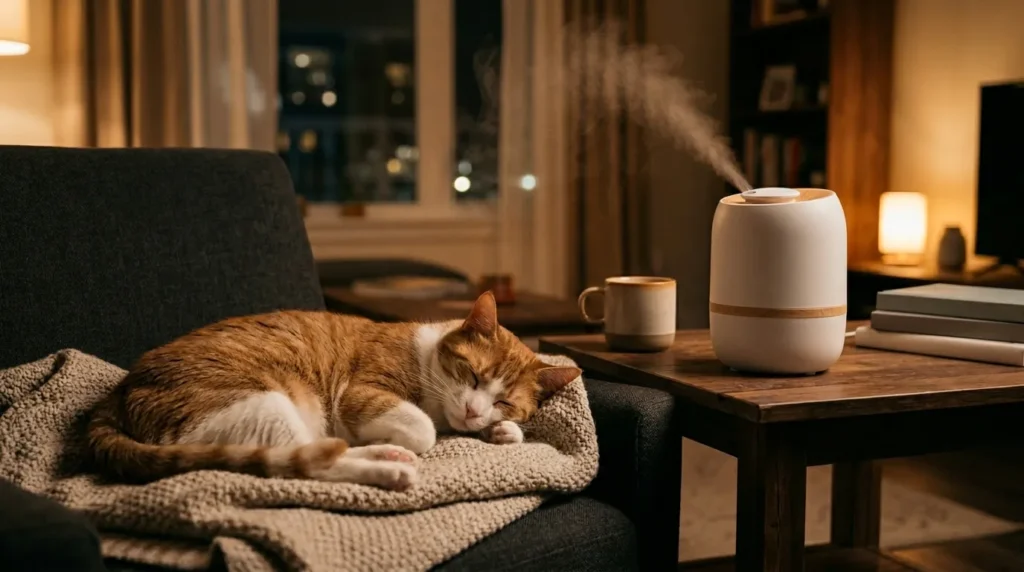
Feline seborrhea, the medical term for abnormal skin cell turnover, shows up more often in indoor cats for reasons tied to how they live. Low humidity from HVAC systems, less activity than an outdoor cat gets, and no rough natural surfaces to work through the undercoat all let skin cells build up instead of shedding normally. Vets describe two patterns. Dry seborrhea (sicca) gives you the dusty white flakes this article is about. Oily seborrhea (oleosa) leaves a greasy, sometimes smelly coat with waxy, clumped scale. Greasy patches near the tail, particularly in long-haired cats, are worth mentioning to your vet.
Senior cats and overweight cats face an added indoor-specific problem. Arthritis limits how far they can twist and reach their lower back, rear and tail base during self-grooming, and those are exactly where dandruff builds up. A senior cat who kept a spotless coat for years can show visible flaking within weeks of arthritis progressing enough to limit her reach. If she’s slowing down, jumping less or sitting hunched, mention it to your vet. Pain relief or joint support can bring her grooming back.
Dry air and grooming reach aren’t the only causes indoors. Several others show up often enough that they’re worth ruling out before you blame the heater:
- Allergies. Food, flea and environmental allergies all disrupt the skin barrier and can produce dandruff on their own, often with itching, redness, or hair loss somewhere else on the body.
- Stress and overgrooming (or under-grooming). A move, a new pet, or a schedule change can push a cat to lick herself raw or stop grooming almost entirely. Both patterns end in the same flaky, dull coat.
- Fleas, even in a cat that never goes outside. Fleas travel in on clothing, shoes or another pet. Flea allergy dermatitis can trigger dandruff-like flaking from one or two bites.
- Diet gaps. Low-fat or low-quality food that lacks omega fatty acids shows up in the coat first.
- Sunburn. Cats with white or thin fur on the ears and nose can burn through a sunny window, and the peeling skin looks like flakes.
- Illness. Diabetes, an overactive thyroid and kidney disease can all change coat quality.
Maintaining your indoor cat’s overall health through regular vet visits catches mobility changes and weight gain before they affect coat condition. A proper feeding approach that manages weight keeps cats flexible enough to self-groom, which lowers dandruff risk directly. Enrichment and movement through daily play also keeps cats active enough to maintain their own coat.
Why Is There Dandruff on My Cat’s Back Near the Tail?
This is the most common spot, and it usually isn’t alarming. The lower back and tail base are the hardest places for a cat to reach, so flakes and oils collect there first. Check three things before you relax. Is the skin underneath pale pink and calm? Are the specks white rather than black or rust-colored? Is she leaving the area alone rather than chewing or scratching at it? If all three are yes, daily brushing of that patch plus the humidity and diet fixes above usually handle it. If the area looks greasy, scabby or thinning, see a vet, because flea allergy and seborrhea both favor this spot.
Dandruff on a Black Cat: Why It Looks Worse
Black and dark cats show every flake, so the same amount of dandruff that disappears on a cream tabby looks dramatic on a black coat. The causes and the treatment are identical. What changes is the checking. Flea dirt is also harder to spot on dark fur, so run the damp paper towel test even if the flakes look obviously white. And don’t judge progress by how it looks from across the room. Compare photos in the same light each week.
How to Tell Normal Flaking from a Medical Problem
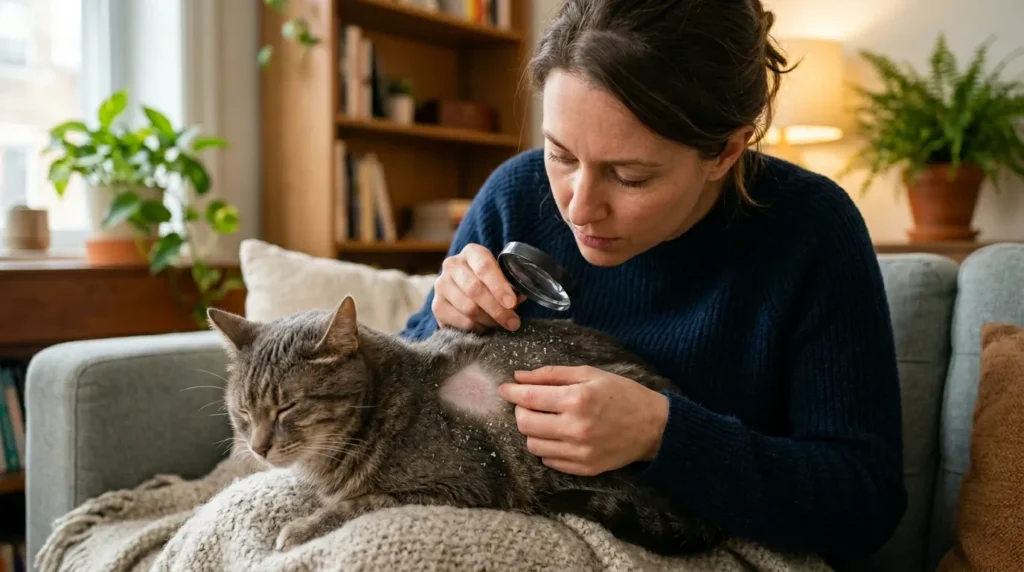
Normal dandruff in indoor cats spreads evenly across the coat, doesn’t worsen quickly, and responds to environmental changes within two to four weeks. The skin beneath the flakes should look pale pink and undamaged. Your cat shouldn’t be scratching hard at the affected areas or showing behavior changes tied to skin discomfort.
The table below shows the difference between mild dandruff that responds to home care and signs that call for a veterinary evaluation.
| Mild Dandruff (Home Care Works) | See a Vet If You Notice This |
| Even white flakes on coat | Flakes combined with hair loss |
| Seasonal or dry-air related | Sudden appearance with no clear cause |
| Improves within 2 to 4 weeks | Worsens despite home care |
| No skin redness or odor | Red, irritated skin or unusual smell |
| Cat not scratching excessively | Constant scratching or overgrooming one spot |
| No black or reddish specks near the tail base | Black or rust-colored specks (possible flea dirt) |
Quick self-check before you reach for a brush or a vet appointment:
- Are the flakes white or grayish, not black or rust-colored? Rules out flea dirt.
- Is the skin underneath pale and calm, not red or scabbed? Rules out active infection or severe allergy.
- Did this start gradually with the heating season, not overnight? Points toward environmental dandruff.
- Is your cat eating, drinking and behaving normally otherwise? A yes supports a home-care approach.
If you answered no to any of these, book the vet visit instead of waiting out the two to four weeks.
Cheyletiella mites, also called “walking dandruff,” produce flakes that look exactly like regular dandruff but move slightly under close inspection. Even indoor cats can pick them up from new pets, a boarding facility, or occasionally human clothing. If the dandruff seems unusually heavy for the environment, a parasite check is worth the appointment. Ringworm is a less common look-alike. It’s a fungal infection that can leave a cat with flaky skin and little to no itching, it’s confirmed through a fungal culture or PCR test rather than by looking at the coat, and it can spread to people.
[Image placeholder: close-up photo showing healthy pale pink skin under flakes versus red, scabbed skin that needs a vet]
The Mistakes That Make Cat Dandruff Worse
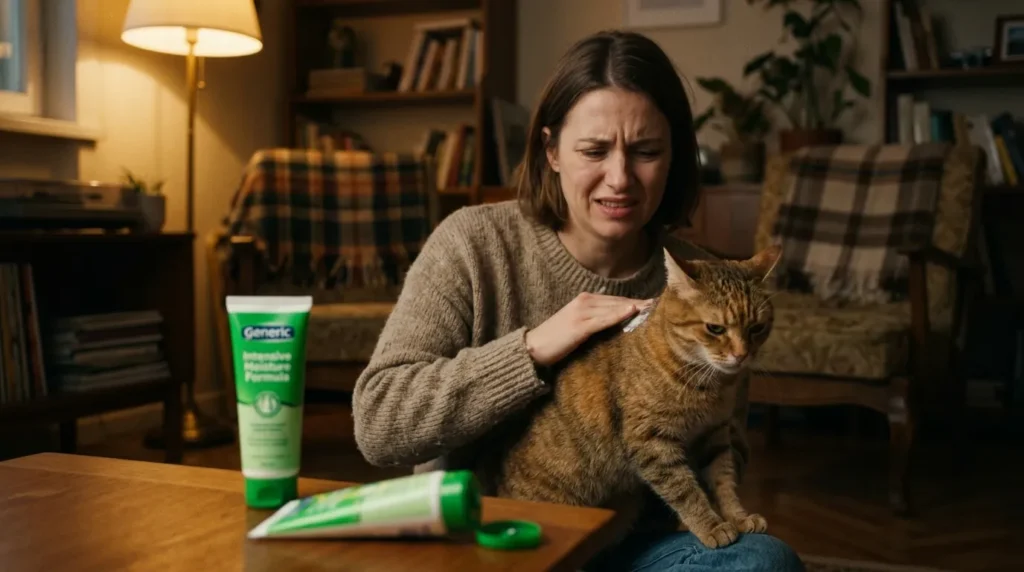
The most common mistake is bathing the cat too often to wash the flakes away. Frequent bathing strips oils that are already in short supply in a dry home, and the skin responds by producing even less moisture. One bath every two to three months with a moisturizing cat-specific shampoo works for most cats. More than that usually backfires.
The second mistake is reaching for whatever’s in the shower. Human shampoo, baby shampoo, dish soap and apple cider vinegar rinses all show up in home-remedy lists, and none of them belong on a cat. Human skin sits at a different pH than cat skin, and even gentle human products disrupt the feline skin barrier and cause dryness and inflammation. Undiluted apple cider vinegar can burn already-irritated skin, and your cat will lick off whatever you put on her anyway, so anything that isn’t safe to swallow in small amounts is a bad choice by default. One wrong product can take weeks to heal.
Three more habits cost people weeks:
- Skipping the flea check. No humidifier fixes a flea problem.
- Using essential oils. Tea tree and several others are toxic to cats, even diluted, and cats absorb and lick them.
- Changing everything at once. If you switch food, add oil and start baths in the same week, you won’t know which one worked, and you won’t know which one caused a stomach upset.
Monitoring your cat’s behavior patterns alongside her coat gives you an early signal when something is shifting, before the dandruff turns dramatic. A cat who starts grooming one area obsessively, or stops grooming a section she used to keep spotless, is telling you something. Keeping litter box habits consistent and maintaining good indoor cat care routines across the board builds a stable baseline that makes skin changes easy to spot.
Honest Assessment: The humidifier is underrated. Most owners try brushing first, and it helps, but in a very dry apartment brushing alone can’t keep pace with how fast the air dries out the skin. Daily brushing plus a running humidifier clears most mild indoor cat dandruff within two weeks when the diet is already decent. If a humidifier feels like too much to manage, adding wet food alone often produces real improvement within a month. I’ll concede that none of this is “fast” in the one-afternoon sense. A bath will make her look better tonight, but it’s the routine that keeps the flakes from returning.
How to Keep Cat Dandruff From Coming Back
Clearing dandruff once is the easy part. Keeping it gone through the next heating season takes a routine you can sustain. This maintenance list is short on purpose.
- Keep the humidifier running from the first cold week until spring, and check the hygrometer weekly.
- Brush on a fixed schedule. Tie it to something you already do, like the evening TV show.
- Keep her at a healthy weight so she can still reach her own back.
- Keep wet food in the rotation and fresh water in more than one spot.
- Stay on year-round flea prevention if your vet recommends it, even for a strictly indoor cat.
- Take a skin and coat photo once a month so slow changes don’t sneak up on you.
- Mention coat changes at every annual vet exam, and ask about bloodwork for seniors.
When Cat Dandruff Needs a Vet Visit This Week
Dandruff paired with any of the following calls for a vet visit within days, not weeks: hair loss in patches, skin that looks red or inflamed under the flakes, a foul smell from the coat or skin, black or rust-colored specks near the tail base, scabs, or a sudden, dramatic jump in flaking with no clear environmental cause. These combinations point to an underlying condition rather than dry air, and they need a diagnosis before treatment.
A sudden spike in dandruff in a previously healthy cat can signal thyroid disease, diabetes, kidney disease, flea allergy, food allergy or a nutritional deficiency. Senior cats showing coat changes alongside weight changes, in either direction, should get bloodwork. A cat’s coat mirrors her internal health closely enough that a real, visible drop in coat quality deserves a baseline blood panel rather than a wait-and-see approach.
What to Expect at the Vet
Knowing the likely steps makes the visit less stressful and helps you answer questions well. Depending on what your vet sees, a visit for dandruff can include:
- A full skin and coat exam, plus questions about diet, home humidity, flea prevention and other pets.
- A flea comb check or a tape or slide sample to look for mites under the microscope.
- A skin scrape or cytology to look for mites, yeast or bacteria.
- A fungal culture or PCR test if ringworm is possible.
- Bloodwork and a urine test if the dandruff comes with weight, thirst or appetite changes.
- An elimination diet trial if a food allergy is suspected.
Costs vary a lot by region and by how many tests are needed, so ask for an estimate before you agree to a workup. Bring photos of the flakes, a note on when they started, and the names of your cat’s food and any supplements.
Vertical space and climbing opportunities that keep indoor cats physically active also support coat health, since they maintain the movement and grooming flexibility a passive lifestyle wears down over time.
[Author box placeholder: add the author’s name, cat care experience, and a “Reviewed by [veterinarian name, credentials]” line here. A named vet reviewer strengthens E-E-A-T on a health topic.]
This article is for informational purposes only. Always consult your vet if you have concerns about your cat’s health.
Frequently Asked Questions About Cat Dandruff
How long does it take to get rid of cat dandruff?
Mild dandruff caused by dry indoor air or gaps in brushing usually improves within two to four weeks of consistent changes. Omega-3 supplementation takes four to six weeks to show in the coat, since the effect works from the inside out. Dandruff that hasn’t improved after four to six weeks of consistent home care needs a vet evaluation to rule out an underlying cause.
What is the fastest way to get rid of cat dandruff?
Brushing plus a humidifier gives the quickest visible change, often within a few days. A moisturizing cat shampoo bath removes loose flakes immediately, but flakes come back if you don’t fix the cause. Stopping them for good takes the full routine: humidity, hydration, diet and a flea check.
Why does my cat have dandruff all of a sudden?
The usual triggers are the heater going on, a food change, a flea exposure, stress from a move or new pet, or a drop in grooming from pain or weight gain. If there’s no obvious trigger and the flaking is heavy, or it comes with weight, appetite or thirst changes, see a vet. Illness can show up in the coat first.
Can cat dandruff cause itching?
Mild dandruff rarely causes much itching on its own. When itching shows up alongside dandruff, it usually points to a secondary cause such as allergies, parasites or a skin infection. A cat who scratches often, bites at her skin, or licks one area excessively along with visible flaking needs a vet assessment rather than home dandruff treatment.
Is it normal for indoor cats to have some dandruff?
A small amount of flaking is normal and reflects ongoing skin renewal. It becomes notable when flakes are easy to see against a dark coat, fall onto furniture in noticeable amounts, or increase over a short period with no clear environmental cause. Most mild indoor cat dandruff is manageable with consistent brushing, better humidity and dietary support.
Can I use human dandruff shampoo on my cat?
No. Human shampoos, including medicated dandruff formulas, have the wrong pH for cat skin and can include ingredients that are harmful if licked off. They usually make flaking worse. Use a cat-specific moisturizing shampoo, or a waterless cat foam if your cat refuses baths, and ask your vet about a medicated product if the problem persists.
How often should I bathe a cat with dandruff?
Rarely. One bath every two to three months with a cat-safe moisturizing shampoo works for most cats. Over-bathing strips oils and tends to make dryness worse. If your vet prescribes a medicated shampoo, follow their schedule instead.
Does coconut oil help cat dandruff?
Applied topically in very small amounts, coconut oil gives temporary surface moisture, but it isn’t an effective long-term fix. Cats groom themselves and swallow whatever’s on their coat, and too much can cause digestive upset or leave the fur greasy. A vet-approved omega-3 fish oil added to food handles the nutritional side of skin health more safely and more effectively.
Does apple cider vinegar help with cat dandruff?
No, and it’s worth avoiding. Undiluted apple cider vinegar can irritate or burn skin that’s already dry or inflamed, and a diluted rinse still risks stinging broken skin you can’t see under the fur. Cats also groom off whatever touches their coat, so an acidic rinse gets ingested. Stick to a cat-specific moisturizing shampoo for occasional baths, and use diet and humidity changes for the underlying dryness.
What food is best for a cat with dandruff?
Look for a complete and balanced food with named animal protein and added omega-3 and omega-6 fatty acids, often sold as a skin and coat formula. Adding wet food helps with hydration. If you suspect a food allergy, don’t guess. A vet-guided elimination diet gives clearer answers than rotating brands.
Can fleas cause cat dandruff, even in a cat that stays indoors?
Yes. Fleas can enter a home on clothing, shoes or another pet, and a flea allergy can trigger dandruff-like flaking from one or two bites. The giveaway is flea dirt: small black or reddish-brown specks, usually near the base of the tail, that turn rust-colored when wet. If you see them, treat for fleas before trying humidity or diet fixes, since those won’t touch a flea-driven problem.
Why does my cat have dandruff on her back but nowhere else?
The back and tail base are the hardest places for a cat to reach during self-grooming, so dry skin and dead cells build up there first, especially in senior or overweight cats with limited flexibility. Dandruff confined to the back with no redness, itching or hair loss is usually a grooming-reach or dry-air issue rather than a sign of disease.
Can stress cause dandruff in cats?
Yes, indirectly. Stress can make a cat overgroom, which irritates the skin, or undergroom, which lets flakes build up. Keep routines steady, add hiding spots and vertical space, and tell your vet about any big changes at home. A calming pheromone diffuser helps some cats.
Does cat dandruff spread to humans?
Regular cat dandruff doesn’t spread to humans. Cat dander, which includes skin flakes, is a common allergen that can trigger reactions in sensitive people, but that’s an immune response to proteins in the skin cells, not an infection. Cheyletiella mites and ringworm can affect people and other pets in the household and need veterinary treatment to clear.
How to get rid of cat dandruff fast and for good: first rule out flea dirt (black or rust-colored specks near the tail base) and mites with a damp paper towel test and a vet check if unsure. Then brush two to three times a week (daily for long coats), run a humidifier at 40 to 60 percent humidity where the cat sleeps, add wet food and a vet-approved omega-3 supplement, and bathe rarely with a cat-specific moisturizing shampoo. Mild indoor cat dandruff usually clears in two to four weeks, and omega-3 effects take four to six weeks. Dandruff with hair loss, redness, odor, scabs or heavy scratching warrants a vet visit within days. Never use human shampoo, apple cider vinegar or essential oils on a cat.

Written by Mishu
A passionate cat lover and indoor living enthusiast, Mishu is the founder and voice behind Indoor Living Cat – a go-to resource for cat owners who want to create the happiest, healthiest life for their feline companions indoors.
View Full Profile