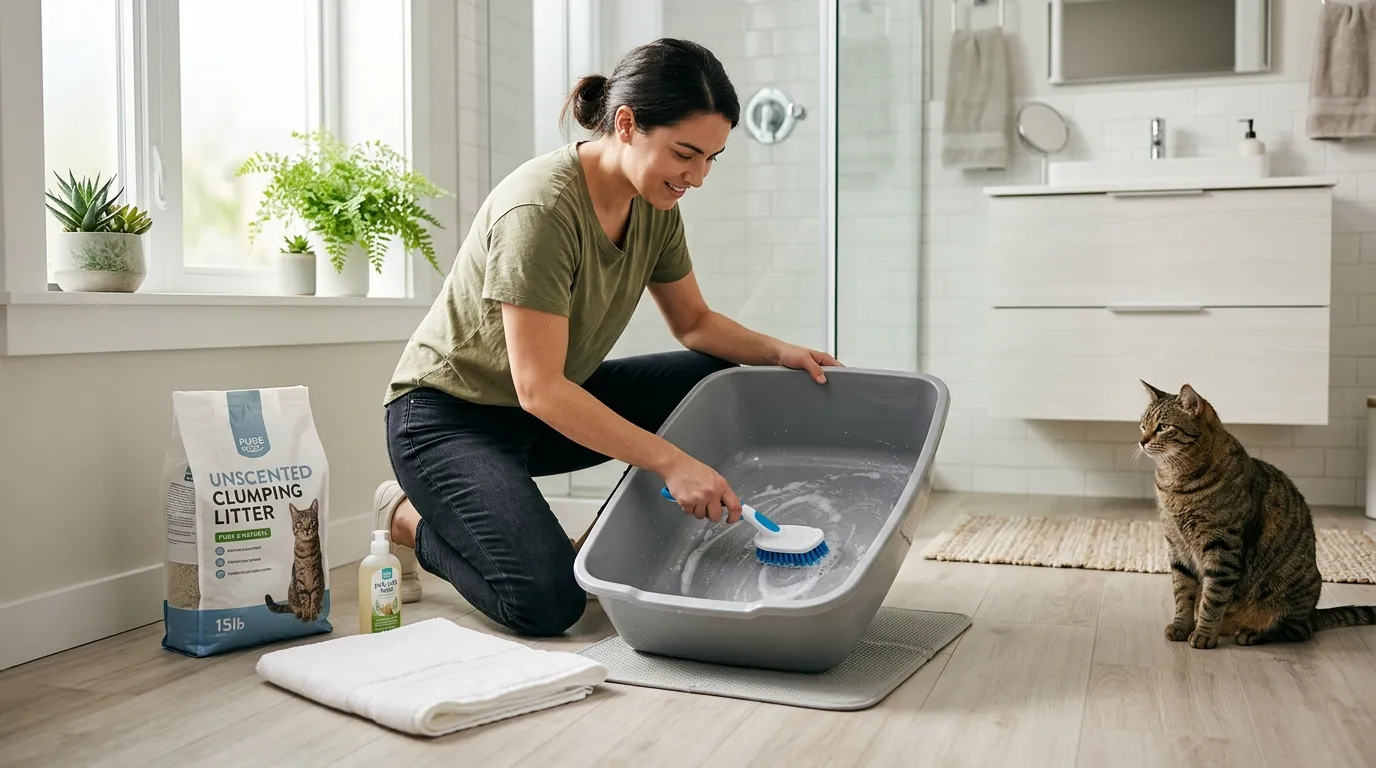
Knowing how to clean a litter box without smell is the difference between an apartment that feels fresh and one that greets guests at the door before you do. Most cat owners clean the box but still deal with lingering ammonia odor because they are missing one or two steps in the process that matter most. I discovered this when switching from my old routine of weekly dumps and scrubs to a system that takes three minutes a day and keeps the box genuinely odor-free between full changes. How to clean litter box without smell is not about finding the right product. It is about doing the right things in the right order consistently. This article gives you the complete seven-step system with nothing left out.
To clean a litter box without smell scoop daily with a metal scoop, top up litter depth to two to three inches after every scoop, do a full empty-and-scrub with unscented dish soap and hot water every one to two weeks and let the box dry completely before refilling. Add a sprinkle of baking soda at the box base before adding fresh litter to neutralize residual odor naturally.
Why Most Litter Box Cleaning Routines Still Leave a Smell?
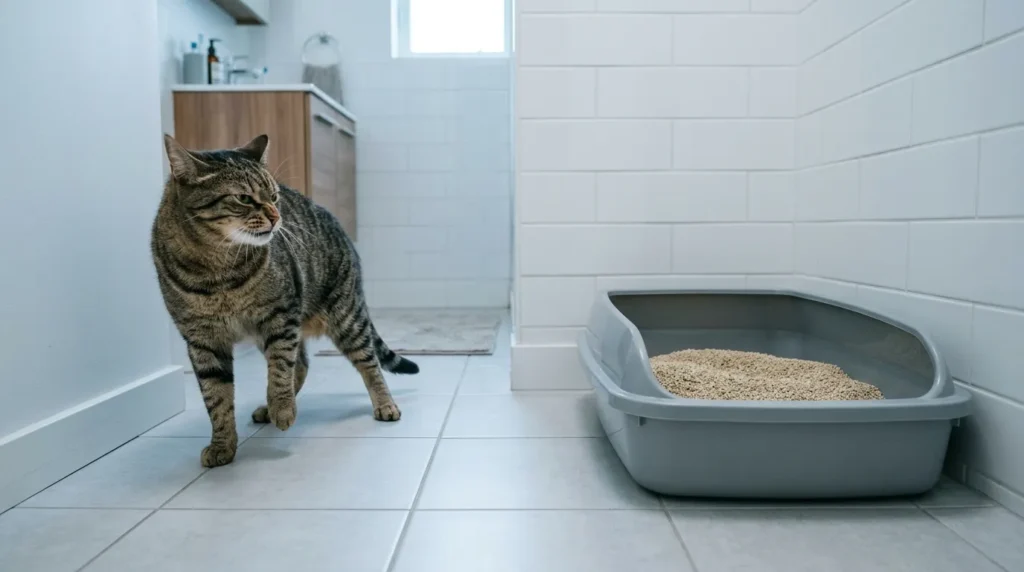
The reason most litter box cleaning routines still produce smell after cleaning comes down to three gaps: scooping without topping up, washing without fully drying and never replacing the box when the plastic has absorbed too much to ever fully clean. Understanding how to clean a litter box without smell means closing all three gaps simultaneously rather than improving just one.
Ammonia buildup is the specific smell that persists after cleaning and it comes from bacteria that survive surface washing by hiding in microscopic scratches inside porous plastic. Regular dish soap removes visible residue from the box surface. It does not penetrate the scratch network where bacteria live. Those bacteria resume ammonia production within hours of the box being refilled regardless of how thoroughly the visible surfaces were scrubbed.
The depth issue compounds the problem. A box cleaned and refilled to only one inch of litter means urine contacts the box base directly during the next use. That urine soaks into the plastic before any clump forms and begins producing ammonia from the base upward. No amount of surface cleaning corrects what is already absorbed into the material itself.
How to Clean Litter Box Without Smell? 7-Step
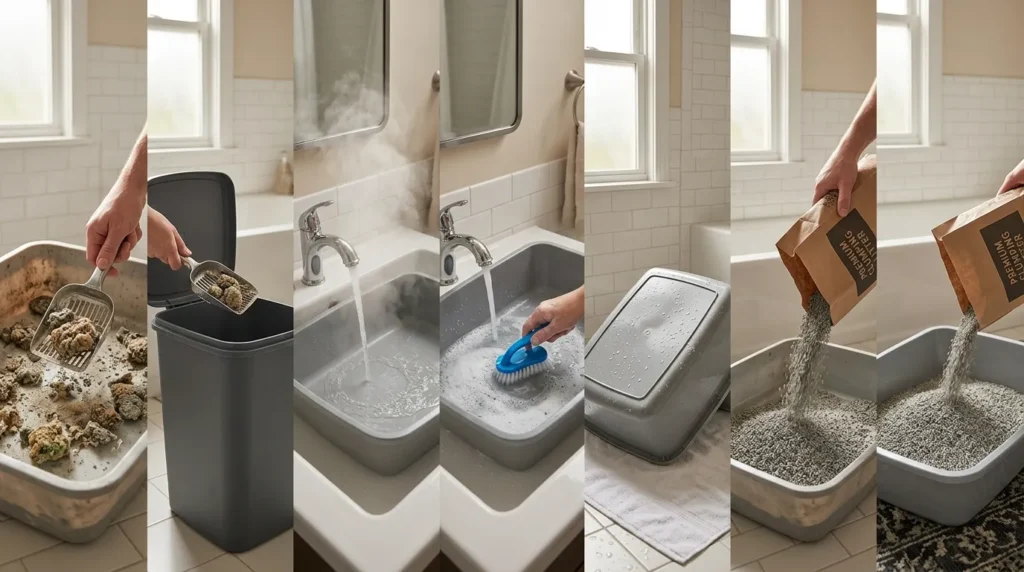
Learning how to clean a litter box without smell is a system not a single action. Here are all seven steps in order with exactly why each one matters.
Step 1: Scoop with a metal scoop every day without exception. Metal scoops have rigid slot gaps that lift entire clumps cleanly. Plastic scoops flex and break clumps apart sending fragments back into the litter where they continue releasing ammonia. This single tool switch improves every daily scoop for the lifetime of the box.
Step 2: Deposit waste into a sealed container immediately. Dropping scoopings into an open bin releases ammonia back into the room continuously. A sealed disposal container with a carbon filter lid or self-sealing bag mechanism contains the odor the moment the lid closes.
Step 3: Top up with fresh litter to two to three inches after every scoop. Scooping removes volume. Without topping up the depth drops from three inches to one inch over ten days. At one inch urine bypasses the litter and hits the box base producing ammonia from the material itself.
Step 4: Sprinkle baking soda at the base before adding fresh litter. A thin layer of baking soda on the box floor before filling neutralizes residual ammonia that cleaning did not fully remove. Use plain unscented baking soda and a light hand. Too much causes dust that irritates cats.
Step 5: Do a full empty-and-scrub every one to two weeks. Empty all litter. Rinse the empty box with hot water to loosen residue. Scrub every interior surface with mild unscented dish soap. Rinse with hot water until the water runs completely clear with no soap trace. Any soap residue left in the box mixes with future urine to produce a different and often stronger smell.
Step 6: Let the box air dry completely before refilling. Moisture inside a partially dried box creates the ideal environment for ammonia-producing bacteria. Lay the box on a clean dry towel for thirty minutes to two hours depending on your bathroom humidity. Never refill a box that still feels damp to the touch.
Step 7: Replace the plastic box every twelve to eighteen months. Plastic boxes past their useful life cannot be cleaned to a truly odor-free state regardless of how correctly you follow steps one through six. The scratches from daily scooping accumulate enough bacteria over time that the material itself becomes the smell source. Replacing the box is the reset the system needs.
For the complete overview of litter box size, type and setup that determines how much your box smells between cleaning cycles check our guide on indoor cat litter box setup.
The Right Cleaning Products for a Smell-Free Litter Box
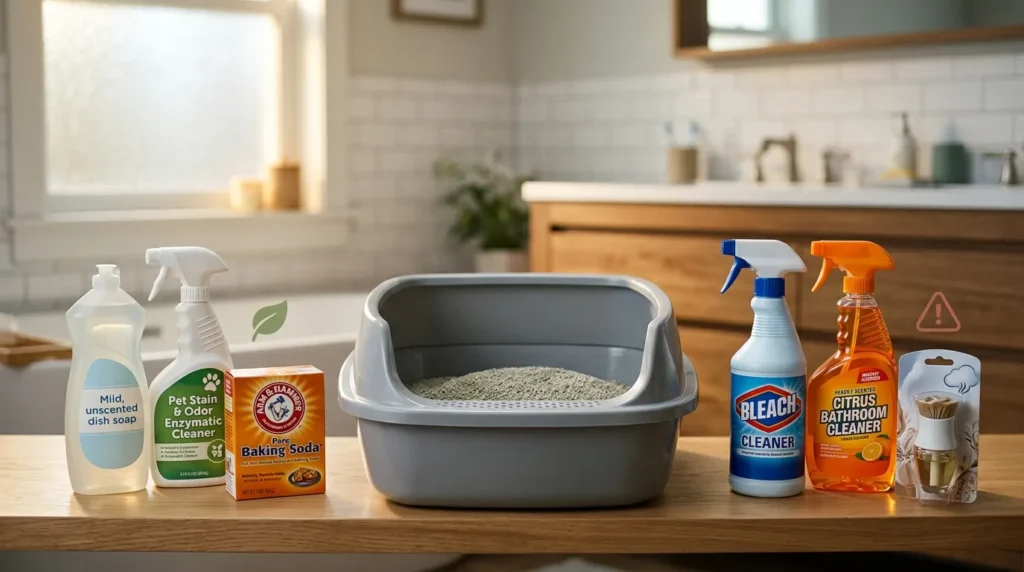
The right products for how to clean a litter box without smell are simpler than most people expect. Mild unscented dish soap handles routine deep cleaning effectively. It removes organic residue, rinses completely and leaves no chemical trace that interacts with cat urine to produce secondary odors. Use it for the full monthly scrub.
Enzymatic cleaners serve a different purpose from dish soap and the two are not interchangeable. Enzymatic cleaners break down uric acid crystals at a molecular level rather than just removing surface residue. Use them monthly after the standard soap wash for any box that is developing residual odor despite regular cleaning. Apply generously to every interior surface, let sit for fifteen minutes without drying and then rinse with hot water.
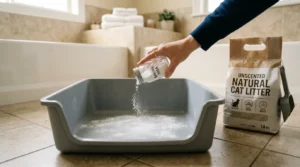
Avoid bleach and strongly scented cleaners entirely. Bleach reacts with ammonia in cat urine to produce chloramine gas which smells worse than ammonia alone and deters cats from the box. Scented cleaners layer an artificial fragrance over the bacteria that are still present and still producing ammonia underneath. Within hours the fragrance fades and the ammonia returns unchanged. The only products that actually stop the smell are ones that remove or neutralize the bacteria and uric acid producing it.
How Litter Choice Affects Whether the Box Smells After Cleaning?
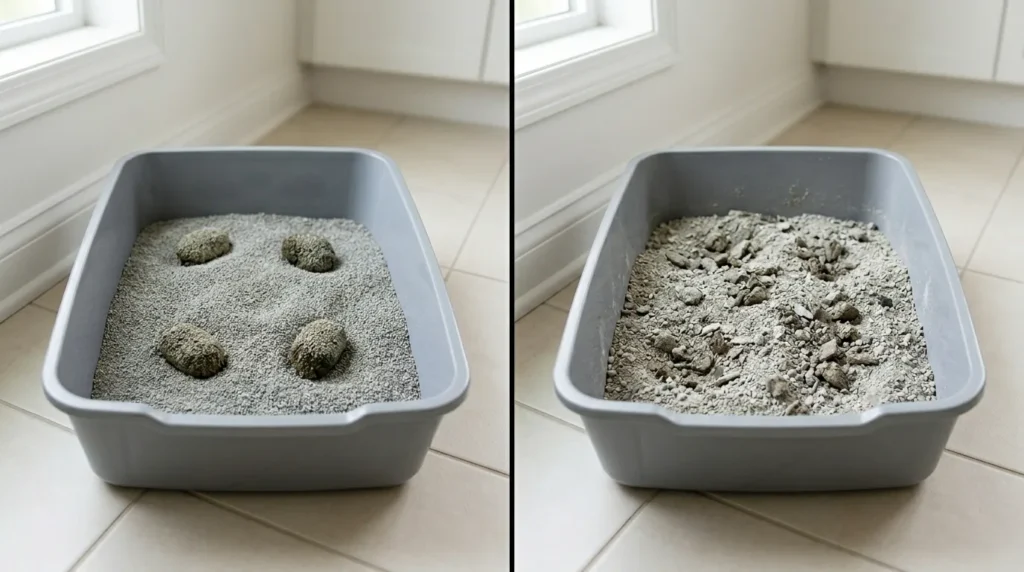
Litter quality is the variable most owners overlook when trying to understand how to clean a litter box without smell consistently. A high-quality unscented clumping clay litter forms firm complete clumps that lift out cleanly with a metal scoop and leave no residue behind. A low-quality budget litter crumbles when you scoop. Those crumbled fragments distribute contaminated material throughout the fresh litter where it continues releasing ammonia until the next full change.
Unscented litter consistently outperforms scented varieties for actual odor control despite the counterintuitive logic. Scented litters add an artificial fragrance layer over ammonia rather than neutralizing it. Within twenty-four hours in a used box the artificial fragrance degrades while the ammonia continues building. The resulting combination of fading artificial scent mixed with building ammonia often smells worse than either element alone.
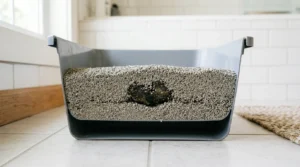
Two to three inches of depth is the minimum that allows clumping litter to absorb urine completely before it contacts the box base. At one and a half inches or less urine penetrates all the way to the plastic before any clump forms. That raw urine soaks into scratches in the plastic and produces ammonia from the base upward even after a complete surface clean. Maintaining the correct depth consistently is as important as any cleaning product you use.
Insight The litter type matters but the depth matters more. I switched to a premium litter at shallow depth and the smell came back faster than with the budget litter at correct depth. Depth determines whether urine contacts the plastic. Litter quality determines how well the clump holds. You need both but if you are only fixing one thing fix the depth first.
Ventilation and Air Quality: The Part of Odor Control Nobody Talks About
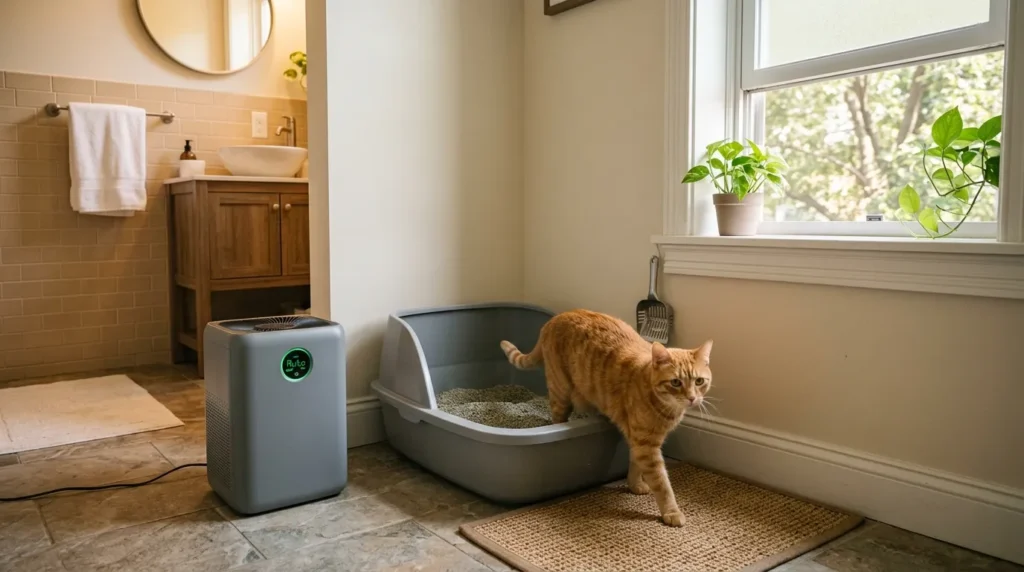
Correct cleaning eliminates the ammonia source inside the box. Ventilation manages the ammonia that dissipates into the surrounding room between cleaning sessions. Both are required for a truly odor-free litter box area. How to clean a litter box without smell addresses the box itself but ignoring the air around it means the smell migrates to the apartment even when the box is freshly cleaned.
A HEPA air purifier with a carbon filter positioned within three feet of the litter box captures both airborne particles and ammonia gas continuously. The HEPA component handles bacteria and dust. The carbon component handles gaseous ammonia specifically. Running a purifier with only HEPA and no carbon layer addresses particles but leaves ammonia unmanaged and the smell persists despite the filter running.
Passive ventilation from a cracked window or a low-speed exhaust fan running after each daily scoop removes the fresh ammonia released during and immediately after scooping. This is the ten-minute window when ammonia concentration in a closed bathroom peaks. Running the exhaust fan for ten minutes post-scoop removes more odor than any deodorizing spray available.
Insight The air purifier is not a substitute for cleaning. It is what keeps the air clean between cleaning sessions. An owner who buys a high-end purifier and then skips daily scooping will still have a smelly apartment because the purifier manages what is already in the air rather than preventing what enters it. Cleaning and purification are two different tools solving two different parts of the same problem.
The Cleaning Mistakes That Bring the Smell Right Back
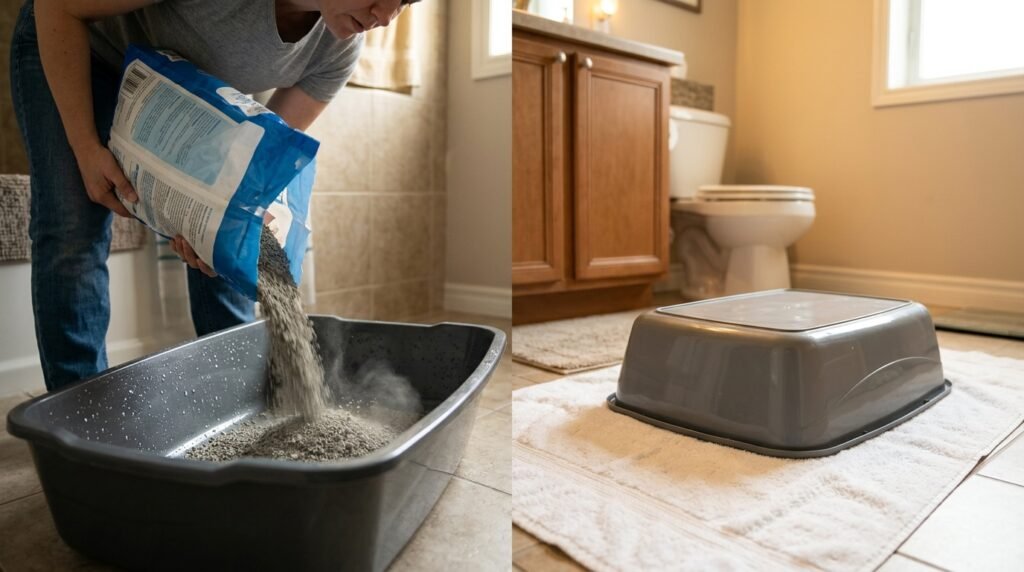
The fastest way to undo a thorough litter box clean is to refill it while it is still damp. Moisture inside the box creates the ideal bacterial environment. A box refilled fifteen minutes after washing when the plastic still holds residual moisture begins producing ammonia within hours because the bacteria that survived the cleaning now have warmth, moisture and fresh litter to work with. Always let the box dry completely before adding any litter.
Incomplete rinsing is the second mistake that immediately reverses a correct cleaning process. Soap residue left on the box interior reacts with future cat urine to produce a chemical smell that is often stronger and more persistent than ammonia alone. Rinse with hot water until you see no foam whatsoever and then rinse once more. The extra thirty seconds of rinsing eliminates a smell source that would otherwise persist for the entire next litter cycle.
The third mistake is treating the full monthly clean as a substitute for daily scooping. An owner who does a perfect deep clean once a month but skips daily scoops has a box that accumulates four weeks of bacterial growth between clean states. The deep clean resets the baseline but daily scooping is what prevents the bacteria from accumulating to smell-producing levels in the first place.
For more on how to place the litter box to maximize ventilation and minimize odor spread throughout your home check our guide on where to put a litter box in a small apartment.
When a Persistently Smelly Litter Box Is a Health Signal?
A litter box that smells unusually strong or different after correct cleaning may be telling you something about your cat’s health rather than your cleaning routine. Urinary tract infections, kidney disease and diabetes all change urine chemistry in ways that produce dramatically stronger or differently scented ammonia output. If the smell type has changed rather than just the intensity that shift warrants a vet call within the week.
A cat producing very small frequent urinations that leave tiny clumps throughout the day rather than two to three normal-sized ones is showing a pattern that points to a urinary issue rather than a litter box maintenance problem. According to the Cornell Feline Health Center, changes in urination frequency and volume are among the earliest observable signals of feline urinary disease.
A box that develops unusually strong smell faster than usual after a complete clean in a cat that was previously easy to maintain is almost always a health change rather than a cleaning failure.
This article is for informational purposes only. Always consult your vet if you have concerns about your cat’s health.
Frequently Asked Questions About Cleaning a Litter Box Without Smell
How do I clean a litter box so it does not smell?
Scoop daily with a metal scoop and top up litter to two to three inches after every scoop. Do a full empty-scrub-dry-refill every one to two weeks using mild unscented dish soap and hot water. Let the box dry completely before refilling. Run a HEPA-carbon air purifier within three feet of the box continuously and replace the plastic box every twelve to eighteen months.
What is the best thing to clean a litter box with to stop odor?
Mild unscented dish soap and hot water handles routine deep cleaning effectively. Enzymatic cleaner used monthly after the soap wash breaks down uric acid residue that soap leaves behind. Baking soda sprinkled at the box base before adding fresh litter neutralizes residual ammonia naturally. Avoid bleach and strongly scented cleaners which react badly with cat urine.
How often should I fully clean the litter box to prevent smell?
Clean clumping clay litter boxes completely every one to two weeks when you scoop daily and top up consistently. Non-clumping and natural plant-based litters need full changes every one to two weeks regardless. If your box smells stronger than usual within two days of a complete clean your cat’s urine chemistry may have changed and a vet check is worth booking.
Does baking soda actually help with litter box smell?
Yes when used correctly. Place a thin layer of plain unscented baking soda on the box base before adding fresh litter during each full change. Baking soda neutralizes the pH of residual ammonia at the base without adding a fragrance that cats dislike. Avoid scented baking soda products sold specifically for litter boxes since the added fragrance often deters fastidious cats.
Why does my litter box still smell after I clean it?
The most common reason is scratched porous plastic that has absorbed enough bacteria to produce ammonia continuously regardless of surface cleaning. If the smell returns within forty-eight hours after a complete thorough wash the box needs replacement rather than more cleaning. A secondary cause is refilling the box before it is fully dry, which allows bacteria to recover rapidly in the moisture.
Conclusion
How to clean a litter box without smell comes down to three daily habits and one periodic reset. Scoop daily with a metal scoop, top up litter depth every time and run a carbon-filter air purifier continuously. Do a full empty-scrub-dry-refill every one to two weeks and replace the plastic box every twelve to eighteen months. Start today by checking your current litter depth and adding fresh litter if it is below two inches. That one adjustment alone produces a noticeable improvement in box smell within twenty-four hours.
To clean a litter box without smell scoop daily using a metal scoop and top up with fresh unscented clumping litter to two to three inches after every scoop. Do a complete empty-scrub-dry-refill cycle every one to two weeks using mild unscented dish soap and hot water followed by full air drying before refilling. Add a thin layer of baking soda to the box base before each fresh fill. Use an enzymatic cleaner monthly for uric acid residue. Replace plastic boxes every twelve to eighteen months. Run a HEPA-carbon air purifier within three feet of the box continuously to manage airborne ammonia between cleaning sessions.