
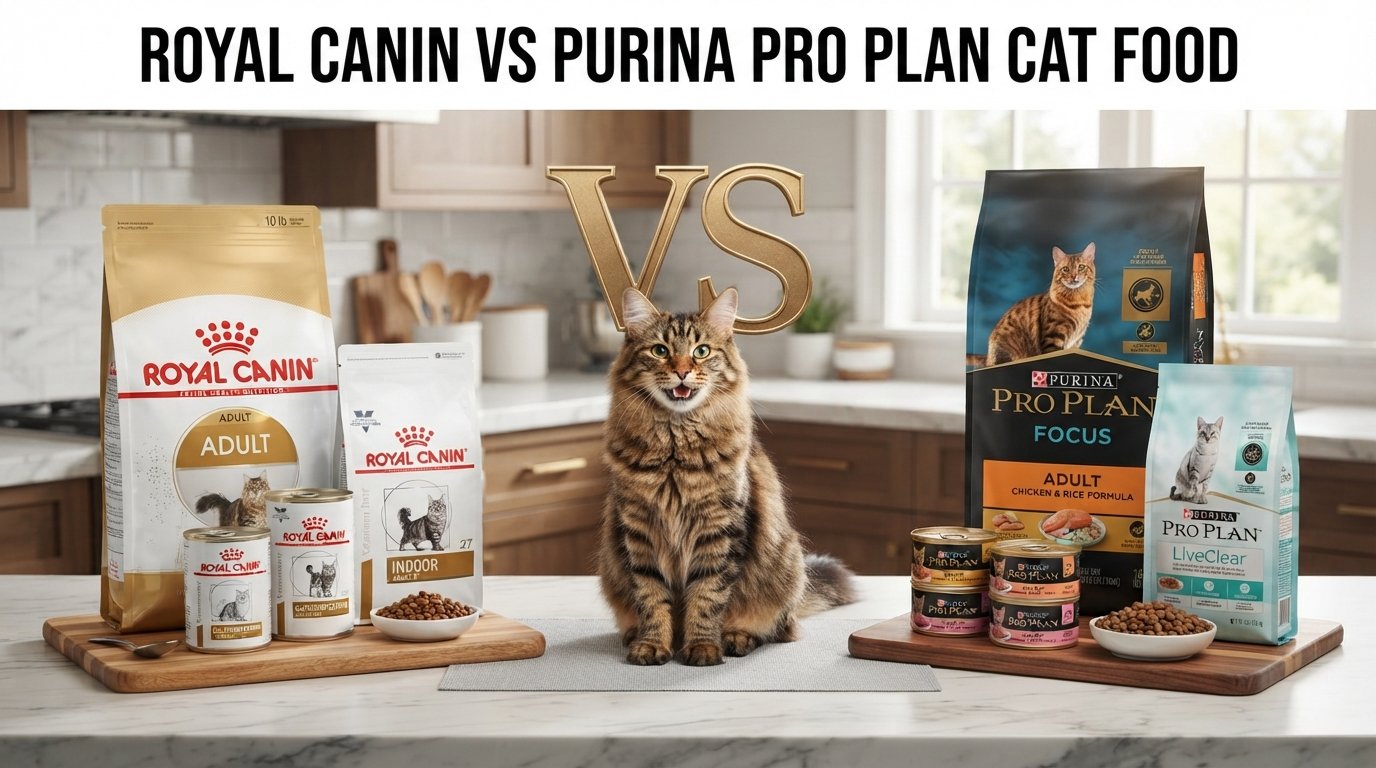
Royal Canin Indoor Adult runs 27% protein and 325 calories per cup. Purina Pro Plan Complete Essentials Chicken & Rice runs 36% protein and 494 calories per cup. That gap changes how each food fits into a feeding routine, and it’s the first thing to understand before you pick one. I’ve fed both to indoor cats, and this comparison breaks down where each one earns its price tag and where it falls short.
Discover our full Royal Canin Indoor Adult and Purina Pro Plan reviews for a deeper look at either formula on its own.
⚡ Quick Verdict
Purina Pro Plan Complete Essentials Chicken & Rice is the better pick for most healthy adult cats: real chicken as the first ingredient, 36% protein, and live probiotics, at a lower price per pound. Royal Canin Indoor Adult is the better pick for cats with a sensitive stomach, tartar buildup, or a hairball problem, since it’s built around digestibility and dental control rather than raw protein numbers. Neither is a bad food. They’re just solving different problems.
Analysis: Royal Canin Indoor Adult Cat Food
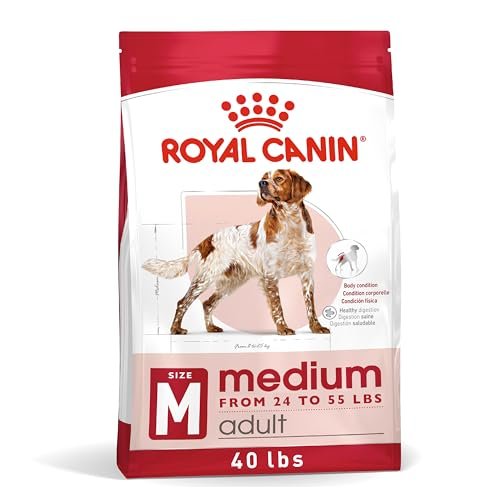
This is a donut-shaped kibble built for cats that live entirely indoors, aged 1 to 7. It leans on digestibility and dental mechanics rather than a big protein number, which makes it a solid pick for a cat with a sensitive gut or a tartar problem.
Indoor cats move less than outdoor ones. They sleep more, groom more, and burn fewer calories, and that changes what their food needs to do. Royal Canin built this formula around that reality: 27% crude protein minimum, 11 to 15% fat, and only 325 calories per cup. That’s a moderate-calorie profile aimed at cats who nap in a sunbeam instead of chasing birds.
The protein source is chicken meal, not whole chicken, which sits lower on some owners’ preference list but isn’t a red flag on its own. Chicken meal is more concentrated protein by weight than fresh chicken, since the moisture is already removed. What matters more here is the L.I.P. protein Royal Canin uses, which the company says is selected for high digestibility, meaning less of it ends up as waste and odor in the litter box.
Build Quality & Design
The kibble is a specific donut shape, and that’s not a marketing flourish. The shape and texture make a cat bite down and chew instead of swallowing pieces whole, and that chewing action, combined with sodium tripolyphosphate in the coating, helps cut down on plaque and tartar. Green tea polyphenols are in there too, working on the same problem from a different angle.
Nutrition & Performance
At 3,534 kcal/kg (325 kcal per cup), this food runs lighter than most adult cat formulas, which is the point. A cat that isn’t burning much energy doesn’t need a calorie-dense bowl, and overfeeding a sedentary indoor cat is one of the fastest ways to end up with a weight problem. Fiber sits at a max of 5.7%, pulling double duty for stool quality and hairball control, since fiber helps move swallowed hair through the gut instead of letting it sit and form a mat.
Features & Functionality
Three things are doing the real work in this bag: the digestible protein for smaller, less smelly stools, the fiber blend for hairballs, and the kibble shape for teeth. It’s not flashy. There’s no probiotic strain called out on the label the way Purina does. But it’s a coherent formula where every ingredient points at the same set of indoor-cat problems.
User Experience
Royal Canin recommends a 7-day transition when switching foods, mixing in increasing amounts of the new kibble each couple of days, and that instruction is printed right on the bag. Bags come in 3, 6, and 15-pound sizes, so you can test it on a smaller bag before committing to the bigger one. The resealable top keeps the kibble from going stale between feedings.
Value for Money
The 15-pound bag runs around $70, which works out to roughly $4.70 per pound. That’s meaningfully more than Purina Pro Plan per pound. You’re paying for the specific digestive and dental engineering here, not for a bigger protein number, so the value case only holds up if your cat actually needs that engineering.
✅ Advantages
✓Built specifically for indoor cats aged 1 to 7, not a generic adult formula.
✓Donut-shaped kibble mechanically fights plaque and tartar every time your cat chews.
✓Moderate 325 kcal/cup calorie count suits a low-activity lifestyle.
✓Fiber blend targets hairballs directly, a common indoor-cat complaint.
❌ Disadvantages
✗Protein sits at 27%, well below Purina’s 36%, which matters for very active or muscular cats.
✗Costs close to $4.70 per pound, noticeably more than Purina per pound.
✗Chicken meal, not whole chicken, is the first ingredient, which some owners avoid on principle.
✗No live probiotic strain listed on the label the way Purina’s Bacillus coagulans is.
Analysis: Purina Pro Plan Complete Essentials Chicken & Rice
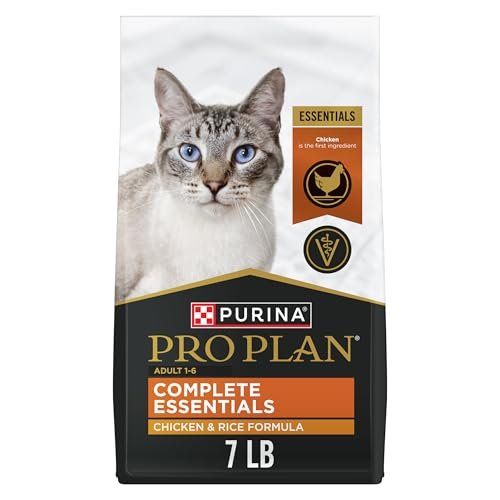
Real chicken is the first ingredient here, protein sits at 36%, and the formula includes a named probiotic strain, Bacillus coagulans, at a guaranteed 600 million CFU per pound. This is the higher-protein, higher-calorie option of the two, built for a cat that’s active or needs to hold onto muscle.
Purina leads with whole chicken, then rice, then a mix of protein meals and fat sources. The guaranteed analysis lands at 36% crude protein and 16% fat, with 494 kcal per cup, roughly 50% more energy-dense than Royal Canin’s Indoor Adult. That’s a meaningful difference if you’re portioning by cups rather than weighing food, since it’s easy to overfeed a cat on this formula without adjusting the amount you scoop.
The probiotic is the standout feature. Dried chicory root supplies inulin as a prebiotic fiber, and the Bacillus coagulans strain survives the manufacturing process to reach the bowl still active, according to Purina’s product documentation. Paired with 1.4% linoleic acid (an omega-6 fatty acid) and 10,000 IU/kg of vitamin A, the formula is built to hit digestion and coat condition at the same time.
Build Quality & Design
The kibble is sized to encourage crunching, which helps with tartar the way Royal Canin’s does, just without a patented shape behind it. Purina’s manufacturing keeps the probiotic culture stable through storage, which is a harder engineering problem than it sounds. A probiotic that dies before your cat eats it isn’t doing anything.
Nutrition & Performance
36% protein and 494 kcal per cup put this formula in high-protein territory. Most cats show more energy and better muscle tone on it within a few weeks, especially cats that get outdoor time or play sessions. The tradeoff is that an indoor-only, low-activity cat can gain weight fast on this food if you don’t cut back the portion from what the bag suggests for an average cat.
Features & Functionality
The chicory-root probiotic and the omega-6/vitamin A combo are the two features that separate this from a generic chicken formula. One handles the gut, one handles the coat, and both show up in the guaranteed analysis rather than as vague marketing language.
User Experience
Palatability is where Purina usually wins in owner feedback. Most cats take to the chicken flavor fast, with less of a transition fight than some prescription or sensitive-stomach diets require. Bags run from 3.5 to 16 pounds, and the seal holds up well against the smell issues that come with older kibble.
Value for Money
A 16-pound bag runs around $55 to $60, which lands near $3.50 per pound, about a dollar less per pound than Royal Canin. You’re getting more protein and a named probiotic strain for less money, which is why this formula wins on pure cost-per-nutrient math.
✅ Advantages
✓Real chicken is the first ingredient, ahead of any meal or by-product.
✓36% protein and a named, guaranteed-count probiotic strain (Bacillus coagulans).
✓Roughly $1 less per pound than Royal Canin Indoor Adult.
✓Omega-6 and vitamin A are called out at specific levels for coat and skin support.
❌ Disadvantages
✗At 494 kcal per cup, it’s easy to overfeed a low-activity indoor cat without adjusting portions.
✗Chicken is a common feline allergen, so this won’t work for cats with poultry sensitivities.
✗No dedicated hairball or indoor-lifestyle claim on this specific SKU (Purina sells a separate Indoor Care line for that).
Purina Pro Plan vs Royal Canin: Specifications Compared
Numbers from the guaranteed analysis panel on each bag, plus the calculated calorie counts both companies publish. These are the figures that actually decide how much to feed and what to expect on the label. However you search it, Royal Canin vs Purina Pro Plan or Purina Pro Plan vs Royal Canin, the specs below don’t change.
| Nutrient | Royal Canin Indoor Adult | Purina Pro Plan Chicken & Rice |
|---|---|---|
| Crude Protein (min.) | 27.0% | 36.0% |
| Crude Fat (min.) | 11.0% (max 15.0%) | 16.0% |
| Crude Fiber (max.) | 5.7% | 2.0% |
| Moisture (max.) | 8.0% | 12.0% |
| Calories | 3,534 kcal/kg (325 kcal/cup) | 4,358 kcal/kg (494 kcal/cup) |
| First Ingredient | Chicken meal | Chicken |
| Probiotic | Not specified on label | Bacillus coagulans, 600M CFU/lb (min.) |
Figures pulled from each brand’s published guaranteed analysis panels. Formulas get reformulated over time, so check the current bag against these numbers before you buy.
Feature Comparison
A quick scan of which formula covers which concern. Neither one checks every box, and that’s the point of comparing them side by side.
| Feature | Royal Canin Indoor Adult | Purina Pro Plan Chicken & Rice |
|---|---|---|
| Real Meat First Ingredient | ✗ (chicken meal) | ✓ |
| Named Live Probiotic Strain | ✗ | ✓ Bacillus coagulans |
| Dedicated Hairball Control | ✓ | ✗ (separate Indoor Care line) |
| Weight/Calorie Management | ✓ (325 kcal/cup) | ✗ (494 kcal/cup) |
| Coat & Skin Support (Omega-6/Vit A) | Standard levels | ✓ Called out on label |
| Dental/Tartar Control Kibble Shape | ✓ Patented donut shape | ✓ Standard crunch kibble |
| Senior (7+) Version Available | ✓ Indoor Mature/Senior 12+ | ✓ Complete Essentials Adult 7+ |
| Resealable Packaging | ✓ | ✓ |
Major Factors to Consider Before You Choose
The spec sheet only tells half the story. Here’s what actually decides which bag belongs in your pantry.
Your cat’s activity level
A cat that sleeps 16 hours a day and never sees a bird outside a window doesn’t need 494 calories a cup. Royal Canin’s 325 kcal/cup gives you more room before the scale creeps up. If your cat gets real playtime, climbs a cat tree daily, or you’re feeding a younger, leaner cat, the higher protein and calorie density in Purina supports that output instead of working against it.
Existing health issues
Hairballs, tartar, and a tendency to gain weight all point toward Royal Canin Indoor Adult, since the formula is built around those three problems specifically. A cat with no history of any of that, or one recovering from mild digestive upset, tends to do fine on Purina’s higher-protein, probiotic-backed recipe. If your cat has a diagnosed condition, kidney disease, diabetes, or a food allergy, run either option past your vet before switching. Neither food here is a prescription or veterinary therapeutic diet.
Budget and how you’ll feed it
Purina costs less per pound. Royal Canin costs less per calorie, in a roundabout way, since you feed a smaller volume. If you free-feed (leaving a full bowl out all day), Royal Canin’s lower calorie density gives you a bigger safety margin. If you measure portions carefully by weight rather than by cup, that safety margin matters less and the price-per-pound gap becomes the bigger factor.
Multi-cat households
Cats in the same house rarely have identical needs. One cat might be lean and active, another older and prone to weight gain. If that sounds like your house, don’t force one bag on every cat. Some owners run Purina for the leaner or younger cat and Royal Canin for the one already showing hairball or weight issues, then separate the bowls at feeding time.
Price Comparison: Which One Actually Costs More?
Royal Canin Indoor Adult runs about $70 for a 15-pound bag, which works out to roughly $4.70 per pound. Purina Pro Plan Complete Essentials Chicken & Rice runs about $55 to $60 for a 16-pound bag, closer to $3.50 per pound. Royal Canin is the pricier food per pound, by close to a dollar.
That gap narrows in daily-cost terms, since Royal Canin’s lower calorie count means you feed a bit less per meal on the recommended portion. It doesn’t close entirely. Over a year of feeding a typical 9-pound indoor cat, Royal Canin still tends to come out somewhat more expensive than Purina at current retail prices. Retail prices change often and vary by retailer, so treat these as ballpark figures rather than a locked-in quote.
Quick math
- Royal Canin Indoor Adult, 15 lb: ~$69.99, or about $4.67/lb
- Purina Pro Plan Chicken & Rice, 16 lb: ~$56, or about $3.50/lb
- Difference: roughly $1.15 to $1.20 more per pound for Royal Canin
What About Kittens and Senior Cats?
Everything above covers the adult formulas: Royal Canin Indoor Adult (ages 1 to 7) and Purina Pro Plan Complete Essentials Chicken & Rice. Neither one is built for a kitten or a cat past 7, and feeding an adult formula to either group misses nutrients they actually need. Here’s what each brand offers instead.
Purina Pro Plan Kitten vs Royal Canin Kitten
Kittens need more protein, fat, and calories per pound of body weight than an adult cat, plus DHA for brain and eye development, so an adult formula from either brand is the wrong bag entirely. Purina makes Pro Plan Kitten formulas built around this higher-energy profile with the same live-probiotic approach as the adult line. Royal Canin sells a dedicated Kitten formula sized and shaped for smaller mouths, with its own digestibility and immune-support focus rather than the dental-mechanics angle of Indoor Adult. If you’re comparing the two kitten lines specifically, treat it as a separate decision from this adult comparison: the protein and calorie gaps that separate Royal Canin from Purina in adult food mostly disappear once you’re looking at their kitten-specific recipes, since both push protein and fat higher across the board for growth.
We’re building a full side-by-side of Purina Pro Plan Kitten vs Royal Canin Kitten, with the same guaranteed-analysis breakdown as above. Check back soon, or bookmark this page, we’ll link it here once it’s live.
Senior cats (7 and older)
Royal Canin makes an Indoor Mature formula and an Aging 12+ line for older indoor cats with slower metabolisms. Purina sells Pro Plan Complete Essentials Adult 7+ Chicken & Rice, which keeps the same probiotic and chicken-first approach but adjusts calorie and mineral levels for an aging cat’s kidneys and joints. If your cat is 7 or older, check the bag for the 7+ or Mature labeling before you buy, since the adult versions reviewed on this page aren’t formulated for that life stage.
| Life Stage | Royal Canin Line | Purina Pro Plan Line |
|---|---|---|
| Kitten | Royal Canin Kitten | Pro Plan Kitten |
| Adult, 1 to 7 (reviewed here) | Indoor Adult | Complete Essentials Chicken & Rice |
| Senior, 7+ | Indoor Mature | Complete Essentials Adult 7+ |
| Senior, 12+ | Aging 12+ | No dedicated 12+ line at time of writing |
About the Two Companies
Royal Canin started in 1968, founded by a French veterinarian who began formulating food based on a pet’s specific health needs rather than a one-size-fits-all recipe. That vet-first approach is still the company’s pitch today: age, breed, indoor lifestyle, and specific sensitivities each get their own formula. Royal Canin is owned by Mars, Incorporated.
Purina traces back to 1894 and is now part of Nestlé, one of the largest food companies in the world. Pro Plan is Purina’s performance-nutrition line, positioned a step above its Purina ONE and Cat Chow brands, and it’s the line Purina points to when it wants to talk about probiotic research and protein science.
Both companies run their own veterinary nutrition teams and both fund AAFCO feeding trials on at least some of their formulas. Neither company publishes every study publicly, so “science-backed” here means the food meets AAFCO’s nutrient profiles for adult maintenance, not that a specific independent study tested this exact bag on this exact cat.
🏆 Winner: Purina Pro Plan Complete Essentials Chicken & Rice
🏆 BEST CHOICE FOR MOST CATS
Score Breakdown
Overall 9.0/10
Protein & Ingredients 9.3/10
Value per Pound 9.2/10
Digestive Support 8.7/10
Weight Management Fit 7.0/10
Palatability 9.4/10
Purina wins on the numbers most owners care about first: real chicken up front, higher protein, a named probiotic, and a lower price per pound. It loses ground only on weight management, where its higher calorie count works against a strictly indoor, low-activity cat.
Choose Purina Pro Plan If…
Budget-Conscious Buyers
You want premium-tier nutrition, real chicken and a probiotic strain, without paying $70 a bag. At roughly $3.50 per pound, this is the more affordable food of the two per pound of kibble.
Active or Multi-Cat Households
Cats that play hard, go outside, or need to hold onto muscle mass benefit from the higher protein and calorie density. It’s also a reasonable everyday food if you have cats of mixed activity levels sharing a bowl.
Cats With Mild Digestive Sensitivity
The chicory-root prebiotic and live probiotic strain are aimed at gut health specifically. If your cat has loose stools or gas on a lower-fiber food, this formula is worth trying before jumping to a prescription diet.
Choose Royal Canin Indoor Adult If…
Hairball-Prone Cats
If you’re finding hairballs weekly, the fiber blend here is built specifically to move swallowed hair through the digestive tract rather than let it sit and mat up.
Cats Prone to Weight Gain
At 325 kcal per cup against Purina’s 494, this food gives you more room for error on portion size before your cat starts putting on weight, which matters most for a sedentary indoor cat.
Cats With Visible Tartar Buildup
The patented kibble shape and sodium tripolyphosphate coating target plaque and tartar mechanically. If your vet has flagged dental buildup at checkups, this is the more targeted option of the two.
🎯 Final Recommendation
Start with Purina Pro Plan Complete Essentials Chicken & Rice for a healthy adult indoor cat with no specific issues. It’s cheaper per pound, higher in protein, and includes a probiotic strain most competing foods don’t name. Switch to, or start with, Royal Canin Indoor Adult if your cat already deals with hairballs, tartar, or a tendency to gain weight, since that’s exactly what its lower-calorie, fiber-forward formula is built to manage.
Summary
- Purina Pro Plan Complete Essentials Chicken & Rice carries 36% protein and real chicken as its first ingredient, well above Royal Canin Indoor Adult’s 27%.
- Royal Canin Indoor Adult runs 325 kcal per cup versus Purina’s 494, making it the better fit for a low-activity, weight-prone cat.
- Purina costs roughly $3.50 per pound; Royal Canin runs closer to $4.70 per pound at typical retail prices.
- Royal Canin’s donut-shaped kibble and fiber blend are built specifically around hairball and dental control.
- Purina’s Bacillus coagulans probiotic is a named, guaranteed-count strain; Royal Canin doesn’t list a specific probiotic strain on this formula.
- Both brands sell dedicated senior (7+) formulas if your cat has aged out of the adult versions covered here.
Frequently Asked Questions
Which is better, Royal Canin or Purina Pro Plan?
For a healthy adult cat with no specific issues, Purina Pro Plan Complete Essentials Chicken & Rice is the stronger all-around pick: more protein, real chicken first, a named probiotic, and a lower price per pound. Royal Canin Indoor Adult pulls ahead for cats with hairballs, tartar buildup, or weight-gain tendencies, since it’s engineered around those specific problems.
Which one has more protein?
Purina Pro Plan Complete Essentials Chicken & Rice guarantees 36% crude protein minimum. Royal Canin Indoor Adult guarantees 27%. That’s a 9-point gap, and it’s the single biggest nutritional difference between the two foods.
Which is more expensive, Royal Canin or Purina?
Royal Canin Indoor Adult is the pricier option per pound, running close to $4.70 per pound against Purina’s roughly $3.50 per pound at typical retail prices. Prices shift by retailer and by promotion, so check current listings before you buy either one.
Is either brand vet-recommended or science-backed?
Both formulas meet AAFCO’s nutrient profiles for adult cat maintenance, and both companies employ veterinary nutritionists and run their own research divisions. Royal Canin was founded by a veterinarian and leans on that history in its marketing. Purina Pro Plan is the brand Purina positions as its research-driven, performance-nutrition line. Neither claim substitutes for a conversation with your own vet about your specific cat.
Which is better for senior cats?
Neither adult formula reviewed here is meant for senior cats. Look for Royal Canin Indoor Mature or Aging 12+, or Purina Pro Plan Complete Essentials Adult 7+ Chicken & Rice, instead. Both age-specific lines adjust calorie and mineral levels for an older cat’s slower metabolism and kidney function.
Can I mix Royal Canin and Purina Pro Plan?
You can, as long as you introduce the change gradually over about a week and watch your cat’s stool and appetite. Mixing two complete-and-balanced foods isn’t a nutritional problem on its own. The bigger risk is over- or under-feeding if you don’t recalculate portions for the calorie difference between the two.
What’s the main difference between the two?
Purina Pro Plan is a higher-protein, higher-calorie formula built around real chicken and a named probiotic. Royal Canin Indoor Adult is a lower-calorie, higher-fiber formula built around hairball control and dental mechanics for cats that don’t move around much.
Does Purina Pro Plan or Royal Canin make a kitten formula?
Both do. Purina sells Pro Plan Kitten, and Royal Canin sells a dedicated Kitten line, and neither is what’s reviewed on this page. The adult formulas compared here (Indoor Adult and Complete Essentials Chicken & Rice) don’t have the calorie and DHA levels a growing kitten needs, so don’t substitute one for the other. See the kittens and seniors section above for how each brand’s full lineup breaks down by age.
Which is better for a cat with a sensitive stomach?
Royal Canin Indoor Adult is built around digestibility first, with highly digestible L.I.P. protein meant to reduce stool volume and gut upset. Purina Pro Plan leans on its Bacillus coagulans probiotic and chicory-root prebiotic to support gut health from a different angle. For a cat with ongoing loose stools, vomiting, or diagnosed sensitivities, talk to your vet before switching either direction, since neither formula here is a veterinary gastrointestinal diet.

Written by Mishu
A passionate cat lover and indoor living enthusiast, Mishu is the founder and voice behind Indoor Living Cat – a go-to resource for cat owners who want to create the happiest, healthiest life for their feline companions indoors.
View Full Profile