
Pro Plan packs about 494 kcal into a cup. Hill’s Science Diet Indoor packs about 328. That one gap explains most of what separates these two foods, and it matters more than anything printed on the front of either bag.
Purina Pro Plan vs Hill’s Science Diet is one of the most common cat food questions I get from readers. Both brands sit on the same vet clinic shelves, and both cost roughly the same at most retailers. Pro Plan markets protein, muscle support, and live probiotics. Hill’s Science Diet Indoor leans into fiber, weight control, and hairball reduction for cats who nap more than they hunt. I’ve rotated both formulas through my own cats over the years, and the differences show up fast, in the food bowl and in the litter box.
Last updated September 2026. This comparison covers adult cat formulas: Purina Pro Plan Complete Essentials Chicken & Rice (the high protein one) and Hill’s Science Diet Adult Indoor Chicken Recipe. Label numbers come from current manufacturer and retailer listings. Formulas change, so read the bag in your hands. These are cat foods, and the dog versions from both brands are built differently. As an Amazon Associate I earn from qualifying purchases, at no extra cost to you.
Purina Pro Plan Cat Food Vs Hill’s Science Diet Cat Food
⚡ Purina Pro Plan vs Hill’s Science Diet: Quick Verdict
Pick Purina Pro Plan High Protein if your cat is active, lean, or needs to hold or gain weight. Pick Hill’s Science Diet Indoor if your cat sleeps most of the day and needs calorie control or hairball help. Pro Plan gives you more calories per cup and live probiotics. Hill’s gives you about a third fewer calories per cup and far more fiber. Protein sits close on both labels.
| At a Glance | Pro Plan Chicken & Rice | Hill’s Indoor Adult |
|---|---|---|
| Calories per cup | About 494 kcal | About 328 kcal |
| Protein | 36% minimum | 36.1% typical (29.5% minimum) |
| Fat | 16% minimum | 16.1% typical |
| Crude fiber | 2% maximum | About 9% |
| Live probiotics | Yes | No (prebiotic fiber blend) |
| First ingredient | Chicken | Chicken |
Purina Pro Plan High Protein: Full Analysis
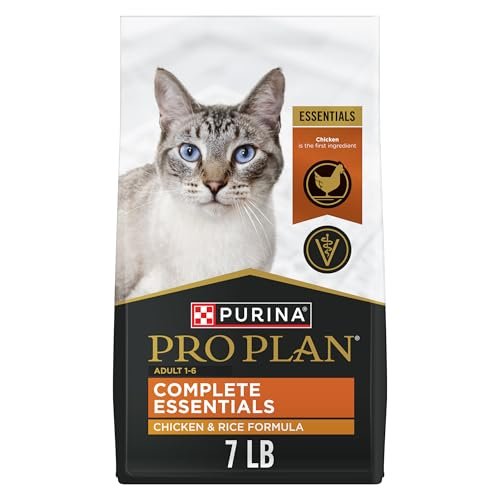
Built for adult cats with an active lifestyle, this formula uses real chicken as the first ingredient to support lean muscle and steady energy.
Real chicken sits at the top of the ingredient list, followed by rice, corn gluten meal, and poultry by-product meal. The label guarantees at least 36% protein and 16% fat, with fiber capped at 2%. Inulin from chicory root and guaranteed live probiotics back that up, keeping digestion steady and supporting immune function at the same time.
Omega-6 fatty acids handle coat health, so you get more than a single protein number on the label. If you’re still working out portion sizes and meal timing, our guide on how to feed an indoor cat properly walks through both step by step.
Ingredients and Nutrition
This formula targets adult cats with above-average energy needs. Chicken leads the ingredient panel, and the fiber-probiotic combination supports gut health. Plant proteins like corn gluten meal and soy protein concentrate add to that 36% figure, so the panel isn’t meat only (Hill’s isn’t either). It’s built as an adult maintenance diet, not a kitten or senior formula, so check the label if your cat falls outside that range.
Digestion and Everyday Feeding
Most cats eat this without hesitation. The kibble size works for fast eaters, and Purina calls the formula highly digestible. Stool quality usually holds up well once a cat fully transitions onto the new food.
Standout Features
The protein and probiotic combination is the real selling point here. Pro Plan pairs muscle support with gut health in one bag, so you’re not choosing between the two.
Owner Experience
Switching cats onto this formula is usually smooth if you do it gradually. The smell is strong enough to tempt picky eaters, and the bag reseals well enough to keep the kibble fresh between feedings. For a full breakdown of every formula in the line, read our complete Purina Pro Plan review.
Cost and Value
Pro Plan sits in the moderate price range for a premium brand. Real chicken and live probiotic cultures push the price up slightly compared to basic formulas. Price per pound also undersells Pro Plan a little, because a pound of it carries about 17% more calories than a pound of Hill’s Indoor. The calorie section below shows the math.
Hill’s Science Diet Indoor: Full Analysis
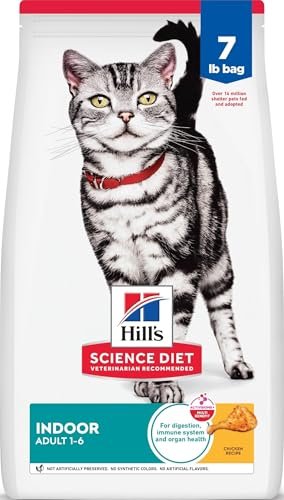
Built for indoor cats, this formula manages weight and reduces hairballs while keeping the rest of the diet balanced.
Hill’s lists 36.1% protein in its typical analysis, and the bag guarantees 29.5% at minimum. Calories land near 328 per cup because about 9% of the kibble is fiber. That combination holds enough protein for muscle maintenance without pushing calories high enough to cause weight gain, and it keeps litter box output more predictable.
Owners pick this formula because it targets indoor-specific problems instead of general nutrition. Omega-6 fatty acids and vitamin E support skin and coat, and the calorie control fits cats that spend most of the day on the couch. For the full ingredient breakdown and flavor options, see our Hill’s Science Diet Indoor cat food reviews.
Ingredients and Nutrition
Chicken is the first ingredient here, same as Pro Plan. Whole grain wheat, corn gluten meal, and powdered cellulose follow, with chicken meal further down the list. The cellulose and beet pulp form the fiber blend, and Hill’s adds its ActivBiome+ prebiotic blend on top. That fiber supports digestion and helps hairballs pass instead of building up.
Digestion and Everyday Feeding
Most cats handle this formula well. Digestion runs gentle, and the lower calorie density means a bigger portion for the same daily calories, about 0.6 cup against 0.4 cup of Pro Plan at 200 kcal. Cats prone to weight gain are easier to portion on this than on higher-calorie formulas.
Standout Features
Hairball control and weight management are the two features that matter most here. Both target problems that come specifically from an indoor lifestyle, not general cat nutrition.
Owner Experience
The trade you’ll notice first is in the litter box, where the extra fiber can mean bulkier stool. The ingredient list stays transparent, and the bag is easy to store and reseal between feedings.
Cost and Value
Pricing sits close to Pro Plan, sometimes a touch lower depending on retailer. Because you feed more of it each day, a bag empties about 14% sooner than the same size bag of Pro Plan. Managing weight and hairballs now can mean fewer vet visits for obesity-related issues down the line.
Ingredients and Nutritional Value: Pro Plan vs Hill’s Side by Side
Readers keep asking how the ingredients and nutrition of these two brands compare on paper, so here’s the label data in one place. Ingredient order comes from current retailer listings and can shift a little between bags. Check the panel on yours before you buy.
Suggested alt text: Ingredient panels of Purina Pro Plan Chicken and Rice and Hill’s Science Diet Indoor cat food
First Seven Ingredients
| Order | Pro Plan Chicken & Rice | Hill’s Science Diet Indoor |
|---|---|---|
| 1 | Chicken | Chicken |
| 2 | Rice | Whole grain wheat |
| 3 | Corn gluten meal | Corn gluten meal |
| 4 | Poultry by-product meal | Powdered cellulose |
| 5 | Wheat flour | Chicken fat |
| 6 | Dried egg product | Wheat gluten |
| 7 | Beef fat (mixed tocopherols) | Chicken meal |
Guaranteed Analysis and Calories
| Nutrient | Pro Plan Chicken & Rice | Hill’s Science Diet Indoor |
|---|---|---|
| Crude protein | 36% min | 36.1% typical, 29.5% min |
| Crude fat | 16% min | 16.1% typical, 16% min |
| Crude fiber | 2% max | 9.3% typical, 9.5% max |
| Moisture | 12% max | 8% max |
| Calories per kg | 4,358 kcal | 3,732 kcal |
| Calories per cup | About 494 kcal | About 328 kcal |
Pro Plan’s numbers are guaranteed minimums and maximums. Hill’s publishes a typical analysis and a lower guaranteed one, so both appear above. Mixing the two types is how the protein gap gets exaggerated.
What the Numbers Say
- Protein is close. Pro Plan guarantees a higher floor, 36% against 29.5%, but Hill’s typical analysis lands at 36.1%. In the bowl, the two are near each other.
- Fat matches. Both sit near 16%, so Hill’s lower calorie count comes mostly from fiber, not from cutting fat.
- Fiber is the big split. Pro Plan caps it at 2%. Hill’s Indoor runs about 9%, from powdered cellulose and beet pulp.
- Probiotics differ. Pro Plan guarantees live probiotics. Hill’s uses prebiotic fiber, which feeds the gut bacteria a cat already has.
- Neither is grain-free. Each puts a grain and corn gluten meal in the top three ingredients.
- Pro Plan adds by-products and color. The Chicken & Rice panel includes poultry by-product meal, fish meal, and caramel color. By-product meal is a legitimate protein source, so this is a preference call. If it bothers you, Hill’s Indoor skips all three.
Calories Per Cup: Where Pro Plan and Hill’s Really Differ
Pro Plan Chicken & Rice runs about 494 kcal per cup, or 4,358 kcal per kilogram. Hill’s Science Diet Adult Indoor runs about 328 kcal per cup, or 3,732 kcal per kilogram (some older bags list 319). Same measuring cup, about a third fewer calories in the Hill’s scoop.
| Measure | Pro Plan | Hill’s Indoor | Gap |
|---|---|---|---|
| Calories per kg | 4,358 | 3,732 | Pro Plan +17% |
| Calories per cup | 494 | 328 | Pro Plan +51% |
| Grams per day at 200 kcal | About 46 g | About 54 g | Hill’s +8 g |
| Cups per day at 200 kcal | About 0.4 | About 0.6 | Hill’s +0.2 cup |
What That Means at the Bowl
A common maintenance estimate for a 10-pound indoor cat is around 200 kcal a day. Your vet can set the real number, but it makes the gap concrete: about 46 grams of Pro Plan or about 54 grams of Hill’s. Swap one for the other cup for cup and your cat’s intake moves by roughly 165 kcal per cup. That’s why a cat can gain weight after a switch even when the new food looks healthier on the bag.
Cups also mislead because the kibble shapes differ. Hill’s pieces are bulkier, so a cup holds less food by weight. A kitchen scale settles it.
Suggested alt text: Kitchen scale showing a daily portion of Pro Plan next to a daily portion of Hill’s Science Diet Indoor
Cost Per Calorie Beats Cost Per Pound
A pound of Pro Plan carries about 1,977 kcal. A pound of Hill’s Indoor carries about 1,693. That makes a 7-pound bag roughly 13,800 kcal of Pro Plan against roughly 11,850 kcal of Hill’s. If both bags cost the same, Pro Plan comes out about 14% cheaper per calorie.
Run the same check on any price you see:
- Find kcal per kg on the bag or the maker’s page.
- Multiply it by the bag weight in kilograms.
- Divide the bag price by that total, then multiply by 1,000.
The result is cost per 1,000 kcal, and it’s the number worth comparing. It only works if you check both prices on the day you buy.
What to Consider Before Choosing
Price and marketing aside, a few practical factors decide which formula actually works for your cat.
Protein Source and Quality
Both foods list chicken first, then lean on plant proteins like corn gluten meal for the rest of their protein. Chicken meal and poultry by-product meal are legitimate protein sources on a pet food label. If you want a named meat throughout the top five ingredients, read the panel before you buy either bag.
Life Stage and Special Needs
Both formulas here target adult cats. Kittens, seniors, and cats with health conditions need a different formula entirely. If you’re feeding a kitten, our guide to the best kitten food for indoor cats covers age-appropriate options.
Weight Management
An indoor cat that sleeps most of the day burns fewer calories than an active outdoor cat. If your cat needs to shed weight, our list of the best cat food for overweight indoor cats covers more options beyond these two.
Calories and Portion Size
A cup of Pro Plan carries about 50% more calories than a cup of Hill’s Indoor. Weigh the food in grams when you switch, and reset the portion instead of copying the old scoop.
Fiber and Digestive Support
Fiber helps hairballs pass and keeps stool regular, but too much can mean larger, more frequent stool. Watch how your cat’s litter box output changes during the first two weeks on a new formula.
Vet Guidance
Cats with kidney disease, urinary issues, or food allergies need formula-specific advice from a vet, not a blog comparison. Use this article to narrow the choice, then confirm with your vet before switching.
Feature Comparison
Here’s exactly where the two brands diverge on paper, not just in marketing copy.
| Feature | Purina Pro Plan High Protein | Hill’s Science Diet Indoor |
|---|---|---|
| Protein Around 36% | ✓ | ✓ |
| Live Probiotics | ✓ | ✗ |
| Prebiotic Fiber | ✓ | ✓ |
| Indoor Cat Formula | ✗ | ✓ |
| Hairball Control | ✗ | ✓ |
| Omega-6 Fatty Acids | ✓ | ✓ |
| Real Chicken First | ✓ | ✓ |
| Balanced Energy | ✓ | ✓ |
| Lower Calories Per Cup | ✗ | ✓ |
| High Fiber (About 9%) | ✗ | ✓ |
| Built for Sensitive Stomachs | ✗ | ✗ |
The protein row is a tie because Hill’s typical analysis lands at 36.1%. Neither of these two formulas is a dedicated sensitive-stomach food. Both brands sell separate sensitive lines, covered below.
Specifications Comparison
This section lays out the physical and nutritional specifications side by side.
| Specification | Purina Pro Plan High Protein | Hill’s Science Diet Indoor |
|---|---|---|
| Price | Moderate | Moderate |
| Target Audience | Active Cats | Indoor Cats |
| Primary Ingredient | Chicken | Chicken |
| Protein | 36% min | 36.1% typical, 29.5% min |
| Fat | 16% min | 16.1% typical, 16% min |
| Fiber Content | 2% max | About 9% |
| Calories per Cup | About 494 kcal | About 328 kcal |
| Calories per kg | 4,358 kcal | 3,732 kcal |
| Gut Support | Guaranteed live probiotics | Prebiotic fiber blend (ActivBiome+) |
| Weight Management | Standard | Supportive |
| Switching Guidance | 7 to 10 days (Purina) | 7 days (Hill’s) |
| Life Stage | Adult | Adult |
Figures come from current manufacturer and retailer label listings. Price stays at ‘Moderate’ on purpose, since bag prices move weekly. Use the cost-per-calorie steps above with today’s prices.
Weight Control: Pros and Cons of Hill’s vs Purina Pro Plan
Hill’s Indoor holds the edge for keeping a healthy cat at a healthy weight, mostly because of those 328 kcal per cup. Pro Plan answers with a separate Weight Management formula. Both work if you measure the food.
Calories and Protein Across the Weight Options
| Formula | kcal per cup | Protein | Fat | Fiber |
|---|---|---|---|---|
| Pro Plan Complete Essentials Chicken & Rice | 494 | 36% min | 16% min | 2% max |
| Pro Plan Weight Management Chicken & Rice | 437 | 43% min | 9% min | 5% max |
| Hill’s Science Diet Adult Indoor | 328 | 36.1% typical | 16.1% typical | About 9% |
| Hill’s Science Diet Perfect Weight Chicken | 315 | 40% typical | 12% typical | 8.2% typical |
Figures come from retailer listings. Weight formulas get reformulated, so confirm the numbers on your bag.
Where Each Food Wins
- Hill’s wins on volume. At about 328 kcal per cup, a measured day of food looks bigger in the bowl, and the 9% fiber adds bulk.
- Hill’s goes lower for actual weight loss. Perfect Weight lists about 315 kcal per cup.
- Pro Plan wins on muscle protection. Its Weight Management formula guarantees 43% protein minimum and carries 20% less fat than Complete Essentials, aimed at holding lean mass while a cat slims down.
What to Watch Out For
- Hill’s Indoor maintains weight. It isn’t formulated as a weight-loss diet.
- Pro Plan Complete Essentials is easy to overfeed. An extra eighth of a cup adds about 60 kcal, roughly 30% of a 200 kcal day.
- Fast weight loss backfires. Cats that lose weight too quickly or stop eating can develop hepatic lipidosis, a serious liver condition. Let your vet set the target and the pace.
How to Switch Between Pro Plan and Hill’s
Purina recommends easing in over 7 to 10 days, and Hill’s recommends 7 days. Go slower if your cat has a touchy stomach.
- Measure the new food by weight, not by the old scoop. Calorie density differs, as the section above shows.
- Mix the new food into the old at the ratios in the table below.
- Keep treats, toppers, and everything else the same during the switch, so you know what caused any change.
- Check the litter box daily for stool firmness, volume, and how often your cat goes.
- Weigh your cat at the start and again two weeks in.
- If stool stays loose for more than two days, go back to the previous step. If it doesn’t clear up, call your vet.
| Step | Old Food | New Food | Standard (7 Days) | Slow (10 Days) |
|---|---|---|---|---|
| 1 | 75% | 25% | Days 1 to 2 | Days 1 to 3 |
| 2 | 50% | 50% | Days 3 to 4 | Days 4 to 6 |
| 3 | 25% | 75% | Days 5 to 6 | Days 7 to 9 |
| 4 | 0% | 100% | Day 7 | Day 10 |
Suggested alt text: Cat food transition schedule showing old and new food percentages by day
Two-Week Checklist After the Switch
- Stool is formed and easy to scoop.
- Litter box visits look the same as before the switch.
- Your cat finishes meals with the same appetite.
- Coat and energy look normal.
- Weight is holding steady, or moving in the direction you want.
Sensitive Stomachs: Which Food Is Easier to Digest?
Neither food reviewed here is a dedicated sensitive-stomach formula. Purina sells Pro Plan Sensitive Skin & Stomach, which lists salmon first with rice and oatmeal. Hill’s sells Science Diet Sensitive Stomach & Skin. If loose stool is your main problem, start with those or with your vet, not with the two foods in this post.
Between the two reviewed here, the difference is gut support. Pro Plan guarantees live probiotics and adds chicory root fiber. Hill’s uses prebiotic fiber, including its ActivBiome+ blend. I can’t tell you from a label which one your cat’s stomach will accept. Some cats settle on one and not the other, and the label won’t predict which.
Change one thing at a time, switch over 7 to 10 days, and judge after two weeks, not two days.
Call your vet if: diarrhea lasts more than 48 hours, or your cat vomits repeatedly, refuses food, or turns lethargic. Any of those means the food isn’t the only question anymore.
Urinary Health: Purina Pro Plan vs Hill’s Science Diet
Neither Pro Plan Chicken & Rice nor Hill’s Indoor is a urinary diet. Both brands sell one, though. Hill’s makes Science Diet Adult Urinary & Hairball Control, built around controlled mineral levels with fiber for hairballs. Purina makes Pro Plan Urinary Tract Health formulas. Both are over-the-counter foods for healthy cats.
A cat with a history of crystals or stones sits in a different category. Hill’s Prescription Diet c/d Multicare needs a vet’s authorization, and no comparison post should talk you into or out of a prescription food.
Water intake matters more than the brand on the bag. Adding wet food raises the moisture your cat takes in, and vets often recommend it for cats prone to urinary trouble.
Emergency: a male cat that strains in the litter box, makes repeated trips with little or no urine, or cries while trying to pee needs a vet the same day. A urinary blockage can become life-threatening within a day or two.
Kittens: Pro Plan vs Hill’s and Switching Off Shelter Food
This comparison covers adult formulas. A kitten needs a food labeled for growth, and both brands make one.
- Purina Pro Plan Kitten Chicken & Rice: chicken first, DHA for brain and vision development, and guaranteed live probiotics. It lists about 534 kcal per cup.
- Hill’s Science Diet Kitten Chicken Recipe: DHA from fish oil and the ActivBiome+ prebiotic blend. Hill’s says it isn’t meant for long-term feeding to adult cats unless their energy needs run high.
Which One Transitions Better Off Shelter Food?
I can’t crown a winner here, and I’d be guessing if I did. Pro Plan’s live probiotics give the gut extra support during a switch. Hill’s prebiotic blend feeds the bacteria already there. Both brands publish a gradual schedule, 7 to 10 days from Purina and 7 days from Hill’s. How slowly you switch matters more than which logo is on the bag.
Start with the food the shelter was feeding. Ask for the brand and the amount, buy a small bag, and use the transition table above. Stretch each step to three days for a kitten with a soft stool, and weigh the kitten weekly on a kitchen scale.
Watch the timeline: loose stool that lasts more than a day in a kitten deserves a vet call. Parasites such as coccidia and roundworms are common in shelter kittens, and no food change fixes them. Kittens also dehydrate faster than adults.
For options beyond these two brands, see our guide to the best kitten food for indoor cats.
🏆 Winner: Purina Pro Plan High Protein
Score Breakdown
I lean toward Purina Pro Plan High Protein for one reason: guaranteed live probiotics in a chicken-first, calorie-dense recipe cover more ground for a lean, active cat than a standard adult formula. It’s not the right pick for every cat, sedentary or kidney-compromised cats included, and Hill’s Indoor beats it for any cat that needs to hold or lose weight. For an active adult cat, though, it delivers muscle support and gut health in the same bag.
Choose Hill’s Science Diet Indoor If…
If you’re managing an indoor cat’s weight, this formula controls calories effectively and cuts down on hairballs, which can save on litter and vet costs down the line.
For a cat that naps most of the day, this balanced formula controls calorie intake while natural fiber keeps digestion moving.
The roughly 9% fiber keeps stool regular, and the ActivBiome+ prebiotic blend feeds the gut bacteria your cat already has. If your cat has chronic loose stool, look at Hill’s Sensitive Stomach & Skin line or call your vet before this one.
Still deciding between vet-recommended brands? Our Hill’s Science Diet vs Royal Canin cat food comparison covers how Hill’s stacks up against another popular clinical brand.
Choose Purina Pro Plan High Protein If…
If your cat plays hard, climbs, or just needs to gain lean muscle, the protein level and the 494 kcal per cup support that directly.
The stronger smell and taste often work on cats that turn their nose up at blander formulas.
The guaranteed live probiotics and chicory fiber suit cats with mildly irregular digestion. Cats with real digestive disease still need a vet.
At the same bag price, Pro Plan works out about 14% cheaper per calorie than Hill’s Indoor. If the price still feels steep, our Purina Pro Plan vs Purina One comparison shows where the brand’s lower-cost line falls short and where it holds up.
Which Food Fits Which Cat?
Find your cat in the left column, then check the fit.
| Your Cat | Better Fit | Why |
|---|---|---|
| Active adult at a healthy weight | Pro Plan | More calories per cup plus live probiotics. |
| Indoor couch cat at a healthy weight | Hill’s Indoor | About 328 kcal per cup and 9% fiber for hairballs. |
| Overweight cat | Hill’s Indoor, or a weight formula from either brand | Lower calories, plus a vet-set portion plan. |
| Underweight or picky eater | Pro Plan | Calorie-dense with a stronger aroma. |
| Ongoing loose stool | Neither. See a vet or a sensitive-stomach line | Chronic diarrhea needs a diagnosis first. |
| History of urinary problems | Neither. Ask your vet | Urinary cats need a vet-guided diet. |
| Kitten | Kitten formula from either brand | Adult formulas don’t fit growth needs. |
| Senior cat | Senior formula from either brand | Neither adult formula here is built for seniors. |
🎯 Final Recommendation
Match the food to how your cat actually lives, not how you wish it lived. An active cat burns through Pro Plan’s extra calories and puts them to use. A cat that sleeps through most of the day does better on Hill’s calorie control. Whichever you pick, weigh the portion in grams and check your cat’s weight every two weeks for the first two months. When in doubt, watch your cat’s body condition for a few weeks after switching, not just the bag’s marketing copy. For more indoor-specific formulas beyond these two, our full guide to cat food for indoor cats covers other brands worth comparing.
Summary
- Purina Pro Plan leads with real chicken and live probiotics at about 494 kcal per cup, built for muscle support and gut health.
- Hill’s Science Diet Indoor targets weight control and hairball reduction at about 328 kcal per cup with about 9% fiber.
- Protein sits close on both labels, around 36%. The real gaps are calories, fiber, and probiotics. Neither is objectively better nutrition, they just serve different goals.
- At the same bag price, Pro Plan costs about 14% less per calorie, though you feed less of it.
- Both use resealable bags and cost about the same at most retailers.
- Active cats tend to do better on Pro Plan, sedentary cats tend to do better on Hill’s.
- Neither food is a sensitive-stomach or urinary diet. Both brands sell those separately, and cats with real problems need a vet.
- Kittens need a kitten formula. Transition gradually over seven to ten days regardless of which formula you choose.
Frequently Asked Questions
Which product is better overall?
Neither wins outright. Pro Plan works better for active cats that need calories, protein, and live probiotics. Hill’s works better for indoor cats that need weight control and hairball reduction. Match the formula to your cat’s activity level first.
Is Hill’s Science Diet better than Purina Pro Plan for cats?
It depends on the job. For calorie control, fiber, and hairballs, Hill’s Indoor comes out ahead at about 328 kcal per cup and about 9% fiber. For live probiotics and a more calorie-dense food, Pro Plan wins. The reverse question, whether Pro Plan beats Science Diet, has the same answer. Protein is close on both labels, so it won’t settle the choice.
Which is better for weight loss?
Hill’s Science Diet Indoor controls calories more directly at about 328 kcal per cup, and Hill’s Perfect Weight goes lower. Pro Plan Complete Essentials runs about 494 kcal per cup, which works against weight loss unless you measure portions carefully. Pro Plan Weight Management is Purina’s answer for overweight cats. Have your vet set the calorie target, since cats that lose weight too fast risk liver problems.
How many calories are in Purina Pro Plan vs Hill’s Science Diet?
Pro Plan Chicken & Rice has about 494 kcal per cup (4,358 kcal per kg). Hill’s Science Diet Adult Indoor has about 328 kcal per cup (3,732 kcal per kg). Bags get reformulated, so confirm the numbers on yours.
How much should I feed my cat of each?
Use the bag’s feeding chart as a starting point, then adjust to your cat’s weight. For a 10-pound cat at around 200 kcal a day, that works out to about 46 grams of Pro Plan or about 54 grams of Hill’s. A kitchen scale beats a measuring cup here, and your vet can give you your cat’s real calorie number.
Can I mix Purina Pro Plan and Hill’s Science Diet?
Yes, some owners rotate between both to add variety and broaden the nutrient range. Introduce any new food gradually over seven to ten days to avoid stomach upset, and measure each one by weight since the calories per cup differ.
Do vets recommend these brands?
Both brands show up often in vet clinics and carry AAFCO-compliant formulas for adult cats. Both also advertise vet recommendations, but a marketing line doesn’t compare the foods. Your vet knows your cat’s bloodwork and history better than any comparison article, so confirm with them if your cat has an existing condition.
Which is better for a sensitive stomach?
Neither of these two formulas is built for one, and both brands sell dedicated lines: Pro Plan Sensitive Skin & Stomach and Hill’s Science Diet Sensitive Stomach & Skin. Between these two, Pro Plan adds live probiotics and Hill’s adds prebiotic fiber. Transition over seven to ten days and judge after two weeks. Ongoing diarrhea needs a vet.
How does Purina urinary cat food compare with Hill’s?
Purina sells Pro Plan Urinary Tract Health formulas and Hill’s sells Science Diet Urinary & Hairball Control. Both are over-the-counter foods for healthy cats. A cat with a diagnosed urinary problem needs a vet-guided plan, which can mean a prescription diet like Hill’s c/d Multicare. A male cat straining to pee is an emergency.
Which transitions better for kittens coming off shelter food?
Neither brand has a proven edge. Pro Plan Kitten adds live probiotics, and Hill’s Kitten adds a prebiotic blend. Go over seven to ten days, start with the food the shelter used, and see a vet if loose stool lasts more than a day.
Are these the same foods for dogs?
No. This page covers cat formulas. Cats need taurine and other nutrients that dog foods aren’t required to supply at cat levels, so never feed dog food to a cat. Both brands make separate dog lines, and the comparison changes for dogs.
What’s the healthiest or most vet-recommended cat food?
No single food holds that title for every cat. Hill’s advertises itself as the brand US vets recommend most, and Pro Plan is sold widely through vet clinics too. Those are marketing claims. The healthiest choice is a complete and balanced formula for your cat’s life stage, fed in measured portions.
Is the price difference worth it?
Both formulas cost about the same at most retailers. The real cost difference comes from bag size, where you buy, and calories per bag. Compare cost per 1,000 kcal instead of cost per pound.
What is the main difference between them?
Pro Plan is the calorie-dense one with live probiotics, about 494 kcal per cup and 2% fiber. Hill’s Indoor is the calorie-controlled one, about 328 kcal per cup and 9% fiber, built for cats that live entirely indoors.

Written by Mishu
A passionate cat lover and indoor living enthusiast, Mishu is the founder and voice behind Indoor Living Cat – a go-to resource for cat owners who want to create the happiest, healthiest life for their feline companions indoors.
View Full Profile