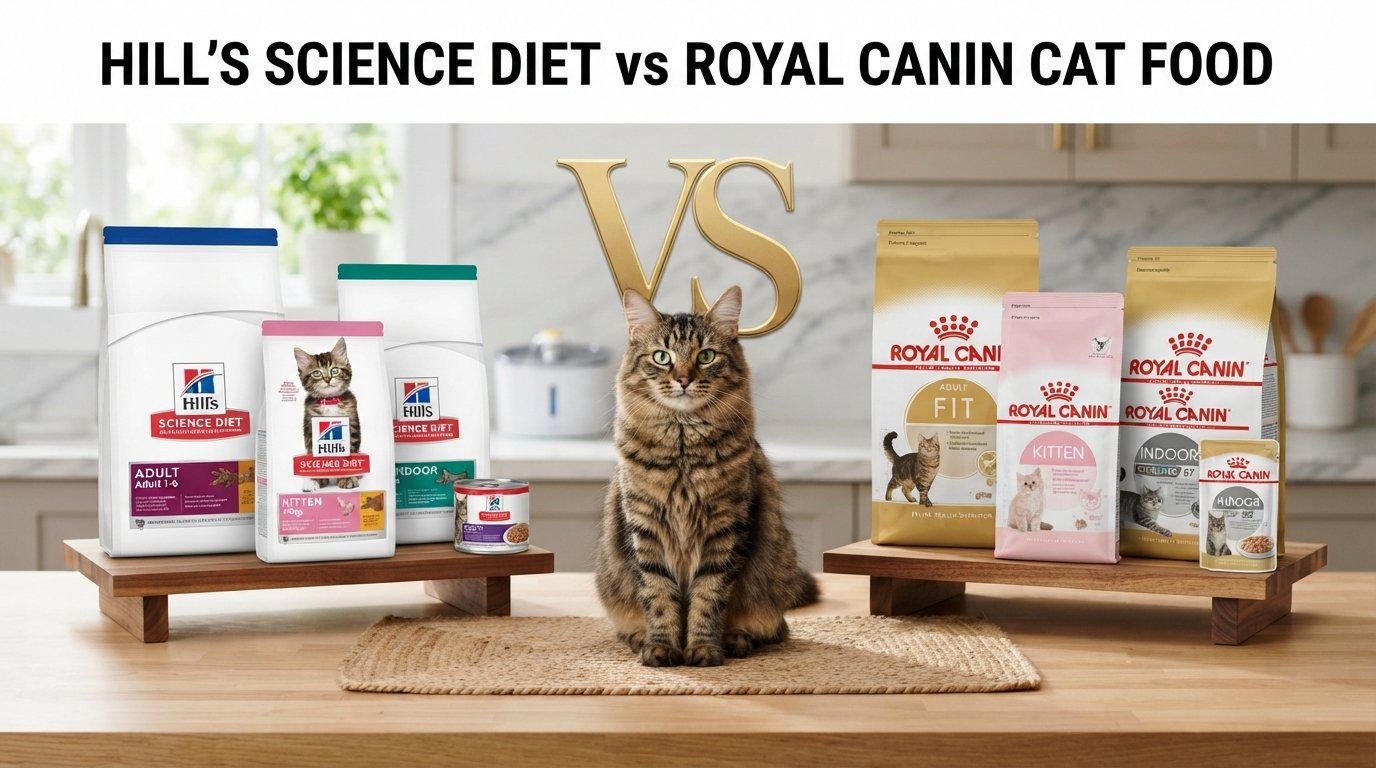
Hill’s Science Diet and Royal Canin solve two different problems. One treats a cat that’s already struggling. The other manages a cat that’s doing fine but lives indoors full time, which comes with its own wear and tear. This guide compares Hill’s Science Diet Sensitive Stomach & Skin against Royal Canin Indoor Adult, plus we’ll cover how each brand stacks up more broadly, since a lot of readers land here asking “is Hill’s Science Diet good for cats” or “is Royal Canin good for cats” rather than picking between these two specific bags.
Need the basics on portions and feeding schedules first? Our guide on how to feed an indoor cat properly covers that before you commit to either bag.
⚡ Quick Verdict: Which Is Better?
Skin irritation or an unpredictable stomach? Go with Hill’s Science Diet. Hairballs, a thickening waistline, and a litter box that clears the room? Royal Canin is the more practical pick. Neither food is “bad.” They’re just built for different cats.
Are Hill’s Science Diet and Royal Canin Actually Good Cat Food?
Short answer: yes, both are reputable, and vets recommend both routinely. Longer answer: “good” depends on what you’re comparing them to and what your cat needs.
Hill’s Science Diet is formulated with veterinary nutritionists and runs feeding trials on its formulas. It also makes the prescription-only Hill’s Prescription Diet line, sold through vets, for cats with diagnosed conditions like kidney disease or chronic GI problems. Royal Canin does the same thing on its side: a large over-the-counter lineup plus a veterinary line for cats with specific medical needs. Both companies publish nutrient breakdowns, both have decades of manufacturing history, and both show up on the “vet recommended” lists you’ll find in most clinics.
Where they differ is philosophy. Hill’s tends to build formulas around a specific health issue first, life stage second. Royal Canin builds around life stage and lifestyle first, then layers in targeted formulas (indoor, hairball, weight, breed-specific) on top. Neither approach is wrong. It just means the “better” brand depends entirely on which cat you’re feeding.
Analysis: Hill’s Science Diet Sensitive
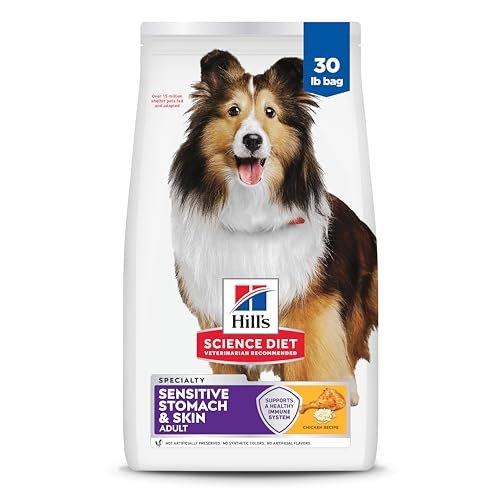
This formula targets adult cats that need real help with skin and gut health, not just standard maintenance. It’s built for cats dealing with chronic discomfort, using ingredients chosen to go easy on a touchy system.
Digestive ease is the core of the strategy here. The formula is highly digestible and includes prebiotic fiber, so your cat absorbs nutrients without the gut having to work overtime. That matters because a lot of “picky eating” is actually a cat avoiding food that upsets its stomach. If vomiting is the main issue at your house, our roundup of cat food for indoor cats that throw up covers several formulas built around that exact problem.
For skin and coat, Hill’s leans on Vitamin E and Omega-6 fatty acids. These hydrate skin from the inside and support a shinier coat, going after the cause of the itching and flaking instead of just covering it up with a supplement.
Build Quality & Design
The kibble skips the harsh fillers that tend to trigger flare-ups in sensitive cats. It’s a consistent, predictable food, which is exactly what you want once you’ve stopped guessing what your cat can handle.
Performance & Speed
Digestive improvements usually show up within a few weeks of consistent feeding. Skin benefits take longer. Less scratching and less flaking are the two signs this formula is doing its job.
Features & Functionality
Triple-action support for stomach, skin, and immune health is the headline feature, backed by 29 essential nutrients and a blend of antioxidants. It’s a solid nutritional base for a cat that needs more than basic calories.
User Experience
Even picky eaters tend to take to it. Kibble size is standard and easy to manage. Transitioning is usually smooth if you follow the slow-mix method over about a week rather than swapping bags overnight.
Value for Money
It costs more than grocery-store food. Think of that gap as a preemptive measure instead of an expense: managing sensitivities through diet often means fewer vet visits for skin or belly issues later.
✅ Advantages
❌ Disadvantages
Analysis: Royal Canin Indoor Adult
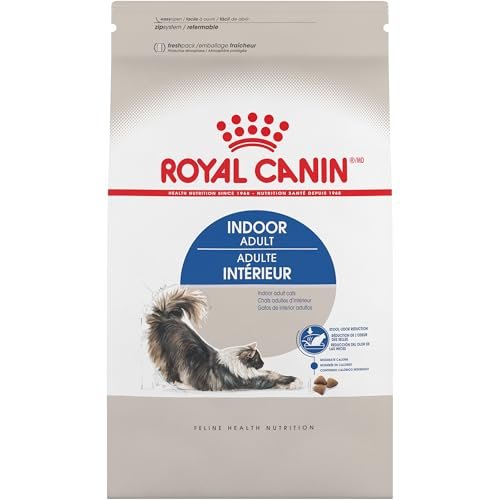
Royal Canin takes a lifestyle-first approach for cats aged 1 to 7 that live indoors full time. It’s built around one fact: indoor cats move less, so they need a food calibrated for that reality.
Indoor cats burn fewer calories than cats with outdoor access, and Royal Canin’s formula is calibrated around that. If your cat has already started packing on pounds, pair this with our guide to best cat food for overweight indoor cats to fine-tune portions. Just as important is the dedicated fiber blend, which helps move hair through the digestive tract instead of letting it collect into a hairball. Our guide to hairball formulas breaks that mechanism down in more depth.
Odor control is the other big draw for apartment living. By maximizing protein digestibility, the food produces smaller, less pungent waste. That’s a small detail on paper and a big one if the litter box sits ten feet from your couch.
Build Quality & Design
The kibble shape is designed to encourage chewing, which supports oral health. Ingredients are balanced to satisfy an indoor cat’s appetite without piling on the extra calories that lead to weight gain.
Performance & Speed
Most owners notice fewer hairball incidents within a month. Reduced litter box odor tends to show up even faster and is usually the first thing people notice.
Features & Functionality
It’s a full package for indoor life: fiber for hairballs, controlled calories for weight, and highly digestible protein to cut down on odor. Between the three, it covers most of what indoor cat owners actually complain about.
User Experience
Feeding guidelines are printed right on the bag, which helps if you’re new to portioning by weight rather than eyeballing a bowl. Bags reseal well and keep the kibble crunchy down to the last serving.
Value for Money
Factor in what you’d otherwise spend on hairball gels and litter deodorizers, and the premium price starts to look reasonable. It’s a preventative buy more than an indulgent one.
✅ Advantages
❌ Disadvantages
What About Prescription Diets for GI Issues?
Neither food covered above is a veterinary prescription diet, and that distinction matters if your cat has a diagnosed condition rather than general sensitivity. Both brands sell a separate, stronger tier for that: Hill’s Prescription Diet i/d for gastrointestinal care, and Royal Canin Veterinary Diet Gastrointestinal. Both require a vet’s authorization to buy, and both are formulated for cats with confirmed conditions like IBD, pancreatitis, or chronic diarrhea rather than everyday sensitivity.
If your cat has occasional stomach upset but no diagnosis, the Hill’s Science Diet Sensitive Stomach & Skin formula reviewed above is the reasonable starting point since it’s available over the counter. If symptoms are frequent, severe, or your vet has already flagged something specific, ask about the prescription-tier options directly. We haven’t tested the two veterinary GI lines head-to-head, so this isn’t a recommendation between them, just a note that they exist and sit above the everyday formulas in this comparison.
[Image placeholder: side-by-side comparison of an over-the-counter sensitive-stomach bag next to a vet-authorized prescription GI bag, to visually separate the two tiers]
Flavor & Recipe Options Compared
Flavor and format matter as much as the nutrition label. A formula only works if your cat will actually eat it. Here’s how the two lineups compare, including options if you want to mix in dry cat food for indoor cats with wet meals.
| Format | Hill’s Science Diet Sensitive | Royal Canin Indoor Adult |
|---|---|---|
| Dry kibble flavor | Chicken & Rice Recipe | Chicken |
| Grain-free dry option | Salmon & Yellow Pea Recipe | Not offered in this line |
| Wet food pairing | Chicken & Vegetable, Tuna & Vegetable cans | Indoor Adult Morsels in Gravy |
| Variety packs | Yes, mixed wet flavor packs | Limited, dry-focused lineup |
| Senior line extension | Adult 7+ formulas available | Indoor 7+ formula available |
If your cat is a texture snob, Hill’s wider wet food lineup gives you more room to experiment. If your cat already prefers dry kibble and you just want a hairball and weight-focused formula, Royal Canin’s single chicken recipe keeps shopping simple.
Major Factors to Consider
Look at your cat’s daily reality before you decide. Is this a medical sensitivity, or a lifestyle challenge? Matching the food to the actual hurdle is the only way your cat thrives instead of just getting by.
Performance
Hill’s focuses on internal and external repair for sensitive systems. Royal Canin focuses on maintenance for the indoor lifestyle. Pick based on whether your cat needs relief from symptoms or support for its environment. If weight is the deciding factor, our roundup of best diet food for indoor cats lists a few more options worth comparing.
Speed & Efficiency
Digestive results usually show up fast for both. Long-term weight or skin management takes patience, since both brands work gradually and consistently rather than as a quick fix.
Price & Value
Weigh the cost against potential vet bills or secondary care products. Premium food often pays for itself by keeping your cat healthy and cutting the need for extra grooming or odor-control supplies.
Build Quality
Both companies run their own feeding trials and hold to strict manufacturing standards. You’re not just paying for ingredients here, you’re paying for quality control that keeps every bag safe and nutritionally consistent.
Design & Aesthetics
This covers kibble shape, texture, and digestibility. Good design lets a cat chew and swallow without effort. Aroma and palatability matter too, since they decide whether your cat eats the food at all. Look for a formula that pairs nutritional science with something your cat’s senses actually respond to.
Durability
This is about freshness and shelf stability. Both brands use packaging built to keep the kibble as fresh on the last day as it was on the first.
Feature Comparison
This breakdown highlights the specific strengths of both formulas, so it’s easier to spot which one lines up with your cat’s current needs, whether that’s digestive sensitivity or general indoor health.
| Feature | Hill’s Science Diet Sensitive | Royal Canin Indoor Adult |
|---|---|---|
| Sensitive Stomach Support | ✓ | ✗ |
| Sensitive Skin Care | ✓ | ✗ |
| Hairball Control | ✗ | ✓ |
| Weight Management | ✗ | ✓ |
| Odor Reduction | ✗ | ✓ |
| Prebiotic Fiber | ✓ | ✗ |
| Antioxidant Rich | ✓ | ✓ |
| Indoor Specific | ✗ | ✓ |
| Omega Fatty Acids | ✓ | ✗ |
| Highly Digestible | ✓ | ✓ |
Specifications Comparison
Exact pricing depends on your local retailer, so these specs focus on function instead: Hill’s medical-style support versus Royal Canin’s lifestyle-oriented approach.
| Specification | Hill’s Science Diet Sensitive | Royal Canin Indoor Adult |
|---|---|---|
| Primary Target | Sensitive Cats | Indoor Cats |
| Main Benefit | Skin/Digestive | Weight/Hairballs |
| Life Stage | Adult, 7+ available | 1-7 Years, 7+ available |
| Key Nutrient | Omega 3 & 6 | Fiber Blend |
| Stool Odor Control | No | Yes |
| Immune Support | Vitamin C + E | Standard |
| Weight Control | No | Yes |
| Digestion Focus | Prebiotics | Protein Quality |
🏆 Winner: Royal Canin Indoor Adult
Score Breakdown
Royal Canin Indoor Adult wins here because it’s the more versatile pick for a standard indoor cat. Hill’s still wins for specific medical sensitivities, but Royal Canin handles the big three of indoor ownership, weight, hairballs, and odor, in one bag. That’s what makes life easier for most owners.
Choose Hill’s Science Diet Sensitive If…
Your Cat Has a Confirmed Sensitivity
A vet has flagged a sensitive stomach or sensitive skin. This formula targets the root cause instead of managing symptoms with occasional treats or supplements.
Frequent Digestive Upset
Cats prone to vomiting or loose stool tend to do noticeably better on the prebiotic fiber blend here than on a standard maintenance diet.
Dull Coat or Itchy Skin
Your cat scratches often or has a dry, flaky coat. The Omega-6 and Vitamin E content addresses this from the inside out, not just through topical products.
You Want a Vet-Style Diet Without the Prescription
This formula offers therapeutic-level nutrition over the counter, so you get targeted support without a prescription food’s paperwork or cost.
Choose Royal Canin Indoor Adult If…
Your Cat Is Healthy but Lives Indoors Full Time
No diagnosed conditions, just the usual side effects of indoor living: less exercise, more hairballs, and a litter box that needs managing.
Weight Has Crept Up
Calorie control built into the formula helps a low-activity cat maintain a healthy weight without you having to measure out a separate diet food.
Hairballs Are a Regular Problem
The dedicated fiber blend moves hair through the digestive tract instead of letting it build up, cutting down on hairball frequency over time.
Litter Box Odor Is a Household Complaint
Higher protein digestibility means smaller, less pungent waste, which matters more in an apartment than a house with a mudroom.
Cat Food Similar to Hill’s Science Diet and Royal Canin
If neither formula above is quite right, or your budget won’t stretch to premium pricing every month, a few other brands sit in a similar tier. This isn’t a ranked list, just categories worth knowing about before you shop.
| If You Want… | Look At |
|---|---|
| Similar science backing, lower price | Purina Pro Plan, which also runs its own research and offers sensitive-skin and indoor formulas at a lower price point than Hill’s or Royal Canin. |
| Grain-free, ingredient-forward | Blue Buffalo, popular with owners who want to see whole-food ingredients higher on the label, though it lacks the clinical feeding-trial history of Hill’s or Royal Canin. |
| Budget-friendly maintenance food | Iams or Purina ONE, reasonable for a healthy cat with no sensitivities, though neither targets skin, GI, or hairball issues the way the formulas above do. |
| A diagnosed medical condition | A vet-prescribed diet from Hill’s Prescription Diet or Royal Canin Veterinary Diet, not an over-the-counter alternative. See the GI section above for why this tier is different. |
🎯 Final Recommendation
Go with Hill’s Science Diet if you’re managing a cat with confirmed skin or digestive sensitivities. It’s a specialized tool for a specific job. If you have a typical indoor cat and want to handle weight and hairballs while keeping litter box odor in check, Royal Canin is the better, more comprehensive option. And if your cat has a diagnosed GI condition rather than general sensitivity, skip both of these and talk to your vet about a prescription-tier formula instead.
Summary
- Hill’s Science Diet is the specialist for digestive and skin issues. Royal Canin Indoor is the specialist for weight and hairballs.
- Both are reputable, vet-recommended brands; “better” depends on your specific cat, not the brand name.
- Hill’s offers a wider wet food lineup. Royal Canin keeps its dry chicken recipe simple and consistent.
- Neither formula here is a prescription diet. Cats with a diagnosed GI condition need Hill’s Prescription Diet i/d or Royal Canin Veterinary Diet Gastrointestinal instead.
- If budget is tight, Purina Pro Plan covers similar ground at a lower price point.
- Always talk to your vet before switching, and transition slowly to avoid stomach upset.
Frequently Asked Questions
Which is better: Hill’s Science Diet or Royal Canin cat food?
It depends on the cat. Hill’s wins for sensitive skin and stomachs. Royal Canin is the better all-rounder for the typical indoor lifestyle. Neither one is objectively “the best brand” across the board.
Is Hill’s Science Diet a good cat food?
Yes. It’s formulated with veterinary nutritionists, runs feeding trials, and is one of the most commonly vet-recommended brands. It’s not the cheapest option on the shelf, and a perfectly healthy cat with no sensitivities may not need its targeted formulas at all.
Is Royal Canin a good cat food?
Yes. It’s a long-established, vet-recommended brand with one of the widest ranges of life-stage and lifestyle-specific formulas on the market. Like Hill’s, it sits at a premium price point, and its everyday lines aren’t a substitute for a veterinary diet if your cat has a diagnosed condition.
How does Royal Canin compare to Hill’s prescription diet for cat GI issues?
They’re not really comparable at the everyday level, since the Royal Canin Indoor Adult formula reviewed here is over the counter and Hill’s Prescription Diet i/d requires vet authorization. If your cat has a diagnosed GI condition, look at Royal Canin Veterinary Diet Gastrointestinal against Hill’s Prescription Diet i/d directly, and let your vet weigh in on which fits your cat’s specific diagnosis.
What cat food is similar to Hill’s Science Diet?
Purina Pro Plan sits closest in terms of research backing and formula variety, usually at a lower price. Royal Canin is the other major comparable brand, though it leans more toward lifestyle formulas than medical-style ones. See the alternatives table above for a fuller breakdown.
What flavors does Hill’s Science Diet Sensitive come in?
The core dry recipe is Chicken & Rice, with a grain-free Salmon & Yellow Pea option, plus Chicken & Vegetable and Tuna & Vegetable wet food cans for variety.
Is the price difference worth it?
Usually, yes. Both are premium brands, and you’re paying for research and quality control, which tends to mean fewer health issues down the road.
Which is better for senior indoor cats?
Both brands offer a 7+ line extension, so age alone shouldn’t decide it. Base the choice on whether your senior cat has sensitivities or general indoor needs. Our guide to cat food for senior cats covers age-specific factors in more detail.
Which has better build quality?
They’re equals here. Both are top-tier manufacturers with long-standing reputations for safety and nutritional science.
Which is better for beginners?
Royal Canin is generally easier for new owners to grasp, since its benefits tie directly to the everyday annoyances of indoor cat ownership: hairballs, weight, and odor.
What are the main differences?
Hill’s fixes internal or external sensitivities. Royal Canin manages the lifestyle challenges of living indoors. One treats a problem, the other prevents one.

Written by Mishu
A passionate cat lover and indoor living enthusiast, Mishu is the founder and voice behind Indoor Living Cat – a go-to resource for cat owners who want to create the happiest, healthiest life for their feline companions indoors.
View Full Profile