
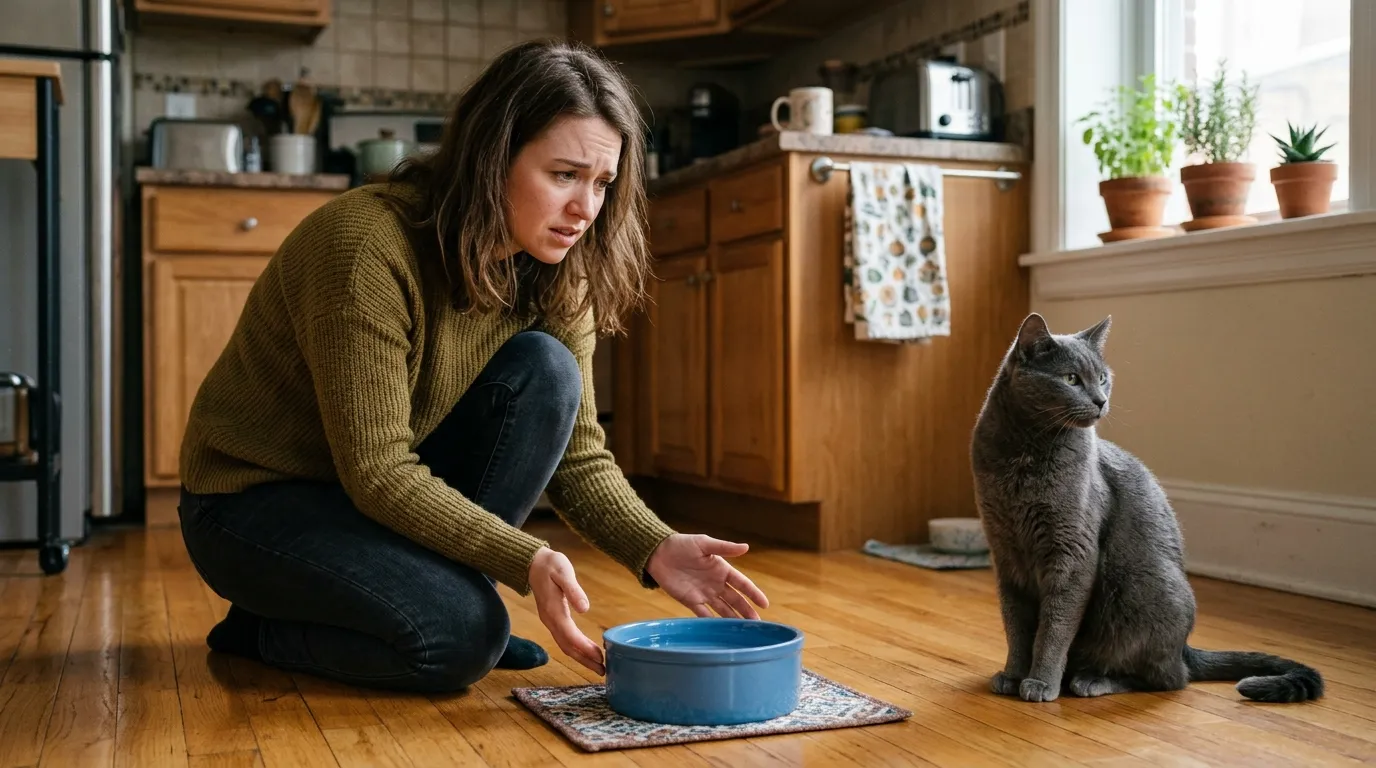
Your indoor cat walks past the water bowl every day like it isn’t there, and low hydration causes real problems over time. Learning how to get an indoor cat to drink more water is one of the most practical things you can do for their long-term health, because the fallout from chronic low water intake (urinary crystals, bladder disease, kidney stress) builds slowly and quietly until it turns into an expensive emergency. I learned this the hard way when my cat had a urinary blockage scare at four years old despite eating regularly and looking completely healthy. Switching her to primarily wet food and adding a moving water fountain fixed her water intake within a week.
This guide covers every change that works, from bowl placement to food strategy to flavor tricks. It also covers how to tell if your cat is dehydrated, what to do if your cat refuses water entirely, how needs shift for kittens and seniors, and the warning signs that mean it’s time to call the vet instead of trying another bowl.
Quick answer: To get your indoor cat to drink more water, switch to wet food as the primary diet, add a cat water fountain, and place several wide, shallow bowls in quiet spots away from the litter box and food. Many cats drink more within a few days of these combined changes. Some need up to two weeks.
Quick-Start Checklist: 5 Changes to Make This Week
Before the full breakdown, here’s the short version. If you only do five things, do these:
- Add at least 30% wet food to daily meals (more if your cat tolerates it)
- Set up 2 to 3 water stations away from food and the litter box
- Switch to wide, shallow bowls filled to the brim
- Rinse and refill water at least once daily, and wash bowls every 2 to 3 days
- Try a fountain for two weeks before deciding it isn’t for your cat
Why Indoor Cats Struggle With Low Water Intake
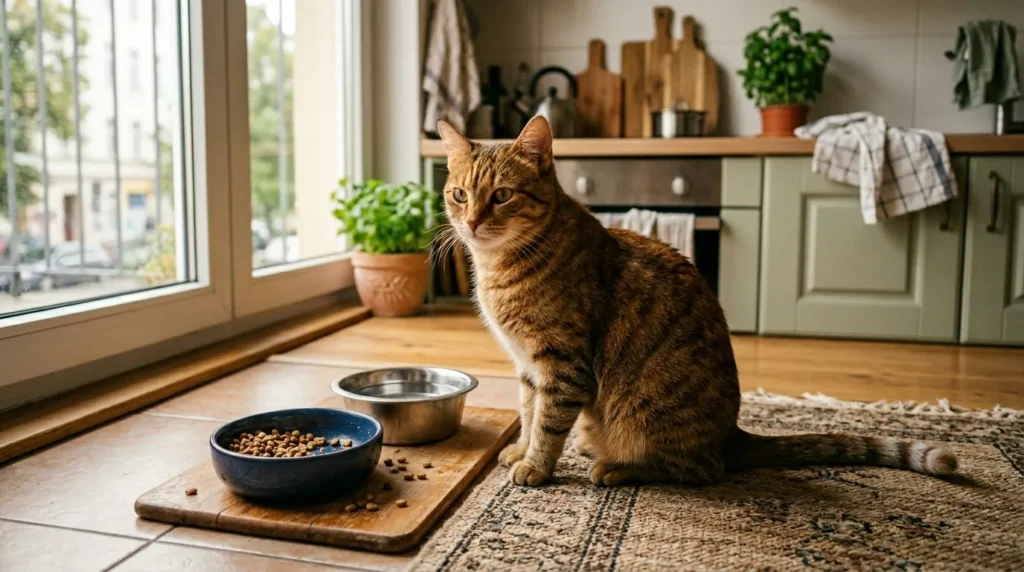
Cats have a low thirst drive by design. Their wild ancestor, the African wildcat, lived in desert environments and evolved to get most of its water from prey. Mice and small birds are roughly 70% water, so a wild cat barely needed to drink. Your indoor cat eating dry kibble gets only 8 to 10% moisture from food and has to make up the rest at the bowl, but the thirst signal never got strong enough to close that gap reliably.
The result is chronic, low-level dehydration that most owners never catch, because cats don’t show obvious thirst the way dogs do. Concentrated urine sets up good conditions for struvite and calcium oxalate crystals in the bladder. Over time that can progress to feline lower urinary tract disease (FLUTD), bladder stones, or kidney stress that needs veterinary treatment.
Setup makes it worse. An outdoor cat has puddles, rain barrels, and a dozen water sources to sample. An apartment cat gets one bowl in one spot, often next to the food or the litter box, and often filled with water that’s been sitting for a day. Diet and setup explain most of the gap, and both are fixable.
Signs Your Indoor Cat Isn’t Drinking Enough
Most cats won’t tell you directly, so you have to read the evidence. Check these first:
- Small, dark, strong-smelling litter clumps. Well-hydrated cats produce larger, paler clumps. This is the easiest daily check.
- Dry or tacky gums. Lift the lip gently. Healthy gums are pink and slippery. Sticky or dry gums point to dehydration.
- Hard, dry stools or straining to poop. Constipation often travels with low fluid intake.
- A bowl that stays full day after day. Mark the water level with tape or a pen at night and check it in the morning.
- Low energy, sunken eyes, or reduced appetite. These are later signs. Treat them as a vet issue, not a bowl issue.
About the skin tent test: pinching the skin between the shoulder blades and watching how fast it snaps back is a popular home check, but it’s unreliable. Older cats and thin cats lose skin elasticity naturally, and overweight cats can mask it. Use it as one clue, never as a verdict.
How to Get an Indoor Cat to Drink More Water?
Combining several small changes beats trying one thing and waiting. Here’s what moves the needle, ranked by impact:
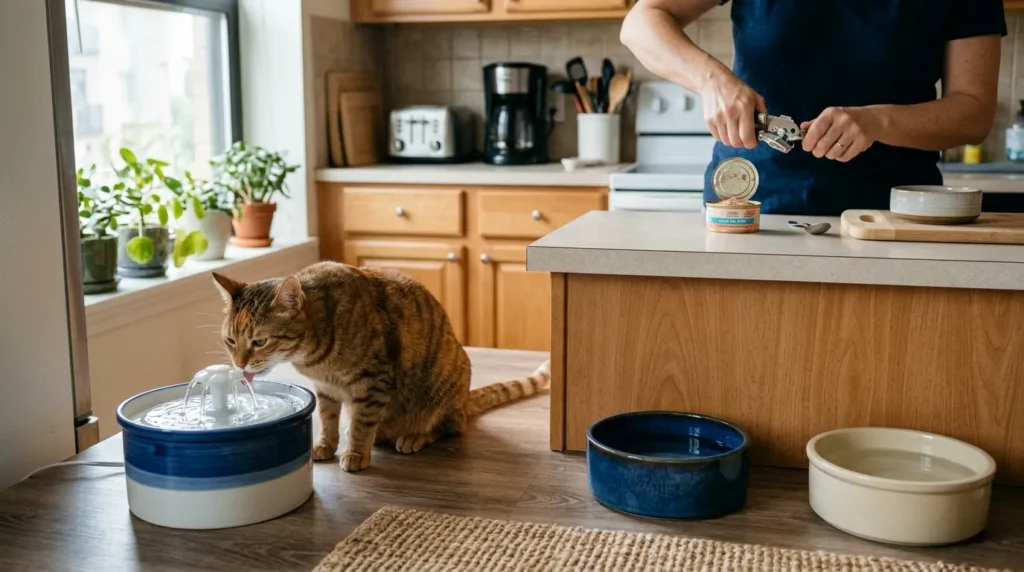
- Switch to wet food as the primary diet. Wet food runs 70 to 80% moisture by weight, and it’s the biggest single change you can make. A cat eating mostly wet food can double total daily moisture intake without drinking one extra sip. Even swapping one dry meal a day for wet food helps. The full breakdown of diet type and hydration for apartment cats is in this guide on how to feed an indoor cat properly, including how much wet versus dry food fits your cat’s needs.
- Add a cat water fountain. Still water can taste and smell stale to a cat within hours. Moving water reads as fresh, and many cats drink more from it. Some cats start within three to five days. Others need two weeks to trust it. Pick a model with a filter and clean it weekly, because a fountain with algae buildup is worse than no fountain at all. The comparison table below covers fountain versus bowl.
- Place multiple water bowls in different rooms. One bowl next to the food or litter box is the default setup, and it’s one of the weakest. The common explanation is an instinct to keep water away from food and waste. Whatever the cause, many cats drink more once water moves away from both. Put three or four wide, shallow bowls in quiet corners around the apartment and your cat will probably adopt at least one.
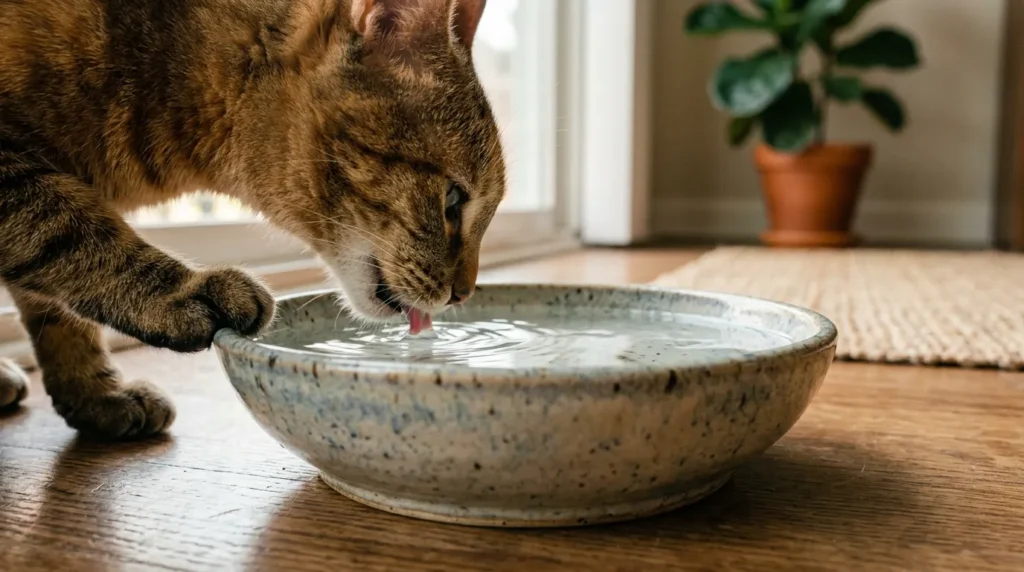
- Use wide, shallow bowls filled to the brim. Many cats avoid deep, narrow bowls because their whiskers brush the sides. This is often called whisker fatigue. I should be honest that it isn’t well established in veterinary research, but the practical result is consistent: lots of cats drink more readily from a wide, shallow bowl filled near the top. Ceramic and glass also hold no residual odor or plastic taste. Plastic scratches over time, and those scratches can harbor bacteria and leave an off-taste.
- Refresh water at least once a day, ideally at each meal. Water sitting 24 hours at room temperature goes flat and picks up airborne odors, and many cats reject it without the owner realizing the water is the problem. Rinsing the bowl with hot water and refilling at mealtimes takes ten seconds.
- Add flavor to make water more appealing. A tablespoon of low-sodium chicken or tuna broth stirred into a full bowl adds enough scent to interest a cat that ignores plain water. Use broth made without onion or garlic, both of which are toxic to cats. Freezing broth into small cubes makes a slow-melting treat many cats lick and paw at. Discard flavored water after a few hours, sooner in a warm room, because it spoils faster than plain water.
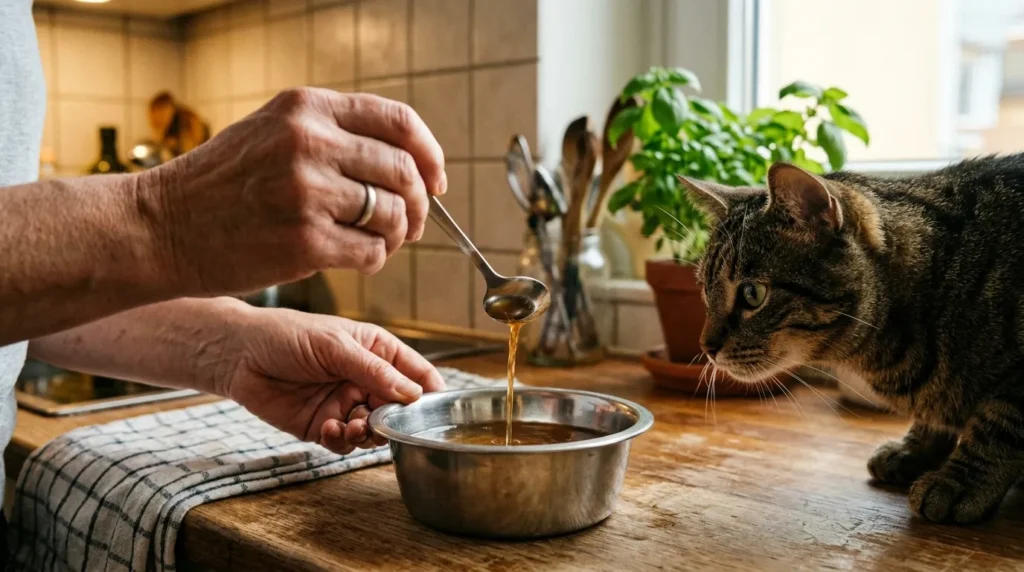
- Add extra water directly to food. For cats on wet food, stir one to two tablespoons of warm water into each meal to make a gravy. Most cats take to it fast. For cats still on dry food, soak the kibble in warm water for a few minutes before serving. It softens the food and adds moisture without an overnight diet change. Throw away uneaten soaked kibble within an hour or two.
- Try filtered or bottled water. Tap water carries chlorine and, in some areas, minerals that cats can taste and smell even when we can’t. A subset of cats will refuse tap water outright. Test filtered or room-temperature bottled water for a week before you spend money on a fountain if you suspect the water itself is the deterrent.
- Raise the water bowl for senior cats. Older cats with arthritis or neck stiffness often skip water because bending to a floor-level bowl hurts. An elevated water station three to four inches off the floor removes that barrier, and some seniors drink more right away.
- Ask your vet about a hydration additive or supplement. For cats that resist every bowl and fountain trick, vet-recommended products such as unflavored electrolyte gels or palatable liquid additives like Purina Hydra Care can add fluid on top of food and water. They don’t replace the changes above. Talk to your vet first if your cat has a history of urinary or kidney problems.
Insight: The fountain-versus-bowl debate misses the point for most apartment cats. What matters is that water sits in multiple spots, stays fresh, and stays away from the litter box. Some cats want a fountain. Some want a bowl filled to the brim. Try both for a week each and watch which one your cat uses. Your cat’s preference matters more than which option feels more intuitive to you.
Fountain vs. Bowl: Which One Wins?
| Factor | Water Fountain | Wide Shallow Bowl |
|---|---|---|
| Appeal to cats | Moving water draws many cats in | Works for cats that dislike noise or flow |
| Upkeep | Weekly deep clean, filter changes, pump check | Daily rinse, wash every 2 to 3 days |
| Cost | Higher upfront, plus replacement filters | Low |
| Noise | Pump hum, louder when water runs low | Silent |
| Failure mode | Algae and slime when neglected; some cats fear the sound | Water goes stale; cat ignores it |
| Best for | Cats that drink from faucets or ignore still water | Multiple stations around a small apartment |
For most homes, the best setup is one fountain plus two or three bowls elsewhere. That gives your cat a choice and gives you a backup when the fountain is being cleaned.
Best Water Bowl Material for Cats
| Material | Pros | Cons |
|---|---|---|
| Ceramic | Heavy, hard to tip, holds no taste or odor | Can chip; check for cracks that harbor bacteria |
| Glass | Nonporous, easy to see if it’s clean | Breakable |
| Stainless steel | Durable, easy to sanitize | Some cats dislike the reflection or the clink |
| Plastic | Cheap, light | Scratches harbor bacteria and hold odors; can leave a taste |
What to Add to Your Cat’s Water (and What to Skip)
| Safe, in small amounts | Skip |
|---|---|
| Low-sodium chicken broth with no onion or garlic | Broth with onion, garlic, or heavy salt |
| Water from tuna packed in water (not oil) | Oil-packed tuna liquid |
| Plain ice cubes or frozen broth cubes | Sports drinks, juice, or flavored human drinks |
| Lactose-free “cat milk” as an occasional treat | Regular cow’s milk, since many adult cats are lactose intolerant |
Wet Food vs. Dry Food: Which Hydrates Your Cat Better?
The moisture gap between wet and dry food is the biggest lever in this guide, so it helps to see it side by side.
| Factor | Wet Food | Dry Food (Kibble) |
|---|---|---|
| Moisture content | 70 to 80% | 8 to 10% |
| Water a 10 lb cat still needs to drink daily | ~1 to 2 oz | ~6 to 7 oz |
| Urinary/FLUTD risk with poor hydration habits | Lower | Higher |
| Cost per day (typical) | Higher | Lower |
| Shelf life once opened | Hours (refrigerate leftovers) | Weeks |
| Dental benefit | Minimal | Some abrasive cleaning action |
A fully dry-fed cat has to drink almost its entire daily water requirement from the bowl, and that rarely happens given the weak thirst drive. A fully wet-fed cat gets most of it from food. Most cats land somewhere between the two, which is why bowl placement, freshness, and fountains still matter after you’ve switched foods.
How to Switch a Dry-Food Cat to Wet Food
A sudden swap can cause stomach upset and a standoff at the food bowl. Go slowly:
- Days 1 to 3: mix about 25% wet food into the usual dry food.
- Days 4 to 6: move to about 50% wet.
- Days 7 to 9: move to about 75% wet.
- Day 10 onward: serve mostly or fully wet, adjusting for your vet’s calorie target.
If your cat balks, stretch each stage to a week, warm the food for a few seconds so the smell comes up, or try a different texture (pate, shreds, or chunks in gravy). Cats with kidney or urinary conditions may need a specific prescription diet, so ask your vet before changing food.
How Much Water Does Your Indoor Cat Need Each Day?
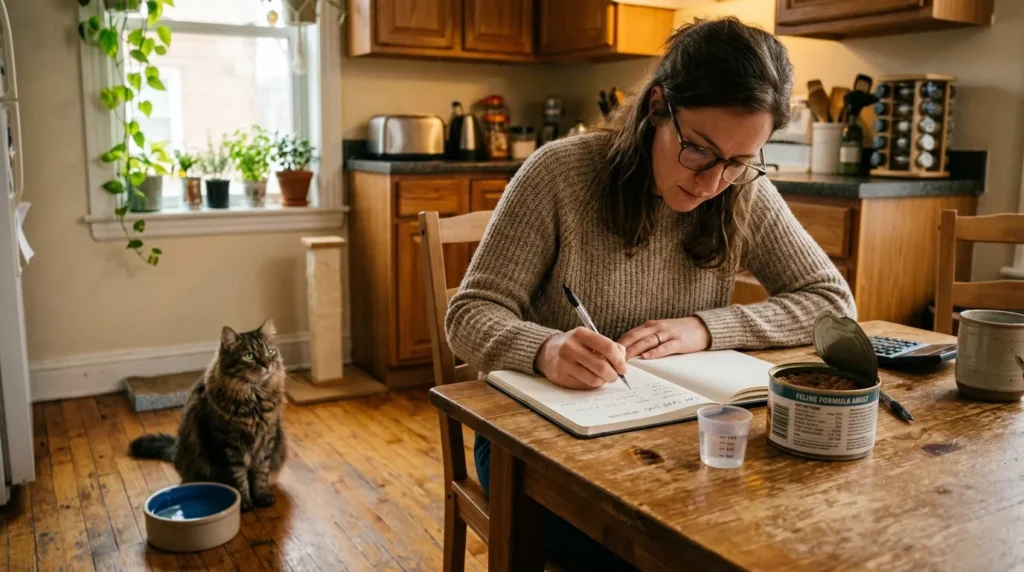
As a general guideline, an indoor cat needs roughly four ounces of water per five pounds of body weight per day, or about 50 ml per kilogram. That total comes from drinking and food moisture combined, which is why wet food changes the math so much.
| Cat’s Weight | Approx. Daily Water Needed |
|---|---|
| 5 lbs | ~4 oz |
| 8 lbs | ~6.5 oz |
| 10 lbs | ~8 oz (1 cup) |
| 12 lbs | ~9.5 oz |
| 15 lbs | ~12 oz |
Here’s a worked example. A 10 lb cat needs about 8 oz. Three 3 oz cans of wet food at 78% moisture deliver roughly 7 oz of water, leaving about 1 oz to drink. The same cat on dry kibble at 10% moisture has to drink nearly all 8 oz from the bowl. Check your food’s guaranteed analysis on the label for its actual moisture percentage.
Track hydration roughly by watching the litter box. A well-hydrated cat produces larger, paler clumps. A cat consistently producing small, dark, concentrated clumps is under-hydrated whether or not the bowl looks used. Pregnant, nursing, and kidney-disease cats need more than the guideline, and your vet should set the number.
For the fuller picture of how total moisture intake connects to urinary and kidney health, this guide on indoor cat health covers the preventive habits that matter most for apartment cats.
Insight: The most underrated hydration tip I’ve found is putting a water bowl near wherever your cat already spends most of the day, not just in the kitchen. Most cats have a sofa or window perch they return to constantly. A bowl six feet from that spot gets used. A bowl across the apartment doesn’t.
My Cat Won’t Drink Water at All: What Now?
“Drink more” and “drink at all” are different problems. A cat that ignores the bowl but eats and acts normal usually responds to the same fixes above, applied faster and more firmly. A cat that has stopped drinking and eating, or seems lethargic, needs a same-day vet visit, not another bowl experiment.
If your cat won’t touch water in any form, work through this order:
- Rule out an obvious deterrent: a dirty bowl, a bowl that was moved, a new pet or object near the water station, or a recent food or litter change.
- Offer wet food with extra water mixed in, even if your cat normally eats dry. Most cats accept a gravy consistency faster than a full diet switch.
- Add a small amount of low-sodium broth to one bowl only, so you can tell whether flavor is what’s missing.
- Try a different bowl material and a different location on the same day. Sometimes the bowl is the problem.
- If none of this gets a response within 24 hours, call your vet. A full day of water refusal, especially with reduced appetite, is not a wait-and-see situation.
How long can a cat go without water? A healthy adult cat can survive roughly three days without water, but trouble starts well before that. Kidney strain, constipation, and weakness can show up within a day or two, and kittens, seniors, and sick cats deteriorate faster. Don’t use the three-day figure as a safe window.
Don’t force water with a syringe unless your vet shows you how. A cat that struggles can inhale liquid into the lungs.
Hydration Needs by Life Stage and Household
Kittens
Kittens need proportionally more water than adult cats relative to body weight, and they’re still learning where their resources live. Keep a shallow, kitten-accessible bowl near wherever they sleep and play, not just at the main kitchen station. Expect to top it off more often, since kittens play in water as much as drink it. Once weaned, wet kitten food is a good habit-builder for later hydration.
Senior Cats
Thirst drive weakens with age, and conditions like kidney disease (common in cats over ten) raise water needs at the same time that mobility and motivation to find water decline. Elevated bowls, extra stations near resting spots, and wet food matter more, not less, as your cat ages. Cats with diagnosed kidney disease need vet guidance on exact fluid targets, since their needs run higher than the general guideline above.
Multi-Cat Households
One water station per cat, plus one extra, is the standard rule of thumb, the same ratio used for litter boxes and for the same reason. A more assertive cat can guard a single water source without ever acting aggressive, and a shyer cat will quietly stop drinking near a companion rather than confront them. Spread stations across separate rooms so every cat has water it doesn’t have to negotiate for.
Hot Weather and Travel: When Water Needs Change
Water needs climb in summer even for a cat that never goes outside, since indoor temperatures rise and cats pace and pant more to manage heat. Add an extra water station during hot months, keep bowls out of direct sunlight where the water warms and grows bacteria faster, and check levels twice a day instead of once. Heavy panting in a cat is never normal. Call your vet.
Travel and boarding disrupt water intake more than most owners expect, since cats react to unfamiliar water taste and unfamiliar bowls. Bring water from home for short trips, pack a familiar bowl, and watch for reduced drinking in the first 24 to 48 hours in a new place. It usually resolves once the cat settles, but monitor closely if the trip runs longer.
Why Does My Cat Drink From the Faucet, the Toilet or a Plant Saucer?
Cats that skip the bowl and drink from running taps, toilets, shower floors, or houseplant saucers are telling you something about their preferences. The usual reasons are a preference for moving or fresher water, dislike of the bowl’s location or material, or simple curiosity. Treat it as a signal and not a quirk.
Don’t just punish it. Offer the same appeal in a safe form: a fountain, a bowl filled fresh right before you leave for work, or a bowl placed in the room where the cat keeps drinking. Keep toilet lids closed if you use bowl cleaners, and move any plant with fertilizer, pesticide, or toxic leaves out of reach.
Common Mistakes That Keep Indoor Cats Chronically Dehydrated
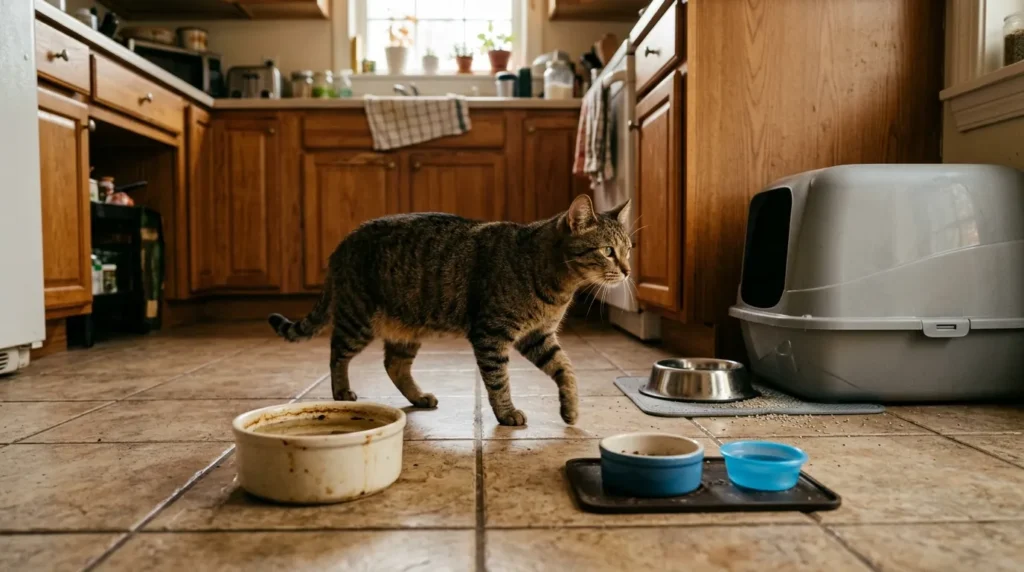
Putting the single water bowl next to the food bowl. It’s convenient for you, but it creates a feeding zone many cats leave between meals, and the water gets ignored along with the food residue nearby. Move water away from food and litter and many cats start using it almost immediately.
Cleaning the bowl only when it looks dirty. Bacterial biofilm builds on the bowl’s surface within 24 to 48 hours even when the water looks clear, and it gives off an odor cats detect and avoid. Rinse with hot water once a day and wash with mild soap every two to three days.
Offering only one water station in a small apartment. One bowl requires effort to seek out. Three bowls in the living room, bedroom, and kitchen create drinking opportunities all day that add up by evening.
Using small, deep, or plastic bowls. Cramped bowls and scratched plastic are common reasons a cat refuses water that’s otherwise fresh.
Topping off instead of replacing. Pouring fresh water on top of yesterday’s water leaves the old film in place. Empty, rinse, then refill.
Ignoring the cat that drinks from faucets or saucers. That cat is telling you plainly that it wants moving or fresher water than what’s in its bowl.
When Low Water Intake Signals a Health Problem Worth Investigating
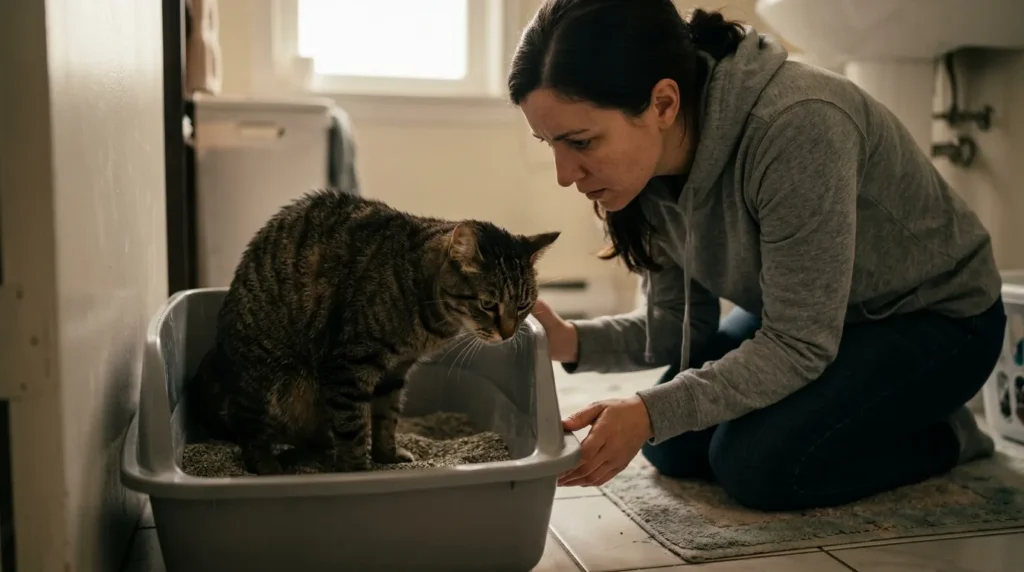
Low water intake in an otherwise healthy cat often improves within one to two weeks of the changes in this article. Watch for these signs instead, and treat them as a reason to call the vet rather than try another bowl:
- Sudden increase or decrease in drinking, in either direction
- Visible straining or crying in the litter box
- Blood in the urine
- Urinating outside the litter box after being reliable
- No urine produced for more than twelve hours
- Lethargy paired with reduced appetite or reduced drinking
Emergency: Male cats face a higher risk of complete urinary blockage because of their anatomy, and a blockage is life-threatening. A cat of any sex that strains repeatedly in the litter box and produces little or no urine needs to see a vet or emergency clinic immediately, not after several hours of waiting.
Why Is My Cat Suddenly Drinking Much More?
Excess thirst is a symptom, not a success. Cats that suddenly drink and urinate far more than usual can have kidney disease, diabetes, or an overactive thyroid. If the change lasts more than a few days, book a vet visit and bring a note of how often the bowl needs refilling.
According to the Cornell Feline Health Center, FLUTD affects roughly one to three percent of cats seen at veterinary clinics, and diet changes that increase moisture intake are among the primary preventive recommendations. This article is for informational purposes only. Always consult your vet if your cat shows signs of urinary difficulty, changes in litter box behavior, or sudden changes in water consumption.
Frequently Asked Questions About Getting Indoor Cats to Drink More Water
How do I get my indoor cat to drink more water fast?
Add wet food or a few spoonfuls of water to each meal today, then move a wide, shallow bowl to a quiet spot away from the litter box. Those two changes work faster than anything else on this list. Cats don’t have a switch, so expect days, not hours.
Will a cat water fountain actually make my cat drink more?
Often, but not always. Moving water reads as fresh and appeals to many cats. Introduce it gradually: leave it unplugged for a day or two so your cat can inspect it before the motor turns on, then give it two weeks. If your cat ignores it entirely, a wide bowl refilled twice a day is a fine alternative.
How do I know if my indoor cat is dehydrated?
Look for dry or tacky gums, small dark litter clumps, hard stools, low energy, and sunken eyes. The skin tent test can add a clue but it’s unreliable in older or thin cats, so don’t lean on it. Any cat that’s lethargic and not eating or drinking needs a vet. This article is for informational purposes only. Always consult your vet if you suspect dehydration.
Can I add tuna water or broth to my cat’s water bowl?
Yes, and it works for many reluctant drinkers. Use tuna packed in water, not oil, and low-sodium chicken broth without onion or garlic. A tablespoon per bowl is enough. Keep plain water available too, and discard flavored water after a few hours.
Should I use filtered water for my cat’s water bowl?
For cats that consistently ignore tap water despite fresh daily changes, a week of filtered or bottled water is worth testing. Some cats pick up chlorine or minerals that humans can’t. It costs little and solves the problem for some cats.
Where is the best place to put a cat water bowl in an apartment?
Away from both the litter box and the food bowl, and near wherever your cat already spends most of the day. Quiet corners in the living room, bedroom, or beside a favorite perch work better than the kitchen feeding area. Several stations around the apartment increase how much an indoor cat drinks across a day.
Do cats prefer cold water, room-temperature water, or ice?
There’s no firm rule, so test it. Many cats accept room-temperature water, and some enjoy slowly melting ice cubes, especially in warm weather. Skip very cold water for cats with sensitive teeth or dental disease.
Are ice cubes safe to put in a cat’s water bowl?
Yes for most cats. Some find a melting cube more interesting than still water. Broth ice cubes add flavor on top of the novelty.
Does wet food alone provide enough hydration, or does my cat still need to drink water?
Wet food covers most, not all, of a cat’s daily water. A cat eating exclusively wet food at 80% moisture still needs fresh water available at all times, even if intake stays low. Wet food reduces the pressure on drinking, it doesn’t remove it.
Why is my cat not drinking water but eating normally?
If the cat eats wet food, much of its water comes from the meal, so you may see little bowl use and still have a hydrated cat. Check the litter box: large, pale clumps are a good sign. If the cat eats dry food only and rarely drinks, apply the changes above and watch for dark, small clumps.
How long can a cat go without water?
About three days is the survival estimate for a healthy adult, but problems begin much sooner. Call your vet if your cat has had no water for 24 hours, especially with lower appetite or energy.
Can I give my cat milk to drink more?
Skip regular cow’s milk. Many adult cats can’t digest lactose and may get diarrhea, which dehydrates them further. Lactose-free cat milk is an occasional treat, not a hydration plan.
How often should I clean a cat water fountain?
Do a full deep clean weekly and swap filters on the schedule your manufacturer lists. Top off daily, and empty and rinse the reservoir if you see slime or a film.
How much water should a cat with kidney disease or a history of urinary blockage drink?
More than the general guideline in this article, and the exact target should come from your vet. Cats managing kidney disease or recovering from a blockage often need a prescription diet with higher moisture content, plus close monitoring of intake and litter box output. This is one case where working directly with your vet matters more than any bowl or fountain trick.
Start With Two Changes Today
Getting your indoor cat to drink more water is mostly a setup problem. The biggest single change is moving toward wet food so most of the daily water comes from meals. The second is adding a fountain or several fresh bowls away from the litter box and food. Make those two changes this week, mark the water level each night, and check the litter clumps after seven days.
Indoor cats need approximately four ounces of water per five pounds of body weight daily, and cats eating only dry kibble at 10% moisture rarely meet that through drinking alone. Wet food at 70 to 80% moisture is the most effective way to raise total daily fluid intake. Many cats drink more from a fountain, though some need up to two weeks to adopt one. Multiple wide, shallow ceramic or glass bowls placed away from the litter box and food bowl increase incidental drinking through the day. Water should be refreshed at least once daily and bowls fully washed every two to three days to prevent bacterial biofilm. Small, dark litter clumps, dry gums, and constipation can signal low intake. Kittens, senior cats, and multi-cat households have distinct needs, and total water refusal lasting 24 hours, or

Written by Mishu
A passionate cat lover and indoor living enthusiast, Mishu is the founder and voice behind Indoor Living Cat – a go-to resource for cat owners who want to create the happiest, healthiest life for their feline companions indoors.
View Full Profile