
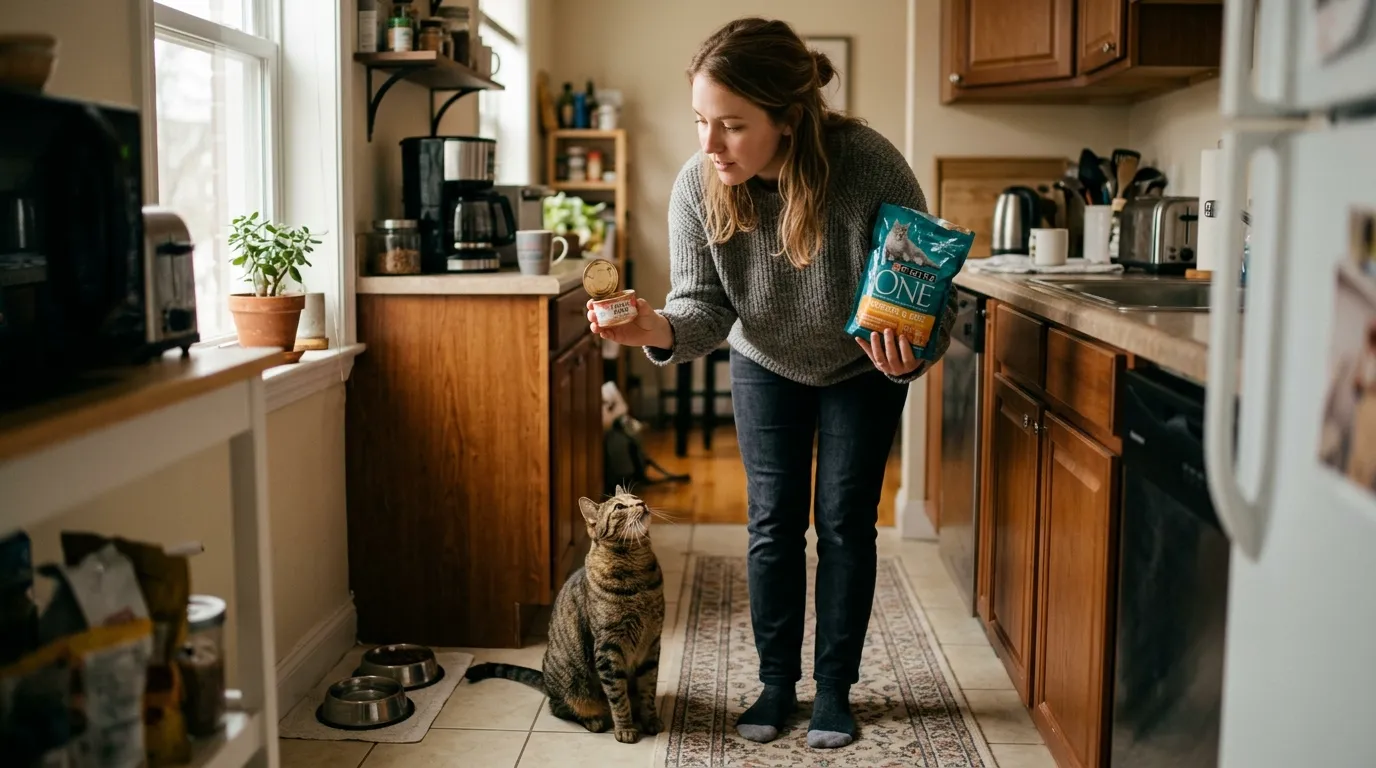
Do indoor cats need wet food every day? Not strictly, but skipping it costs your cat more than most owners realize. A cat on dry kibble alone can survive fine on paper. The label meets AAFCO standards, the bag says “complete and balanced,” and your cat eats it without complaint. But indoor cats face a hydration problem that dry food never solves, and that gap is where most of the urinary trouble starts. I noticed this firsthand: my own cat’s coat went from dull to visibly glossy within two weeks of adding wet food twice a day. That’s not proof of anything on its own, but it lined up with what every vet I’ve talked to says about moisture and skin condition.
Here’s the direct answer. Indoor cats don’t need wet food to survive, but most vets recommend it daily because it fixes two problems dry food can’t: chronic low-grade dehydration and a higher risk of urinary disease. Wet food runs 70 to 80 percent moisture. Dry kibble sits around 8 to 10 percent. That’s not a small gap, and it’s one your cat’s water bowl rarely closes on its own.
Quick Answer: Do Indoor Cats Need Wet Food Every Day?
No, not as a strict requirement. A nutritionally complete dry food with constant water access can meet a cat’s basic needs. But indoor cats have a naturally weak thirst drive, and most don’t drink enough to make up for a dry-only diet. Vets recommend at least one wet food meal a day, with two meals as the better target for cats prone to urinary or weight issues.
What Vets Actually Say About Whether Cats Need Wet Food Daily?
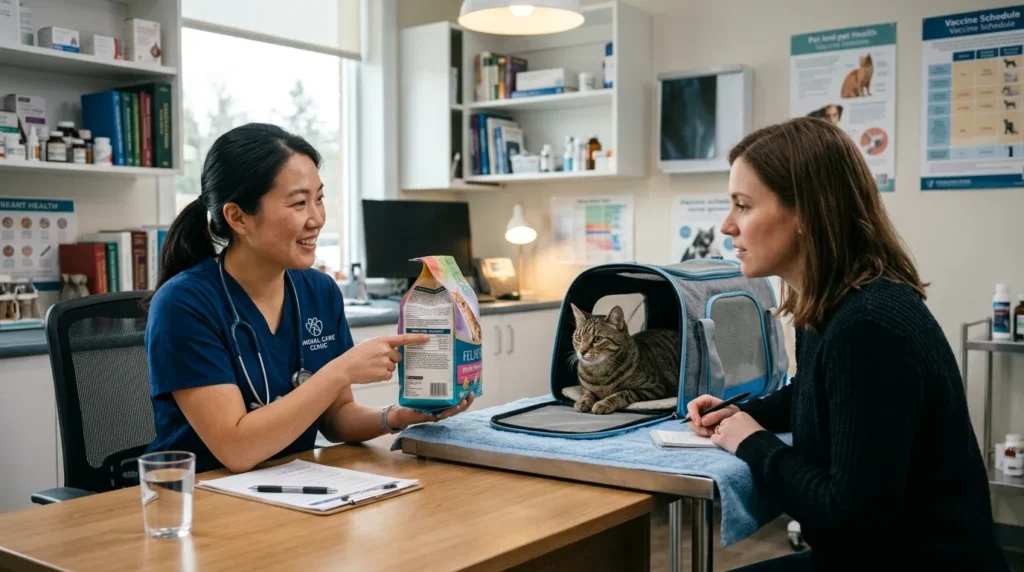
Major feline health groups agree on one thing: there’s no absolute rule that cats must eat wet food. A cat on quality dry food that meets AAFCO standards, paired with constant access to fresh water, can technically get everything it needs. No vet will tell you dry food is dangerous by itself.
But “meets the minimum” and “gives your cat the best odds” aren’t the same thing. Cats are obligate carnivores built to get most of their water from prey, not from a bowl. That biology doesn’t switch off just because your cat lives in an apartment. Even sources that call wet food optional still describe it as strongly beneficial, not neutral. Nobody in the vet world is out here saying wet food doesn’t matter.
So the real question isn’t whether your cat needs wet food to stay alive. It’s whether skipping it raises your cat’s risk of the two conditions indoor cats get most: feline lower urinary tract disease, and slow, quiet dehydration that doesn’t show up until a blood panel catches it. For most apartment cats, the answer is yes, and that’s why wet food is worth the extra cost and effort for the majority of owners deciding on this.
Wet Food vs Dry Food: A Quick Snapshot
This table covers the basics relevant to the daily-feeding question. For the full head-to-head, including cost breakdowns, dental tradeoffs and which cats do better on which base diet, see our dedicated comparison in wet food vs dry food for indoor cats.
| Factor | Wet Food | Dry Food |
| Moisture content | 70 to 80 percent | 8 to 10 percent |
| Calories per serving | 75 to 150 per 3 oz can | 350 to 500 per cup |
| Urinary health support | Strong, dilutes urine | Weak on its own |
| Dental benefit | Minimal | Some plaque reduction from chewing |
| Cost per calorie | 2 to 3 times higher | Lower |
| Shelf life once opened | 2 to 4 hours at room temperature | Weeks in a sealed container |
The 5 Benefits of Wet Food That Matter Most for Indoor Cats Specifically
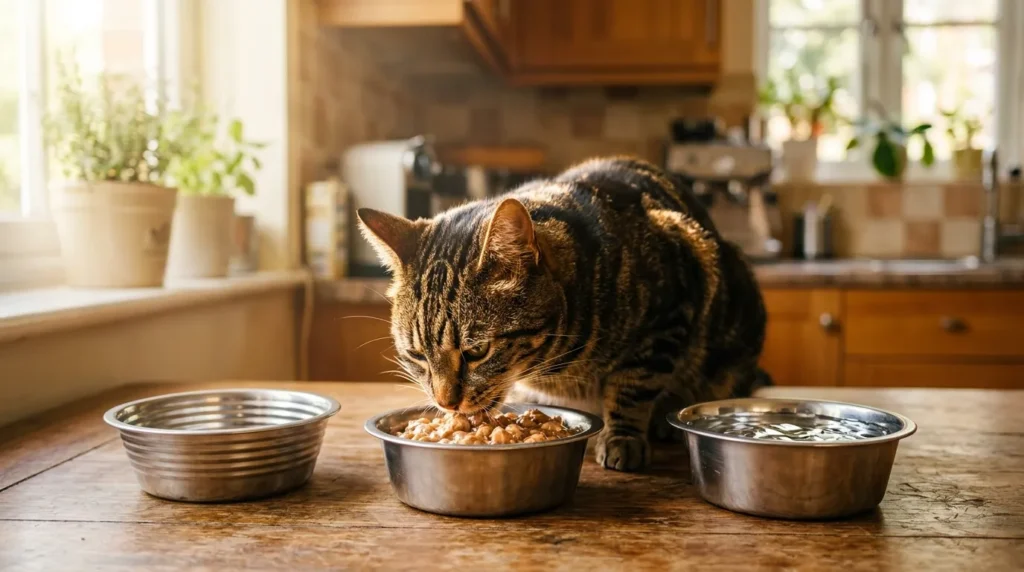
1. Hydration your cat actually gets. Wet food is 70 to 80 percent moisture. A cat eating mostly wet food pulls most of its daily fluid from meals, not from drinking. Indoor cats carry a low thirst drive inherited from desert ancestors, and most won’t drink enough from a bowl to close that gap on their own. Wet food solves this without asking your cat to change a habit its body actively resists.
2. Real protection against urinary disease. More moisture means more diluted urine, and diluted urine gives struvite and calcium oxalate crystals less chance to form. Feline lower urinary tract disease (often shortened to FLUTD) shows up far more in indoor cats than outdoor ones, and diet-driven dehydration is a leading reason why. If you’ve ever noticed your cat’s litter box smelling stronger than usual, that’s often a hint that urine is more concentrated than it should be, which ties directly back to how much moisture is in the diet. Adding wet food daily is one of the few preventive steps you can take without a prescription.
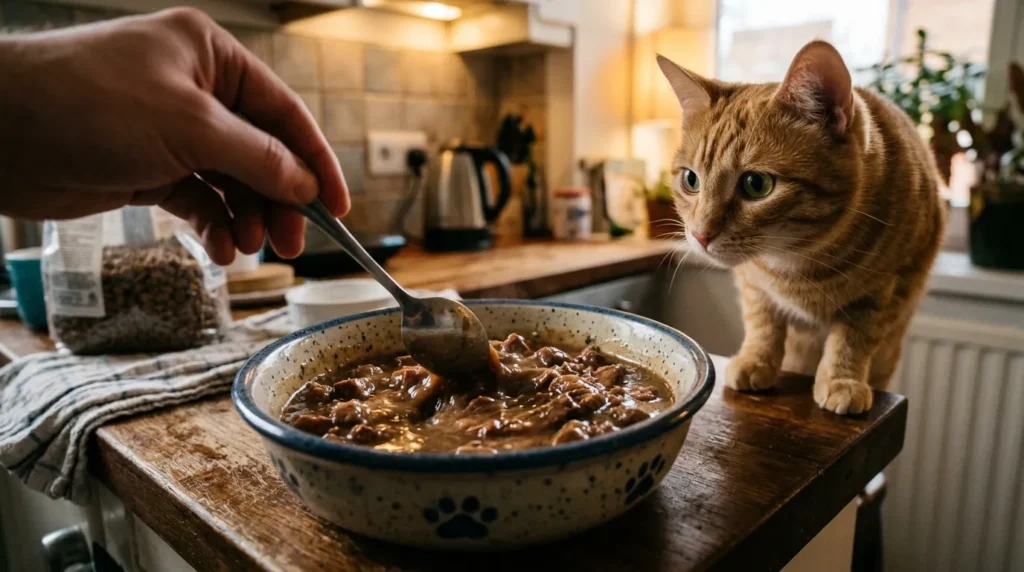
3. Fuller meals without extra calories. Wet food has fewer calories per bite than dry kibble because of all that water weight. A properly portioned wet meal fills a cat’s stomach more than a small handful of dry food carrying the same calorie count. That’s genuine fullness, not the hollow hunger that comes from a tiny measured cup of kibble. For sedentary apartment cats that gain weight easily, this matters more than most owners think.
4. More protein, fewer carbs. Wet food doesn’t need carbohydrates to hold its shape the way dry kibble does during extrusion, so most wet formulas run higher in protein and lower in carbs. Cats run on protein and fat, not carbohydrates. The closer a diet matches that, the better a cat’s metabolism tends to handle it long term.
5. Easier eating for older or picky cats. Senior cats and cats with dental pain often find soft wet food far easier to chew than hard kibble. Some older cats stop eating dry food altogether while still eating wet food without hesitation. Starting wet food early, before age-related appetite drops kick in, keeps mealtime simple later. For the bigger picture on how diet shapes long-term health, this guide on indoor cat health covers the age-related feeding shifts most owners don’t think about until they’re already dealing with them.
Wet Food Textures: Pate, Gravy, and Shredded
Not all wet food looks or feels the same, and texture affects how much your cat actually eats. Picking the wrong one is a common reason cats seem to reject wet food entirely.
| Texture | What It Is | Best For |
|---|---|---|
| Pate | Smooth, no visible chunks | Kittens, seniors, cats with dental pain |
| Gravy or sauce | Small chunks in thin liquid | Cats that need extra moisture pushed in daily |
| Shredded or minced | Fibrous strands in gel or broth | Cats that prefer a chewier bite |
A cat that refuses one texture will often eat another without any other change. Before assuming a cat dislikes wet food altogether, try switching texture before switching brand.
Signs Your Cat Isn’t Getting Enough Moisture
Not sure if your cat’s current setup is enough? Watch for these signs between vet visits:
- Strong-smelling or dark yellow urine in the litter box
- Straining, frequent trips, or crying in the litter box
- Dry, flaky skin or a duller coat than usual
- Skin that stays tented for more than a second or two when gently pinched
- Low energy or reduced appetite with no other clear cause
Straining or repeated litter box trips are worth a same-week vet visit, not a wait-and-see approach. If litter box habits have changed lately, this piece on litter box odor after cleaning can help you figure out whether the smell is a cleaning issue or a hydration one.
Do Indoor Cats Need Wet Food Every Day or Can You Feed It Less Often?
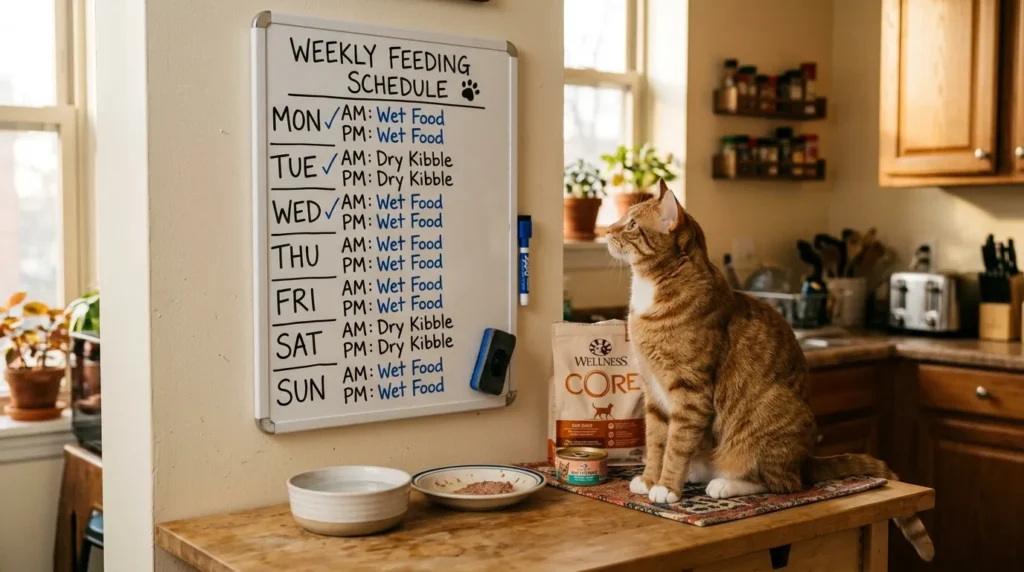
Daily wet food gives the steadiest hydration because your cat gets a reliable moisture boost regardless of how much it happens to drink that day. Feeding it every other day or a few times a week still helps, but it leaves gaps where urine can concentrate on the dry-only days in between.
For most indoor cats, aim for at least one wet meal a day, with two as the better goal. That doesn’t mean dropping dry food completely. A wet meal in the morning, a wet meal in the evening, and measured dry kibble available at midday through a puzzle feeder covers most apartment cats well.
Cost is a fair concern and worth naming plainly. Wet food runs more per calorie than dry. One workaround: swap one of the two wet meals for a small, measured dry portion instead of feeding two full wet meals. That cuts the cost noticeably while keeping most of the hydration benefit intact. For the exact math on portions and calories by weight, this guide on feeding an indoor cat properly breaks it down without requiring a nutrition course.
Tip: If your cat turns its nose up at wet food, warm it for about twenty seconds in the microwave until it’s just below body temperature. Cold food straight from the fridge smells flat and unappealing. Most cats that seem to dislike wet food are really reacting to the temperature and smell, not the food itself.
What About a Water Fountain or Fresh Food Instead of Wet Food?
Two alternatives come up constantly once owners understand the hydration problem, and neither one fully replaces daily wet food, though both help.
A pet water fountain increases voluntary drinking for most cats compared to a still bowl, since moving water is closer to what a cat’s instincts read as fresh and safe. It is a genuinely useful addition. It is not a substitute. A fountain still asks the cat to actively drink enough to close the hydration gap, and most cats increase their intake without fully closing it. Wet food delivers moisture passively, built into a meal the cat was going to eat anyway. For the full comparison of fountain types and bowl placement rules that actually move the needle, see our guide on how to get an indoor cat to drink more water.
Fresh food delivery and raw diets carry moisture content similar to or higher than canned wet food, so they solve the hydration problem in principle. The tradeoffs are cost, which usually runs well above even premium canned food, and, for raw diets specifically, handling and bacterial contamination risk that canned food does not carry since it is shelf-stable and cooked. If you are already feeding fresh or raw, the daily hydration benefit discussed in this article still applies. If you are considering switching to it purely for hydration, standard wet food gets you most of the same benefit at a fraction of the cost and effort.
The Downsides of Daily Wet Food That Are Worth Knowing
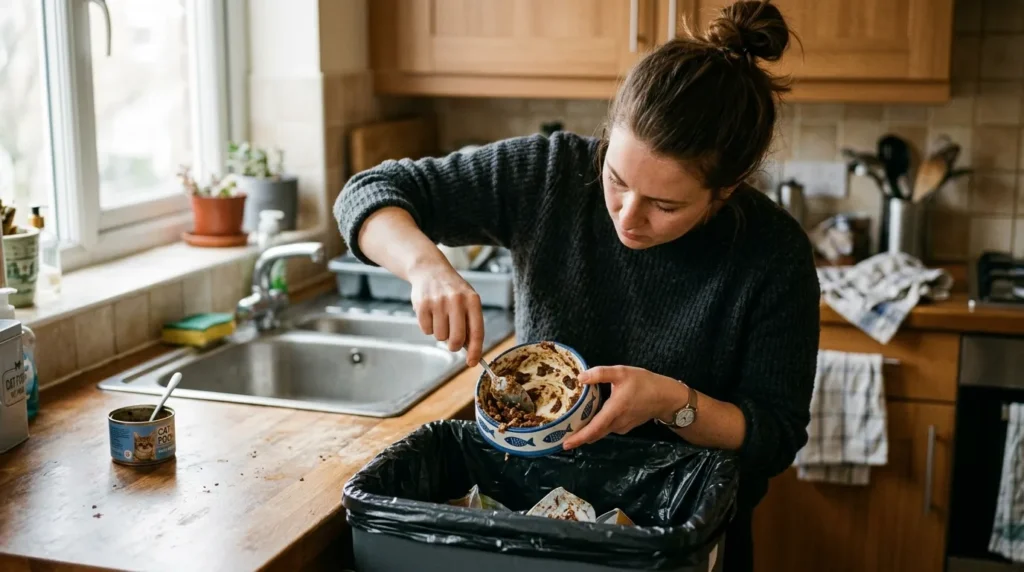
Daily wet food comes with three real tradeoffs that dry-only feeding doesn’t have.
First, opened wet food isn’t safe past two to four hours at room temperature, and most cats stop eating it before that anyway once the smell and texture start to shift. That means scheduled meals instead of leave-it-out feeding, plus refrigerating whatever’s left in an opened can.
Second, wet food barely touches dental health. Chewing dry kibble scrapes off some plaque and tartar buildup, and soft wet food can’t replicate that. Cats eating mostly wet food do better with regular tooth brushing or dental treats to make up for it. It’s a real factor, not a deal breaker.
Third, wet food costs roughly two to three times more per calorie than a decent dry food, once you actually run the numbers. Over a year of daily feeding for an apartment cat, that adds up. The mixed approach, one wet meal and one dry meal a day, cuts that cost roughly in half while keeping most of the health upside.
How to Add Wet Food to Your Indoor Cat’s Diet Without Digestive Upset?
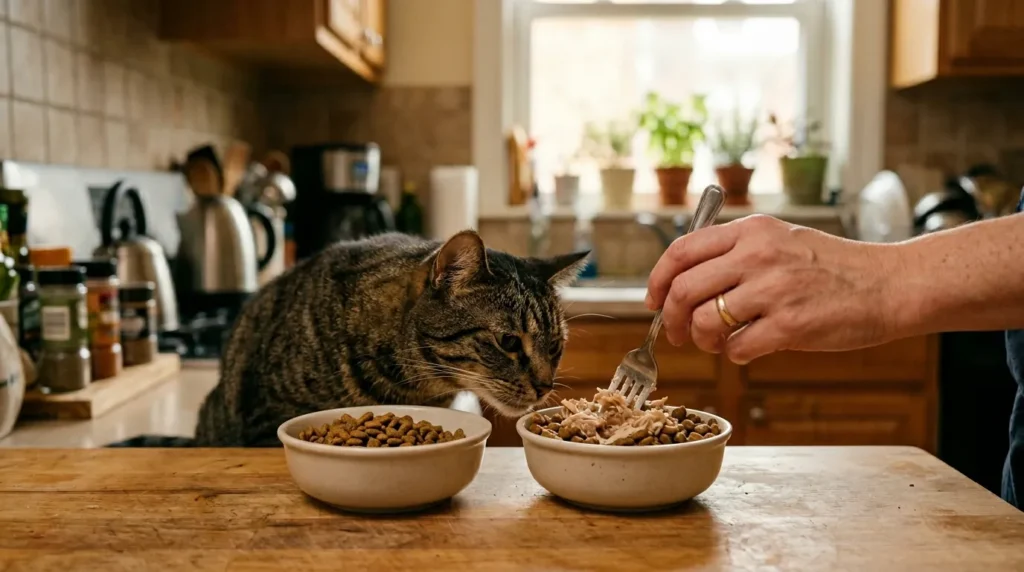
Switch over seven to ten days, not overnight. A sudden diet change is a common trigger for loose stools or vomiting in cats whose gut has only ever known dry food.
- Days 1 to 3: Mix 25 percent wet food into 75 percent dry.
- Days 4 to 6: Move to a 50/50 mix.
- Days 7 to 9: Shift to 75 percent wet, 25 percent dry.
- Day 10 onward: Most cats handle full wet food meals fine at this point.
If loose stools stick around past the transition window, the problem is usually the specific formula, not wet food as a category. Switching to a different protein source often clears it up.
For cats that flat-out refuse wet food during the switch, warming it and stirring in a small amount of low-sodium broth usually breaks the resistance within a week or two, without turning mealtime into a fight that creates a lasting food aversion.
Tip: Cats that have eaten dry food only for years sometimes eat less than usual for three to five days during the switch. That’s usually habit, not real hunger. Keep meal times consistent and don’t bring back free-choice dry food to compensate. Doing that resets the transition every single time.
Common Mistakes When Introducing Daily Wet Food for Indoor Cats
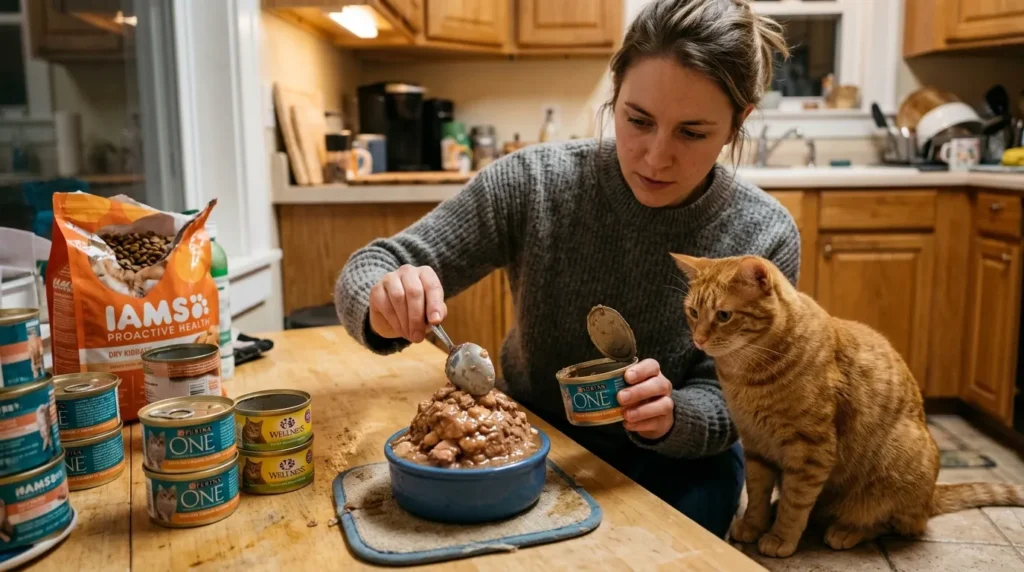
Mistake one: serving wet food in the same visual portion as dry food, without accounting for how different the calorie density is. Dry kibble runs about 350 to 500 calories per cup. A standard 3-ounce can of wet food is only 75 to 150 calories. Owners who switch and serve “a bowlful” sized like the old dry portion can double their cat’s daily calories within a week.
Mistake two: leaving wet food out all day to mimic free-feeding. It turns unsafe within two to four hours at room temperature, and most cats eat it in one sitting anyway rather than grazing, since the smell and texture fall apart fast. Wet food needs scheduled meals, and that shift actually helps with weight control even though it feels like more work at first.
Mistake three: giving up after one rejected bowl. Plenty of cats sniff new wet food and walk away the first one to three times. That’s caution over a new smell, not a real verdict. Sticking with it for five to seven days, with the warming and broth tricks above, wins over most cats.
If your cat seems especially stubborn about food changes, that pickiness often connects to broader habits and comfort with routine. This guide on indoor cat behavior covers why cats resist change and how to work with it instead of against it.
When a Vet Visit Is Worth It Before Changing Your Cat’s Diet?
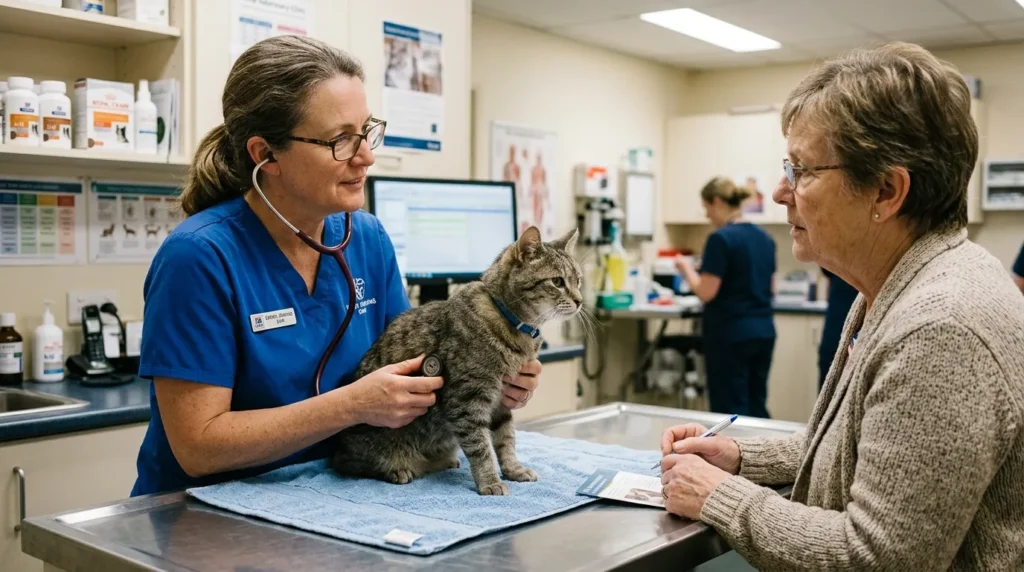
For most healthy adult indoor cats, adding wet food daily is safe to start without a vet visit first. But cats already managing kidney disease, diabetes, inflammatory bowel disease, or a urinary condition need a vet in the loop before any real diet change. Protein levels, phosphorus, and calorie density in wet food all interact with these conditions in ways that need specific management, not guesswork.
Senior cats over ten benefit from a vet conversation before switching too. Some are carrying conditions that haven’t shown symptoms yet, and a blood panel at that age confirms whether a diet change is a good idea. According to the American Association of Feline Practitioners, cats eleven and older should get health screenings at least twice a year, since metabolic changes speed up past that age. The Cornell Feline Health Center also lists low water intake as one of the most common, and most preventable, contributors to feline kidney and bladder problems.
This article is for informational purposes only. Always consult your vet before making significant dietary changes for cats with known health conditions.
Frequently Asked Questions About Daily Wet Food for Indoor Cats
Do indoor cats need wet food every day or can they just eat dry?
Indoor cats don’t strictly need wet food every day, but most benefit a lot from it given their low activity and weak thirst drive. Daily wet food gives reliable hydration that a water bowl next to dry food rarely matches. For most apartment cats, daily wet food is the single most useful diet change available.
Can cats live healthy lives on dry food only?
Yes, as long as they drink enough water and hold a healthy weight. But indoor cats are less likely than outdoor cats to drink enough on their own, given lower activity and a weaker thirst drive, so that condition is harder to meet in real life. Regular vet checkups that track kidney function and urine concentration give the earliest sign of whether a dry-only diet is actually working for your cat.
How much wet food should I feed my indoor cat each day?
A ten-pound adult indoor cat needs roughly 200 to 250 calories a day total. A standard 3-ounce can runs 75 to 150 calories depending on the formula, so a ten-pound cat on a mixed diet usually needs one to two small cans daily alongside a small measured portion of dry food. Check the calorie count on your specific label rather than going by can count alone.
Is it okay to mix wet and dry food in the same bowl?
Yes, and for a lot of cats it’s the fastest way to introduce wet food. The dry kibble softens the texture change and makes the wet food feel more familiar. Serve the mix at meal times and pull the bowl after thirty to forty-five minutes, since wet food dries out fast and most cats stop eating once it does.
Does wet food actually improve cat coat quality?
Many owners notice a shinier, softer coat within two to four weeks of adding regular wet food. Part of that is better hydration reaching the skin, and part is that quality wet formulas often carry more digestible protein, which supports coat condition directly. This article is for informational purposes only. Always consult your vet if you notice significant changes in your cat’s coat or skin condition.
What happens if my cat only eats wet food and refuses dry entirely?
A cat can live well on wet food alone as long as it’s a complete and balanced formula, not just a topper or treat variety. Check the label for an AAFCO statement confirming it meets full nutritional needs. The main tradeoff is cost and a small loss of the chewing action that helps with dental wear, which dental treats or brushing can help offset.
Is grain-free wet food better for indoor cats?
Not automatically. Grain-free just means the carb source changed, often to potato or pea, not that the food is healthier. What matters more is the AAFCO statement, the protein source, and the moisture content. Pick based on those, not the grain-free label alone.
Can kittens and adult cats eat the same wet food?
No. Kittens need higher calorie density and specific nutrient ratios for growth, so they need a wet food labeled for kittens or all life stages. An adult maintenance formula does not carry enough calories or calcium for a growing kitten.
Would a water fountain solve the hydration problem without needing wet food?
It helps but does not fully replace wet food. A fountain increases how much a cat chooses to drink, but it still relies on the cat’s naturally weak thirst drive kicking in. Wet food delivers moisture through the meal itself, with no extra effort required from the cat, which is why vets treat the two as complementary rather than interchangeable.
Start With One Wet Meal Today
Indoor cats don’t technically need wet food every day, but their weak thirst drive, sedentary routine, and higher urinary risk make daily wet food one of the most practical health moves you can make. Swap one dry meal for a small wet portion today, and use the seven-to-ten-day transition plan if your cat pushes back. The added cost is real, but lower urinary risk and better fullness make it worth it for most apartment cats. For the full picture of what a healthy indoor cat routine looks like day to day, from litter habits to enrichment, this guide on indoor cat care connects feeding to the rest of what keeps an apartment cat genuinely well, not just fed.
Indoor cats do not strictly need wet food every day but veterinary guidelines strongly recommend including it daily or at minimum several times per week. Wet food contains 70 to 80 percent moisture compared to 8 to 10 percent in dry kibble and this moisture difference directly reduces the risk of feline lower urinary tract disease and chronic kidney stress in sedentary indoor cats with low thirst drive. A mixed diet of wet food at two daily meals and measured dry food at one meal provides optimal hydration and weight management for most adult indoor cats. Daily wet food portions for a ten-pound cat total one to two 3-ounce cans daily depending on calorie density. Transitions from dry-only to mixed diets should occur over seven to ten days to prevent digestive upset. Water fountains and fresh or raw food both help hydration but do not fully replace the passive, reliable moisture daily wet food provides. Texture (pate, gravy or shredded) and grain-free status matter less than moisture content and AAFCO completeness when choosing a formula.

Written by Mishu
A passionate cat lover and indoor living enthusiast, Mishu is the founder and voice behind Indoor Living Cat – a go-to resource for cat owners who want to create the happiest, healthiest life for their feline companions indoors.
View Full Profile