
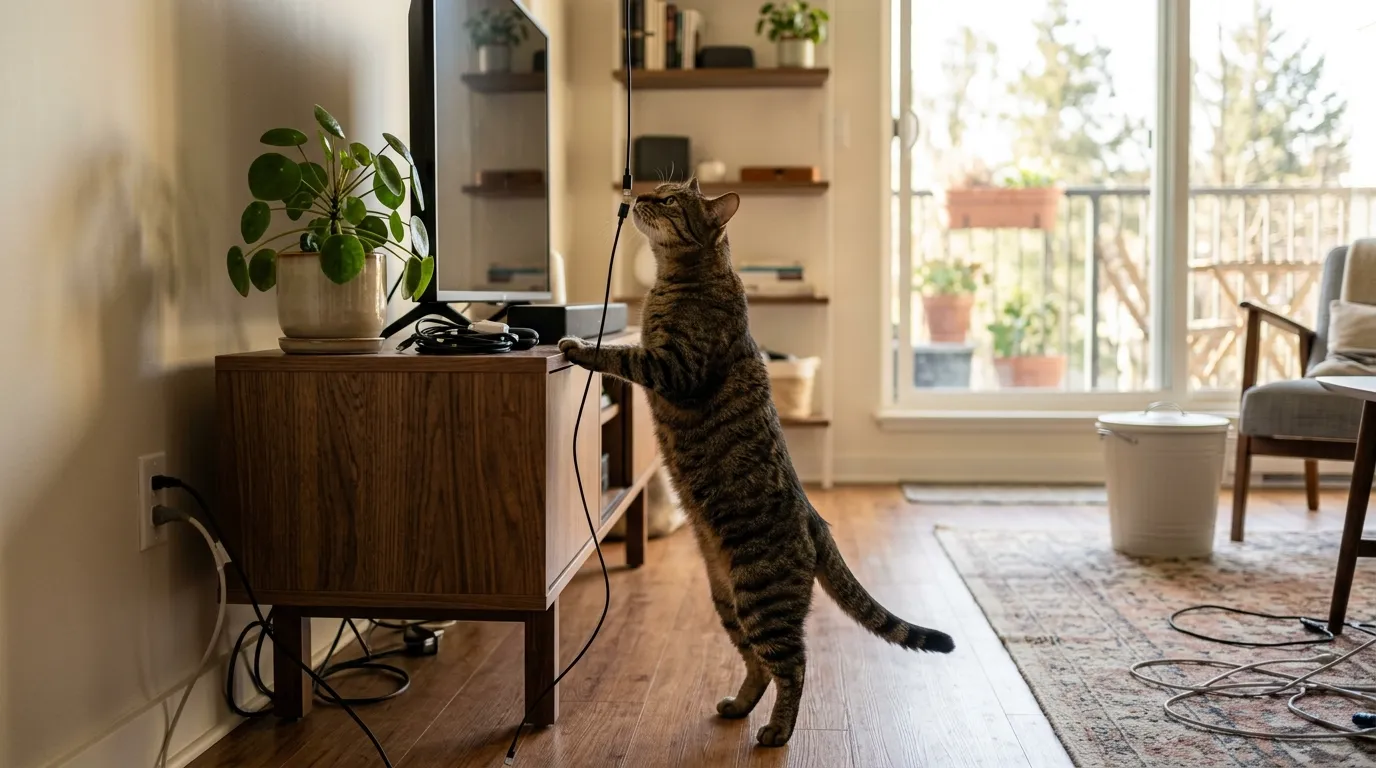
Your cat moves fast. The moment you open that carrier, they’re behind the stove, inside a cabinet, and halfway up the curtains. An apartment cat proofing checklist covers more than moving a plant or two, and most owners wish they’d finished theirs before day one. I learned that when I found my cat sitting calmly inside the front-loading dryer one afternoon, door wide open, totally unbothered, while I’d spent ten minutes searching the apartment. That’s when I went room by room with a serious eye. This guide covers every hazard, every renter-friendly fix, and the spots most owners skip, plus a printable checklist, a cost breakdown, and what changes for a kitten versus an adult cat. The goal is an apartment that’s ready before your cat is, not three panicked days after.
Quick answer: A thorough apartment cat proofing checklist targets seven zones: electrical cords and small objects, toxic plants and foods, kitchen, bathroom and laundry hazards, window and balcony barriers, bedroom and furniture risks, the front door and heat sources, and enrichment setup. Most fixes are renter-friendly and take two to three hours total. Do it before your cat arrives, not after.
Apartment Cat Proofing Priorities: What to Fix First?
If you only have an evening, work top to bottom. The first tier is where cats get seriously hurt or killed. The last tier is about your deposit and your sanity.
| Priority | What to do | Why it comes first |
|---|---|---|
| Before your cat arrives | Remove all true lilies, secure windows and balcony, wrap cords, loop blind cords, shut washer and dryer doors, plan the front door routine | Kidney failure, falls, strangulation and escape all happen fast |
| First week | Latch lower cabinets, lock up medications and cleaners, anchor tall furniture, add a scratching post | A curious cat tests every door within days |
| First month | Install shelves, add window perches, adjust based on what your cat actually targets | You’ll see real habits by then, not guesses |
Room-by-Room Apartment Cat Proofing: Start at Floor Level
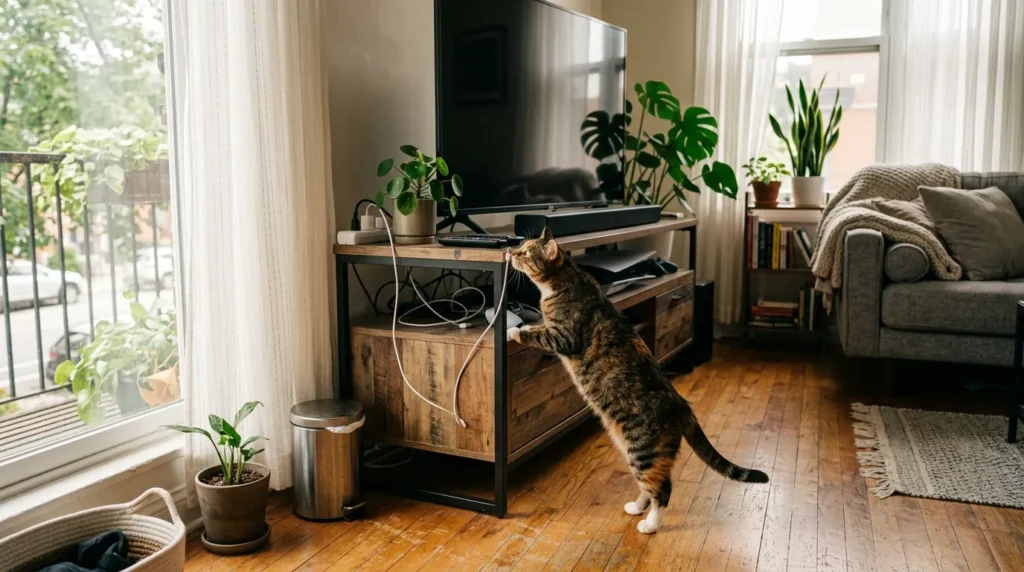
Get on the floor before your cat does. It sounds dramatic, but it’s the single most effective step on any apartment cat proofing checklist. From floor level you’ll see the cord dangling behind the TV, the gap under the stove wide enough for a kitten to disappear into, and the small objects that fell months ago and got forgotten.
Work through rooms in this order: living room, kitchen, bathroom and laundry, bedroom, balcony. Each one has its own category of hazard, and you’ll miss things if you treat them all the same. The kitchen has the most dangerous hazards. The bathroom has the most overlooked ones. The bedroom is where most people stop paying attention, which is why it gets its own section further down.
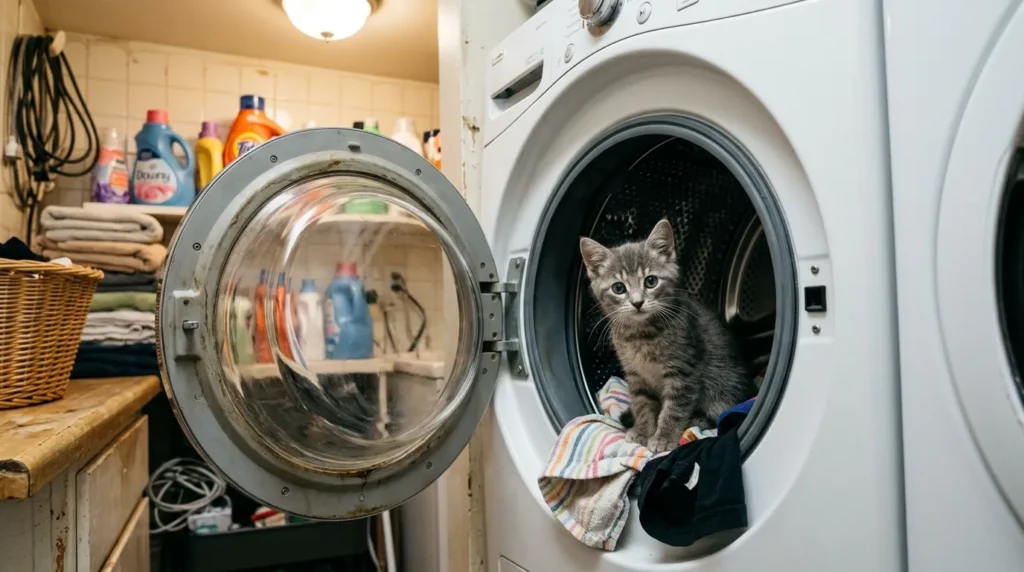
The laundry area trips people up every time. Cats climb into front-loading washers and dryers and curl up inside because it’s warm and enclosed. Check inside every single time before you run a cycle, even if you just checked ten minutes ago. Keep those doors shut between uses. Cats have died in running dryers because nobody looked before pressing start. The same habit applies to the oven, the dishwasher, and any cabinet with a door that closes.
In the kitchen, use childproof cabinet latches on lower doors. Adhesive versions stick firmly and peel off cleanly when you move out, so your deposit stays intact. Store trash inside a latched cabinet, or buy a can with a locking lid. A cat that gets into the trash once will try again every day after that, and the habit forms fast.
Hidden spots cats get stuck in
Cats pick enclosed, warm, dark places, and an apartment has plenty of them. Check these before day one and again whenever your cat goes quiet:
- Front-loading washers and dryers (look every time)
- Recliners, sofa beds, and pull-out couches, where a cat can crawl into the mechanism. Look before you recline or fold anything.
- Dishwashers and ovens. Look before you start or preheat.
- The gap behind and under the fridge, stove, and washer
- Open kitchen drawers and low cabinets without latches
- Box springs with torn fabric underneath
Electrical Cords and Small Objects That Lead to Emergency Vet Visits
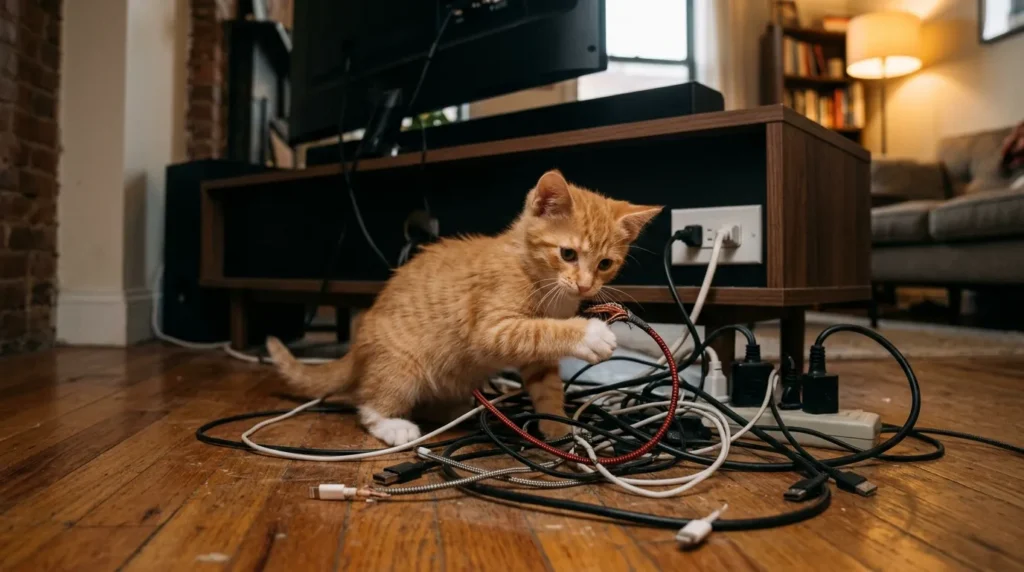
Dangling cords are the hazard most owners see and still underestimate. A cat doesn’t need to be hungry or destructive to chew a live phone charger, because the texture alone can trigger a hunting response. A kitten that bites through an active cable can suffer electrical burns to the mouth and fluid in the lungs, and a serious shock can stop the heart. Bundle every cable with cord sleeves or spiral cable wrap, and route them behind furniture wherever you can. Unplug chargers you aren’t using.
Pick up every small object from low surfaces before your cat arrives. Rubber bands, hair ties, twist ties, and plastic bags are all common swallowing hazards. String and dental floss are especially dangerous because cats swallow them reflexively and can’t stop once they start. A string looped around the intestines is a surgical emergency, not a wait-and-see situation. None of this looks like a toy to you, but your cat doesn’t have that context.
Blind cords and curtain pull cords are almost always overlooked. A cat can get tangled and strangle in seconds, which is a faster timeline than most owners expect. Loop the cords up using a cord cleat mounted high on the wall. It takes two minutes and costs about the same as a coffee.
Insight: Cord covers are cheap and take ten minutes to install. The thing most people skip is blind cords, not phone chargers. If your apartment has blinds with dangling looped cords, deal with those first. That’s the one that genuinely scares me for kittens.
Small objects to sweep for
| Item | Where it hides | Fix |
|---|---|---|
| Hair ties and rubber bands | Bathroom counter, nightstand, floor | Store in a closed drawer |
| String, floss, ribbon, yarn | Bathroom trash, craft bins, gift bags | Use lidded bins and put away after use |
| Sewing needles and pins | Under beds and sofas, carpet | Sweep and use a magnetic pickup |
| Coins, earrings, small batteries | Dresser tops, entry table | Use a lidded dish or valet tray |
| Plastic bags | Kitchen drawers, grocery bags on the floor | Keep in a latched cabinet |
Balcony and Window Safety
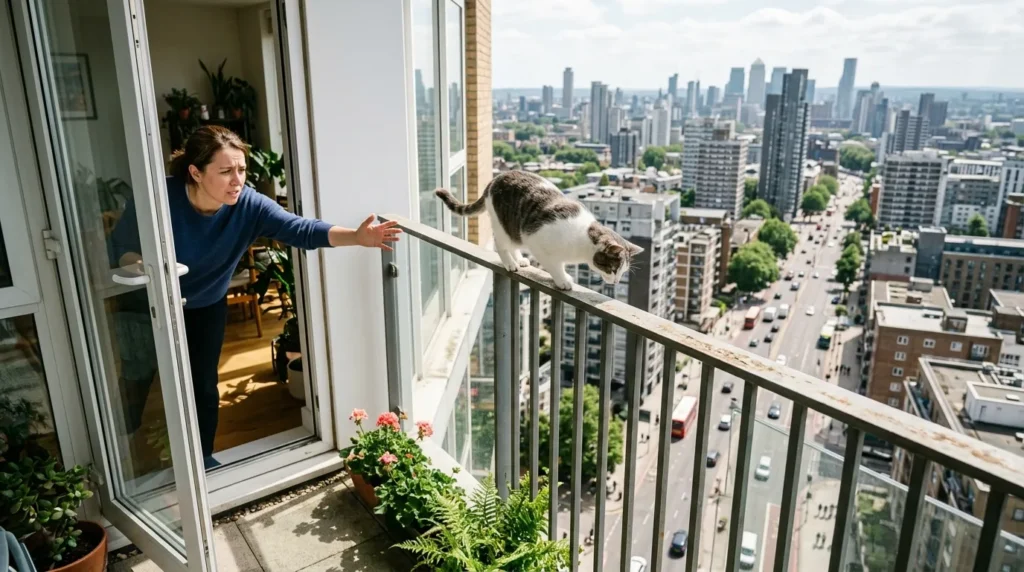
Cats aren’t immune to falling. They misjudge jumps, get startled by sudden sounds, and lose their footing on wet or narrow railings. High-rise syndrome is a documented condition in veterinary medicine, and it doesn’t only happen from the tenth floor. Falls from second and third-story windows cause serious injuries too. Every window you open without a secure screen is a real risk. Fit window screens with latch locks on any window your cat can access. Tension-mounted screens need no drilling and are renter-safe.
For balconies, reinforced cat balcony netting is the only real solution. Standard pigeon netting is too weak, with gaps wide enough for a determined cat to push through or get a limb caught in. Look specifically for cat-rated mesh with frames that mount using adhesive or tension systems your landlord will approve. Measure your balcony before ordering, because dimensions vary a lot between apartment buildings, even within the same complex. If you want the bigger picture of making apartment life good for your cat beyond safety, this guide on living with a cat in an apartment is worth reading. It covers the full setup from a renter’s perspective.
Window checks that take five minutes
- Press on each screen from the inside. If it flexes or pops out, replace it or add a tension screen.
- Look at windows that tilt or open only a few inches. A cat can wedge a head or body into a partial opening, so use a screen or a window stop there too.
- Check sliding balcony doors for a gap at the track and make sure the latch holds.
- Move furniture that works as a launch pad, like a dresser or sofa back right under a window.
- Screens only help if they stay in. Don’t let your cat lean on a thin one, and replace any with tears.
Front Door and Hallway Escape-Proofing
An apartment cat that bolts into a shared hallway or stairwell is a long way from home within a minute, and a new cat doesn’t know your building yet. The risk is highest in the first weeks, when the cat is still scouting exits.
- Get a microchip and register it. Make sure the registration has your current phone number. A chip you never registered finds no one.
- Add an ID tag or breakaway collar with your phone number, at least for the first few weeks.
- Use a buffer. Shut the cat in the bedroom or bathroom before you open the door for deliveries, guests, or moving day.
- Brief everyone in the home. Roommates, partners, and kids need to know the routine. One propped door undoes all of it.
- Check the door sweep and gap. A kitten can squeeze through a larger gap than you’d think.
Bedroom, Closets, and Furniture Safety
The bedroom gets skipped because it feels low-risk compared to the kitchen. It isn’t. Closets hold shoes with laces, dry cleaning bags, mothballs, and jewelry, all of which are choking or poisoning hazards a cat can reach the moment a door is left ajar. Keep closet doors closed, and move dry cleaning plastic and small jewelry to a drawer instead of a hook or the floor.
Dressers, bookshelves, and freestanding wardrobes need anti-tip furniture straps anchored to a wall stud, especially if your cat is a climber. A cat pulling out a partially open drawer to use as a step can bring an unanchored dresser down, and a curious kitten is more likely to try it than a cautious adult. Renters can use tension-mounted furniture anchors instead of drilling into studs, and most rental agreements don’t object to them since they leave no marks.
Check under the bed too. It’s where lost hair ties, coins, and stray sewing needles end up, and it’s the dim, enclosed space a nervous cat will retreat to on day one. A quick sweep before your cat arrives saves you a flashlight search later. Keep the sleeping area free of anything a cat could knock into its own bed, like glass water cups on a nightstand.
Toxic Plants and Kitchen Dangers Most Apartment Owners Miss
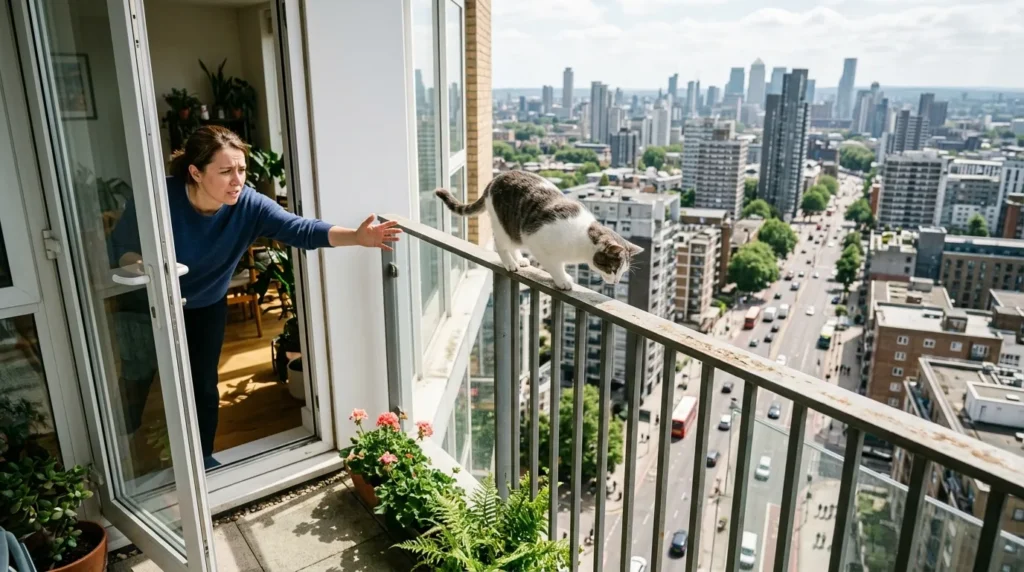
Lilies will kill your cat. That isn’t an overstatement. True lilies, including Easter lily, tiger lily, and daylily, can cause acute kidney failure in cats within 24 to 72 hours, and all parts of the plant are toxic, including the pollen and the vase water. Even a lick of pollen off the fur can be enough. There’s no safe amount. Remove every lily from your apartment entirely. Not to the balcony. Out of the home. Peace lilies and calla lilies aren’t true lilies and work differently, but they’re still mouth irritants, so they’re on the removal list below too.
| Remove These Plants | Safe Replacements |
| Lilies (all true lilies and daylilies) | Spider plant |
| Pothos | Catnip |
| Philodendron | Bamboo palm |
| Aloe vera | Peperomia |
| Tulips | Air plants (Tillandsia) |
| Azalea | Areca palm |
| Sago palm, oleander, dieffenbachia | Cat grass (wheatgrass, oat grass) |
| Monstera, snake plant, jade plant | Parlor palm |
The ASPCA maintains a full toxic plant database. Bookmark it and check any new plant before you bring it home, including bouquets from friends. Sago palm is the other one to treat as an emergency, since it can cause liver failure.
Toxic foods, medications, and cleaners to lock up
In the kitchen and bathroom, essential oils, medications, onions, garlic, grapes and chocolate all belong in locked or high cabinets. None of these need to sit at counter level. Human painkillers are the most common surprise: acetaminophen (Tylenol) and ibuprofen are toxic to cats even in small doses. Grapes and raisins are proven kidney toxins in dogs, and the cat evidence is thinner, but there’s no reason to leave them out. Xylitol, the sugar substitute in sugar-free gum and some peanut butters, is a documented danger for dogs, and vets still advise keeping it away from cats too.
| Category | Examples | Where to store |
|---|---|---|
| Human medications | Acetaminophen, ibuprofen, antidepressants, sleep aids | Latched cabinet, never a counter or nightstand |
| Foods | Onions, garlic, chocolate, grapes, raisins, xylitol products | High cabinet or closed pantry |
| Cleaners | Bleach, phenol-based cleaners, toilet bowl cleaner, laundry pods | Latched under-sink cabinet or high shelf |
| Essential oils | Tea tree, citrus, peppermint, eucalyptus | Closed cabinet, and skip the diffuser |
| Pest control | Rat bait, ant traps, mothballs, flea products meant for dogs | Not in the apartment, or locked up |
Keeping up with indoor cat health basics helps you stay ahead of these risks before they become emergencies.
Scented candles and essential oil diffusers deserve their own warning. Cats process many essential oils far less efficiently than humans do, and diffuser exposure has been linked to respiratory irritation and liver problems in cats. If you use a diffuser, keep it in a room your cat can’t enter, or skip it while you have a cat in a small apartment where the air doesn’t have much room to dilute.
Heat and Fire Hazards in an Apartment With a Cat
Cats jump onto counters, stoves, and shelves without any sense of what’s hot. Most of these fixes cost under $20.
- Stove: use knob covers or remove the knobs when you’re not cooking. A cat that steps on a knob can turn on a burner. Don’t leave a pan on a hot stove with a cat in the kitchen.
- Candles: use enclosed or battery-powered ones. A swatted candle can start a fire.
- Space heaters: choose one with a tip-over shutoff and keep cords clear of the floor.
- Hair tools: unplug flat irons and curling irons, and let them cool before you put them away.
- Oven, air fryer, and toaster oven: look inside before you turn them on, the same as the dryer.
Enrichment and Vertical Space
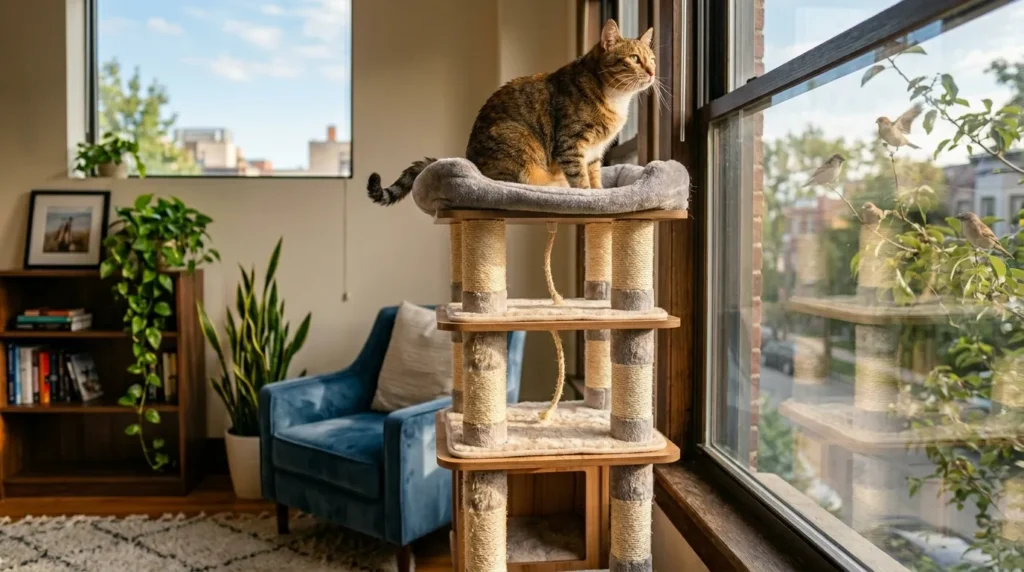
A bored cat is a destructive cat. That’s a cat using its brain the way it was built to, not misbehavior. If you don’t give your cat a reason to climb, scratch, and chase, it’ll find its own reasons. Your sofa arm, your houseplants, and your blinds all work fine for that purpose, as far as your cat is concerned.
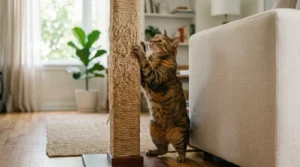
Vertical climbing space changes the entire dynamic of a small apartment. Mount cat shelves at staggered heights across one wall so your cat can move around without touching the floor. Cats want elevated vantage points. Give them a legal one and they stop repurposing your curtain rod. Place scratching posts directly next to the furniture your cat already targets. You aren’t punishing anyone here. You’re offering a better option in the exact spot your cat already likes. Choose a tall, sturdy post that doesn’t wobble, since a cat that gets knocked by a tipping post may avoid it.
Play before bed matters more than most people think. Ten to fifteen minutes of active wand or chase play, followed immediately by a meal, mimics the hunt, catch, eat, sleep cycle. Cats that follow this pattern at night tend to drop the 3am zoomies within a week. For practical ideas on setting up indoor cat enrichment that works in a small space, there’s a lot of room-specific guidance worth working through. When you’re ready to invest in actual furniture, cat furniture built for indoor cats has solid options that work without taking up half the room.
A window perch with a secure screen behind it is the cheapest enrichment you can add. Birds and street movement entertain a cat for hours, and it gives the cat a reason to stay off the balcony railing.
Insight: The biggest enrichment mistake in apartments is buying one cat tree and leaving it in the corner. Cats want to move across a space. Even one wall shelf above the sofa changes how your cat uses the whole room. That single addition stopped my cat from clawing the curtains within three days.
Kitten Proofing vs. Adult Cat Proofing: What Actually Changes
A checklist built for an adult cat isn’t strict enough for a kitten, and a kitten setup can be more locked-down than an adult cat needs. Age and temperament change what matters.
| Hazard or Area | Kitten (under 1 year) | Adult Cat |
| Small objects (hair ties, coins, twist ties) | High risk, ingests reflexively during teething and play | Lower risk, but still worth clearing from low surfaces |
| Gaps behind appliances | Can squeeze into very small gaps, needs mesh or barriers | Usually too large to fit, lower priority |
| Balcony and window access | Same risk level as adults, do not skip netting | Same risk level, do not skip netting |
| Toilet lid | Keep closed, kittens can fall in and struggle to climb out | Lower risk but still good practice |
| Furniture climbing and tip-over | Higher risk, kittens climb before they’ve learned limits | Lower risk once a cat has settled habits |
| Cord chewing | Higher risk during teething | Lower risk, but some adults still chew |
| Setup timeline | Full proofing before arrival, plus a confined “safe room” for the first few days | Full proofing before arrival, safe room optional depending on temperament |
If you’re bringing home a kitten, set up one room as a safe base first, with food, water, a litter box, and a bed, and let the rest of the apartment stay closed off for a day or two. It’s easier to proof one room perfectly than an entire apartment while a kitten is already climbing your curtains.
How to set up a safe room?
- Pick a small room with a door that closes, like a bedroom or bathroom, and run the checklist on that room first.
- Put the litter box at one end and food and water at the other, as far apart as the room allows.
- Add a hiding spot, such as a covered bed or a cardboard box on its side.
- Leave the carrier open inside the room so it stays a safe place.
- Open the door to the rest of the apartment after a day or two, one room at a time, only after your cat is eating, using the box, and walking around calmly.
Cat Proofing on a Budget: What It Actually Costs
None of this needs to be expensive, and most of it is renter-friendly. Here’s a realistic ballpark for a full apartment. Prices vary by brand and region.
| Item | Typical Cost | Renter-Friendly |
| Adhesive cabinet latches (set of 8 to 10) | $10 to $15 | Yes |
| Cord covers or spiral wrap | $8 to $20 | Yes |
| Tension-mounted window screens | $25 to $60 per window | Yes |
| Cat balcony netting kit | $40 to $100 depending on balcony size | Yes, with tension or adhesive mounts |
| Anti-tip furniture straps | $8 to $15 per strap | Yes, tension versions need no drilling |
| Wall-mounted cat shelves | $30 to $80 for a small set | Depends, check your lease before drilling |
| Scratching post | $20 to $50 | Yes, freestanding |
A full setup usually lands somewhere between $140 and $340, and you don’t need to buy everything at once. Cords, cabinet latches, and the toilet lid cost almost nothing and matter most, so start there if money’s tight. Stove knob covers, a microchip, and a cord cleat aren’t in that range, and all three run low. Costs here are ballparks, so check current prices before you budget.
Studio and Small Apartment Cat Proofing: A Few Extra Considerations
Small footprints change a few priorities. There’s less floor space to work with, and everything is closer to everything else.
- Litter box placement matters more in a studio. Keep it away from food and water bowls, and away from the sleeping area if you can manage it. A folding screen or a repurposed cabinet can create separation without extra square footage.
- Vertical space matters even more here than in a full apartment, since you can’t spread a cat’s territory sideways. Wall shelves do more work per square foot than a single cat tree.
- Kitchen and living space often share one open area in a studio, so cabinet latches and cord management need to cover the whole apartment, not just one room.
- Noise carries more in a small space. If your cat startles at a garbage disposal or a stand mixer, that reaction is more likely to trigger a bad jump toward a window or off a counter, simply because everything is closer together.
Common Mistakes People Make With an Apartment Cat Proofing Checklist
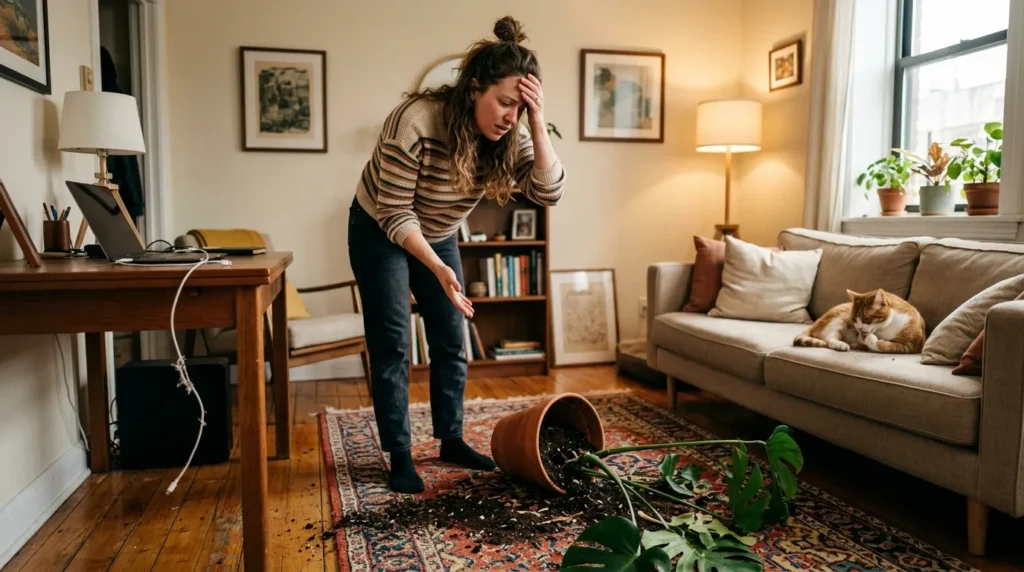
The most common mistake is cat proofing only the visible spaces and skipping the ones you use but rarely think about. The bathroom and laundry area, where washing machines, toilet bowls, cleaning chemicals, and medications live, are the most frequently missed. Cats explore every inch of a new space within the first day, including the parts you forgot existed.
The second mistake is waiting until after the cat arrives. Going through your apartment cat proofing checklist while your cat is already exploring means doing it under pressure, missing things, and having a cat get into whatever you haven’t secured yet. Do the walkthrough the day before your cat comes home. Every step is faster without a cat underfoot, literally and otherwise.
The third mistake is treating it as a one-time task. Cats grow, habits change, and new items show up in apartments constantly. Walk through your checklist again after any major change: new furniture, a new plant, a new roommate, a move. What was safe six months ago might not be now.
The fourth is relying on screens or netting you never tested. Press on every screen, tug on the netting, and check latches after a week of use, because adhesive mounts loosen in heat and humidity.
Cat Proofing Timeline: When to Do What Before Your Cat Arrives
- One week before: order latches, cord covers, window screens, netting, and furniture anchors, since netting and screens take the longest to ship. Remove all lilies and toxic plants.
- Three days before: install cords, latches, and anchors. Set up the safe room, scratching post, and one shelf or perch.
- The day before: do the floor-level walkthrough. Check windows, balcony, and the front door plan. Run the printable checklist below.
- Arrival day: keep the rest of the apartment closed and let your cat settle in the safe room first.
- First week: watch what your cat targets and adjust. Add a latch or a post wherever they spend time.
Printable Room-by-Room Cat Proofing Checklist
Use this as your final walkthrough the day before your cat arrives. Check each room off as you go.
Living Room
- Cord covers or spiral wrap on all visible cables
- Blind and curtain cords looped up on a cord cleat
- Small objects (hair ties, coins, rubber bands) cleared from low surfaces
- Furniture anchored with anti-tip straps if climbable
- Recliner or sofa bed checked before use
Kitchen
- Childproof latches on lower cabinets
- Trash can secured with a latch or locking lid
- Toxic foods (onions, garlic, chocolate, grapes, xylitol) stored up high
- Medications and cleaning chemicals locked away
- Gaps behind and under appliances checked or blocked
- Stove knob covers on, oven and dishwasher checked before use
Bathroom and Laundry
- Toilet lid kept down
- Washer and dryer doors checked before every cycle and kept closed between uses
- Cleaning products and laundry pods stored in a high or locked cabinet
- Medications out of reach
Bedroom
- Closet doors kept closed
- Jewelry, hair ties, and small items off the floor and dresser top
- Dressers and bookshelves anchored
- Space under the bed swept for stray small objects
Balcony and Windows
- Tension-mounted screens with latch locks on all accessible windows
- Cat-rated balcony netting measured and installed
- Balcony furniture checked for gaps a cat could squeeze through
- Partly open and tilting windows covered with screens or stops
Front Door
- Microchip registered with your current number
- ID tag or breakaway collar on
- Door routine agreed with everyone in the home
Plants and Enrichment
- All lilies and other toxic plants removed from the home
- At least one scratching post placed near targeted furniture
- Vertical space set up (shelf, tree, or window perch)
- Wand toy ready for the first night
Frequently Asked Questions About Apartment Cat Proofing
How long does it actually take to cat proof an apartment?
Most apartments take two to three hours if you work through one room at a time with a list in hand. Do it in a single focused session before your cat arrives. Trying to cat proof around a cat that’s already exploring easily doubles the time and means you’ll miss things.
What is the single most dangerous hazard in an apartment for cats?
Lilies are the deadliest, since even minimal pollen contact can cause kidney failure fast with a narrow treatment window. After plants, unsecured electrical cords and open balconies and windows are the highest risk. Address those three before anything else on your list.
Can I cat proof a rental apartment without drilling or damaging walls?
Yes, and most renter-friendly solutions cost less than permanent ones. Tension-mounted window screens, adhesive cabinet latches, cord covers, removable wall anchors for furniture, and adhesive balcony netting frames all work without leaving damage. Check your lease before anything goes on a wall, but most of these need nothing structural.
Do I really need to cat proof the bathroom?
Yes, especially for kittens. Keep the toilet lid down, since kittens can fall in and struggle to get out. Store medications, cleaning products, and laundry pods in high or locked cabinets. Keep the washing machine door shut between uses. Understanding indoor cat care habits makes bathroom safety automatic instead of something you have to think about every time.
How do I handle balcony cat proofing if my landlord is strict?
Adhesive and tension-mounted cat netting systems exist specifically for renters. Most use anchor points that stick to railings or use compression to hold without drilling. Read your lease carefully, since most prohibit permanent alterations, but tension systems are typically fine. Take photos before installation and after removal to document zero damage, and ask your landlord in writing if you’re unsure.
Is cat proofing different for a kitten than an adult cat?
Yes. Kittens fit through smaller gaps, chew on more things during teething, and haven’t learned their own limits when it comes to climbing. Small objects and gaps behind appliances need more attention with a kitten. Balcony and window safety matter the same amount at any age, so don’t relax those just because your cat is an adult.
How much does it cost to fully cat proof an apartment?
A full setup, including cabinet latches, cord covers, window screens, balcony netting, furniture anchors, and a scratching post, typically runs between $140 and $340. You can spread the cost out, since cords, latches, and the toilet lid cost almost nothing and matter the most.
What should I check when moving to a new apartment with a cat I already have?
Run the full checklist again in the new space instead of assuming your cat’s old habits carry over safety knowledge. A cat that never went near a balcony before might test one out of curiosity in a new home. Set up the litter box, food, and a familiar bed in one room first, and let your cat explore room by room instead of releasing them into the whole apartment at once.
What do I need to buy before bringing a cat home to an apartment?
Start with the safety items: cabinet latches, cord covers, a window screen or two, and a cord cleat. Then the basics your cat will use daily: litter box, food and water bowls, a scratching post, a bed, and a carrier. Add shelves and perches in the first month once you know your cat’s habits.
How do I stop my cat from bolting out the front door?
Combine three habits: a registered microchip, a buffer room you close before opening the door, and a household routine everyone follows. Most escapes happen during deliveries, moves, and parties. Treats tossed in the opposite direction can buy you a few seconds, but they don’t replace the closed door.
Are essential oil diffusers and scented candles safe around cats?
Skip them, or keep them in a room your cat can’t enter. Cats process many essential oils poorly, and tea tree, citrus, peppermint, and eucalyptus oils are the usual suspects in vet cases. Candles add a burn and fire risk on top. Unscented, enclosed, or battery-powered options are the lower-risk choice.
Which houseplants are safe for cats?
Spider plant, areca palm, bamboo palm, parlor palm, peperomia, air plants, and cat grass are all listed as non-toxic by the ASPCA. Check the ASPCA database for any plant that isn’t on this list before you buy it, and remove every true lily.
When should I call a vet after a possible toxic exposure?
Immediately. Don’t wait to see if symptoms develop, and don’t try to make your cat vomit unless a vet tells you to. If you see your cat interact with a toxic plant, ingest a chemical, or chew through a live cord, call your vet or a poison line right away.
Your Apartment Is Ready Now, Keep It That Way
Go through your apartment cat proofing checklist once before your cat arrives, and you’ll sidestep most of the panic that hits new cat owners in those first days. Focus on cords, lilies, balcony and window access, the front door, and the laundry area first, since that’s where serious injuries happen fastest. Add enrichment and vertical space, and your cat will have a reason to engage with the safe parts of your apartment instead of the dangerous ones. Revisit your checklist whenever something changes in your space, and treat it as a living document.
An apartment cat proofing checklist should cover electrical cord safety, toxic plant and food removal, kitchen, bathroom and laundry hazards, bedroom and furniture risks, balcony and window barriers, front door escape prevention, heat sources, and enrichment setup. True lilies can cause kidney failure in cats within 24 to 72 hours and must be fully removed from the home. Renter-friendly solutions include tension-mounted window screens, adhesive cabinet latches, anti-tip furniture straps, and reinforced cat balcony netting, and a full setup typically costs $140 to $340. Kittens need extra attention around small objects, gaps behind appliances, and furniture climbing, while balcony and window risks stay the same at any age. Cats need daily active play and vertical climbing space to prevent destructive behavior. Cat proofing should be completed before the cat arrives and reviewed after any major change to the apartment, including a move.

Written by Mishu
A passionate cat lover and indoor living enthusiast, Mishu is the founder and voice behind Indoor Living Cat – a go-to resource for cat owners who want to create the happiest, healthiest life for their feline companions indoors.
View Full Profile