My cat spent two years on dry food only, developed a urinary crystal issue at age four, and the switch to mostly wet food resolved it within six weeks. It never came back. That’s one cat, which makes it an anecdote and nothing more, but the reasoning behind the switch holds up and this article lays it out.
The verdict: for indoor cats, wet food wins on hydration, weight control and urinary health. Dry food wins on convenience and cost. Most indoor cats do best on a mix, with wet food as the main meal and dry food in a supporting role. Below you’ll find a head-to-head comparison, portion math with a worked example, how to choose a dry food, whether an “indoor” label matters, and a switch plan for a cat that has only ever known kibble.
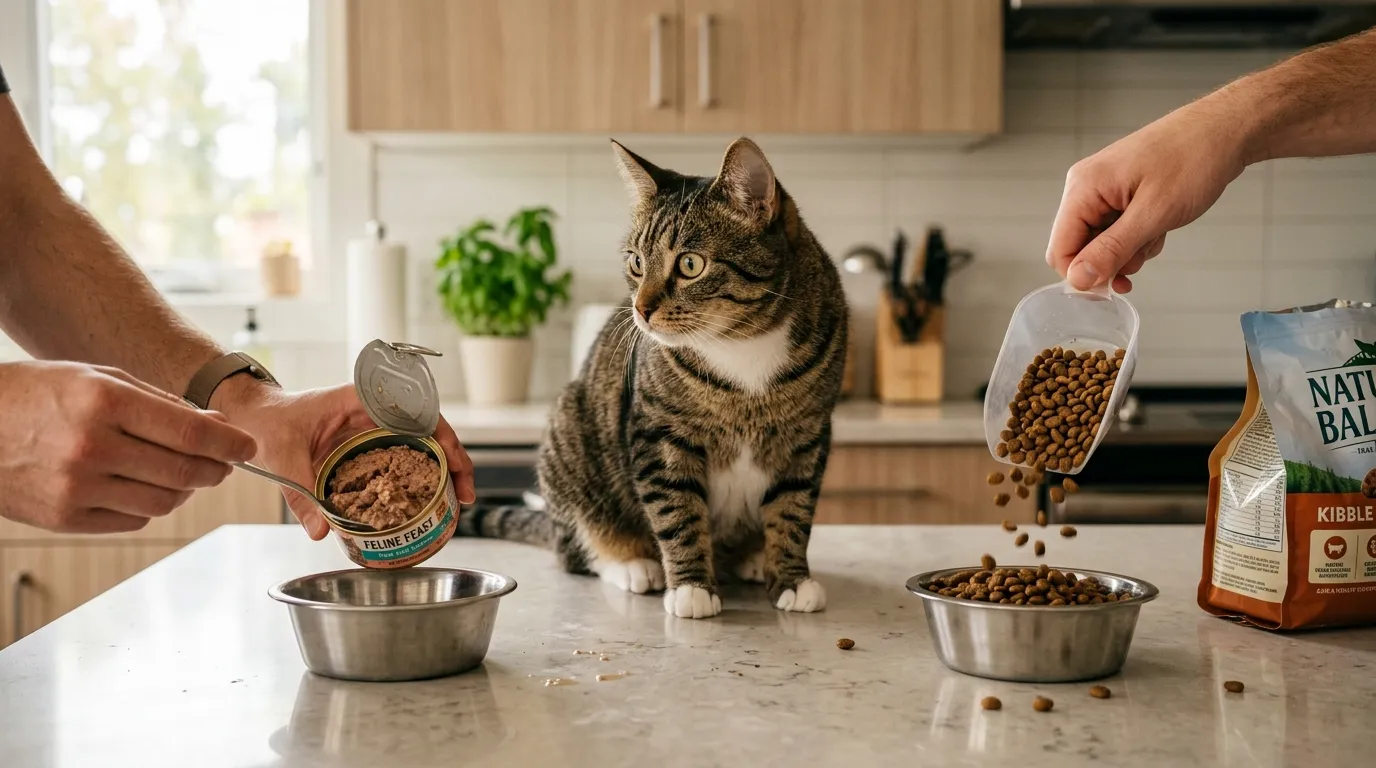
Short answer: for indoor cats, wet food is the better primary food. It’s 70 to 80 percent water, which a sedentary apartment cat rarely makes up by drinking, and it carries fewer calories per bite than kibble. Dry food works best as a supplement or inside puzzle feeders. A split of roughly 70 percent wet and 30 percent dry, counted by calories, is a practical starting point for a healthy adult cat.
What Wet Food Is and Why Indoor Cats Need It More Than You Think
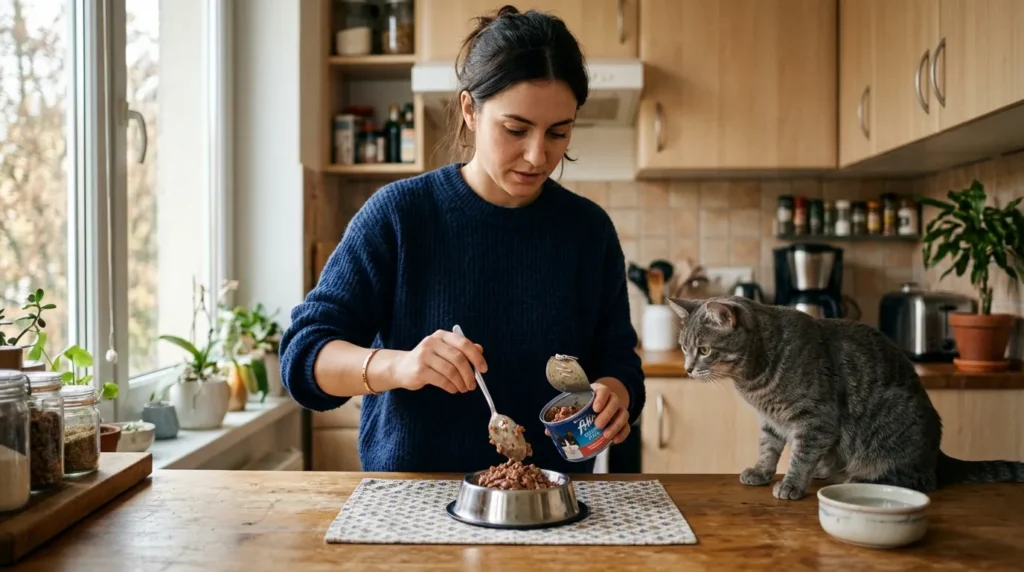
A 5.5-ounce can of wet food is 70 to 80 percent water by weight. Prey animals run about 70 percent water, so a can of pate lands much closer to a natural cat meal than a bowl of kibble does. Cats also descend from desert animals and have a weak thirst drive, and an indoor cat that spends the day on the sofa has little reason to walk to a water bowl.
Cats eating dry food do drink more from the bowl, but their total water intake still ends up lower than on a wet diet. The numbers show how big the gap is. A common rule of thumb puts a cat’s daily water need at about 50 milliliters per kilogram of body weight, from all sources. For a 10 pound cat, that’s roughly 7 to 8 fluid ounces. One 5.5-ounce can of wet food supplies about 4 ounces of it. A third of a cup of kibble supplies a fraction of an ounce.
That gap matters most for the urinary tract. When moisture intake stays low, urinary tract health gets quietly compromised over months and years, and wet food fixes the problem at the source by delivering water with every meal. The Cornell Feline Health Center notes that surveys put feline lower urinary tract disease (FLUTD) at the top of the list of reasons cats visit a vet. The risk factors Cornell and the AVMA list for it read like a description of an apartment cat: middle age, extra weight, little exercise, an indoor litter box, no outdoor access and a dry diet.
Vet note: wet food lowers the odds of urinary trouble. It doesn’t diagnose or treat a cat that already has crystals or stones. That takes a urinalysis from your vet and, often, a prescription urinary diet.
Most wet foods also deliver more protein and fewer carbohydrates per calorie than kibble. Wet food’s low calorie density lets a cat eat a full, satisfying bowl for fewer calories than the same volume of kibble would supply, which matters for a cat that burns very little on a sofa all afternoon.
The one real limitation of wet food is practical. Once a can is open, the clock runs: after two to four hours at room temperature, bacteria multiply and most cats lose interest anyway. In summer or a warm apartment this window shortens further. That means two or three feeding times a day instead of one bowl you can leave out, which is a real problem for owners who work long hours. Some auto-feeders keep wet food cool with an ice pack, but check the manufacturer’s stated hold time before you trust one for a full workday.
How to Store and Serve Wet Food
- Throw out uneaten wet food after four hours at room temperature, or after two hours in a warm room.
- Move leftovers from an opened can into an airtight container and refrigerate them. Use them within about three days.
- Take the chill off before serving. Stir in a splash of warm water, or warm the dish for a few seconds, stir, and test it with your finger. Cold food smells weaker, and cats often skip it.
- Wash the bowl between meals so old residue doesn’t spoil the next serving.
Ways to Add More Water to Your Indoor Cat’s Day
- Stir one to two tablespoons of warm water into each wet meal. Many cats lap up the resulting gravy.
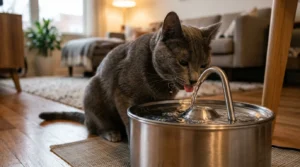
- Put water bowls in two or three spots, add a fountain if your cat likes running water, and watch which one your cat actually uses for a week. Keep that setup.
- Wash and refill bowls daily. Stale water goes untouched.
What Dry Food Is and Where It Actually Earns Its Place
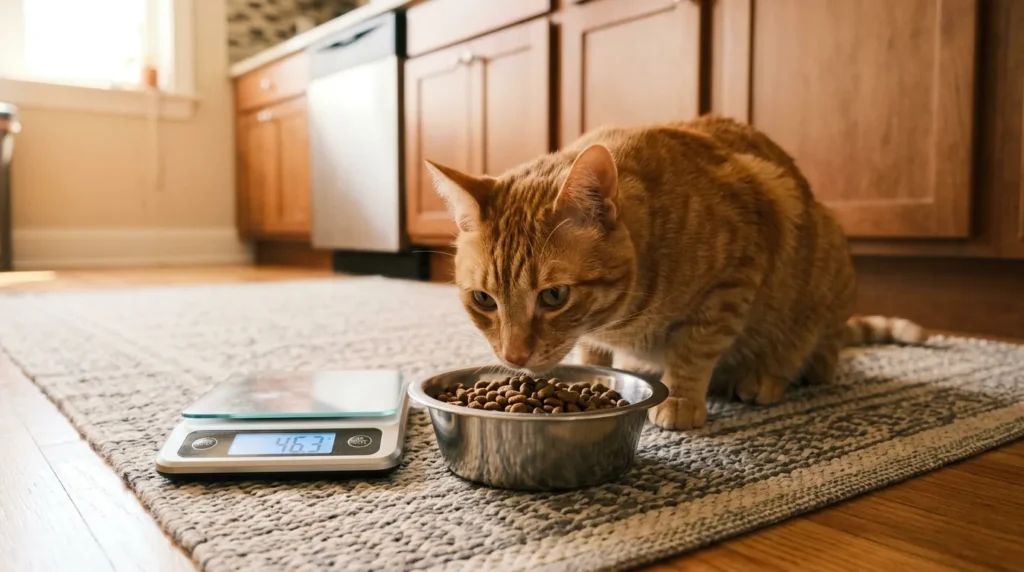
A cup of typical dry food carries 300 to 500 calories. A 5.5-ounce can of wet food often carries 150 to 200. Kibble is only 8 to 10 percent water, so it’s shelf-stable and easy to store, and that same density makes it dangerously easy to overportion for a cat that barely moves all day.
Where kibble earns its place is structured enrichment feeding. Puzzle feeders, food-dispensing toys and scatter feeding all need small, hard pieces that wet food can’t supply. They rank among the best indoor cat enrichment tools available because your cat works, mentally and physically, for part of its daily calories. That’s a small dose of the hunting that apartment life takes away. Many owners put kibble in puzzle feeders during the day and serve wet food at set morning and evening meals.
The dental benefit is real but oversold. Chewing kibble can scrape off some tartar, but many cats swallow it nearly whole, and standard kibble crumbles on the first bite. A few dry diets carry the VOHC Seal of Acceptance, which means the manufacturer’s trials showed the food cut plaque or tartar by about 20 percent or more on average. If teeth are your reason for choosing dry food, that seal is the thing to look for. Tooth brushing and professional cleanings still do more than any food.
None of this makes dry food a bad choice. A complete and balanced kibble meets an adult cat’s nutrient needs, and plenty of cats live long lives on it. The trouble is low moisture and high calories per cup, and both are manageable once you plan for them.
How to Choose a Dry Food for an Indoor Cat
If kibble is part of your plan, either as the smaller share next to wet food or because budget leaves no other option, a few lines on the bag matter more than the photo on the front. Check these six things before you buy:
- The adequacy statement. Look for “complete and balanced” for adult maintenance or all life stages. As the FDA explains, a cat food earns that phrase by meeting an AAFCO nutrient profile or passing an AAFCO feeding trial. A bag marked “for intermittent or supplemental feeding only” is a topper, not a meal.
- Calories per cup. Find the calorie statement, printed as kcal per cup or per kilogram. It changes from bag to bag, and you need it for the portion math further down.
- Protein source. Look for a named animal protein, such as chicken, turkey, salmon or a named meal, near the top of the ingredient list.
- Fiber and hairball claims. Many indoor formulas add fiber for hairball control. That helps if your cat coughs up hairballs regularly and adds nothing if yours doesn’t.
- Kibble size and texture. Small, hard pieces roll well through puzzle feeders. Large or crumbly pieces jam or turn to dust.
- Bag size. Buy a bag you can finish within about six weeks of opening, and keep the kibble in its original bag inside an airtight container so the fats don’t go stale.
Wet Food vs Dry Food for Indoor Cats: The Direct Comparison
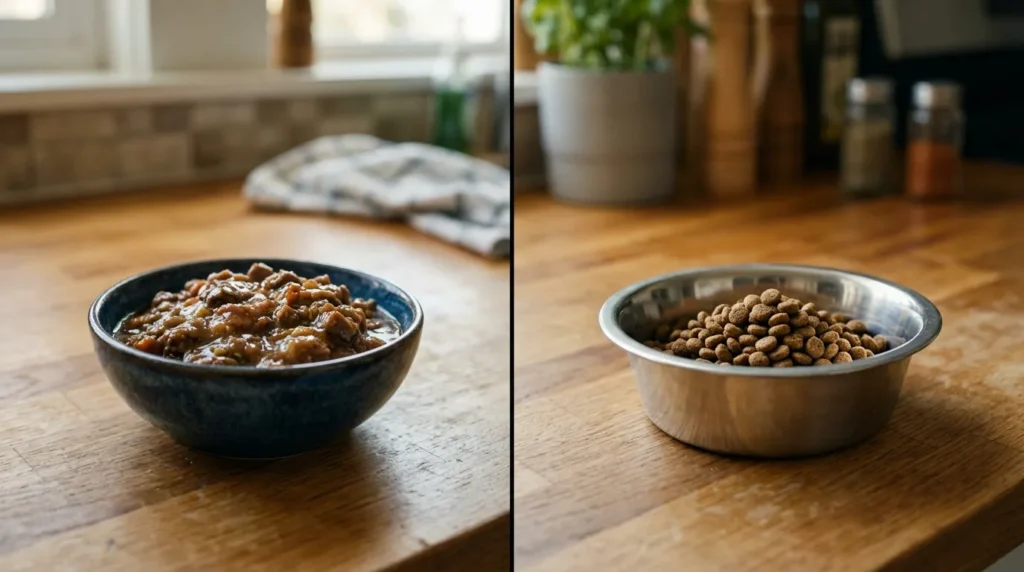
Here’s how the two stack up on the categories that matter most for an indoor cat living in an apartment or small home:
| Category | Wet Food | Dry Food | Winner for Indoor Cats |
| Moisture content | 70 to 80% | 8 to 10% | Wet food |
| Calorie density | Low (good for weight) | High (easy to overfeed) | Wet food |
| Urinary health support | Strong | Weak without extra water | Wet food |
| Protein per calorie | Higher | Lower (more carbs) | Wet food |
| Convenience | Opened cans need refrigeration and timed meals | Works in measured auto-feeders and puzzle toys | Dry food |
| Cost | Higher per calorie | Lower per calorie | Dry food |
| Shelf life once opened | 2 to 4 hours out, about 3 days refrigerated | Weeks, if stored airtight | Dry food |
| Dental benefit | Minimal | Mild (if cat chews; VOHC-accepted diets do more) | Dry food (slight) |
| Puzzle feeder compatibility | Does not work | Works well | Dry food |
| Palatability for picky eaters | Higher | Lower for some cats | Wet food |
Wet food takes more rows for indoor cats because two of the most common problems in this group, obesity and urinary disease, respond directly to wet food’s moisture and lower calorie density. Dry food takes the rows that touch your schedule and your wallet, and those count. If cost decides it, kibble-heavy feeding with measured portions and extra water beats a wet-heavy plan you can’t afford to keep up.
Indoor Cat Food vs Regular Cat Food: What the Label Changes
The word “indoor” on a bag tells you who the marketing team pictures buying it. There is no standard recipe behind it. An indoor formula has to meet the same AAFCO adult maintenance profile as any other adult cat food, and past that line the recipe belongs to the manufacturer.
Here’s what indoor formulas usually change, and where to verify it on the bag:
| Feature | Usually different in indoor formulas | Where to check |
| Calories | Lower per cup | Calorie statement (kcal per cup) |
| Fiber | Higher, for hairballs and fullness | Guaranteed analysis, “crude fiber” |
| Fat | Lower | Guaranteed analysis, “crude fat” |
| Moisture | Same as any food in that format | “Moisture (max)” on the label |
| Life stage | Adult maintenance, sometimes all life stages | Adequacy statement |
For a healthy adult, an indoor formula is a reasonable pick, especially in dry form, since it’s usually built around a sedentary cat’s lower calorie needs. It can’t fix low moisture, though, and a regular adult formula fed in measured portions does the same job for a lean cat. The choice between wet and dry changes your cat’s water intake far more than the word “indoor” does.
Three exceptions apply. Kittens and pregnant or nursing cats need a growth and reproduction or all-life-stages food, not an adult indoor formula. Cats with kidney, urinary or dental disease need whatever diet your vet prescribes. And an overweight cat needs a calorie target from your vet, because an “indoor” label doesn’t set one.
Which Is Better for Your Indoor Cat’s Specific Situation
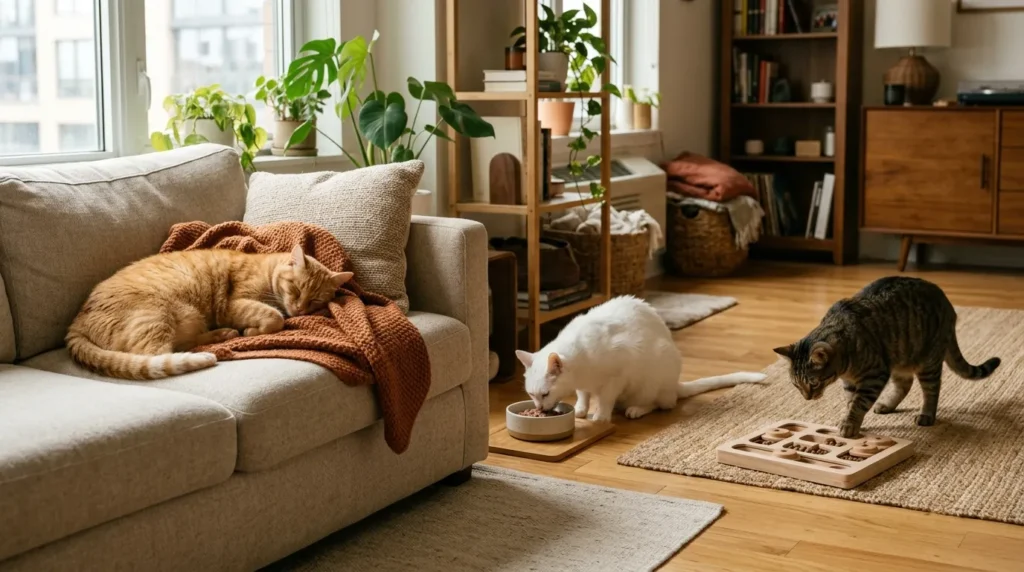
The right choice shifts with your cat’s health and habits. Here’s the direct answer for each common indoor cat situation:
For an overweight or weight-prone indoor cat: Wet food is the clearer choice because its lower calorie density gives you a satisfying portion without overdoing it. A cat that needs to lose weight also needs a calorie target and a pace from your vet, since fast weight loss can harm a cat’s liver. Portion math and meal timing get their own treatment in this guide on how to feed an indoor cat properly, which is worth reading before you start.
For a cat with a urinary history, such as crystals, stones or repeat bladder inflammation: Wet food almost exclusively, on your vet’s say-so. If your vet has prescribed a urinary diet, that prescription beats anything in this article, and wet versions of those diets exist. For a cat that stays on kibble, replacing even one dry meal a day with wet food adds a meaningful amount of water.
For a senior cat aged 10 or older: Wet food, most of the time. Sore teeth and weaker jaw muscles make kibble hard to chew, and cats with declining kidney function need every bit of water they can get. Kidney disease is common in older cats and its diet is a vet decision, so ask about a renal diet before you switch on your own.
For a cat in a studio or one-bedroom apartment where the owner works long hours: A combination works best. Wet food at morning and evening meals covers hydration and protein, and dry food in a timed feeder or puzzle toy covers the midday gap without spoiling. How small-space life shapes what your cat needs day to day is the subject of this guide on living with a cat in an apartment, which ties feeding to the rest of the daily setup.
For a tight budget: Start with the one wet meal you can afford every day, usually the evening one, and keep dry food for the rest. One wet meal a day, kept up for a year, beats a full wet plan you drop in month two.
For a cat that is already healthy and at a good weight: A mix of wet and dry works and saves you from choosing one. Aim for roughly 70 percent of daily calories from wet food and 30 percent from dry. That’s a practical starting point and not a clinical rule, and some cats do fine on all wet food. The ratio keeps moisture intake high, and it leaves room for kibble in puzzle feeders without making kibble the main calorie source.
How Much Wet and Dry Food Should an Indoor Cat Eat?
Portions come from calories, not cups or cans. A healthy, neutered 10 pound indoor adult usually lands somewhere around 200 to 250 calories a day. That number moves with age, muscle and activity, so treat it as a ballpark and ask your vet for your own cat’s target.
Here’s a worked example. Assume a 10 pound cat with a 220 calorie daily target, fed 70 percent wet and 30 percent dry by calories, using a 150 calorie 5.5-ounce can and a kibble that carries 350 calories per cup. Swap in the numbers from your own labels.
| Food | Share of calories | Calories | Example label | Daily amount |
| Wet | 70% | 154 | 150 calories per 5.5-ounce can | About 1 can, split into 2 meals |
| Dry | 30% | 66 | 350 calories per cup | About 3 tablespoons |
| Total | 100% | 220 |
Feed half the can in the morning and half in the evening, and weigh the kibble on a kitchen scale, since 66 calories of dry food is a small amount and eyeballing it drifts upward over time.
Cans in the same 5.5-ounce size run from about 150 to 250 calories, so a richer can changes the math. Weigh your cat once a month, change portions in small steps, and give each change four weeks before you judge it.
How to Switch a Dry-Food Cat to Wet Food
Resistance is real and it’s temporary. Cats that look loyal to kibble are often just unfamiliar with the texture of wet food. Move slowly, and count calories so your cat isn’t eating a full portion of both. Most cats finish the switch within two to four weeks on a schedule like this one:
| Week | Wet food share of daily calories | Dry food share |
| 1 | 20% (one part wet to four parts dry) | 80% |
| 2 | 40% | 60% |
| 3 | 60% | 40% |
| 4 | 70% (your target) | 30% |
A few things make the switch go faster:
- Mix a small spoonful of wet food into the kibble in week one. Once your cat eats it without fuss, move the wet food to its own dish.
- Warm the wet food to just above room temperature. Smell is what draws a hesitant cat in.
- Try two textures. Pate suits some cats, and shredded or chunks in gravy suit others.
- Expect softer stools for a few days. Call your vet if they last more than a week or if vomiting starts.
Don’t wait out a standoff. A cat that eats nothing for a full day needs a call to your vet. Overweight cats that stop eating can develop hepatic lipidosis, a fatty liver disease that turns into an emergency fast.
Insight Cats that seem totally dry-food-loyal have usually never had wet food served warm, in a texture they like, at a time when they were hungry. Change one of those before you decide your cat refuses it.
Urinary Warning Signs: When Food Isn’t the Answer
Wet food lowers risk. It doesn’t rule out a problem. Cornell’s FLUTD guide lists the signs to watch for. Call your vet the same day if you see any of these:
- Straining or crying out in the litter box
- Frequent trips with little urine
- Blood in the urine
- Urinating outside the box, often on cool, smooth surfaces such as tile or a bathtub
- Excessive licking around the genitals
Emergency: a male cat that strains and passes little or no urine needs a vet right now, at any hour. Veterinary sources describe a full blockage as a true medical emergency that can be fatal within 24 to 48 hours.
Crystals and stones get confirmed by a urinalysis, not by a food change, so a cat showing these signs needs a vet visit before any diet experiment.
The One Mistake Indoor Cat Owners Make When Choosing Between Wet and Dry
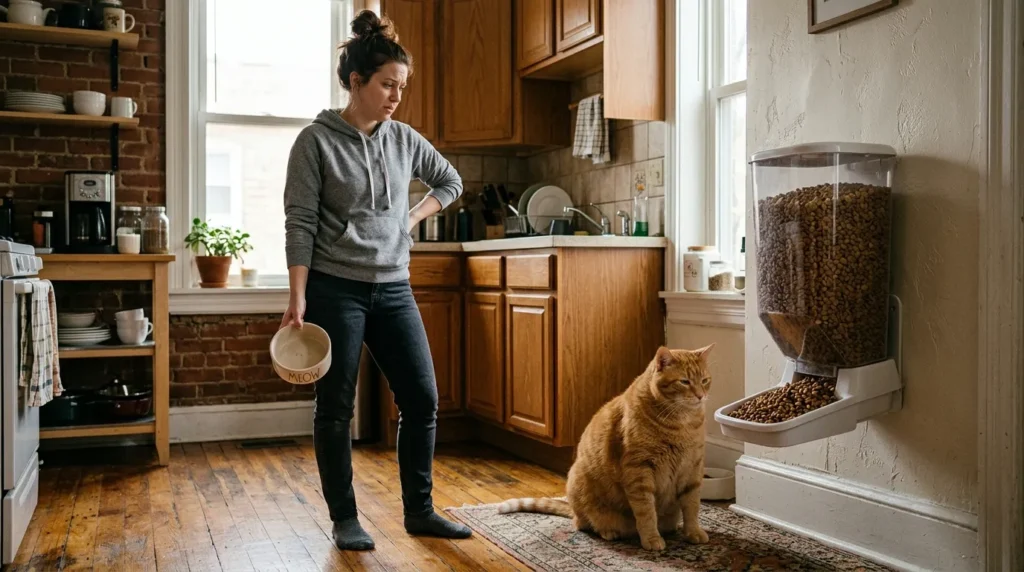
The biggest mistake is choosing dry food because it’s easy and then leaving a full bowl out all day. Free-feeding kibble is one of the fastest routes to an overweight indoor cat. It’s calorie-dense, and in a small apartment with little else to do, most cats eat out of boredom as much as hunger.
A full bowl looks like a well-fed cat, and that’s the trap. Weight creeps up while water intake stays low, and by the time urinary trouble appears or the vet mentions obesity at the annual checkup, the pattern is years old.
Kibble left out all day gives your cat no structure and gives you no idea how much got eaten. If you use dry food, weigh it, serve it at set times, or put it in puzzle feeders so your cat has to work for it. That one change helps weight and boredom at the same time.
Insight Free-feeding dry food to an apartment cat is like keeping a bowl of chips on your desk all day and wondering why your energy crashes and your waistline grows. Your cat can’t fix that with willpower. You have to change the setup for them.
Common Feeding Mistakes That Make the Wet vs Dry Question Worse
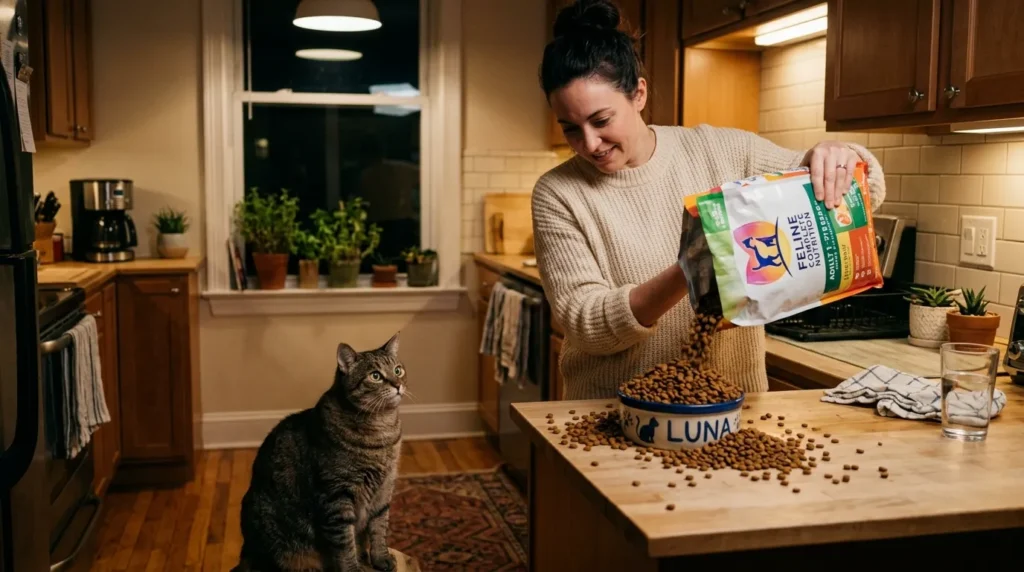
- Pouring the same volume after switching to wet food. Wet portions look much bigger than dry portions with the same calories. One and a half 5.5-ounce cans at 150 calories each delivers about what half a cup of 450 calorie kibble does. Serve the visual amount you used to serve in kibble and you’ll overfeed within the first week.
- Treating wet food as a topper. A teaspoon of wet food on a full bowl of kibble adds almost no water. For wet food to deliver its benefits, it has to make up a real share of daily intake.
- Ignoring the calories on the label. Wet foods vary widely. Some 5.5-ounce cans hold 150 calories and others hold 250 for the same serving size. Calculate portions from your cat’s calorie target, not from the can size or the serving suggestion on the package.
- Measuring kibble with a scoop. How much kibble fits in a cup shifts with kibble size and how you fill it. A kitchen scale takes ten seconds and removes the guesswork.
- Switching overnight. A sudden diet change often ends in a refused bowl or an upset stomach. Use the four-week schedule above.
Our Verdict: Which Wins for Indoor Cats?
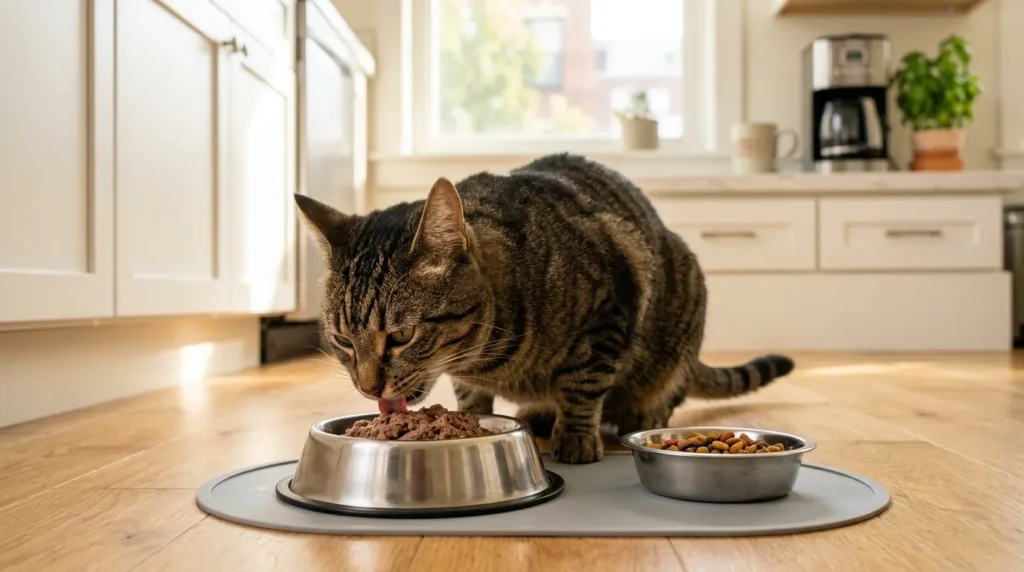
Wet food wins for indoor cats as the primary food. The water alone settles it for sedentary apartment cats that won’t drink enough to offset a dry-only diet. The lower calorie density makes portions more forgiving, and the higher protein content sits closer to what cats are built to eat.
Dry food still earns a place in most indoor routines: in puzzle feeders for enrichment, as a midday option when a full wet meal isn’t practical, and as a calorie boost for underweight cats that need concentrated calories without much volume. The mistake is building the diet on kibble and treating wet food as the extra. For an indoor cat, flip that.
The realistic combination that works for most indoor apartment cats: wet food morning and evening as the primary meals, and dry food in a puzzle feeder or a measured midday portion if needed. Track monthly weight and adjust portions from there.
Indoor Cat Feeding Checklist
- Wet food supplies most of the daily calories (about 70 percent is a sound starting point).
- Every food you buy says “complete and balanced” for adult maintenance or all life stages.
- You know the calories per can and per cup, and you’ve done the daily math.
- Dry food is weighed on a scale and served at set times or in puzzle feeders.
- Fresh water sits in two or three spots, and you know which one your cat uses.
- You weigh your cat once a month and adjust in small steps.
- Your vet has signed off on the plan if your cat has a urinary, kidney or dental history.
Frequently Asked Questions About Wet Food vs Dry Food for Indoor Cats
Is wet food or dry food better for an indoor cat’s weight?
Wet food, because its moisture cuts the calories per serving. A cat eating wet food can finish a physically satisfying portion while taking in fewer calories than the same volume of kibble would supply. Indoor cats gain weight easily, and wet food buffers against the slow creep that comes with dry-only feeding. Either way, the daily calorie target from your vet sets the real limit.
Can I feed my indoor cat wet food only?
Yes. A wet-only diet is nutritionally complete when the label says “complete and balanced” for adult maintenance or all life stages. AAFCO sets the nutrient profiles but doesn’t certify individual foods, so that claim comes from the manufacturer’s label statement. The main challenges are cost, refrigeration and timed meals. If cost is a concern, a 70 to 30 split favoring wet food gives most of the health benefits at a lower budget impact than wet food exclusively. This article is for informational purposes only. Always consult your vet for personalized dietary recommendations for your cat.
Is indoor cat food different from regular cat food?
Slightly, and mostly in the calorie count. There’s no standard recipe for an indoor formula, but they usually carry fewer calories per cup, more fiber and less fat than a regular adult formula, and both have to meet the same AAFCO adult maintenance profile. An indoor formula suits a healthy adult indoor cat. The wet vs dry choice affects hydration and urinary health far more than the label does. Kittens, pregnant or nursing cats and cats with medical conditions need something different.
What should I look for in dry food for an indoor cat?
Check five things: a “complete and balanced” statement for adult maintenance, the calories per cup, a named animal protein near the top of the ingredient list, kibble small and hard enough for puzzle feeders, and a bag size you can finish within about six weeks. Then weigh every portion on a kitchen scale.
How much wet food should an indoor cat eat per day?
It depends on calories. A 10 pound neutered indoor adult often needs about 200 to 250 calories a day. If 70 percent of that comes from wet food and a can holds 150 calories, that’s about one 5.5-ounce can split over two meals. Cans range from about 150 to 250 calories, so read your label and ask your vet for your cat’s target.
Is dry food bad for indoor cats?
No. A complete and balanced kibble meets an adult cat’s nutrient needs, and many cats do well on it. The risks come from low moisture and high calorie density, especially with free-feeding: extra weight and lower water intake, which both raise the odds of urinary trouble. Measure portions, serve them at set times or in puzzle feeders, and add a wet meal or two.
Does dry food clean indoor cats’ teeth?
Marginally, and only if the cat chews. Many cats swallow kibble nearly whole, and standard kibble crumbles on the first bite. Dry diets with the VOHC Seal of Acceptance have trial evidence for reducing plaque or tartar, so pick one of those if dental benefit is your goal. Tooth brushing remains the most effective home dental care for indoor cats and is worth establishing as a habit early.
How do I switch my indoor cat from dry food to wet food?
Start with about 20 percent of daily calories from wet food, which is one part wet to four parts dry, and raise it by about 20 percentage points each week until you reach your target, usually 70 percent. Most cats complete the switch within two to four weeks. Warming the wet food to just above room temperature boosts smell and palatability, which helps resistant cats accept the new texture faster.
How long can wet food sit out?
Two to four hours at room temperature, and closer to two in a warm room. After that, throw it out and wash the bowl. Refrigerate opened cans in an airtight container and use them within about three days.
Does wet food smell worse in a small apartment?
Open wet food has a stronger smell than dry food, and you’ll notice it in a studio or one-bedroom apartment. Refrigerate unused portions right after opening and wash the bowl after each meal. Some formulas are less pungent than others, and pate-style varieties typically smell less intense than chunky or shredded ones.
Wet Food Is Where to Start Today
Weigh your cat before you change anything and write the number down. Then replace one dry meal a day with wet food, measure it by calories, and weigh again at four weeks. Watch water intake and litter box habits along the way, and call your vet about any straining or blood in the urine. Keep dry food in the rotation for puzzle feeders and busy days, and build the diet around wet food. If your cat has a urinary, kidney or dental history, run the plan past your vet first.
Sources and Further Reading
- Cornell Feline Health Center: Feline Lower Urinary Tract Disease
- FDA: “Complete and Balanced” Pet Food
- Veterinary Oral Health Council: accepted products for cats
Wet food is the better primary food for indoor cats because it is 70 to 80 percent water, which supports urinary tract health in sedentary apartment cats that drink little. Dry food is 8 to 10 percent water and carries 300 to 500 calories per cup, so it is easy to overfeed. A split of roughly 70 percent wet food and 30 percent dry food, counted by calories, works as a starting point for a healthy adult. Dry food fits best in puzzle feeders and measured portions, not in an always-full bowl. An “indoor” label has no standard recipe, so check calories per cup and the “complete and balanced” statement instead. Cats with urinary, kidney or dental history should follow their vet’s diet.

Written by Mishu
A passionate cat lover and indoor living enthusiast, Mishu is the founder and voice behind Indoor Living Cat – a go-to resource for cat owners who want to create the happiest, healthiest life for their feline companions indoors.
View Full Profile