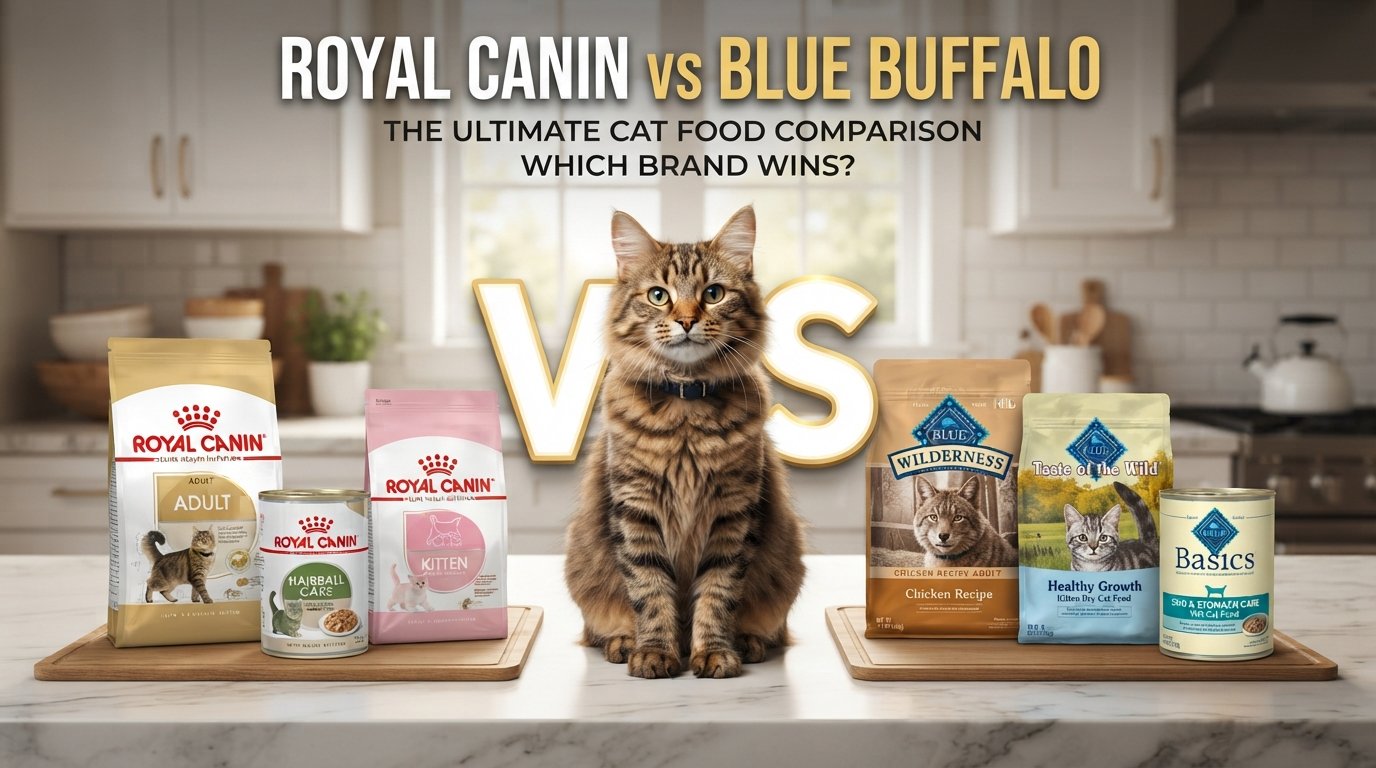
Royal Canin Indoor Adult runs 27% protein and leans on corn, rice, and wheat. Blue Buffalo Wilderness Indoor runs 38% protein and skips grain entirely. That single gap in the guaranteed analysis panel drives almost every other difference between these two bags, from price to how your cat’s stool smells three weeks in. I’ve fed both formulas, read both label panels line by line, and pulled the manufacturers’ own calorie and ingredient data so you can see exactly what you’re paying for before you buy either one.
Need help with portions and feeding schedules too? Our guide on how to feed an indoor cat properly covers that alongside whichever brand you land on.
⚡ Quick Verdict
Blue Buffalo Wilderness Indoor is my top pick for a healthy adult cat. Deboned chicken leads the label, protein sits at 38%, and there’s no corn, wheat, or soy in the bag. Royal Canin Indoor Adult is the better call if your cat throws up hairballs, has a touchy stomach, or you want a lower price per bag while you figure out what works. Neither food is a bad choice. The right one comes down to your cat’s digestion, not the marketing on the front of the bag.
Analysis: Royal Canin Indoor Adult Cat Food
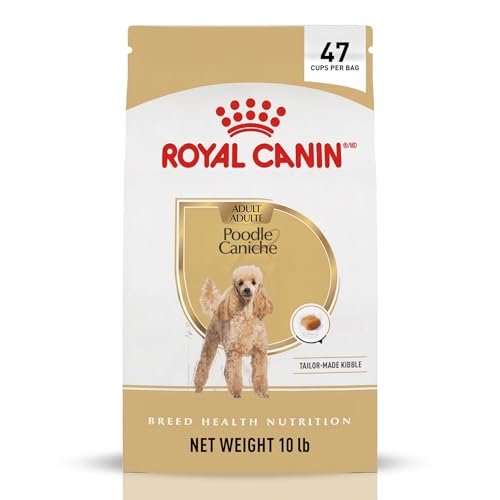
Royal Canin Indoor Adult targets cats between one and seven years old who nap, groom, and graze more than they run. It’s built to solve three specific problems: weight gain, hairballs, and litter box odor. If your cat needs digestion managed before protein gets maximized, this bag fits.
The guaranteed analysis lists 27% minimum crude protein and 11 to 15% crude fat. That’s moderate, not high, next to most indoor formulas on shelves right now. Chicken meal leads the ingredient list. Corn, brewers rice, and wheat follow close behind. It’s a grain-inclusive recipe, and some cats that struggle on richer, grain-free diets actually do better here.
One kilogram of this food delivers 3,534 kcal of metabolizable energy, or 325 kcal per 8-oz. cup on an as-fed basis, per Royal Canin’s own calculation. That’s on the lower end for dry cat food, which matches the brand’s whole pitch: a housecat sleeping sixteen hours a day doesn’t need the calorie density of a barn cat.
The fiber blend is the real reason people buy this bag. It moves swallowed hair through the gut instead of letting it sit and knot up. If your cat is throwing up regularly and you’re not sure hairballs are even the cause, our guide to cat food for indoor cats that throw up walks through the other usual suspects before you switch formulas.
Full Ingredient List
Straight from the bag: chicken meal, corn, brewers rice, corn gluten meal, wheat, chicken fat, wheat gluten, natural flavors, brown rice, pea fiber, rice hulls, dried plain beet pulp, vegetable oil, calcium sulfate, grain distillers dried yeast, sodium silico aluminate, fish oil, potassium chloride, fructooligosaccharides, sodium pyrophosphate, psyllium seed husk, salt, and DL-methionine. Psyllium seed husk and pea fiber are the two doing most of the hairball work.
Build Quality & Design
The kibble is small and hard, shaped so your cat has to bite it rather than swallow it whole. That texture pulls double duty on dental health, since chewing slows tartar buildup. Royal Canin has made cat food for close to fifty years, and this formula comes out of the brand’s in-house veterinary research rather than a generic co-packed recipe.
Performance & Speed
“Performance” here means steady weight control, not muscle-building. The calorie count is tuned for a cat that isn’t burning much energy in a day. Litter box odor dropped in my house within two weeks, which lines up with the brand’s claim that highly digestible protein cuts stool volume.
Features & Functionality
The standout is combining hairball control and weight management in one bag. Most brands make you pick one. Royal Canin also sells a matching wet food, Indoor Adult Morsels in Gravy, if you want to mix textures for a picky eater.
User Experience
Feeding guidelines print clearly on the bag and scale by weight, so portioning isn’t a guessing game. Kibble size stays consistent whether you buy the 3-lb bag or the 15-lb one. It’s stocked in nearly every pet store and grocery chain, so running out isn’t usually an issue.
Value for Money
Royal Canin typically costs less per bag than Blue Buffalo, and the smaller bag sizes make it cheap to test before you commit to bulk. If hairballs or a sensitive stomach are the actual problem, not protein content, this is the more affordable route.
✅ Advantages
❌ Disadvantages
Analysis: Blue Buffalo Wilderness Indoor
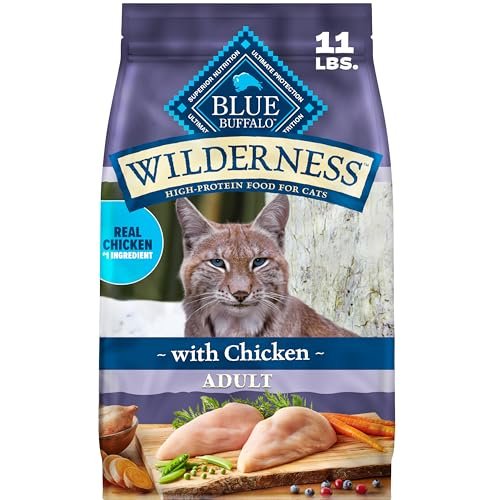
Blue Buffalo’s Wilderness line goes after a different problem: an indoor cat that still has a carnivore’s appetite and none of the outdoor calorie burn to match. It’s high-protein, grain-free, and puts real chicken at the front of the bag. If filler-heavy kibble worries you, this is worth a look.
Deboned chicken is the first ingredient, chicken meal is the second, and together they push the recipe to 38% minimum crude protein and 16% minimum crude fat. There’s no corn, wheat, or soy anywhere in the mix. For a cat burning fewer calories than an outdoor hunter, a protein-dense, filler-light bag supports lean muscle without loading up on carbohydrate the cat’s body wasn’t built to process well.
Blue Buffalo lists the calorie content at 3,674 kcal ME per kilogram, or roughly 410 to 411 kcal per cup, according to the brand’s own product data. That’s nearly 26% more calorie-dense per cup than Royal Canin Indoor Adult, so a proper portion is smaller in volume even if it looks like less food in the bowl.
LifeSource Bits are the feature that stands out most. They’re cold-formed after cooking so the vitamins and antioxidants don’t get cooked out, unlike most of the kibble around them. It’s a practical way to give an indoor cat, who doesn’t get the dietary variety of a hunting cat, a fuller nutrient profile without adding supplements yourself.
Ingredients Blue Buffalo Highlights
Blue Buffalo’s own product page calls out chicken, chicken meal, flaxseed, sweet potatoes, menhaden fish meal, blueberries, dried egg product, taurine, and cranberries as the ingredients doing the nutritional heavy lifting. The brand confirms there’s no chicken or poultry by-product meal, no corn, wheat, or soy, and no artificial flavors or preservatives anywhere in the formula. Check the bag in hand for the exact, full label order, since recipes get small tweaks over time.
Build Quality & Design
The focus is animal protein quality, full stop. There’s no chicken or poultry by-product meal anywhere in the recipe, which some owners treat as a mark of higher sourcing standards. Veterinarians and animal nutritionists formulated it, which at least confirms it’s balanced for long-term feeding and not just a claim on the bag.
Performance & Speed
Performance means keeping an indoor cat lean on fewer carbohydrate calories. Because it’s high in protein and skips grain fillers, digestion tends to run more efficiently. Cats on this formula often show steadier energy and a visibly sleeker coat within a few weeks of the switch.
Features & Functionality
Grain-free, meat-first composition is the headline. LifeSource Bits work as a nutritional backstop, adding antioxidants that support immune health. Omega 3 and 6 fatty acids from flaxseed round the formula out for skin and coat, a common weak spot for cats that spend all day indoors under dry heat or AC.
User Experience
The kibble is highly palatable, which helps if your cat is picky or has turned its nose up at other high-protein diets before. It’s an easy way to feed a meat-forward diet without handling raw food yourself. It also pairs well with the routines in our indoor cat feeding guide if you’re switching over from a different brand.
Value for Money
You pay a premium for protein quality here, and it’s a fair trade if your cat handles high-protein diets well. Long-term muscle and coat condition are the real payoff, and the formula holds up well for an active indoor cat over years, not just weeks.
✅ Advantages
❌ Disadvantages
Royal Canin vs Blue Buffalo Ingredients Compared
Protein percentage tells you part of the story. The ingredient panel tells you the rest. Here’s how the two label panels actually stack up, ingredient for ingredient, not just headline for headline.
| Ingredient Detail | Royal Canin Indoor Adult | Blue Buffalo Wilderness Indoor |
|---|---|---|
| 1st Ingredient | Chicken meal | Deboned chicken |
| Grain Content | Corn, brewers rice, wheat, brown rice | None (grain-free) |
| By-Product Meals | None listed | None (brand policy) |
| Fiber Sources | Pea fiber, rice hulls, psyllium seed husk, beet pulp | Flaxseed, sweet potatoes |
| Fat Source | Chicken fat, vegetable oil, fish oil | Chicken fat (typical for line), flaxseed |
| Named Antioxidant Source | Not called out on label | LifeSource Bits, blueberries, cranberries |
| Artificial Preservatives | None listed | None (brand policy) |
| Allergen Watch | Wheat gluten, corn gluten (grain-sensitive cats) | Fish meal, egg product (seafood/egg-sensitive cats) |
The short version: Royal Canin leans on grain and named fiber ingredients to solve digestion and hairball problems. Blue Buffalo leans on animal protein and cold-formed nutrients to solve a leaner, meat-first diet. Neither ingredient panel is objectively “bad.” They’re built for different jobs.
Do Indoor Cats Even Need Dry Food?
Dry food isn’t required for indoor cats, but it solves real problems wet food doesn’t. It’s cheaper per calorie, it doesn’t spoil sitting in a bowl all day, and the crunch does some dental work that pate-style wet food skips entirely. Cats are obligate carnivores built for a moisture-rich diet, so the trade-off is hydration. Dry kibble runs around 8 to 10% moisture, while wet food runs closer to 78%.
Neither Royal Canin Indoor Adult nor Blue Buffalo Wilderness Indoor is a wet food, so if your cat doesn’t drink much water on its own, pairing either bag with a wet topper or a running water fountain matters more than which dry brand you pick. Both companies sell a matching wet formula for exactly this reason.
Major Factors to Consider
I break every indoor cat food comparison down into these six areas. They’re what actually determines whether a formula keeps a cat healthy, not the copy on the front of the bag. For a third data point on portioning, our Purina Indoor Cat Food guide covers another indoor-formula option worth weighing.
Protein Quality
Cats are obligate carnivores, so protein source matters as much as the percentage on the bag. Deboned meat digests differently than a rendered meal, and that’s the real difference between these two brands.
Digestive Efficiency
Efficiency is about how much of the food your cat actually absorbs. Fewer fillers usually mean less waste, but a sudden jump in protein can upset a sensitive stomach just as easily.
Price & Value
Value is cost over time, not the sticker price. A formula that prevents vet visits for hairballs or weight gain often saves more than it costs up front.
Formulation Trust
Both brands use veterinarians and nutritionists during formulation. That’s a baseline you should expect from any indoor cat food, not a reason to pick one over the other.
Kibble Texture
Texture affects palatability and dental health. A hard kibble that forces chewing helps reduce tartar, which is why Royal Canin markets its shape for that purpose specifically.
Long-Term Fit
The right food keeps working for years, not weeks. Watch coat condition, stool quality, and weight over a full bag before you call it the right long-term match.
Feature Comparison
This table lines up the key features of Royal Canin Indoor Adult against Blue Buffalo Wilderness Indoor. Use it to spot the differences that matter most for your cat’s digestion, protein needs, and dental health.
| Feature | Royal Canin Indoor Adult | Blue Buffalo Wilderness Indoor |
|---|---|---|
| Grain-Free Formula | ✗ | ✓ |
| Real Chicken First Ingredient | ✗ | ✓ |
| Hairball Control Fiber | ✓ | ✗ |
| LifeSource Bits / Antioxidant Blend | ✗ | ✓ |
| Dental / Tartar Control Kibble | ✓ | ✗ |
| Weight Management Focus | ✓ | ✓ |
| No By-Product Meals | ✗ | ✓ |
| Omega Fatty Acids | ✓ | ✓ |
| Vet/Nutritionist Formulated | ✓ | ✓ |
Specifications Comparison
The table below lists the guaranteed analysis, calorie content, and core specifications for both formulas, pulled straight from each brand’s own product data. Use it to check what’s actually in the bag rather than relying on the front label.
| Specification | Royal Canin Indoor Adult | Blue Buffalo Wilderness Indoor |
|---|---|---|
| Crude Protein (min.) | 27.0% | 38.0% |
| Crude Fat (min.) | 11.0% | 16.0% |
| Crude Fiber (max.) | 5.7% | Check current bag label |
| Calorie Content | 3,534 kcal/kg · 325 kcal/cup | 3,674 kcal/kg · ~411 kcal/cup |
| Bag Sizes | 3, 7, 15 lb | 2, 4, 5, 9.5, 11, 15 lb |
| Grain-Free | No | Yes |
| Primary Focus | Hairball & weight control | High-protein muscle support |
| Life Stage | Adult (1-7 years) | Adult (1-7 years) |
| Key Protein Source | Chicken meal | Deboned chicken |
| Formulated By | Royal Canin veterinarians | Veterinarians / nutritionists |
Calorie figures are each brand’s own “as fed, calculated” estimate and can shift slightly between production runs. Check the current bag for the exact numbers before you set a feeding amount.
🏆 Winner: Blue Buffalo Wilderness Indoor
Score Breakdown
Blue Buffalo wins on protein quality. Real deboned chicken as the first ingredient, no grain fillers, and a 38% protein floor line up more closely with what an obligate carnivore actually needs. Royal Canin is still the smarter pick for cats with hairball issues or sensitive stomachs, but for the average healthy indoor cat, Blue Buffalo Wilderness Indoor is the stronger everyday formula.
Choose Royal Canin Indoor Adult If…
Hairball-Prone Cats
Choose Royal Canin if your cat regularly coughs up hairballs. The fiber blend is built to move swallowed hair through digestion instead of letting it build up, and it’s one of the more targeted hairball formulas on the market.
Sensitive Stomachs
Select this formula if your cat has struggled with high-protein or grain-free diets before. The grain-inclusive recipe and moderate protein level can be gentler on digestion for a cat that needs a slower transition.
Budget-Conscious Buyers
Choose this if you want a trusted, vet-formulated diet at a lower price point. Smaller bag sizes also make it cheap to test before buying in bulk. Curious how it stacks up against another mainstream brand? See our Royal Canin vs IAMS cat food comparison.
Dental Health Focus
Opt for this if tartar buildup worries you. The kibble shape and texture are built to encourage chewing, which supports oral health alongside regular vet dental checks. You can also compare it against another popular option in our Royal Canin vs Hill’s Science Diet cat food guide.
Not Sure Either One Fits? Other Options Worth a Look
Royal Canin and Blue Buffalo sit at opposite ends of the same spectrum, but they’re not the only two indoor formulas out there. A few situations where a third brand is worth a look before you buy either bag:
- Your cat has diagnosed kidney disease: both of these formulas are too high in protein for a renal diet. Talk to your vet about a prescription option instead.
- You want a mid-price alternative to Blue Buffalo’s protein level without Royal Canin’s grain content: our IAMS vs Blue Buffalo cat food comparison covers exactly that gap.
- You’re comparing across more than two brands before you decide: the Purina Indoor Cat Food guide adds a third, widely available option to the mix.
🎯 Final Recommendation
Go with Blue Buffalo Wilderness Indoor if your cat is healthy and you want a high-protein, grain-free diet closer to what a carnivore actually eats. Go with Royal Canin Indoor Adult if your cat deals with hairballs, a sensitive stomach, or you want a lower-cost, vet-backed option while you figure out what works. Still torn? Our IAMS vs Blue Buffalo cat food comparison gives you a third data point before you decide.
Summary
- Royal Canin Indoor Adult carries 27% protein, 325 kcal per cup, and a grain-inclusive recipe built around hairball and weight control.
- Blue Buffalo Wilderness Indoor carries 38% protein, roughly 411 kcal per cup, and a grain-free recipe led by real deboned chicken.
- Royal Canin’s ingredient panel relies on chicken meal, corn, rice, and wheat, with psyllium seed husk and pea fiber handling hairball control.
- Blue Buffalo’s panel skips grain entirely and leans on deboned chicken, flaxseed, sweet potatoes, and LifeSource Bits for antioxidants.
- Blue Buffalo is more calorie-dense per cup, so a correct portion looks smaller in the bowl than Royal Canin’s.
- Both formulas include omega fatty acids for skin and coat health, and both are vet- or nutritionist-formulated.
- The right pick depends on whether your cat needs digestive support or a higher-protein diet, not on which bag has the bigger marketing claim.
Frequently Asked Questions
Which is better, Royal Canin or Blue Buffalo, for cats?
Blue Buffalo Wilderness Indoor is the stronger everyday food for most healthy cats thanks to its higher protein and grain-free recipe. Royal Canin Indoor Adult is the better pick for cats with hairball issues or sensitive stomachs.
How do the ingredients in Royal Canin and Blue Buffalo actually compare?
Royal Canin’s label opens with chicken meal, followed by corn, brewers rice, and wheat, with pea fiber and psyllium seed husk added for hairball control. Blue Buffalo’s label opens with deboned chicken and chicken meal, skips grain entirely, and adds flaxseed, sweet potatoes, and cold-formed LifeSource Bits for antioxidants. See the ingredient comparison table above for the full breakdown.
Does Royal Canin cat food contain corn and wheat?
Yes. Royal Canin Indoor Adult is grain-inclusive, with corn, wheat, and brewers rice appearing in the ingredient list. Blue Buffalo Wilderness Indoor is grain-free.
Which food is better for hairballs?
Royal Canin Indoor Adult includes a dedicated fiber blend for hairball control. Blue Buffalo Wilderness Indoor doesn’t market a specific hairball formula in this line.
Is Blue Buffalo too high in protein for indoor cats?
Most healthy indoor cats handle 38% protein fine, since cats are obligate carnivores built to run on it. Cats with kidney concerns should check with a vet before switching to a high-protein diet, and that goes for either brand here, not just Blue Buffalo.
What cat food is better than Blue Buffalo?
“Better” depends on what you need it to solve. If your cat needs more hairball or digestive support, Royal Canin Indoor Adult tends to work better than Blue Buffalo. If price is the deciding factor, IAMS or Purina indoor formulas run cheaper for similar coverage. See our IAMS vs Blue Buffalo and Purina Indoor Cat Food guides for closer comparisons.
How many calories are in a cup of Royal Canin vs Blue Buffalo?
Royal Canin Indoor Adult runs about 325 kcal per cup. Blue Buffalo Wilderness Indoor runs closer to 411 kcal per cup, roughly 26% more calorie-dense. That means a correct portion of Blue Buffalo looks smaller in the bowl, even though it’s not actually less food.
Is dry cat food OK for an indoor cat, or should I feed wet?
Dry food is fine for most healthy indoor cats and is what both Royal Canin Indoor Adult and Blue Buffalo Wilderness Indoor are. The trade-off is moisture: dry kibble runs around 8 to 10% water while wet food runs near 78%. If your cat doesn’t drink much on its own, adding a wet topper or a water fountain matters more than which dry brand you choose.
Which offers better value for money?
Royal Canin typically costs less per bag, while Blue Buffalo costs more but delivers a higher concentration of animal protein per serving.
What is the main difference between Royal Canin and Blue Buffalo cat food?
Royal Canin focuses on digestion, hairball control, and dental health with a grain-inclusive recipe. Blue Buffalo focuses on high protein and grain-free nutrition with real chicken as the first ingredient.

Written by Mishu
A passionate cat lover and indoor living enthusiast, Mishu is the founder and voice behind Indoor Living Cat – a go-to resource for cat owners who want to create the happiest, healthiest life for their feline companions indoors.
View Full Profile