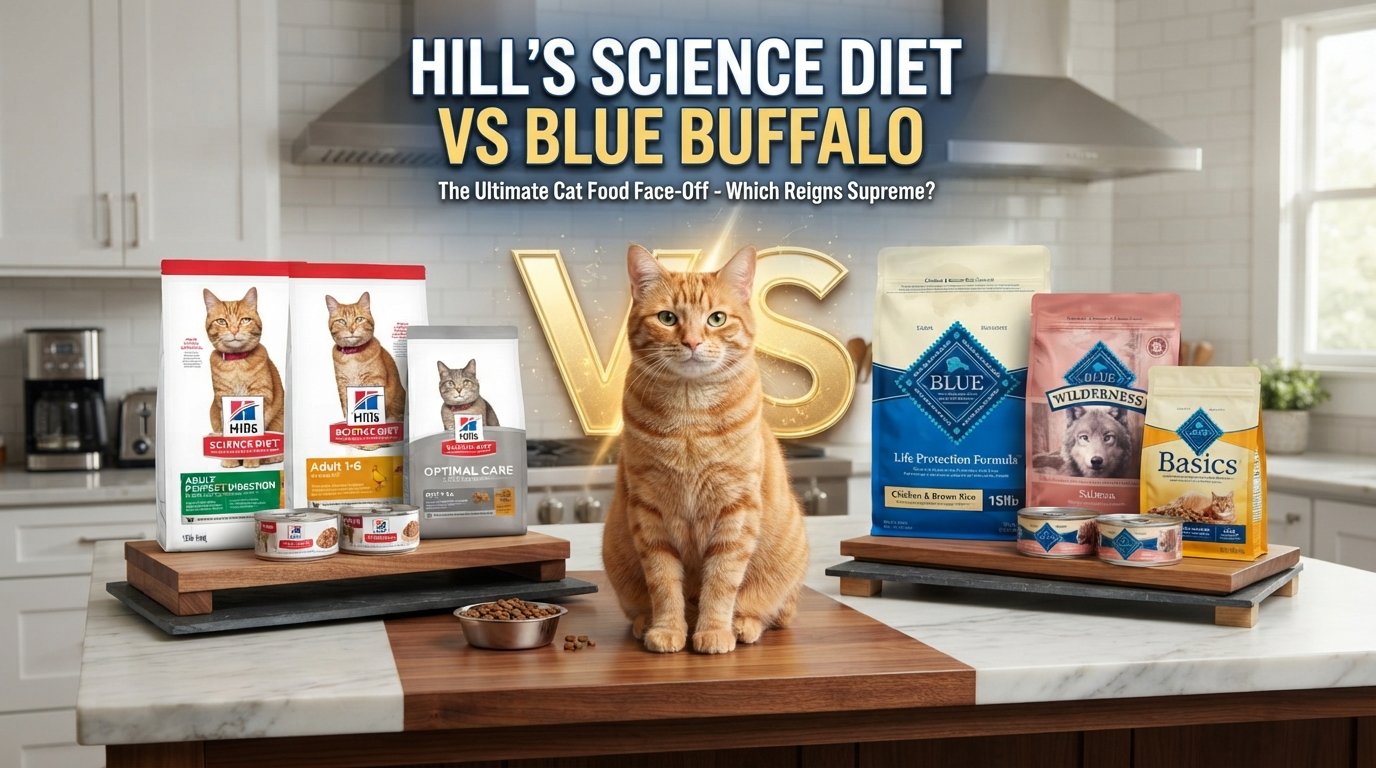
Hill’s Science Diet vs Blue Buffalo cat food comes down to two very different feeding philosophies. Hill’s builds every recipe around clinical research and a veterinary track record, while Blue Buffalo Wilderness leans into a high-protein, grain-free diet built to mirror what a cat would hunt in the wild. I’ve fed both to cats in my own house, and below I compare them side by side, guaranteed analysis included, so you can match the right food to your cat’s health profile.
One quick note before we dive in: this comparison covers the cat food lines. Hill’s and Blue Buffalo both make dog food too, and those formulas differ enough on protein sourcing and calorie targets that they deserve their own comparison. If you landed here looking for the dog food versions, this isn’t that guide.
Discover our top Hill’s Science Diet vs Blue Buffalo cat food comparisons to find the best cat food for your cat’s health, nutrition and budget.
⚡ Quick Verdict: Is Hill’s Science Diet Better Than Blue Buffalo?
For most healthy indoor cats, Blue Buffalo Wilderness wins on protein content and ingredient quality. For weight control or a vet-recommended diet, Hill’s Science Diet wins on calorie control and clinical backing. Blue Buffalo Wilderness runs 38% crude protein and skips grain entirely. Hill’s Science Diet Adult Indoor runs 36.1% protein, 319 calories per cup, and adds 8.5% fiber for hairball control and firmer stools. Neither is “better” in a vacuum. The right pick depends on whether your cat needs weight management or benefits from a higher-protein, ancestral-style diet.
Analysis: Hill’s Science Diet
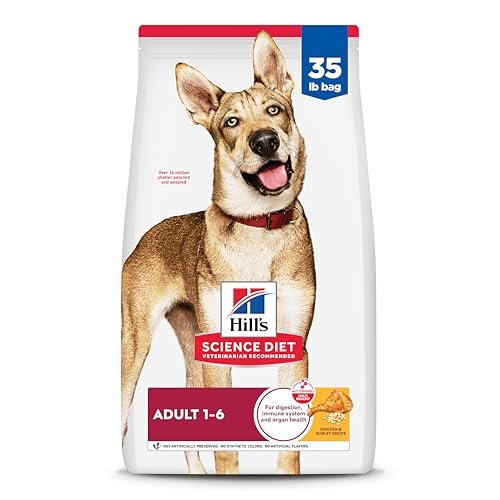
Hill’s Science Diet is my top recommendation for owners who want the peace of mind that comes with clinical validation. It isn’t chasing trends. It offers a stable, well-researched foundation for cats who need consistent nutrition without surprises.
The brand builds its reputation on a science-first approach. Every batch is formulated to hit precise nutritional targets for specific life stages, so your cat gets what it needs to thrive. That’s why so many veterinarians keep this on their clinic shelves, in much the same way they trust other clinically backed brands like Royal Canin for cats with specific health needs.
I like how it balances quality proteins with essential nutrients to keep muscles lean and coats soft. The focus on digestive health and fiber makes it a predictable, safe bet for most indoor cats, and you’re paying for a formula that’s passed strict quality and safety checks at every step.
Build Quality & Design
The kibble is sized and shaped for consistency, which makes it easy for cats to chew and digest. Because the brand sticks to strict safety controls, I’d call it one of the more reliable options for long-term feline wellness.
Performance & Speed
It provides a steady energy source built for indoor cats. At 319 calories per 8 oz cup, it runs lighter than most grain-free formulas, so it helps a less active pet stay at a healthy weight while supporting lean muscle mass. Most owners notice a healthier coat and more regular digestion within a few weeks of switching.
Features & Functionality
Omega-6 fatty acids (3.71%) and Vitamin E (675 IU/kg) stand out for skin and coat health. Because it skips unnecessary fillers, you get a nutrient-dense meal that vets frequently suggest for cats with mild sensitivities or weight management needs.
User Experience
Feeding instructions are straightforward. Most cats take to the flavor profile fast, which makes transitioning to this diet a relatively painless experience for both of you.
Value for Money
On paper it looks like a standard option. The real value shows up in long-term health stability: by focusing on preventative nutrition, it may help you avoid a few vet trips down the line, which makes it a reasonable financial bet.
Analysis: Blue Buffalo Wilderness
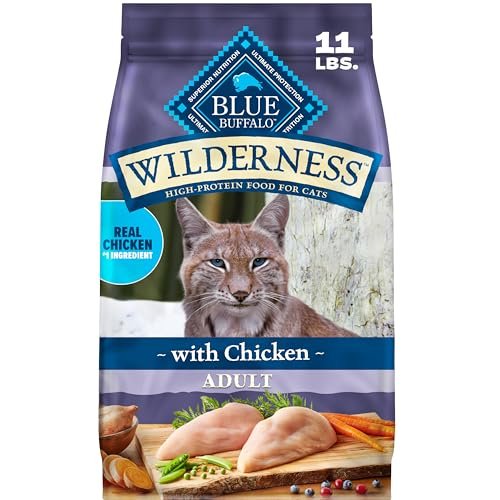
Blue Buffalo Wilderness is for the owner who wants to tap into a cat’s natural, carnivorous roots. It’s a high-protein, grain-free diet built to feel like a premium, meat-focused meal for an active indoor hunter.
This food puts real chicken first, which is exactly what I look for in a quality diet. Ditching the grains and gluten helps sensitive cats, and I’m also a fan of the LifeSource Bits, cold-formed to keep their antioxidants and vitamins potent. That formula edge shows up clearly when you line it up against Purina One or other mainstream, grain-inclusive brands.
Developed with input from animal nutritionists, this recipe is built to help indoor cats stay lean and active. The high protein content supports muscle maintenance, and the flavor usually wins over even picky eaters.
Build Quality & Design
With real chicken as the first ingredient, biological value runs high. The LifeSource Bits add a textural contrast while packing in a precise blend of antioxidants and minerals.
Performance & Speed
This formula is built for active indoor cats that need sustained energy. The 38% protein content helps them hold onto muscle, and many owners report a visible boost in playfulness within the first month.
Features & Functionality
Going grain-free is a real plus for cats prone to digestive upset or gluten sensitivity. The LifeSource Bits add an extra layer of immune support that feels intentional rather than tacked on.
User Experience
The packaging makes it clear this is a premium, high-protein product. Because it’s palatable, you shouldn’t have much trouble getting a cat to switch over to this denser diet.
Value for Money
You’re paying for meat quality and a specialized antioxidant blend. It’s a solid way to give your cat a premium, grain-free meal that supports a long, active life.
Nutrition Snapshot: Guaranteed Analysis
Numbers tell a clearer story than marketing copy. Here’s how the two adult indoor chicken recipes compare on their published guaranteed analysis.
| Nutrient | Hill’s Science Diet | Blue Buffalo Wilderness |
|---|---|---|
| Crude Protein (min) | 36.1% | 38.0% |
| Crude Fat (min) | 14.8% | 16.0% |
| Crude Fiber (max) | 8.5% | 6.0% |
| Moisture (max) | Not published on bag | 9.0% |
| Taurine (min) | 0.22% | 0.15% |
| Calories per Cup | 319 kcal (8 oz cup) | ~357 kcal per 100g (est.), higher than Hill’s per cup |
| Grain-Free | No | Yes |
Blue Buffalo doesn’t print a calories-per-cup figure on the bag the way Hill’s does. Based on AAFCO calculation methods, Wilderness Indoor Chicken runs around 357 kcal per 100 grams, which lands noticeably higher per cup than Hill’s 319 kcal, mostly driven by the extra fat. In practice, Hill’s higher fiber supports firmer stools and hairball control, while Blue Buffalo’s higher protein and fat suit cats that need more fuel for an active lifestyle. Neither profile is wrong. It depends on your cat’s activity level and any weight goals your vet has set.
Major Factors to Consider
Before you pick one, think about what your cat actually needs. Are you after clinical balance or high-protein, ancestral nutrition? Weighing these factors tells you which bag belongs in your pantry.
Performance
Think about how active your cat is. High-protein formulas fuel energetic, playful cats, while balanced formulas offer a steadier burn for laid-back indoor companions. If weight is already a concern, our guide to the best cat food for overweight indoor cats walks through lower-calorie options in more depth.
Speed & Efficiency
Watch the transition process closely. Picky cats or ones with sensitive stomachs may need more patience switching to a high-protein, grain-free food than to a standard balanced blend. Mix the new food in gradually over seven to ten days.
Price & Value
Treat the cost as a health investment rather than a sticker price. Premium ingredients often mean better nutrition, which can mean fewer vet visits down the road.
Build Quality
Check the quality control. I look for clear ingredient labels and companies that invest in real safety testing, so every bowl matches the one before it.
Design & Aesthetics
Don’t overlook kibble shape and texture. Good kibble encourages chewing, which supports dental health, and it needs to smell and taste good enough that your cat actually eats it.
Durability
Think about storage. Kibble needs to stay fresh, so a reliable bag seal matters more than people give it credit for once you’re a few weeks into a large bag.
Feature Comparison
This breakdown compares the main feature differences between Hill’s and Blue Buffalo. Use it to see which lines up with your cat’s dietary needs and your own stance on grain content and ingredient quality.
| Feature | Hill’s Science Diet | Blue Buffalo Wilderness |
|---|---|---|
| Real Chicken First | ✓ | ✓ |
| Grain-Free Formula | ✗ | ✓ |
| Higher Protein % | ✗ | ✓ |
| Higher Fiber % | ✓ | ✗ |
| Higher Taurine % | ✓ | ✗ |
| Includes LifeSource Bits | ✗ | ✓ |
| Veterinarian Recommended | ✓ | ✓ |
| Omega-6 Skin Support | ✓ | ✓ |
| No Artificial Colors | ✓ | ✓ |
Specifications Comparison
The technical specs for both products, laid out side by side, for a clear view of what you’re getting in terms of intended use and core nutritional focus.
| Specification | Hill’s Science Diet | Blue Buffalo Wilderness |
|---|---|---|
| Primary Focus | Veterinary Science | Ancestral Diet |
| Grain-Free | No | Yes |
| Main Protein | Chicken | Chicken |
| LifeStage | Adult 1-6 | Adult 1-7 |
| Indoor Specific | Yes | Yes |
| Key Supplement | Vitamin E | LifeSource Bits |
| Country | USA | USA |
| Best For | Balanced Health | High Protein |
🏆 Winner: Blue Buffalo Wilderness
Score Breakdown
Blue Buffalo Wilderness takes the win for a premium, grain-free, high-protein experience that feels more modern. The LifeSource Bits are a nice touch for immune health. Hill’s is still the gold standard for clinical needs, but Blue Buffalo reads as the more complete diet for a healthy, active indoor cat.
Choose Hill’s Science Diet If…
Choose Hill’s Science Diet if your vet has recommended a clinically validated formula, or if your cat is prone to weight gain and needs a lower-calorie, higher-fiber diet to stay on track.
Pick this if your cat has a sensitive stomach and does better on a gradual, grain-inclusive diet rather than a sudden jump to high-protein food. The added fiber also cuts down on hairball frequency in long-haired breeds.
Choose it if you’d rather trust a brand with decades of published research behind every recipe. Owners who value predictability over trend-driven formulas tend to stick with Hill’s for years.
Choose this brand if you’re feeding an older cat, since Hill’s builds out full life-stage lines. For a deeper look at age-specific options, check our guide to cat food for senior cats.
🎯 Final Recommendation
Go with Hill’s Science Diet if your vet has recommended a clinically managed diet, or if weight control is the priority. If your cat is healthy, active, and you want a high-protein, grain-free diet, Blue Buffalo Wilderness is the way to go. Both are high-quality brands, so you won’t go wrong as long as you match the pick to your cat’s actual health profile rather than the marketing on the bag. For general feeding guidance beyond brand comparisons, our indoor cat feeding guide covers portion sizes and meal frequency in more depth.
Summary
- Hill’s Science Diet uses clinical data to build a balanced, stable meal plan for any cat.
- Blue Buffalo Wilderness leans into ancestral, grain-free nutrition with high protein and immune-boosting antioxidants.
- Hill’s runs lighter at 319 calories per cup with 8.5% fiber and 0.22% taurine, while Blue Buffalo carries more protein and fat at 38% and 16%.
- Choose Hill’s for medical reliability and consistent dietary results. It’s the gold standard for owners who prefer a science-led approach to feeding.
- Blue Buffalo is the meat-first choice for owners who want to skip grains and focus on high-potency nutrients.
- The right call depends on whether your cat does better with a balanced, grain-inclusive formula or a high-protein, grain-free recipe.
Frequently Asked Questions
Hill’s vs Blue Buffalo: what’s the short answer?
Blue Buffalo Wilderness has more protein (38% vs 36.1%) and skips grain. Hill’s Science Diet has fewer calories per cup (319 vs an estimated 357 per 100g for Blue Buffalo) and more fiber (8.5% vs 6%). Pick Blue Buffalo for an active, healthy cat that does well on higher protein. Pick Hill’s if your vet wants weight managed or your cat needs a gentler, grain-inclusive diet.
Is Hill’s Science Diet better than Blue Buffalo?
Neither is better across the board. Hill’s Science Diet is the stronger pick for vet-guided or weight-focused diets, while Blue Buffalo Wilderness suits active cats that thrive on a higher-protein, grain-free formula.
Is the price difference worth it?
Yes, for most owners. Both are premium brands built on quality ingredients. Paying more up front often means fewer digestive problems and better long-term health for your cat.
Which is better for senior or diabetic cats?
Hill’s tends to work better here, thanks to its lower calorie density and dedicated life-stage formulas. If your cat has been diagnosed with diabetes, our guide on cat food for diabetes explains what to look for on the label before switching foods.
Which is better for beginners?
Hill’s is easier to start with because of its clear, vet-approved feeding guidelines. Blue Buffalo works too, though the higher protein means you should watch the transition closely for the first week or two.
Which offers better value for money?
Value depends on what you’re optimizing for. Hill’s delivers value through clinical reliability, while Blue Buffalo delivers value through its nutrient-dense, grain-free ingredient list.
What are the main differences?
The core differences come down to grain content, protein level, and overall nutritional philosophy. Hill’s takes a science-backed, balanced approach; Blue Buffalo goes grain-free with an ancestral, meat-heavy recipe. Pick based on whether your cat needs grain-free food or a clinically balanced diet.
Do Hill’s and Blue Buffalo make dog food too?
Yes, both brands sell dog food lines under the same names. The dog formulas use different protein levels and calorie targets built for canine nutrition, so this cat-specific comparison doesn’t carry over directly. If you need the dog food version, look for a comparison built around AAFCO dog nutrient profiles instead.

Written by Mishu
A passionate cat lover and indoor living enthusiast, Mishu is the founder and voice behind Indoor Living Cat – a go-to resource for cat owners who want to create the happiest, healthiest life for their feline companions indoors.
View Full Profile