
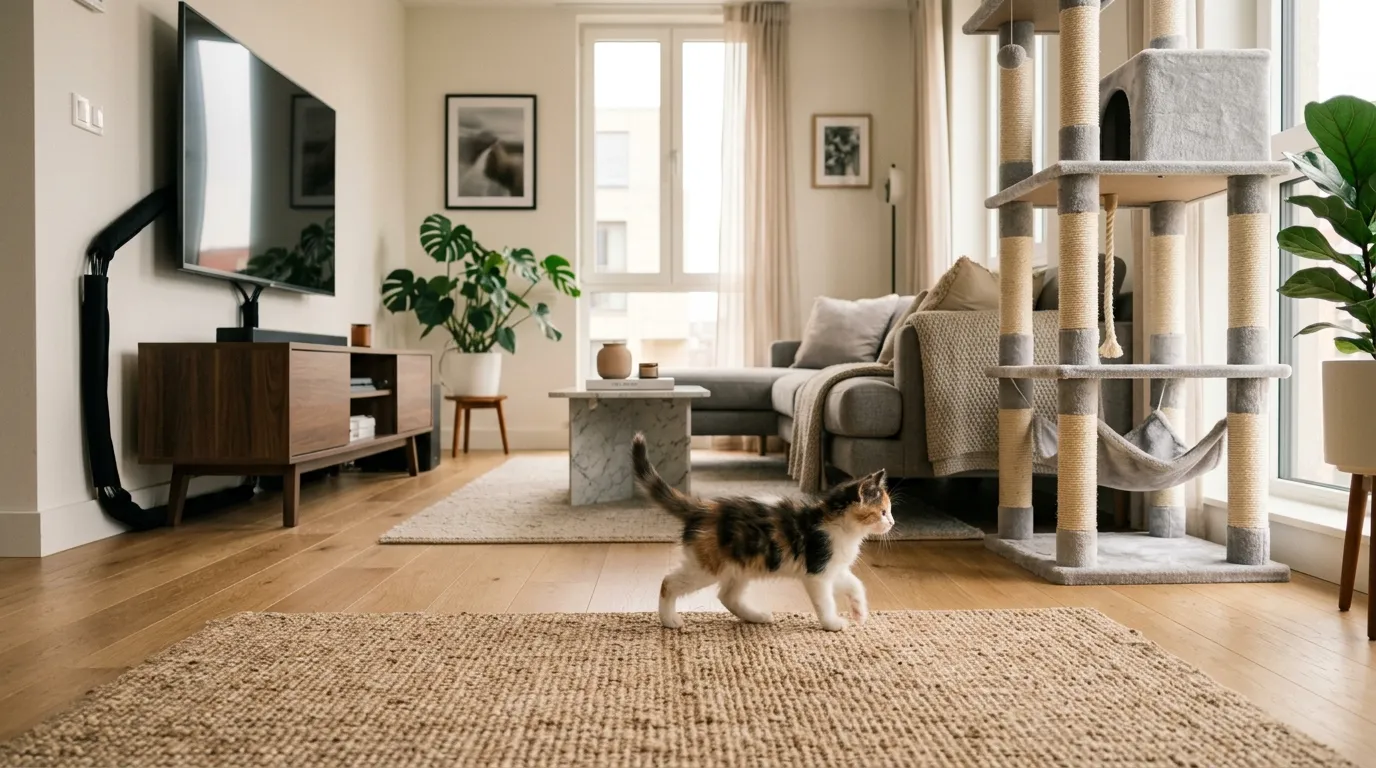
I found my kitten wedged behind the dryer, chewing a charging cable near the sofa, and dangling from a window blind cord all before lunch. That was the same week I brought her home. Knowing how to kitten proof an apartment properly before she arrived would have saved me an entire morning of near heart attacks. The challenge with apartment kitten proofing is that you also have to protect your security deposit and work around fixtures you cannot permanently alter. This guide covers every genuine hazard in a rental apartment and gives you renter-friendly fixes for each one, plus a safe-room setup plan and a full checklist you can run through room by room.
To kitten proof an apartment, block all appliance gaps with foam pipe insulation, cover cords with cable sleeves, install pet-grade window screens, keep the toilet lid down, remove toxic plants, lock away medications and cleaning chemicals, clear small choking hazards off counters and floors, and secure tall narrow furniture using adhesive wall anchors. Most fixes take under an hour and cost less than $50 total.
How to Kitten Proof Apartment Floor Level? The Gaps Nobody Thinks About
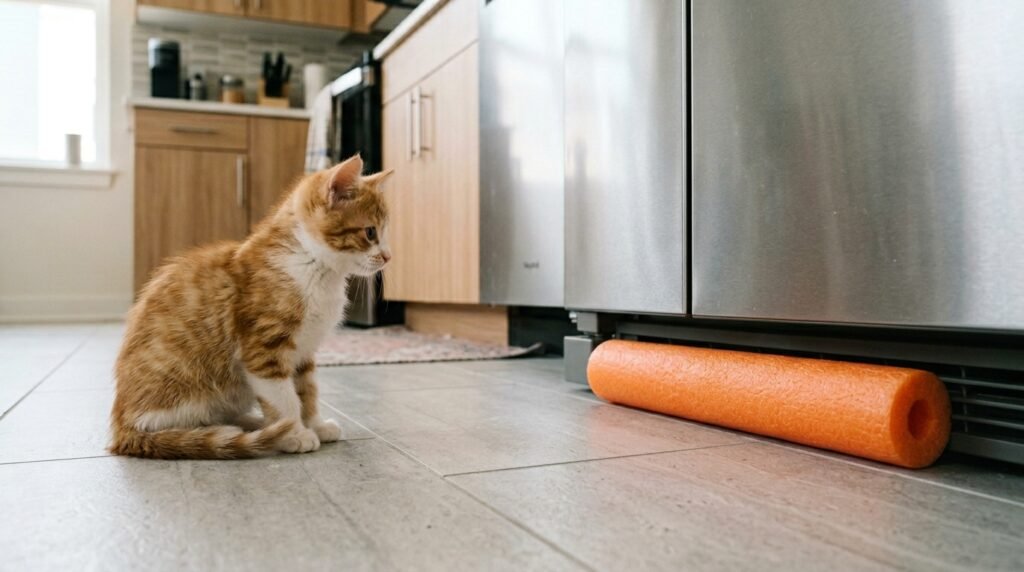
Kittens are essentially liquid. A healthy twelve-week-old kitten can fit through any gap wider than its skull, and in an apartment that means the space beneath your refrigerator, oven, and dishwasher are all genuine entrapment hazards. The motors under fridges and ovens run warm, and a kitten that crawls in and cannot get back out faces both overheating and mechanical injury risk.
Use foam pipe insulation from any hardware store to plug gaps under appliances. Cut it to length and press it into the gap. It does not require adhesive and leaves no marks when removed, so it is fully renter-friendly. Pool noodles cut lengthwise work just as well if you already have one lying around. Do this before the kitten comes home, not after you notice her missing.
Check reclining furniture too. The internal mechanism of a recliner can trap and seriously injure a kitten who climbs into the base while it is upright, then gets crushed when someone operates the lever. Block access under and behind reclining sofas and sleeper beds with cardboard panels or fitted mesh during the kitten phase. Most generic guides skip this, but it is one of the more serious hazards in a furnished apartment.
Don’t stop at appliances and recliners. Dressers, media stands, and hollow-based furniture often have gaps at the bottom seam or a missing back panel, and a kitten that squeezes into one of those can end up stuck inside a drawer for hours. Pull each piece slightly away from the wall and look for openings before the kitten arrives, not after you hear a muffled meow coming from your bookshelf.
Cord and Cable Safety: Solving the Apartment Tech Hub Problem
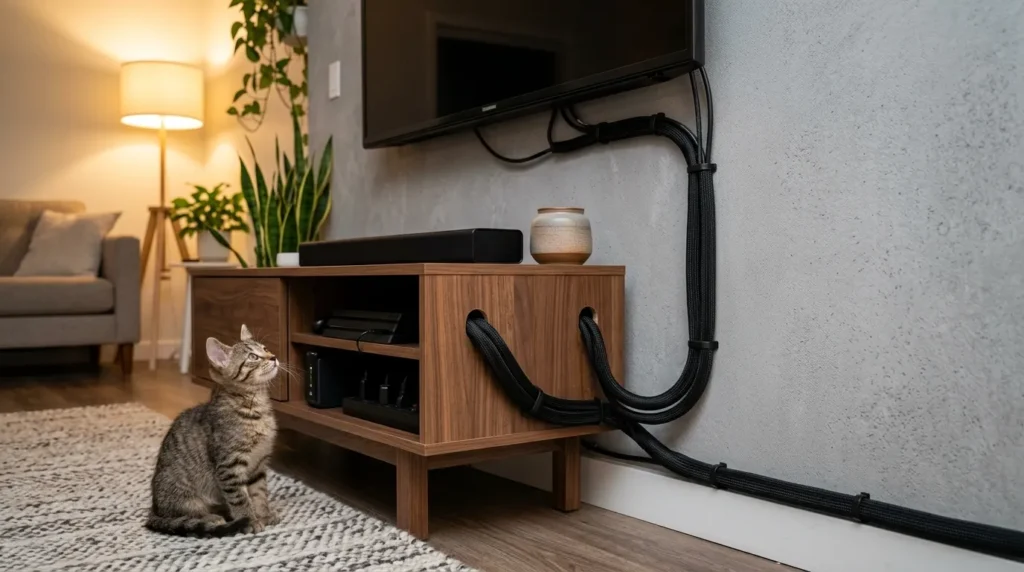
Electrical cord safety is the most urgent thing to address when you kitten proof an apartment, because chewing a live wire causes burns, cardiac arrest, and death in kittens. Apartments typically pack dense cord clusters near the TV stand, desk, and charging station, and you cannot hide them entirely, but you can contain them completely.
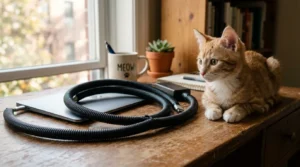
Use flexible split-loom cable tubing or spiral cable wrap on every exposed cord at floor and desk level. These cost a few dollars per meter and make cords both physically harder to chew and less interesting to a kitten, since the texture is unfamiliar. Do not rely on bitter-taste sprays alone. Some kittens show no aversion to bitter tastes at all, and most sprays wash off within days.
Run any remaining loose cords along baseboards using adhesive cable clips, and tape the clips down rather than drilling. This keeps cords off the floor entirely and removes the trailing movement that attracts kittens in the first place. A cord pinned flat against a wall is dramatically less interesting to a kitten than one snaking across an open floor.
For more ideas on setting up a kitten-safe space that also supports mental health and enrichment, indoor cat enrichment covers how to design a stimulating apartment environment that reduces the destructive boredom that makes kittens chew things in the first place.
Window and Balcony Safety: The High-Rise Risk Renters Overlook
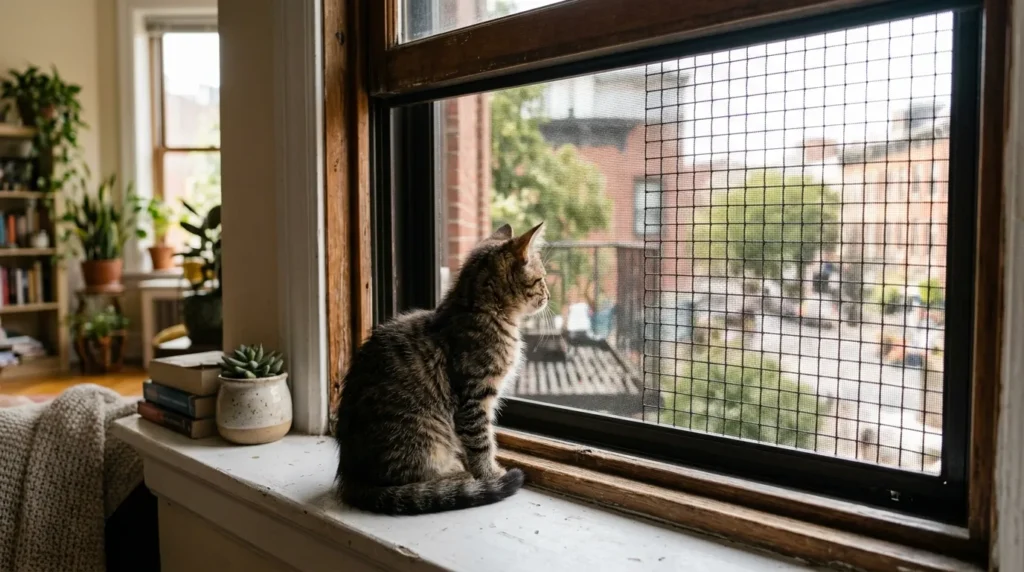
Standard apartment window screens are built to block insects, not to hold up against a kitten pressing into them at a run. A two-pound kitten hitting a standard screen at speed can pop it out of the frame and fall several stories. Vets call the resulting injuries high-rise syndrome, and it is entirely preventable.
Replace standard screens with pet-grade reinforced mesh screens in any window you open regularly. These fit the same frames as standard screens and need no permanent installation. Most cost between fifteen and thirty dollars per window, and they screw into the existing frame with the same hardware. This is one of the few safety measures where spending more genuinely matters.
For balconies, transparent balcony cat netting made for apartment use is the renter-friendly answer. It attaches to railings without drilling, using zip ties or tension cables, and it is nearly invisible from street level, so most landlords have no objection. Never assume a screen door or balcony railing alone is enough. Kittens fit through gaps that look far too small from a human perspective.
Small Objects and Choking Hazards Every Apartment Hides
This is the hazard category most kitten-proofing guides skip, and it sends more kittens to the emergency vet than people expect. Apartments are small, which means everything sits within a few feet of the floor a kitten patrols all day. Hair ties, rubber bands, bag clips, bottle caps, jewelry, coins, and paper clips all look like toys to a kitten, and a kitten that swallows one can end up needing surgery to remove it.
Plastic bags and packaging deserve their own warning. A kitten can chew through a grocery bag or a bag of chips and swallow shreds of plastic, or get a handle looped around her neck while playing with it. Cut bag handles before you set a bag down, and store plastic bags in a closed drawer or cabinet rather than under the sink where they usually live.
A five-minute nightly sweep solves most of this. Before bed, walk through the apartment and clear the counters, the coffee table, and the floor near your desk of anything smaller than a golf ball. Keep a small lidded jar by the door for hair ties, and toss loose change into a drawer instead of a dish. This habit costs nothing and prevents the single most common reason kittens end up at an emergency clinic in their first few months.
Kitchen Cabinets, Medications, and Under-the-Sink Chemicals
Under-sink cabinets in most apartments hold dish soap, drain cleaner, bleach, and other chemicals that are toxic if a kitten knocks one over and licks the spill. Kittens are strong enough to nose a cabinet door open by six months old, sometimes earlier, and a magnetic or handle-mounted cat cannot always be told apart from a curious paw.
Use adhesive childproof cabinet latches on every lower cabinet that holds cleaning products, and move anything genuinely dangerous, like drain cleaner or laundry pods, to a shelf the kitten cannot reach at all. These latches stick to the inside of the cabinet frame and come off clean, so they will not cost you your deposit.
Medications need the same treatment, both yours and any you keep for the kitten later. A single ibuprofen tablet or a dropped blood pressure pill can be fatal to a cat under ten pounds. Store all medication in a closed drawer or a cabinet with a latch, never in an open pill organizer on the counter or nightstand.
Toxic Plants and Essential Oils: Hidden Chemical Hazards
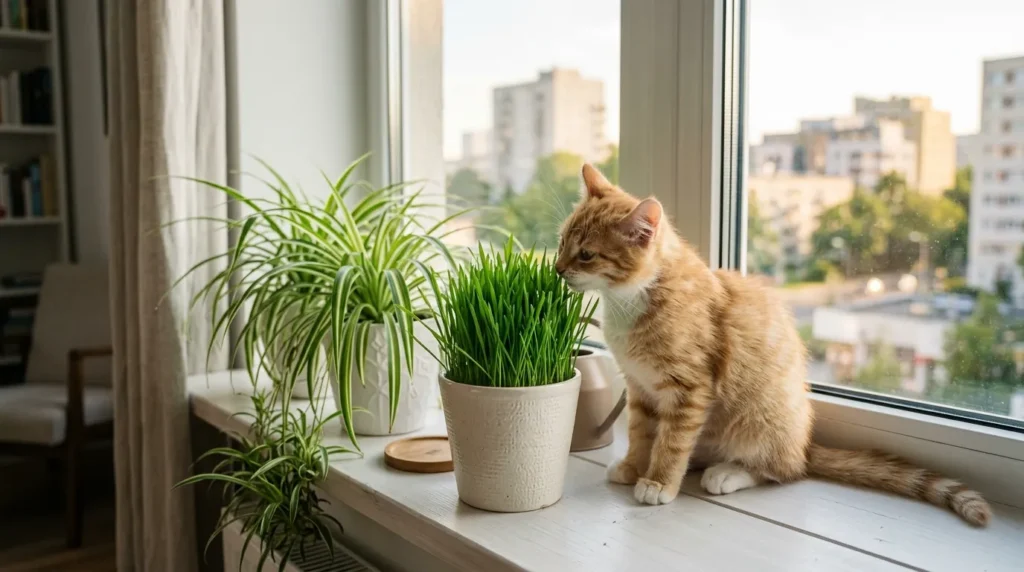
Several of the most popular apartment plants are toxic to cats, and some are dangerous at small doses. Lilies of any variety are the most serious. Even a small amount of pollen or a sip of vase water can cause kidney failure in cats. Pothos, snake plants, and philodendrons all cause oral irritation and gastrointestinal distress. The ASPCA maintains a full searchable database of toxic plants at aspca.org/pet-care/animal-poison-control, and it is worth checking every plant in your apartment before your kitten arrives.
Replace toxic plants with spider plants, calatheas, cat grass, or air plants. All of these are non-toxic and still look good in an apartment. Move any plant you are not replacing to a room the kitten cannot access, and keep that door closed.
Essential oil diffusers need the same attention. Tea tree, peppermint, eucalyptus, and citrus oils are toxic to cats, and in a small apartment the airborne concentration can reach levels that cause respiratory distress. If you use a diffuser, run it in a room with the door closed and make sure that room has ventilation before the kitten ever enters it. A HEPA air purifier is a safer alternative for apartment air quality, and it carries no feline toxicity risk at all.
Securing Furniture and Preventing Tipping Hazards Without Drilling
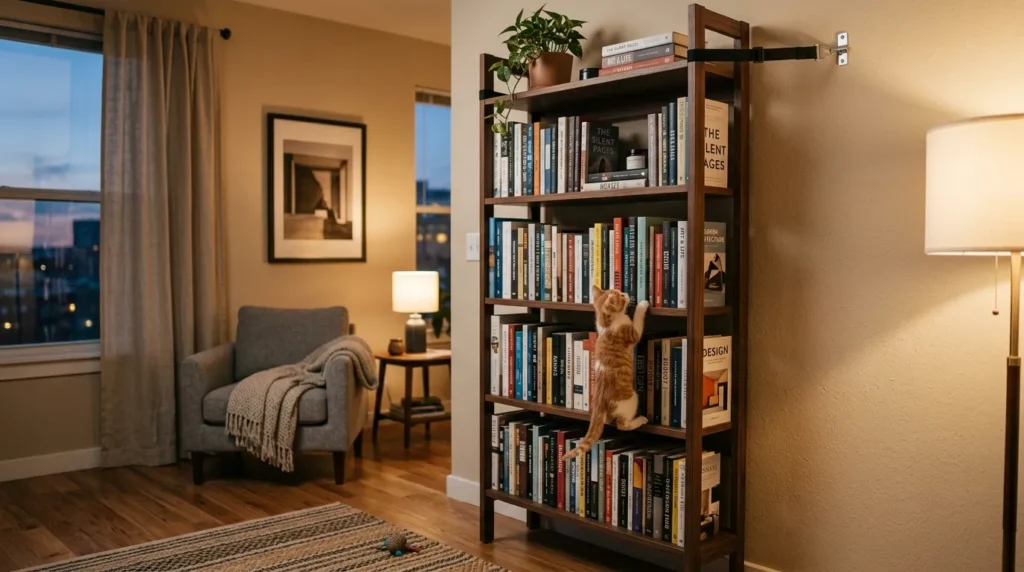
Tall narrow furniture is a specific apartment problem, because renters tend to buy IKEA-style bookshelves and media units built for a small footprint rather than structural stability. A kitten climbing a top-heavy bookcase can tip it, and in a small apartment there is rarely enough floor clearance for the shelf to fall without hitting something, or someone.
Furniture anti-tip straps with heavy-duty adhesive mounts are now widely available and leave minimal to no wall damage when removed. Attach one strap to the top of any tall piece of furniture and anchor it to the wall stud with the adhesive plate. This prevents tipping without drilling, and the adhesive plates typically cost less than five dollars each.
Bathroom trash cans deserve the same attention. Small apartment bathroom bins tip easily when a curious kitten tries to fish something out, and a tipped bin hands her choking-hazard access to everything inside. Use a lidded, weighted bin in every bathroom your kitten can reach. Keep the toilet lid down as a standing house rule. A kitten can drown in a toilet, and chemical cleaners left in the bowl pose a poisoning risk at the concentrations used in small apartment bathrooms.
Setting Up a Safe Room for the First 24 to 48 Hours
Do not give a new kitten the run of the whole apartment on day one, even after you have finished every fix on this list. A brand-new environment overwhelms a kitten, and a smaller space is easier for you to monitor while you confirm you actually caught everything.
Pick one fully secured room, usually a bedroom or bathroom, and set it up before the kitten arrives:
- Litter box, placed away from the food and water bowls and away from any heating vent or loud appliance
- Food and water bowls, kept a few feet from the litter box
- A bed or blanket in a low-traffic corner where she can retreat
- Two or three toys, nothing with loose string or small removable parts
- A scratching post, so she has an approved surface from day one
Let her settle into that one room for a day or two, then open access to a second room once you have checked it at kitten-eye level, meaning you actually get down on the floor and look. Keep expanding room by room rather than all at once. Most apartments can be fully opened up within two to three weeks using this approach, and it dramatically cuts down on the number of hazards you have to catch at once.
Renter’s Reality The one thing I wish someone had told me before bringing a kitten into a rental: do your floor-level audit while lying on your stomach. The hazards that are invisible at standing height are obvious from six inches off the ground. Spend ten minutes doing this in every room before your kitten arrives, and you will find things a standing walkthrough completely misses.
The Kitten-Proofing Mistake That Wastes Time and Creates False Confidence
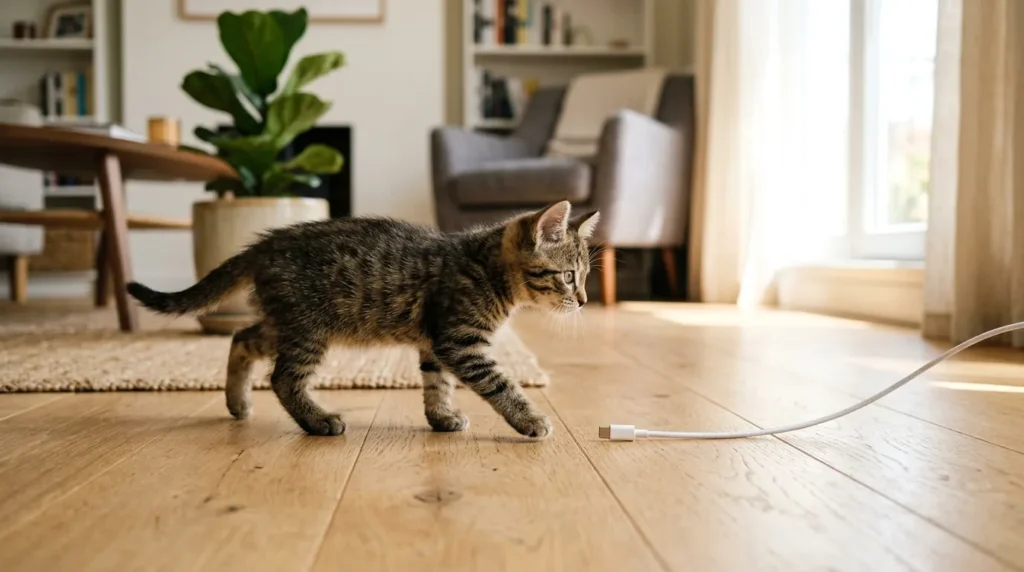
The most common mistake people make when they kitten proof an apartment is relying on deterrent sprays instead of physical barriers. Bitter apple spray, citrus spray, and similar products wear off within days, wash off during normal cleaning, and simply do not work on some kittens who show no aversion to bitter tastes at all. They create the feeling of having done something without creating actual protection.
Physical barriers work regardless of a kitten’s taste preferences, persistence, or age. A cord inside a cable sleeve cannot be chewed. A gap sealed with foam cannot be entered. A screen replaced with pet-grade mesh cannot be pushed out. Spend your time and money on physical fixes, and use deterrent sprays only as a secondary layer, never as the primary safety measure.
The second mistake is kitten-proofing the living room while ignoring the bathroom and laundry area. Those two rooms hold the highest density of genuinely life-threatening hazards in any apartment: an open toilet, chemical cleaners under the sink, dryer access, and small objects on bathroom surfaces. Do those rooms first, not last.
Apartment Kitten-Proofing Checklist
Run through this room by room before your kitten’s first day home:
- Foam or a pool noodle wedged into every appliance gap (fridge, oven, dishwasher, washer, dryer)
- Recliners and sleeper sofas checked underneath and blocked off, or locked in the open position
- Dresser and media stand backs checked for gaps a kitten could squeeze into
- All exposed cords run through split-loom tubing or cable sleeves
- Loose cords secured along baseboards with adhesive clips
- Standard window screens swapped for pet-grade reinforced mesh
- Balcony railings covered with transparent cat netting
- Blind and curtain cords tied up out of reach, or cut and replaced with cordless blinds
- Countertops, floors, and desks swept nightly for hair ties, coins, bag clips, and jewelry
- Plastic bag handles cut and bags stored in a closed drawer or cabinet
- Under-sink cabinets fitted with adhesive childproof latches
- Medications moved into a closed drawer or latched cabinet
- Toxic plants removed or relocated behind a closed door; remaining plants checked against the ASPCA list
- Essential oil diffusers confined to a closed, ventilated room
- Tall furniture anchored to the wall with adhesive anti-tip straps
- Bathroom trash cans swapped for lidded, weighted bins
- Toilet lid down, every time, as a standing house rule
- Safe room set up with litter box, food, water, bed, and toys, ready before the kitten arrives
Quick-Reference Hazard Fix Table
| Hazard | The Risk | The Renter-Friendly Fix |
| Appliance gaps | Entrapment near hot motors | Foam pipe insulation, no adhesive needed |
| Exposed cords | Electric shock from chewing | Cable sleeves or split-loom tubing |
| Standard window screens | Pop-out fall risk | Pet-grade reinforced mesh screens |
| Balcony access | High-rise fall | Transparent cat netting on railings |
| Small objects (hair ties, coins, bag clips) | Choking or intestinal blockage | Nightly counter and floor sweep, lidded catch-all jar |
| Plastic bags and packaging | Suffocation, plastic ingestion | Cut handles, store in a closed drawer |
| Under-sink chemicals and medications | Poisoning | Adhesive childproof cabinet latches |
| Dresser and furniture gaps | Kitten trapped or lost inside furniture | Check backs and bottoms before arrival day |
| Tall furniture | Tipping under kitten weight | Adhesive anti-tip furniture straps |
| Open toilet lid | Drowning and chemical exposure | Lid-down house rule, no exceptions |
| Toxic plants | Kidney failure, oral irritation | Replace with spider plants or cat grass |
| Bathroom trash can | Choking hazard from contents | Lidded weighted bin |
| Blind cords | Strangulation | Tie up high or replace with cordless blinds |
| Essential oil diffuser | Respiratory toxicity | Move to closed room or replace with HEPA filter |
FAQ
How do I stop my kitten from climbing apartment curtains?
During the kitten phase, use cheap sheer curtains you do not mind snagging, or tie heavy drapes up out of reach. Once the kitten hits six months old, the climbing obsession usually fades significantly.
Is a studio apartment too small for a kitten?
No. Kittens care about vertical space more than floor space. A floor-to-ceiling tension cat tree in a 400-square-foot studio gives a kitten more usable territory than a sprawling flat room with no vertical options.
Can I use essential oil diffusers with a kitten in the apartment?
Only in a closed room with ventilation. Tea tree, peppermint, eucalyptus, and citrus oils are toxic to cats. A HEPA air purifier is a safer apartment air quality choice.
How do I kitten proof an apartment without losing my security deposit?
Use foam pipe insulation for gaps, adhesive cable clips for cords, pet-grade replacement screens for windows, and adhesive anti-tip furniture straps and cabinet latches. None of these require drilling, and all of them are fully removable.
What plants are safe to keep in a kitten-proofed apartment?
Spider plants, calatheas, air plants, and cat grass are all non-toxic. Check any existing plants at aspca.org before the kitten arrives. Pothos, snake plants, and all lily varieties need to go.
Do I need a stair gate or playpen in an apartment?
Usually not for a single-floor apartment. A playpen helps if you have a room you cannot fully kitten-proof yet, like a home office with loose cables, or if you need to separate the kitten from a resident cat or dog during introductions.
Where should the litter box go in a small apartment?
Start it in the kitten’s safe room, away from food, water, and any loud appliance. Bathrooms work well because the flooring is easy to clean. Avoid closets or anywhere with a door that could accidentally shut her in.
When should I let my kitten roam the whole apartment?
Start with one secured room for the first day or two, then expand access gradually as you confirm each area is fully checked. Most apartments can be fully opened to the kitten within two to three weeks.
Learning how to kitten proof an apartment comes down to physical barriers over deterrents, floor-level thinking, and paying specific attention to the small objects, chemicals, and furniture gaps that most guides treat as afterthoughts. Do the foam gap-plugging, get the cable sleeves on before day one, latch the under-sink cabinets, and replace at least one window screen with a pet-grade version before the kitten ever arrives. Those steps prevent the most common apartment kitten injuries. Once your apartment is secured and your kitten is settling in, new indoor cat covers how to build the enrichment routine and daily structure that keeps a kitten mentally healthy and physically engaged in a small space long term.
Kitten proofing an apartment requires physical barriers rather than deterrent sprays. The highest priority fixes are blocking appliance gaps with foam pipe insulation, containing all exposed cords in cable sleeves, replacing standard window screens with pet-grade reinforced mesh, and removing toxic plants including all lily varieties, pothos, and snake plants. Small choking hazards like hair ties, coins, and plastic bags need a nightly sweep, and under-sink chemicals and medications need adhesive childproof latches. Renter-friendly furniture anchoring uses adhesive anti-tip straps without drilling. Keeping the toilet lid down at all times prevents drowning risk. New kittens do best starting in a single secured safe room with a litter box, food, water, and a bed before gradually gaining access to the rest of the apartment over two to three weeks.

Written by Mishu
A passionate cat lover and indoor living enthusiast, Mishu is the founder and voice behind Indoor Living Cat – a go-to resource for cat owners who want to create the happiest, healthiest life for their feline companions indoors.
View Full Profile