
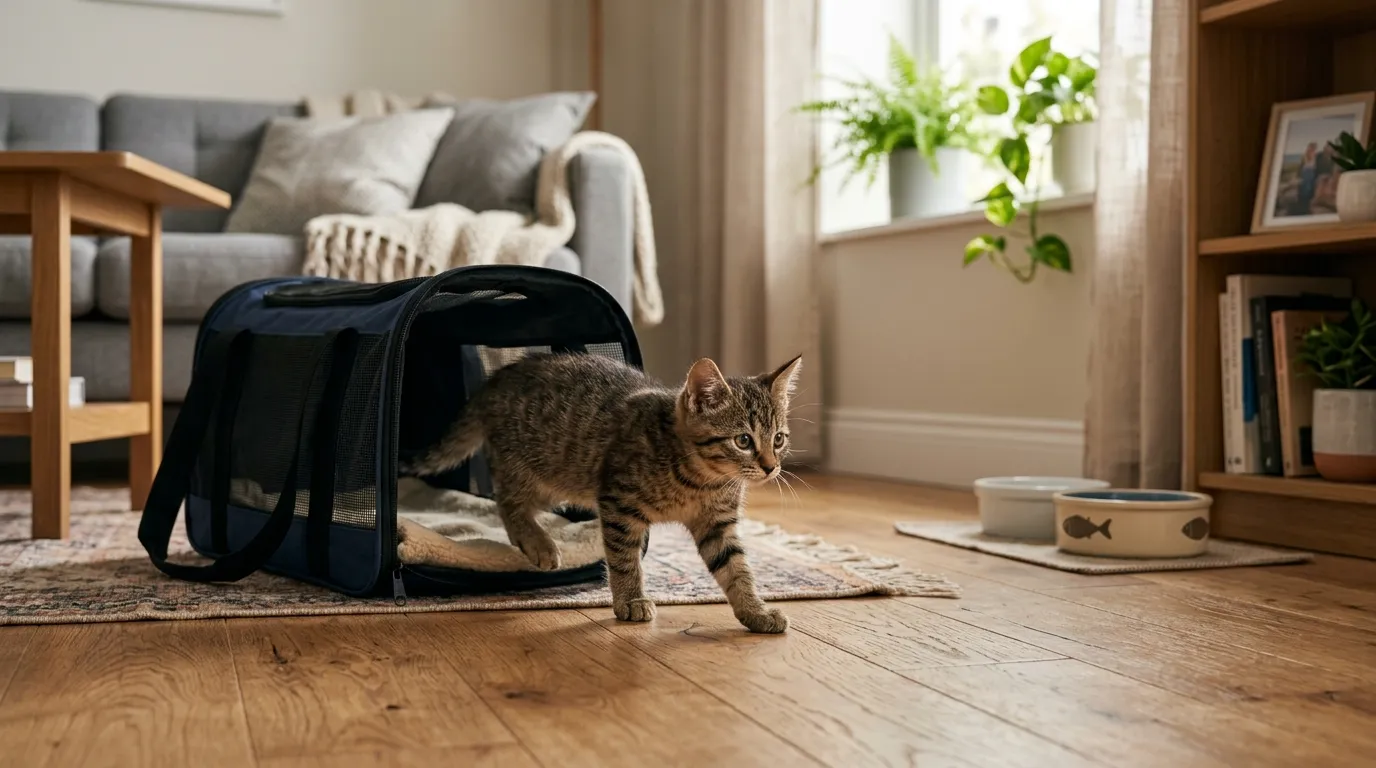
Nobody tells you that the first week with new cat can feel like the longest week of your life. You bring them home, the carrier door opens and then nothing happens for two days. No eating, no exploring, just silence from whatever gap they have wedged themselves into. Knowing what to expect during the first week with a new cat turns what feels like failure into something recognizable as normal progress. I remember watching my cat’s food bowl stay completely untouched for 36 hours and convincing myself something was medically wrong until I checked the litter box and realized she had been using it in the middle of the night the entire time. This guide walks you through every day of that first week, what to set up before they even arrive, and what to do about it.
During the first week with a new cat, expect hiding for days one through three, cautious nighttime exploration from days three to five and the first voluntary approach to you somewhere around days five to seven. Track the litter box and food bowl daily rather than visual contact to judge progress. Most cats settle meaningfully within seven to ten days.
First Week With a New Cat: Quick Overview
If you only have a minute, here’s the whole timeline in one table. Everything below goes into more depth on each phase, what triggers it and what you should and shouldn’t do while it’s happening.
| Days | What’s Happening | What to Do |
|---|---|---|
| Before arrival | You’re prepping the space | Set up a single safe room with litter, food, water and a hiding spot |
| Days 1 to 3 | Decompression, hiding, skipped meals | Keep noise low, leave the carrier out, check the litter box and bowl overnight |
| Days 3 to 5 | Nighttime exploring, periscope peeking | Ignore the peeking, keep the routine identical every day |
| Days 5 to 7 | First voluntary approach, slow blinks | Sit on the floor, stay still, let the cat initiate contact |
| Week 2 | Clearer personality, more confident movement | Introduce toys, start light play sessions, consider the vet visit |
Before They Arrive: Setting Up a Safe Room
The first week goes smoother when the hard decisions are made before the carrier door even opens. Pick one small room, a spare bedroom, a bathroom or a quiet office, and set it up as your cat’s entire world for the first few days. A studio or one-bedroom apartment works fine for this. You’re not choosing the room based on size, you’re choosing it based on how much foot traffic passes by the door.
Here’s what that room needs before your cat gets home:
- A litter box, placed away from the food and water
- Food and water bowls, ideally the same brand your cat was eating at the shelter or foster home
- One or two hiding spots, like a cardboard box on its side or a covered bed
- A scratching post, so the claws have a legal target from day one
- Something that smells like their old environment, a blanket or towel from the shelter if you can get one
That last item does more work than people expect. A scent-marked blanket rubbed on the carrier and later on the new bedding tells a cat’s nose that this strange-smelling apartment already has something familiar in it. If the shelter can’t send anything home with you, rub a soft cloth gently on your cat’s cheeks while they’re still there and bring that instead.
First Week with New Cat: What Days 1 to 3 Actually Look Like?

Days one through three are the feline decompression phase and most new cat owners spend them convinced they made a terrible mistake. The cat disappears, refuses to eat in front of you and may not use the litter box until the apartment goes completely silent at 2am. This is not rejection. This is a cat running a full threat assessment of every smell, sound and surface in an environment that was completely unfamiliar 48 hours ago.

Leave the carrier in the room with the door removed for the first three days. A cat who knows their retreat is accessible is a cat who feels safe enough to eventually stop using it. Removing the carrier or moving it to storage sends the opposite signal and adds another layer of instability to an already overwhelming situation.
Keep noise minimal during days one through three. No visitors, no loud music and no vacuum cleaner. Every unexpected sound resets the cat’s threat clock back to zero and extends the hiding phase. The quieter those first 72 hours are, the faster the cat moves through decompression and into exploration.
Hissing or a low growl during these first few days is normal too, especially if you reach toward the hiding spot. It’s a warning, not aggression, and it usually fades on its own once the cat stops feeling cornered. Keep your hands to yourself and it typically settles within the first two or three days.
What to Watch for Instead of Looking for the Cat?

The litter box and food bowl are your two most reliable progress indicators during the first week. A cat you never see during the day who has used the litter box and emptied part of their food bowl overnight is a cat who is adjusting exactly on schedule. These two data points matter more than any amount of visual contact.
Check the litter box every morning and note whether it shows fresh use. Check the food bowl at the same time and record how much was eaten. You do not need to see the cat eat or eliminate, the evidence they leave behind tells you everything you need to know about how their stress response is tracking. Consistent overnight use of both means the process is working.
According to the ASPCA, tracking these indirect behavioral markers during the adjustment period is the most reliable way to distinguish normal decompression from a cat who is genuinely struggling medically. If both the litter box and food bowl go untouched for more than 24 hours, that is when intervention is needed rather than more patience.
Normal Decompression vs. A Reason to Call the Vet
| Normal First-Week Behavior | Call Your Vet Instead |
|---|---|
| Skipping meals for 24 to 48 hours | No food or water touched after 48 hours |
| Hiding most of the day, moving at night | Litter box completely unused for over 24 hours |
| Occasional hiss when approached in a hiding spot | Straining in the litter box, vomiting, or labored breathing |
| Quiet, low energy for the first few days | Limping, drooling, or a swollen abdomen |
Days 3 to 5: The Nighttime Explorer Phase

Around days three to five you will start hearing your new cat moving through the apartment after you go to bed. Footsteps in the hallway, objects being investigated, the sound of them jumping onto a surface and jumping back down. This is the nighttime explorer phase and it is a significant milestone in the first week with a new cat.

During the day you may begin catching glimpses of what I call the periscope phase. A head appearing around a doorframe. A pair of eyes watching you from the hallway before disappearing when you look back. The cat is no longer hiding to be invisible, they are hiding while gathering information about whether you are safe enough to approach.
Resist every urge to follow the head around the doorframe, call the cat’s name or make any deliberate move toward them. Each time you acknowledge the periscope moment the cat retreats and the clock resets slightly. Pretend you do not see them. They are studying you and any direct response interrupts the assessment. This phase is actually the beginning of the bond even though it looks like nothing is happening.
This is also a reasonable point to start leaving one or two toys near the edge of the safe room, a wand toy or a ball with a bell works well. Don’t try to initiate play yet. A toy left within reach lets a curious cat interact with something new on their own terms, which builds confidence faster than a person waving a toy in their face.
Days 5 to 7: The First Voluntary Approach and What It Means?

Somewhere between days five and seven most cats make their first voluntary approach. It might be as small as walking past you at close range without bolting, sniffing your ankle while you are standing still or sitting on the same sofa cushion you recently vacated. These feel minor but they are major. Each one represents the cat deciding their data collection has reached a threshold where you are safe enough for proximity.
Your job during this phase is to be completely unremarkable. Do not reach toward the cat when they approach. Do not make eye contact directly. Do not talk to them. Sit on the floor, keep your hands visible and still and let them investigate you as if you were furniture. Any reaction on your part shifts the dynamic from the cat controlling the interaction to you controlling it and that shift ends the approach immediately.
The first time your cat slow-blinks at you is the moment the cortisol-to-oxytocin transition has genuinely started. Slow-blink back once and look away. That exchange is the feline equivalent of a handshake and it tells you the hard part of the first week with a new cat is behind you.
Real Talk Sit on the floor at some point every day during the first week. A person standing or seated on furniture is physically much larger and more intimidating than a person sitting cross-legged at cat level. This one habit change shortens the average first approach by two to three days in my experience. It costs you nothing and it makes a real difference.
Introducing Your New Cat to Other Pets, Kids and the Rest of the House
[Image placeholder: a child sitting calmly on the floor a few feet away from a new cat, not reaching toward it]
If you have other pets, resist introducing them during the first week entirely. Keep the new cat behind a closed door and let scent do the introducing first, swap bedding between the animals every day or two so each one gets used to the other’s smell before they ever meet face to face. A full introduction between a new cat and a resident cat or dog is its own process and usually takes longer than a week to do safely, so treat week one as scent-swapping only.
If you have family members or housemates, brief them on day one. Children are especially important to manage during the first week because their natural instinct is to chase and pet, and that instinct is the fastest way to add days to the adjustment timeline. Set one simple rule for kids: no picking up, no chasing, no cornering. Let the cat come to them the same way it comes to you, sitting on the floor, hands still, no direct eye contact.
Same goes for visitors. It’s tempting to show off a new cat to friends the first weekend, but a room full of new voices during the decompression phase resets the whole timeline. Save the introductions for week two or three, once the cat is already moving through the apartment with some confidence.
Do You Need a Vet Visit During the First Week?
Most shelters and rescues send cats home with recent vaccine and health records, and if that’s the case, a vet visit isn’t urgent during week one. Let the cat settle first. A car ride and an exam table on top of an already overwhelming few days adds more stress right when you’re trying to reduce it.
The exceptions are worth knowing. Book a vet visit sooner, even during the first week, if your cat came from an unknown background with no health records, shows any of the warning signs in the table above, or if you have other pets at home who haven’t been screened for contagious illnesses like feline leukemia or FIV. Otherwise, a general wellness check in week two or three, once the cat has calmed down enough to travel without a full panic response, is the more comfortable option for everyone.
Feeding, Litter and Routine: What to Set Up and When?

Establish the feeding schedule on day one and do not deviate from it during the first week. Same time, same location, same bowl. Cats under stress rely on environmental predictability as a signal that their surroundings are stable and safe. Routine is one of the fastest ways to lower a cat’s ambient anxiety level in a new home.
Keep the food matching whatever the shelter or foster home was feeding for at least two weeks. A sudden food change on top of a rehoming stress event compounds digestive upset and makes the first week significantly harder for everyone. Warmed wet food placed on a flat wide plate encourages eating in stressed cats because the scent carries further and the open plate removes whisker pressure.
Place the litter box in the same room as the cat’s sleeping area for the first week. Access matters more than aesthetics when a stressed cat needs to eliminate in a new environment. Once the cat is using the box consistently and showing comfort in moving through the apartment, you can gradually transition the box to its permanent location over several days. For detailed guidance on sizing and placement, indoor cat litter box covers everything that matters for apartment setups specifically.
The Mistake That Makes the First Week Harder Than It Has to Be
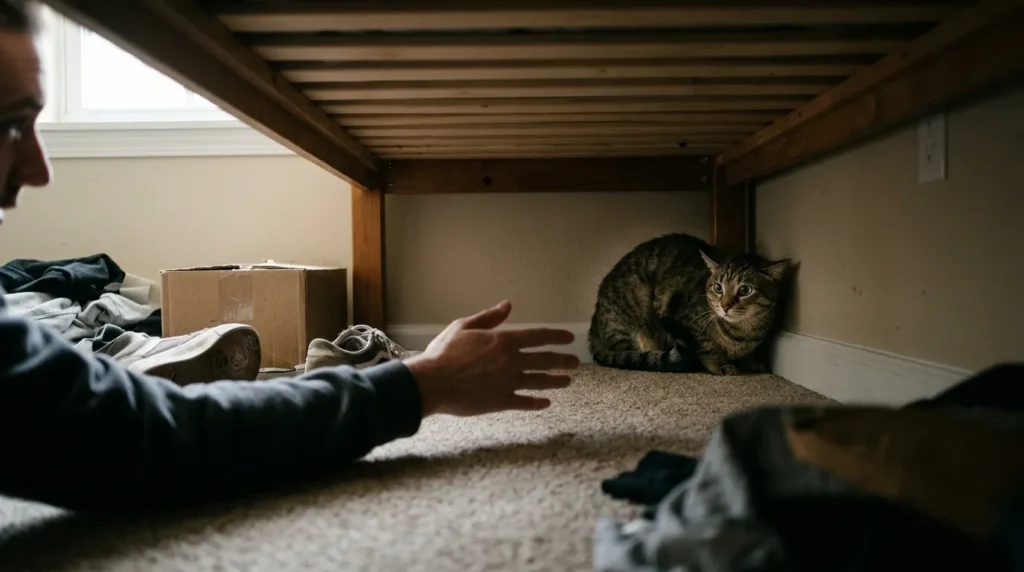
The mistake almost every new cat owner makes during the first week is pursuing the cat rather than waiting for the cat to come to them. It comes from the right place, you want to reassure the cat and help them feel welcomed. But from the cat’s perspective, a large creature following them into their hiding spot and reaching toward them is exactly the behavior of a predator and it trains them to stay hidden longer.
Every time you reach under the bed, follow the cat into a room or sit directly in front of their hiding spot, you extend the adjustment period. The cat learns that being visible leads to unwanted contact and they respond by being less visible. The opposite approach, ignoring the cat completely while being calmly present in the apartment, produces earlier voluntary contact every single time.
Real Talk The quieter and more boring you make yourself during the first week, the sooner the cat decides you are worth investigating. You are not abandoning the cat by not pursuing them. You are giving them the thing they actually need right now which is control over when the relationship starts.
First Week Checklist
- Set up one safe room before the cat arrives, with food, water, litter and a hiding spot
- Leave the carrier out with the door removed for the first three days
- Keep noise, visitors and household changes to a minimum through day three
- Check the litter box and food bowl every morning instead of chasing visual contact
- Keep feeding times, food brand and litter type identical to the shelter’s setup
- Brief kids and housemates on the no-chase, no-pickup rule
- Sit on the floor at cat level at least once a day
- Hold off on other-pet introductions, vet visits (unless urgent) and guests until week two
FAQ
Is it normal for a new cat to not eat for the first day or two?
Yes. Skipping meals for the first 24 to 48 hours is common. As long as the cat is alert and warm, monitor the bowl overnight. If nothing is eaten after 48 hours, contact your vet.
How do I know if my new cat is okay if I never see them?
Check the litter box and food bowl daily. Use from both overnight means the cat is adjusting normally even if they stay hidden during daylight hours.
Should I try to pet my new cat during the first week?
Only if they approach you first and initiate contact. Let every physical interaction in the first week be entirely the cat’s idea. Forced petting extends the adjustment.
What if my new cat cries at night?
Some crying in the first night or two is normal disorientation. If it continues past night three or sounds distressed rather than exploratory, check for illness and review the environment for stressors.
How do I get my new cat to use their litter box?
Place it in the room where they are spending most time and keep it scooped daily. Most cats use the box instinctively, problems arise from poor placement, wrong litter type or a dirty box.
How long should I keep my new cat in one room?
Most cats are ready to explore the rest of a small apartment somewhere between days five and ten, once they’re using the litter box and eating consistently. Open the door and let them decide the pace rather than moving them out on a fixed schedule.
Is hissing or growling during the first week something to worry about?
Not on its own. A hiss when you reach toward a hiding spot is a boundary, not aggression, and it usually fades within the first few days once the cat stops feeling cornered. Frequent hissing that isn’t tied to being approached is worth mentioning to your vet.
Should I introduce my new cat to my other pets during the first week?
No. Keep them separated behind a closed door and swap bedding daily so each animal gets used to the other’s scent first. A full introduction is a slower process that’s easier to do once your new cat is confident moving through the apartment.
Do I need to take my new cat to the vet the first week?
Not usually, if they came from a shelter with recent records and show no warning signs. A wellness visit in week two or three is easier on a cat who’s had time to calm down first.
When will my new cat start acting like themselves?
Most cats show clear personality traits by week two and begin acting comfortably at home between weeks three and six. Shy or rescue cats may take two to three months for their full personality to emerge.
The first week with a new cat is a test of patience more than anything else. Track the litter box and food bowl rather than visual contact, keep noise low, sit on the floor daily and let the cat control every interaction. Do those things and most cats begin approaching voluntarily by day six or seven. Once the first week is behind you and the cat is moving through the apartment with growing confidence, new indoor cat covers how to build the enrichment routine and daily structure that keeps that confidence growing into month two and beyond.
During the first week with a new cat, hiding for days one through three is normal feline decompression behavior. Nighttime litter box use and an empty food bowl each morning are reliable signs of healthy adjustment even when the cat is invisible during the day. Setting up a single safe room with a hiding spot, litter box and scent-familiar bedding before the cat arrives shortens this phase. The nighttime exploration phase begins around days three to five and the first voluntary approach typically happens between days five and seven. Hold off on introducing other pets, scheduling non-urgent vet visits or inviting guests until the second week. Forcing interaction extends the adjustment. Consistent feeding times, a stable litter box location and floor-level passive presence from the owner are the three most effective tools for a faster first week.

Written by Mishu
A passionate cat lover and indoor living enthusiast, Mishu is the founder and voice behind Indoor Living Cat – a go-to resource for cat owners who want to create the happiest, healthiest life for their feline companions indoors.
View Full Profile