
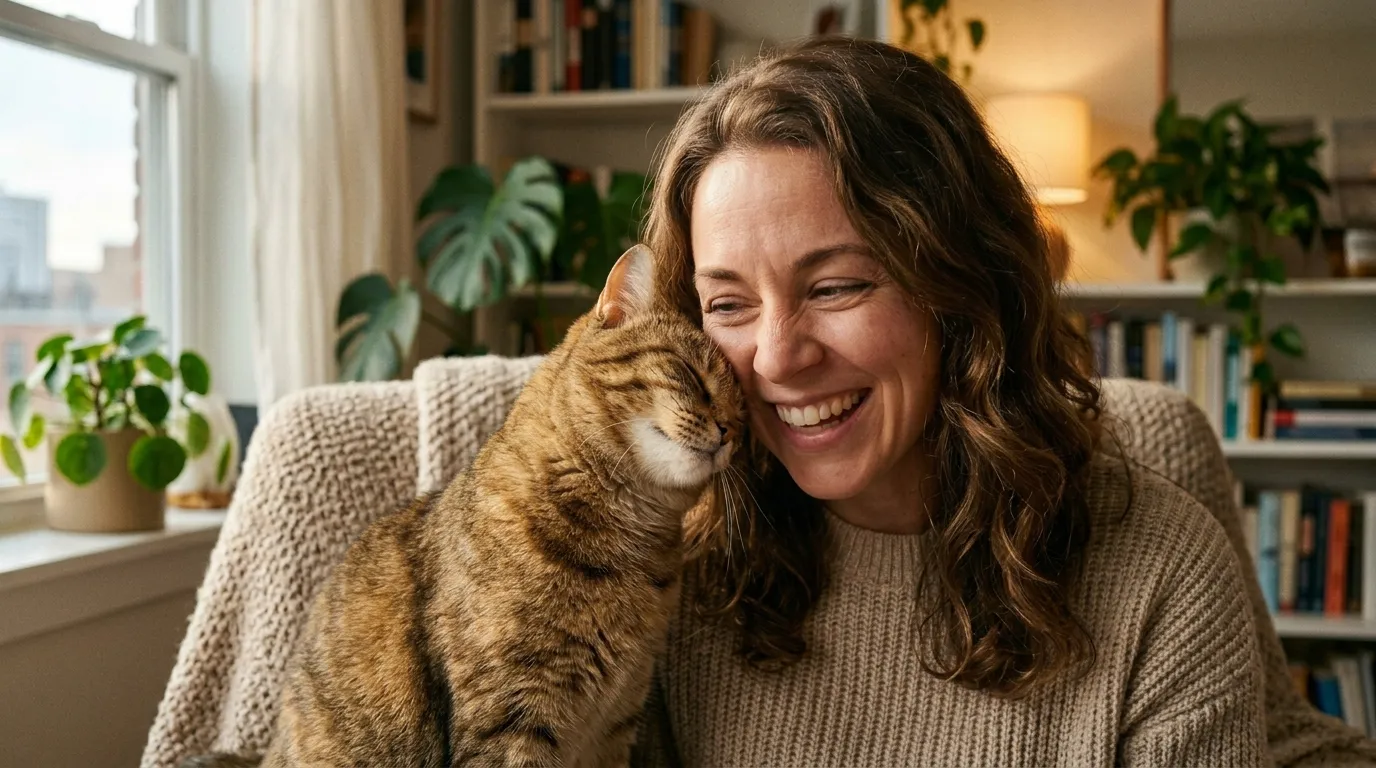
My cat once headbutted my coffee mug hard enough to slosh coffee across the counter. She looked at me like the mug had gotten in her way, not the other way around. Why does my cat headbutt me like that, mug and all? The answer surprised me the first time I read it, and it changed how I see this cat behavior.
She was not clumsy. She was mid ritual, and the mug got in the way of a job she takes seriously. The headbutt cats give humans is called bunting, and it is one of the clearest trust signals in a cat’s behavior. This guide covers the real reasons behind it, the exact glands doing the work, the one lookalike behavior that means an emergency vet visit instead of a pat on the head, and how bunting fits into the wider picture of indoor cat behavior as a whole.
Why does my cat headbutt me? She’s pressing scent glands from her forehead and the base of her ears onto you to leave her pheromones behind. This behavior is called bunting. It builds a shared scent between you two, signals real trust, lowers her stress through familiar smell, and tells other cats you belong to her.
In short, a cat headbutt usually means one of these:
- She’s marking you as part of her social group with scent
- She trusts you enough to expose her most vulnerable spot
- She wants something specific, like food, play, or a door opened
- She’s greeting you after time apart
- She’s redistributing scent to feel calmer in her own space
- She learned the behavior from her mother and littermates as a kitten
The Specific Glands Behind Why Your Cat Headbutts You?
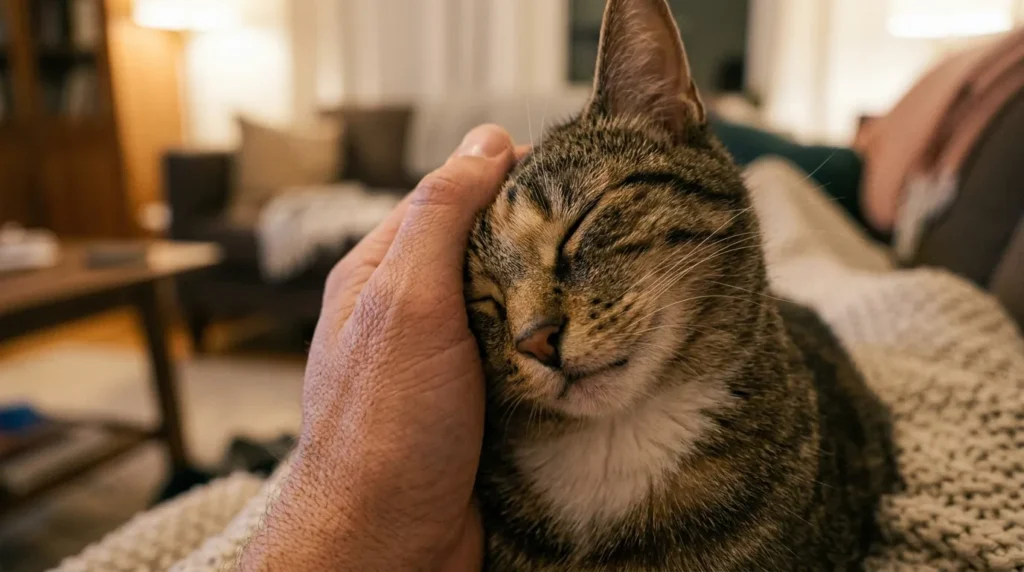
Bunting is the technical term for a cat pressing facial glands against a person, animal, or object on purpose. Two glands do the work: the temporal glands above and in front of the eyes, and the pinna glands at the base of each ear. These differ from the cheek glands cats use during regular face rubbing. The forehead and ear glands carry a pheromone mix tied to social bonding, not territory marking.
Most articles just mention “facial pheromones” without saying which glands fire, or why the forehead gets used over the cheek or chin. Research on feline scent marking backs this up. A study on how cats respond to petting at different gland sites found that stimulation at the temporal gland area drew far more positive responses than touch anywhere else on the body, which lines up with why this exact spot became the go-to greeting zone. The forehead’s pheromone profile is also close to what synthetic calming products, like Feliway, try to copy for anxious cats in multi-cat homes. When your cat presses her forehead against you, she is applying that exact compound straight to your skin.
Is Bunting Bonding, or Is It Territorial Marking? Both, Depending on Context
Here’s where a lot of cat articles oversimplify things. Some sources describe bunting as pure social bonding. Others, including older ethology writing, classify it as a form of territorial scent marking, especially when it follows a tense encounter with another cat. Both are correct, just for different situations.
When your cat bunts a stranger’s leg, a doorframe, or your laptop the second you walk away from it, she’s likely doing territorial upkeep, telling her environment “this is mine.” When she bunts you after a slow blink, with a relaxed tail and soft eyes, that’s the bonding version. The behavior looks almost identical from the outside. The tell is context: who or what she’s marking, what came right before it, and how her body looks while she does it.
The Colony Scent: Why Your Cat Is Making You Smell Like Family?
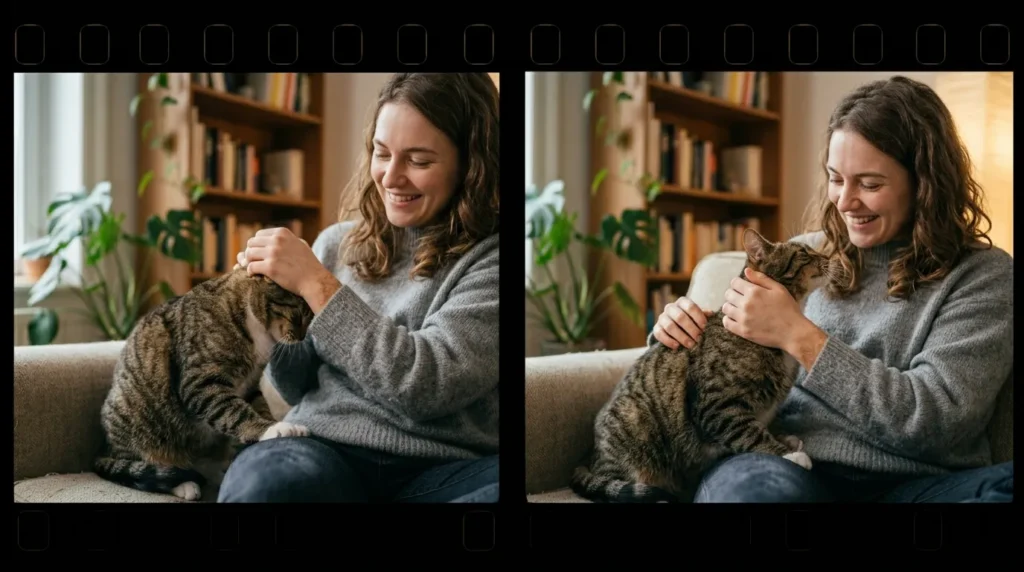
Cats living in the same home build a shared scent by bunting and rubbing on each other again and again. That shared smell lets them recognize group members fast, and spot strangers just as fast. When your indoor cat headbutts you, she runs the same protocol and files you under social group member.
This has a real effect on her stress levels. Combined with her own scent deposits, your smell reads as safe and familiar instead of neutral background noise. Apartment cats without other pets to spread this behavior across tend to aim it entirely at their one person, more often and more firmly than cats sharing a home with several animals.
This is also why she headbutts things that smell like you: a jacket you just took off, or the pillow you sleep on. She is refreshing the group scent on items tied to you, because those items need to keep smelling like hers for her own comfort.
Multi-pet homes add another layer. Cats who get along will bunt each other’s heads and flanks the same way they bunt you, and some will bunt a friendly dog too. A cat who skips this with a housemate animal usually just has not accepted that animal as family yet, not that she dislikes them.
Want the fuller picture of how she talks to you day to day? Reading up on indoor cat behavior puts bunting in context with everything else she does. It is not a random bump. It is a deliberate, chemically precise move, and it’s one piece of the bigger behavior picture we cover in our full indoor cat behavior guide.
The Vulnerability Signal: Why Your Cat Headbutts You at the Forehead
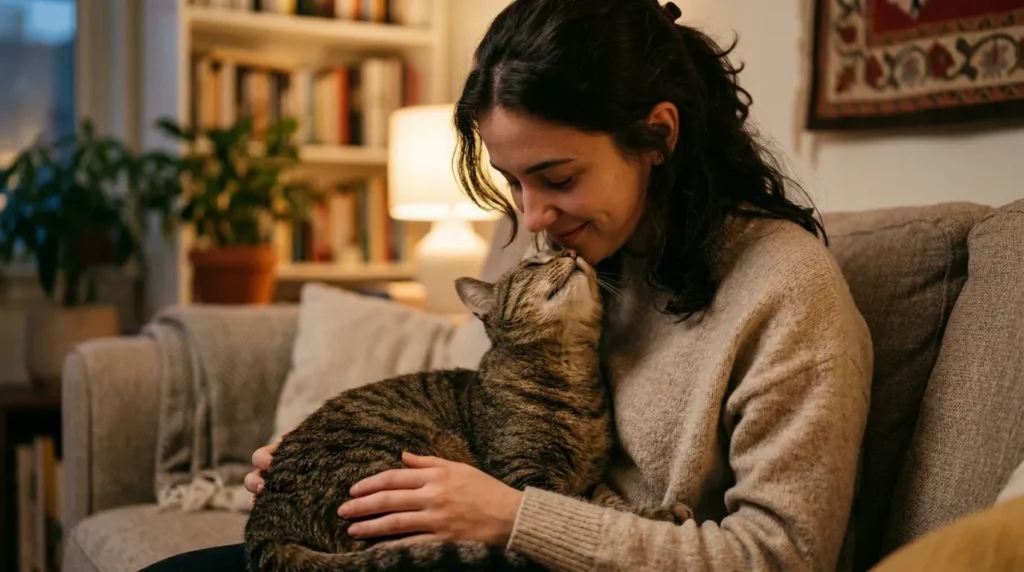
The top of a cat’s head is the one spot she cannot defend with teeth or claws in a fight. Holding it against you for several seconds is deliberate. She only does this with someone she has already decided poses zero threat. A headbutt carries more than scent. It is also a trust statement: I do not need to guard myself around you.
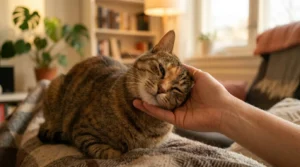
According to ASPCA’s feline body language guide, face and head contact ranks among the strongest positive signals a cat sends a human. When a headbutt is followed by a slow blink, she is finishing a full greeting sequence: chemical acceptance and visual trust in one move.
Here is how to answer a headbutt the way a cat actually wants:
- Give a slow, deliberate blink back
- Offer a short scratch behind the ear or along the jaw
- Skip full-body petting until she asks for it
- Let her walk away first if she wants to
This mirrors how a bonded cat greets another cat, and it closes the loop she opened. Grabbing her, or petting her whole body too fast, often tips into overstimulation. That is usually what causes the sudden bite owners find confusing.
Cat Headbutt vs Other Affection Behaviors
Bunting is one signal in a wider set of cat affection cues, and mixing them up leads to a lot of misread body language. Here is how they compare.
| Behavior | What It Means | How to Spot It |
|---|---|---|
| Head bunt (forehead) | Deep trust plus scent bonding | Firm, sustained press against your face or hand |
| Cheek rub | Lighter, more casual marking | Quick sideways rub against your leg or arm |
| Chin rub | Object or item ownership marking | Chin dragged along a corner, box edge, or your hand |
| Kneading | Comfort and contentment, rooted in kitten nursing | Paws pressing rhythmically on a soft surface |
| Slow blink | Visual trust signal, “I feel safe with you” | Eyes close slowly, often paired with a relaxed face |
| Allorubbing (body rub) | Bonding between group members | Full body slides along your legs or another cat |
| Tail wrap | Affection and claiming contact | Tail curls around your leg or arm while walking past |
| Bunt then nip | Overstimulation, not aggression | A soft bite lands right after a headbutt or pet |
Why Does My Cat Headbutt Only Me and Not Everyone Else in the House?
[Image placeholder: cat headbutting one family member while sitting apart from another family member in the same room]
A cat rarely bunts the whole household equally. She’s picking, and the pick usually comes down to a few things: who feeds her, who handles her the most gently, and who she’s simply logged the most calm hours next to. Bunting is a trust budget, and she spends it on whoever earned it, not whoever wants it most.
A few patterns show up often in multi-person homes:
- The quiet one gets bunted more. Cats read loud movement and sudden noise as risk, so the calmest person in the room often becomes the favorite target.
- The feeder isn’t always the winner. Some cats bond hardest with whoever plays with them, not whoever fills the bowl.
- Kids get skipped more often. Fast, unpredictable movement reads as unsafe to a cat, even from a child she likes.
- New partners take time. A cat may take months to extend bunting to someone who joined the household later, and that’s a timeline issue, not a rejection.
If you’re the one being skipped, don’t force it. Sit near her without reaching for her, let her approach first, and offer a slow blink before she offers hers. Trust moves at her pace, not yours.
How to Get Your Cat to Trust You Enough to Headbutt You
Not every cat bunts right away, and that is normal. Trust builds through repetition, not force. Try these steps if your cat is still warming up to you.
- Sit at her level instead of looming over her.
- Offer a finger near her nose and let her close the distance.
- Give a slow blink first instead of waiting for hers.
- Keep handling short during the first few weeks in a new home.
- Reward calm contact with a treat or gentle scratch, not a hug.
A cat who was rescued or lived outdoors may take months to bunt for the first time. That is not a training failure. It is a cat working through a history you cannot rush.
Why Indoor Apartment Cats Headbutt More Intensely
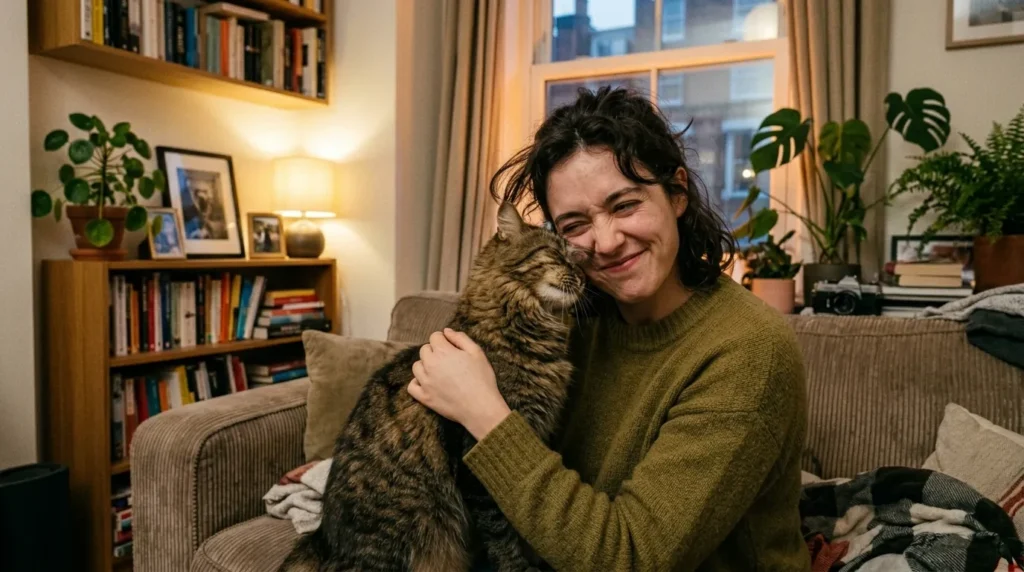
Indoor cats tend to headbutt their owners harder and more often than outdoor cats. The reason is simple: you are the main relationship in her life. An outdoor cat spreads her bonding across other animals, people, and territory. An indoor apartment cat puts the whole job, scent bonding, trust signaling, social upkeep, onto whoever she lives with.
This is a normal adjustment to a smaller social world, not unhealthy dependence. Your cat is doing exactly what her instincts tell her to do, just aimed at the one partner she has.
Giving her vertical space and enough territory to explore cuts overall anxiety, so the bunting you get reads as real affection instead of stress driven clinginess. Daily enrichment that works her hunting instinct also spreads her social needs out, which tends to produce a calmer, more secure headbutt rather than a needy one.
Reality check: cats who headbutt hardest are usually the most confident, not the neediest. A securely attached cat does not tap her forehead against you and pull back. She plants herself, full commitment. A heavy headbutter is a sign of a socially secure cat, not an anxious one.
When a Cat Headbutt Is Actually a Medical Emergency
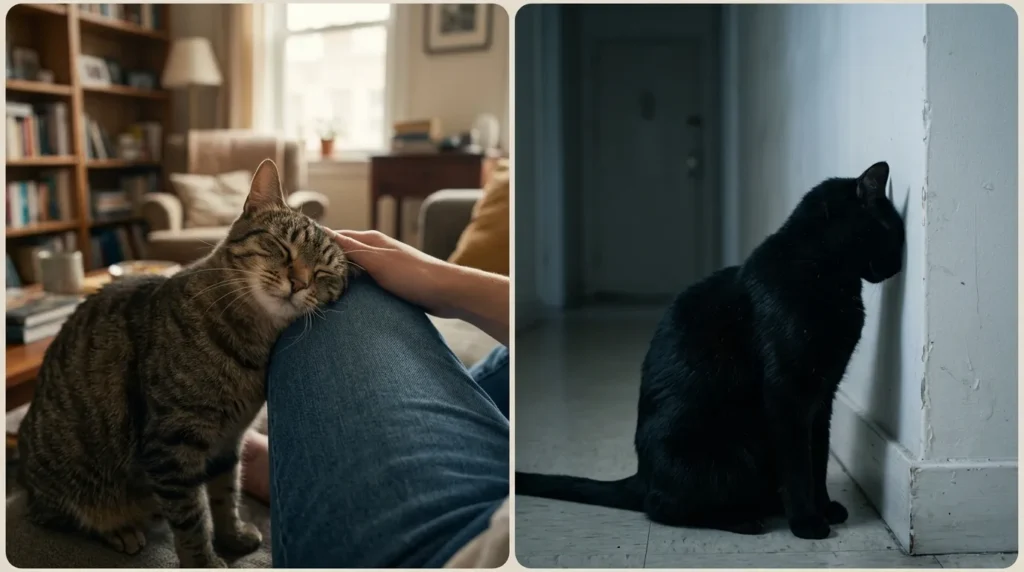
Head pressing looks a little like bunting from across the room, but it is not the same thing. A cat with head pressing shoves the top of her head against a wall, furniture, or the floor, over and over, for a long stretch, with no social engagement attached. No eye contact, no greeting, no relaxed body. She looks lost, not content.
| Feature | Bunting (Normal) | Head Pressing (Emergency) |
|---|---|---|
| Target | You, another cat, or a scented object | Wall, furniture, or floor |
| Duration | A few seconds, then she moves on | Continues for minutes, repeats often |
| Eye contact | Often followed by a slow blink | None, eyes may look glazed or unfocused |
| Body language | Relaxed, responsive to you | Disoriented, unsteady, or circling |
| What it means | Trust and scent bonding | Possible liver disease, brain issue, toxin, or high blood pressure |
Head pressing shows up with other symptoms too: changes in alertness, aimless circling, uneven pupils, seizures, or a loss of normal coordination. A cat leaning her head to one side, walking with a stumble, or pressing her head into a corner and staying stuck there is not greeting you. Unlike bunting, it does not respond to your presence and does not stop on its own.
Call your vet the same day if you see:
- Head pushed into a wall, floor, or furniture with no social behavior around it
- Repeated pressing that lasts minutes, not seconds
- Glazed eyes, uneven pupils, or a blank stare during the episode
- Wobbling, circling, or a head tilt alongside the pressing
- No response when you speak to her or approach
If your cat presses her head into a wall instead of into you, treat it as an emergency. Do not wait to see if it passes.
This article is for informational purposes only. Always consult your vet if you have concerns about your cat’s health.
The Mistake That Misses What Your Cat Is Asking For
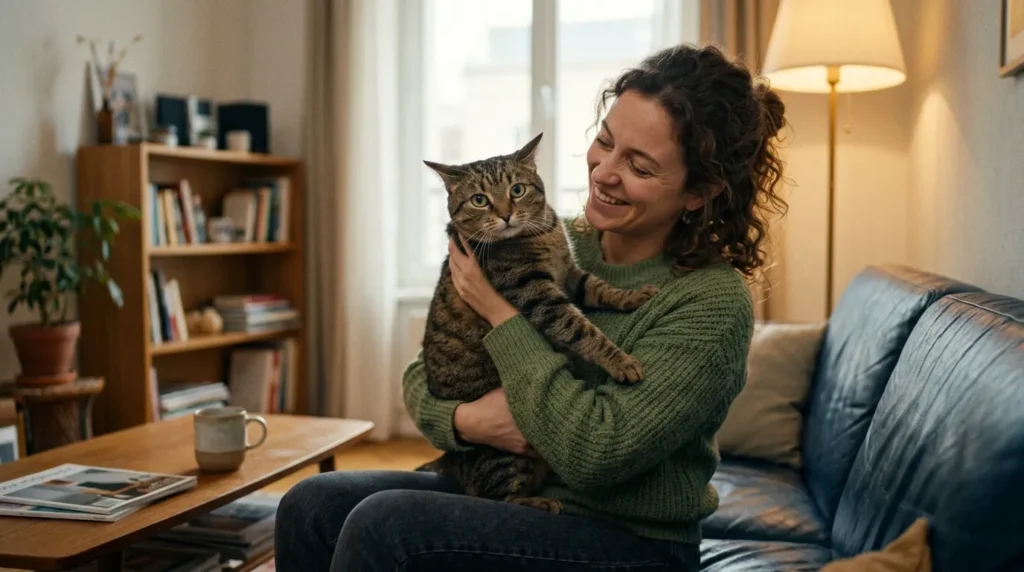
Most owners treat the headbutt as a request for full-body contact instead of what it is: a scent exchange. She just did something precise. Scooping her up, pressing your face into hers, or stroking her whole body right after often tips into overstimulation, and that ends in a bite or a fast retreat. Owners then read the cat as unpredictable, when really the timing was off.
A headbutt is an invitation to match her energy, not raise it. A slow blink, a short ear scratch, then back to whatever you were doing tells her you accepted the greeting without demanding more. Cats who get this response tend to come back and bunt again, instead of learning to avoid a behavior that gets them overwhelmed.
Keeping an eye on her overall health over time helps you know her normal bunting pattern, so any sudden change stands out fast.
Feeding her on a consistent schedule cuts down on hunger driven attention seeking, so you can read true social bunting more clearly. A clean litter box also lowers background stress, since an anxious cat’s bunting tends to feel more frantic than affectionate. Our full indoor cat litter box guide covers setup and placement if yours needs work, and this piece on why a litter box smells even after cleaning is worth a look if odor is part of the stress.
Regular grooming sessions give her structured contact that satisfies the same bonding drive behind allorubbing.
Quick Checklist: Is This Bunting or a Problem?
Bookmark this if you want a fast gut check next time it happens.
- ☑ Aimed at you, another pet, or something that smells like you — normal
- ☑ Lasts a few seconds, then she walks off or settles in — normal
- ☑ Comes with purring, a raised tail, or a slow blink — normal
- ☒ Aimed at a wall, corner, or furniture with no pause — get it checked
- ☒ Repeats for minutes at a time, several times a day — get it checked
- ☒ Paired with stumbling, circling, or a blank stare — same-day vet call
Frequently Asked Questions About Cat Headbutting
Is my cat headbutting me to show love?
Yes, and it is measurable. She is marking you as part of her group using facial pheromones that physically lower her stress hormones when she smells them on you. It is the closest thing cats have to chemically adopting you as family.
Why does my cat headbutt my phone or laptop?
Your device smells like you and it is pulling your attention away from her. She is marking it as socially important, and mildly annoying, at the same time. Think territorial marking mixed with a bid for attention.
How should I respond when my cat headbutts me?
Give a slow blink back, then a short scratch behind the ear, then go back to what you were doing. That mirrors how a bonded cat would greet her, and it finishes the exchange without overloading her.
Why does my cat headbutt me at 3am specifically?
Cats run on a crepuscular clock, meaning dawn and dusk are their active hours. A quiet, dark house with fewer distractions makes you the easiest social target around. It is routine bonding, not distress.
Is it bad if my cat never headbutts me?
No. Some cats show attachment through following you room to room or slow blinking instead of direct contact. Skipping bunting does not mean a weak bond. It just means a different style.
My cat headbutts strangers but not me. Why?
She probably uses bunting as a greeting for people she does not know well, and saves other signals, following you, sitting near you, slow blinks, for the bond she already has with you.
Do kittens headbutt too, or is this an adult cat behavior?
Kittens start head bunting their mother and littermates within the first few weeks of life, before the scent glands fully mature. It is a learned social habit from birth, not something that appears later.
Does a light head bump mean something different from a hard headbutt?
A light tap is often a quick hello or a request for attention. A firm, sustained press is the full bunting ritual, scent deposit and trust signal combined. Both are affectionate, just different intensities.
Why does my cat headbutt me and then walk away?
She finished her greeting. A quick bunt without lingering is often just a hello, not a full bonding moment. Cats do not always need a long interaction to feel connected.
Can a cat headbutt someone she does not like?
Rarely. Bunting takes trust, so cats do not spend it on people or animals they want to avoid. A stiff body or flattened ears during head contact usually points to something else going on.
Why does my cat rub her head on furniture and not just me?
She is spreading her scent across her territory, not just her people. Furniture, doorframes, and corners get the same treatment because she wants the whole space to smell like home.
Does headbutting mean I’m my cat’s favorite person?
It’s a strong signal, but not the only one. Weigh it against following behavior, sleeping location, and how she reacts when you leave the room. A cat who bunts you but sleeps on someone else’s bed every night is telling you something more nuanced than “favorite.”
Why does my cat headbutt me while purring loudly?
Purring during a bunt usually means she’s fully relaxed, not stressed or seeking something urgently. It’s the combination owners want to see: scent bonding plus a calm, content body state.
Is headbutting a sign of dominance in cats?
Not in the way it sounds. Bunting can signal social status within a group, but it’s closer to “this is my person” than “I’m in charge of you.” Dominance framing borrows too much from dog behavior and doesn’t map cleanly onto cats.
Bunting is one thread in a much bigger fabric of how your cat talks to you. If you want the full picture, from body language to daily routines that shape her behavior, our indoor cat behavior guide is the place to start, with linked guides on apartment living, enrichment, health, and litter box setup covering the rest of her daily world.
Cats headbutt people through bunting, a behavior that deposits pheromones from the temporal glands above the eyes and the pinna glands at the base of the ears. This builds a shared scent that marks the person as a safe group member and lowers the cat’s stress through familiar smell. Bunting is a strong trust signal because the top of the head is a spot a cat cannot defend. Which person in a household gets bunted usually comes down to calm handling and time spent together, not just who feeds the cat. The right response is a slow blink and a short ear scratch, not full-body petting. Head pressing against walls or furniture with no social engagement is a neurological emergency and needs same-day vet care.

Written by Mishu
A passionate cat lover and indoor living enthusiast, Mishu is the founder and voice behind Indoor Living Cat – a go-to resource for cat owners who want to create the happiest, healthiest life for their feline companions indoors.
View Full Profile