
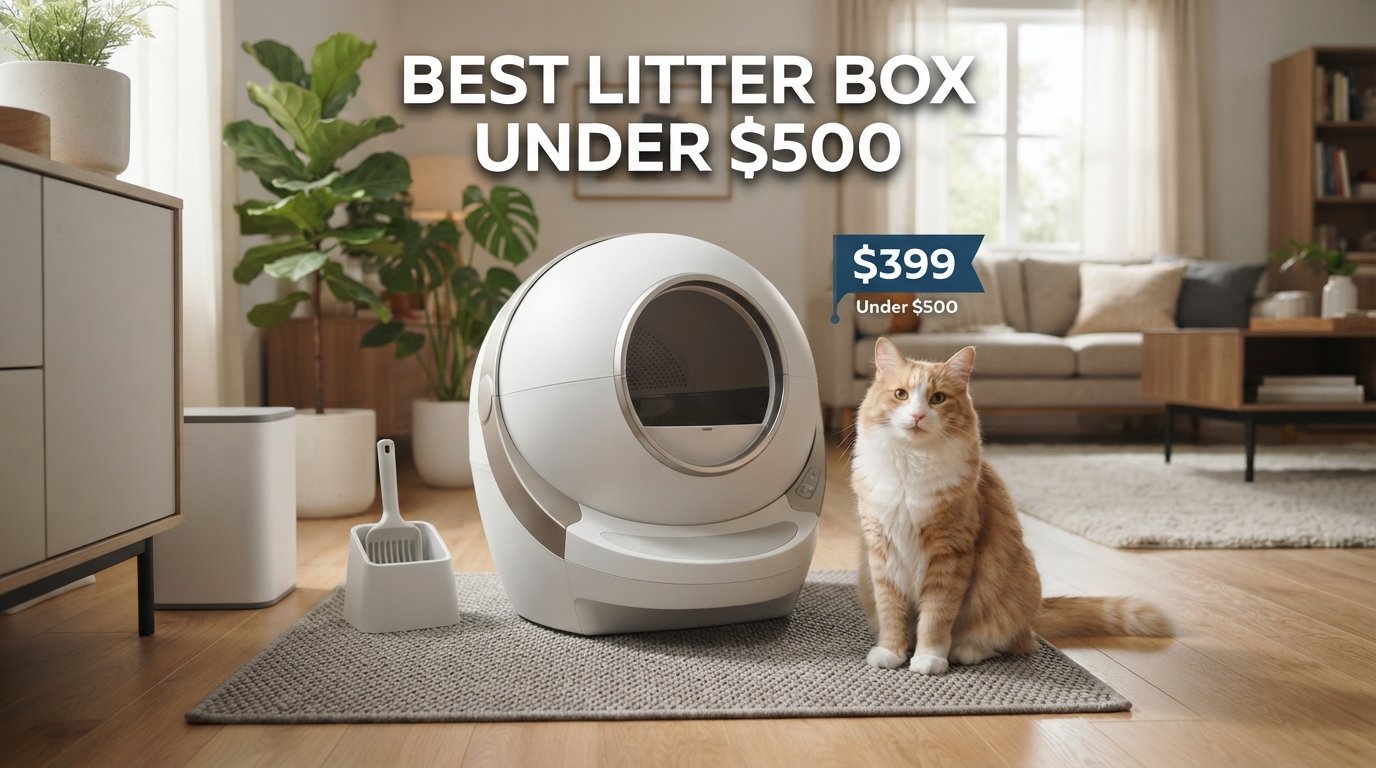
You don’t need to spend $500 on a litter box. That’s the honest answer, and it’s the one most roundups bury. A $500 budget opens the door to app-connected self-cleaning units, but the boxes that actually last longest and control odor best are stainless steel trays that cost a fraction of that. Our top pick, the TEVILA stainless steel box, is one of them.
So this guide covers the full range. We rank seven manual boxes we’d actually put in a home, explain what the $150 to $500 automatic tier gets you, and show you how to tell which one your cat will use. Because a box your cat refuses is a waste of money at any price.
⚡ Quick Verdict
What a $500 Budget Actually Buys You
Cat litter boxes stretch from $10 plastic pans to $700 robots, and the jump in price doesn’t track the jump in usefulness. Here’s how the market breaks down as of September 2026. Prices move constantly, so treat these as bands, not quotes.
| Price Band | What You Get | Who Should Stop Here |
|---|---|---|
| Under $30 | Basic open plastic pans. No odor treatment, no high sides, no liner rim. They work and they’re light. | Kitten owners, foster homes, anyone needing a spare box in a second room. |
| $30 to $70 | High-sided plastic, sifting trays, antimicrobial treatment like Microban, liner rims. Also where most stainless steel trays sit. | Most people. This band holds our top two picks and solves odor and tracking without electronics. |
| $70 to $200 | Furniture-style enclosures, top-entry designs, XL steel boxes, and entry-level rake-style automatics. | People hiding the box in a living room, or testing automation without much risk. |
| $200 to $500 | Rotating-chamber self-cleaning units with app control, weight tracking, and sealed waste drawers. The Neakasa M1 sits near $380 and the M1 Lite near $250. | Multi-cat homes, people who travel, anyone whose main complaint is the daily scoop. |
| Over $500 | Flagship units. The Litter-Robot 4 lists at $699, which puts it outside a $500 ceiling unless you catch a sale or buy reconditioned. | Buyers who want the longest track record and don’t mind paying for it. |
Two things follow from that table. First, if you want a self-cleaning box and you’re capped at $500, you’re shopping the $200 to $500 band, and we cover that separately in our guide to the Best Automatic Litter Box Under $500. Second, if odor and durability are your real problems, a $50 steel tray beats a $400 machine, because steel doesn’t absorb anything and has nothing to break.
Litter Box or Cat Litter? Check Which One You’re Shopping For
People search for “cat litter” and “cat litter box” interchangeably, and they’re not the same purchase. The box is the tray. The litter is what goes in it. If you came here looking for the substrate rather than the container, here’s the short version so you don’t waste a trip.
| Litter Type | Strength | Weakness | Works in Automatic Boxes? |
|---|---|---|---|
| Clumping clay (bentonite) | Tight clumps, cheap, cats accept it readily | Heavy bags, dusty, tracks on paws | Yes, it’s the default |
| Lightweight clay | Roughly half the weight to carry and pour | Softer clumps, more dust, gets kicked out easily | Sometimes. Weight sensors can misread it |
| Crystal (silica gel) | Absorbs urine, low dust, long life between changes | Crunchy texture some cats hate, pricier per month | Only in sifting systems built for it |
| Pine pellets | Natural odor control, biodegradable, very low tracking | Breaks into sawdust, needs a sifting tray | Rarely. Use a manual sifting box instead |
| Tofu or corn | Flushable in small amounts, light, soft on paws | Can mold in humid rooms, costs more | Usually yes, check the manual |
💡 Quick tip on box and litter pairing
Stainless steel pairs with anything, which is part of why we rank it first. Sifting trays like the Arm & Hammer model below only work properly with litter that separates cleanly, so pine and crystal are a good match and fine-grain clumping clay is not.
Side-by-side photo of five litter types poured into small dishes, labeled. Alt text: “Comparison of clumping clay, lightweight clay, crystal, pine pellet, and tofu cat litter.”
Our Top Picks at a Glance
| Image | Product | Best For | Score | Link |
|---|---|---|---|---|
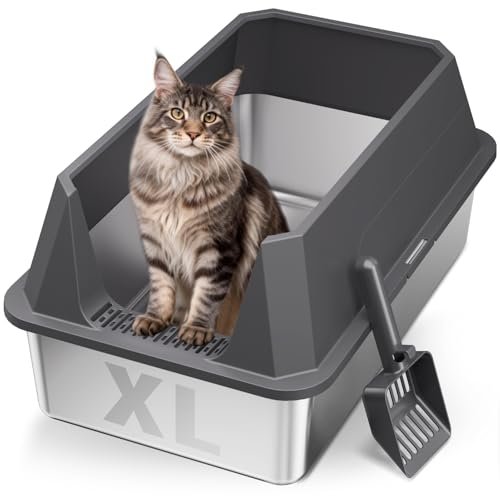 |
TEVILA Stainless Steel Litter Box with High Sides, XL High S 🏆 Editor’s Pick |
Leak-proof, odor-free, large cats | 9.5/10 | View on Amazon Free Shipping & 30-Day Returns |
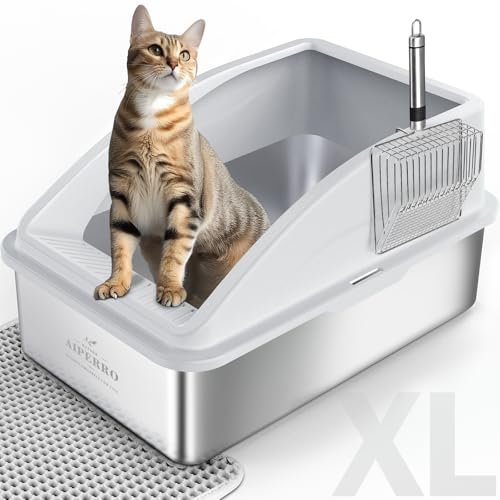 |
Stainless Steel Litter Box | XL Enclosed Cat Litter Boxes wi 🥈 Runner-Up |
Stopping litter tracking, privacy | 9.2/10 | View on Amazon Free Shipping & 30-Day Returns |
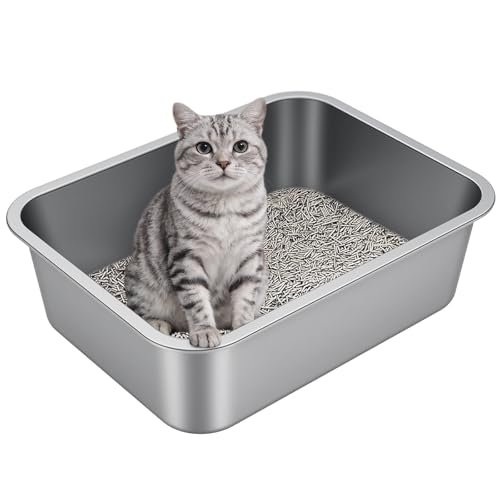 |
Idymere Stainless Steel Litter Box with High Sided, Metal Ca | Compact spaces, smaller cats | 8.2/10 | View on Amazon Free Shipping & 30-Day Returns |
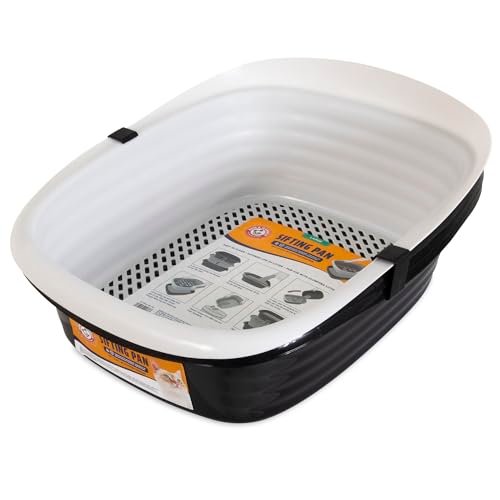 |
Arm & Hammer Large Sifting Litter Box Scoop Free Cat Litter ♻️ Low-Maintenance Pick |
Skipping the daily scoop without electronics | 7.8/10 | View on Amazon Free Shipping & 30-Day Returns |
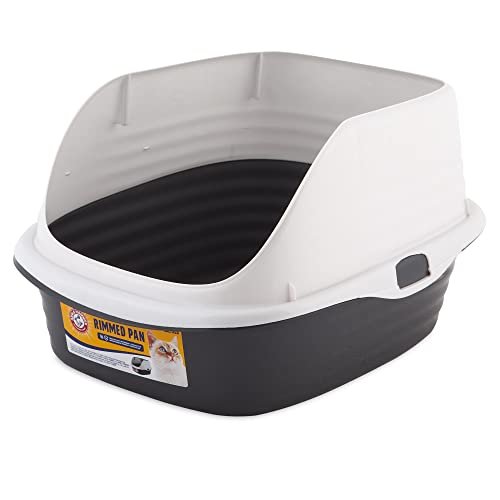 |
Arm & Hammer Rimmed Cat Litter Box with High Sides and Micro | Liner users on a budget | 7.5/10 | View on Amazon Free Shipping & 30-Day Returns |
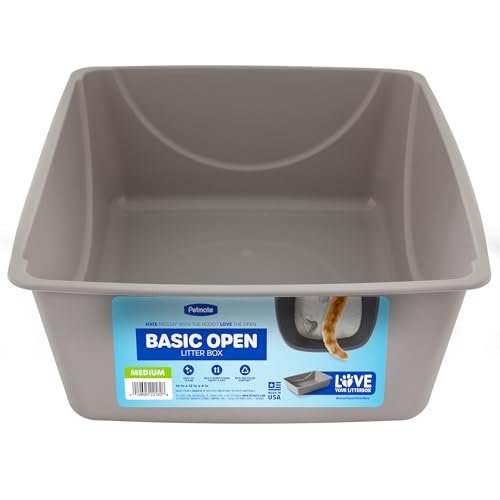 |
Petmate Open Cat Litter Box, Blue Mesa/Mouse Grey,M (Pack of | A simple spare box for a second room | 6.8/10 | View on Amazon Free Shipping & 30-Day Returns |
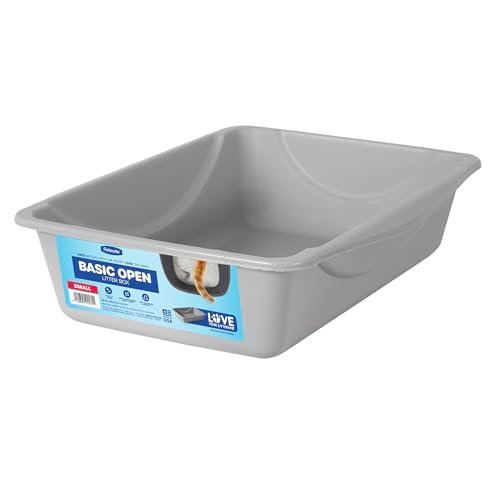 |
Petmate Basic Open Cat Litter Pan, Multidirectional Easy to 💵 Budget Pick |
Kittens, travel, tight apartments | 6.5/10 | View on Amazon Free Shipping & 30-Day Returns |
Find Your Match in 30 Seconds
Most people arrive with one specific complaint. Find yours below and skip straight to the review.
| Your Situation | What to Prioritize | Our Pick |
|---|---|---|
| “He sprays up the wall” | Waterproof, leak-proof walls at 5 inches or higher, welded or buckled seams | TEVILA Stainless Steel |
| “Litter is everywhere” | Enclosed design, angled filter plate, a mat at the exit | AIPERRO XL Enclosed |
| “The room always smells” | Non-porous material. Plastic absorbs urine through scratch marks, steel doesn’t | Any stainless steel box |
| “I want it cheap and simple” | Open pan, no moving parts, easy to rinse in a tub | Petmate Basic Open Pan |
| “I hate scooping” | A sifting tray, or an automatic unit if your budget reaches $250 or more | Arm & Hammer Sifting |
| “My apartment is tiny” | A compact footprint under 17 inches long, or a vertical automatic design | Idymere Stainless Steel |
| “I need something light and portable” | Thin plastic, a lifting rim on all sides, low entry wall | Petmate Basic Open Pan |
| “I want the healthiest option” | Food-grade stainless steel with no coating to chip, plus low-dust litter | TEVILA Stainless Steel |
| “My cat is 15 pounds and growing” | At least 22 inches of interior length so he can turn without touching a wall | TEVILA or AIPERRO |
📋 How We Evaluated
We scored each box on five things, weighted in this order:
- Odor behavior over time (30%). Whether the material holds smell after months of use, not just on day one.
- Size against feline guidelines (25%). Interior length measured against the 1.5x body-length rule, and entry height for seniors and kittens.
- Containment (20%). Wall height, seam design, and how much litter ends up outside the box.
- Cleaning effort (15%). How many steps it takes to do a full dump and rinse.
- Cost per year of service (10%). A $50 box that lasts a decade beats a $20 box replaced annually.
Specs come from manufacturer listings and were checked against current product pages in September 2026. We don’t score a box we wouldn’t put in our own house.
Detailed Reviews
1
TEVILA Stainless Steel Litter Box with High Sides, XL High S🏆 Editor’s Pick
9.5/10
| Material | Stainless steel |
| Dimensions | 22.8 x 15 x 10.2 inches |
| Wall Height | 5.7 inches |
| Included | Scoop and pads |
| Best For | Large cats, sprayers, multi-cat homes |
What We Found
The TEVILA sets the bar for hygiene and durability. Walls run 5.7 inches with external buckles holding the corners, and that combination is what stops urine from wicking out at the seams. If you own a cat who stands up to pee, this is the design detail that matters most, and it’s the one cheap boxes skip.
At 22.8 inches long it clears the 1.5x rule for a cat up to roughly 15 inches nose to tail base, so a Maine Coon has room to turn and dig. Steel is non-porous, so there’s no scratch network for bacteria to settle into. Waste slides off under a rinse instead of needing a scrub, and the included non-slip pads keep it from sliding on tile.
You buy it once. That’s the point. A plastic box replaced every year costs more over five years and smells worse the whole time.
💬 My Take
Switching to steel is the single change that fixed the smell in my spare room. I’d buy this again without thinking about it.
Who It’s For
Owners of large cats or multi-cat households who want odor gone rather than masked. It’s the right call if you’re tired of replacing scratched, smelly plastic every year.
✅ Pros
- Non-porous steel won’t hold odor.
- 5.7-inch buckled walls contain leaks.
- Scratch-proof, so it stays smooth for years.
- 22.8 inches fits cats other boxes cramp.
❌ Cons
- Costs more up front than plastic.
- Heavier to carry to the tub.
- Metal rings when a cat digs hard.
- Open top won’t hide the box from guests.
View Price on Amazon Free Shipping & 30-Day Returns Available
2
Stainless Steel Litter Box | XL Enclosed Cat Litter Boxes wi🥈 Runner-Up
9.2/10
| Material | Stainless steel |
| Dimensions | 23 x 15 x 11 inches |
| Design | Enclosed with lid |
| Extras | Mat and metal scoop |
| Best For | Tracking control, shy cats |
What We Found
The AIPERRO takes the steel advantage and adds a lid. Its 30-degree angled filter plate sits at the exit, so litter knocks off paws on the way out instead of riding down the hall. That one feature does more for a clean floor than any mat we’ve used.
At 23 by 15 inches, it’s slightly longer than the TEVILA and a full inch taller, and the base is leak-proof, so a sprayer won’t reach the floor. The mat and metal scoop come in the box, which saves a separate order. Steel again means no rust, no absorbed urine, no yearly replacement.
The tradeoff is real though. Some cats won’t enter an enclosed box, and a lid traps ammonia between cleanings if you fall behind on scooping. If your cat already uses a hooded box happily, this is the upgrade. If he’s never seen one, start with the open TEVILA.
💬 My Take
Best enclosed box I’ve come across. It keeps the room clean and doesn’t hold smell the way hooded plastic does.
Who It’s For
Owners of large cats who want tracking to stop, and anyone whose cat prefers to do their business out of sight. Good pick if the box lives somewhere people walk past.
✅ Pros
- Angled filter plate cuts tracking sharply.
- Steel stays hygienic and rust-free.
- 23 inches fits big cats easily.
- Mat and metal scoop included.
❌ Cons
- Some cats refuse enclosed boxes.
- Heavier than plastic alternatives.
- Lid adds a step to every cleaning.
- Traps odor if you skip a day of scooping.
View Price on Amazon Free Shipping & 30-Day Returns Available
3
Idymere Stainless Steel Litter Box with High Sided, Metal Ca
8.2/10
| Material | Stainless steel |
| Dimensions | 16.9 x 13 x 5.1 inches |
| Design | Open-top |
| Surface | Non-stick |
| Best For | Kittens, small cats, tight spaces |
What We Found
The Idymere is the compact answer for people who want steel but don’t have room for a 23-inch tray. At 16.9 by 13 inches it fits beside a toilet or under a shelf, and the 5.1-inch walls still catch most of what a digger throws.
Rounded edges make it safe to grab with wet hands. The smooth surface means waste doesn’t stick, so a rinse and a wipe finishes the job. You can also use it as a bathing tub for a small pet or as storage when your cat outgrows it, which softens the sting of buying a box your kitten will only need for a year.
Be clear on the limit though. At 16.9 inches it’s under the 1.5x rule for any adult cat longer than about 11 inches in the body, so a full-grown Ragdoll will be cramped. Buy it for a kitten, a small adult, or a second box in a bathroom.
💬 My Take
A big step up from plastic in a small footprint. Just measure your cat before you order, because the size is the catch.
Who It’s For
Owners of kittens or smaller adult cats in apartments. Also a good second or third box if you’re following the one-box-per-cat-plus-one rule and running out of floor space.
✅ Pros
- Steel stops odor buildup for good.
- Non-stick surface rinses in seconds.
- Rounded edges are safe to handle.
- Fits where bigger boxes won’t.
❌ Cons
- 16.9 inches is too short for big cats.
- No lid, so no privacy.
- 5.1-inch sides won’t stop a sprayer.
- No scoop or mat included.
View Price on Amazon Free Shipping & 30-Day Returns Available
4
Arm & Hammer Large Sifting Litter Box Scoop Free Cat Litter ♻️ Low-Maintenance Pick
7.8/10
| Feature | Lift-to-sift technology |
| Protection | Microban |
| Material | Recycled plastic |
| Compatibility | Pine, crystal, clumping |
| Best For | Skipping the scoop on a budget |
What We Found
This is the cheapest way to stop scooping. The box stacks three trays, and you lift the top one to drop clean litter through while waste stays behind. No motor, no app, no power cord, nothing to fail. If an automatic box is out of budget and the scoop is your actual complaint, start here.
Microban is molded into the plastic rather than sprayed on, so it keeps working on odor-causing bacteria as the surface wears. The large footprint suits most adult cats. It handles pine, crystal, and clumping litter, though the sifting works best with pine and crystal because fine clumping clay tends to fall through with the clean litter.
It’s still plastic, so it’ll scratch and eventually hold smell. Plan on replacing it about once a year. And the system only works if you sift daily, since letting clumps sit defeats the whole design.
💬 My Take
Pick this if the daily scoop is what you hate. It won’t last like steel, but it saves real minutes every day.
Who It’s For
Busy owners who want less handling, and anyone using pine pellets or crystal litter. A good middle step if you’re curious about automation but not ready to spend $250 on a machine.
✅ Pros
- Sifting replaces daily scooping.
- Microban is built into the plastic.
- Takes pine, crystal, or clumping litter.
- No motor means nothing to break.
❌ Cons
- Plastic scratches and holds odor over time.
- Fine clumping clay sifts poorly.
- Only works if you sift every day.
- Three trays mean more parts to rinse.
View Price on Amazon Free Shipping & 30-Day Returns Available
5
Arm & Hammer Rimmed Cat Litter Box with High Sides and Micro
7.5/10
| Material | Recycled plastic |
| Dimensions | 18.7 x 15.5 x 10.6 inches |
| Feature | Microban odor protection |
| Compatibility | All litter types |
| Best For | Liner users, budget buyers |
What We Found
If you clean with liners, the rim is the reason to buy this one. It grips a liner’s edge so the bag doesn’t slide down the wall mid-week, which is the failure mode that makes most people give up on liners entirely.
Walls reach 10.6 inches, tall enough to keep a normal digger’s litter inside. Microban is in the plastic, same as the sifting model. The body uses recycled material, which matters if that’s on your list. At 18.7 inches long it suits an average cat but not a big one.
Claws tear liners. That’s the honest limitation here, and no rim design fixes it. Plastic will also start holding smell once the surface scratches, usually within a year of daily use.
💬 My Take
A dependable plastic tray that makes liner cleanup faster. Solid, not exciting, and priced accordingly.
Who It’s For
Owners who clean with liners and want the bag to stay put. Also fine for anyone who wants high sides and Microban without paying for steel.
✅ Pros
- Rim holds liners in place properly.
- 10.6-inch walls contain digging.
- Microban fights odor bacteria.
- Made from recycled plastic.
❌ Cons
- Plastic still retains odor eventually.
- Won’t last like metal.
- Claws tear liners regardless of the rim.
- 18.7 inches is short for large breeds.
View Price on Amazon Free Shipping & 30-Day Returns Available
6
Petmate Open Cat Litter Box, Blue Mesa/Mouse Grey,M (Pack of
6.8/10
| Material | Plastic |
| Dimensions | 16 x 12 inches |
| Design | Open-top |
| Origin | Made in USA |
| Best For | A no-frills spare box |
What We Found
Nothing clever here, and that’s fine. The Petmate Open is a mid-sized plastic tray with a wide base and a rim on all four sides for lifting. It’s made in the USA, it rinses clean, and it costs almost nothing.
The open design keeps air moving, which helps between scoops. There’s no antimicrobial treatment and no high-side scatter guard, so a vigorous digger will send litter over the edge. Standard-grade plastic will scratch with use and start holding odor after several months.
Where it earns its place is as box number two or three. Cats want more boxes than most homes have, and this is the cheap way to add one to a spare bathroom without another $50 outlay.
💬 My Take
A classic basic tray. I’d buy it as a second box, not as the main one.
Who It’s For
Anyone adding a spare box to a second room, fostering, or setting up for a short stay somewhere. It’s a dependable tray for people who don’t want features they won’t use.
✅ Pros
- Simple design with nothing to fail.
- Rim on all sides makes lifting easy.
- Open top keeps air circulating.
- Cheap enough to buy two.
❌ Cons
- Plastic picks up odor over time.
- No scatter guard or high sides.
- 16 inches is small for a big cat.
- No antimicrobial treatment.
View Price on Amazon Free Shipping & 30-Day Returns Available
7
Petmate Basic Open Cat Litter Pan, Multidirectional Easy to 💵 Budget Pick
6.5/10
| Material | Plastic |
| Dimensions | 14 x 10.5 x 3.5 inches |
| Design | Open-top |
| Suitability | Kittens/Small cats |
| Best For | Travel, training, tight budgets |
What We Found
The 3.5-inch wall is the whole story. A kitten or an arthritic senior can step in without hauling themselves over a ledge, and that’s the difference between a cat using the box and a cat going next to it. Low entry solves an accessibility problem no premium box addresses.
At 14 by 10.5 inches it’s the smallest box here, which makes it easy to carry, easy to stash in a bathroom corner, and easy to throw in a car for a weekend. The rim helps you lift it without tipping. It costs less than a bag of litter.
Don’t buy this as an adult cat’s only box. It’s too short for the 1.5x rule, the low sides guarantee scatter, and plain plastic will hold odor within months. Treat it as a starter tray or a travel pan and it does exactly what you need.
💬 My Take
Good starter and travel tray. Plan on replacing it with something bigger once the kitten grows.
Who It’s For
Kitten owners who need low, easy access for litter training. Senior cats with stiff joints. Small apartments, travel setups, and anyone who prefers dumping the whole tray over sifting through it.
✅ Pros
- 3.5-inch entry suits kittens and seniors.
- Cheapest option on this list.
- Light enough to carry one-handed.
- Compact footprint fits anywhere.
❌ Cons
- Plain plastic absorbs odor quickly.
- Too small for an adult cat full-time.
- Low sides mean litter on the floor.
- No odor treatment at all.
View Price on Amazon Free Shipping & 30-Day Returns Available
Should You Spend the Full $500 on an Automatic Box?
Sometimes, yes. If you’re away from home for long stretches, if you have three or four cats generating more waste than one daily scoop handles, or if a physical limitation makes bending over the box hard, automation earns its price. For everyone else, a good manual box plus a two-minute daily habit does the same job.
Here’s where the market sits under a $500 cap. The Litter-Robot 4 is the best-known unit and lists at $699, which puts it over budget at full price, though reconditioned units and sales bring it closer. Below that, the Neakasa M1 runs around $380 with an open-top design that nervous cats accept more readily than a globe, and the M1 Lite sits near $250. Leo’s Loo Too lands in the $349 to $500 range and adds UV sterilization plus Alexa and Google Home support. CNN Underscored also rates the Catlink SE well as an under-$500 pick with a smaller footprint.
Read This Before You Buy a Cheap Automatic Box
⚠️ Safety warning
Forbes Vetted reports that several low-cost automatic litter boxes sold under generic brand names have been linked to serious injuries and deaths in cats, and notes that even the well-reviewed $380 Neakasa M1 had two reported safety incidents. Stick to established brands, confirm the unit has weight and infrared sensors that halt a cycle when a cat enters, and don’t leave a kitten under 5 pounds alone with any rotating unit. No self-cleaning box is truly hands-off.
If you’re leaning that direction, we compare the current field in detail in our Best Automatic Litter Boxes guide and the price-capped version at Best Automatic Litter Box Under $500.
Comparison graphic: manual stainless steel box vs automatic unit, with annual cost and maintenance time side by side. Alt text: “Manual stainless steel litter box compared to an automatic self-cleaning litter box.”
What to Look For Before Buying
Picking a box means balancing your cat’s comfort against your own cleaning habits. Get the material and the size right and the rest is detail.
Material Durability and Hygiene
Stainless steel wins because it’s non-porous. Plastic develops a web of claw marks within months, and urine settles into those grooves where no amount of scrubbing reaches it. That’s the real reason old plastic boxes smell. Steel rinses back to clean every time and lasts years instead of one.
Size and Accessibility
Measure your cat from nose to the base of the tail, then multiply by 1.5. That’s your minimum interior length. A 12-inch cat needs 18 inches of box. Kittens and older cats also need a low entry wall, around 3 to 5 inches, because a 10-inch ledge is a barrier to stiff hips.
Containment and Leak Protection
High sides stop litter from landing on your floor. If your cat sprays standing up, look for walls above 5 inches and check how the corners are joined, since that seam is where urine escapes. Enclosed boxes hide the mess well, but plenty of cats want a clear view of the room while they’re vulnerable.
Cleaning and Maintenance Style
Decide how you actually want to clean before you buy. Open tops scoop fastest. Sifting trays skip the scoop but need daily use to work. Enclosed boxes need the lid off every time. Automatic units need a drawer emptied and a deep clean monthly. Pick the routine you’ll keep.
How Many Boxes You Need
The standard guidance is one box per cat, plus one spare. Two cats means three boxes. It sounds excessive until you’ve dealt with a cat who started going on the rug because another cat blocked the only box. Spread them across different rooms and floors rather than lining them up in one spot, since three boxes in a row counts as one location to a cat.
Where You Put It
Quiet, reachable, and not next to the food bowl. Avoid spots beside a washing machine or furnace where a sudden noise can startle a cat mid-use, because one bad scare can put them off that box permanently. Cats also prefer somewhere with two exits, so a dead-end closet is a harder sell than an open corner.
Litter Depth
Two to three inches works for most cats and most litters. Less than that and clumps stick to the bottom. More than four inches and you’re wasting litter while cats kick the excess out. Deep-fill only makes sense with high-sided boxes and enthusiastic diggers.
If you’re still deciding which self-cleaning model fits your home, see our roundup of the Best Automatic Litter Boxes.
How to Switch Your Cat to a New Litter Box
Cats dislike change, and a new box is change. Rush the swap and you’ll find out where else in the house your cat is willing to go. Do it over about a week instead.
- Set the new box next to the old one. Don’t remove anything yet. Both boxes stay available, side by side, in the spot your cat already trusts.
- Use the same litter, same depth. Change one variable at a time. If you also want a new litter, save that for a month after the box swap is settled.
- Move a scoop of used litter across. One small scoop from the old box into the new one carries the scent that tells your cat this is a bathroom.
- Wait for two or three confirmed uses. Watch for clumps in the new box, not just your cat walking past it. This usually takes two to four days.
- Make the old box less appealing. Leave it slightly dirtier than usual for a couple of days while keeping the new one spotless. Cats pick the cleaner option.
- Remove the old box. Take it out once the new one has been used consistently for three days straight.
- Watch for a week. Any accidents outside the box mean you moved too fast. Put the old one back and restart at step four.
🩺 When it isn’t the box
A cat who suddenly stops using a box they’ve always used may have a urinary tract issue, not a preference. Straining, frequent small urinations, crying in the box, or blood are reasons to call a vet the same day, particularly for male cats. A blocked urethra is a medical emergency.
Litter Box Cleaning Schedule
Most odor complaints trace back to a schedule, not a product. Here’s what actually needs doing and how often.
| How Often | Task | Why It Matters |
|---|---|---|
| Twice daily | Scoop solids and urine clumps | Ammonia builds within hours. This is the single biggest factor in whether a room smells. |
| Every 2 to 3 days | Top up litter to 2 to 3 inches | Shallow litter lets clumps weld to the bottom of the box. |
| Weekly | Sweep or vacuum around the box, wash the mat | Tracked litter spreads odor through the whole room. |
| Every 2 to 4 weeks | Full dump, wash with unscented soap and warm water, dry completely | Clears residue scooping misses. Steel can go closer to 4 weeks, plastic closer to 2. |
| Every 12 months | Replace plastic boxes | Scratched plastic holds bacteria you can’t wash out. Steel boxes skip this step entirely. |
✅ Deep-clean checklist
- Empty all litter into a bag, don’t tip it down a drain
- Wash with warm water and unscented dish soap
- Skip bleach, ammonia, and pine or citrus cleaners, which are toxic or repellent to cats
- Rinse until no soap smell is left
- Dry the box fully before refilling, since damp litter clumps to the base
- Wash the scoop at the same time, because it’s the thing you touch most
- Refill to 2 to 3 inches, not to the brim
Five Mistakes That Cost People Money
- Buying by price band instead of by problem. A $400 machine doesn’t fix a box that’s too small. Diagnose the complaint first, then shop.
- Buying too small. The most common error by a wide margin. Cats need 1.5 times their body length, and most boxes on shelves are sized for a kitten.
- Using scented litter to cover odor. Perfume doesn’t remove ammonia, it sits on top of it, and strong scents drive some cats away from the box entirely.
- Keeping one box for two cats. Territorial blocking is a real cause of accidents outside the box. Add boxes before you blame the cat.
- Cleaning with bleach or ammonia products. Ammonia smells like urine to a cat, which marks the spot as a toilet rather than clearing it.
Related Guides
- Best Automatic Litter Boxes
- Best Automatic Litter Box Under $500
- Best Automatic Litter Box for Large Cats
- Best Automatic Litter Box for Multiple Cats
- Best Smart Litter Box for Cats
Frequently Asked Questions
Do I have to spend $500 to get a good litter box?
No. Our top pick is a stainless steel tray that costs a small fraction of that and outperforms plastic on odor and lifespan. Spend the full budget only if you want automation, and even then the useful models sit between $250 and $500.
Are stainless steel litter boxes better than plastic?
Yes, because steel is non-porous. It doesn’t hold smells or bacteria the way scratched plastic does, and it’s a one-time purchase rather than a yearly one.
What’s the cheapest litter box that’s actually good?
For a main box, a mid-range stainless steel tray under $70 gives you the best cost per year of use. For a spare or a kitten, a basic open pan like the Petmate Basic does the job for the price of a bag of litter.
How often should I replace a litter box?
Replace plastic boxes about every 12 months, sooner if the surface is visibly scratched or the smell survives a wash. Stainless steel boxes last for years. Check the base for cracks whenever you deep clean.
Do high-sided boxes prevent litter tracking?
They stop litter being kicked over the edge during digging, which is most of the problem. They don’t stop litter carried out on paws, so pair high sides with a mat at the exit for the full effect.
What is the best litter box size for a large cat?
At least 1.5 times your cat’s body length, measured nose to tail base. For most large breeds that means 22 inches or more of interior length. Both stainless steel picks above clear that mark.
Are enclosed litter boxes good for all cats?
No. Some cats want the privacy, others refuse to enter a space with one exit. Watch your cat’s habits before spending on a hood. If they currently hide to use the box, enclosed is likely a win.
What’s the lowest-maintenance litter box setup?
An automatic unit removes the daily scoop but adds a drawer to empty and a monthly deep clean. Without electronics, a sifting tray with pine pellets is the least hands-on manual option.
Is a lightweight or portable litter box worth it?
For travel, a spare bathroom, or a foster setup, yes. As a daily box, light plastic pans scratch fast and start holding odor within months. Buy one as a second box, not a first.
How many litter boxes do I need for two cats?
Three, using the one-per-cat-plus-one rule. Put them in different rooms rather than side by side, because three boxes in one corner reads as a single location to a cat.
Can I use any litter in an automatic litter box?
No. Most rotating and rake-style units need hard clumping clay to sift properly. Crystal, pine pellets, and some lightweight litters either jam the mechanism or confuse weight sensors. Check the manual before switching.
Are automatic litter boxes safe for cats?
Established models with working weight and infrared sensors have a good record, but Forbes Vetted has documented injuries and deaths tied to generic-brand units, and even well-reviewed models have had reported incidents. Buy a known brand, test the sensors when it arrives, and supervise kittens and very small cats.
🎯 Final Verdict
Buy the TEVILA Stainless Steel Litter Box. Non-porous steel means the smell stops instead of being masked, 5.7-inch buckled walls keep urine off your floor, and 22.8 inches of length fits a cat that most boxes cramp. It costs a fraction of a $500 budget and you won’t be replacing it next year.
If your cat prefers privacy or litter tracking is your main complaint, the AIPERRO enclosed steel box is the one to get instead. And if what you really want is to stop scooping, put the rest of that budget toward a self-cleaning unit in the $250 to $500 range and read the safety notes above before you order.
View Our Top Pick on Amazon Free Shipping & 30-Day Returns Available
Looking for other types of litter boxes? Our complete Indoor Cat Litter Box guide covers covered, stainless steel, top-entry, and automatic options.

Written by Mishu
A passionate cat lover and indoor living enthusiast, Mishu is the founder and voice behind Indoor Living Cat – a go-to resource for cat owners who want to create the happiest, healthiest life for their feline companions indoors.
View Full Profile