
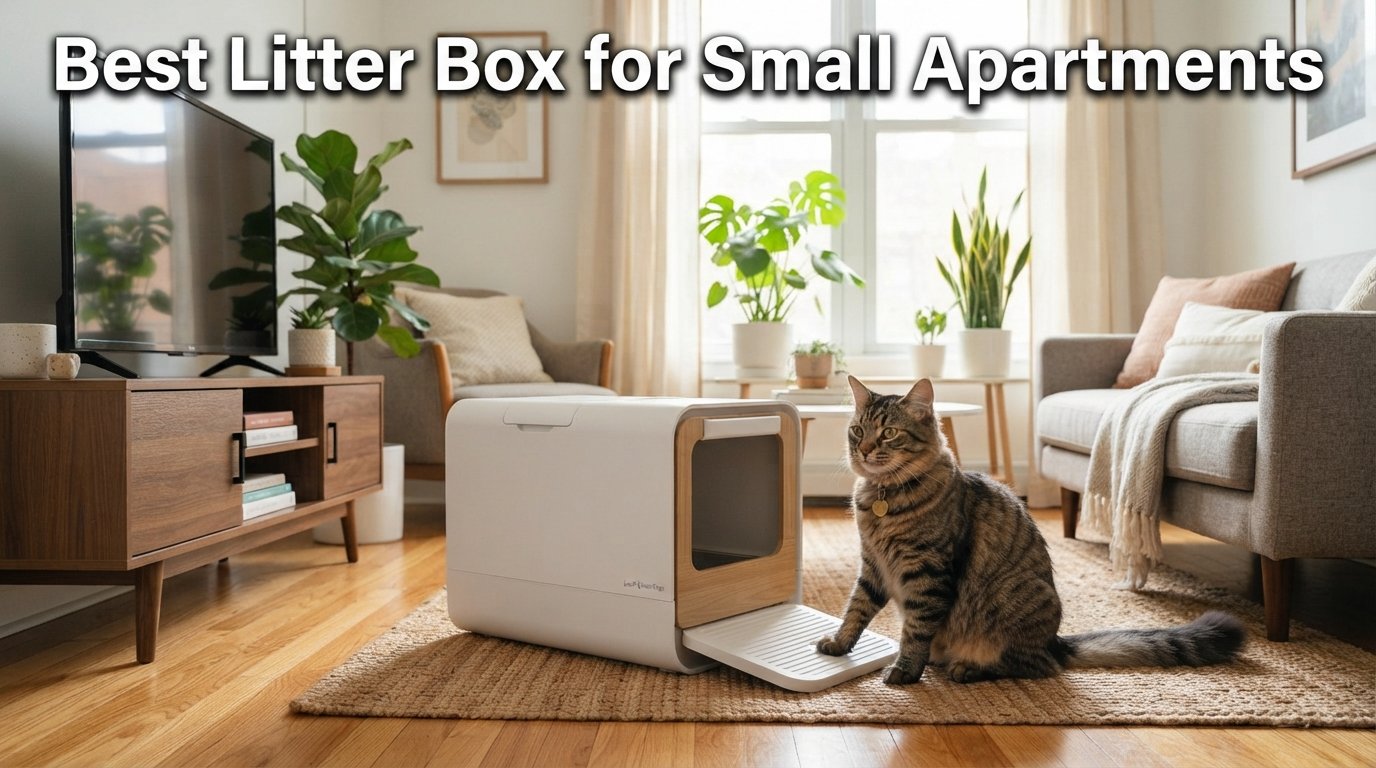
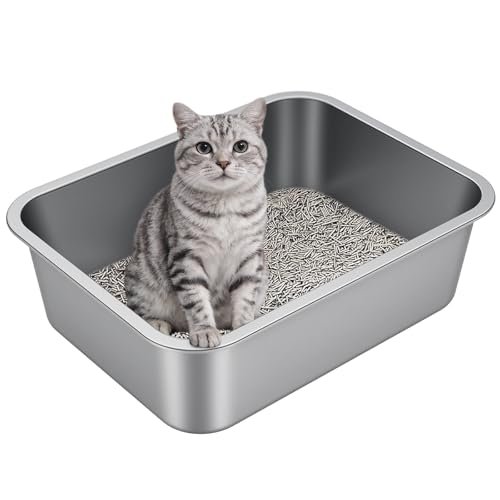
The Idymere stainless steel litter box is the best pick for most small apartments. It takes up 16.93 x 12.99 inches of floor, it doesn’t soak up odor the way plastic does, and it rinses clean. If you need something else, the rest of this guide sorts the other six by what they solve.
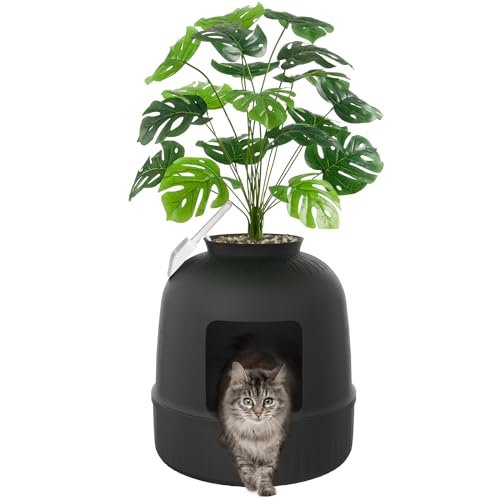
Not every apartment has a spare corner, though. If the box has to live in the living room, the Lifewit hidden enclosure turns it into a planter. If floor space is the tightest limit, the Petmate Basic Open Pan measures 14 x 10.5 inches and suits a kitten or a very small cat. Below you’ll find seven boxes ranked, a size comparison, and a placement and odor routine for studios and one-bedrooms.
Last updated: September 2026. Prices and availability on Amazon change, so check the current listing before you order. As an Amazon Associate, we earn from qualifying purchases made through links on this page.
⚡ Quick Verdict
- The 7 best litter boxes for small apartments at a glance
- How much floor space each box takes (and what size your cat needs)
- Detailed reviews
- What to look for before buying
- Small apartment litter box solutions: placement, odor and tracking
- Choosing cat litter for a small apartment
- Frequently asked questions
Our Top Picks at a Glance
| Image | Product | Score | Link |
|---|---|---|---|
 |
Idymere Stainless Steel High-Sided Litter Box 🏆 Editor’s Pick |
9.5/10 | View on Amazon Free Shipping & 30-Day Returns |
 |
Lifewit Hidden Enclosure Litter Box with Carbon Filter 🥈 Runner-Up |
9.2/10 | View on Amazon Free Shipping & 30-Day Returns |
 |
OneBug Stainless Steel High-Sided Litter Box with Scoop | 8.8/10 | View on Amazon Free Shipping & 30-Day Returns |
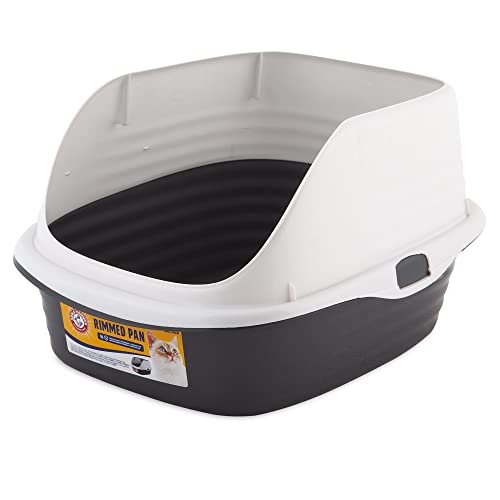 |
Arm & Hammer Rimmed Litter Box with High Sides and Microban | 8.2/10 | View on Amazon Free Shipping & 30-Day Returns |
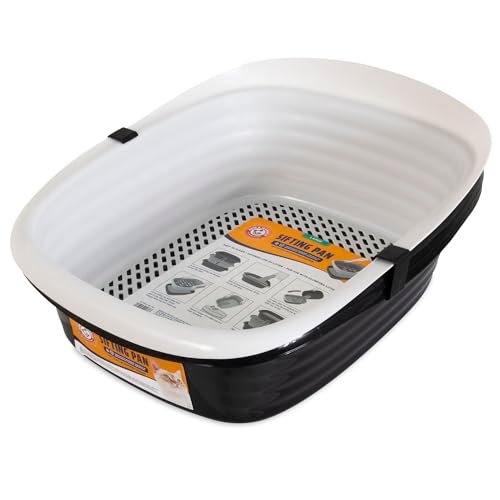 |
Arm & Hammer Large Sifting Litter Box | 7.9/10 | View on Amazon Free Shipping & 30-Day Returns |
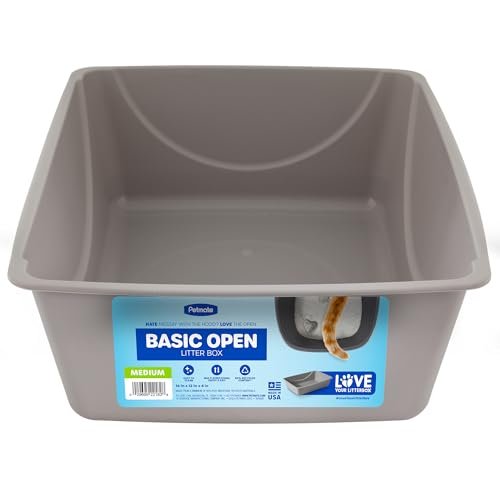 |
Petmate Open Litter Box, Blue Mesa/Mouse Grey (Medium) | 7.2/10 | View on Amazon Free Shipping & 30-Day Returns |
 |
Petmate Basic Open Litter Pan 💵 Budget Pick |
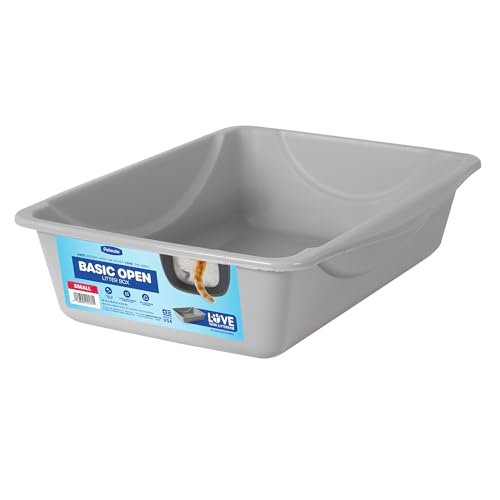
6.5/10 | View on Amazon Free Shipping & 30-Day Returns |
📋 How We Evaluated
Every box gets a score out of 10 on five things: floor space (from the listed dimensions), odor control (the material and any filter), litter scatter (wall height and entry design), how easy it is to clean, and whether a cat has room to turn around. Specs come from the manufacturer listings on Amazon, and the scores are our own judgment.
How Much Floor Space Each Box Takes
In a small apartment, floor space is the first filter. Here’s every pick side by side, ranked from smallest footprint to largest. Floor space is length times width from the listed dimensions.
| Box | Material | Length x width | Height | Floor space | Best for |
|---|---|---|---|---|---|
| Petmate Basic Open Pan | Plastic | 14 x 10.5 in | 3.5 in | About 147 sq in | Kittens, very tight corners |
| Petmate Open (Medium) | Plastic | 16 x 12 in | Not listed | About 192 sq in | Simple open pan, closets |
| Idymere Stainless Steel | Stainless steel | 16.93 x 12.99 in | 5.12 in | About 220 sq in | Easy cleaning, odor resistance |
| OneBug Stainless Steel | Stainless steel | 17.32 x 13.39 in | 7.87 in | About 232 sq in | Litter tracking, older cats |
| Arm & Hammer Rimmed | Recycled plastic | 18.7 x 15.5 in | 10.6 in | About 290 sq in | Diggers, sprayers, liners |
| Arm & Hammer Large Sifting | Recycled plastic | Listed as Large | Not listed | Check listing | Skipping the scoop |
| Lifewit Hidden Enclosure | Plastic | 19 x 47 in (as listed) | Enclosed | Check listing | Hiding the box in a living space |
Top-down diagram drawing all seven boxes to the same scale, so readers can see the footprint differences at a glance. Suggested alt text: “Footprint size comparison of seven litter boxes for small apartments”.
What size litter box does your cat need?
Vets and cat behavior groups commonly recommend a box about 1.5 times as long as your cat, measured from nose to the base of the tail. Grab a tape measure and a treat, and measure yours once.
| Cat length (nose to base of tail) | Box length to aim for |
|---|---|
| 10 in (kitten or very small cat) | 15 in |
| 12 in | 18 in |
| 14 in | 21 in |
| 16 in | 24 in |
| 18 in | 27 in |
Now the honest part. The open pans on this list run 14 to 19 inches long, so by that rule they fit small cats best. Bigger cats trade some comfort for floor space in a studio, and that’s a fair trade if the box passes two checks: your cat can turn around without touching a wall, and all four paws stay inside while it squats. If either fails, go up a size or pick a wider pan, even if it costs you another 50 square inches of floor.
Photo or illustration showing how to measure a cat from nose to base of tail with a tape measure. Suggested alt text: “How to measure a cat to choose a litter box size”.
Detailed Reviews
1
Idymere Stainless Steel High-Sided Litter Box 🏆 Editor’s Pick
9.5/10
| Dimensions | 16.93 x 12.99 x 5.12 inches |
| Material | Stainless Steel |
| Design | High-sided open |
| OdorResistance | High |
What We Found
The Idymere is a stainless steel pan that measures 16.93 x 12.99 inches and stands 5.12 inches tall. That works out to about 220 square inches of floor space, a little less than the OneBug and about a quarter less than the Arm & Hammer Rimmed. Stainless steel is non-porous, so urine doesn’t soak in the way it can with scratched plastic. A wipe-down and a rinse gets it clean.
The 5.12-inch walls stop most litter that gets scratched backward. Cats that dig sideways can fling grains over that height, and a cat that sprays will clear it easily. If yours does either, step up to the OneBug (7.87 inches) or the Arm & Hammer Rimmed (10.6 inches). Rounded edges are easy on paws, and on your hands when you lift the pan to wash it.
The trade is the open top. There’s no lid to hide it and no filter to help, so odor control comes from the material and your scooping habit. Miss a few days and steel won’t save you.
💬 My Take
This is the one I’d put in a studio. It’s the easiest box here to keep clean, and a clean box does more for odor than any filter.
Who It’s For
One small or medium cat in a studio or one-bedroom, with a bathroom corner or closet floor to spare. It also suits anyone whose plastic pan still smells after a wash.
✅ Pros
- Non-porous steel doesn’t absorb urine odor.
- 5.12-inch walls stop most forward-kicked litter.
- Steel won’t crack the way brittle plastic can.
❌ Cons
- Metal feels cold, and some cats need a few days to accept it.
- Costs more up front than a plastic pan.
- Open top with no lid, and walls too short to stop spraying.
View Price on Amazon Free Shipping & 30-Day Returns Available
2
Lifewit Hidden Enclosure Litter Box with Carbon Filter 🥈 Runner-Up
9.2/10
| Dimensions | 19 x 47 inches |
| Material | Plastic |
| Design | Hidden enclosure |
| OdorControl | Carbon filter |
What We Found
The Lifewit looks like a large planter and works as a covered litter box. An activated carbon filter handles odor, and the enclosure keeps the box out of sight in a living room or bedroom, which is the whole reason to buy it.
A low threshold and a small platform make it easy for kittens and older cats to get in. The platform also wipes some litter off paws before the cat steps out, so less ends up on your floor. A removable basin keeps cleanup simple.
It’s the largest item on this list (the listing gives 19 x 47 inches), and the filter needs replacing. Some cats won’t use a covered box at all, so watch for accidents outside it during the first week.
💬 My Take
Buy this when the litter box has to sit in the room where you live and an open pan would look terrible there. If you have a bathroom or closet, the Idymere takes far less floor.
Who It’s For
Apartment owners whose only spare spot is out in the open. It assumes your cat accepts a covered box and that you have room for a piece of furniture.
✅ Pros
- Hides the litter box in a planter-style enclosure.
- Carbon filter helps control odor.
- Integrated step wipes litter off paws.
❌ Cons
- Large footprint, so it won’t fit a closet.
- Filters need replacing.
- Costs more than a basic pan.
View Price on Amazon Free Shipping & 30-Day Returns Available
3
OneBug Stainless Steel High-Sided Litter Box with Scoop
8.8/10
| Dimensions | 17.32 x 13.39 x 7.87 inches |
| Material | Stainless Steel |
| Design | High-sided with ramp |
| TrackingControl | Integrated |
What We Found
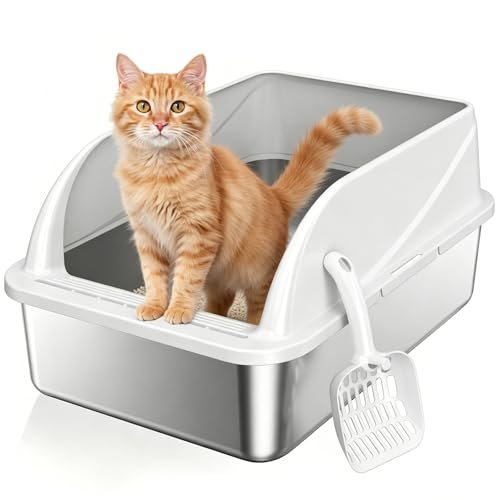
The OneBug is a stainless steel pan at 17.32 x 13.39 inches and 7.87 inches tall, with an angled front step and a scoop in the box. That’s about 232 square inches of floor, only a bit more than the Idymere.
The walls run nearly 3 inches taller than the Idymere’s, and the step gives paws a chance to knock loose litter off before the cat walks onto your floor. Together they make this the best scatter control among the stainless boxes here.
The sloped entry also helps kittens and older cats who don’t jump well. Steel is loud when you scoop, though, and the step adds bulk to one side of the box.
💬 My Take
I’d choose this one for a cat that flings litter, or a floor that’s always gritty.
Who It’s For
Owners who want steel’s easy cleaning plus better scatter control, and cats that need a gentle way in.
✅ Pros
- Steel base wipes clean.
- Angled entry knocks litter off paws.
- 7.87-inch walls hold in scatter.
❌ Cons
- Slightly bigger footprint than the Idymere.
- The step adds bulk.
- Scooping on metal is loud.
View Price on Amazon Free Shipping & 30-Day Returns Available
4
Arm & Hammer Rimmed Litter Box with High Sides and Microban
8.2/10
| Dimensions | 18.7 x 15.5 x 10.6 inches |
| Material | Recycled Plastic |
| Design | High-sided with rim |
| OdorControl | Microban |
What We Found
This is the tallest open pan on the list at 10.6 inches, and the biggest at 18.7 x 15.5 inches, roughly 290 square inches of floor. It’s recycled plastic with Microban, an antimicrobial treatment built into the plastic that slows bacterial growth on the pan itself. It doesn’t replace scooping.
The rim holds a liner in place, which speeds up dumping and refilling. The tall walls keep most litter inside, and they’re the best fit here for cats that spray or dig hard. It works with most litter types.
The cost is floor space. It takes up about a third more than the Idymere, and plastic can hold onto smells over time whatever is built into it. Liners also add to your trash.
💬 My Take
A dependable box for a messy cat, if you can spare the corner.
Who It’s For
Owners with a cat that digs, kicks or sprays, who use liners and like that the box is made from recycled plastic. You’ll need about 290 square inches of floor.
✅ Pros
- Microban helps keep bacteria down on the pan.
- Rim holds liners in place.
- 10.6-inch walls contain most mess.
❌ Cons
- Biggest footprint of the open pans.
- Plastic can absorb odor over time.
- Liners add to your trash.
View Price on Amazon Free Shipping & 30-Day Returns Available
5
Arm & Hammer Large Sifting Litter Box
7.9/10
| Dimensions | Large |
| Material | Recycled Plastic |
| Design | Sifting system |
| OdorControl | Microban |
What We Found
This one swaps the scoop for a sifting pan. You lift the upper tray, let clean litter fall through to the base, and throw out the clumps left behind. Like the other Arm & Hammer, it’s recycled plastic with Microban on the surface.
The listing calls it Large without giving measurements, so check the size against your floor space before you order. Sifting only works if your litter falls through the slots and forms clumps hard enough to stay on top, so test it with the litter you already use. It’s listed as working with clumping, pine and pellet litters.
You still check the box every day. You just do it without a scoop.
💬 My Take
A time-saver if you hate scooping, as long as you can spare the floor.
Who It’s For
Busy owners using clumping or pellet litter who would rather lift and shake than scoop.
✅ Pros
- Sifting replaces the scoop.
- Microban adds surface protection.
- Works with several litter types.
❌ Cons
- Takes up a lot of floor space.
- The sifting tray gets heavy when full.
- Needs the right litter to sift well.
View Price on Amazon Free Shipping & 30-Day Returns Available
6
Petmate Open Litter Box, Blue Mesa/Mouse Grey (Medium)
7.2/10
| Dimensions | 16 x 12 inches |
| Material | Plastic |
| Design | Open-top |
| BestFor | General use |
What We Found
The Petmate Open is a plain plastic pan at 16 x 12 inches, which is 192 square inches and noticeably smaller than either Arm & Hammer box. Rimmed sides catch some scatter, and the wide base gives a cat room to stand.
There’s no filter, no antimicrobial coating and no high walls. Plastic holds odor over time, so wash it often and plan to replace it once scratches build up. At this size it slides into a closet corner without fuss.
💬 My Take
Plain and reliable. Pick it if your cat hates enclosed or high-walled boxes.
Who It’s For
Owners who want a simple, dependable open pan for a closet or corner, and cats that dislike feeling enclosed.
✅ Pros
- Simple shape is easy to wash.
- Wide base helps contain scatter.
- Light enough to move.
❌ Cons
- No odor-control features.
- Plastic holds smell over time.
- No high walls.
View Price on Amazon Free Shipping & 30-Day Returns Available
7
Petmate Basic Open Litter Pan 💵 Budget Pick
6.5/10
| Dimensions | 14 x 10.5 x 3.5 inches |
| Material | Plastic |
| Design | Open-top |
| BestFor | Kittens |
What We Found
At 14 x 10.5 inches and 3.5 inches tall, this is the smallest pan here and the Budget Pick. That’s 147 square inches, small enough for nearly any corner. By the 1.5x rule covered above, a box this long suits a cat up to about 9 inches, which means a kitten or a very small cat.
There’s no odor tech. The 3.5-inch walls are low enough for a kitten to step over, and low enough for litter to fly out. The rimmed edge gives you a grip when you dump it.
Buy it for a kitten or as a temporary second box. Most adult cats will outgrow it.
💬 My Take
A basic pan for a kitten or a very tight corner. It does the job and nothing more.
Who It’s For
Kitten owners, students and first-time cat owners who need something simple and cheap, or anyone with a spot too tight for a bigger pan.
✅ Pros
- Fits almost anywhere.
- Light enough to move.
- Budget price and simple to maintain.
❌ Cons
- Plastic holds odor over time.
- 3.5-inch walls let litter fly.
- Too small for adult cats.
View Price on Amazon Free Shipping & 30-Day Returns Available
What to Look For Before Buying
I find that picking a box for an apartment comes down to balancing cat comfort against floor space. Work through these four checks in order and the shortlist gets short quickly.
Check Footprint and Placement
Tape out the box’s length and width on the floor where it would go. Leave room for the cat to walk in and out, plus a mat if you’ll use one. I look for corners and closet floors that won’t sit in a walkway.
Value Material and Odor Control
Stainless steel is my favorite for odor resistance, because urine can’t soak into it. Plastic costs less, but scratches build up and it tends to hold onto smells. Carbon filters, as in the Lifewit, help inside enclosed boxes. Microban, as in the Arm & Hammer boxes, treats the plastic surface and doesn’t replace scooping.
Rate Cleaning Efficiency
Think about how long a daily scoop takes. Sifting boxes swap the scoop for a lift and shake. Smooth surfaces keep waste from sticking to the sides. And a box you can dump and wash in a bathtub gets washed more often than one you can’t.
Verify Cat Comfort and Accessibility
The box has to be big enough for your cat to turn around, as covered in the size section above. Low entries help kittens and senior cats, and our low-entry covered litter box guide covers that in more depth. A comfortable cat is less likely to have accidents.
One caution. If a cat that used the box reliably starts going elsewhere, call your vet before you buy a new box. Urinary problems are a common cause, and no litter box fixes those.
Match the Box to Your Cat
| If your cat is… | Look at |
|---|---|
| A kitten or very small cat | Petmate Basic Open Pan (3.5-inch walls are easy to step over) |
| Older or stiff in the joints | OneBug (sloped entry) or a low-entry box |
| A digger or litter flinger | OneBug (7.87 in) or Arm & Hammer Rimmed (10.6 in) |
| A sprayer | Arm & Hammer Rimmed, the tallest open pan here |
| Uncomfortable in enclosed boxes | Idymere or Petmate Open |
| Fine with a covered box, and you want it hidden | Lifewit Hidden Enclosure |
Before You Order: A Quick Checklist
- ☐ I measured my cat, nose to base of tail.
- ☐ I taped the box’s footprint on the floor where it will go.
- ☐ The spot has airflow and isn’t next to food, water or a noisy washer.
- ☐ My cat can turn around and keep all four paws inside.
- ☐ I have a plan for daily scooping and a full wash every two weeks.
Small Apartment Litter Box Solutions: Placement, Odor and Tracking
The box matters, but where it sits and how you maintain it matters just as much in a small space. These are the fixes that come up again and again.
Where to Put a Litter Box in a Small Apartment
Pick a quiet spot away from food and water bowls. Cats don’t like to eat next to their toilet, and they don’t like a washing machine starting up while they’re squatting. Avoid dead ends where another pet or a person could block the way out.
| Location | Why it works | Watch for |
|---|---|---|
| Bathroom corner | Tile is easy to clean and a fan helps with smell. | A closed door blocks access. Prop it open. |
| Closet | Out of sight. | Needs airflow. A sealed closet traps smell. |
| Entryway or hallway nook | Cats can leave in two directions. | Tracked litter reaches the rest of the apartment fast. |
| Behind a sofa or under a console table | Uses dead space. | Tight entry. Check that your cat can turn around. |
| Furniture enclosure | Blends into a living space. | Big footprint and filter replacements. |
Simple studio floor plan showing four candidate litter box spots (bathroom corner, closet, hallway nook, behind the sofa) with arrows for the cat’s path. Suggested alt text: “Where to put a litter box in a studio apartment”.
How Many Litter Boxes Do You Need?
The usual rule is one box per cat, plus one extra. A studio makes that hard. With two cats, put the boxes at opposite ends of the room, because two boxes side by side work like one big box. If you can only fit one, scoop twice a day and watch for accidents on the floor, which are the first sign it isn’t working.
A Simple Odor-Control Routine
- Scoop once a day. With two cats, or in a studio where you smell everything, scoop twice.
- Keep the litter 2 to 3 inches deep. Shallower than that and urine reaches the bottom of the pan.
- Every two weeks for one cat, dump everything and wash the box with hot water and unscented dish soap.
- Skip ammonia cleaners and strong perfumes. Ammonia smells like urine to a cat, and heavy scents can put cats off the box.
- Dry the box completely before refilling, so litter doesn’t cake to the bottom.
- Bag the waste and take it out daily, or use a lidded trash can nearby.
- Keep air moving with a window or a bathroom fan.
If you’d rather skip the scooping altogether, see our guides to the best self-cleaning litter box for apartments and the best automatic litter box for odor control.
How to Cut Down on Litter Tracking
- Put a ridged or textured mat where the cat exits, and point the box so the cat steps out onto it, not onto hardwood.
- Pick a high-sided box or one with a step, like the OneBug or the Arm & Hammer Rimmed.
- Try a coarser litter. Fine clay granules stick to paws and travel.
- Keep a handheld vacuum or a small broom next to the box. Two minutes a day beats a weekly sweep.
Choosing Cat Litter for a Small Apartment
The box is half the setup. The litter you pour into it changes how the apartment smells, how much tracks across the floor, and how heavy the bag is to carry up the stairs. Here’s how the main types compare.
| Litter type | Good for | Trade-off |
|---|---|---|
| Clumping clay | Easy scooping and firm clumps. | Heavy to carry, can be dusty, and fine granules track. |
| Pine or wood pellets | Natural scent and less tracking than fine clay. | Pellets break down to sawdust when wet. Works best in a sifting box. |
| Silica crystals | Absorbs moisture and is light to carry. | Some cats dislike the texture. |
| Plant-based (corn, wheat, tofu) | Lightweight and lower in dust. | Odor control varies by brand. |
Choose unscented. Most cats prefer it, and perfume plus cat smell in a small room is worse than either alone. When you switch, mix the new litter into the old over about a week so your cat doesn’t reject the box.
Related Guides
- Best Automatic Litter Boxes
- Best Self-Cleaning Litter Box for Apartments
- Best Automatic Litter Box for Odor Control
- Best Automatic Litter Box Under $300
- Best Smart Litter Box for Cats
- Low-Entry Covered Litter Boxes
Frequently Asked Questions
What is the best litter box for a small apartment?
The Idymere Stainless Steel Litter Box is the best pick for most small apartments. It takes about 220 square inches of floor, washes easily and doesn’t soak up odor. Choose the Lifewit if the box has to be hidden, or the Petmate Basic Open Pan for a kitten or a very tight corner.
How big should a litter box be in a small apartment?
Aim for a box about 1.5 times as long as your cat, measured from nose to the base of the tail. Small apartments usually force a compromise, so treat that as a target. If your cat can turn around and keep all four paws inside, the size works.
Where should I put a litter box in a studio apartment?
Pick a quiet corner away from food, water and noisy appliances like a washer. A bathroom corner, a ventilated closet or a spot behind a console table all work. Avoid dead ends where the cat could get blocked in.
How many litter boxes do I need in a small apartment?
One per cat, plus one extra. In a studio, put two boxes at opposite ends of the room, not side by side, because adjacent boxes work like one. If you only have room for one, scoop twice a day and watch for accidents outside the box.
How often should I clean a small apartment litter box?
I scoop once a day and do a full deep clean every two weeks. It keeps the space fresh. With two cats or in a studio, I’d scoop twice.
How do I keep a small apartment from smelling like cat litter?
Scoop daily, keep the litter 2 to 3 inches deep, and wash the box every two weeks with unscented soap. Stainless steel or a box with a carbon filter helps, and so does a window or bathroom fan. A sealed closet traps the smell instead of solving it.
Do enclosed boxes help with apartment odors?
They hide the litter and contain scatter, but the smell builds up inside, so you still scoop daily. A carbon filter, like the Lifewit’s, helps. Some cats refuse covered boxes, so watch for accidents in the first week and make sure the box has ventilation.
Can I use stainless steel boxes for all cats?
Most cats, yes. Steel is non-toxic and doesn’t crack, and most cats get used to the metal surface within a few days. A few dislike the cold or the scratch sound against metal, and a slightly deeper layer of litter muffles it.
How do I prevent litter tracking in a small space?
I use a mat at the entrance to catch loose grains. A high-sided box like the OneBug or the Arm & Hammer Rimmed helps too, and coarser litter tracks less than fine clay.
What is the best way to hide a litter box?
Hidden enclosure furniture, like the Lifewit, is the most effective way to hide a box. A ventilated closet or a discreet corner behind a screen also works. Whatever you pick, make sure the cat has easy, stress-free access and the box gets air.
What is the best cat litter for a small apartment?
Unscented, low-dust clumping litter is a safe default. Lighter plant-based litters make sense if you carry bags up stairs. Switch gradually over about a week by mixing old and new.
🎯 Final Verdict
For most small apartments, buy the Idymere Stainless Steel Litter Box. It gives you a steel pan that’s easy to keep clean in about 220 square inches of floor, and a clean box does more for odor than any feature on this list.
The other picks solve narrower problems:
- Lifewit Hidden Enclosure: the box has to sit in a room you live in.
- OneBug Stainless Steel: litter tracking or an older cat’s entry is your main problem.
- Arm & Hammer Rimmed: your cat digs or sprays and you can spare about 290 square inches.
- Arm & Hammer Large Sifting: you hate scooping and use a litter that sifts well.
- Petmate Basic Open Pan: you have a kitten, or a corner too tight for anything else.
Measure the floor, then measure your cat. And whatever you buy, scoop every day, because no box replaces it.
View Our Top Pick on Amazon Free Shipping & 30-Day Returns Available
Looking for other types of litter boxes? Explore our complete Indoor Cat Litter Box guide for covered, stainless steel, top-entry and automatic options.

Written by Mishu
A passionate cat lover and indoor living enthusiast, Mishu is the founder and voice behind Indoor Living Cat – a go-to resource for cat owners who want to create the happiest, healthiest life for their feline companions indoors.
View Full Profile