
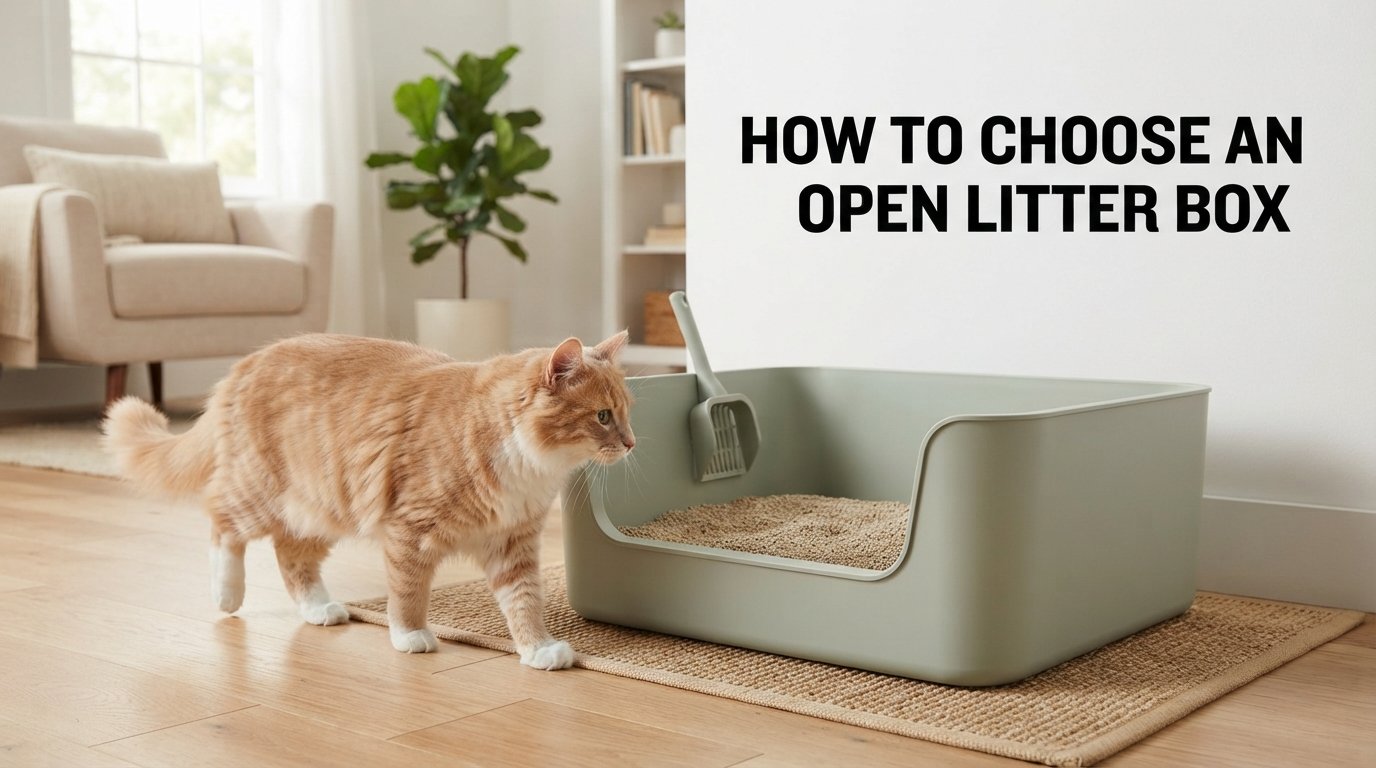
Choose an open litter box in this order: your cat’s body length first, wall height second, material third, and price last. Most buyers flip that list, and it shows up later as litter on the floor, a box that smells even after washing, or a cat who walks past it and goes behind the couch.
This guide walks through the decisions that matter before you compare models: size, entry height, plastic versus stainless steel, manual versus automatic, and waste capacity. Then it matches six open-top boxes to the cats and homes they suit.
Last updated October 2026. We earn a commission from qualifying Amazon purchases made through the links below, at no extra cost to you. It doesn’t change our scores.
This guide is part of our indoor cat litter box guide and our complete open litter box hub, where you’ll find every review and buying guide in one place.
If you only have a minute, use this:
- →Large or heavy cat: Go for an XL stainless steel pan like the Tevila XL, or a roomy automatic like the Self Cleaning Open Top.
- →Senior, arthritic or very young cat: Pick a low entry. The Self Cleaning Open Top has one. Skip tall walls.
- →Big scatter problem: Look for 5 inches or more of wall, a splash guard, or a baffle.
- →No scooping, no app: The WARCAT is automatic without WiFi.
- →Tight budget, kitten: The Petmate Basic works short term. Plan to replace it.
Products in this guide
These are the Amazon listings we anchor to when we talk about how to choose an open litter box. Each card gives a quick read on materials, stated use case and patterns in buyer feedback. Follow the link to confirm fit, today’s price and the latest verified reviews before you buy.
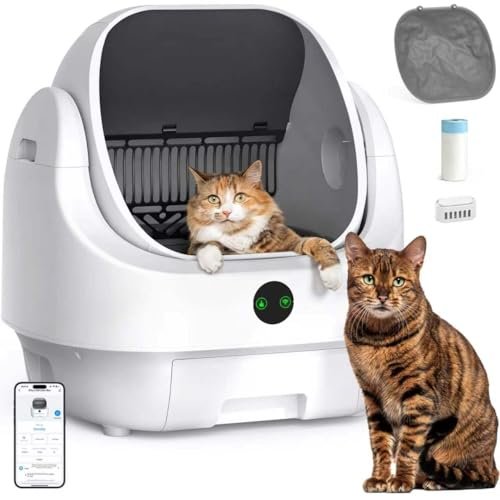 Open-Top Automatic Litter Box, Odor Control, Ready to Use, Self Cleaning
Smart open-top automation with sealed waste bin for odor-free convenience.
8.4/10
|
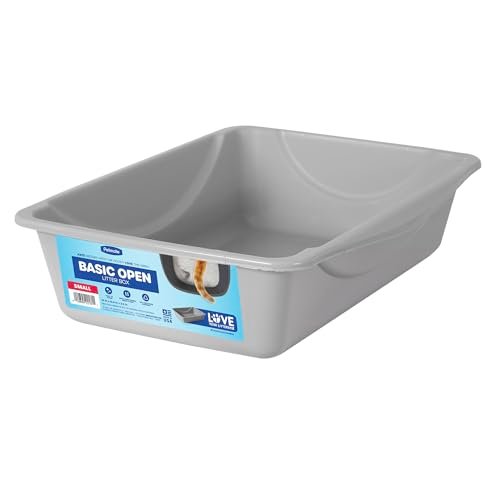 Petmate Basic Open Plastic Cat Litter Pan, Gray, Small
Basic small plastic pan suitable only for kittens or very petite cats.
6.5/10
|
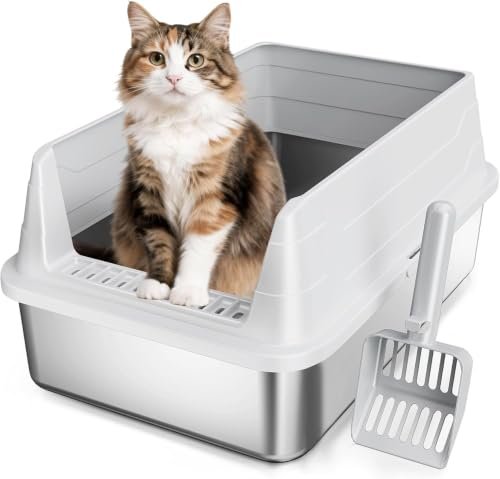 Stainless Steel Cat Litter Box, Odor Free Easy Clean Metal Litter Box
Durable stainless steel option with high sides to effectively contain scatter.
7.8/10
|
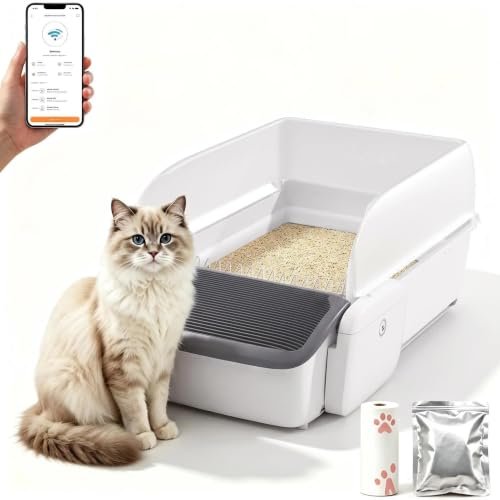 Self Cleaning Cat Litter Box Open Top Automatic Litter Box for Multi-Cat
Spacious automatic model with rubber inner tub ideal for multi-cat homes.
8.9/10
|
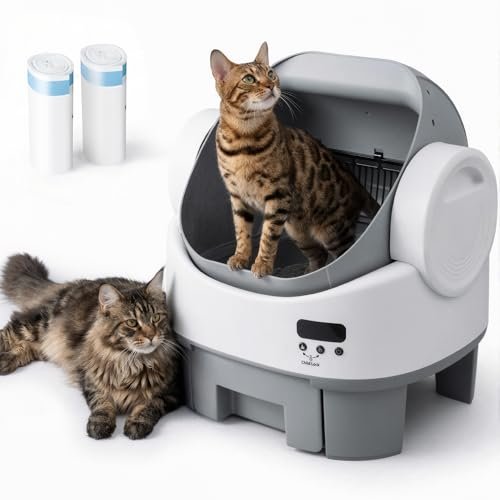 WARCAT Automatic Litter Box, Open Top, Child Lock, Gray & White
Plug-and-play self-cleaning box with child lock, no WiFi required.
8.1/10
|
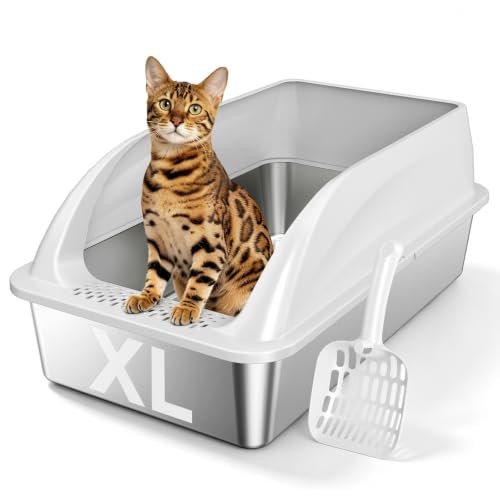 Tevila XL Open Top Stainless Steel Litter Box with High Sides, Light Gray
Extra-large stainless steel pan designed specifically for Maine Coons.
9.2/10
|
Open Litter Boxes Compared Side by Side
Specs below come from each listing. Prices change often and the source listings don’t state them, so check Amazon on the day you buy.
| Box | Type | Stand-out spec | Best for | Score |
|---|---|---|---|---|
| Tevila XL Stainless Steel | Manual, stainless steel | 5.7-inch splash guard, rounded corners, non-slip pads, scoop | Large breeds, heavy diggers | 9.2 |
| Self Cleaning Open Top (Multi-Cat) | Automatic, rubber inner tub | Low-clearance entry, three-sided baffle, gap-free rake, app, 7L bin | Seniors, multi-cat homes | 8.9 |
| Open-Top Automatic Litter Box | Automatic | Safety sensors, dual-defense odor system, sealed 9L bin, app | Big cats moving off manual pans | 8.4 |
| WARCAT Automatic Litter Box | Automatic, no WiFi | Ten sensors, child lock, sealed 10L drawer | Families who want simple automation | 8.1 |
| Stainless Steel Cat Litter Box | Manual, stainless steel | High sides, anti-slip pads, scoop | Small cats, hygiene-first buyers | 7.8 |
| Petmate Basic Open Pan | Manual, plastic | Small footprint, wide base | Kittens, very tight spaces | 6.5 |
How we judged each pick?
We didn’t lab-test these boxes. Scores reflect listing specs, materials, how well each design fits a specific cat and home, and patterns in buyer feedback. Where a listing doesn’t give a number, such as price or exact wall height, we say so instead of guessing.
|
This unit suits owners who want automation without giving up the openness cats prefer. The open top helps large cats moving over from a traditional pan, and the safety sensors pause the cycle when a cat steps in. Reviewers point to the dual-defense odor system and the sealed 9L bin, which the listing rates at up to ten days for one cat. Price isn’t listed, so check it before you commit. App monitoring and zero scooping will appeal most to tech-comfortable households. The tradeoff is more moving parts than a manual pan. |
|
This is the budget entry point, and the small size is the catch. The wide base contains some mess, but the low walls won’t stop a vigorous digger. Plastic here means you’ll wash it often, since there’s no odor control built in. We’d buy it for a kitten or a spot where nothing bigger fits. For most adult cats, you’ll outgrow it quickly. |
|
Non-porous stainless steel resists odor better than plastic, and the high sides cut scatter without a hood. The smooth surface keeps waste from sticking, which makes cleaning faster. The listing targets small cats, so owners of bigger breeds should look at the Tevila XL instead. Anti-slip pads and a scoop come in the box. It’s a hygienic pick for small households that don’t need automation. |
|
Interior space is the headline: it fits cats of all sizes, including seniors who struggle with high entries. The rubber inner tub resists scratching and is easier to deep clean than a standard plastic bin. The gap-free rake works with various litter types, which keeps ongoing costs down. It has app monitoring, a 7L waste bin rated for three to seven days depending on cat count, and a three-sided baffle that holds back flying litter while keeping the open feel. With several cats, plan on the short end of that range. |
|
This one is for people who want automation without a smart-home setup. There’s no WiFi and no app, so setup is plug-and-play. Ten sensors stop the cycle when a cat enters, and the child lock keeps toddlers out of the controls. The 10L sealed drawer helps over a short getaway, and it accepts virtually all clumping litters, so you aren’t tied to proprietary refills. You give up remote monitoring in exchange for simplicity. |
|
Our top pick for large breeds. The XL footprint lets a big cat turn around freely, and the 5.7-inch splash guard keeps vigorous diggers from emptying the box without a covered hood that traps odors. The stainless steel doesn’t hold smells or scratch the way plastic does. The open top makes scooping quick, and rounded corners leave no gaps for grime. It ships with a scoop and non-slip pads. The one caution: those tall walls can be tough for very young kittens. |
What Most Buyers Get Wrong About Open Litter Boxes
Open tops don’t all behave the same. Wall height decides scatter, and material decides how the box smells after six months. Plastic costs less up front but picks up micro-scratches that hold odor. Stainless steel costs more and doesn’t.
Start with the cat. Size, age and mobility narrow the field faster than any feature list. Then pick a material and an automation level. For automatic models, check the safety sensors and how easy the parts are to clean.
The Selection Logic
Here is the four-step filter we apply to every open litter box. It screens out flimsy options early so the shortlist fits your cat and your floor plan.
|
01
Identify the Real Need
Measure your cat from nose to base of tail so the interior fits a full turn without stepping in waste. Then check your floor space and whether your cat is a digger who needs high sides.
|
02
Match the Product Type
Sort options by material and rim design. Stainless steel and thick, scratch-resistant builds beat thin trays. Look for reinforced corners and non-slip bases so the box stays put when a big cat digs.
|
|
03
Check the Tradeoff
Low entries help kittens and seniors but let more litter out. Higher walls hold litter in but can block a stiff cat. Decide which problem you’d rather solve.
|
04
Choose by Real Use
Think about the daily routine. Smooth interiors that rinse clean, a sealed waste path if you go automatic, and a scooping height you can use without awkward bending.
|
How to Size an Open Litter Box for Your Cat?
Size is the most common reason a cat rejects a box. The widely used rule of thumb is an interior length about 1.5 times your cat’s length, measured from nose to the base of the tail. A cat who can’t turn around, or who has to hang a back leg over the rim, will start looking for other spots.
- Measure length. Nose to base of tail while your cat stands. Multiply by 1.5 for the minimum interior length.
- Check shoulder height. This sets how high a wall your cat can step over without a hop.
- Note age and joints. Stiffness, a recent injury or a kitten under a few months means a low entry.
- Measure the spot. Include clearance for the automatic unit’s waste drawer or for scooping around the pan.
- Count the cats. Plan one box per cat plus one spare. Size and capacity both scale with the household.
| Cat profile | What to prioritize | Good fit in this guide |
|---|---|---|
| Kitten | Very low sides, small footprint, short-term use | Petmate Basic Open Pan |
| Small adult | Moderate walls, easy cleaning | Stainless Steel Cat Litter Box |
| Large breed (Maine Coon, Ragdoll type) | XL interior, tall splash guard | Tevila XL Stainless Steel |
| Senior or arthritic | Low-clearance entry, roomy interior | Self Cleaning Open Top (Multi-Cat) |
| Multi-cat home | Space, capacity, easy deep cleaning | Self Cleaning Open Top (Multi-Cat) or WARCAT Automatic Litter Box |
Open vs Covered Litter Boxes: Which Does Your Cat Need?
Cats get a clear view of their surroundings in an open box, and that matters for shy or anxious animals who don’t like feeling trapped. Open tops also let air move, so odor doesn’t sit in a closed hood. The price is more visible litter and more scatter.
| Open top | Covered / hooded | |
|---|---|---|
| Visibility for the cat | Full view, easier to escape | Enclosed, can feel trapped |
| Scatter | Higher unless walls or a baffle help | Lower, litter stays inside |
| Odor | Fresh air, no trapped smell, needs daily scooping | Smell builds inside the hood |
| Cleaning access | Quick to scoop | Lid or hood to remove |
| Best for | Large cats, seniors, nervous cats | Cats that dig hard and owners who mind the look |
If your cat already uses a covered box without problems, don’t switch just because a guide says open is better. Cats like what they know. Change one thing at a time.
Match Material to Odor Control Needs
Plastic boxes pick up micro-scratches. Bacteria and urine smell settle into those grooves and are hard to remove, even with a full wash. Stainless steel is non-porous, so it resists odor and cleans down to a smooth surface.
Automatic models usually have ABS plastic interiors. They can seal odors well with tight compartments but still build up residue if you skip cleaning. A manual steel pan avoids that problem, but you need to scoop daily.
Choose stainless steel if long-term odor control is the top priority and you don’t mind scooping. If you go automatic, check how the waste compartment seals and whether the bag or drawer locks smell in between emptying.
The Stainless Steel Cat Litter Box has a smooth surface that stops waste from sticking, and the Tevila XL uses solid steel with rounded corners. The Petmate Basic Pan depends on frequent washing because plastic holds odor over time.
–>
|
Stainless Steel Cat Litter Box, Odor Free Easy Clean Metal Litter Box
Durable stainless steel option with high sides to effectively contain scatter.
|
7.8/10 Check Price Amazon |
|
Tevila XL Open Top Stainless Steel Litter Box with High Sides, Light Gray
Extra-large stainless steel pan designed specifically for Maine Coons.
|
9.2/10 Check Price Amazon |
How Products Differ Here
- →Stainless Steel Cat Litter Box: Non-porous metal surface that resists odor absorption better than standard plastic.
- →Tevila XL Open Top Stainless Steel: Rustproof solid steel with rounded corners that remove the gaps where smells hide.
The Tevila XL and the standard Stainless Steel Cat Litter Box both use non-porous metal, unlike plastic alternatives. Smooth surfaces rinse quickly with no residue buildup.
Evaluate Entry Height for Cat Mobility
High sides stop scatter but can keep older cats and kittens out. Low entries help cats with joint problems, but a vigorous digger will kick more litter onto the floor.
Automatic open-top models often have low-clearance entries built for large breeds and senior cats. Manual pans vary a lot. Some are deep basins that favor containment and others favor easy access.
Check your cat’s shoulder height and age before buying a tall-walled box. If scatter bothers you, look for a splash guard or baffle instead of a tall barrier your cat has to climb.
The Self Cleaning Cat Litter Box Open Top has a low-clearance entry and a raised baffle that balances access and scatter. The Tevila XL has 5.7-inch walls that suit active diggers but may be tough for very small kittens.
|
Self Cleaning Cat Litter Box Open Top Automatic Litter Box for Multi-Cat
Spacious automatic model with rubber inner tub ideal for multi-cat homes.
|
8.9/10 Check Price Amazon |
|
Tevila XL Open Top Stainless Steel Litter Box with High Sides, Light Gray
Extra-large stainless steel pan designed specifically for Maine Coons.
|
9.2/10 Check Price Amazon |
How Products Differ Here
- →Self Cleaning Cat Litter Box Open Top: Low-clearance entry with a three-sided baffle that holds litter in and stays accessible for seniors.
- →Tevila XL Open Top Stainless Steel: 5.7-inch splash guards block flying litter but may be too high for very young kittens.
The Self Cleaning Open Top fits cats with mobility issues thanks to the low entry and roomy interior. The Tevila XL contains mess with high sides, so it suits active adults better than stiff or elderly cats.
Decide Between Automation and Simplicity
Self-cleaning units remove daily scooping, but they need power, sometimes WiFi, and upkeep on mechanical parts. Manual boxes work during a power cut and have nothing to break, but someone has to scoop every day.
Smart models add health tracking and alerts, which helps if you watch for changes in urination. More features also mean more that can fail, compared with a plug-and-play automatic or a basic pan.
Choose automation if you travel or hate scooping, and have an outlet nearby. Stay manual if you want zero tech upkeep or worry that motor noise will bother a light sleeper.
The WARCAT runs without WiFi or apps. The Open-Top Automatic Litter Box adds full app control and health tracking.
–>
|
WARCAT Automatic Litter Box, Open Top, Child Lock, Gray & White
Plug-and-play self-cleaning box with child lock, no WiFi required.
|
8.1/10 Check Price Amazon |
|
Open-Top Automatic Litter Box, Odor Control, Ready to Use, Self Cleaning
Smart open-top automation with sealed waste bin for odor-free convenience.
|
8.4/10 Check Price Amazon |
How Products Differ Here
- →WARCAT Automatic Litter Box: Works without WiFi or apps, a good match for owners who want less tech.
- →Open-Top Automatic Litter Box: Adds app monitoring and WiFi so you can track usage and change settings remotely.
The WARCAT suits buyers who want simplicity, and the Open-Top Automatic suits owners who like data. Both end scooping, though the second adds remote management for trips.
Assess Waste Capacity and Maintenance Frequency
Bin size sets how often you empty the unit. That matters most in multi-cat homes and on trips. Bigger bins mean fewer trips to the trash but take up more floor.
Sealed waste drawers lock odors in, so you can go longer between emptying than with an open manual pan. Even large bins fill up, so work out a realistic number for your household.
Compare the stated capacity with your actual cat count. A bin rated for ten days with one cat might last three days with several.
The Open-Top Automatic Litter Box has a 9L bin rated up to ten days for a single cat. The Self Cleaning Open Top has a 7L bin that handles three to seven days. The WARCAT has a 10L sealed drawer.
|
Open-Top Automatic Litter Box, Odor Control, Ready to Use, Self Cleaning
Smart open-top automation with sealed waste bin for odor-free convenience.
|
8.4/10 Check Price Amazon |
|
Self Cleaning Cat Litter Box Open Top Automatic Litter Box for Multi-Cat
Spacious automatic model with rubber inner tub ideal for multi-cat homes.
|
8.9/10 Check Price Amazon |
|
WARCAT Automatic Litter Box, Open Top, Child Lock, Gray & White
Plug-and-play self-cleaning box with child lock, no WiFi required.
|
8.1/10 Check Price Amazon |
How Products Differ Here
- →Open-Top Automatic Litter Box: 9L waste bin rated for up to ten days with a single cat.
- →Self Cleaning Cat Litter Box Open Top: 7L bin suited to three to seven days, depending on cat count.
- →WARCAT Automatic Litter Box: 10L sealed drawer for longer absences.
The WARCAT (10L) and Open-Top Automatic (9L) hold the most waste, which cuts emptying frequency. The Self Cleaning Open Top’s 7L bin needs a closer eye in busy homes.
Plan Placement, Litter Depth and Number of Boxes
A great box in a bad spot still fails. Put it somewhere quiet and easy to reach, away from food and water, and not next to a loud washer or a doorway with foot traffic. Give your cat more than one way out so it never feels cornered.
Litter depth matters as much as the pan. Most guidance lands around 2 to 3 inches of clumping litter. Deeper litter gets kicked out faster and shallow litter lets waste stick to the bottom, which is where plastic smells start.
- →Number of boxes: One per cat plus one spare, spread across different rooms if you can.
- →Location: Quiet, low-traffic, easy to reach for seniors without stairs.
- →Mat: A textured mat outside the box catches stray litter, which helps most with low-wall designs.
- →Litter type: Use clumping litter in automatic units unless the manual says otherwise. Check compatibility before buying.
Open Litter Box Buying Checklist
Run through this before you click buy.
What Buyers Often Misread?
‘Odor-free’ claims depend on frequent waste removal and the right litter. Automatic doesn’t mean maintenance-free either. Rakes, sensors and filters still need cleaning and replacing.
‘Open top’ describes the entry style. Some models still have walls, baffles or splash guards, so check the details. Real odor control comes from material and sealing, not the label.
| All stainless steel boxes are identical in quality and thickness.
Gauge and finish vary, which changes durability and how well the box resists scratches and rust.
|
| Automatic boxes work with any type of cat litter.
Many sensors and rakes need specific clump sizes or granule types, or they jam.
|
| Higher walls always mean better litter containment for every cat.
Tall walls can keep elderly or arthritic cats out, and that leads to accidents outside the box.
|
| Wi-Fi features are essential for every automatic litter box user.
Basic automatic cleaning works without connectivity, so app features are optional.
|
| A bigger box is always better.
Too big for the space and it won’t fit where your cat feels safe. Match size to cat and spot.
|
How to Clean and Maintain an Open Litter Box?
| Task | How often | Notes |
|---|---|---|
| Scoop clumps and waste | Daily | Skip a day and odor and avoidance both climb. |
| Top up litter to 2-3 inches | Every few days | Low litter lets waste stick to the bottom. |
| Empty automatic waste bin or drawer | Per capacity and cat count | Seven to ten days is the best case for one cat. |
| Full wash and refill | Every few weeks for clumping litter, weekly for non-clumping | Use unscented dish soap and warm water. Strong fragrances put cats off. |
| Wipe sensors and rake on automatic units | Monthly, or per the manual | Dust and litter dust cause false stops. |
Skip bleach and strong disinfectants unless the manufacturer says it’s fine. Residue can irritate paws and keep cats away. Rinse well and dry the box before refilling.
How to Switch Your Cat to a New Open Litter Box?
- Keep the old box. Place the new one beside it for a week or two so your cat chooses.
- Use familiar litter. Change the box, not the litter, in the same week.
- Mix old and new. Add a scoop of used litter to the new box so it smells like home.
- Run automatic units off at first. Let a nervous cat get used to the shape before you turn the motor on.
- Retire the old box slowly. Remove it only after your cat uses the new one consistently.
Why Your Cat Might Avoid the Box?
- →Too small or too tall: A cat who can’t turn or step in comfortably will go elsewhere.
- →Dirty box: Cats are fussy. Scoop daily.
- →Noise or motion: An automatic unit that startles your cat can cause avoidance. Let the cat explore it while it’s off.
- →Bad location: Busy hallways, loud appliances, or food nearby.
- →Scented litter or cleaners: Switch to unscented.
A sudden change in litter habits can signal a health problem. If your cat strains, cries, visits the box often with little output, or passes blood, call your vet the same day. A male cat who can’t urinate needs emergency care. Don’t wait to see if a new box fixes it.
How To Make the Final Choice
Pick the box that solves your biggest daily headache, whether that is odor, mobility access, or scooping. Skip features that don’t address it.
Frequently Asked Questions
What is the best open litter box for a large cat?
A box with an XL interior and tall splash guard fits big cats best. The Tevila XL in this guide is our pick, with a 5.7-inch splash guard and a stainless steel body. Any box should be about 1.5 times your cat’s length.
How big should an open litter box be?
Aim for an interior length about 1.5 times your cat’s body, nose to base of tail. Check the width too, so your cat can turn without stepping in waste.
Do open-top litter boxes cause more litter scatter than covered ones?
They can. High sides, splash guards or baffles contain most of it. Match wall height to your cat’s digging style and a textured mat catches the rest.
Do open litter boxes smell more than covered ones?
Not usually. Open boxes let air move so odor doesn’t build in a hood, but you need to scoop daily. The material matters more: stainless steel doesn’t hold smells the way scratched plastic does.
Are stainless steel litter boxes worth the extra cost?
Yes, if odor control and longevity matter most. Steel doesn’t absorb smells or scratch easily, and it sanitizes more thoroughly than plastic.
Can senior cats use automatic open-top litter boxes safely?
Most open-top automatics have low entries and sensors that pause the cycle when a cat steps in. Check the specific entry height and sensor behavior before buying.
Is an open litter box good for kittens?
Only with a low entry. A small basic pan like the Petmate works short term. Tall-walled boxes can stop very young kittens from getting in.
How often do I need to empty the waste drawer on an automatic box?
It depends on bin size and cat count, from every few days to about two weeks. A single-cat home with a large bin may reach ten days. Multi-cat homes empty far sooner.
Do automatic litter boxes need special litter?
Many take standard clumping litter, but some need specific granule sizes to avoid jams. Check compatibility with your preferred brand first.
How many litter boxes do I need?
One per cat plus one spare, placed in different spots if you can.
How often should I wash an open litter box?
Scoop daily and do a full wash every few weeks for clumping litter, or weekly for non-clumping. Use unscented soap and rinse well.
Keep Reading: Open Litter Box Guides

Written by Mishu
A passionate cat lover and indoor living enthusiast, Mishu is the founder and voice behind Indoor Living Cat – a go-to resource for cat owners who want to create the happiest, healthiest life for their feline companions indoors.
View Full Profile