
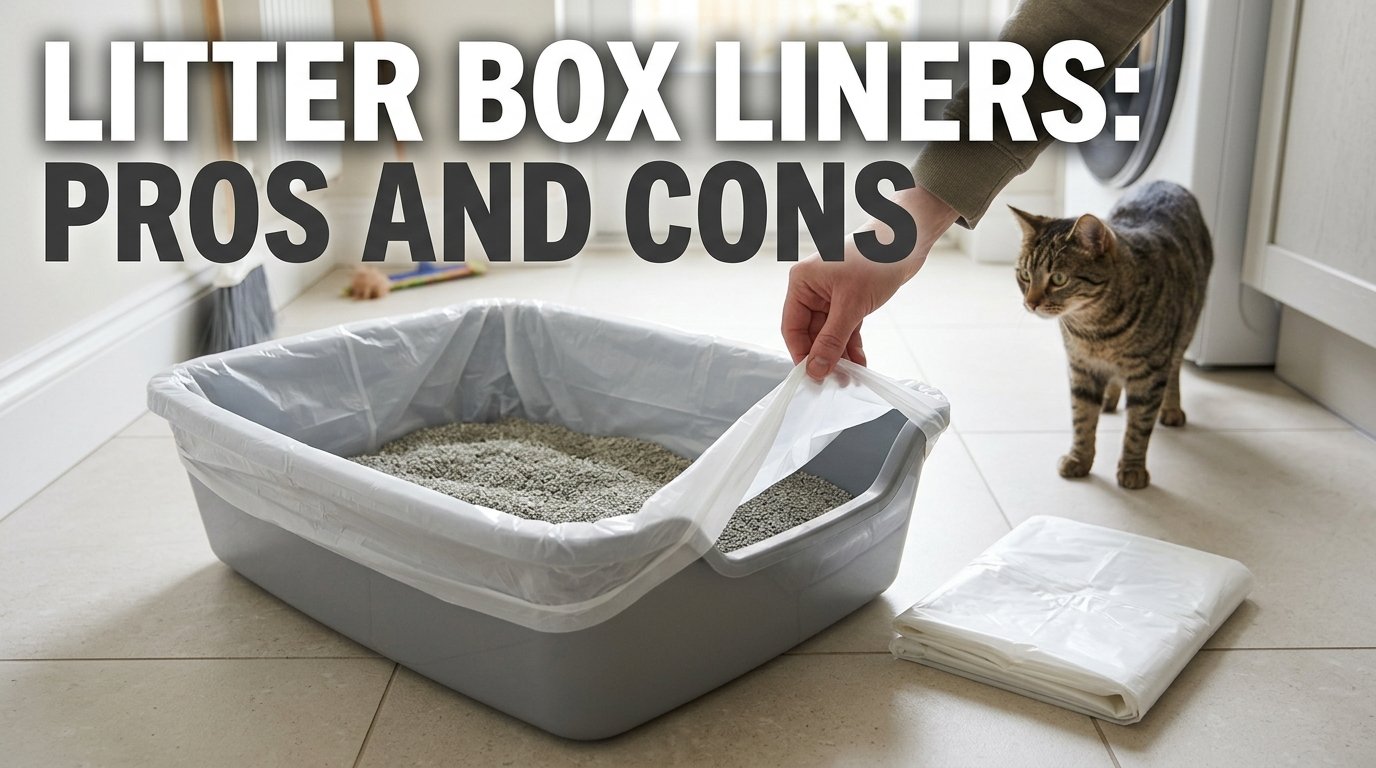
Litter box liners save scrubbing and make disposal tidy, but they cost money on every change and some cats refuse them. That’s the short version of the litter box liners pros and cons. This guide covers both sides, then looks at two real examples: Litter Box Liners Compatible with Pets Scoopfree and ANWA 40 Count Automatic Litter Box Bags. The first has an anti-scratch cardboard layer and a drawstring, and the second is built for automatic boxes with a sensor-friendly design. For a wider shortlist across every box type, see our guide to the best litter box liners.
Updated October 10, 2026. We earn a commission if you buy through our Amazon links, at no extra cost to you. Product details come from retailer listings, so confirm compatibility on the page before you order.
⚡ Quick Verdict
Liners are worth it if you change the box on a schedule and your cat accepts them. Pick the Pets Scoopfree liner if you own the compatible Crystal Pro, and the ANWA bags if you own a Litter-Robot 3, 4 or 5. They aren’t rivals, since each is made for a different box.
Litter Box Liners Pros and Cons
Here’s the balance sheet before the product details. Most of the cons come down to fit and cat behavior, which you can control. Cost and plastic waste you can only manage.
✅ Litter Box Liners Pros
❌ Litter Box Liners Cons
A cat behavior site we checked sums up the catch: liners help only “in theory” if they don’t fit well. Folds let urine pool and smell, claws can poke holes or snag in the plastic, and a cat that links the box with that snag may start going elsewhere. Treat any sign your cat is avoiding the box as a reason to pull the liner. If torn bags are your main worry, read whether cats scratch through litter box liners and how to stop it.
Do Cats Like Litter Box Liners?
Some do, and some don’t. Cats that dig hard or dislike the crinkle of plastic are the usual problem cases. A smooth, snug liner in a box your cat already uses is the safest setup. Switching a nervous cat’s box overnight is the riskiest. If your cat rejects liners, compare litter box liners vs no liners before you decide.
Types of Litter Box Liners Compared
| Type | Pros | Cons |
|---|---|---|
| Standard plastic drawstring liners | Cheap, widely sold, quick to tie and lift | Thin ones tear; single-use plastic |
| Compostable liners | Less plastic, plant-based materials | Pricier, shorter shelf life, need a program that takes pet waste |
| Automatic-box liners | Cut to fit specific models; some are translucent so sensors read correctly | Fit only listed models; poor installation can cause tears or jams |
If plastic waste is your main objection, compostable litter box liners trim it, though you’ll still need a safe disposal route for cat waste.
Are Litter Box Liners Worth It?
The table gives a quick rule of thumb. For the full cost and cleanup breakdown, read are litter box liners worth it.
| Liners make sense if… | Skip them if… |
|---|---|
| You change the box every week or two and hate scrubbing | Your cat has dug through or avoided liners before |
| You have an automatic box that takes model-specific bags | You wash the pan often and don’t mind the work |
| Someone in the house wants less contact with waste | You can’t find a size or model that fits your box |
| Your cat is relaxed about the box and doesn’t shred things | The ongoing cost and plastic waste bother you more than the cleanup |
List of Litter Box Liners Pros And Cons: Two Examples
These two products solve different problems, so compare them on fit for your box rather than on a single score.
Analysis: Litter Box Liners Compatible with Pets Scoopfree
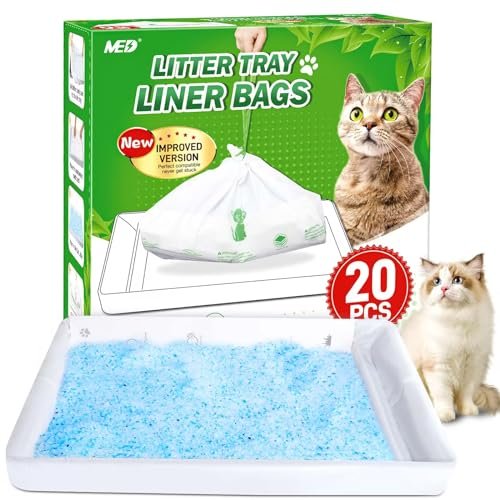
A box-specific liner with an anti-scratch cardboard layer, built for a rectangular tray.
This liner is cut for owners of a compatible ScoopFree-style self-cleaning box. The listing says it works with the Crystal Pro only, so match your model before you add it to the cart.
Build Quality & Design
The listing describes reinforced seams and a drawstring closure, plus customized cardboard that acts as an anti-scratch barrier between the liner and the cat. At 37 x 17 inches it’s a large bag meant to sit snugly in the corners of a rectangular tray.
Performance & Speed
It’s described as tear-resistant, and the drawstring lets you tie off and lift out the waste in one move. The listing gives no weight rating, so don’t count on a specific load.
Features & Functionality
The cardboard layer is the standout. According to the listing, it keeps the liner from catching on the auto-rake, which is the usual way liners jam these boxes.
User Experience
Setup is simple if your box is the listed model: lay the liner in, smooth it into the corners, and let the drawstring do the closing. Some cats may not like the cardboard layer, so watch how yours reacts for the first week.
Value for Money
The price and pack count aren’t listed in our notes. The number to check is cost per liner on the current listing, then compare it with the model-specific alternatives for your box.
✅ Advantages
❌ Disadvantages
Analysis: ANWA 40 Count Automatic Litter Box Bags
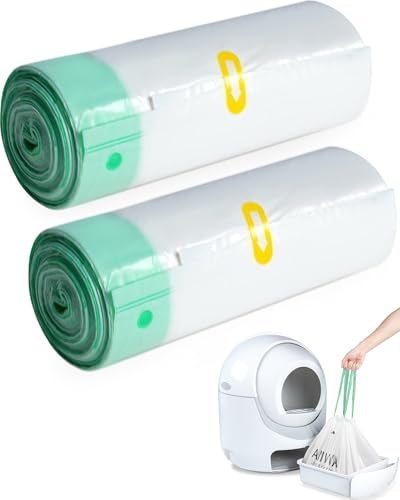
Built for automatic litter boxes, with a translucent bag the sensors can read.
These bags are made for automatic boxes. The listing names the Litter-Robot 3, 4 and 5 and says they suit most automatic boxes. A review page we checked lists only the LR series (3, 4, 5, 5 Pro and EVO), so confirm your exact model before ordering.
Build Quality & Design
The listing says the material is LDPE that’s soft and quiet, which suits timid cats. Side seams are double-sealed, and the drawstring is said to be 2.5 times thicker than the liner. Each bag measures 25.2 x 15.4 inches, and the pack holds 40.
Performance & Speed
Translucency matters in these boxes. The listing says the bags let the sensors detect usage correctly while still hiding the waste. The pull-out design is meant to make changes quick.
Features & Functionality
Pre-cut sizing means no trimming or folding. The drawstring closes the bag so you can lift it out without touching the contents.
User Experience
Installation is where these bags succeed or fail. The review page warns that stretching or uneven draping can cause tears or jams during a cycle, and that static cling can make rolls awkward to unroll in dry rooms. Take your time on the first install.
Value for Money
Price isn’t listed here, but 40 bags in two rolls goes a long way in a one-cat home. Check cost per bag on the listing and compare it with the manufacturer’s own liners.
✅ Advantages
❌ Disadvantages
Major Factors to Consider
Whichever liner you pick, these are the six things that decide whether you end up happy with it.
Box Compatibility
This is the deciding factor. The Scoopfree liner lists the Crystal Pro only, and the ANWA bags list Litter-Robot models. A wrong match fails no matter how good the bag is.
Speed & Efficiency
Both use a drawstring, so changes take a minute or two. The ANWA’s pull-out design is aimed at faster swaps in an automatic box.
Price & Value
Neither price is listed here. Divide price by bag count on the live listing, and remember the ANWA pack gives you 40 bags.
Build Quality
Both list reinforced or double-sealed seams. The ANWA adds a thicker drawstring, while the Scoopfree adds a cardboard layer to guard against claws and the rake.
Design & Aesthetics
The ANWA is translucent so automatic-box sensors read correctly and the contents stay hidden. The Scoopfree liner is built around its cardboard layer.
Durability
Both are described as tear-resistant. Neither lists a weight rating, so don’t overload them, and install carefully to avoid stretching.
Feature Comparison
The table shows what each listing says. “Not listed” means the listing doesn’t mention it, which isn’t the same as “no”.
| Feature | Litter Box Liners Compatible with Pets Scoopfree | ANWA 40 Count Automatic Litter Box Bags |
|---|---|---|
| Anti-scratch cardboard | ✓ | Not listed |
| Drawstring closure | ✓ | ✓ |
| Translucent for sensors | Not listed | ✓ |
| Reinforced or double-sealed seams | ✓ | ✓ |
| Pull-out design | Not listed | ✓ |
| Tear-resistant | ✓ | ✓ |
| Box compatibility | Crystal Pro only | Litter-Robot 3, 4 and 5, plus others per listing |
Specifications Comparison
Dimensions are the clearest numbers here. The ANWA bag is much smaller because it’s cut for an automatic box’s waste globe, not an open pan.
| Specification | Litter Box Liners Compatible with Pets Scoopfree | ANWA 40 Count Automatic Litter Box Bags |
|---|---|---|
| Price | Not listed | Not listed |
| Pack count | Not listed | 40 bags |
| Dimensions | 37″ x 17″ | 25.2″ x 15.4″ |
| Material | Not listed | LDPE, per the listing |
| Seal | Reinforced seams | Double-sealed side seams |
| Closure | Drawstring | Drawstring |
| Design | Anti-scratch cardboard | Pull-out design, translucent |
| Compatibility | Crystal Pro only | Litter-Robot 3, 4 and 5; confirm your model |
🏆 Which One Should You Pick?
Pick Litter Box Liners Compatible with Pets Scoopfree if you own the compatible Crystal Pro. The anti-scratch cardboard layer is its defining feature, and the reinforced seams and drawstring cover the basics. It’s the only choice of the two for that box, so it wins by default there.
Choose ANWA 40 Count Automatic Litter Box Bags If…
You Own a Litter-Robot 3, 4 or 5
These bags are cut for the LR series. Check the compatible-model list on the listing, since a review page also names the 5 Pro and EVO.
You Want Sensor-Friendly Bags
The translucent material is meant to let the box’s sensors detect your cat while hiding the waste.
You Want Volume
Forty bags in a pack lasts a long time in a small household, so you reorder less often.
You Have a Timid Cat
The listing calls the LDPE soft and quiet, which helps a skittish cat get used to the box.
How to Get the Most From Litter Box Liners? (and Avoid the Cons)
Most of the downsides above disappear when you follow a few habits.
- Get the size right. A liner that’s too short slips, and one that’s too tight tears. Measure the pan and check the listing’s dimensions. Our guide on what size litter box liner you need shows how.
- Smooth it flat. Press the liner into the corners so there are no folds for urine to pool in.
- Secure it on every side. Fold the overhang around the rim so the liner can’t fold back into the box as your cat covers waste.
- Scoop gently. Lift clumps out. Dragging the scoop along the floor snags folds and can puncture the bag.
- Change it on schedule. Every 1 to 2 weeks is typical, more often with several cats.
- Test with one box first. If you have two boxes, line only one and watch which your cat picks. If your cat starts going elsewhere, take the liner out.
🎯 Final Recommendation
Liners are worth it for owners who want faster cleanups and will take the time to fit them properly. Skip them if your cat avoids them or the cost and plastic bother you.
If you do buy, let your box decide. The Pets Scoopfree liner is for the Crystal Pro. The ANWA bags are for Litter-Robot style automatic boxes. Neither beats the other outside its own box.
Summary
- Liners make cleanup faster and disposal tidier, but they add recurring cost and plastic waste.
- The biggest cons are poor fit, folds that trap urine, and cats that dislike the feel or catch claws in the plastic.
- Litter Box Liners Compatible with Pets Scoopfree adds an anti-scratch cardboard layer and lists the Crystal Pro only.
- ANWA 40 Count Automatic Litter Box Bags are translucent and cut for Litter-Robot 3, 4 and 5 style boxes.
- Fit carefully, smooth out folds, and change liners every 1 to 2 weeks to avoid most problems.
- Watch your cat. If it starts avoiding the box, take the liner out.
Frequently Asked Questions
Are litter box liners worth it?
For many owners, yes. They cut scrubbing and make disposal cleaner. They’re a poor fit for cats that dig hard or dislike them, and for anyone bothered by the recurring cost.
What are the disadvantages of litter box liners?
The main ones are ongoing cost, single-use plastic, folds that trap urine, holes from claws, and cats that refuse to use a lined box. A wrong-size or wrong-model liner can also slip, tear or jam an automatic box.
Do cats hate litter box liners?
Some do. Poorly fitting liners with lots of folds are the usual trigger, and claws catching in the plastic can create a bad association with the box. If your cat starts going elsewhere, remove the liner.
Do litter box liners make cleaning easier?
Yes, when they fit. You tie the drawstring and lift the bag out instead of scraping the pan. A liner with holes or folds can make cleaning harder, because urine reaches the pan and scoops snag.
Which is better, the Scoopfree liner or the ANWA bags?
It depends on your box. The Scoopfree liner lists the Crystal Pro only, and the ANWA bags list Litter-Robot 3, 4 and 5 style automatic boxes. Choose by compatibility first.
Is the price difference worth it?
Neither price is listed in our notes, so there’s no number to weigh. Divide price by bag count on the live listing, then compare against the manufacturer’s own liners for your box.
What are the main differences?
Size and purpose. The Scoopfree liner is 37 x 17 inches with an anti-scratch cardboard layer, while the ANWA bag is 25.2 x 15.4 inches, translucent and sold in packs of 40 for automatic boxes.
Do liners work in automatic litter boxes?
Only if they’re made for your model. The ANWA bags list Litter-Robot 3, 4 and 5, and a review page adds the 5 Pro and EVO. Install them carefully, because stretched or uneven bags can tear or jam.
Are litter box liners bad for the environment?
Standard liners are single-use polyethylene, which isn’t biodegradable. Compostable liners reduce the plastic, though they still need a safe disposal route for cat waste.
How often should I change a litter box liner?
Every 1 to 2 weeks is typical, and more often with several cats. Automatic boxes follow the manufacturer’s schedule.

Written by Mishu
A passionate cat lover and indoor living enthusiast, Mishu is the founder and voice behind Indoor Living Cat – a go-to resource for cat owners who want to create the happiest, healthiest life for their feline companions indoors.
View Full Profile