
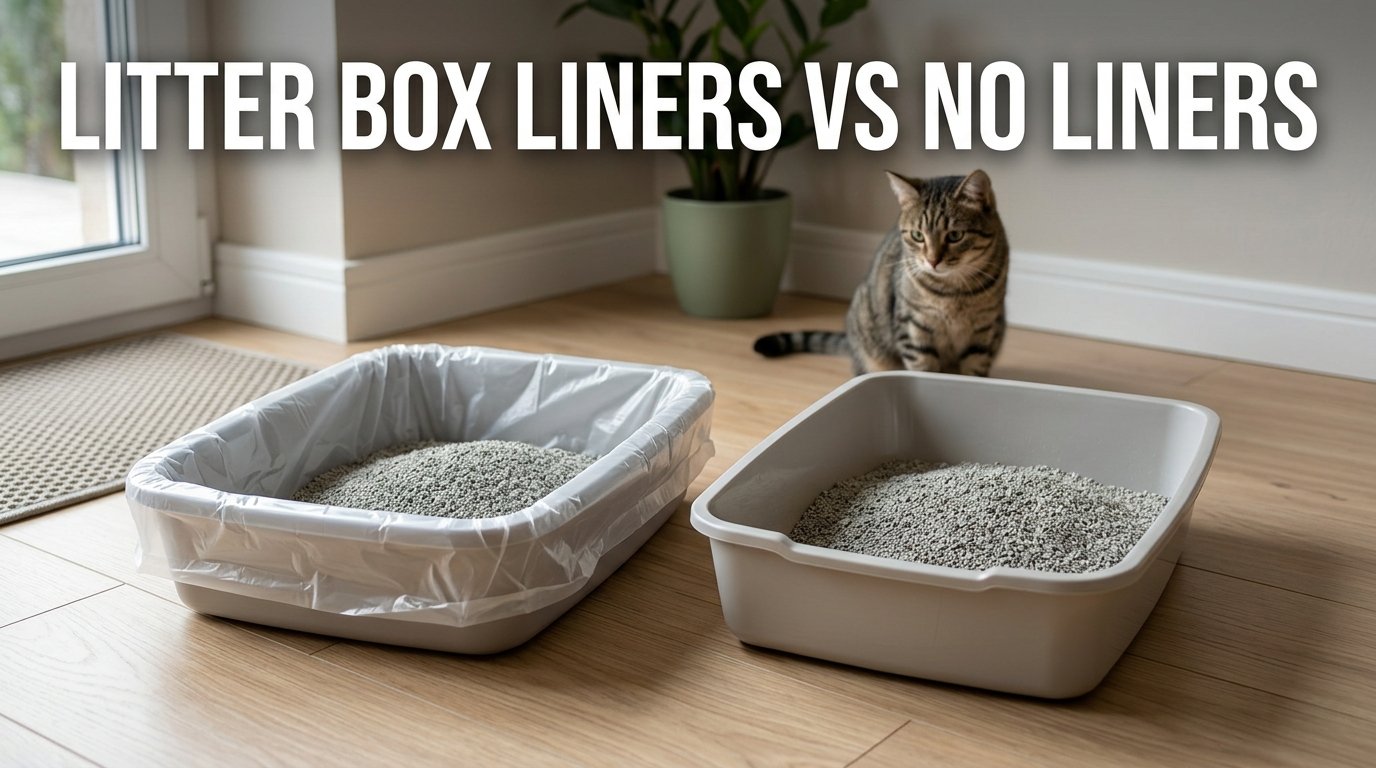
Use a liner if you dump and wash the whole box on a schedule and your cat leaves plastic alone. Skip it if your cat digs hard, or if you mostly scoop and top off. Both setups work. The mistake is picking one without matching it to your cat’s habits and the way you actually clean.
This guide covers what changes with a liner and what doesn’t, how liners and no liners compare on cleanup, odor, cost, and cat acceptance, and how to set up either one without a mess. It also includes our liner pick, the Jonny Cat Litter Box Liner, for anyone who decides a liner suits them. If you want to compare more options, see our guide to the best litter box liners.
Last updated: October 2026.
Disclosure: This post contains affiliate links. If you buy through them we may earn a commission at no extra cost to you.
⚡ Quick Verdict
Liners win for owners who dump the full box and want less scrubbing, for anyone with sore wrists or limited mobility, and for multi-cat homes that dump often. No liners win for diggers, for frequent scoopers who rarely dump, and for anyone cutting plastic. If you go with a liner, the Jonny Cat jumbo liner, a 2-mil bag with a drawstring, is the pick in this guide.
Litter Box Liners vs No Liners at a Glance
Here’s the short version of how the two setups compare on the things owners ask about most.
| Factor | With liners | Without liners |
|---|---|---|
| Cleanup effort | Lift, tie, toss. The pan needs a wipe, and a wash now and then. | Dump the litter, then scrub and dry the pan every full change. |
| Cat acceptance | Most cats ignore it. Diggers can snag claws or pull the bag loose. | Nothing to snag. The box feels the same every time. |
| Odor | Keeps urine off the pan floor and corners. Does nothing for stale litter. | Plastic absorbs urine over time. Scratched pans hold smell. |
| Leak risk | Urine can pool under a bag that slips or bunches. | No bag to slip. Liquid sits directly on the pan. |
| Cost | Ongoing. Divide the box price by the bag count to get cost per change. | Soap and water only. You may replace the pan sooner. |
| Plastic waste | One bag per full change. | None extra. |
| Best for | Dump-and-wash routines, multi-cat homes, anyone who hates scrubbing. | Diggers, frequent scoopers, plastic-conscious owners. |
Pros and Cons of Litter Box Liners
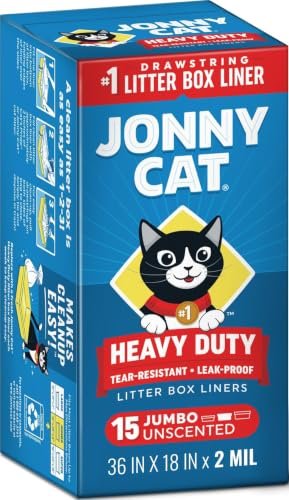
*For cat owners who dread cleaning dirty litter boxes and need a mess-free solution.*
A liner is a plastic bag that sits inside the pan. When it’s time to change the litter, you pull the bag up, cinch the drawstring, and carry the whole thing to the trash. The pan stays mostly clean, so you skip the scrubbing and the sink full of litter dust.
That convenience has limits. A liner can’t fix a box that’s too small, a litter that’s too dusty, or a cleaning routine that’s too rare. And if your cat digs like she’s after buried treasure, the bag will end up in a crumpled mess at the bottom. For a longer breakdown, see our full list of the litter box liners pros and cons.
✅ Advantages
❌ Disadvantages
Pros and Cons of Going Without Liners
Going without a liner is the default for most cats and most owners. You scoop daily, dump when the litter is spent, and wash the pan. It costs nothing beyond soap and takes no setup.
✅ Advantages
❌ Disadvantages
Odor, Cost, Cat Acceptance and Other Factors
These are the factors that should drive the decision, in the order most owners care about them.
Cat acceptance
This comes first because a cat who won’t use the box makes every other factor irrelevant. Most cats tolerate a liner. If yours starts going outside the box after you add one, remove it right away. Watch for scratching the bag, hesitating at the edge, or a change in where she goes. Our guide on whether cats scratch through litter box liners covers this in more detail.
Odor control
A liner protects the pan from soaking up urine, and that helps over months. It won’t mask a dirty box. Daily scooping and a full change on schedule matter more than either setup.
Cost
Divide the box price by the bag count. The Jonny Cat box in this guide is a 15-count, so check the current price and divide. Compare that against your time and the cost of replacing a scratched pan sooner. Still unsure about the cost? See whether litter box liners are worth it.
Time and effort
Liners cut dump day to a few minutes. Without them, plan on scrubbing and drying the pan each time, which takes longer and is harder on wrists.
Environmental impact
One liner is one plastic bag per change. If that matters to you, look at biodegradable or compostable litter box liners, or skip liners and wash the pan.
Hygiene and health
Liners reduce how much you touch the pan, which helps during dump day. If you’re pregnant or immunocompromised, ask your doctor about handling litter at all. Gloves and handwashing apply in both setups.
Durability and fit
A liner only works if it fits your pan. Check the pan dimensions against the bag size, and keep sharp claws trimmed to protect the plastic. If you’re not sure how to measure, read what size litter box liner you need.
Which One Should You Choose?
Choose litter box liners if…
You dump and wash on a schedule
You do a full change every couple of weeks and hate the scrubbing that follows. A liner turns that into a lift-and-tie job.
You have several cats
More cats means more dump days. A drawstring bag cuts the time and keeps the mess off your hands.
Your wrists or back hurt
Lifting a bag is easier than scrubbing a full pan over a sink.
Your cat leaves plastic alone
She scratches litter, not the pan. The bag stays flat and stays put.
Skip liners if…
Your cat digs hard
She’ll snag claws and pull the bag into the litter. You’ll spend more time fixing it than you save.
You scoop daily and rarely dump
If you top off and wash every month or two, the bag saves little.
You want less plastic
Going bare costs nothing and creates no extra waste.
Your cat is sensitive to change
If she’s picky about the box, don’t add a new variable.
Quick checklist before you buy
- ☐ My cat doesn’t dig through the pan floor or shred things.
- ☐ I do a full dump and wash at least every few weeks.
- ☐ I’ve measured the pan and compared it to the bag size.
- ☐ I have a tight way to secure the bag, like clips or a tucked rim.
- ☐ I’m okay with one plastic bag per change.
If you ticked most of these, a liner is a good fit. If not, skip it and use the cleaning routine below.
Jonny Cat Litter Box Liner Review
Jonny Cat is the liner we’d pick for most owners who go the liner route. The 2-mil thickness holds up against typical claws, and the drawstring closes the bag so you can carry it out without touching waste. It’s unscented and sized for jumbo pans.
Build quality and design
The bag is 2-mil plastic with reinforced seams, in plain white. It resists punctures from claws and nails. It’s functional rather than pretty, and that suits something that lives under litter.
Performance
The bag handles the weight of wet litter and resists splitting. It doesn’t absorb anything, so urine pools at the bottom and gets tied up with the litter at the next change. If the bag slips, that pooling can find its way under the plastic, so secure the edges.
Features
Features include a drawstring closure, an extra-large size, and an unscented bag. Check the dimensions against your pan before you order, or compare other jumbo litter box liners.
User experience
Setup takes a minute. Tuck the bag over the rim, add litter, and scoop as usual. Dump day is lift, tie, toss. [ADD: your real-world impressions after using it, with a photo.]
Value for money
The box is a 15-count. Divide the current price by 15 to see your cost per change, and compare it to what a scrubbing session costs you in time. For multi-cat homes that dump often, the math tends to favor liners.
| Specification | Jonny Cat Liners |
|---|---|
| Pack size | 15-count box |
| Dimensions | 3 ft x 18 in |
| Material | 2-mil plastic |
| Closure | Drawstring |
| Scent | Unscented |
| Best for | Cats, jumbo pans |
| Price | [Check current price on Amazon] |
Score breakdown
8.5/10
8.5/10
8.0/10
8.0/10
9.0/10
8.0/10
Jonny Cat wins this guide because it combines thickness, fit and a drawstring that solves the main liner complaint, which is messy disposal. Our one reservation is the same as for any liner: if your cat digs hard, it won’t help.
How to Use a Litter Box Liner ?(Step by Step)
- Empty and wash the pan. Dry it fully so the bag doesn’t trap moisture.
- Open the liner and lay it flat across the pan.
- Push it into the corners so there’s no loose slack.
- Fold the excess over the rim and tuck it tight. Use binder clips or clothespins to hold it if needed.
- Pour in litter slowly, to your usual depth, so the bag doesn’t shift.
- Scoop daily as normal. Use a gentle motion so the scoop doesn’t snag the plastic.
- On dump day, pull the drawstring closed, lift the bag out, tie it off and put it in the trash.
- Wipe the pan, check for scratches, and start with a fresh bag.
How to Clean a Litter Box Without Liners?
- Scoop daily, ideally twice if you have more than one cat.
- On dump day, empty the entire pan into a trash bag.
- Rinse with warm water to remove loose litter and residue.
- Scrub with mild, unscented dish soap. Avoid strong ammonia or bleach-heavy cleaners, since cats can dislike the smell.
- Rinse well so no soap film stays behind.
- Dry completely with a towel or let it air dry. Moisture traps odor.
- Add fresh litter to your usual depth.
| Litter type | Typical full-change schedule |
|---|---|
| Clumping | Every 2 to 4 weeks, with daily scooping |
| Non-clumping | About once a week |
These are common guidelines. If the box smells sour even after scooping, change it sooner.
Alternatives to Liners, and What Not to Use
- High-sided or hooded boxes reduce scatter for diggers.
- Litter mats catch tracked litter at the box exit.
- A fast sifting scoop shortens the daily routine.
- Disposable cardboard boxes help during travel or short-term situations.
- Thick trash bags work in a pinch, but they slip and lack a drawstring. See can you use trash bags as litter box liners for the full answer.
Why panty liners don’t belong in a litter box
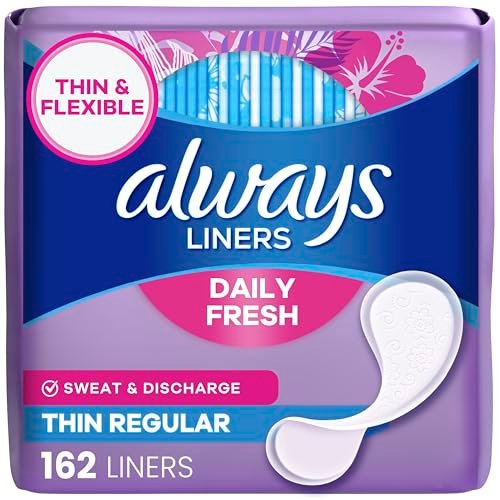
This post once compared Jonny Cat liners to Always panty liners. The two have nothing in common: one is a pan-sized waste bag, and the other is a thin personal hygiene product for light discharge. Panty liners are too small and too thin to contain a pan of litter, and the adhesive has no job in a box. Stick with products made for cats.
Final Recommendation
Pick liners if you dump and wash on a schedule, your cat doesn’t dig through plastic, and you want dump day to take minutes. Pick no liners if your cat shreds bags, you scoop often and rarely dump, or you want to cut plastic. For most multi-cat homes and anyone with sore hands, I’d go with liners, and Jonny Cat is the one to buy.
Whichever you pick, scoop daily, watch your cat’s habits, and change the setup if she tells you it isn’t working.
Summary
- Liners cut dump day to a few minutes, and they protect the pan from urine.
- No liners cost nothing and suit diggers and frequent scoopers.
- Liners don’t fix odor on their own. Daily scooping and regular full changes do.
- Match the liner to your pan size and secure the rim to stop slipping.
- If your cat refuses the box after you add a liner, remove it.
- Panty liners and thin trash bags are poor substitutes for cat-specific liners.
- Jonny Cat’s 2-mil jumbo drawstring liner is our pick if you go with a liner.
Frequently Asked Questions
Are litter box liners worth it?
They’re worth it if you dump and wash the whole box on a schedule, and your cat leaves the plastic alone. The bag turns a scrub job into a lift-and-tie job. They’re not worth it if your cat digs hard enough to shred the bag, because you’ll fight loose plastic and urine pooling underneath it.
Do cats like litter box liners?
Most cats don’t care. A few refuse the box because the plastic crinkles or snags a claw. If your cat starts eliminating outside the box after you add a liner, take it out first and rule that out before looking for other causes.
Do litter box liners help with odor?
Only indirectly. A liner keeps urine from soaking into the box floor and corners, which are where old smell builds up. It does nothing for the litter itself, so daily scooping and regular full changes still decide how the room smells.
Can I use a trash bag as a litter box liner?
You can, but a kitchen bag is thinner and slippery, and it bunches under the litter. Cat-specific liners like Jonny Cat’s 2-mil jumbo bags are cut to fit a pan and have a drawstring, which is the part that makes disposal clean. If you go with a trash bag, pick a thick one and secure the edges.
Can panty liners go in a litter box?
No. Panty liners are made for personal hygiene and light moisture. They’re too small and thin to hold a pan of litter, and the adhesive does nothing in a box. This is the reason that comparison from the old version of this article didn’t make sense.
How often should I change litter with or without a liner?
Scoop at least once a day either way. A common rule is a full change every 2 to 4 weeks for clumping litter and about once a week for non-clumping. A liner makes the full change faster. It doesn’t change the schedule.
Can I flush cat litter or liners?
No. Clumping litter can block plumbing, and plastic liners don’t break down in a sewer system. Tie the bag and put it in the trash.
How do I stop my cat from tearing the liner?
Pull the bag tight and secure it around the rim. Add litter slowly so the bag doesn’t shift. Keep your cat’s claws trimmed. If the bag still shreds, your cat is a digger, and going without a liner is the better fit.
Are litter box liners biodegradable?
Standard liners, including Jonny Cat’s 2-mil plastic bags, are plastic. Biodegradable and compostable versions exist, so check the label if that matters to you. Note that pet waste usually can’t go in a home compost pile.
What are the alternatives to litter box liners?
Use a box with high sides, a litter mat to catch scatter, a fast-draining scoop, and a regular dump-and-wash routine. Some owners also use disposable cardboard boxes during travel or illness.

Written by Mishu
A passionate cat lover and indoor living enthusiast, Mishu is the founder and voice behind Indoor Living Cat – a go-to resource for cat owners who want to create the happiest, healthiest life for their feline companions indoors.
View Full Profile