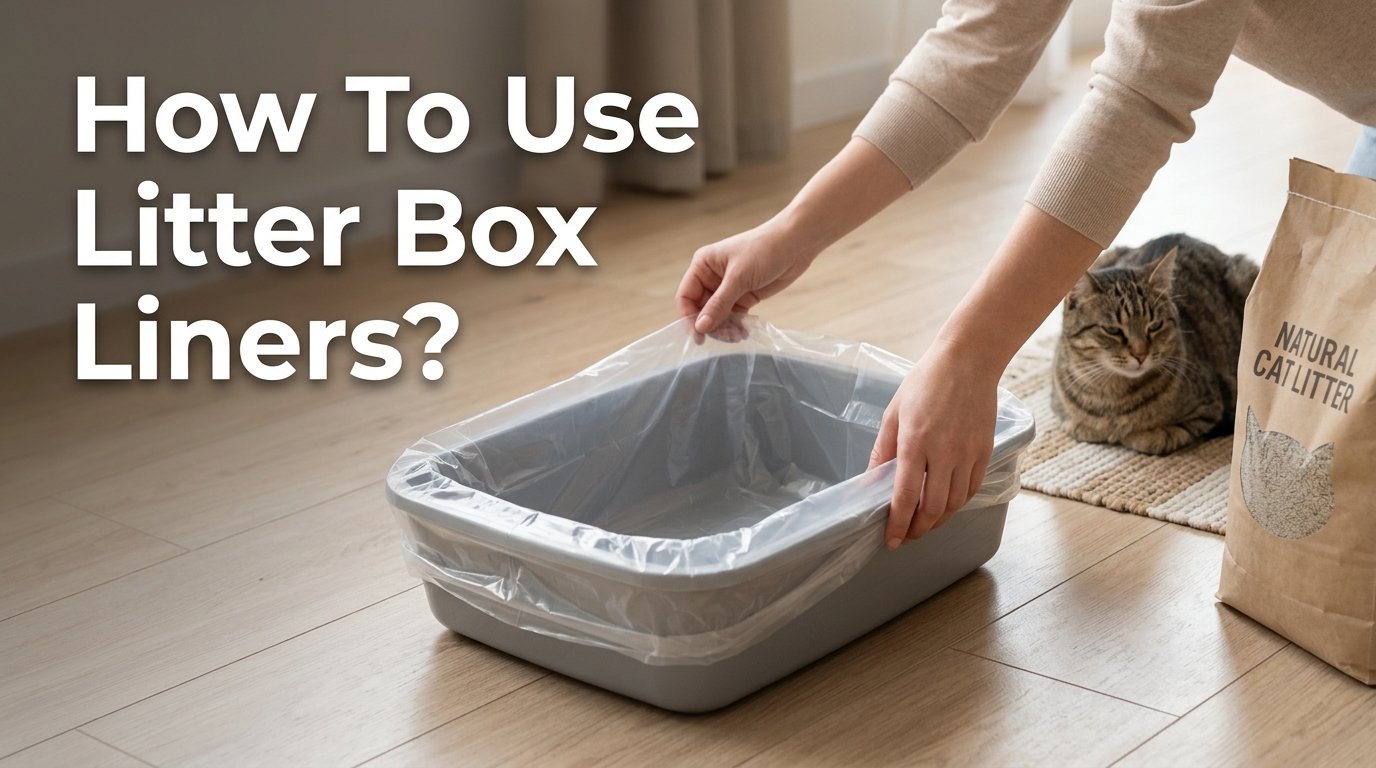
Measure your pan, then pick a liner that’s a few inches longer than the box on every side. For most open-top pans, that means a jumbo around 36 x 18 inches. Smaller pans can use a 30 x 16 or 30 x 17 inch large, and big or deep ones move up to 37 x 18 or the 39 x 21 inch Super. That’s the short answer to “what size litter box liner do I need,” and the rest of this guide shows how to confirm it.
Scooping is bad enough. Scrubbing cemented litter off the pan bottom is worse. I compared five listings, from Jonny Cat’s 2 mil jumbo bags to FortiCrest’s 2.8 mil 37-inch liners, and sorted them by fit first. Jonny Cat comes in 5 and 15 count boxes, Fresh Step adds a scent, one 150-count pack fits select automatic boxes (not the Litter-Robot 3, 4 or 5), and FortiCrest targets larger pans. For every liner type side by side, see our best litter box liners guide.
Updated October 10, 2026. We earn a commission if you buy through our Amazon links, at no extra cost to you. Sizes come from retailer listings and can change, so check the dimensions on the page before you order.
What Size Litter Box Liner Do I Need?
Liner sizes are listed flat, as length x width. The bag opens up around your pan, so you want it long enough to reach the floor corners and still leave a few inches to fold over the rim. Three numbers do most of the work: the pan’s length, width and depth.
Quick size guide
- Standard open pan: a Large (30 x 16 or 30 x 17 in) or a Jumbo (36 x 18 in).
- Large or deep pan: 37 x 18 in or the 39 x 21 in Super.
- Automatic box: a liner made for your exact model.
- Not sure: buy the smaller pack of a jumbo and test it.
How to Measure Your Litter Box for a Liner
- Take the hood and any sifting tray off. Measure the pan itself.
- Measure the length and width at the top rim, in inches.
- Measure the depth inside, from the rim to the floor of the pan.
- Check the listing’s flat dimensions, written as length x width, for the liner you want.
- Do a dry run. Drape the unfolded liner in the empty pan. It should reach every corner and leave a few inches over the rim all the way around.
- When you land between two sizes, pick the bigger one. Extra material bunches under the litter. A short liner slips in.
Litter depth matters too. PrettyLitter’s own guidance gives 2 inches as the minimum for its litter and 3 inches for larger or older cats, and it calls roughly 12 x 16 inches an average-sized box. Deeper litter weighs more, which is where thickness starts to count.
Liner Size Names Aren’t Standard
“Large,” “Jumbo” and “Super” mean different things to different brands. FortiCrest sells a 37 x 18 inch liner as Large, while Jonny Cat’s Jumbo is 36 x 18 inches and its Large is only 30 x 16. Go by the inches and ignore the label.
| Brand and size name | Flat size | General fit (confirm with a dry run) |
|---|---|---|
| Jonny Cat Large | 30 x 16 in | Standard, smaller open pans |
| Fresh Step Large | 30 x 17 in (2.5 ft x 17 in) | Standard open pans |
| Jonny Cat Jumbo | 36 x 18 in | Most traditional open pans, per the listing |
| FortiCrest Large | 37 x 18 in | Larger or deeper pans |
| Jonny Cat Super | 39 x 21 in | Extra-large pans |
Which Liner Size for Which Litter Box?
| Your box | What to buy | Watch for |
|---|---|---|
| Standard open pan | Large (30 x 16 or 30 x 17) or Jumbo (36 x 18) | Jumbo bunches a little in a small pan, which is fine |
| Large, deep or high-sided pan | Jumbo or bigger (37 x 18, or 39 x 21 Super) | A bag that’s too short slips into the litter |
| Hooded or covered box | Size to the pan, not the hood | Lift the hood off during a dry run |
| Automatic box | Model-specific liner only | The 150-count here doesn’t fit the Litter-Robot 3, 4 or 5 |
| Heavy litter or a large, active cat | 2.5 mil or thicker, such as 2.8 mil | Lift from the bag body, not the drawstring |
Our Five Liners at a Glance
| Image | Liner | Flat Size | Thickness | Count | Best For | Link |
|---|---|---|---|---|---|---|
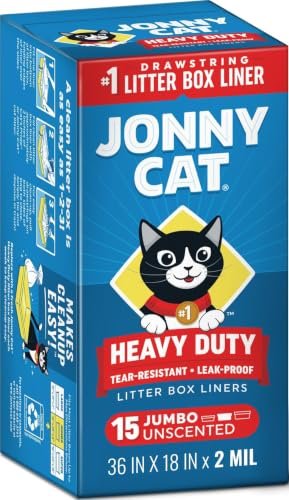 |
Jonny Cat Jumbo, 15 count | Jumbo 36 x 18 in | 2 mil | 15 | Most standard open pans | Check Price |
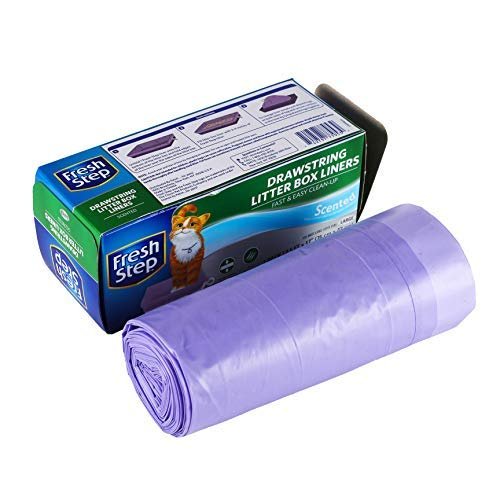 |
Fresh Step Scented, 30 x 17 in | Large 30 x 17 in | Not stated | Check listing | Standard pans, scent fans | Check Price |
 |
150 Count Automatic Box Bags | Model-specific | Not stated | 150 | Select automatic boxes | Check Price |
 |
Jonny Cat Jumbo, smaller pack | Jumbo 36 x 18 in | 2 mil | 5 | Testing the fit | Check Price |
 |
FortiCrest 37 x 18 in, 2.8 mil | 37 x 18 in | 2.8 mil | 30 | Big pans, large or active cats | Check Price |
List of Cat Litter Box Liners
Thin liners tear under claws, and flimsy ones leak granules. The sensible fix is a size that fits, enough thickness for your cat, and a drawstring that makes disposal quick. Here’s how the five stack up on those points.
|
1
|
Jonny Cat Litter Box Liners Heavy Duty, Tear & Leak Resistant Jumbo 15 |
Jonny Cat’s Jumbo is the default answer for most open-top pans. Retailer listings put it at 36 x 18 inches and describe it as a fit for most traditional, open-style boxes. It’s 2 mil thick, closes with a drawstring, and this box holds 15 liners.
It’s built for manual pans, not automatic boxes, and it’s unscented, so pair it with a litter that handles odor. On a small pan the extra length bunches under the litter. That’s untidy but doesn’t cause leaks. Our jumbo litter box liners guide goes deeper on these bigger bags.
How This Can Solve Your Problem
- ✓ Resists tears and leaks from claws, preventing spills and sticky residue
- ✓ Drawstring closure allows quick, low-contact disposal of waste
- ✓ Jumbo 36 x 18 inch size fits most traditional open pans
Important Considerations
- • Unscented, so you may need extra odor control
- • Best for manual litter boxes, not automatic models
- • Extra length can bunch up in smaller pans
|
2
|
Fresh Step Drawstring Cat Litter Box Liners, Scented, 2.5 ft x 17 in |
The 2.5 ft x 17 in size works out to 30 x 17 inches, roughly six inches shorter than a jumbo. That suits standard pans better than deep or oversized ones. If your box is big, measure before you buy.
It adds a light scent and a drawstring for tying off. Fresh Step pairs it with clumping litter for odor control, and the scent is the main reason to pick it over the unscented options here. Another brand to compare is covered in our Tidy Cats litter box liners guide.
How This Can Solve Your Problem
- ✓ Light scent helps neutralize odors between litter changes
- ✓ Durable plastic resists scratches and punctures from claws
- ✓ 30 x 17 inch size suits standard open pans
Important Considerations
- • The scent may not suit sensitive noses
- • Best paired with clumping litter for odor control
- • Drawstring may need practice for a tight seal on heavy loads
- • Shorter than a jumbo, so check fit on deep or large pans
|
3
|
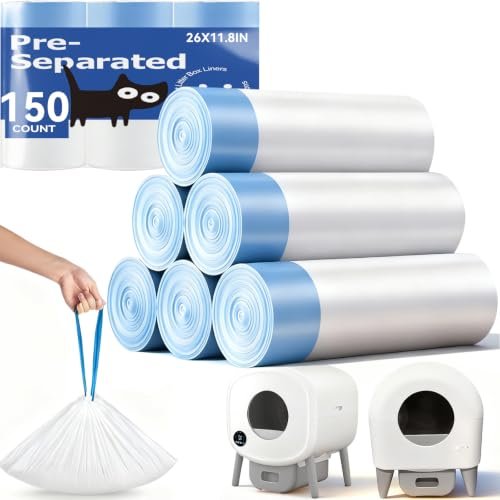
150 Count Cat Litter Box Bags for Automatic Cat Litter Box with Drawstring |
Automatic boxes need model-specific liners, so this one answers a different question than the others. It’s a 150-count pack of pre-separated bags with a reinforced drawstring, made for particular automatic boxes. It does not fit the Litter-Robot 3, 4 or 5.
We don’t have a dimension for this bag, so confirm the compatible models on the listing before you order. For catteries and multi-cat homes the count makes it cheap per bag, though very large waste volumes may need extra odor control.
How This Can Solve Your Problem
- ✓ Designed for automatic litter boxes, with compatibility listed per model
- ✓ Pre-separated bags prevent accidental tearing and save time
- ✓ Leak-proof material handles heavy loads without spills
Important Considerations
- • Does not fit certain automatic boxes, including the Litter-Robot series
- • Best for bulk users such as catteries or multi-cat homes
- • May need extra odor control for very large waste volumes
|
4
|
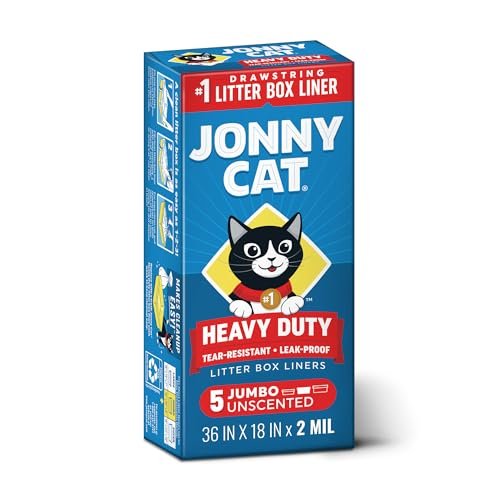
Jonny Cat Litter Box Liners: Heavy Duty, Tear & Leak Resistant, Drawstring (Smaller Pack) |
Same liner as the 15-count box, in a smaller pack. It makes sense when you aren’t sure the jumbo fits your pan, because you find out before buying 15.
The tear resistance and drawstring match the larger box. The catch is the count: heavy loads or multiple boxes use five liners fast.
How This Can Solve Your Problem
- ✓ Heavy-duty material resists tears from claws
- ✓ Drawstring closure allows quick, low-contact disposal of waste
- ✓ Jumbo size fits most traditional open boxes
Important Considerations
- • Unscented, so you may need extra odor control
- • Smaller pack runs out quickly in busy homes
- • Best for manual boxes, not automatic models
|
5
|
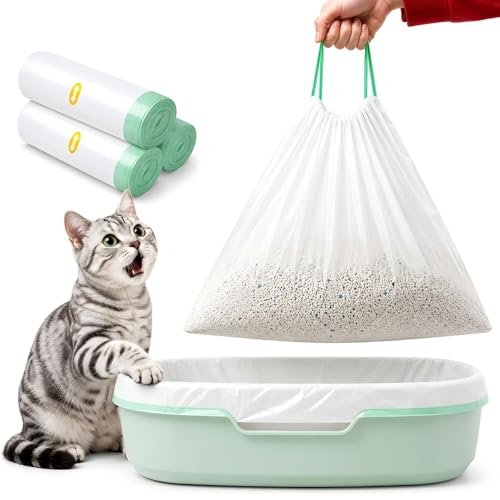
FortiCrest Cat Litter Box Liners, 30 Count, Large 37″ x 18″, 2.8 Mil |
FortiCrest labels this size Large, yet it’s an inch longer than Jonny Cat’s Jumbo. That’s a reminder that size names aren’t standard. Trust the inches, not the label.
At 2.8 mil it’s the thickest of the five, and the listing rates it for up to 30 lb of waste. It’s the pick for big pans, deep litter and active cats. For heavy loads, lift from the body of the bag rather than the drawstring.
How This Can Solve Your Problem
- ✓ 2.8 mil thickness resists claw damage and leaks
- ✓ 37 x 18 inch size fits standard and larger boxes
- ✓ Drawstring closure allows quick, low-contact disposal
Important Considerations
- • Heavy loads are safer to lift from the body of the bag
- • Compact packaging saves space but limits bulk options
- • Best for homes with large or active cats
How to Solve Cat Litter Box Messes Effectively?
A well-fitted liner does most of the work. These four habits handle the rest. Our guide on how to use litter box liners covers the setup.
- Select durable liners: Look for at least 2 mil to resist claws. Jonny Cat’s Jumbo is 2 mil and FortiCrest is 2.8 mil. For automatic boxes, use bags made for your model.
- Use odor-neutralizing litter: Pair liners with clumping or odor-control litter. A scented liner such as Fresh Step’s adds a second layer, which helps in multi-cat homes and small apartments.
- Stick to a routine: Scoop daily and replace liners every 1 to 2 weeks, depending on how many cats you have and the litter type. Automatic boxes follow the manufacturer’s schedule.
- Dispose of liners properly: Pull the drawstring tight before you lift the bag. For heavy loads, hold the body of the bag, not just the drawstring, and use a trash can with a lid to keep odor in.
Key Factors in Choosing the Right Litter Box Liners
Size comes first, and these five factors decide the rest.
- Size and box compatibility: Measure the pan and compare it to the flat size on the listing. Jumbo and large cover most open pans, while automatic boxes need liners made for them. For deep pans, pick a longer liner so it doesn’t slip.
- Thickness: Aim for 2 mil or more. Thicker bags, such as the 2.8 mil FortiCrest, suit big cats and deeper litter.
- Scent preferences: Unscented liners suit sensitive noses but may need extra odor control. A light scent like Fresh Step’s helps between changes.
- Disposal convenience: A drawstring lets you lift, tie and toss without touching the litter. That matters in multi-cat homes and for anyone with limited mobility. See our drawstring litter box liners guide for more options.
- Budget and quantity: Bulk packs cut the cost per bag and reduce reordering. A smaller pack, like Jonny Cat’s, is better when you’re still testing the fit.
When the Liner Doesn’t Fit: Quick Fixes?
| What you see | Likely cause | Fix |
|---|---|---|
| Liner slides into the box | Bag too short, or no overhang | Size up and fold a few inches over the rim |
| Tears at the corners | Bag stretched tight to fit | Move to the next size up, or a thicker liner |
| Big folds under the litter | Bag larger than needed | Smooth it flat before pouring, or size down |
| Litter sneaks between liner and wall | Liner not pressed into the corners | Smooth it down and pour litter in slowly |
| Drawstring won’t close | Bag too small to gather | Size up, or lift from the bag body |
Cat Litter Box Odor Prevention Tips
Liners control mess. Odor needs its own plan.
- Scoop daily: Remove waste once a day, more often with several cats. A long-handled scoop keeps your hands clear.
- Use odor-neutralizing litter: Clumping or odor-control litters such as Fresh Step or Dr. Elsey’s absorb moisture and cut smell. Skip cheap, dusty litters, which hold odor.
- Choose liners that fit: A snug, correctly sized liner stops litter and urine reaching the pan. Replace it every 1 to 2 weeks.
- Ventilate the area: Keep the box in an airy spot, away from food prep and closets. A covered box can trap more smell than an open one in a closed space, so airflow matters.
- Wash the pan: Use mild soap and water every 1 to 2 weeks. Avoid harsh chemicals that can irritate paws. Rinse well and dry the pan before refilling.
- Add odor absorbers: Baking soda or activated charcoal near the box helps. For stubborn smells, use an enzymatic cleaner made for pet messes.
Common Mistakes When Choosing and Using Liners
- Guessing the size from the name: “Large” and “Jumbo” mean different things by brand. Compare the actual inches and do a dry run.
- Choosing flimsy liners: Thin bags tear and leave sticky residue. Check the mil rating before you buy. See whether cats scratch through litter box liners for more.
- Skipping the overhang: A liner with no extra material at the rim slides into the litter the first time your cat digs. Elastic litter box liners grip the rim and avoid this.
- Neglecting daily scooping: Waste builds into clumps and odor. Scoop daily and more often in multi-cat homes.
- Relying on liners for odor: A liner holds waste but doesn’t remove smell. Pair it with good litter and a clean pan.
- Disposing sloppily: Tie the drawstring tight, lift from the body of heavy bags, and use a lidded trash can. For an eco-friendly option, see compostable litter box liners.
- Skipping box cleaning: Wash the pan every 1 to 2 weeks, even with a liner.
Quick Summary
- Jonny Cat’s Jumbo (36 x 18 in, 2 mil) is the safe first choice for most open pans. Heavy-duty material resists tears, and the drawstring makes cleanup quick. Get this solution
- Fresh Step’s scented liner (30 x 17 in) suits standard pans and adds light odor control. It pairs well with clumping litter. Get this solution
- The 150-count pack is made for select automatic boxes, with pre-separated bags. It doesn’t fit the Litter-Robot 3, 4 or 5, so check your model. Get this solution
- Jonny Cat’s smaller pack is the same jumbo liner in fewer numbers. It’s the low-risk way to test the fit. Get this solution
- FortiCrest’s 37 x 18 in liner is 2.8 mil thick and rated for up to 30 lb. It’s the choice for big pans and active cats. Get this solution
Frequently Asked Questions
What size litter box liner do I need?
Match the liner’s flat length and width to your pan, with a few inches left over to fold across the rim. A jumbo around 36 x 18 inches fits most traditional open pans, a 30 x 16 or 30 x 17 inch large suits smaller ones, and big or deep pans call for 37 x 18 inches or more.
Measure the pan, check the listing’s dimensions, and do a dry run with the unfolded bag.
How do I measure a litter box for a liner?
Remove the hood and measure the pan’s rim length, rim width and inside depth in inches. Compare those numbers to the liner’s flat length and width. The bag should reach every corner and leave a few inches of overhang all around.
What does jumbo mean for litter box liners?
There’s no standard. Jonny Cat’s Jumbo is 36 x 18 inches, its Large is 30 x 16 and its Super is 39 x 21. FortiCrest calls 37 x 18 inches Large. Compare inches, not labels.
Will a liner that’s too big cause problems?
Usually not. The extra material bunches under the litter, which looks messy but doesn’t leak. Smooth it flat before pouring. A liner that’s too small is the bigger risk, because it slips into the litter or tears at the corners.
Do litter box liners fit automatic litter boxes?
Only liners made for your model do. The 150-count pack here is for select automatic boxes and doesn’t fit the Litter-Robot 3, 4 or 5. Check the compatible models on the listing before ordering.
How thick should a litter box liner be?
Look for at least 2 mil. Jonny Cat’s Jumbo is 2 mil and FortiCrest’s is 2.8 mil. Thicker bags suit big cats, deep litter and heavy loads.
How do I solve cat litter box messes?
Start with a properly sized, heavy-duty liner with a drawstring. Scoop daily, replace liners every 1 to 2 weeks, pair them with odor-control litter, and wash the pan every 1 to 2 weeks.
What causes cat litter box messes?
The usual causes are thin liners that tear, bags that are too small for the pan, litter that sticks to the box, and poor odor control. Skipped scooping and sloppy disposal add to it. If you’re improvising with kitchen bags, read can you use trash bags as litter box liners.
Can I use a liner in a covered or hooded box?
Yes, but size it to the pan, not the hood. Remove the hood for the dry run, then fit the liner and put the hood back on.
Is it worth investing in cat litter box liners?
For most owners, yes. A well-fitted liner cuts scrubbing, reduces spills and makes disposal quick. Bulk packs lower the cost per bag. If your cat shreds liners, thicker material or going without may suit you better. See are litter box liners worth it, the litter box liners pros and cons and litter box liners vs no liners.

Written by Mishu
A passionate cat lover and indoor living enthusiast, Mishu is the founder and voice behind Indoor Living Cat – a go-to resource for cat owners who want to create the happiest, healthiest life for their feline companions indoors.
View Full Profile