
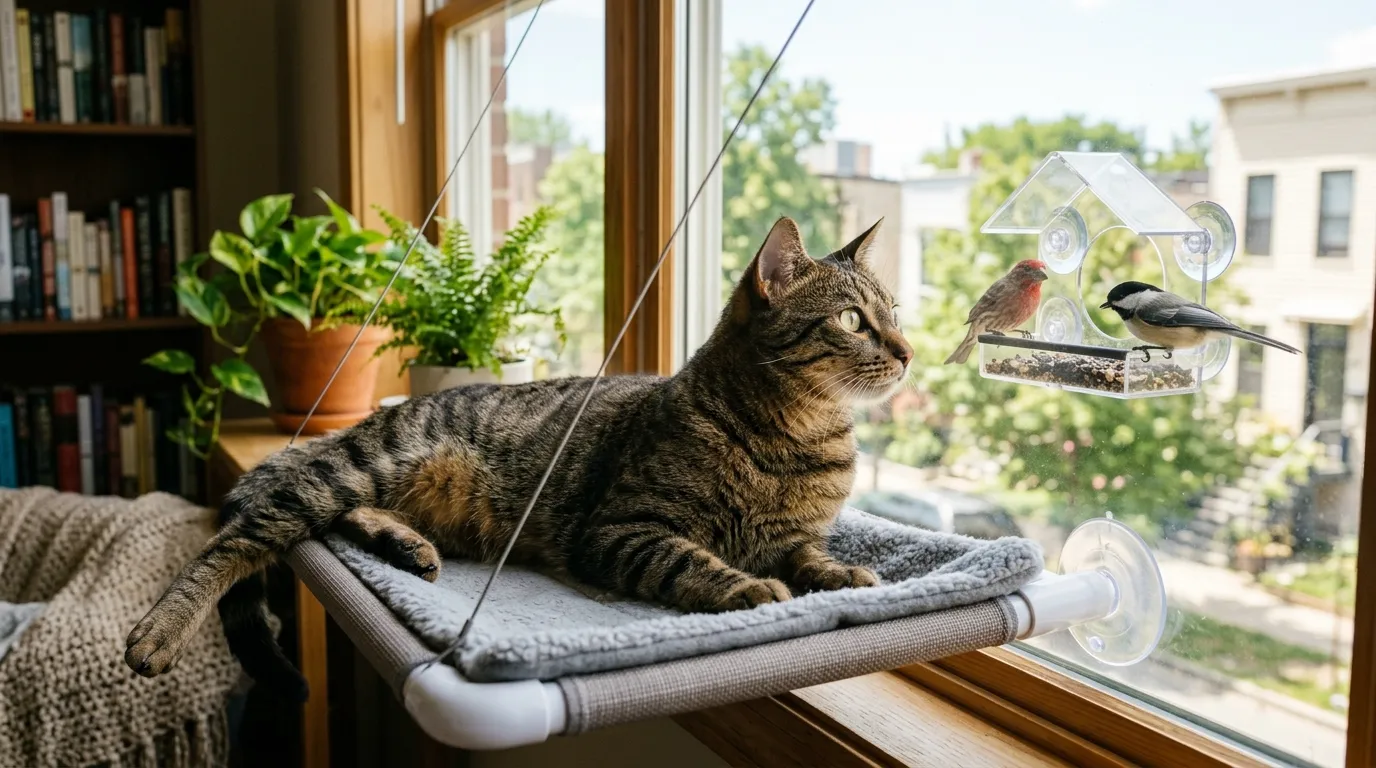
Window setup for indoor cat living was the last thing on my mind when I adopted my first apartment cat. I put her bed in the corner, filled a basket with toys she ignored and spent six months wondering why she sat on the cold narrow windowsill instead of any of the comfortable surfaces I had prepared for her. She was telling me exactly what she needed and I kept buying things that were not it. A proper window setup for indoor cat living is not a nice extra. It sits alongside food, play and litter access as a daily need that shapes a cat’s mental state. This guide covers five steps to set it up correctly, from perch positioning to the outdoor additions that turn an ordinary window into something your cat will use for hours, plus the one safety risk almost nobody mentions.
A complete window setup for indoor cat homes needs four elements working together: a stable padded perch at the correct height, a bird feeder positioned five to eight feet outside the glass, a safe path up to the perch and a window with a clear sightline to outdoor movement. Set these up in that order and most cats start using the station within twenty-four hours.
Why Your Cat Sits on the Windowsill and Ignores Everything Else You Bought
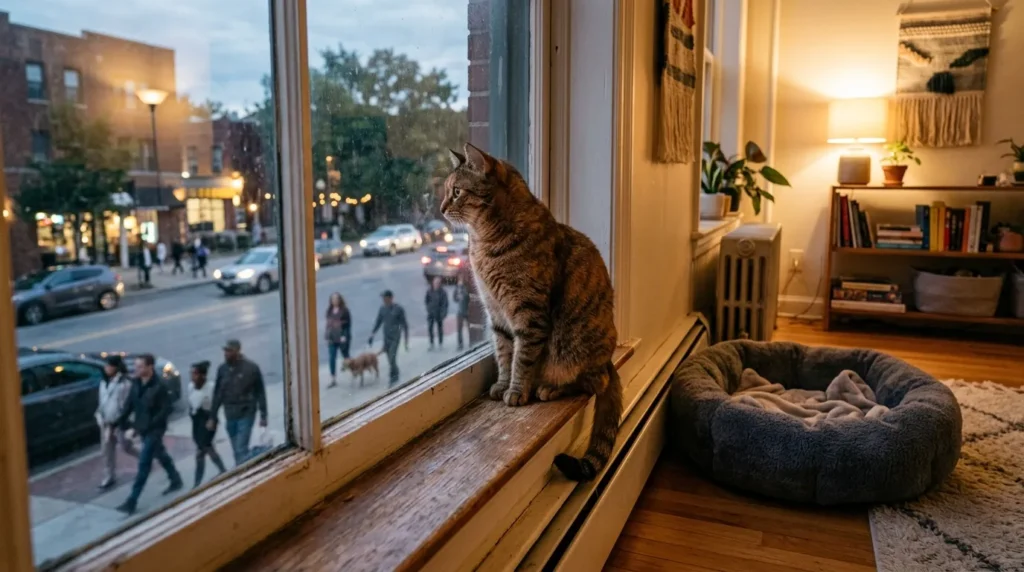
Cats sit on windowsills because surveying territory from a raised, unobstructed vantage point is one of the strongest instincts a domestic cat carries. Sunlight and warmth are a bonus, not the reason. The real draw is movement. Birds land and leave. Squirrels cross the yard. Leaves fall. People pass by. None of it is predictable, and that unpredictability is exactly what activates the alert, watchful state that is part of healthy feline behavior.
A windowsill is narrow and uncomfortable. Your cat sits there anyway because it is the only spot in the apartment that delivers this kind of stimulation. A window setup for indoor cat spaces that actually works simply makes the most behaviorally valuable spot in the home also the most physically comfortable one. That one change can redirect hours of pacing, furniture scratching and vocalizing into calm, sustained window time, an outcome closely tied to broader indoor cat enrichment planning, and to reducing the kind of restlessness covered in our guide on signs your indoor cat is bored.
The research backs this up. Guidance from the Ohio State University Indoor Pet Initiative lists access to natural sightlines from perches as a core environmental need for indoor cats, right alongside food, water, litter and scratching surfaces. It is baseline welfare, not a bonus.
Step 1: Choose the Right Window and Position the Perch Correctly
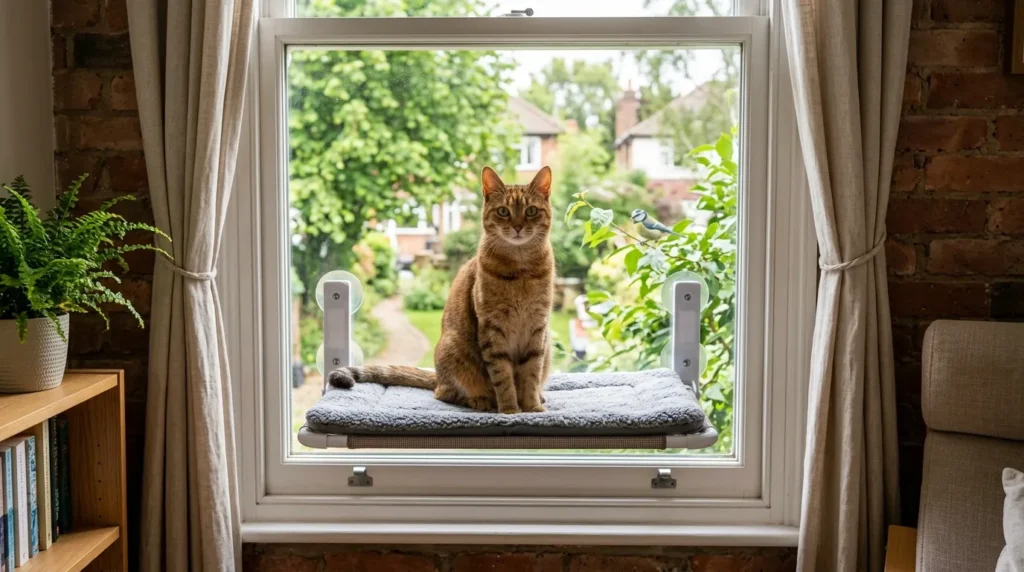
Pick a window with real outdoor activity and decent natural light. South or east facing windows catch morning sun, which most cats seek out on their own. A window facing a bare parking lot produces far less engagement than one facing a tree, garden, lawn or a street with foot traffic. You cannot always choose which windows your apartment has, but you can choose which one becomes the primary cat station. For cats living in smaller units, this matters even more. If you are working with a cat in an apartment with limited floor space, the window often becomes the single biggest enrichment upgrade you can make.
Set the perch so the cat’s eye level lines up with the middle third of the glass, not the very top or bottom. Mount it too high and the cat has to crane down to see ground level activity. Mount it too low and it misses treetop movement and bird flight paths. Middle-third placement gives the widest combined view of ground and sky.
The perch needs to hold the cat’s full relaxed weight with zero movement. Any wobble teaches the cat the perch is not safe to rest on, and it goes right back to the sill. Press a suction cup perch with your full hand weight before letting the cat near it. Clean the glass with rubbing alcohol first. Any residue stops the seal from forming properly and causes drop events, which can permanently kill a cat’s trust in that perch.
Window Perch Types Compared
| Perch Type | Best For | Weight Support | Main Tradeoff |
|---|---|---|---|
| Suction cup perch | Renters, no drilling allowed | Usually one cat, check the label | Needs weekly suction checks |
| Sill mounted shelf | Wide windowsills, multi cat homes | Highest, screws into the frame | Not removable without patching |
| Radiator or box seat | Homes with a radiator under the window | High, sits on existing furniture | Only fits specific window setups |
| Hammock style perch | Cats that like fabric over hard plastic | Moderate, check straps monthly | Fabric wears faster than plastic |
Step 2: Add the Bird Feeder That Turns the Window Into Cat TV
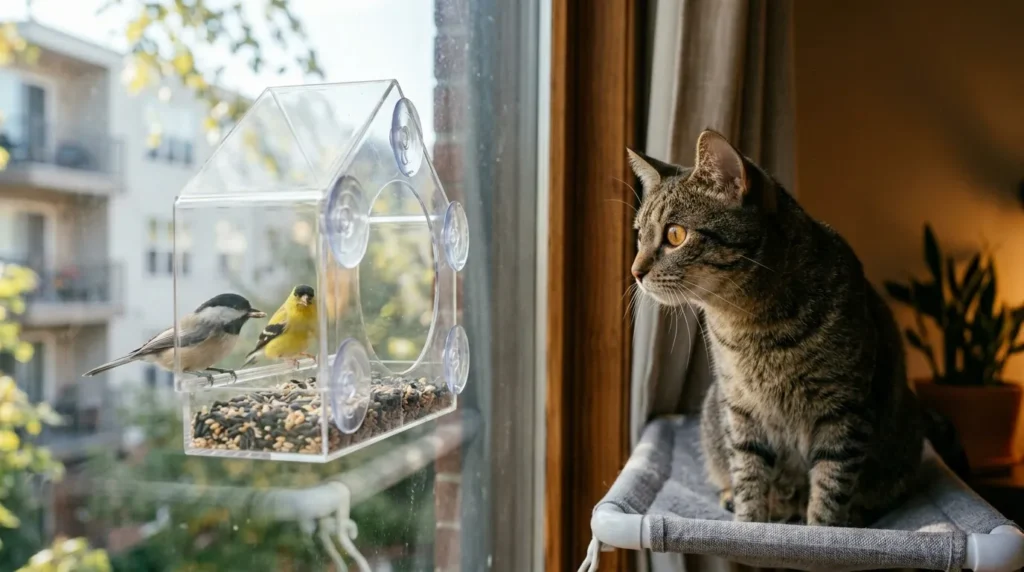
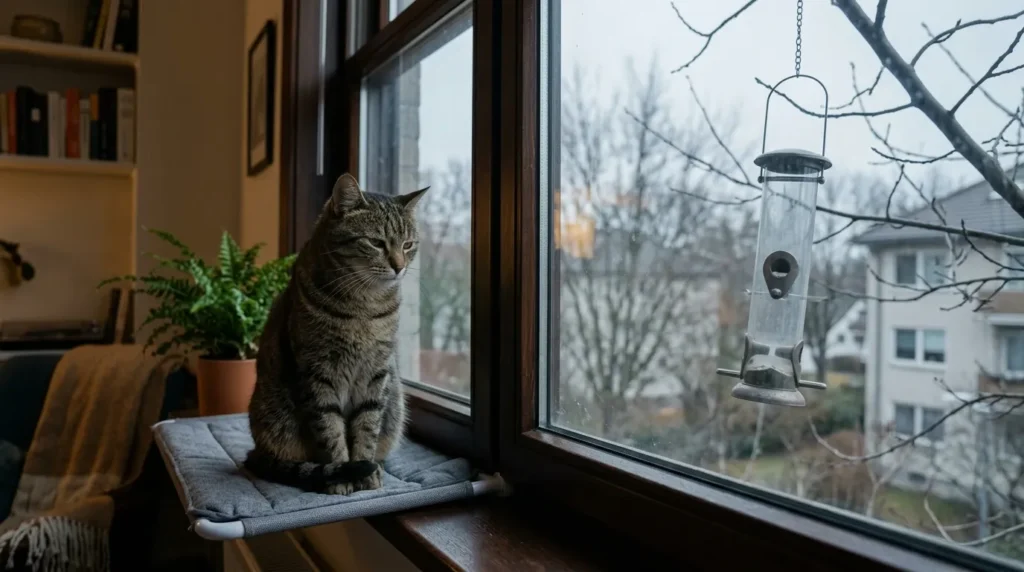
A bird feeder outside the window is the single addition that turns a decent window setup into something your cat actually wants to watch all day. Without a feeder, the view is passive. Birds show up if they show up. With a feeder five to eight feet from the glass, the view becomes an active event that repeats at unpredictable times. Birds arrive, feed, startle and come back. The cat tracks all of it without any effort from you after setup.
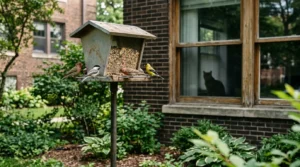
Suction cup feeders that attach right to the glass bring birds within inches of the cat’s face. That produces intense reactions but also the highest startle rate, since birds see the cat and flee fast. A pole mounted feeder placed five to eight feet away produces calmer, longer visits, because birds do not feel an immediate threat and stay to feed instead of landing and bolting. For most apartments, a pole feeder on a balcony or a suction feeder on a nearby wall works better for daily engagement than one attached directly to the glass.
Refill the feeder every two to three days. An empty feeder stops attracting birds within a day, and the cat’s interest fades within a week. Keeping the feeder full matters as much as any other part of the setup. The window station only stays part of your cat’s daily routine if the feeder keeps producing birds, in the same way that feeding an indoor cat on a consistent schedule keeps the rest of the day predictable for them.
Step 3: Build a Path Up That Your Cat Will Actually Use
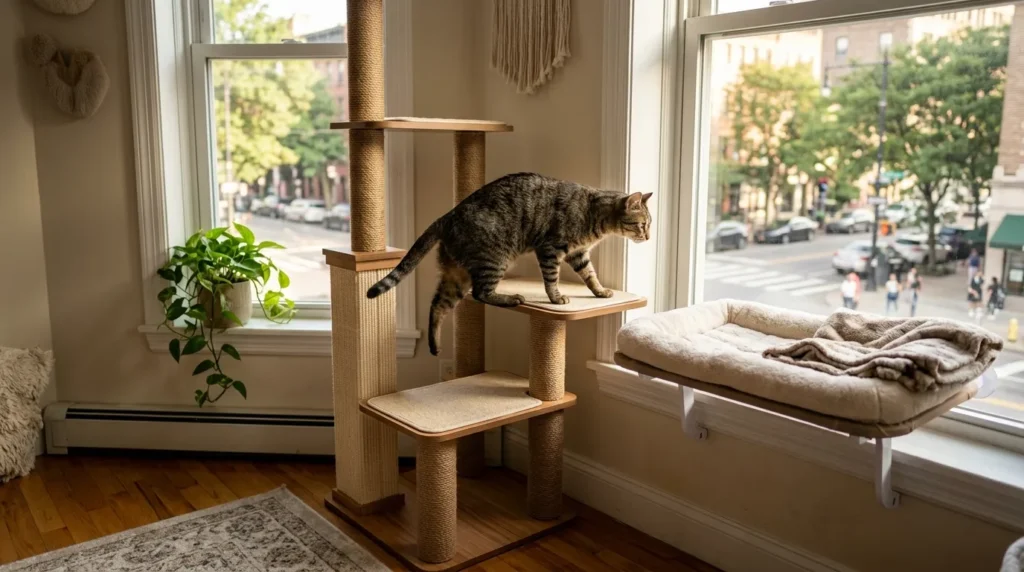
A window perch your cat cannot reach comfortably is just furniture. The path up matters as much as the perch itself, especially for older cats and cats that are not confident jumpers. A three foot gap between the floor and the perch, with nothing in between, works fine for a young agile cat and completely blocks a senior cat with stiff joints. Our guide on indoor cat lifespan covers how mobility shifts through each life stage, which is worth a look if you are setting this up for an older cat specifically.
Put a cat tree, chair, bookshelf or any stable surface within one easy jump of the perch. That intermediate surface should sit no more than eighteen to twenty inches below the perch, so the final jump stays small. Floor, intermediate step, perch. That logical path gets used. A single intimidating jump from floor to high perch gets avoided.
The approach path also decides whether the cat feels safe once it is up there. A perch reachable by only one jump, with no second way down, can feel like a trap to a cat that stays alert to being cornered. Add a second approach option, even something as simple as a chair on the other side, and the cat will use the perch more and stay longer.
Pick approach furniture that does more than one job. A cat tree beside the window that also works as a scratching post and a climbing route gives you three enrichment functions in one piece, and the climbing itself adds a bit of daily activity that supports healthy weight management for cats who otherwise move very little. Choosing cat furniture that serves multiple functions for an indoor cat is what turns a functional corner into a spot your cat returns to across the whole day.
Step 4: Make the Perch Worth Staying On for Hours
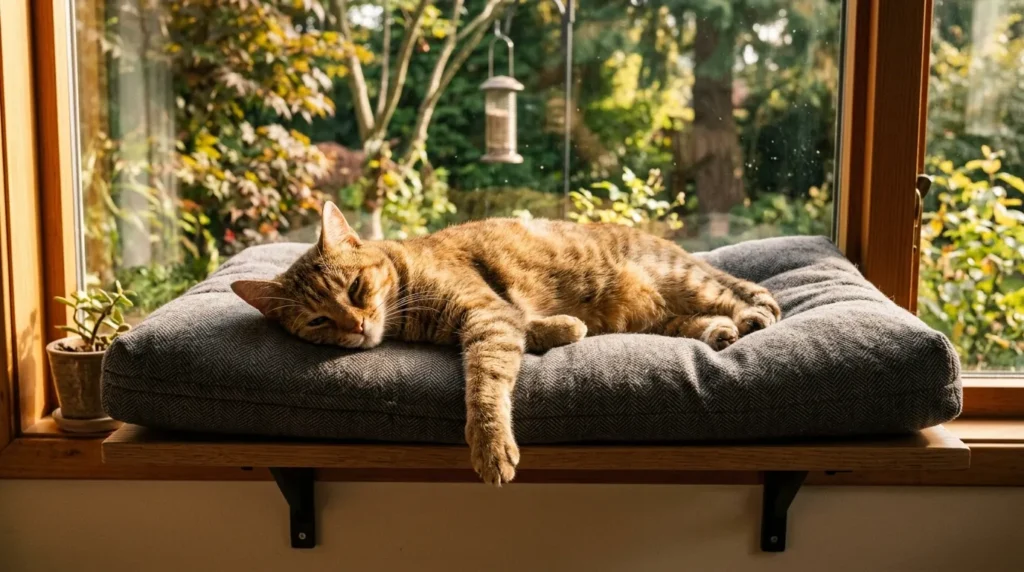
A cat that visits the perch for three minutes and leaves has an engagement problem, not a motivation problem. The view outside is interesting enough. The perch just is not comfortable enough to stay on. Most suction cup perches are narrow enough that the cat has to sit upright and alert instead of sprawling out. Sitting upright for long periods is tiring, and eventually the cat picks physical comfort over the view.
The perch needs to be wide enough for a full body stretch and padded enough that lying flat beats the windowsill. Twelve inches is too narrow for a full grown cat. Sixteen to twenty inches allows a real sprawl. A thin foam insert with a fleece cover works, but a two inch memory foam cushion produces noticeably longer sessions because the cat can rest without any postural effort.
Fold a thin fleece blanket over the perch instead of using a bare cushion where you can. A blanket carries the cat’s own scent from sleeping elsewhere in the apartment, so the new surface smells familiar within a use or two. Cats approach new surfaces cautiously and abandon them fast if nothing familiar anchors them there. One scent-carrying blanket on an unfamiliar perch can shorten the adoption timeline from two weeks to two or three days for most cats.
Step 5: Cat-Proof the Window so It Can Be Left Open Safely
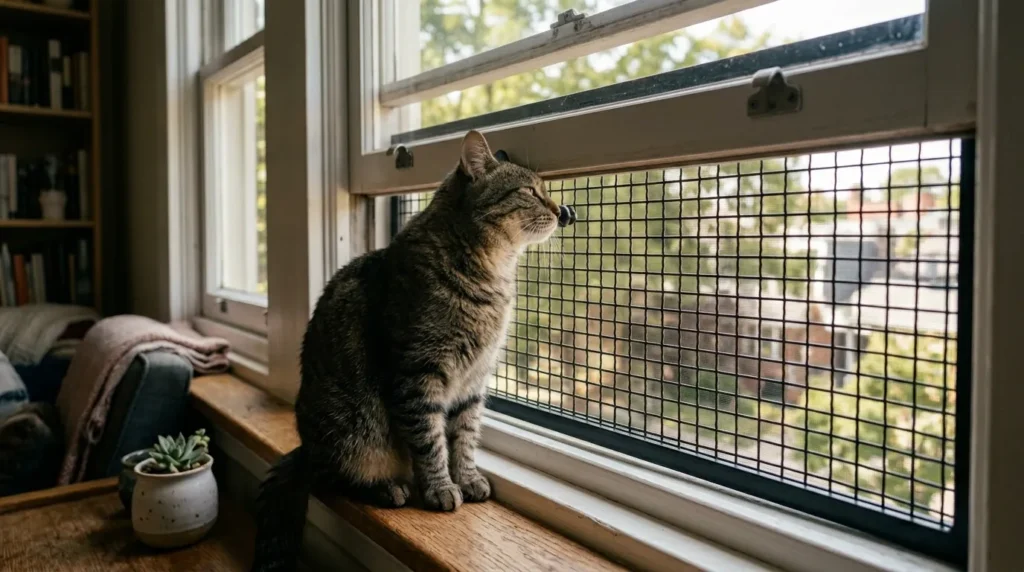
A window that opens safely adds a whole new sensory layer to the station. Fresh air carries bird sounds, outdoor smell, temperature shifts and wind movement that no amount of visual stimulation replaces. A cat that can smell the outdoors through an open window gets the kind of olfactory input that supports overall indoor cat health, and is often the missing piece in an otherwise solid setup.
Standard apartment screens fail under cat pressure. A cat that leans on a regular screen with sustained interest will eventually pop it loose, which is a real fall risk. Swap standard screens for heavy-duty pet mesh, fixed securely into the frame, on any window you plan to open near the cat station. Limit the opening to four inches, no matter how good the screen is. No adult cat can fit through a four-inch gap, and four inches is more than enough airflow and scent.
Insight The fresh air part of the setup is where most owners stop short, and cats notice. An open window with outdoor smells cuts down on indoor cat vocalizing more reliably than almost anything else I have tried. The cat is not meowing because it wants to go outside. Most of the time it is meowing because all it can smell is apartment air. Four inches of open window and heavy mesh costs almost nothing and solves a problem owners often spend months trying to fix with play sessions alone.
High-Rise Syndrome: The Safety Risk Most Owners Don’t Know About
Vets have a specific name for cats falling from open windows and balconies: high-rise syndrome. It spikes every spring and summer when owners open windows for fresh air, and it’s serious enough that it deserves its own section rather than a line buried in the safety step above.
Two things make this counterintuitive. First, cats fall from low floors too, not just high ones; a fall from a second or third story can cause worse injuries than a fall from higher up, because the cat doesn’t have enough distance to right its body into the safe landing position. Second, a confident, athletic cat is at higher risk than a nervous one, since agile cats lean out further chasing a bird or an insect and misjudge the edge.
Signs of a high-rise fall needing an emergency vet visit include difficulty breathing, a limp or refusal to bear weight, bleeding from the nose or mouth, or a cat that seems dazed and slow to respond. Any fall from a window, regardless of how minor it looks, deserves a same-day vet check. Internal injuries don’t always show right away.
The fix ties directly back into Step 5. Heavy-duty mesh, secured into the frame, on every window a cat has access to, not just the one with the perch. A four-inch maximum opening. And a rule worth setting for the whole household: nobody props a window open past that limit “just for a minute,” because a minute is all it takes.
This article is for informational purposes only. Always consult your vet if you have concerns about your cat’s health.
Signs Your Window Setup Is Actually Working
Not every setup earns its keep right away. Check for these signs in the first two weeks:
- Your cat naps on the perch, not just visits it. Full sleep means it feels safe there.
- Vocalizing at other times of day drops off, especially early morning meowing.
- Scratching on furniture away from the window declines within the first week.
- Your cat chooses the perch over the couch during peak bird activity hours.
- Session length grows past ten minutes by the second week.
If none of these show up after two weeks, the problem is almost always the access path or an empty feeder, not the cat.
Window Setup Shopping List and Cost Breakdown
Here’s roughly what a full setup costs, in the order I’d prioritize buying if budget forces you to phase it in.
| Item | Approximate Cost | Priority |
| Padded window perch (16-20 inch, suction or sill mount) | $25-$60 | Buy first |
| Heavy-duty pet mesh screen | $20-$45 | Buy first, especially if the window opens |
| Pole or suction bird feeder | $15-$35 | Buy second |
| Intermediate step (cat tree, sturdy chair repurposed) | $0-$80 | Buy second, or reuse existing furniture |
| Fleece blanket for scent-anchoring | $10-$15 | Buy anytime, low cost |
| Birdseed, refilled every 2-3 days | $8-$12/month ongoing | Ongoing cost |
A basic but genuinely functional setup runs $60-$100 total, and most of it is one-time spending. The mesh screen isn’t optional if the window opens at all; treat it as part of the perch cost, not an add-on.
The Window Setup Mistake That Makes All the Other Work Pointless
The mistake that wrecks a well-built window setup is treating it as a one-time job instead of an ongoing system. The perch goes in, the feeder gets filled once, and three weeks later the feeder sits empty, the suction cups have loosened slightly from temperature swings, and the cat spends fifteen minutes at the window before wandering off to the couch. Everything is still physically in place. The behavioral value has dropped to almost nothing.
The maintenance schedule is simple:
- Refill the feeder every two to three days.
- Press on the perch weekly to check suction stability, and reclean the glass if you feel any flex.
- Wash the perch cover monthly to clear built-up dander.
- Rotate the blanket now and then to refresh the scent from a different sleeping spot.
The second mistake is setting up a window station and then blocking it. A chair pulled in front of the access path, a bag dropped on the intermediate step, a piece of furniture nudged in front of the perch, any of these breaks the routine. The cat tries the route once, finds it blocked, and stops trying. Rebuilding a broken habit takes longer than building it the first time. Treat the approach path as permanent, not temporary.
The third mistake, and it’s a seasonal one, is forgetting the setup needs small adjustments through the year. Direct sun through glass in summer can make a dark perch too hot to lie on by early afternoon; move it slightly out of direct light or add a lighter cover. In winter, cold radiating off single-pane glass can make the perch less inviting even with good padding; a thicker cushion or a spot a few inches back from the glass keeps it comfortable year-round.
Frequently Asked Questions
Does my indoor cat actually need a window perch or is the sill enough?
The sill is never enough because it is uncomfortable for sustained resting. A cat on a sill watches for a few minutes then leaves, since nothing properly supports its weight. A padded perch wide enough for a full sprawl turns brief visits into hour-long sessions. That is a big behavioral difference for one piece of gear.
What kind of bird feeder works best for indoor cat window entertainment?
A pole mounted feeder five to eight feet from the glass produces the most sustained bird activity, since birds feel safe enough to linger instead of flushing right away. Suction cup feeders on the glass give closer, more intense viewing but shorter visits. Both work. Start with a pole feeder if your building allows one, or a suction feeder on a nearby wall or balcony rail.
How do I stop my cat from falling through the window screen?
Swap standard screens for heavy-duty pet mesh rated for cat pressure, and cap the opening at four inches. Standard apartment screens are built for insects, not cats, and pop under sustained pushing. Heavy-duty mesh holds. Four inches is a hard physical limit no adult cat can pass through.
My cat ignores the window perch I installed. What am I doing wrong?
Check the access path first. If the jump is over eighteen inches, or there is only one approach direction, the cat may be avoiding the exposure, not the perch itself. Add a chair on the other side to create a second approach and shorten the final jump. Then check that the feeder outside is full and active, since an empty feeder means no birds and no reason to sit there.
How long should an indoor cat spend at the window each day?
There is no upper limit. A cat spending four hours at the window has its environmental needs met, not a problem. The window station works as passive enrichment that does not wear out the way interactive play sessions can. Aim for the longest voluntary window time you can get, and a well-stocked feeder gets you there naturally.
Can I build a DIY window perch instead of buying one?
Yes, if you can match the stability and width of a store-bought version. A plywood shelf bolted into wall studs beside the window, padded with a two inch foam cushion, works as well as most commercial perches. Suction cup DIY builds are riskier, since a hardware store cup is rarely rated for a cat’s full weight.
Do I need a different setup for multiple cats sharing one window?
One perch rarely works for two cats long term, since window space is a resource cats compete over. A wide sill shelf that fits both, or two smaller perches on separate windows, avoids the standoffs that come from forcing cats to share one narrow spot.
Is it actually dangerous to leave a window open for my cat?
It can be, and vets call the resulting injuries high-rise syndrome. The risk isn’t limited to top-floor apartments; falls from second and third floors are common and often worse than falls from higher up. Heavy-duty mesh secured into the frame and a hard four-inch opening limit remove nearly all of the risk while still letting fresh air through.
Conclusion
A window setup for indoor cat living changes daily life more than most environmental upgrades combined, because it delivers ongoing enrichment all day without needing you to do anything after the initial install. Get the perch stable and comfortable, keep the feeder filled, secure the screen properly, and build a clear access path. Do those things right and your cat will pick the window station over every other piece of furniture you own. Start today by clearing whatever is blocking the sill and placing something stable at the right height beside it. The rest follows on its own.
A window setup for indoor cat living needs a stable padded perch at mid-window height, a bird feeder five to eight feet outside the glass for steady bird activity, a low-jump access path from floor to perch, and reinforced mesh screening for any window left open, capped at a four-inch gap. The perch should be sixteen to twenty inches wide for a full sprawl. Suction cups need alcohol-cleaned glass and a weekly stability check. High-rise syndrome, the medical term for fall injuries from open windows, affects cats on low floors as often as high ones, making secured mesh non-negotiable rather than optional. A basic functional setup costs $60-$100 and gives five to eight hours of passive daily enrichment after the initial setup, with almost no upkeep beyond refilling the feeder.

Written by Mishu
A passionate cat lover and indoor living enthusiast, Mishu is the founder and voice behind Indoor Living Cat – a go-to resource for cat owners who want to create the happiest, healthiest life for their feline companions indoors.
View Full Profile