
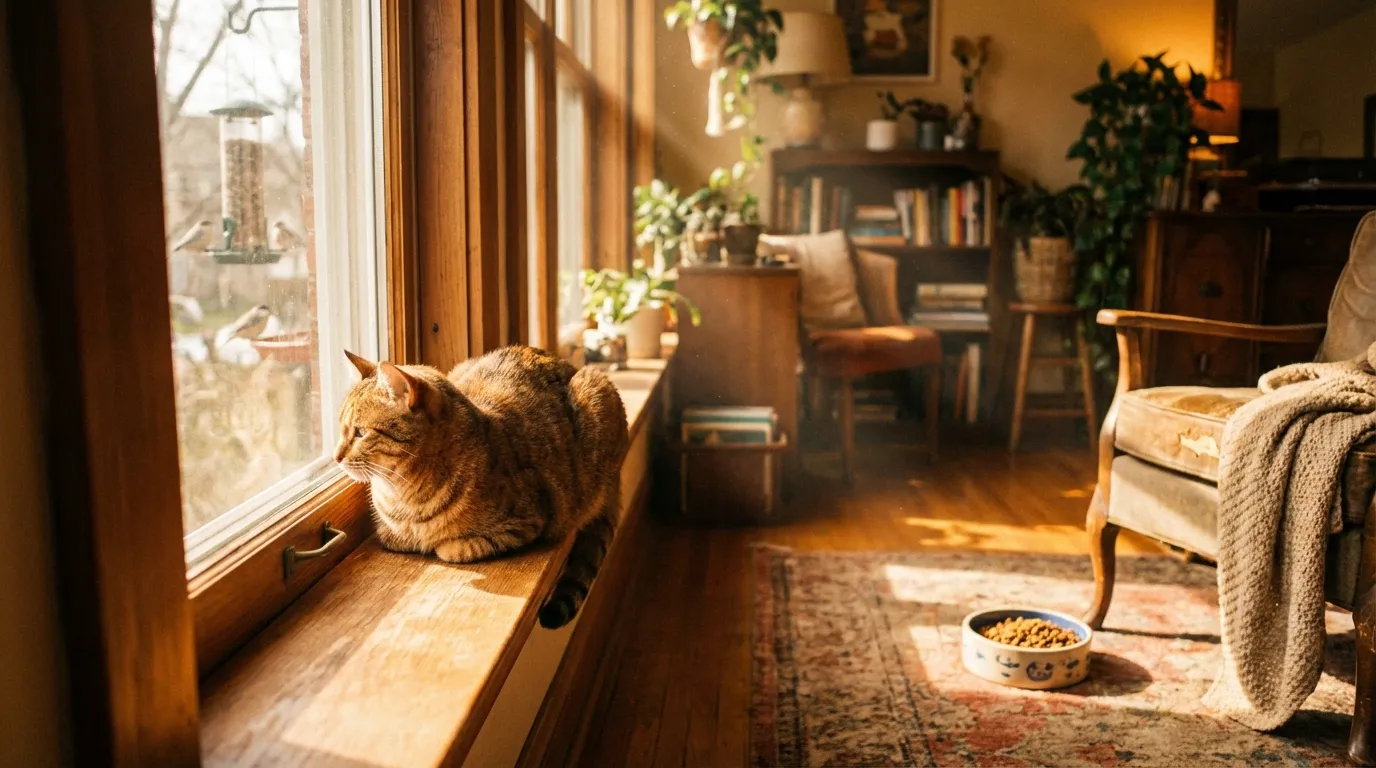
How to take care of an indoor cat is a question most owners only ask after something breaks. The couch gets shredded, the 3am yowling won’t stop, or you find a puddle somewhere that definitely isn’t the litter box. I’ve been there. I once spent two weeks thinking my cat just wasn’t thirsty, then figured out she’d been avoiding her water bowl because she hated still water. One fountain later, problem solved.
Knowing how to take care of an indoor cat properly means more than keeping them alive. It means helping them thrive. This is the main guide in our indoor cat care library, and it covers food, litter, enrichment, vertical space, health, and the mistakes most owners quietly make before they know better. Where a topic deserves more depth than fits here, we link out to the full guide.
Indoor cats need a high-protein wet-food diet served twice daily, at least two litter boxes scooped every day and a minimum of 15 minutes of interactive play. They need vertical climbing space, window access and a routine that stays consistent. Most behavior and health problems in indoor cats trace back to poor diet, a dirty or undersized litter box, or chronic boredom.
How to Take Care of an Indoor Cat: The Daily Checklist
If you only have five minutes, here’s the short version. Everything else in this guide expands on these five habits.
- Feed wet food twice a day, with a named meat listed as the first ingredient.
- Scoop the litter box daily. One cat needs two boxes, minimum.
- Play for 15 minutes with a wand toy, ideally around dawn and dusk.
- Give your cat height. A cat tree or window shelf works.
- Brush two to three times a week and book one vet visit a year.
Get these five right and most behavior problems never show up in the first place.
Feed Your Indoor Cat Like the Carnivore It Actually Is

Indoor cats need less total food than outdoor cats, but they need more protein, not less. Cats are obligate carnivores. Their bodies run on meat, not grain. A diet heavy in carbohydrates, which shows up in a lot of dry food, leads to weight gain, a dull coat and eventually kidney or urinary trouble.
Wet food should be the foundation, not a treat. It delivers the protein cats need and adds water intake at the same time, something most indoor cats fall short on. If you use dry food at all, pick one with a named meat as the first ingredient (chicken, turkey, salmon, not “meat by-products”), and keep fresh water available away from the food bowl.
| Factor | Wet Food | Dry Food |
|---|---|---|
| Protein source | Usually higher, named meat first | Varies widely, often plant-based fillers |
| Water content | 70 to 80 percent | Under 10 percent |
| Urinary health support | Better, due to added moisture | Weaker unless paired with a fountain |
| Cost per meal | Higher | Lower |
| Best use | Primary diet | Occasional topper, not the base diet |
Water fountains genuinely help. Still water puts many cats off. Something about running water triggers their instinct to drink. Feed adult cats twice a day on a fixed schedule instead of leaving dry food out all day. That single habit is one of the easiest ways to prevent the slow creep of indoor cat obesity, which the American Association of Feline Practitioners lists among the most common preventable health problems in indoor cats.
The pet food aisle is full of “indoor formula” bags that lean more on marketing than substance. What actually matters on the label: a high protein percentage, a named meat source listed first and low grain content. If a bag doesn’t have all three, put it back and try the next one. For a deeper breakdown of portions and feeding schedules, our full feeding guide for indoor cats covers it step by step at how to feed an indoor cat properly.
The Litter Box Setup Most Cat Owners Get Wrong
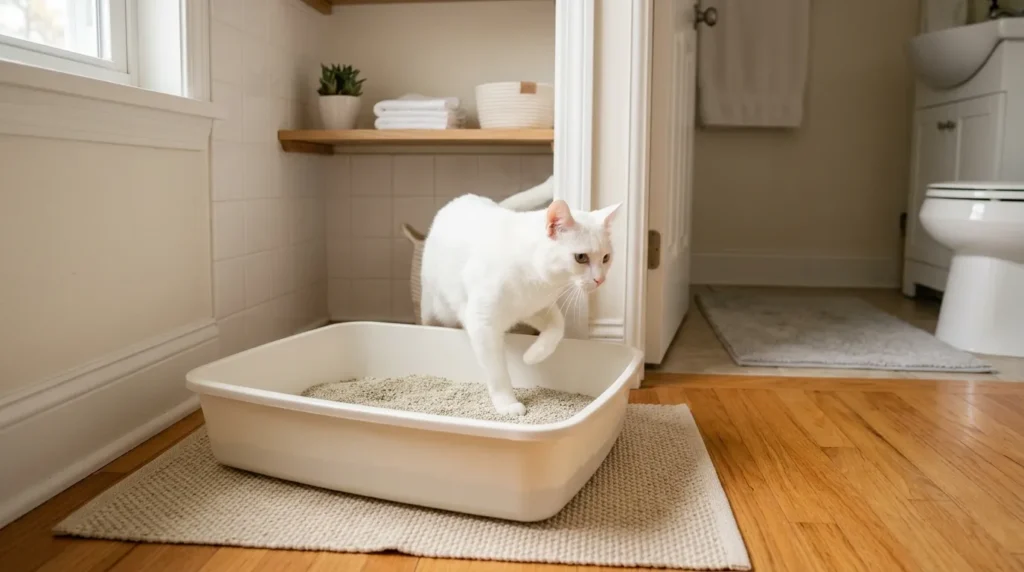
A dirty or poorly placed litter box is the number one reason indoor cats start going elsewhere. Our complete litter box setup guide covers the full breakdown, but here’s the short version.
The rule is one box per cat, plus one extra, known as the N+1 rule. One cat means two boxes minimum, and that isn’t optional. It scales as your household grows: two cats need three boxes, three cats need four. Litter box hygiene is where most owners cut corners they later regret.
- Scoop at least once a day, twice if you can manage it.
- Do a full clean and litter change every one to two weeks.
- Use unscented, clumping litter for most cats; scented varieties are more for the owner’s nose than the cat’s.
- Size the box at one and a half times your cat’s length, nose to tail.
- Place it in a quiet, low-traffic spot, never next to the washing machine.
Size is the thing almost nobody gets right. Most commercial boxes sold in pet stores are genuinely too small for an adult cat. A large plastic storage tote with one side cut low makes a better litter box than most things marketed as one. It’s bigger, easier to clean and costs less.
Covered or open? Most cats prefer open boxes. A cover traps odor inside, and a nervous cat can feel cornered with only one exit. If your cat already avoids a covered box, try removing the lid before you try anything else.
Location matters just as much as size. A cat startled while using the box starts associating that spot with stress, and you end up with a litter avoidance problem that spreads to other corners of the house.
How to Keep an Indoor Cat Mentally Stimulated Every Day
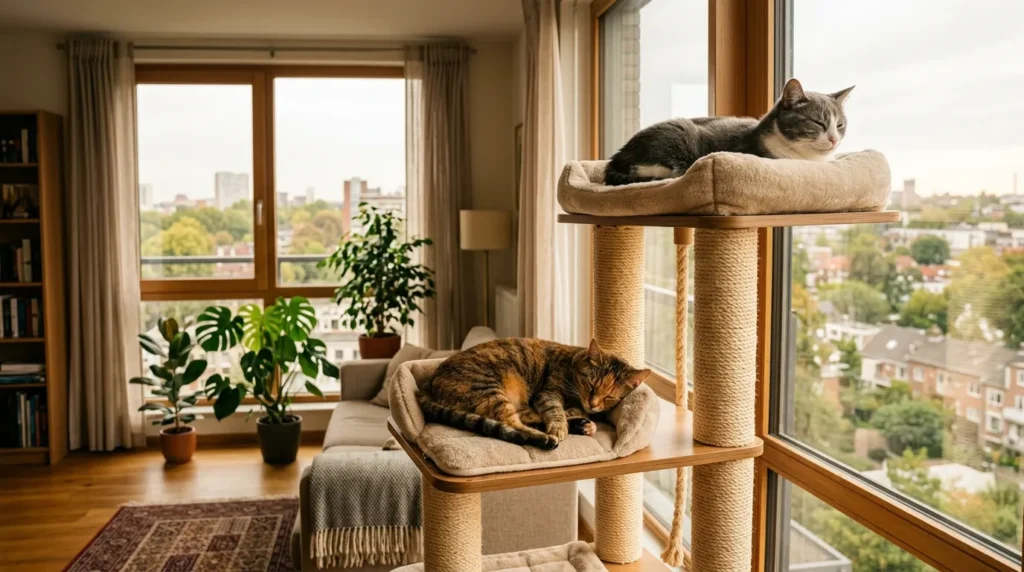
Mental stimulation is the piece most indoor cat care advice mentions and then underdelivers on. Boredom sits behind a lot of behavior problems: destructive scratching, nighttime wailing, aggression, obsessive grooming. It all traces back to a brain with nowhere to put its energy.
Indoor cats sleep 12 to 16 hours a day, and most of that energy gets saved for dawn and dusk, when wild prey naturally moves. Time your play sessions around those hours and you’ll get a far stronger response for the same 15 minutes.
Interactive play is not optional. Use a wand toy or feather teaser and actually play with your cat, not just drag it across the floor, for at least 15 minutes a day. Split that into two sessions if you can. Let your cat catch the toy at the end. A cat that never gets to “win” gets frustrated, and that frustration comes out sideways later, sometimes as biting during what should be a calm petting session.
Enrichment beyond play matters too. Puzzle feeders turn mealtime from a 20-second sprint into real mental work. Predatory instinct doesn’t switch off because a cat lives indoors. It needs an outlet every day. Rotating toys keeps them “new”; a toy left out for three weeks becomes invisible to most cats. For a full weekly rotation system, see our enrichment ideas for apartments.
Window access is free enrichment. A perch at bird-eye-level with a feeder outside gives your cat hours of stimulation it would otherwise get from patrolling a yard. The American Veterinary Medical Association notes that environmental enrichment helps reduce behavior problems in indoor cats. That connection is worth taking seriously. If a window is part of your setup, make sure it’s screened; open windows are one of the more overlooked dangers in an indoor cat’s home.
The toys you buy matter less than the time you put in. A $2 bottle cap skittered across a hardwood floor gets more real play than a $35 automated gadget running on its own. Cats don’t need novelty toys so much as something that moves like prey, which means you’re the one who has to control it.
Vertical Space and Territory: Why Your Cat Needs to Climb
 Cats are not floor animals by nature. Height means safety, ownership of territory and a sense of control, all things an indoor cat needs to feel settled. A cat with no vertical options has nowhere to truly decompress.
Territorial behavior in indoor cats, including aggression, scent-marking and resource guarding, often traces back to a lack of vertical space rather than personality. A tall cat tree near a window solves more behavior problems than most other purchases combined.
In small apartments where floor space is tight, wall-mounted shelves and perches do the same job. The goal is a route your cat can travel at height, up, across and back down, so it can move through the space without staying at ground level. Enclosed hiding spots at height matter too. A cardboard box or covered bed on a shelf gives a cat the option to feel invisible when it needs to reset. Our guide to keeping a cat happy in an apartment covers layout ideas for tight spaces in more depth.
Multi-cat households need this even more than single-cat homes. When cats can’t escape each other vertically, low-grade tension becomes permanent. Give every cat a clear route upward, and a lot of the ambient friction in a shared space quietly disappears.
Indoor Cat Care by Life Stage: Kittens, Adults, and Seniors
Everything above applies to a healthy adult cat. The specifics shift once you move outside that window, and a lot of owners either overfeed a senior like a kitten or underestimate how much supervision a kitten actually needs.
| Life Stage | Key Differences | What to Watch |
|---|---|---|
| Kittens (under 1 year) | Eat 3 to 4 small meals a day, need kitten-formula food for extra calories and protein, litter train faster with a low-entry box, need supervised play to build bite inhibition | Rapid growth, teething, high energy that needs a real outlet or it turns into furniture damage or hand-biting |
| Adult cats (1 to 10 years) | The core routine covered throughout this guide: two meals, two boxes, daily play, annual vet visit | Slow weight gain, which is easy to miss month to month but adds up over a year |
| Senior cats (10+ years) | Often need softer food, a lower-entry litter box, and more frequent vet visits to catch arthritis, kidney disease or thyroid issues early | Any new or sudden change in behavior, including biting, aggression or litter box avoidance, is more likely medical than behavioral at this age |
Kittens under 4 months old shouldn’t have full run of the apartment yet. Keep them in one cat-proofed room with everything they need until they’re confident with the litter box, then expand their world gradually. Senior cats benefit from the opposite: keeping their world smaller and more predictable as mobility and senses decline, rather than rearranging furniture or routines that took years to settle into.
Grooming, Vet Care and the Health Basics That Actually Matter
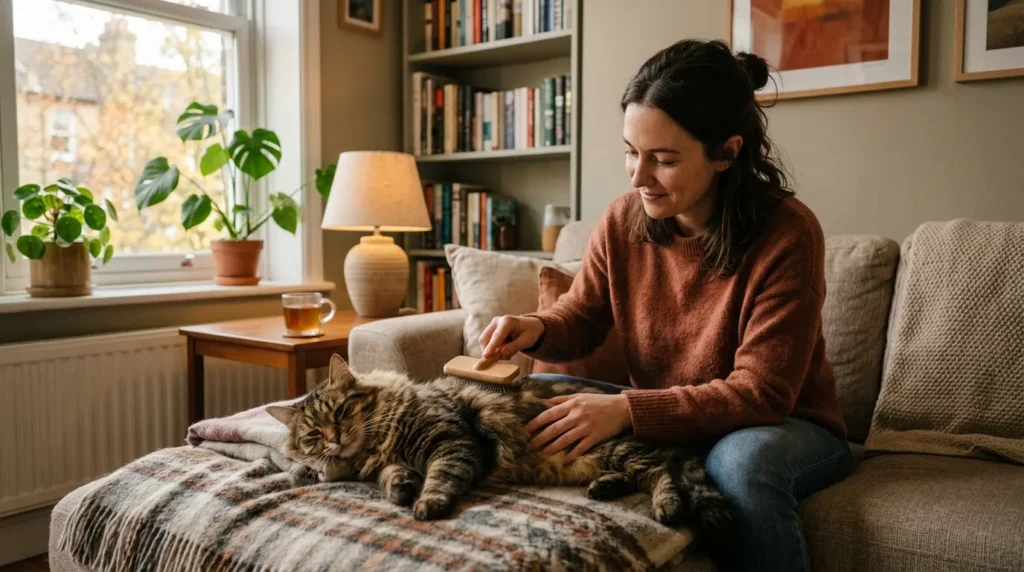
Indoor cats may look low-maintenance, but they still need regular care to stay healthy. Brushing a few times a week controls shedding, prevents hairballs and lets you catch early changes in coat, skin or weight. Nail trims every couple of weeks keep claws manageable. Routine vet visits catch hidden issues like dental disease, kidney problems or diabetes early. Even indoor cats need vaccinations, since germs still travel in on shoes, other pets or visitors. For a broader look at common indoor cat health risks, see our indoor cat health guide.
Indoor Cat Care Schedule
| Care Area | Frequency | Why It Matters |
|---|---|---|
| Brushing | 2 to 3 times per week | Reduces shedding, prevents hairballs, checks coat health |
| Nail trimming | Every 2 to 3 weeks | Prevents overgrowth and scratching issues |
| Vet check-up | Once a year, more for older cats | Detects hidden illness early |
| Vaccinations | As recommended by vet | Protects against airborne or indirect infections |
| Dental check-up | Every annual visit | Prevents silent but serious dental disease |
| Spay/Neuter | One-time procedure | Reduces health risks and behavior issues |
Should You Declaw an Indoor Cat?
Short answer: no, and this isn’t a fringe opinion anymore. The American Veterinary Medical Association strongly discourages elective declawing and supports non-surgical alternatives, and the American Association of Feline Practitioners opposes it outright as an elective procedure. Declawing is an amputation of the last bone in each toe, not a nail trim, and it’s banned outright in several U.S. cities and in New York State.
Scratching is a normal, necessary behavior, not a flaw to surgically remove. The fix is redirection, not amputation:
- A tall, sturdy scratching post placed where your cat already spends time
- Nail caps, which blunt the damage without touching the claw itself
- Regular nail trims every 2 to 3 weeks
- Double-sided tape on furniture your cat currently targets, while the new post takes over
Vets reserve declawing for rare medical cases, like a tumor on the claw itself, not as a routine fix for furniture damage.
Signs of a Well-Cared-For Cat vs. a Neglected One
Some signals are easy to miss day to day. This side-by-side makes them easier to spot.
| Sign | Well-Cared-For Cat | Neglected Setup |
|---|---|---|
| Coat | Smooth, minimal shedding clumps | Dull, matted or greasy patches |
| Litter box use | Consistent, no accidents | Avoidance, accidents outside the box |
| Play response | Chases toys, engages readily | Ignores toys or overreacts, then quits |
| Body language | Relaxed posture, normal appetite | Hiding, hunched posture, reduced appetite |
| Vocalization | Normal, situational | Excessive or sudden changes in pitch |
The Mistakes Indoor Cat Owners Make Most Often
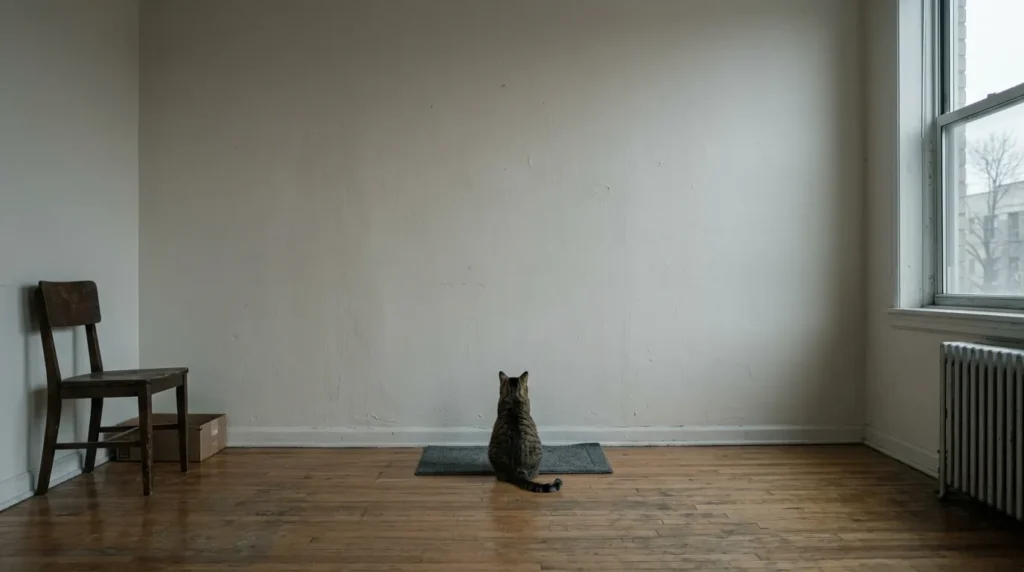
The biggest mistake is treating an indoor cat like a low-maintenance pet. It isn’t one. Its entire world is the space you’ve given it, so every enrichment gap, every dirty litter box and every week without real play gets absorbed somewhere. When something goes wrong, check the environment first.
The second mistake is underestimating what happens when space and stimulation are missing. A cat confined to a small apartment with nothing to climb, nothing to hunt and no consistent interaction becomes anxious, then destructive, then hard to live with. That’s a setup problem, not a personality problem.
Feeding only dry food is the third mistake, and it carries the most serious long-term cost. Indoor cats already carry higher risk for urinary issues because of lower activity levels. A dry-food-only diet raises that risk further, and the damage can take years to show up, which makes the two hard to connect later.
A fourth mistake worth naming: letting litter box maintenance slide once the setup looks fine. A box that starts smelling again within a day or two of a full clean usually points to litter type or cleaning frequency, not the location itself. Our guide on why the litter box smells after cleaning walks through the common causes.
A fifth mistake is letting hands become toys during play. A kitten who learns to grab and mouth your fingers carries that habit into adulthood, and what looked cute at three months turns into real bites at three years. Redirect every grab to a toy from day one.
When Your Cat’s Behavior Is a Warning Sign, Not an Attitude
Some problems look like behavior issues but are medical ones, and confusing the two costs time and makes cats sicker. A cat that suddenly stops using the litter box, eats noticeably less, drinks far more water than usual or turns aggressive without a clear trigger is showing a medical red flag, not a personality shift.
Straining in the litter box with little or no output is a medical emergency, especially in male cats. It can point to a urinary blockage, and blockages can turn fatal within 24 to 48 hours. If you see this, don’t wait for a next-day appointment.
Sudden weight loss, hiding more than normal or a dramatic change in vocalization after years of consistency all point to something wrong internally. Cats don’t show pain the way dogs or people do. They go quiet, they withdraw, they stop engaging. If your cat’s personality shifts, assume a medical cause and rule it out before calling it behavioral. Our indoor cat behavior guide breaks down which signs point where, including what it means when a cat that’s never bitten anyone suddenly starts.
This article is for informational purposes only. Always consult your vet if you have concerns about your cat’s health.
Frequently Asked Questions About Indoor Cat Care
How often should I feed my indoor cat?
Feed adult indoor cats twice a day, morning and evening, at consistent times. A predictable schedule reduces anxiety and helps regulate digestion. If your cat gulps food and vomits it back up, splitting meals into three smaller portions with an automatic feeder often solves it without other changes.
How do I keep my indoor cat from getting bored?
Play with your cat for at least 15 minutes a day using an interactive wand or feather toy, something you control, not something that runs on its own. Rotate toys weekly so they feel new. Add a window perch with a bird feeder outside. Use puzzle feeders at mealtime. None of these changes cost much, but they make a measurable difference in how settled your cat is.
How many litter boxes does an indoor cat need?
One cat needs two litter boxes. The standard rule is one per cat plus one extra, and it scales up with every additional cat. Scoop at least once a day and do a full litter change every one to two weeks. A box that’s too small, too dirty or in a noisy spot gets avoided, and then you’re cleaning carpets instead of just scooping a box.
How many hours do indoor cats sleep?
Indoor cats sleep 12 to 16 hours a day on average. Kittens and senior cats tend to sleep more. Most of their active window falls at dawn and dusk, so plan play sessions around those times for the strongest response.
Do indoor cats still need vaccines?
Yes. A cat that never goes outside can still be exposed through an open window, another pet in the home or germs carried in on shoes. Core vaccines matter regardless of lifestyle, so keep to your vet’s recommended schedule.
Is it okay to keep a cat indoors all the time?
Yes, and indoor cats typically live longer than outdoor ones. Outdoor cats face traffic, predators, disease exposure and extreme weather. The tradeoff is that you’re responsible for meeting all their stimulation and social needs inside the home. Do that consistently and an indoor cat can live a full, healthy life well past 15 years.
What are the signs that my indoor cat is unhappy?
Watch for over-grooming, sudden or excessive vocalization, litter box avoidance, unprovoked aggression or long stretches of flat, withdrawn behavior. A cat that stops engaging isn’t just being aloof. That’s usually a signal something is off, whether environmental, social or medical.
How do I stop my indoor cat from scratching the furniture?
Give your cat at least one tall, sturdy scratching post near the furniture it’s targeting; cats scratch where they spend time, so location matters. Rope or sisal works better than carpet for most cats. Add a horizontal scratcher too, since some cats prefer that angle. Double-sided tape on the furniture surface makes it unpleasant while your cat builds a new habit, and nail caps are a pain-free backup if scratching keeps up. Declawing isn’t the answer; major veterinary bodies discourage or oppose it outright.
How much does it cost to care for an indoor cat each month?
Budget roughly $50 to $80 a month for food and litter combined, more if your cat eats a premium wet-food diet. Add annual costs for vet visits, vaccinations and the occasional dental cleaning. Toys and enrichment items are a small one-time cost if you rotate what you already own instead of buying new every month.
Does indoor cat care change with age?
Yes. Kittens need more frequent meals and closer supervision during play so biting habits don’t carry into adulthood. Adult cats follow the core routine in this guide. Senior cats often need softer food, easier litter box access and closer vet monitoring, since a sudden change in an older cat is more likely to be medical than behavioral.
Conclusion
Taking care of an indoor cat comes down to three things: feed it well, give it a clean and stimulating environment and stay consistent. Start today with the highest-impact changes: switch to wet food as the primary diet, scoop both litter boxes daily and block out 15 minutes for real interactive play. Those three changes alone shift your cat’s baseline mood and behavior faster than anything else. For the deeper dives behind each section here, from litter box counts to home setup to specific behavior questions, use the guides linked throughout this page as your next stop.
Indoor cats do best on a consistent daily routine built around two meals of high-protein wet food, a litter box scooped at least once a day and a minimum of 15 minutes of interactive play. Cats in apartments and small homes need deliberate access to vertical climbing space, window views and rotating enrichment to satisfy predatory instinct and prevent anxiety-driven behavior problems. Care needs shift by life stage: kittens need more frequent meals and supervised play, while senior cats need softer food and closer monitoring for medical changes. Indoor cats sleep between 12 and 16 hours a day and are most active at dawn and dusk, so timing play around those hours improves engagement. Annual vet visits, current vaccinations and regular brushing matter even for cats with no outdoor access. Major veterinary bodies discourage or oppose elective declawing in favor of scratching posts and nail caps. Indoor cats with their needs consistently met often live well into their teens, generally longer than outdoor cats.

Written by Mishu
A passionate cat lover and indoor living enthusiast, Mishu is the founder and voice behind Indoor Living Cat – a go-to resource for cat owners who want to create the happiest, healthiest life for their feline companions indoors.
View Full Profile