
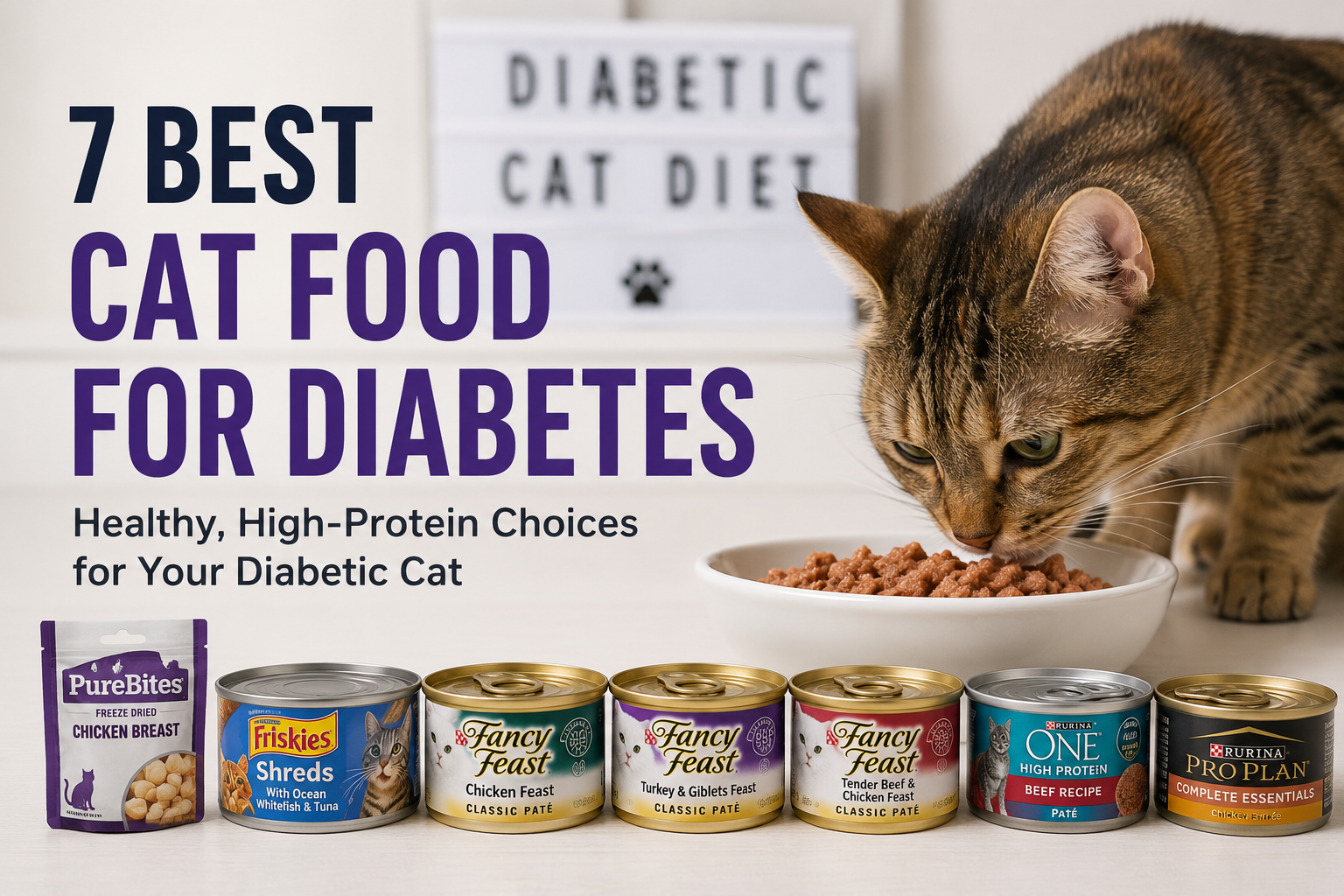
Diabetic cat food works best when it skips the fillers and leans hard on animal protein, because that’s the combination that keeps blood sugar from spiking. A diabetes diagnosis changes how you shop for cat food, usually overnight. Ingredient panels you never read before suddenly matter, and “moisture content” turns into a real decision instead of a throwaway spec. Below, we cover the best canned and wet foods and treats for a diabetic cat, why carbs and water matter more than the words on the front of the can, what to do if your cat still wants dry food, and how to switch diets without wrecking your cat’s stomach or their insulin schedule. You may also find our guide on how to feed an indoor cat properly useful for building a full feeding routine around any new diet.
Diabetic Cat Food at a Glance
If you just need the short version before your vet appointment, here it is:
- Pick canned or wet food over dry, almost every time. Dry kibble runs 20% to 45% carbs on a dry matter basis; even the “diabetic” prescription kibbles land higher in carbs than a basic can of pate.
- Aim for under 10% carbohydrate on a dry matter basis. Under 7% is better if your cat will eat it.
- Meat, poultry, or fish should be the first ingredient. Not broth, not corn, not “meat by-product meal” three lines down.
- Feed on a schedule, not free-fed. Insulin dosing depends on your cat eating a predictable amount at predictable times.
- Never switch foods cold turkey while your cat is on insulin. Loop your vet in first, since a sudden drop in carbs can mean a sudden drop in blood sugar too.
That’s the whole strategy in five bullet points. Everything after this is the “why” and the specific products.
What to Look for in Cat Food for Diabetes
Diabetic cats do better on food that resembles what a cat actually eats in the wild: mostly meat, barely any grain or starch. Dry kibble needs starch to hold its shape during manufacturing, and that starch turns into glucose fast once it hits your cat’s bloodstream. Wet and canned food skip that problem entirely and add water your cat’s body needs anyway, especially since diabetic cats are more prone to kidney strain and dehydration.
A few things actually move the needle:
- Protein first. Meat, fish, or poultry should lead the ingredient list, not corn, wheat, or rice.
- Low carbohydrate load. Look for foods under roughly 10% carbs on a dry matter basis, since fewer starches mean smaller glucose spikes.
- Higher moisture. Wet food runs 70 to 80% water, which supports hydration and kidney function, something diabetic cats are more prone to struggle with.
- Consistent feeding schedule. Cats on insulin do best eating at the same times each day, since blood sugar swings get harder to manage on an irregular schedule.
A quick word on the biology, because it explains why this list looks the way it does. Diabetes in cats (vets call it diabetes mellitus) usually shows up as insulin resistance: the pancreas still makes insulin, but the body stops responding to it well. Extra weight makes that resistance worse, and extra dietary carbs give the body more glucose to fight with in the first place. Cut the carbs and the workload on your cat’s system drops too.
None of this replaces insulin therapy or a vet’s guidance. Diet is one part of managing feline diabetes, not a fix on its own. Some cats do reach remission (meaning they no longer need insulin) with the right combination of a low-carb diet and treatment, but that outcome depends on the individual cat, how early the disease was caught, and whether there’s already been damage to the pancreas. It isn’t guaranteed, and it isn’t something to chase by skipping vet visits.
Best Wet Foods and Treats for Diabetic Cats
We tested this list against protein content, carb load, moisture, and how consistently cats actually eat the stuff. Here are seven canned foods and treats worth trying, followed by a comparison table if you want to scan them side by side.
Pure Chicken Freeze-Dried Treats
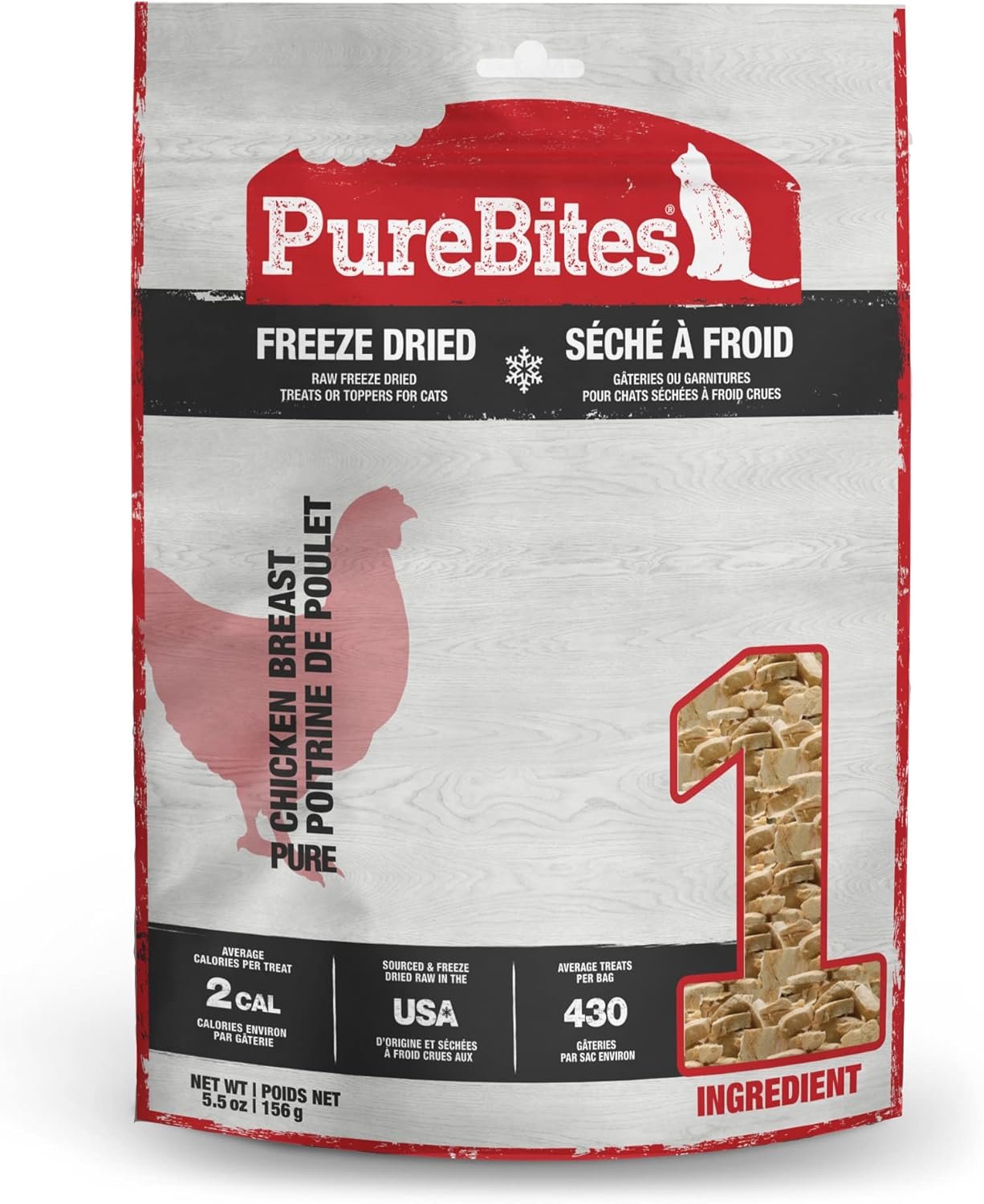
PureBites Chicken Breast Freeze Dried Cat Treats list one ingredient: chicken breast. Nothing else. That single-ingredient format matters if your cat also deals with food sensitivities on top of diabetes, since there’s nowhere for a hidden starch to sneak in.
The freeze-drying process locks in protein without adding fillers, artificial colors, or preservatives. Most owners use these as training rewards or crumble them over wet food to boost palatability. They’re not a meal replacement, so treat them as a supplement to a full diabetic-friendly diet your vet has approved.
Key Features
- Made with 100% chicken breast
- Single-ingredient recipe
- Freeze-dried raw protein
- No fillers or additives
- Made in the USA
| Pros | Cons |
| Single ingredient | Not a complete meal |
| High protein | Premium price |
| Low calorie | Treat use only |
| No artificial additives | Some cats prefer soft treats |
Best For
Cats needing limited-ingredient treats or meal toppers.
Whitefish and Tuna Shreds
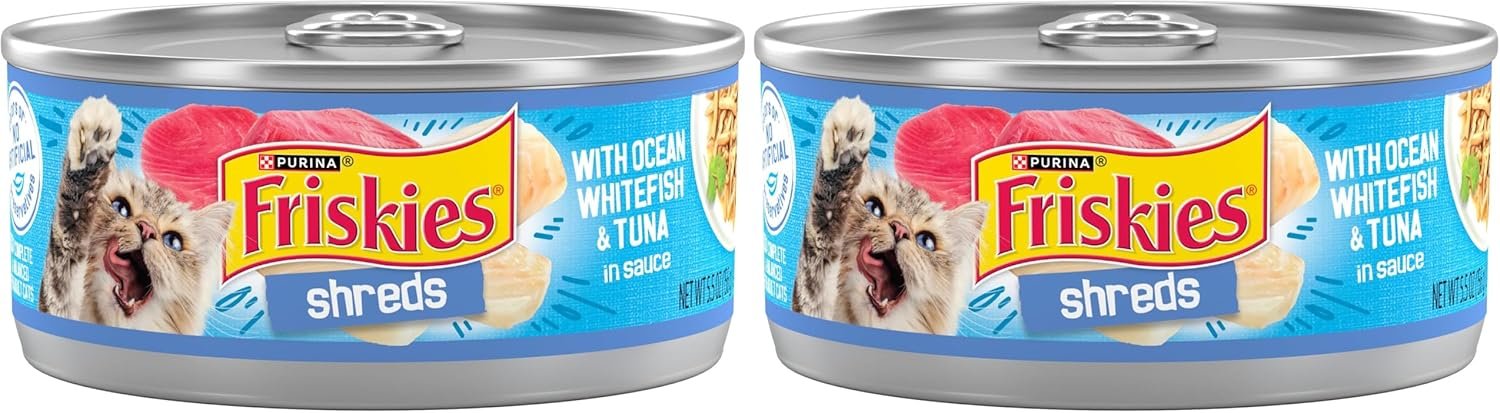
Friskies Purina Shreds with Ocean Whitefish and Tuna is soft, saucy, and built for cats that turn their nose up at anything else. That’s a real advantage when a diabetic cat loses interest in food, since skipped meals make insulin dosing harder to manage and can trigger dangerous drops in blood sugar if you dose without your cat actually eating.
Real whitefish and tuna anchor the recipe, and it delivers complete adult nutrition with plenty of added moisture. It’s made without artificial colors or preservatives at Purina-owned U.S. facilities. It wasn’t formulated specifically for diabetic cats, though, so check the carb content against your vet’s recommendations before making it a daily staple. For a closer look at how it stacks up against another popular budget option, see our Friskies vs Fancy Feast comparison.
Key Features
- Real whitefish and tuna
- Tender shredded texture
- Added moisture for hydration
- No artificial colors or preservatives
- Complete adult nutrition
| Pros | Cons |
| Affordable | Not grain-free |
| High moisture content | Contains gravy |
| Appealing texture | Seafood flavor may not suit every cat |
| Widely available | Not ideal for all dietary plans |
Best For
Cat owners looking for an affordable wet food, and one of the cheapest options on this list if you’re watching cost per can.
Classic Chicken Pate
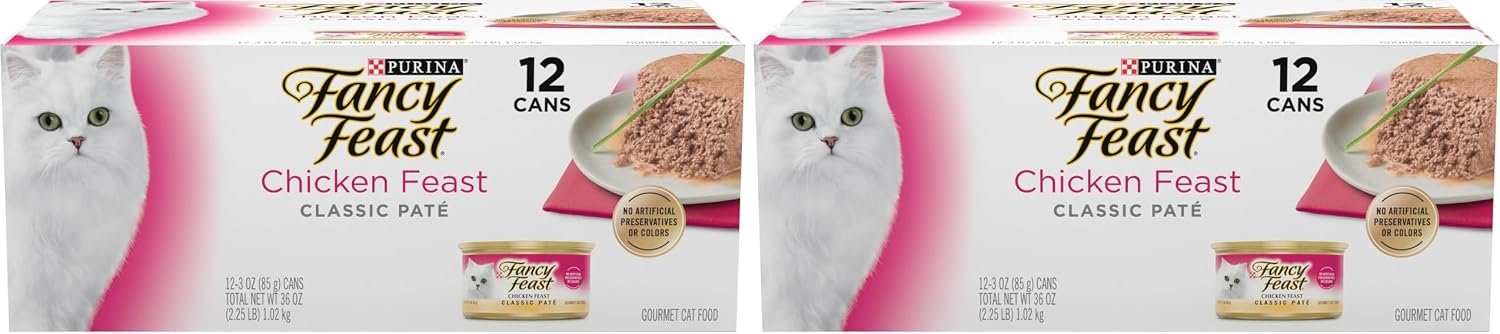
Fancy Feast Chicken Feast Classic Pate keeps things simple: real chicken, a smooth texture, no chewing required. Senior cats and picky eaters tend to go for it fast, which counts for a lot when you’re trying to keep a diabetic cat eating on schedule. It’s also one of the most searched Fancy Feast options for diabetic cats, and for good reason: the classic pate line skips the gravy and sauce that pad out carbs in some of Fancy Feast’s other lines.
It’s grain-free and delivers complete, balanced nutrition without artificial colors or preservatives. The small 3-ounce cans mean less food sits open in the fridge going stale, and you can portion meals more precisely, which matters when you’re tracking intake alongside insulin doses.
Key Features
- Real chicken as first ingredient
- Grain-free formula
- Smooth pate texture
- Complete and balanced nutrition
- No artificial preservatives
| Pros | Cons |
| Highly palatable | Small can size |
| Grain-free | Premium pricing |
| Great for picky eaters | Limited flavor variety |
| Soft texture | Some cats prefer chunks |
Best For
Picky cats that enjoy smooth pate meals.
Turkey and Giblets Pate
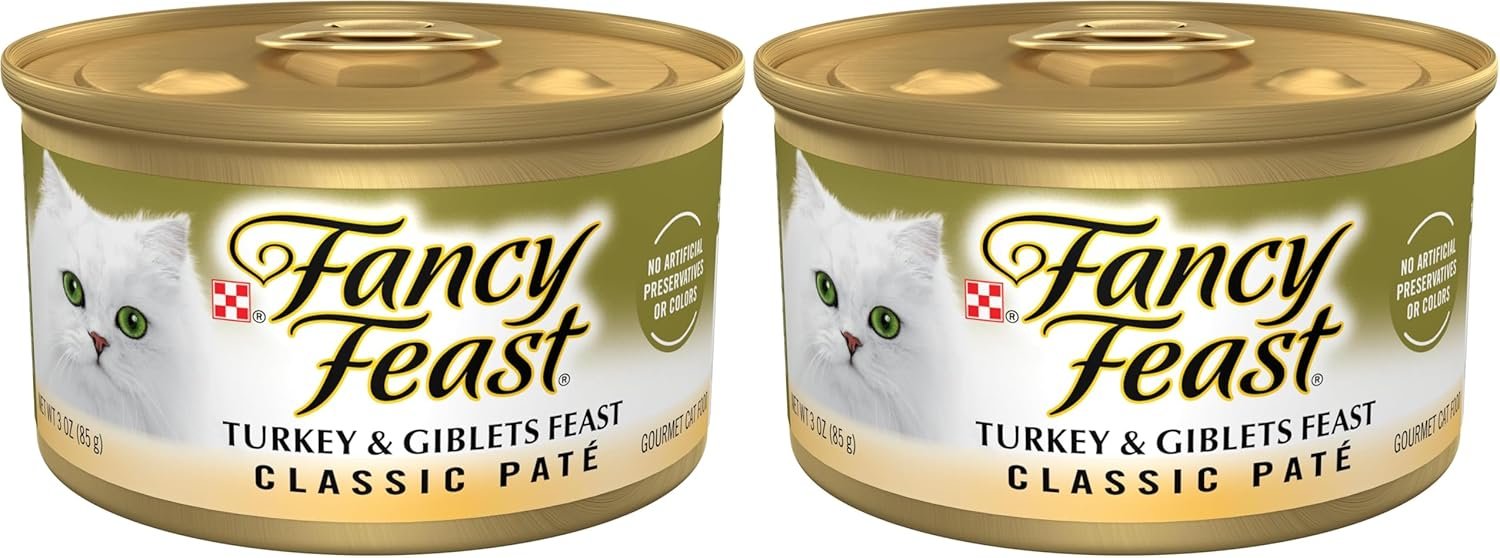
Fancy Feast Turkey and Giblets Feast Classic Pate swaps chicken for turkey but keeps the same soft, spoonable texture. It works well for older cats or anyone recovering from dental work, since there’s nothing to chew.
This grain-free recipe skips artificial colors and preservatives while covering complete daily nutrition for adult cats. Rotating it with other flavors keeps mealtime interesting, which helps if your cat gets bored of the same can week after week.
Key Features
- Real turkey as first ingredient
- Grain-free recipe
- Soft pate texture
- Complete adult nutrition
- No artificial preservatives
| Pros | Cons |
| Soft texture | Not suitable for kittens |
| Grain-free | Some cats dislike giblets |
| Protein-rich | Premium price |
| Easy to serve | Limited texture options |
Best For
Adult and senior cats needing soft meals.
Beef and Chicken Pate
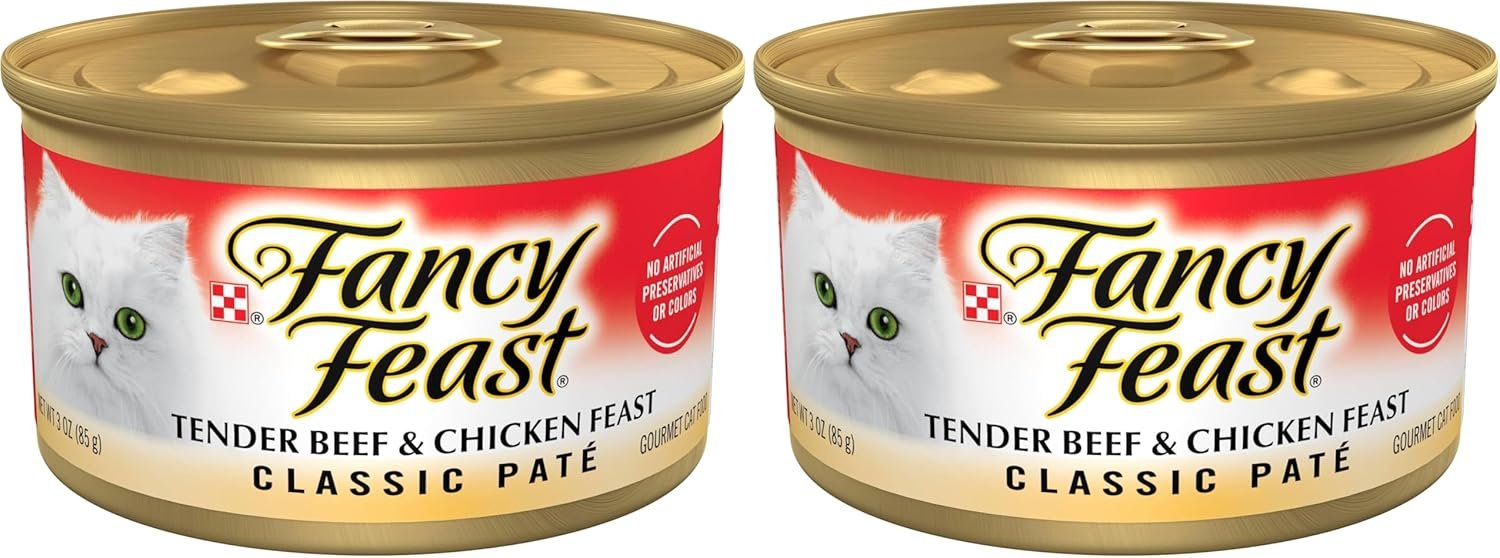
Fancy Feast Tender Beef and Chicken Feast Classic Pate blends two proteins into one smooth, savory recipe. Cats that get bored of a single-flavor diet, and there are plenty, tend to respond well to the mix.
It offers complete, balanced nutrition for adult cats with no artificial colors or preservatives. Cats moving off dry food usually adjust to this pate faster than to chunkier wet foods, which makes it a solid transition option if you’re switching a newly diagnosed diabetic cat off kibble.
Key Features
- Real beef as first ingredient
- Grain-free formula
- Smooth pate texture
- Complete adult nutrition
- No artificial colors
| Pros | Cons |
| Rich meaty flavor | Not ideal for beef-sensitive cats |
| Grain-free | Small cans |
| Complete nutrition | Limited texture variety |
| Highly palatable | Premium cost |
Best For
Cats that enjoy rich beef flavors.
Purina ONE Beef Pate
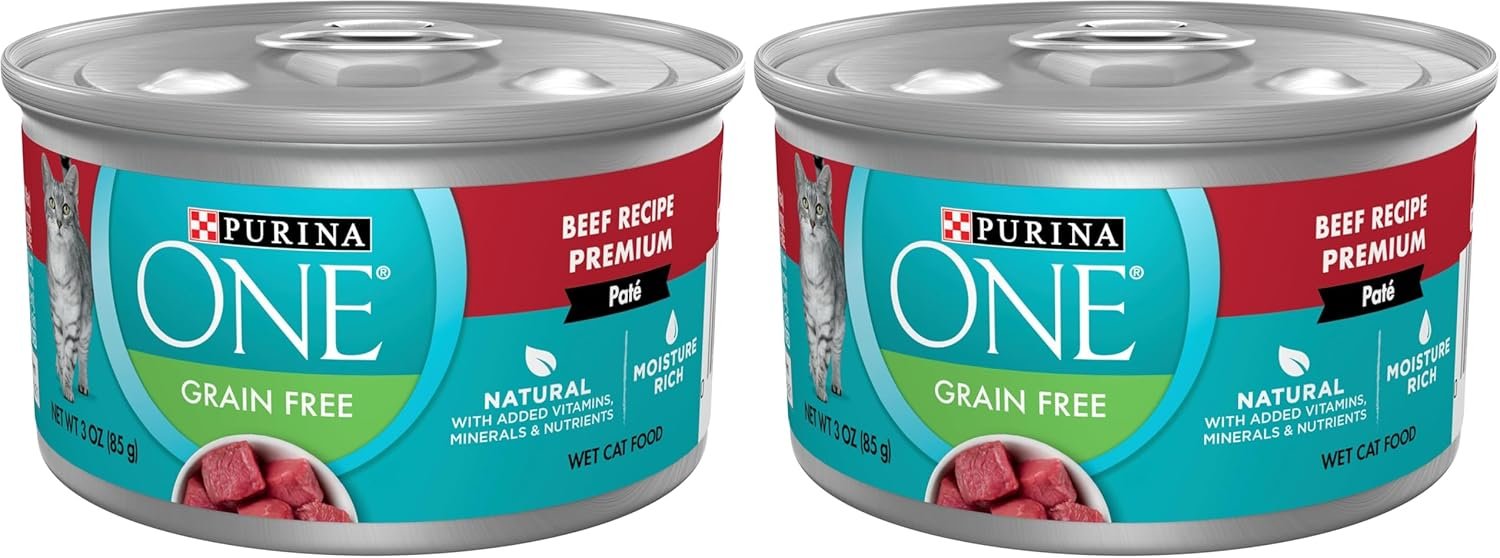
Purina ONE Natural High Protein Beef Recipe puts beef first on the label and backs it with a moisture-rich, grain-free pate. Added vitamins and minerals round out a formula built for overall wellness, not just protein numbers.
It’s suitable across life stages and includes antioxidants for immune support, plus the hydration boost that comes standard with any wet food. If you’re deciding between this and Purina’s other line, our Purina ONE vs Purina Pro Plan comparison breaks down where the two formulas actually differ.
Key Features
- Real beef as first ingredient
- Grain-free recipe
- Added vitamins and minerals
- High-protein formula
- Supports hydration
| Pros | Cons |
| High protein | Higher price |
| Grain-free | Limited flavors |
| Supports skin and coat health | Some cats prefer chunks |
| Suitable for all life stages | Only available in pate form |
Best For
Owners seeking premium high-protein nutrition.
Premium Chicken Entree
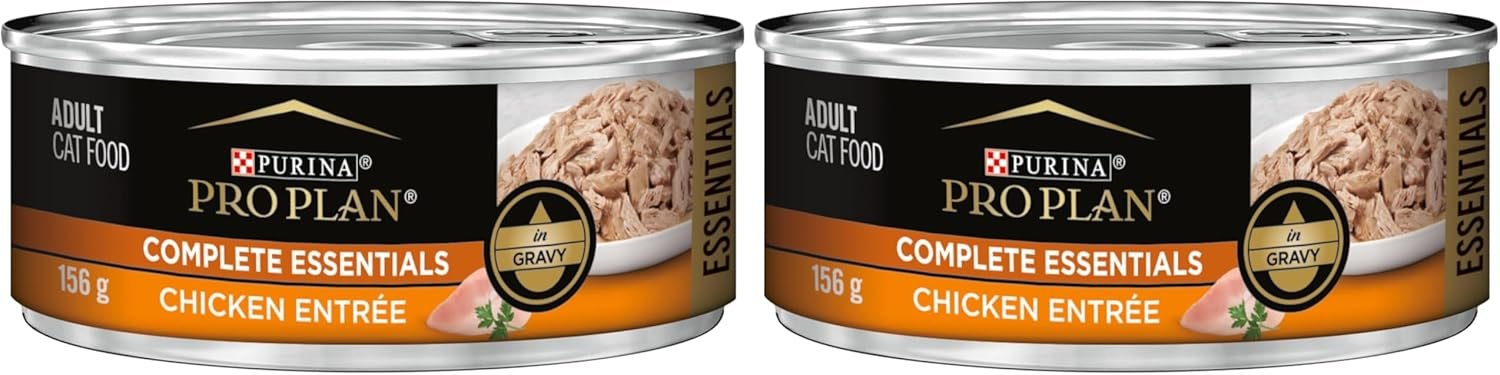
Purina Pro Plan Complete Essentials Chicken Entree pairs real chicken with a savory gravy that most adult cats eat without hesitation. It’s a step up in price from the others on this list, and the formula reflects that.
Antioxidants support immune health, taurine supports vision, and the protein content helps maintain lean muscle, something diabetic cats can lose faster than healthy ones. It’s manufactured at Purina-owned U.S. facilities, which gives it a consistent track record for quality control.
Key Features
- Real chicken recipe
- High protein formula
- Antioxidants for immune support
- Taurine for vision health
- No artificial colors
| Pros | Cons |
| Premium nutrition | Higher price |
| Great taste | Not grain-free |
| Supports multiple health areas | Gravy texture may not suit all cats |
| Complete daily nutrition | Limited flavor in this pack |
Best For
Owners wanting premium daily wet food.
Wet Food vs Dry Food for Diabetic Cats
Wet food wins for most diabetic cats, and the reason comes down to carbs and water, not marketing. Dry kibble needs starch to hold its shape during manufacturing, which pushes carbohydrate content up even in bags labeled “grain-free.” Grain-free doesn’t mean starch-free. Manufacturers often swap wheat or corn for potato or pea starch, and that swap does nothing for your cat’s blood sugar. Wet food doesn’t have that manufacturing constraint, so it can lean almost entirely on meat.
Here’s the gap in real numbers: most standard dry cat food runs somewhere between 20% and 45% carbohydrate on a dry matter basis. Even kibble marketed specifically for diabetic cats, including some prescription formulas, often lands in the same range or only slightly lower. Wet and canned pate foods, by comparison, regularly come in under 10%, and the best options land closer to 3% to 5%, which is roughly what a cat would get from the stomach contents of prey in the wild.
That said, some cats genuinely prefer crunch, and a small amount of low-carb dry food used as a topper isn’t automatically a problem if your vet is on board and your cat’s blood sugar is well controlled. Check the label’s guaranteed analysis and calculate the carb percentage yourself rather than trusting the word “diet” or “indoor” on the front of the bag. If you’re weighing both formats side by side, our guides on wet cat food for indoor cats and dry cat food for indoor cats cover what to check on each label.
What About Dry Food for a Diabetic Cat?
People search for this constantly, so let’s answer it straight: almost no dry cat food is genuinely low-carb, and that includes most of what’s sold as “diabetic” or “weight management” kibble at the pet store. A handful of specialty brands make dry food under 10% carbs, and cat owners managing diabetes at home tend to name the same two or three every time. They’re harder to find in a regular grocery store, and they usually cost more per pound than mainstream kibble.
Prescription dry diets from your vet, built specifically for diabetes management, exist too. They’re formulated to slow glucose release rather than eliminate carbs entirely, so they can still run higher in carbs than a basic can of pate. That doesn’t make them useless. It just means “prescription” and “low-carb” aren’t automatically the same thing, and you should ask your vet for the actual carbohydrate percentage before assuming a diabetic-labeled kibble solves the problem on its own.
If your cat absolutely will not eat wet food, talk to your vet about:
- Whether a specialty low-carb kibble (under 10% carbs on a dry matter basis) is available and affordable for your household
- Whether a prescription diabetic dry food makes sense alongside insulin adjustments
- Mixing a small amount of dry food with a wet-food base, rather than feeding dry exclusively
- Freeze-dried raw treats or toppers as a lower-carb way to satisfy a cat that likes crunch
The bottom line hasn’t changed: canned and wet food give you a much easier path to good blood sugar control, and dry food should be the exception you clear with your vet, not the default.
Signs Your Cat’s Current Food Isn’t Working
Diet changes take time to show results, but a few signs mean it’s worth a vet visit sooner rather than later:
- Drinking and urinating noticeably more than usual
- Losing weight despite eating normally or eating more
- Walking flat on the back legs (a sign of diabetic neuropathy)
- Low energy or skipping meals for more than a day
Go the other direction too. If a food switch drops your cat’s carb intake fast and your vet hasn’t adjusted the insulin dose to match, watch for hypoglycemia: wobbliness, disorientation, weakness, or in severe cases, seizures. That’s an emergency, not a wait-and-see situation. Any diet change for a cat on insulin should happen with your vet looped in on the timeline, not after the fact.
Older cats face a higher risk of diabetes alongside other age-related conditions, so senior cats deserve extra attention to portion size and ingredient quality. Our guide to cat food for senior cats covers what changes as cats age. Weight is another factor worth watching, since overweight cats face a much higher risk of developing type 2 diabetes in the first place. If your cat needs to slim down, our diet food guide for overweight indoor cats can help you plan that alongside a diabetes-friendly menu.
How We Chose These Products
We picked these based on ingredient quality, protein content, moisture levels, brand reputation, and customer feedback. Diabetic cats generally do better on high-protein, moisture-rich food, so wet and canned formulas and limited-ingredient treats got priority over dry options. Palatability mattered too, since a food that sits untouched in the bowl doesn’t help anyone, and a skipped meal is a real problem for a cat on insulin. We also spread the picks across a few price points, from budget-friendly Friskies to premium Purina Pro Plan, because a good diet shouldn’t depend on a big budget.
Comparison Table
| Product | Type | Main Protein | Grain-Free | Price Tier | Best For |
| PureBites Chicken Treats | Freeze-Dried Treat | Chicken | Yes | Premium | Limited ingredient diets |
| Friskies Whitefish & Tuna | Wet/Canned Food | Fish | No | Budget | Budget buyers |
| Fancy Feast Chicken Pate | Wet/Canned Pate | Chicken | Yes | Mid-range | Picky eaters |
| Fancy Feast Turkey & Giblets | Wet/Canned Pate | Turkey | Yes | Mid-range | Adult cats |
| Fancy Feast Beef & Chicken | Wet/Canned Pate | Beef & Chicken | Yes | Mid-range | Flavor variety |
| Purina ONE Beef Recipe | Wet/Canned Pate | Beef | Yes | Mid-range | High-protein nutrition |
| Purina Pro Plan Chicken | Wet/Canned Food | Chicken | No | Premium | Premium nutrition |
Buying Guide
Important Features to Consider
Prioritize high-quality animal protein and confirm the food is labeled complete and balanced for your cat’s life stage. Look for an AAFCO statement on the label. It’s a small line of text, but it confirms the food meets minimum nutritional standards rather than being sold as a treat or supplement only.
Safety Considerations
Always talk to your vet before changing a diabetic cat’s diet. A sudden drop in carbohydrate intake can affect insulin needs, so dose adjustments sometimes go hand in hand with a food switch. Cats that stop eating for more than 24 hours are also at risk of a liver condition called hepatic lipidosis, so a picky cat that won’t touch a new food needs attention fast, not patience.
Ingredient Quality
Choose foods with real meat in the first two or three ingredients and skip anything padded with corn, wheat gluten, or excess plant fillers.
Age Suitability
Senior cats usually do better with soft pate textures, while younger adults can handle more variety in texture and shape.
Budget Considerations
Premium formulas cost more, but several affordable wet foods still deliver solid protein and moisture without stretching your budget. Friskies Purina Shreds is the cheapest option on this list and still beats most dry food on carb content, which makes it a reasonable starting point if cost is the deciding factor.
Quick Switching Checklist
- Confirm the new food with your vet, especially if your cat is on insulin
- Mix 25% new food with 75% old food for the first two to three days
- Move to a 50/50 mix for the next few days
- Finish the switch over 7 to 10 days total, watching for vomiting or loose stool
- Monitor water intake and litter box habits during the transition
- Ask your vet about a blood glucose curve a week or two after the switch, so insulin dosing gets adjusted based on real numbers instead of guesswork
Frequently Asked Questions
What is the best cat food for diabetes?
High-protein, low-carb wet or canned food tends to work best, but your vet can point you toward the right formula for your cat’s specific case.
Is wet food better for diabetic cats?
Usually, yes. Wet and canned food carry more moisture and less starch than dry kibble, which lines up better with a diabetic cat’s needs.
Is dry food ever okay for a diabetic cat?
Sometimes, but only as a small addition, not the main diet. Standard dry food runs far too high in carbs for most diabetic cats. A handful of specialty low-carb kibbles exist, and prescription diabetic dry diets exist too, but neither is as low-carb as a typical can of wet food. Ask your vet before adding any dry food back in.
Is Fancy Feast good for diabetic cats?
The Classic Pate line is one of the more commonly recommended options, since it skips gravy and sauce and keeps the ingredient list simple. It wasn’t formulated specifically as a diabetic diet, though, so confirm the carb percentage with your vet rather than assuming every Fancy Feast product is equally appropriate.
Can diabetic cats eat treats?
Yes, in small amounts. Limited-ingredient, single-protein treats are usually the safest pick since they add the least extra carbohydrate.
Should I switch foods suddenly?
No. Transition over 7 to 10 days to avoid digestive upset, and slower if your cat has a sensitive stomach.
Are grain-free foods necessary for diabetic cats?
Not always. Grain-free doesn’t automatically mean low-carb, since some grain-free recipes just swap wheat for potato or pea starch. Check the actual carbohydrate content rather than relying on that label alone.
Can a change in diet put a cat’s diabetes into remission?
Some cats do reach remission with a low-carb diet combined with proper insulin treatment, but results vary by cat and by how early the diabetes was caught.
What ingredients should I avoid in diabetic cat food?
Watch for corn syrup, added sugars, and foods where corn, wheat, rice, or potato starch appear in the first few ingredients.
What’s an inexpensive option that still works?
Friskies Purina Shreds with Ocean Whitefish and Tuna is the most budget-friendly pick on this list. It isn’t formulated specifically for diabetes, so double-check the carb content with your vet, but it beats dry kibble by a wide margin on cost and moisture alike.
Final Verdict
Best Overall: Purina ONE Natural High Protein Grain Free Wet Cat Food
Best Budget Option: Friskies Purina Shreds with Ocean Whitefish and Tuna
Best for Picky Senior Cats: Fancy Feast Chicken Feast Classic Pate
No food cures feline diabetes or guarantees a specific result on its own. Work with your vet to build a feeding plan that fits your cat’s insulin needs, weight, and appetite, and adjust as your cat’s bloodwork changes over time.

Written by Mishu
A passionate cat lover and indoor living enthusiast, Mishu is the founder and voice behind Indoor Living Cat – a go-to resource for cat owners who want to create the happiest, healthiest life for their feline companions indoors.
View Full Profile